

P0461 on 2016-2020 Chevrolet Malibu: Causes and Fixes for Fuel Gauge Errors
Code P0461 on a 2016-2020 Chevrolet Malibu means the fuel gauge is inaccurate because of a problem with the fuel level sensor circuit. The most common fix is replacing the fuel level sensor, which is part of the fuel pump module inside the gas tank. This repair requires dropping the fuel tank as there is no access panel under the rear seat. Expect to pay $200-$400 for the part and 2-4 hours of labor.
- P0461 on your Malibu means the fuel gauge is not working correctly due to a fault in the fuel level sensor circuit.
- The most likely cause is a failed fuel level sensor, which is sold as part of the complete fuel pump module.
- Diagnosis involves checking the wiring and connector at the fuel tank before deciding to replace the pump module.
- Replacing the fuel pump module is a significant job that requires dropping the fuel tank, making it a difficult DIY task (4/5 difficulty).
- Before replacing parts, it's worth asking a dealer if any software updates (TSBs) apply to your vehicle, as this can sometimes be the root cause on GM vehicles.
What's Unique About the 2016-2020 Chevrolet Malibu
For the ninth-generation Malibu, like many modern GM vehicles, the fuel level sensor is integrated into the fuel pump module, meaning the entire assembly often needs to be replaced. A critical point for this platform is the lack of a fuel pump access panel under the rear seat, which is present in some older models and other vehicles. This means that accessing the fuel pump module requires the entire fuel tank to be dropped, significantly increasing the labor time and complexity of the repair. While the sensor itself is the most frequent culprit, GM has a history of issuing Technical Service Bulletins (TSBs) for other models where this code is caused by an ECM software glitch requiring reprogramming.
Symptoms You May Notice
- Inaccurate or erratic fuel gauge (e.g., jumping from full to empty).
- Fuel gauge stuck on 'Full' or 'Empty'.
- Check Engine Light is on.
- Low fuel warning light illuminates even when the tank is full.
- Fuel gauge fluctuates wildly while driving.
- Replacing the instrument cluster when the problem is the fuel level sensor.
- Replacing the entire fuel pump for a simple wiring issue at the tank connector.
- Assuming the fuel pump is bad when only the integrated level sensor has failed.
Most Likely Causes
- Faulty Fuel Level Sensor 🔴 High Probability The sensor is a moving part (a float on a resistor) inside the fuel tank. Over time, the resistor strip's contact fingers can wear out or become contaminated by fuel additives, causing erratic readings. On this Malibu, it is part of the fuel pump module and is the most common failure point.
How to confirm: Test the sensor's resistance with a multimeter while moving the float arm. The resistance should change smoothly without any dead spots. This requires removing the fuel pump module from the tank. A typical GM range is approximately 40 Ohms at empty and 250 Ohms at full.
Typical fix: Replace the entire fuel pump module assembly, which includes the fuel level sensor, or in some cases, just the sensor itself if available separately.
Est. part cost: $200-$400 - Wiring or Connector Issues 🟡 Medium Probability The wiring harness connector on top of the fuel tank is exposed to the elements under the car, making it susceptible to corrosion, moisture intrusion, or physical damage from road debris.
How to confirm: Visually inspect the wiring and connector at the fuel pump module for corrosion, bent pins, or loose connections. Perform a 'wiggle test' on the harness while observing live data on a scan tool.
Typical fix: Clean the connector terminals with a contact cleaner or repair/replace the damaged section of the wiring harness.
Est. part cost: $10-$100 - Fuel Vapor Line Interference ⚪ Low Probability RepairPal and an older NHTSA complaint for a previous generation Malibu mention that a fuel vapor line inside the tank can sometimes shift and physically block the movement of the fuel level sensor's float arm. While less documented on the 2016-2020 models, it remains a possibility during diagnosis.
How to confirm: Visually inspect the inside of the fuel tank when the fuel pump module is removed. Check if the float arm's path is obstructed by any hoses or wires.
Typical fix: Reposition and secure the interfering fuel vapor line away from the float arm.
Est. part cost: $0
Rare But Worth Checking
- ECM Software Glitch: As per TSB #N192285430 and #PIP5695 for different Chevrolet models, an error in the ECM calibration can cause a false P0461 code. It's worth checking with a dealer for any applicable software updates for your Malibu's VIN before replacing expensive hardware, as this is a known pattern for GM vehicles.
- Faulty Instrument Panel Cluster (IPC): In rare cases, the fault may not be with the sensor or wiring, but with the gauge cluster itself. This is unlikely and should only be considered after all other possibilities have been exhausted.
Diagnosis Steps
- Connect an OBD-II scanner to confirm the P0461 code and check for any other related codes.
- Use the scanner to view live data for the 'Fuel Level Sensor' reading. Compare this reading to the fuel gauge on the dashboard and your estimate of the actual fuel in the tank.
- Confirm that there is no fuel pump access panel under the rear seat. Accessing the pump requires dropping the fuel tank.
- Raise and support the vehicle safely. Visually inspect the main connector on top of the fuel tank for any signs of corrosion, damage, or moisture.
- Perform a 'wiggle test' on the wiring harness leading to the fuel tank while watching the live data for any fluctuations.
- If wiring appears okay, the next step is to lower the fuel tank to access the fuel pump module. This is a labor-intensive process.
- Once the module is removed, test the sensor. Disconnect the connector and use a multimeter set to Ohms to measure the resistance between the sensor's signal and ground pins. Slowly move the float arm from empty to full. The resistance should change smoothly, typically from ~40 Ohms (empty) to ~250 Ohms (full). Any sudden jumps or infinite readings indicate a bad sensor.
- While the module is out, inspect the tank for any internal obstructions, like a loose vapor line, that could impede the float's movement.
- If the sensor and wiring test good, check with a GM dealer for any Technical Service Bulletins (TSBs) regarding an ECM software update for your vehicle's VIN.
Parts You'll Likely Need
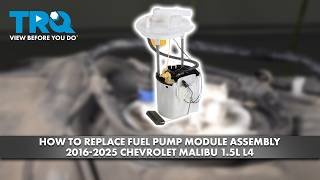
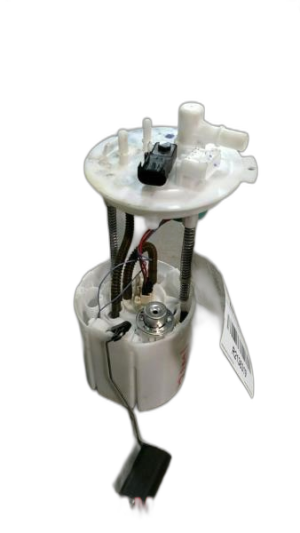
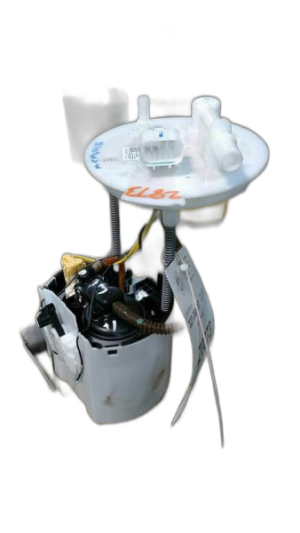
- Fuel Pump Module Assembly
(OEM #84707086 (superseded by 84932335))— The fuel level sensor is integrated into the fuel pump module. On the 2016-2020 Malibu, this is the most common failure point for code P0461. Part number may vary by engine (1.5L vs 2.0L vs Hybrid).
Trusted brands: ACDelco, Delphi
OEM price range: $300-$450
Aftermarket price range: $150-$250 - Fuel Tank Lock Ring — The plastic or metal lock ring that secures the fuel pump module to the tank can be brittle and may break during removal. It is often recommended to replace it as a precaution.
Trusted brands: TRQ, ACDelco
OEM price range: $20-$40
Aftermarket price range: $10-$25
Related Codes That Often Appear With This One
- P0463 — Indicates 'Fuel Level Sensor 'A' Circuit High Input', often appearing with P0461 when there's an open circuit or a complete failure of the sensor.
- P0462 — Indicates 'Fuel Level Sensor 'A' Circuit Low Input', which can be triggered by a short in the circuit.
- P2066 — Relates to the 'Fuel Level Sensor 'B' Circuit'. This would only appear if the vehicle has a saddle-style tank with two level sensors, which is not standard on the 2016-2020 Malibu.
Technical Service Bulletins (TSBs) & Recalls
- N192285430: Notes that on other GM models, an ECM calibration error can cause P0461, fixed by reprogramming the ECM.
- PIP5695: Mentions checking for ECM updates for fuel gauge concerns related to P0461 on other GM trucks.
- PIC5703A: Describes a P0461 code on the Chevy Sonic where the gauge was stuck on empty, pointing to a sensor issue.
- 09-06-04-007A: Cited in an owner complaint (ODI #10311787) for an older Malibu, this bulletin addressed a fuel vapor line hanging up the fuel level sender.
Platform-Specific Known Issues
- A known issue on some Chevrolet models is a fuel vapor line inside the tank interfering with the fuel level sensor float arm, causing inaccurate readings and triggering P0461.
- While the provided TSBs are not for the Malibu specifically, they show a pattern for GM vehicles where P0461 can be caused by an ECM calibration error that requires a software update from a dealer to fix. (See TSB #N192285430, #PIP5695)
- There is no fuel pump access panel under the rear seat for this generation, making replacement more difficult than on previous models or other vehicles. The fuel tank must be dropped.
Mechanic-Grade Diagnostic Values
- Fuel Level Sensor Resistance — expected: Approx. 40 Ohms (Empty) to 250 Ohms (Full). Failure: Readings are out of range, infinite (open), or jump erratically as the float arm is moved.
- Fuel Level Sensor Signal Voltage (at sensor) — expected: Approx. 0.5V (Empty) to 4.5V (Full) with key on, engine off.. Failure: Voltage is stuck near 0V (short to ground) or near 5.0V (open/short to reference).
- Reference Voltage (at sensor connector) — expected: Approx. 5.0 Volts. Failure: Significantly lower or no voltage indicates a problem with the PCM or wiring.
Scan Tool Commands That Help
- GDS2 (GM Global Diagnostic System 2): Vehicle DTC Information — To perform an all-module scan to see if other control units (like the BCM or Instrument Panel Cluster) are reporting communication errors related to the fuel system.
- GDS2 (GM Global Diagnostic System 2): Fuel System Data / Live Data — To monitor the raw fuel level sensor voltage and percentage as reported to the ECM, which can be compared against the physical gauge reading to isolate the fault.
- GDS2 (GM Global Diagnostic System 2): Output Controls / Gauge Sweep — To command the instrument panel cluster to perform a full sweep of all gauges. If the fuel gauge moves correctly during this test, it confirms the gauge motor itself is functional, pointing the diagnosis back towards the sensor, wiring, or modules.
Wiring & Ground Locations
- Fuel Pump Control Module (FPCM) — On the 2016+ Malibu, this module regulates voltage to the fuel pump. It is typically located in the trunk area, under the carpet on the right (passenger) side.. The FPCM is a critical link between the ECM and the fuel pump assembly. While not the primary cause of P0461 (which is a sensor circuit code), a fault in the FPCM or its wiring can sometimes cause related fuel system issues. The fuel level signal itself is typically read by the ECM or BCM directly.
- X400 Connector — This is the main electrical connector on top of the fuel pump module assembly, accessible after dropping the fuel tank.. This is the primary point of failure for wiring issues. The pins for the fuel level sensor signal, ground, and reference voltage should be tested here for corrosion, continuity, and correct voltage.
- Fuel Tank Ground Strap — A metal strap connecting the fuel tank or filler neck to the vehicle's chassis.. While less common on modern vehicles, a corroded or broken ground strap can cause erratic electrical behavior in the fuel system. It's a quick visual check while under the vehicle.
Real Owner Repair Stories
- YouTube Commenter on "2016-2022 Chevy Malibu 9 Problems and Issues" (2016-2020 Chevrolet Malibu (specific year not mentioned)) — Fuel gauge on the dashboard shows the wrong fuel level.
✅ What actually fixed it The problem was identified as a faulty fuel pump that required replacement. The comment implies the level sensor is part of the pump assembly.
OEM Part Supersession History
23150651, 23375924, 23406974→84254628— Standard part evolution and updates by the manufacturer.
Heads up: This is the part number for the fuel pump wiring harness connector, fitting 2016-2018 Malibu models. Always verify by VIN.
Model Year Variations Within This Range
- 2016-2018: The fuel pump wiring harness connector is listed under part number 84254628, which supersedes several older numbers. Models from 2019 onwards may use a different connector.
- 2019+: The 2019 model year introduced a facelift. While the fundamental fuel system design remained similar, part numbers for components like the fuel tank can differ based on engine (1.5L vs 2.0L) and options.
Diagnostic Flowchart
Other Known Issues on This Vehicle
Issues unrelated to this code that are worth knowing about as an owner of this generation:
- "Shift to Park" Message When in Park 🟠 Medium — Extremely common across 2016-2019 models. Can occur at any mileage and leads to a no-start condition if the battery drains. (Ref: TSB #19-NA-206, TSB #23-NA-119. GM also has special coverage programs.)
- Cracked Pistons (1.5L LFV Engine) 🔴 High — Common on 2016-2018 models, often before 100,000 miles. Caused by Low-Speed Pre-Ignition (LSPI). Results in misfires, oil consumption, and potential engine failure. (Ref: TSB #N162071350, Customer Satisfaction Program #N182195660.)
- PCV System Clogging / Rear Main Seal Failure 🟠 Medium — The PCV orifice in the camshaft cover can clog, causing excessive crankcase pressure that leads to oil leaks, most notably a failed rear main seal. (Ref: TSB #17-NA-026)
- Reduced Engine Power / Limp Mode 🟠 Medium — Can be caused by various sensor failures, but a common one is the accelerator pedal position sensor. Also caused by charge air cooler hose separation on turbo models. (Ref: Special Coverage #N182188250 (for pedal sensor), TSB #22-NA-224 (for CAC hose).)
Used vs. New Parts: Buying Guide for This Vehicle
When a used part is the smart pick: A used fuel pump module is generally not recommended. The level sensor is a wear item, and the labor to drop the fuel tank is significant. A used part carries a high risk of premature failure, forcing you to do the job twice. A used wiring harness or connector pigtail from a junkyard can be a cost-effective fix if the issue is confirmed to be a damaged connector.
Donor-vehicle mileage cap: roughly under 30000 miles for the part to have meaningful remaining life.
What to inspect on the donor part:
- For a wiring connector, inspect for any signs of corrosion (green or white powder) on the pins.
- Ensure the plastic is not brittle or cracked.
- Verify the locking tabs are intact and functional.
OEM-only on this vehicle (don't cheap out):
- Fuel Pump Control Module (FPCM): While some aftermarket modules exist, they can have compatibility issues. A new OEM module is the safest bet, though it may require programming by a dealer or a properly equipped independent shop.
Aftermarket brands forum-validated for this vehicle:
- ACDelco (often the Original Equipment part)
- Delphi (a major OEM supplier to GM; quality is generally considered equivalent to ACDelco).
Brands owners have reported issues with on this vehicle:
- Unbranded, generic parts from online marketplaces (e.g., eBay, Amazon) are a significant gamble. The quality of the internal resistor strip and pump motor is often poor, leading to a short service life.
Real Owner Stories
Aggregated from forums and TSBs cited above. Mileages and costs reflect what owners reported in those sources.
2017 Chevrolet Malibu
Symptoms: The fuel gauge dropped to empty and the check engine light came on, even though the tank had fuel.
What fixed it: Replacement of the fuel level sending unit within the fuel pump assembly, which required dropping the fuel tank.
Source hint: Chevy Malibu Forum thread titled '2017 Malibu Fuel Gauge Problem'
2018-2020 Buick Regal
Symptoms: Erratic fuel gauge readings and a P0461 code.
What fixed it: The issue was traced to either a corroded wiring harness or a failed fuel level sensor.
Source hint: Carly Community blog titled 'Buick Regal GS fuel level sensor fault'
Related OBD-II Codes
Frequently Asked Questions
Can I access the fuel level sensor through a panel under the rear seat of my 2016-2020 Malibu?
Is there a software update for the P0461 code on my Malibu?
What is the correct resistance range for the fuel level sensor on this vehicle?
Could a mechanical obstruction inside the tank cause my fuel gauge to jump?
Should I replace just the sensor or the whole fuel pump assembly?
Are there other common issues on the 2016-2020 Malibu I should watch for while fixing this?
Helpful Videos
Used OEM Parts in Stock



New Aftermarket Parts Available


The information in this article is provided for general reference and educational purposes only. Vehicle specifications, procedures, and part compatibility can vary by production date, trim level, and region. Always consult your vehicle's factory service manual and verify part numbers before purchasing or performing repairs. Safety-critical components such as airbags, seat belts, and braking systems should be installed by a qualified professional.
- Chevrolet Malibu:
- 🎬 Helpful Videos
- 🛍️ Shop This Part
- What's Unique About the 2016-2020 Chevrolet Malibu
- Symptoms You May Notice
- Most Likely Causes
- Rare But Worth Checking
- Diagnosis Steps
- Parts You'll Likely Need
- Related Codes That Often Appear With This One
- Technical Service Bulletins (TSBs) & Recalls
- Platform-Specific Known Issues
- Mechanic-Grade Diagnostic Values
- Scan Tool Commands That Help
- Wiring & Ground Locations
- Real Owner Repair Stories
- OEM Part Supersession History
- Model Year Variations Within This Range
- Diagnostic Flowchart
- Other Known Issues on This Vehicle
- Used vs. New Parts: Buying Guide for This Vehicle
- Real Owner Stories
- 2017 Chevrolet Malibu
- 2018-2020 Buick Regal
- Related OBD-II Codes
- Frequently Asked Questions
- 🎟️ Get 5% Off