

P0457 on 2021-2023 Ford E-350: Causes and Fixes for EVAP Leak (Loose Gas Cap or 'Check Fuel Fill Inlet' Message)
On 2021-2023 Ford E-350s and its Super Duty siblings, P0457 almost always means the fuel filler cap is loose, dirty, or faulty, sometimes accompanied by a 'Check Fuel Fill Inlet' message. Before buying parts, tighten the cap until it clicks multiple times and clear the code. If it returns, a new OEM Motorcraft cap (FC-1105) is the most likely and inexpensive fix.
- P0457 on your E-350 is almost certainly a gas cap issue.
- Always tighten the cap until you hear at least one, preferably multiple, clicks.
- If you see a 'Check Fuel Fill Inlet' message, clean the filler neck and cap seal.
- If you must replace the cap, use an OEM Motorcraft part (FC-1105 / LC3Z-9030-A) to avoid further issues.
- Do not immediately replace expensive parts like the purge valve or canister without first ruling out the cap and performing a smoke test.
What's Unique About the 2021-2023 Ford E-350
For this specific generation of Ford E-350 and its Super Duty platform mates, the fuel cap issue is so prevalent that Ford issued multiple Technical Service Bulletins (TSBs). TSBs SSM 51719 and SSM 50977 directly address this code, noting that the fuel cap design requires multiple turns to seal properly and can be sensitive to contamination. This makes a simple user error—not tightening the cap enough—the number one cause, far more than on many other vehicles.
Diagnostic Flowchart
Tap your situation to follow the diagnostic path that matches what you're seeing on this vehicle.
Symptoms You May Notice
- Illuminated Check Engine Light (MIL)
- Possible faint fuel smell near the rear of the vehicle.
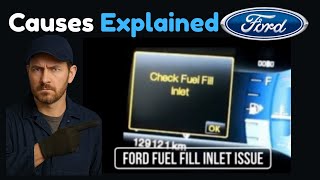
- Many Ford vehicles, including those with physical caps, may display a "Check Fuel Fill Inlet" message on the dashboard information center. 🎬 Watch: How to troubleshoot the 'Check Fuel Fill Inlet' message. This is a direct indicator that the system has failed a leak test originating at the filler neck.
- Replacing the EVAP purge valve or charcoal canister before thoroughly checking the fuel cap. As one owner on a Ford forum discovered, it's easy to replace multiple parts only to find the issue was simpler (or different) than expected. The cap is, by far, the most likely culprit for this specific code on this vehicle.
Most Likely Causes
- Loose or Improperly Installed Fuel Cap 🔴 High Probability Ford TSB SSM 51719 explicitly states this is a primary cause and that the cap 'requires multiple turns to seal properly.' This is the most common cause by a wide margin.
How to confirm: Remove the fuel cap, inspect it, and reinstall it by turning it clockwise until it clicks at least one or two times. Ford specifically advises this procedure. 🎬 See a walkthrough on fixing the P0457 fuel cap code.
Typical fix: Properly tighten the fuel cap. Clear the code and drive for a few days to allow the EVAP monitor to run and confirm the fix.
Est. part cost: $0 - Faulty or Worn Fuel Cap 🟡 Medium Probability The rubber O-ring seal on the cap can degrade over time, becoming hard or cracked. Additionally, the internal ratchet mechanism can fail, preventing it from applying proper torque even if it still clicks.
How to confirm: Visually inspect the rubber seal on the cap for cracks, stiffness, or deformities. If the cap feels loose or the top part of the cap can be wiggled independently from the threaded base, it is broken internally.
Typical fix: Replace the fuel cap with a new OEM (Motorcraft) part. Aftermarket caps are a common source of EVAP codes due to improper sealing.
Est. part cost: $25-$45 - Contamination on Fuel Filler Neck or Cap ⚪ Low Probability TSB SSM 51719 mentions that 'outside contamination on the fuel cap sealing surface' can prevent a proper seal. This is common on work vehicles like the E-350 that may operate in dusty or dirty environments.
How to confirm: Inspect the rim of the fuel filler neck and the cap's rubber seal for dirt, rust, or debris.
Typical fix: Wipe the fuel filler neck and the cap's seal clean with a lint-free rag.
Est. part cost: $0 - Faulty EVAP Canister Vent Valve/Solenoid ⚪ Low Probability
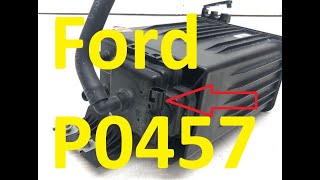
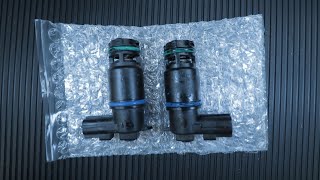
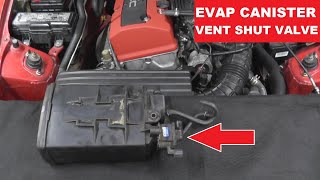
How to confirm: This component is normally open and closes to seal the system for testing. If it gets stuck open, it creates a large leak identical to a missing cap. Diagnosis typically requires a bi-directional scan tool to command the valve shut or a smoke machine to see if smoke escapes from it. 🎬 Watch: How to test and replace the EVAP vent valve.
Typical fix: Replace the canister vent valve assembly, which is often located on or near the charcoal canister by the fuel tank.
Est. part cost: $50-$100
Rare But Worth Checking
- Cracked or Disconnected EVAP Hose: A hose, especially near the charcoal canister or purge valve, can become brittle and crack. A specific failure noted by owners on platform-mates is a brittle plastic vent hose near the filler neck breaking off its fitting. This is usually found with a smoke test.
- Faulty EVAP Canister Purge Valve: This valve is located in the engine bay and is normally closed. If it sticks open, it can cause a leak, though it often triggers other codes as well.
- Damaged Fuel Filler Neck: Rust or physical damage to the filler neck can prevent even a new cap from sealing correctly. This is a common issue on older or high-mileage vehicles.
Diagnosis Steps
- Inspect the fuel cap. Remove it and check the rubber seal for cracks or damage.
- Clean any dirt or debris from the cap seal and the fuel filler neck.
- Reinstall the fuel cap. Per Ford TSB SSM 51719, 'Advise the customer to turn the fuel filler cap clockwise until there is at least one audible click to seal properly.' Hearing multiple clicks is good practice.
- Clear the code using an OBD-II scanner. The light may also turn off on its own after several drive cycles (which can take a few days) if the problem is resolved.
- If the code returns, replace the fuel cap with a genuine Motorcraft part (FC-1105). This is an inexpensive and very common fix that resolves the issue for the vast majority of owners.
- If the code persists with a new OEM cap, a visual inspection of the EVAP hoses for obvious cracks or disconnections is warranted. Pay close attention to the plastic hoses near the filler neck.
- The definitive next step is to have the EVAP system tested with a smoke machine. This will involve injecting low-pressure smoke into the system and watching where it escapes, pinpointing the exact location of the leak (e.g., vent solenoid, hose, or charcoal canister).
Parts You'll Likely Need
- Fuel Filler Cap
(OEM #LC3Z-9030-A)— This is the most common cause of P0457 on this vehicle, as confirmed by multiple Ford TSBs. The original cap's seal may be worn, the ratchet mechanism may be broken, or the user may not be tightening it correctly.
Trusted brands: Motorcraft (also sold under part number FC-1105)
OEM price range: $35-$50
Aftermarket price range: $15-$30
Related Codes That Often Appear With This One
- P0455 — P0455 indicates a 'Gross EVAP Leak'. P0457 is a more specific version that the PCM sets when its logic points to the fuel cap. TSB SSM 51719 confirms both codes can appear for the same fuel cap issue.
- P0456 — While P0457 indicates a large leak, a faulty cap seal can sometimes start as a small leak, triggering a P0456 ('Small EVAP Leak') code first.
Technical Service Bulletins (TSBs) & Recalls
- SSM 51719: Notes that P0457 may be caused by improper fuel filler cap installation or contamination.
- SSM 50977: Highlights that a loose fuel filler cap is a common cause for P0457 and that the cap design has changed.
Platform-Specific Known Issues
- TSB #SSM 51719: Ford states that on 2021-2023 F-Super Duty/E-Series with 6.2L, 6.8L, or 7.3L engines, P0457 and/or P0455 may be due to improper fuel filler cap installation or contamination. It explicitly advises to 'turn the fuel filler cap clockwise until there is at least one audible click to seal properly.' If the code returns, the TSB refers technicians to a specific pinpoint test in the workshop manual.
- TSB #SSM 50977: For 2021 models with 6.2L or 7.3L engines, Ford notes that P0457 can be caused by a loose fuel cap and that the cap design has changed, requiring multiple turns to seal properly.
Mechanic-Grade Diagnostic Values
- Fuel Tank Pressure (FTP) Sensor Voltage (Key On, Engine Off, fuel cap removed) — expected: 2.4V - 2.8V. Failure: A reading outside this range with the system open to atmosphere suggests a faulty sensor or wiring issue, not a physical leak. A static voltage of 2.6V to 2.65V is considered normal.
- EVAP Canister Vent Valve (CVS) Solenoid Coil Resistance — expected: 20 - 50 Ohms. Failure: A reading of infinite resistance (open circuit) or near-zero resistance (short circuit) indicates a failed solenoid coil.
- EVAP Canister Vent Valve (CVS) Solenoid Power Supply — expected: 12V+ (Battery Voltage) on one wire of the connector with Key On. Failure: No voltage indicates a problem with the power feed, likely a blown fuse or wiring issue. The PCM provides the ground to activate the solenoid.
- Fuel Tank Pressure (FTP) during automated leak test — expected: System is pulled to a vacuum of approximately -8.0 in-H2O, then monitored.. Failure: Failure to reach the target vacuum indicates a large leak (P0455/P0457). If pressure bleeds off too quickly after the test, it indicates a smaller leak.
Hidden / Shadow Codes Worth Checking
- Mode $06 Data: This is not a specific code, but a diagnostic mode that reveals the results of the PCM's non-continuous self-tests. For the EVAP system, it shows the raw pressure decay values from the last leak test. A technician can analyze this data to see if the system is passing or failing, and by how much, sometimes before a DTC is officially set. (see via Professional scan tool (like Ford IDS) or advanced consumer tools (like FORScan) with Mode $06 functionality.)
Scan Tool Commands That Help
- Ford IDS (or equivalent professional scanner): EVAP System Leak Test — This is the primary automated test used by dealers. It commands the vent solenoid closed, uses the purge valve to draw a vacuum, and monitors the FTP sensor to check for leaks. It's the definitive software-based test to run after a visual inspection and fuel cap check have been performed.
- Bidirectional Scan Tool (e.g., FORScan, Autel): Canister Vent (CV) Solenoid On/Off Command — This allows a technician to manually close the normally-open vent valve. It is used to confirm the solenoid is functional (you can hear it click) and to seal the system for a smoke test. If smoke escapes from the vent valve while it's commanded closed, the valve is faulty.
Wiring & Ground Locations
- Passenger Fuse Box, Fuse 22 — The passenger compartment fuse panel is located to the left of the brake pedal.. Fuse 22 (10A) is listed as powering 'Vehicle power 2', which includes the Canister Vent Solenoid. If the solenoid has no power, it cannot close to seal the system for a test, causing a large leak fault.
Real Owner Repair Stories
- Ford Truck Enthusiasts Forums (2012 Ford F-250 6.2L (Platform-mate)) — P0457 error code.
❌ Tried (didn't work) Replaced gas cap, Replaced charcoal canister, Replaced purge valve
✅ What actually fixed it Found a broken plastic vent hose near the fuel filler neck. The user repaired the connection with a piece of 5/16 inch fuel line, which resolved the code.
"I Checked Everything" — The Actual Cause
- A faulty Fuel Tank Pressure (FTP) sensor can cause a P0457 code even if the system is perfectly sealed. The sensor might provide an incorrect voltage reading to the PCM, making the computer believe there is a leak when there isn't one. This will pass a smoke test because there is no physical leak to be found. Diagnosis requires checking the FTP sensor's voltage with the system open to atmosphere (cap off) and comparing it to the specified range (e.g., 2.4V - 2.8V).
OEM Part Supersession History
7U5Z-9F945-D→9U5Z-9F945-C— Component revision for improved durability or performance. The TSB mentioning a 'design change' likely relates to the fuel cap, but EVAP components are also frequently updated.
Heads up: While multiple part numbers may fit, using the latest revision (9U5Z-9F945-C) is recommended for repairs on the Canister Vent Solenoid.
Helpful Videos
We Have This Part in Stock


The information in this article is provided for general reference and educational purposes only. Vehicle specifications, procedures, and part compatibility can vary by production date, trim level, and region. Always consult your vehicle's factory service manual and verify part numbers before purchasing or performing repairs. Safety-critical components such as airbags, seat belts, and braking systems should be installed by a qualified professional.
- Ford E-350:
- 🎬 Helpful Videos
- 🛍️ Shop This Part
- What's Unique About the 2021-2023 Ford E-350
- Diagnostic Flowchart
- Symptoms You May Notice
- Most Likely Causes
- Rare But Worth Checking
- Diagnosis Steps
- Parts You'll Likely Need
- Related Codes That Often Appear With This One
- Technical Service Bulletins (TSBs) & Recalls
- Platform-Specific Known Issues
- Mechanic-Grade Diagnostic Values
- Hidden / Shadow Codes Worth Checking
- Scan Tool Commands That Help
- Wiring & Ground Locations
- Real Owner Repair Stories
- "I Checked Everything" — The Actual Cause
- OEM Part Supersession History
- 🎟️ Get 5% Off