

P0457 on 2013-2017 Ford C-MAX: EVAP Leak Causes and Fixes
On a 2013-2017 Ford C-MAX, code P0457 is most often caused by a faulty canister purge valve, a known issue documented in Ford TSB 19-2207. Replacing the valve costs about $50-$70 for the part and is a common DIY fix. Before replacing parts, inspect and clean the capless fuel filler neck, as debris can also cause this code.
- For a 2013-2017 Ford C-MAX, P0457 is very likely caused by a bad canister purge valve, a known issue covered by Ford TSB 19-2207.
- Before replacing parts, always inspect and clean the capless fuel filler opening, as debris can prevent a proper seal and is a common, no-cost fix.
- The canister purge valve is a relatively inexpensive part ($50-$80) and is accessible for DIY replacement in the engine bay.
- This issue is also common on the 2013-2017 Ford Fusion Hybrid and Lincoln MKZ Hybrid, which share the same engine and EVAP components.
What's Unique About the 2013-2017 Ford C-MAX
Unlike many vehicles where P0457 points to a loose gas cap, the 2013-2017 Ford C-MAX has two highly specific and common failure points. First, it uses a capless fuel filler system, so the issue is often debris or a bad seal in the filler neck flap, not a traditional cap. More importantly, Ford issued Technical Service Bulletin (TSB) 19-2207, which directly links P0457 on these cars to a faulty canister purge valve with a poor internal seal, making it the primary suspect.
Diagnostic Flowchart
Tap your situation to follow the diagnostic path that matches what you're seeing on this vehicle.
Symptoms You May Notice
- Check Engine Light is on
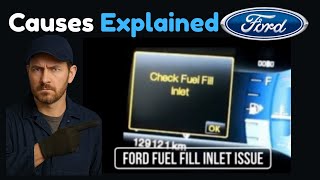
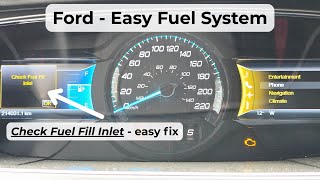
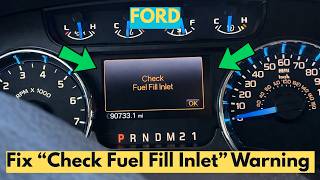
- A "Check Fuel Fill Inlet" message on the dashboard
- Fuel odor near the vehicle
- Difficulty starting the engine immediately after refueling
- A 'whoosh' sound of air rushing in when opening the fuel filler door
- Slightly reduced fuel economy
- Struggling to accelerate or a louder than normal engine sound during acceleration
- Replacing the fuel tank when the issue is a much cheaper component like the purge valve or filler neck.
- Assuming it's a 'loose gas cap' without realizing the vehicle has a capless system that requires a different diagnostic approach of cleaning and inspection.
- Replacing the canister vent solenoid when the more common failure point on this platform is the purge valve in the engine bay.
Most Likely Causes
- Faulty Canister Purge Valve 🔴 High Probability Ford TSB 19-2207 explicitly identifies a canister purge valve with poor sealing capability as the cause for P0457 and related codes on this exact vehicle and its platform mates (Fusion/MKZ Hybrid). The valve fails by sticking open, allowing un-commanded vacuum from the intake manifold into the fuel tank.
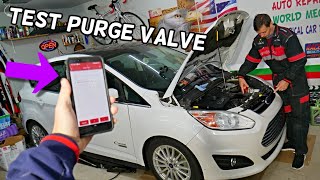
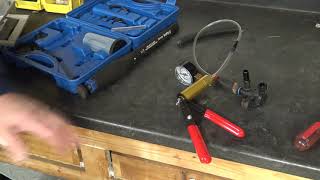
How to confirm: With the engine idling, disconnect the electrical connector and the EVAP hose from the purge valve. Place your finger over the valve's port where the hose was connected. If you feel any suction, the valve is stuck open and is faulty. A properly functioning valve should be completely closed 🎬 Watch: How to test the purge control valve solenoid yourself. with the engine running at idle and no command from the PCM.
Typical fix: Replace the canister purge valve. The TSB also recommends a PCM software update to be performed by a dealer or qualified shop to optimize the EVAP monitor strategy.
Est. part cost: $50-$80 - Debris or Faulty Seal in Capless Fuel Filler Neck 🟡 Medium Probability The C-MAX uses a capless fuel system. Instead of a cap, a spring-loaded door with a seal is used. Dirt, dust, or wear on this seal can prevent it from closing properly, causing a large EVAP leak that the system interprets as a loose cap.
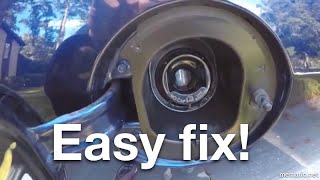
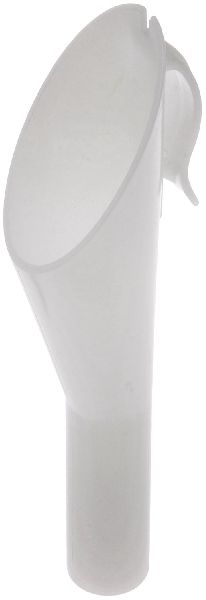
How to confirm: Visually inspect the fuel filler opening for any debris that may be holding the flap open. Use the emergency fuel funnel (usually located with the spare tire tools) to open and close the flap a few times to check for smooth operation. Clean the opening and the seal with a clean cloth and a small amount of carburetor cleaner or WD-40.
Typical fix: Thoroughly clean the fuel filler opening and seal. If cleaning doesn't resolve the issue or the seal is visibly damaged or cracked, the entire fuel filler neck assembly must be replaced.
Est. part cost: $150-$250 - Cracked or Disconnected EVAP Hose ⚪ Low Probability While not specific to this platform, plastic and rubber EVAP lines can become brittle over time and crack or break, especially at connection points.
How to confirm: A visual inspection may reveal an obviously cracked or disconnected hose, particularly around the purge valve in the engine bay or near the charcoal canister under the car. However, smaller cracks are best found using a smoke machine, which forces smoke into the EVAP system to reveal the location of any leaks.
Typical fix: Replace the damaged section of the hose. In some cases, a broken plastic nipple can be repaired with a section of rubber fuel line.
Est. part cost: $10-$50
Rare But Worth Checking
- Faulty EVAP Canister Vent Solenoid: This valve, typically located on or near the charcoal canister under the vehicle, can get stuck open, causing a large leak code. It's a common failure point on many vehicles, though less so than the purge valve on this specific C-MAX.
- Cracked Charcoal Canister: Physical damage to the plastic housing of the charcoal canister can cause a large leak, though this is uncommon without evidence of an underbody impact.
- Faulty Fuel Tank Pressure Sensor: In rare cases, the sensor that measures fuel tank pressure can fail and provide incorrect readings to the PCM, falsely triggering a leak code when no leak exists.
Diagnosis Steps
- Read the trouble codes with an OBD-II scanner and note any other codes present, especially P1450, P0456, P04EE, or P04EF.
- Carefully inspect the capless fuel filler opening. Use the white plastic emergency funnel to work the flap. Clean any dirt or debris from the seal and flap with a clean rag and a small amount of carb cleaner.
- Clear the codes and drive the vehicle for a few days to see if the light returns. If it does, proceed to the next step.
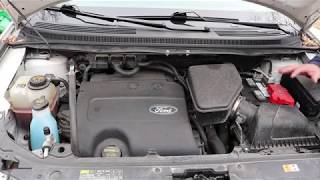
- Locate the canister purge valve in the engine bay. It's a small black valve with two hoses and an electrical connector, often mounted near the intake manifold.
- Test the purge valve. With the engine idling, disconnect the electrical connector from the valve, then disconnect the hose that runs back towards the fuel tank. Place your finger on the port; if you feel any vacuum suction, the valve is stuck open and must be replaced.
- If the purge valve test passes, visually inspect all accessible EVAP hoses for cracks or disconnection.
- If no obvious issues are found, the next step is a professional smoke test to check for leaks in the EVAP hoses, charcoal canister, or vent solenoid.
Parts You'll Likely Need
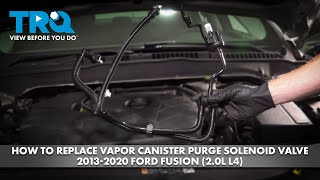
- Canister Purge Valve
(OEM #AU5Z-9C915-B)— This is the most common cause of P0457 on this vehicle, as identified by Ford in TSB 19-2207. This part number has been superseded by AU5Z-9C915-E. The Motorcraft service part number is CX-2409.
Trusted brands: Motorcraft, Dorman, Standard Motor Products
OEM price range: $60-$80
Aftermarket price range: $45-$65 - Fuel Tank Filler Neck
(OEM #FV6Z-9034-D)— If the seal in the capless system is damaged, worn, or fails to seal after cleaning, the entire filler neck assembly must be replaced. This part includes the metal pipe and the integrated capless valve mechanism. This part number supersedes FV6Z-9034-A and FV6Z-9034-C.
Trusted brands: Ford (OEM)
OEM price range: $225-$275
Aftermarket price range: $100-$180
Related Codes That Often Appear With This One
- P1450 — This code for 'Unable to Bleed Up Fuel Tank Vacuum' is specifically mentioned in TSB 19-2207 as being caused by the same faulty canister purge valve sticking open. It is the most common companion code.
- P0456 — This code for a 'Small EVAP Leak' is also listed in TSB 19-2207 and can be triggered by the same failing purge valve.
- P0455 — This is a general code for a 'Gross EVAP Leak'. P0457 is a more specific version of this code that is triggered after a refueling event, and they can appear together.
- P04EE / P04EF — These codes point to purge valve performance issues and are also cited in TSB 19-2207 as being related to the same faulty part.
Technical Service Bulletins (TSBs) & Recalls
- TSB 19-2207: Addresses an illuminated MIL with DTCs P1450, P0456, P0457, P04EE, and/or P04EF due to the poor sealing capability of the canister purge valve. The fix involves replacing the canister purge valve (Part No. AU5Z-9C915-D in the TSB, which is an older revision) and updating the PCM software.
Platform-Specific Known Issues
- TSB 19-2207 was issued by Ford due to the high failure rate of the canister purge valve's internal seal on 2013-2017 C-MAX, Fusion, and MKZ hybrid models, directly causing code P0457 among others.
Mechanic-Grade Diagnostic Values
- Fuel Tank Pressure (FTP) Sensor Voltage (Key On, Engine Off) — expected: 2.6V to 2.65V. Failure: A significant deviation from this range at atmospheric pressure can indicate a faulty sensor. If the voltage drops immediately upon starting the engine, it suggests a purge valve stuck open.
- EVAP Canister Vent Valve Solenoid Resistance — expected: 12 - 80 Ohms. Failure: A reading outside this range indicates a faulty solenoid coil.
Hidden / Shadow Codes Worth Checking
- Mode $06, Test ID $3C: This monitor ID in a generic OBD-II scanner's Mode $06 data corresponds to the Engine-Off Natural Vacuum (EONV) EVAP monitor test results. Specific component IDs under this monitor (like $81, $82, $83) show the results for positive and negative pressure tests, which can help determine if a leak is present without waiting for the full monitor to run and set a code. (see via An OBD-II scanner capable of displaying Mode $06 data.)
Scan Tool Commands That Help
- Ford IDS, FORScan, or other advanced bidirectional scanner: EVAP System Test — This is a guided diagnostic function that commands the purge and vent solenoids to seal the system, pulls a vacuum, and monitors the fuel tank pressure sensor to check for leaks. It's the factory-prescribed way to verify the integrity of the entire system after a repair.
- Ford IDS, FORScan, or other advanced bidirectional scanner: Manually command Canister Purge Valve (CPV) OFF and Canister Vent Valve (CVV) ON (closed). — With the engine running, command the purge valve off and the vent valve closed. Then, monitor the Fuel Tank Pressure (FTP) sensor PID. If the pressure/vacuum value begins to drop (indicating vacuum is building), it proves the purge valve is mechanically stuck open, as it's pulling vacuum when commanded off.
Wiring & Ground Locations
- Ground Connection Point near Fuse Box — Located to the right of the battery, near the engine compartment fuse box.. The EVAP canister purge valve and other related solenoids require a solid ground connection to function. A corroded or loose ground at this primary engine bay location can cause intermittent or failed operation of EVAP components, leading to fault codes.
- G200 / G201 — Located in the left kick panel area, inside the passenger cabin.. These are major body ground points. While less likely to be the primary cause for an engine bay component fault, they are part of the overall ground distribution circuit that could affect the Powertrain Control Module's (PCM) sensing and control of the EVAP system.
Real Owner Repair Stories
- YouTube video demonstrating a fix (Ford C-MAX (year not specified, but applies to capless system)) — Water was not draining from the fuel filler area.
✅ What actually fixed it The drain hole in the plastic housing around the fuel filler neck was clogged. The owner used a long, flexible wire (20-30cm) to poke through the drain hole and clear the blockage, allowing water to drain properly. This prevents debris buildup and potential corrosion around the filler neck seal, which can cause EVAP leaks.
OEM Part Supersession History
AU5Z-9C915-A, AU5Z-9C915-B, AU5Z-9C915-C, AU5Z-9C915-D→AU5Z-9C915-E— Ford iteratively improved the part to address the sealing capability issues identified in TSB 19-2207. The -E revision is the latest and most robust version.
Heads up: All previous versions are compatible but are considered inferior to the latest AU5Z-9C915-E part. When replacing, always use the latest revision.
Helpful Videos



Used OEM Parts in Stock
New Aftermarket Parts Available


The information in this article is provided for general reference and educational purposes only. Vehicle specifications, procedures, and part compatibility can vary by production date, trim level, and region. Always consult your vehicle's factory service manual and verify part numbers before purchasing or performing repairs. Safety-critical components such as airbags, seat belts, and braking systems should be installed by a qualified professional.
- Ford C-MAX:
- 🎬 Helpful Videos
- 🛍️ Shop This Part
- What's Unique About the 2013-2017 Ford C-MAX
- Diagnostic Flowchart
- Symptoms You May Notice
- Most Likely Causes
- Rare But Worth Checking
- Diagnosis Steps
- Parts You'll Likely Need
- Related Codes That Often Appear With This One
- Technical Service Bulletins (TSBs) & Recalls
- Platform-Specific Known Issues
- Mechanic-Grade Diagnostic Values
- Hidden / Shadow Codes Worth Checking
- Scan Tool Commands That Help
- Wiring & Ground Locations
- Real Owner Repair Stories
- OEM Part Supersession History
- 🎟️ Get 5% Off