

P0456 on 2013-2015 Volkswagen Jetta Hybrid: Causes and Fixes for a Small EVAP Leak
The P0456 code on a 2013-2015 VW Jetta Hybrid indicates a very small leak in the evaporative emissions system. The most common fixes are tightening or replacing the gas cap, or replacing the EVAP purge valve (N80). A gas cap costs around $20-$50, while a purge valve can range from $30 to $100. On this specific Jetta Hybrid, the N80 valve is difficult to access as it's located under the intake manifold, making replacement more labor-intensive.
- P0456 is a minor issue, indicating a very small leak in the emissions system; your car is safe to drive.
- Always start with the simplest fix: check that your gas cap is tight and its seal is not cracked. This resolves the issue in many cases.
- The second most likely culprit on the Jetta Hybrid is the N80 EVAP purge valve, which is a known issue for this engine but is difficult to access.
- If simple checks don't work, a smoke test performed by a mechanic is the most reliable way to find the exact source of the leak.
What's Unique About the 2013-2015 Volkswagen JETTA HYBRID
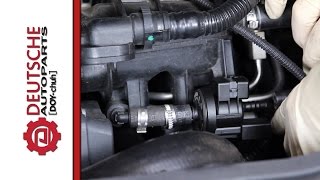
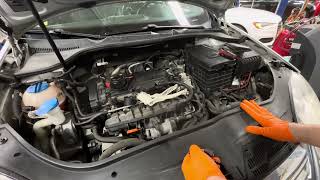
 🎬 Watch: How to replace the purge valve on a 1.4L Jetta" loading="eager" fetchpriority="high" style="max-width:100%;height:auto;border-radius:6px;display:block;box-shadow:0 2px 8px rgba(0,0,0,0.1);" />
The 2013-2015 Jetta Hybrid uses the 1.4L turbocharged engine (Engine Code: CNLA) from the EA211 family. On this specific platform, Volkswagen issued a Tech Tip (01-19-06) acknowledging that the EVAP Canister Purge Valve (N80) is a common failure point for this code and is difficult to access as it's located under the intake manifold. This makes diagnosis and replacement more involved and costly than on other Jetta engines (like the 2.5L) where the valve is often easily accessible in the engine bay.
Diagnostic Flowchart

Tap your situation to follow the diagnostic path that matches what you're seeing on this vehicle.
Symptoms You May Notice
- Check Engine Light is on.
- A faint smell of fuel, particularly around the gas cap area or outside the vehicle.
- Difficulty starting the engine immediately after refueling (a classic sign of a stuck-open purge valve).
- Slightly rough or unstable idle.
- Gas pump nozzle clicks off repeatedly when trying to fill the tank (less common, but can indicate a canister or vent issue).
- Replacing the oxygen (O2) sensors. O2 sensors are not part of the EVAP system and will not cause a P0456 code.
- Replacing the fuel injectors. While fuel-related, injectors are not part of the sealed EVAP system.
Most Likely Causes

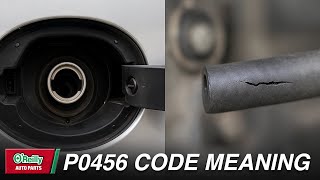
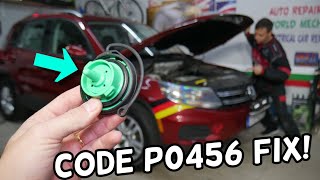
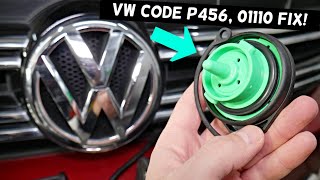
- Loose or Faulty Gas Cap 🔴 High Probability The gas cap seal is a simple rubber O-ring that can crack, harden, or get dirty over time, preventing a proper seal. It's the most common and easiest-to-fix cause for any EVAP leak code. Even not tightening it until it clicks can trigger the code.
How to confirm: Inspect the gas cap's rubber seal for any visible cracks, tears, or debris. Ensure the cap is tightened until it clicks at least once. If the tether gets caught under the cap, it can also prevent a seal. An aftermarket cap may also not seal correctly.
Typical fix: Clean the seal and filler neck, then tighten the cap properly. If the seal is damaged, replace the entire gas cap with a new OEM or high-quality aftermarket part. After replacement, the code may clear on its own after several drive cycles.
Est. part cost: $20-$50 - Faulty EVAP Purge Valve (N80) 🔴 High Probability The N80 valve can get stuck partially open, creating a small, persistent leak. VW has issued a Tech Tip (01-19-06, Transaction #2056714) specifically for the 1.4T engine in this Jetta, outlining a test procedure for this valve due to its frequent failure. A stuck-open valve allows un-metered fuel vapors into the intake, which can cause rough idle and hard starting after refueling.
How to confirm: A diagnostic test involves checking for vacuum at the valve when it's commanded closed; any vacuum indicates a leak. A simple DIY test is to remove the valve and try to blow through it; if air passes, it's faulty. A professional will use a smoke machine.
Typical fix: Replace the N80 purge valve. On the 1.4T Hybrid engine, this valve is located under the intake manifold, making replacement a 2-3 hour labor job for a professional.
Est. part cost: $30-$100 - Cracked or Disconnected EVAP Hoses 🟡 Medium Probability The plastic and rubber hoses in the EVAP system can become brittle and crack over time due to heat and age. A corrugated plastic hose connected to the N80 valve is a known weak point on some modern VW models and can develop hairline cracks.
How to confirm: A visual inspection may reveal obvious cracks or loose connections. The most definitive method is a smoke test, where a mechanic fills the EVAP system with vaporized smoke to see where it escapes. Tiny cracks may be invisible without a smoke test.
Typical fix: Replace the specific section of cracked or broken hose. Sometimes the hose is part of a larger, more expensive assembly that includes the N80 valve.
Est. part cost: $20-$150 - Faulty Leak Detection Pump (LDP) ⚪ Low Probability The LDP is responsible for pressurizing the system to test for leaks. While it can fail, it's less common for a P0456 code than the gas cap or N80 valve. Failure of the LDP often triggers other specific codes related to the pump's circuit or performance (like P2402).
How to confirm: Diagnosis requires a capable scan tool to command the pump on and check its function. The pump is typically located in the passenger side rear wheel well area, requiring removal of the fender liner for access.
Typical fix: Replace the leak detection pump. This involves removing the rear wheel and fender liner for access.
Est. part cost: $100-$250
Rare But Worth Checking
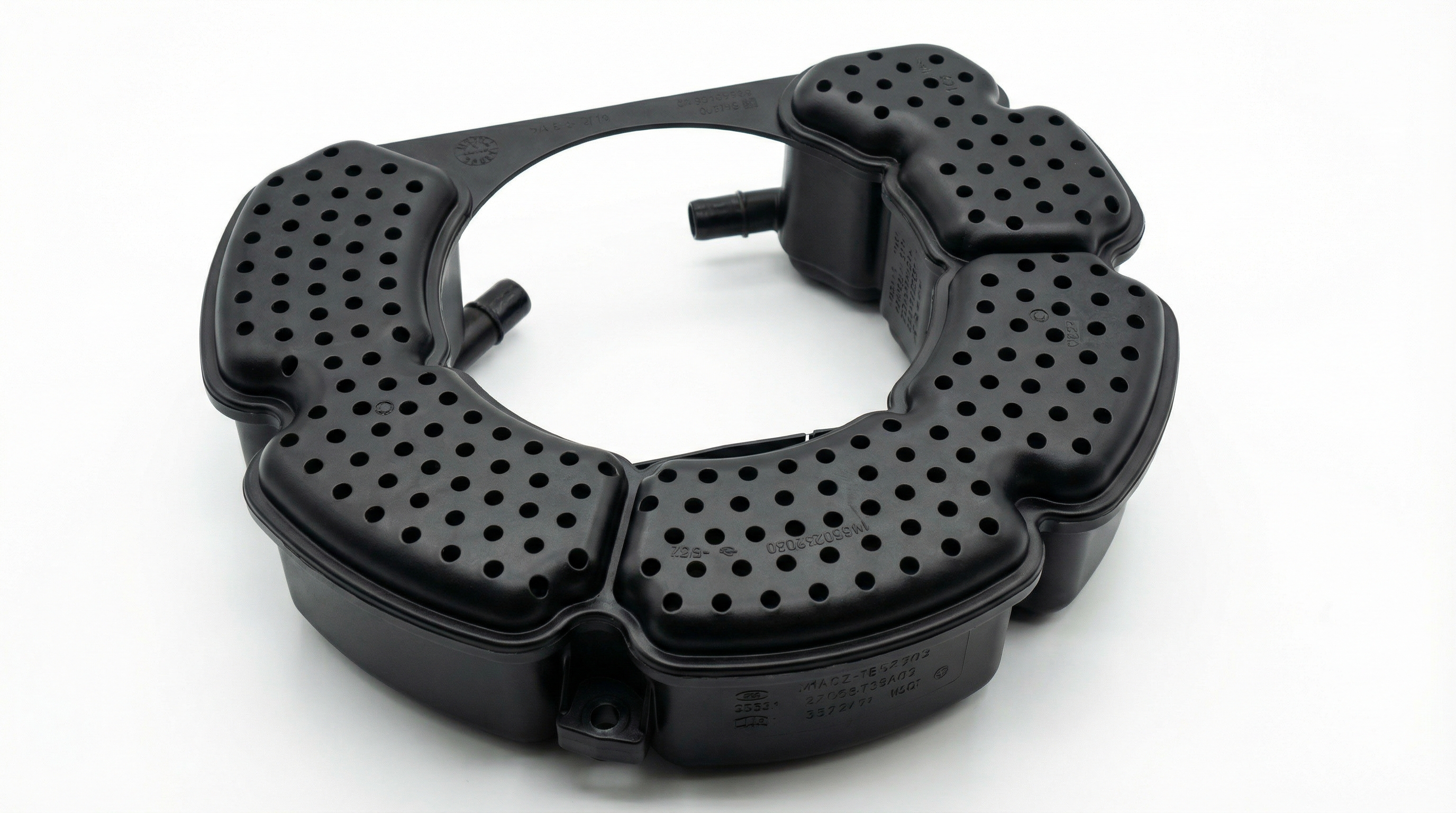
- Cracked Charcoal Canister: The charcoal canister holds the fuel vapors. A physical crack in its plastic housing can cause a leak, though this is uncommon without physical damage to the undercarriage. A failed canister can also cause issues with refueling.
- Leaking Fuel Tank Filler Neck: Corrosion or damage to the metal pipe leading to the gas tank can cause a leak that is difficult to spot without a smoke test. This is more common in areas with heavy road salt usage.
Diagnosis Steps
- Read the code with an OBD-II scanner to confirm P0456 is the primary code. Note any other codes present.
- Inspect the gas cap. Remove it, check the rubber seal for cracks or debris, and clean it. Reinstall it, ensuring it clicks several times. Many owners report fixing the issue with a new OEM gas cap.
- Clear the code with the scanner and drive for a few days to see if the light returns. The EVAP monitor runs under specific conditions (e.g., steady speed, specific fuel level), so it may take time.
- If the light returns, perform a thorough visual inspection of all accessible EVAP hoses in the engine bay for obvious cracks or disconnections. Pay attention to corrugated plastic lines.
- If no obvious issues are found, the next step is to test the N80 purge valve. This can be done by checking for vacuum when it's closed, as outlined in VW Tech Tip 01-19-06. A scan tool like VCDS can be used to run an EVAP system test.
- If the N80 valve is good and no visual leaks are found, the most effective next step is a professional smoke test. This will pressurize the system with smoke and reveal the exact location of the small leak, which could be a tiny hose crack or a faulty canister.
Parts You'll Likely Need

- Fuel Cap
(OEM #1K0-201-550-F (or 5C0201550E))— This is the most frequent cause of a P0456 code. The seal fails over time, causing a small leak that the system detects. It's the cheapest and easiest part to replace first.
Trusted brands: Volkswagen (OEM), Stant, Gates
OEM price range: $30-$50
Aftermarket price range: $15-$30 - EVAP Canister Purge Valve (N80)
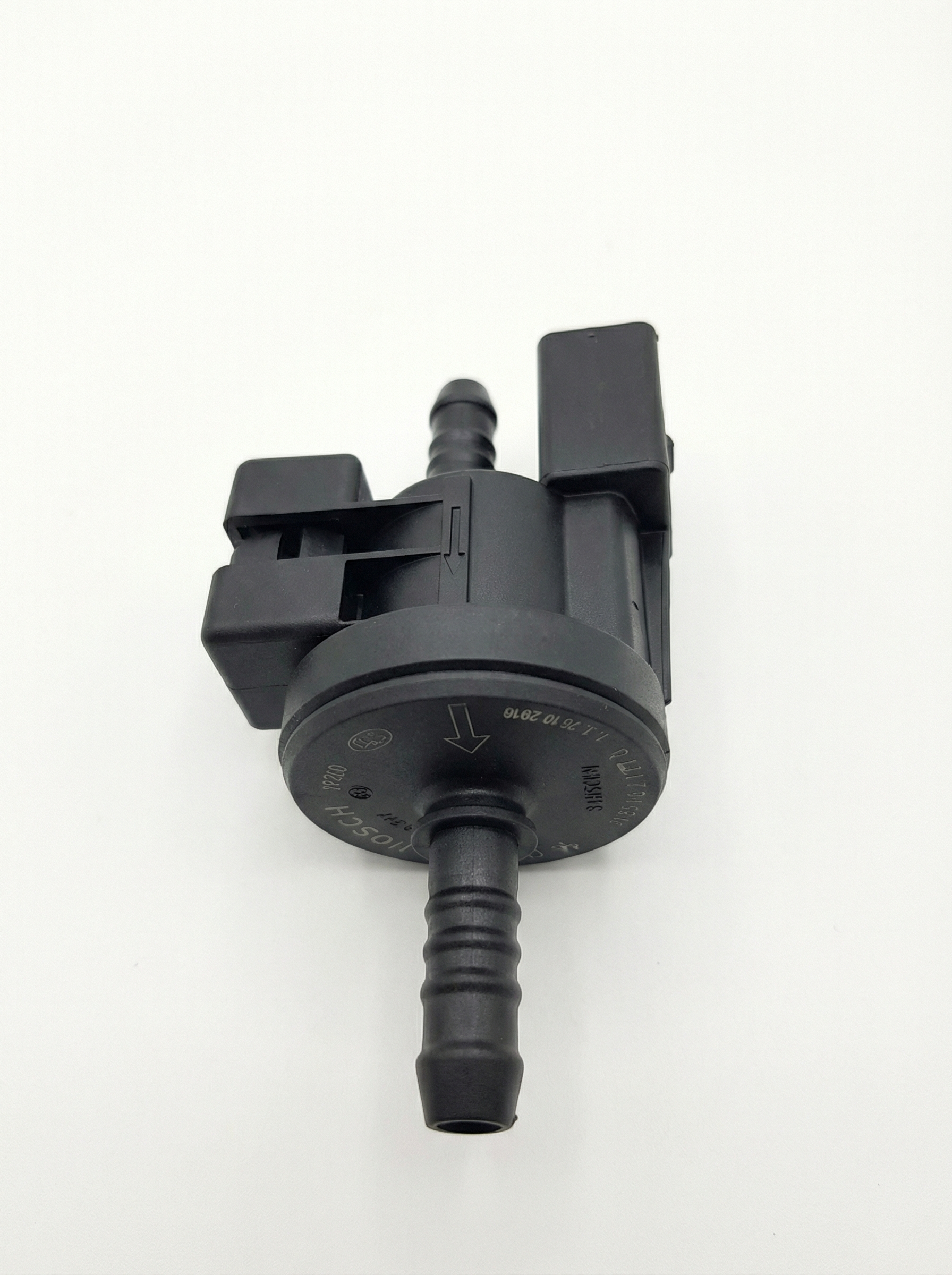
(OEM #04E906517A)— This valve is a known failure point on the 1.4T engine, causing it to stick open and create a leak. VW has issued a specific Tech Tip for testing this part. Its location under the intake manifold makes replacement labor-intensive.
Trusted brands: Bosch (OEM supplier), Volkswagen (OEM)
OEM price range: $70-$120
Aftermarket price range: $30-$80 - Leak Detection Pump (LDP)
(OEM #7L0906243A)— If the gas cap and purge valve are confirmed to be working correctly, the LDP is the next most likely electronic component to fail, though it's less common for this specific code.
Trusted brands: Bosch, Dorman, Genuine VW
OEM price range: $150-$250
Aftermarket price range: $60-$150
Related Codes That Often Appear With This One
- P0441 — This code for 'Incorrect Purge Flow' often appears with P0456 when the N80 purge valve is failing, as it can both leak (P0456) and fail to flow correctly when commanded (P0441).
- P2181 — The provided NHTSA TSB for the Jetta Hybrid lists P2181 ('Cooling System Performance') alongside P0456. While not directly related in function, it indicates that multiple faults can be logged simultaneously during a dealer visit. [Bulletin #VIN-4-A-PIN APRI]
- P0300 — A random misfire code (P0300) can sometimes accompany a P0456 if the leaking N80 valve is causing a significant vacuum leak, disrupting the air/fuel mixture enough to cause misfires.
Technical Service Bulletins (TSBs) & Recalls
- VIN-4-A-PIN APRI: Mentions P0456 as one of several potential customer complaints logged in the ECU, alongside issues like fuel gauge problems and cooling system faults.
- TT 01-19-06 (Transaction #2056714): Provides a detailed procedure for testing the N80 purge valve on 2013-2019 Jettas with the 1.4T engine, acknowledging it is a common failure point and is difficult to access.
Platform-Specific Known Issues
- NHTSA Technical Service Bulletin #VIN-4-A-PIN APRI for the 2013-2015 Jetta Hybrid notes that the P0456 code can be present along with other unrelated faults like P2181 (Cooling System) and fuel gauge issues, indicating a pattern of multiple stored codes found during diagnostics.
- Volkswagen Tech Tip 01-19-06 (Transaction #2056714) was released for the 1.4T engine (CNLA) used in this vehicle, providing a specific diagnostic procedure for a leaking N80 purge valve, which is a common cause for P0456.
Mechanic-Grade Diagnostic Values
- N80 Purge Valve (04E906517A) electrical resistance — expected: 15 to 25 Ohms. Failure: A reading outside this range indicates a faulty coil in the valve.
- N80 Purge Valve mechanical seal test — expected: Should hold vacuum when disconnected and not energized.. Failure: If a handheld vacuum pump is attached and it cannot hold vacuum, the valve is stuck open and leaking.
- N80 Purge Valve connector voltage — expected: Pin 1 should show battery voltage (~12V) with the key on, engine off.. Failure: No voltage suggests a wiring or fuse issue upstream of the valve.
Hidden / Shadow Codes Worth Checking
- 01110: This is the VAG-specific (Volkswagen/Audi Group) fault code that directly corresponds to the generic OBD-II code P0456, 'EVAP System: Very Small Leak Detected'. (see via This code will be displayed when scanning the vehicle with a VW-specific diagnostic tool like VCDS (VAG-COM) or ODIS.)
Scan Tool Commands That Help
- VCDS (VAG-COM): Basic Settings - Group 071 — On older control modules, this command initiates the EVAP system leak test. This forces the system to run its self-test without needing to perform a full drive cycle, allowing for quicker verification of a repair.
- VCDS (VAG-COM): Basic Settings - IDE00744 (EVAP Valve test) — On newer UDS-protocol control modules, this specific, named test can be run to check the function of the N80 purge valve directly.
Wiring & Ground Locations
- Leak Detection Pump (LDP) — Located in the right rear wheel well, near the fuel filler door area.. This is a key component of the EVAP system. Knowing its location is critical for inspection and replacement if it is suspected of failing.
- G12 — Ground connection located on the lower left side of the engine compartment.. A poor ground at this location could potentially affect various engine sensors and actuators, including those in the EVAP system.
- G44 — Ground connection located at the lower left 'A' pillar.. This is a major chassis ground point. A loose or corroded connection here can cause a wide range of difficult-to-diagnose electrical issues.
Real Owner Repair Stories
- YouTube user on a 2017 VW Jetta 1.4T (2017 Volkswagen Jetta S 1.4T (non-hybrid, but similar engine family)) — Intermittent P0456 check engine light.
❌ Tried (didn't work) Initial research did not immediately point to the cause.
✅ What actually fixed it A smoke test revealed a small crack in the corrugated plastic hose leading to the EVAP purge valve. The user noted the correct fix is to replace the hose assembly (P/N 04E133366CQ), but they performed a temporary repair with sealant.
OEM Part Supersession History
1K0-201-550-AE→1K0-201-550-F— Updated part design or material for better sealing and longevity.
Heads up: The new part number is a direct replacement for the old one. Using the latest revision is recommended to prevent repeat failures.
Helpful Videos
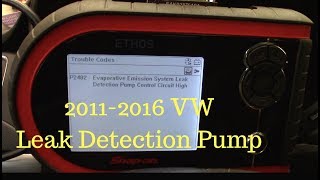
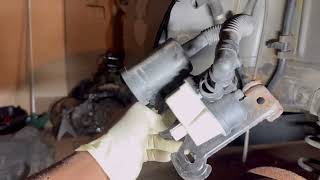
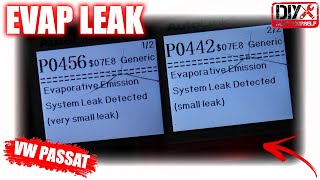
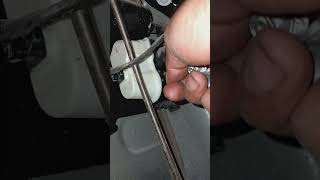
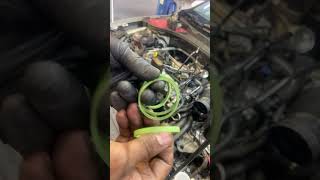
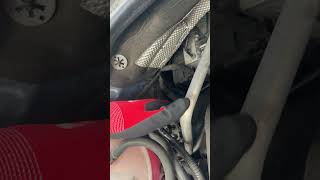
Used OEM Parts in Stock
New Aftermarket Parts Available


The information in this article is provided for general reference and educational purposes only. Vehicle specifications, procedures, and part compatibility can vary by production date, trim level, and region. Always consult your vehicle's factory service manual and verify part numbers before purchasing or performing repairs. Safety-critical components such as airbags, seat belts, and braking systems should be installed by a qualified professional.
- Volkswagen JETTA HYBRID:
- 🎬 Helpful Videos
- 🛍️ Shop This Part
- What's Unique About the 2013-2015 Volkswagen JETTA HYBRID
- Diagnostic Flowchart
- Symptoms You May Notice
- Most Likely Causes
- Rare But Worth Checking
- Diagnosis Steps
- Parts You'll Likely Need
- Related Codes That Often Appear With This One
- Technical Service Bulletins (TSBs) & Recalls
- Platform-Specific Known Issues
- Mechanic-Grade Diagnostic Values
- Hidden / Shadow Codes Worth Checking
- Scan Tool Commands That Help
- Wiring & Ground Locations
- Real Owner Repair Stories
- OEM Part Supersession History
- 🎟️ Get 5% Off