

P0456 on 2010-2017 Volkswagen Golf: Causes and Fixes for a Very Small EVAP Leak
For a 2010-2017 VW Golf, code P0456 is most often caused by a loose or faulty gas cap, or a failing EVAP purge valve (N80). Checking the gas cap first is a simple, no-cost step. If the code returns, the N80 valve is the next most likely culprit and a very common failure item on this platform.
- P0456 signifies a very small leak in the fuel vapor (EVAP) system.
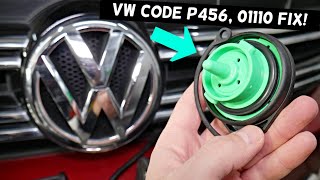
- Always start with the simplest and most common fix: inspect and tighten the gas cap. If the seal is cracked or worn, replace it with an OEM part.
- If the gas cap doesn't solve the problem, the EVAP Purge Valve (N80) is the next most likely cause on a VW Golf and is a common DIY replacement.
- The Check Engine Light is the primary symptom; the code does not indicate an immediate mechanical danger, but the car will not pass an emissions test.
- For leaks that are not obvious, a smoke test performed by a professional is the fastest way to find the source and avoid replacing unnecessary parts.
What's Unique About the 2010-2017 Volkswagen GOLF

On VW Golf models from this era, the P0456 code is exceptionally common. While the gas cap is a universal weak point for all cars, VWs are particularly known for issues with the EVAP Purge Valve, commonly referred to as the N80 valve. Many owners on forums like VWVortex and GolfMK6.com report replacing the gas cap, only to have the code return, ultimately tracing the issue to the N80 valve. The vehicle range also covers two distinct generations, the Mk6 (PQ35 platform) and Mk7 (MQB platform), which use different platforms and have some variations in component design and location, though the failure patterns are similar.
Diagnostic Flowchart

Tap your situation to follow the diagnostic path that matches what you're seeing on this vehicle.
Generation note: This range covers the Volkswagen Golf Mk6 (2010-2014) and Mk7 (2015-2017). The Mk7 is built on the newer MQB platform and features a more advanced engine and electronics. While the principles of the EVAP system are the same, the exact part numbers and locations for components like the purge valve (N80) and leak detection pump may differ. For example, the N80 valve on some Mk6 2.0T engines is a more complex assembly with integrated hoses. However, the common causes and diagnostic approach for P0456 are largely identical for both generations.
Symptoms You May Notice

- Check Engine Light is on.
- A faint fuel smell, particularly around the outside of the car (in some cases).
- Difficulty starting the engine immediately after refueling (a classic sign of a stuck-open purge valve).
- A 'Check Gas Cap' message may appear on the instrument cluster before the Check Engine Light illuminates.
- Difficulty filling the fuel tank, where the pump nozzle clicks off repeatedly.
- Replacing the N80 purge valve when the actual problem is a simple loose or bad gas cap.
- Replacing other EVAP components without first performing a smoke test to confirm the leak's location, leading to unnecessary expense. Some forum users have reported that even a smoke test can fail to find a very small leak.
- Confusing the N80 valve with other nearby components. On some Mk6 models, a part of the activated charcoal filter system is located prominently on the engine and is often mistaken for the N80 valve, which is located lower down, near the intake manifold.
Most Likely Causes

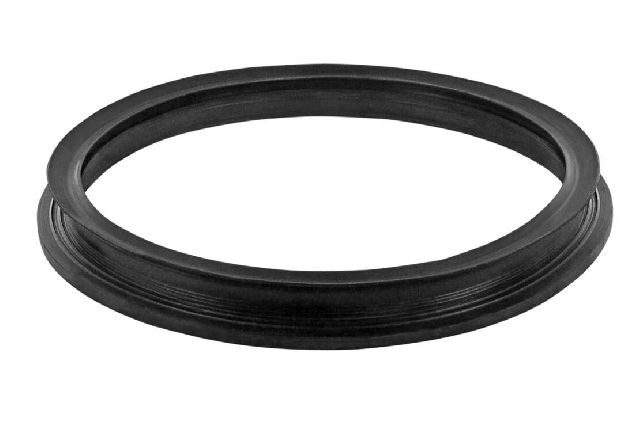
- Loose or Faulty Gas Cap 🔴 High Probability The gas cap seal is made of rubber that can crack and degrade over time from exposure to fuel and weather, preventing a proper seal. This is the most common and easiest fix for P0456. Many owners report that aftermarket caps fail to seal properly, making an OEM cap the recommended replacement.
How to confirm: Remove the gas cap and inspect the rubber O-ring for any visible cracks, stiffness, or damage. Ensure the cap clicks several times when tightened. A user on GOLFMKV.com noted a small tear in the rubber ring was the cause of their P0456 code.
Typical fix: Replace the gas cap. It is highly recommended to use an OEM (Original Equipment Manufacturer) cap from VW, as some aftermarket caps may not seal correctly and can cause the code to persist.
Est. part cost: $25-$50 - Faulty EVAP Purge Valve (N80 Valve) 🔴 High Probability This solenoid valve is a known high-failure part on many Volkswagen/Audi models. It can get stuck slightly open due to internal wear or carbon debris from the charcoal canister, creating a small, persistent leak that the system detects.
How to confirm: With the engine running at idle, you can often feel or hear the valve rhythmically ticking. A more definitive test is to remove the valve and, with it disconnected from power, try to blow through it or pull a vacuum on it. It should be closed and not allow air/vacuum to pass. If it leaks, it's faulty. Advanced scan tools like VCDS can also run an output test to check its function.
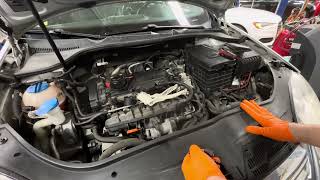
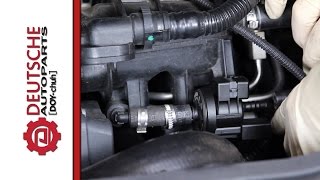
Typical fix: Replace the N80 purge valve. This part is typically located in the engine bay and is relatively easy to access, though on some Mk6 2.0T engines it is a more involved assembly under the intake manifold. 🎬 Watch this DIY walkthrough for replacing the 2.0T N80 valve.
Est. part cost: $30-$120 - Cracked or Disconnected EVAP Hoses 🟡 Medium Probability The plastic and rubber hoses in the EVAP system, especially those in the hot engine bay, can become brittle and crack over time.
How to confirm: A visual inspection may reveal obvious cracks or disconnections. However, very small leaks are difficult to see. The most effective method is to have a professional perform a smoke test, which fills the EVAP system with a harmless, visible smoke to pinpoint the exact location of the leak. 🎬 See how a smoke machine finds hidden EVAP leaks.
Typical fix: Replace the damaged section of hose. In some cases, the hose may be part of a larger, pre-molded assembly.
Est. part cost: $20-$80 - Faulty Leak Detection Pump (LDP) ⚪ Low Probability The LDP is the component that pressurizes the system for the leak test. If the pump itself has an internal leak or is malfunctioning, it can trigger a leak code. While less common than the N80 valve, it is a potential failure point.
How to confirm: This usually requires a smoke test to confirm the pump itself is leaking. Advanced diagnostics with a scan tool like VCDS can run specific tests on the LDP circuit (e.g., Basic Settings Group 71).
Typical fix: Replace the Leak Detection Pump. An Audi TSB for a similar platform suggests this as a fix if other components check out.
Est. part cost: $100-$250
Rare But Worth Checking
- Cracked Charcoal Canister: The plastic housing of the charcoal canister can develop hairline cracks, creating a leak. Shaking the canister may reveal a rattling sound, indicating broken internal components. Tapping the N80 valve on paper and seeing black carbon particles is another sign the canister is failing.
- Leaking Fuel Tank or Filler Neck: While rare, rust or physical damage can cause a small perforation in the fuel tank or the filler neck, leading to a P0456 code. This is a more serious issue that is typically identified during a smoke test.
- Faulty Fuel Tank Pressure (FTP) Sensor: The FTP sensor monitors pressure in the EVAP system. If it provides incorrect readings to the ECU, the computer may falsely believe there is a leak. This can sometimes trigger P0456 without an actual physical leak being present.
Diagnosis Steps
- Read the code with an OBD-II scanner to confirm P0456 is present.
- Inspect the gas cap. Ensure it is tight. Remove it and check the rubber seal for cracks or wear. If in doubt, replace it with an OEM part, clear the code, and drive for a few days to see if it returns.
- Visually inspect the engine bay for any obvious cracks or disconnected EVAP hoses, particularly around the N80 purge valve.
- Test the N80 purge valve. With the engine off, disconnect the valve and try to blow through it or apply vacuum. If air passes or vacuum bleeds off, the valve is stuck open and must be replaced. For a more advanced check, use a tool like VCDS to run an output test (typically in Engine -> Output Tests), which will cycle the valve so you can hear/feel it clicking.
- If the above steps do not resolve the issue, the most effective next step is a professional smoke test. This involves feeding pressurized smoke into the EVAP system's service port.
- Observe where the smoke escapes. This will pinpoint the exact location of the leak, whether it's a hose, the charcoal canister, the leak detection pump, or the fuel tank itself.
- If no leak is found with a smoke test, the issue could be an intermittently failing valve or a faulty leak detection pump that is not pressurizing the system correctly.
- Once the leak is identified, replace the faulty component.
Parts You'll Likely Need
- Fuel Tank Cap
(OEM #Mk6 (2010-2014): 1K0201550F (replaces 1K0201550AE). Mk7 (2015-2017): 5Q0201550L)— This is the most frequent cause of a P0456 code due to the rubber seal wearing out. It's the first, easiest, and cheapest part to replace. Always use an OEM cap for best results.
Trusted brands: Genuine VW/Audi
OEM price range: $30-$50
Aftermarket price range: $15-$30 - Vapor Canister Purge Valve (N80 Valve)
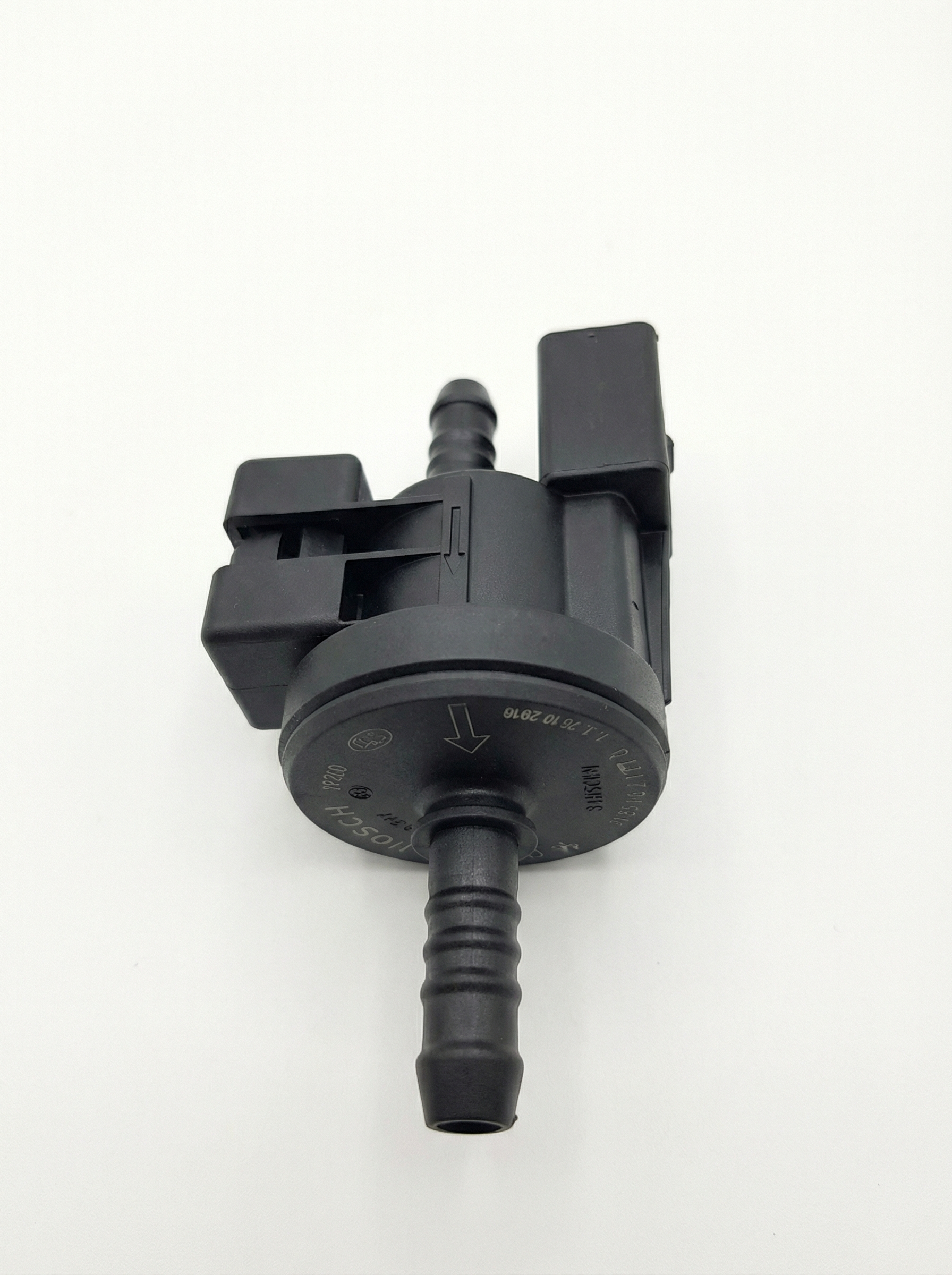
(OEM #06E906517A (Bosch P/N: 0280142431) is common for many 2.0T/2.5L engines. Some Mk6 2.0T use a hose assembly like 06J133781CE.)— A very common failure point on VWs that causes a small leak when it fails to close completely.
Trusted brands: Bosch (OEM supplier), Genuine VW/Audi, Hamburg Tech
OEM price range: $70-$120
Aftermarket price range: $30-$60
Related Codes That Often Appear With This One
- P0441 — Indicates incorrect purge flow, often pointing directly to a malfunctioning or clogged N80 purge valve.
- P0442 — This code is for a 'small leak detected,' which is slightly larger than the 'very small leak' of P0456. They can appear together if the leak size is borderline or if there are multiple leaks.
- P0455 — This indicates a 'gross leak detected.' It's less common to see with P0456, but can occur if a component fails catastrophically after initially causing a small leak, or if the gas cap is left off entirely.
- 01110 — This is a VAG-specific code that directly corresponds to P0456, 'Evap Control System Very Small Leak Detected', and will be seen when using VW-specific scan tools like VCDS.
Technical Service Bulletins (TSBs) & Recalls
- This VW Tech Tip, referenced by Ross-Tech, provides specific guidance for testing the N80 Purge Valve when codes P0441, P0442, P0455, or P0456 are present on various models, including the Jetta which shares components with the Golf. It reinforces the N80 valve as a primary suspect for these codes.
- This Audi TSB for the Q7, which uses a similar EVAP system design, details a specific pressure drop test for diagnosing P0456. It outlines procedures for testing the Leak Detection Pump (LDP) and the system for leaks, and provides criteria for replacing the LDP if it is found to be faulty.
Platform-Specific Known Issues
- The NHTSA has logged numerous Technical Service Bulletins (TSBs) that mention 'MIL-on P0456' for the 2016 Golf, indicating it is a recognized issue by the manufacturer, although these specific TSBs do not detail a direct cause or fix. [VIN4APIN20190611, VIN4APIN20190610, VIN4APIN20190529, VIN4APIN20190516, VIN4APIN20190507]
- Some owners on forums report a recurring P0456 code that appears seasonally, particularly at the start of summer, even after replacing the gas cap and N80 valve, suggesting temperature changes may affect a marginal seal somewhere in the system.
Mechanic-Grade Diagnostic Values
- N80 Purge Valve Resistance — expected: 22 to 30 Ohms (VW Spec). Some sources state 15-25 Ohms is also acceptable.. Failure: A reading outside of this range, particularly an open circuit (infinite resistance) or a short (zero resistance). A reading of 17.8 Ohms was noted on a failing valve.
- N80 Purge Valve Connector Voltage (Key On) — expected: Pin 1 should show battery voltage (approx. 12V). Pin 2 is the ground, controlled by the ECU.. Failure: Low or no voltage at Pin 1 suggests a wiring or fuse issue upstream. A forum user reported only 1.25V on a faulty circuit, while a working car showed 9-10V.
Hidden / Shadow Codes Worth Checking
- 01110: EVAP Control System: Very Small Leak Detected. This is the VAG-specific equivalent of the generic P0456 code. (see via VW/Audi specific scan tools like VCDS or OBDeleven.)
Scan Tool Commands That Help
- VCDS (VAG-COM): Engine -> Basic Settings -> Group 071 — This command initiates the EVAP system leak test (Leak Detection Pump test). It pressurizes the system and allows the user to monitor if it holds pressure, confirming the integrity of the tank and lines. This is used to verify a fix or test the LDP's function.
- VCDS (VAG-COM): Engine -> Basic Settings -> Group 202 — On some ECUs, this is an alternative command to run the Leak Detection Test from a cold engine at idle.
- VCDS (VAG-COM): Engine -> Output Tests — This function allows you to manually cycle the N80 purge valve. You should be able to hear and feel it clicking. This confirms the ECU can command the valve and that the solenoid is mechanically actuating, though it does not confirm if it's sealing properly.
Wiring & Ground Locations
- N80 Purge Valve Connector — In the engine bay, connected to the N80 valve itself. Location varies slightly by engine (2.0T vs 2.5L).. Testing for power and ground at this connector is a key step in diagnosing a faulty N80 circuit. Pin 1 is power, and Pin 2 is the ECU-controlled ground. Brown wires on VWs typically indicate a ground connection.
- Leak Detection Pump (LDP) — Typically located under the right rear wheel housing liner or near the fuel tank.. The wiring to the LDP can be damaged by road debris or corrosion. A fault in this wiring can prevent the EVAP self-test from running correctly, potentially leading to a P0456 code.
Real Owner Repair Stories
- Golfmk6.com forum user (VW Golf Mk6 GTI) — Recurrent P0456 code for several years, slight engine hesitation on acceleration.
❌ Tried (didn't work) Replaced N80 purge valve, Performed smoke test (showed no leaks), Replaced canister vent valve
✅ What actually fixed it The user noted the code appeared after a significant engine repair (timing chain/tensioners). The final resolution was not posted in the thread, but the key takeaway is that even after replacing common parts and getting a clean smoke test, the code can persist, potentially related to other engine performance characteristics. - Ross-Tech Forums user (VW (model not specified, but 2.5L engine)) — P0456 code returned after previous repairs.
❌ Tried (didn't work) Replaced Leak Diagnosis Pump (LDP) due to a previous leak., Replaced gas cap with a genuine VW part.
✅ What actually fixed it The final fix was not explicitly stated, but the diagnostic path led to suspecting either the N80 valve or insufficient vacuum being supplied to the LDP from a potentially failing cam-driven vacuum pump, a known issue on the 2.5L engine. The recommended next step was to test the system's ability to hold pressure by clamping the line to the N80 and running the VCDS Basic Settings test.
"I Checked Everything" — The Actual Cause
- A user on a GolfMK6 forum reported a persistent P0456 code even after their mechanic performed a smoke test that found no leaks. They had already replaced the N80 valve and the canister vent valve. This indicates that the leak can be so intermittent or small that a standard smoke test might miss it, or the fault may lie with a sensor or the LDP's operation rather than a physical leak.
OEM Part Supersession History
6e906517→06E-906-517-A— Standard part revision and update by the manufacturer.
Heads up: This is a direct replacement for the older part number. It is a widely used N80 valve across many VW/Audi models.
Model Year Variations Within This Range
- 2010-2014 (Mk6): The Mk6 is based on the older PQ35 platform. Some 2.0TSI engines in this generation use a more complex N80 purge valve that is integrated into a hose assembly (P/N 06J133781CE), making replacement more involved and expensive than the simple standalone valve (06E906517A) found on other engines like the 2.5L.
- 2015-2017 (Mk7): The Mk7 uses the newer, lighter, and stiffer MQB platform. While the EVAP system principles are the same, component locations and specific part numbers may differ from the Mk6. The interior and electronic systems are significantly more modern.
Helpful Videos

Used OEM Parts in Stock

New Aftermarket Parts Available


The information in this article is provided for general reference and educational purposes only. Vehicle specifications, procedures, and part compatibility can vary by production date, trim level, and region. Always consult your vehicle's factory service manual and verify part numbers before purchasing or performing repairs. Safety-critical components such as airbags, seat belts, and braking systems should be installed by a qualified professional.
- Volkswagen GOLF:
- 🎬 Helpful Videos
- 🛍️ Shop This Part
- What's Unique About the 2010-2017 Volkswagen GOLF
- Diagnostic Flowchart
- Symptoms You May Notice
- Most Likely Causes
- Rare But Worth Checking
- Diagnosis Steps
- Parts You'll Likely Need
- Related Codes That Often Appear With This One
- Technical Service Bulletins (TSBs) & Recalls
- Platform-Specific Known Issues
- Mechanic-Grade Diagnostic Values
- Hidden / Shadow Codes Worth Checking
- Scan Tool Commands That Help
- Wiring & Ground Locations
- Real Owner Repair Stories
- "I Checked Everything" — The Actual Cause
- OEM Part Supersession History
- Model Year Variations Within This Range
- 🎟️ Get 5% Off