

P0456 on 2013-2015 Volkswagen Eos: Causes and Fixes for a Very Small EVAP Leak
For a 2013-2015 VW Eos, the P0456 code is most often caused by a loose or faulty gas cap, or a failing EVAP purge valve (N80). A new OEM gas cap is about $25-$50, while a purge valve can cost between $30 and $70 for the part. Both are simple DIY fixes. Always start with the gas cap, ensuring it's an OEM part, as aftermarket caps are known to cause this code.
- P0456 indicates a 'very small leak' in the emissions system and is not a serious threat to your engine's health.
- Always check your gas cap first. Make sure it's tight. If the seal is cracked or old, replace it before attempting more complex repairs.
- On a 2013-2015 Eos, the EVAP Purge Valve (N80) is the second most likely culprit and is a common failure point for VWs.
- If the gas cap and N80 valve are good, the next step is a smoke test to find the leak, which may require a visit to a repair shop.
What's Unique About the 2013-2015 Volkswagen EOS
On Volkswagen platforms like the Eos with the 2.0T engine, the EVAP Purge Valve, known as the N80 valve, is a notoriously common failure point that can lead to P0456 and other EVAP codes. While a loose gas cap is the most common cause across all vehicles, a faulty N80 valve is a very close second for this specific platform and its relatives (GTI, Jetta, A3). Owners often find themselves replacing this valve to resolve persistent small leak codes after a gas cap replacement fails to solve the issue. The valve can get stuck slightly open or become clogged with charcoal debris from the canister, especially if the fuel tank is frequently overfilled.
Diagnostic Flowchart
Tap your situation to follow the diagnostic path that matches what you're seeing on this vehicle.
Symptoms You May Notice
- Check Engine Light is on
- A faint smell of gasoline, particularly around the rear of the car or near the fuel filler door after refueling.
- Difficulty starting the engine immediately after refueling (if the purge valve is stuck open, flooding the engine with vapor)
- Rough idle or slight hesitation (less common, but possible with a faulty purge valve introducing unmetered air).
- Audible rapid clicking noise from the N80 valve in the engine bay that is louder than usual.
- Replacing the charcoal canister when the issue is a simple hose or valve. The canister is expensive and fails less often than the surrounding components.
- Immediately assuming a complex leak without first checking the gas cap. Always start with the simplest and most common fix, ensuring it's an OEM part.
- Replacing other parts before performing a smoke test. For persistent leaks after replacing the gas cap and N80 valve, a smoke test is the most efficient way to find the true source and avoid wasting money on parts.
Most Likely Causes
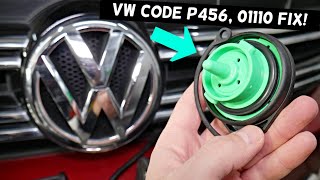
- Loose, Worn, or Incorrect Gas Cap 🔴 High Probability The gas cap seal is a simple rubber O-ring that degrades over time, losing its ability to create a perfect seal. This is the most frequent cause for any EVAP leak code. Aftermarket caps are a notorious source of P0456 codes on VWs, as they often use inferior materials or have a slightly different molding that prevents a perfect seal.
How to confirm: First, ensure the cap is tightened until it clicks at least three times. Inspect the rubber seal for cracks, stiffness, or damage. If the light returns after tightening and clearing the code, the cap is likely faulty. A key step many miss is cleaning the fuel filler neck's metal rim with a Scotch-Brite pad to remove any grit or corrosion that could prevent a seal.
Typical fix: Replace the fuel tank cap. It is highly recommended to use a Genuine VW OEM replacement (Part No. 5C0201550E or its successor) to ensure a proper seal. Many owners report that only an OEM cap will resolve the issue.
Est. part cost: $25-$50 - Faulty EVAP Purge Valve (N80 Valve) 🔴 High Probability The N80 valve on VW 2.0T engines is known to fail by either getting stuck open, stuck closed, or leaking intermittently. Debris from a deteriorating charcoal canister can also travel down the line and clog the valve, holding it slightly open.
How to confirm: With the engine off, disconnect the valve's electrical connector and the two hoses. Try to blow through it; it should be closed and not allow any air to pass. If air passes through, it has failed. A professional can also command it to open and close with a scan tool like VCDS to test its function and listen for a click.
Typical fix: Replace the N80 purge valve. It's located in the engine bay, mounted on the intake manifold, and is held in place by two hose clamps and an electrical connector, making it a straightforward DIY job.
Est. part cost: $30-$70 - Cracked or Disconnected EVAP Hoses/Lines 🟡 Medium Probability The plastic and rubber hoses in the EVAP system, especially the hard plastic lines near the engine, become brittle with age and exposure to heat cycles, leading to small cracks that are often invisible to the naked eye.
How to confirm: A visual inspection may reveal obvious cracks, especially on corrugated plastic lines near the N80 valve. The most definitive way to find a very small leak is with a smoke test, which forces low-pressure, UV-dyed smoke into the EVAP system to reveal the source of the leak from any cracked hose, seal, or component.
Typical fix: Replace the specific section of cracked hose. Some owners opt to replace brittle plastic sections with more durable silicone vacuum tubing of the correct diameter.
Est. part cost: $20-$100
Rare But Worth Checking
- Faulty Leak Detection Pump (LDP): The LDP is the component that pressurizes the system for the leak test. If it malfunctions internally, it can incorrectly report a leak to the ECM. An Audi TSB (2035519/4) for a similar system notes that if the system holds pressure but the code persists, the LDP itself is the likely culprit.
- Cracked Charcoal Canister: While more likely to cause a large leak code (P0455), a small hairline crack in the canister body can result in a P0456 code. Shaking the canister to check for rattling charcoal bits can indicate internal failure.
- Pinhole Leak in Fuel Filler Neck: Rust or physical damage to the metal tube leading from the gas cap to the tank can cause a very small, hard-to-find leak. This is often found during a smoke test when smoke is seen escaping from around the filler neck area, even with a good cap installed.
- Faulty Fuel Tank Pressure Sensor: This sensor monitors the pressure within the EVAP system. If it provides inaccurate readings to the ECM, it can falsely trigger a leak code. This is less common than a mechanical leak but is a possible electrical cause.
Diagnosis Steps
- Read the code with an OBD-II scanner to confirm P0456 is present.
- Inspect the gas cap. Ensure it is tight and clicks multiple times. Remove it and check the seal for any cracks or damage. Clean the filler neck sealing surface with a mild abrasive pad.
- If the code returns after clearing, replace the gas cap with a new OEM part (VW P/N 5C0201550E). This is an inexpensive and very high-probability fix. Drive for a few days to allow the EVAP monitor to run.
- If the code persists, locate and test the N80 purge valve in the engine bay. Disconnect it and attempt to blow through it; no air should pass. If it leaks, replace it.
- If no obvious faults are found, the most effective next step is to have a professional perform a smoke test. This involves injecting vaporized smoke into the EVAP system to visually pinpoint the location of the very small leak, which could be a cracked hose, a faulty LDP, or a cracked canister.
Parts You'll Likely Need
- Fuel Tank Cap
(OEM #5C0201550E (supersedes 5C0201550N))— This is the most common failure point for any EVAP leak code due to the degradation of its rubber seal over time. Using a genuine OEM part is critical for VWs.
Trusted brands: Genuine VW
OEM price range: $40-$50
Aftermarket price range: $15-$30 - Vapor Canister Purge Valve (N80 Valve)
(OEM #06E906517A)— A very common failure item on VW 2.0T engines that causes a variety of EVAP codes, including P0456, by sticking open or leaking.
Trusted brands: Bosch (OEM supplier), Genuine VW/Audi
OEM price range: $50-$80
Aftermarket price range: $30-$60
Related Codes That Often Appear With This One
- P0441 — This code for 'Incorrect Purge Flow' is often triggered by a faulty N80 purge valve that is stuck open or closed, which is also a primary cause of P0456.
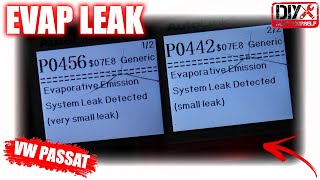
- P0442 — This indicates a 'Small Leak Detected'. A P0456 (Very Small Leak) can worsen over time and become a P0442, or the two can appear intermittently depending on conditions. They often share the same root causes.
- P2181 — Mentioned in a TSB alongside P0456. This code relates to 'Cooling System Performance' and is likely an unrelated issue that may occur concurrently. [Bulletin #VIN-4-A-PIN APRI (2015 ENGINE)]
Technical Service Bulletins (TSBs) & Recalls
- VIN-4-A-PIN APRI (2015 ENGINE, dated 2016-04-21): Mentions 'MIL-ON, FAULT P0456 IN THE ECM' as a possible customer complaint.
- VIN-4-A-PIN APRI (2014 VISIBILITY, dated 2016-04-13): Also lists 'MIL-ON, FAULT P0456 IN THE ECM' among potential faults.
Platform-Specific Known Issues
- The official Volkswagen Technical Service Bulletins (TSBs) for the 2014 and 2015 Eos list P0456 as a potential fault code, but group it with several other unrelated codes, indicating it's a known but not specifically detailed issue. [Bulletin #VIN-4-A-PIN APRI (2015 ENGINE), Bulletin #VIN-4-A-PIN APRI (2014 VISIBILITY)]
- A more relevant TSB for the underlying system is Audi TSB 2035519/4, which details testing the Leak Detection Pump (LDP) and EVAP system for P0456/P0442, advising that if the system holds pressure during a test, the LDP itself should be replaced.
Mechanic-Grade Diagnostic Values
- N80 Purge Valve Coil Resistance — expected: 22 to 30 Ohms (VW Spec). Failure: A reading outside this range, particularly a low reading around 17.8 Ohms, indicates a failing valve even if it hasn't set a specific electrical fault code. Other sources suggest a wider acceptable range of 15-35 Ohms.
- N80 Purge Valve Connector Voltage (Ignition ON, Engine OFF) — expected: ~9V or battery voltage. Failure: A significantly lower voltage, such as 1.25V, points to a wiring or ECU driver issue rather than a faulty valve itself.
- Fuel Tank Pressure Sensor (G400) Voltage — expected: 0.5V - 4.5V during self-test. Failure: A voltage outside this range can indicate a faulty sensor or wiring, potentially causing the PCM to misinterpret system pressure and set a false leak code.
Scan Tool Commands That Help
- VCDS (VAG-COM): Basic Settings - Group 070 (or 202 on some ECUs) — This function initiates the EVAP system's self-test. It allows a technician to command the system to pressurize and check for leaks without waiting for the automatic monitor to run. You can monitor the test progress and see if it passes or fails, helping to confirm if a repair was successful.
- VCDS (VAG-COM): Output Test - N80 Purge Valve — This allows you to actively cycle the N80 valve on and off. While the test is running, you should hear the valve clicking. This confirms the ECU can control the valve and that the valve's solenoid is mechanically responding, helping to isolate electrical from mechanical failures.
- Dealer-level scanner (e.g., ODIS): Flash Update/Software Calibration — In some cases, particularly if a smoke test passes and all components test good, the P0456 code may be caused by overly sensitive software in the ECU. A TPI or TSB may exist that requires reprogramming the ECU with an updated calibration to adjust the leak detection thresholds.
Wiring & Ground Locations
- Engine/Gearbox Earth Point — Main ground strap from the battery negative terminal to a point on the transmission case or engine block.. A poor engine ground can cause a variety of sensor and solenoid issues, including incorrect voltage readings at the N80 valve or Fuel Tank Pressure sensor, potentially leading to false diagnostic codes.
- Fuse for Leak Detection Pump (LDP) — Fuse panel B (location may vary slightly by model year, check diagram).. The LDP (V144) is powered by a fuse. If this fuse is blown, the LDP cannot run its test, which can lead to EVAP system fault codes. The test procedure for the LDP begins with checking this fuse.
Real Owner Repair Stories
- Ross-Tech Forums user (2009 VW Jetta 2.5L (Mk5)) — Persistent P0456 code returning after clearing.
❌ Tried (didn't work) Replaced the Leak Detection Pump (LDP) due to a diagnosed leak., Replaced the gas cap with a genuine VW part.
✅ What actually fixed it The user was advised that the next most likely culprit, despite the previous part replacements, was a faulty N80 purge valve. The thread implies this is the next logical step after the two most common fixes failed.
"I Checked Everything" — The Actual Cause
- In some documented cases across various manufacturers, a vehicle can pass a standard EVAP smoke test but still set a P0456 code. This can happen if there is a software glitch in the Engine Control Module (ECM/PCM) where the leak detection parameters are too sensitive. The fix in this scenario is not a mechanical repair, but rather a software update (flash) for the control module provided by the manufacturer.
OEM Part Supersession History
5C0201550N→5C0201550E— Part update/revision by Volkswagen.6E906517→06E906517A— Part update/revision by Volkswagen/Audi.
Helpful Videos
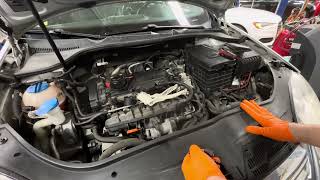
![How to Fix P0456 Engine Code in 7 Minutes [7 DIY Methods / Only $3.44]](https://img.youtube.com/vi/njt81AALI3U/mqdefault.jpg)
Used OEM Parts in Stock
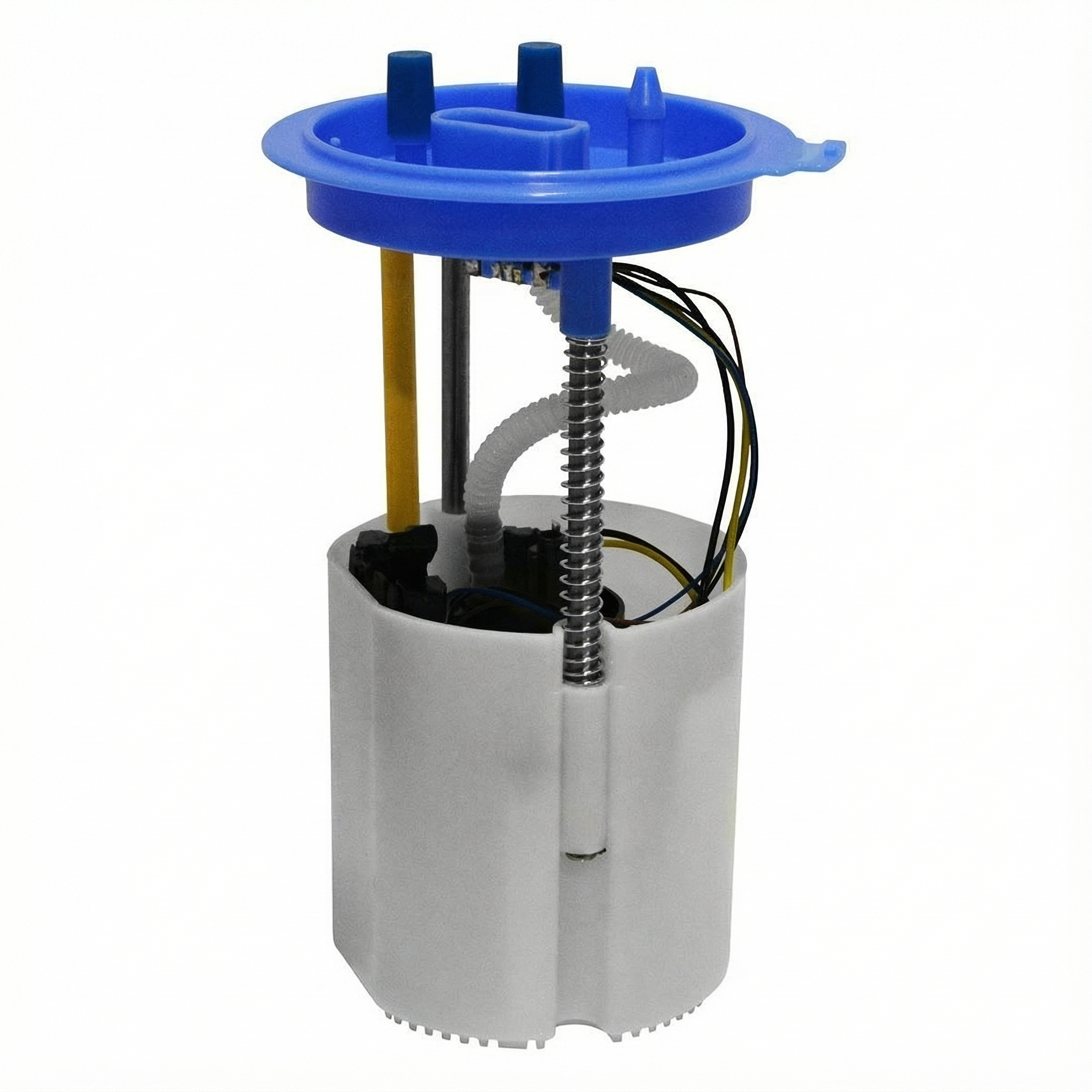
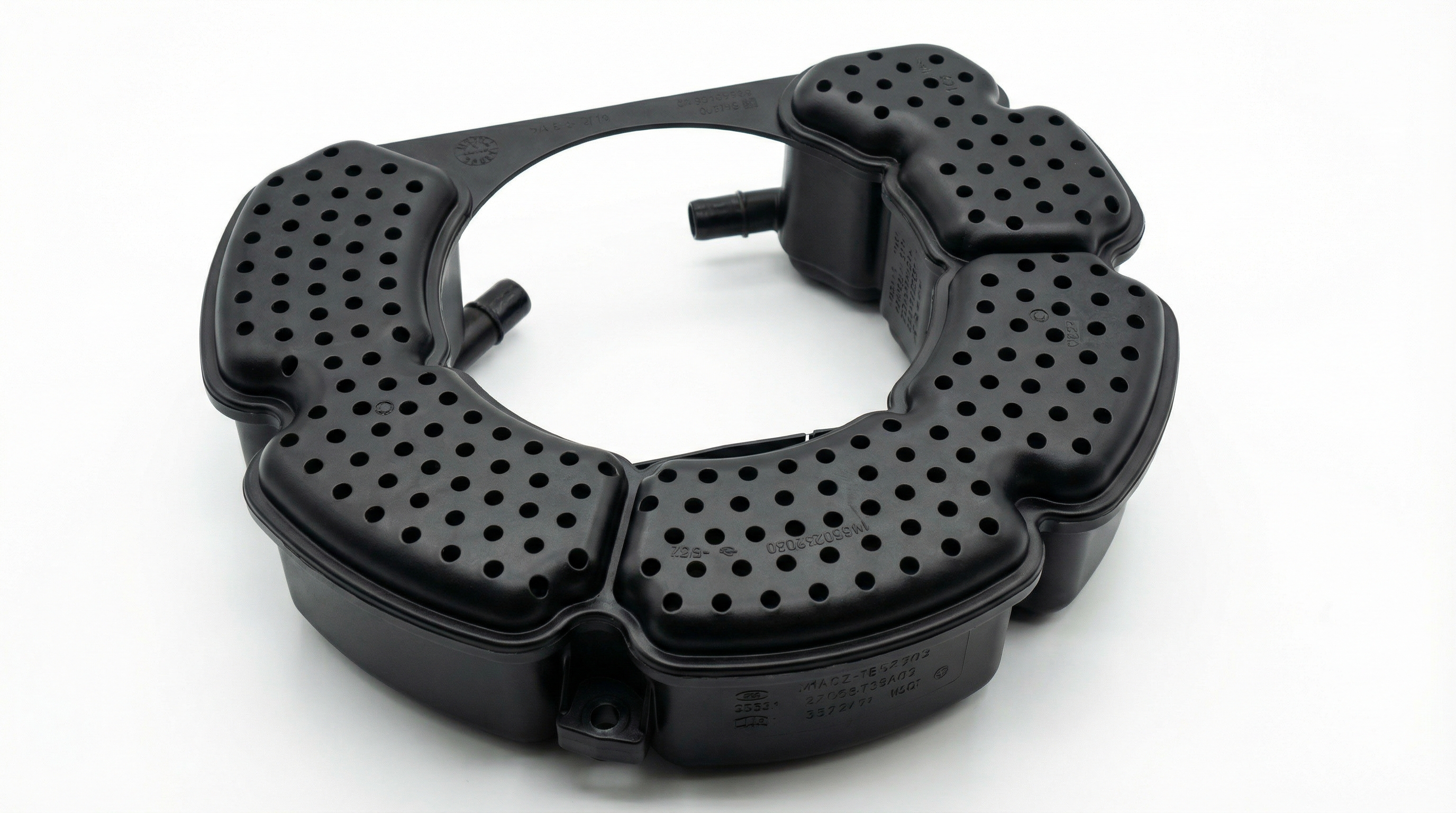
New Aftermarket Parts Available
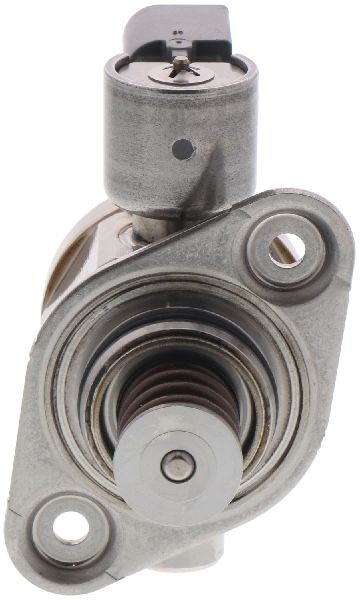
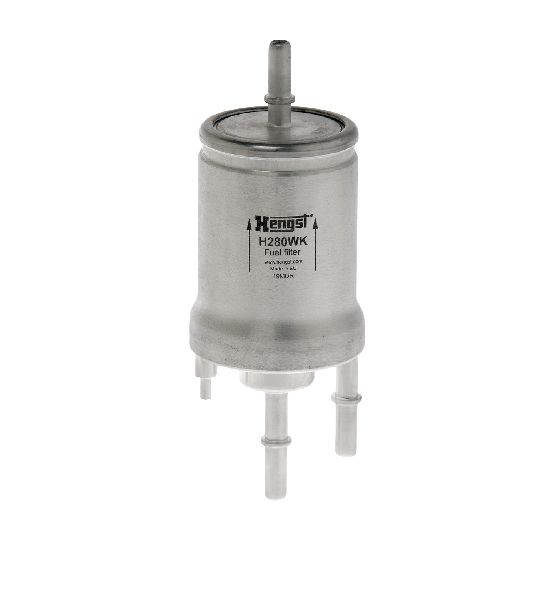


The information in this article is provided for general reference and educational purposes only. Vehicle specifications, procedures, and part compatibility can vary by production date, trim level, and region. Always consult your vehicle's factory service manual and verify part numbers before purchasing or performing repairs. Safety-critical components such as airbags, seat belts, and braking systems should be installed by a qualified professional.
- Volkswagen EOS:
- 🎬 Helpful Videos
- 🛍️ Shop This Part
- What's Unique About the 2013-2015 Volkswagen EOS
- Diagnostic Flowchart
- Symptoms You May Notice
- Most Likely Causes
- Rare But Worth Checking
- Diagnosis Steps
- Parts You'll Likely Need
- Related Codes That Often Appear With This One
- Technical Service Bulletins (TSBs) & Recalls
- Platform-Specific Known Issues
- Mechanic-Grade Diagnostic Values
- Scan Tool Commands That Help
- Wiring & Ground Locations
- Real Owner Repair Stories
- "I Checked Everything" — The Actual Cause
- OEM Part Supersession History
- 🎟️ Get 5% Off