

P0456 on 2013-2016 Volkswagen CC: EVAP Small Leak Causes and Fixes
For a 2013-2016 VW CC, a P0456 code is most often caused by a faulty gas cap or a failing N80 EVAP purge valve. Start by checking the gas cap for a tight seal and inspecting its O-ring for cracks. If that's not the issue, the N80 valve is the next likely culprit, costing around $25-$70 for a DIY replacement.
- P0456 indicates a very small leak in the fuel vapor system, which is not a critical mechanical issue.
- Always start with the simplest fix: check that your gas cap is tight and the seal is intact. A new gas cap is an inexpensive first step.
- The N80 EVAP purge valve is the second most likely culprit and is a common failure item on the VW 2.0T engine.
- If the gas cap and N80 valve are good, the next step is a smoke test to find hairline cracks in the system's plastic hoses.
What's Unique About the 2013-2016 Volkswagen CC

The 2.0T TSI engine (Engine Code: CCTA) used in the Volkswagen CC and its platform-mates is known for specific EVAP system failure points. While a loose gas cap is a universal cause, the N80 (EVAP Purge Regulator Valve) is a particularly common failure item on this and similar VW/Audi platforms. The solenoid inside the valve can fail or stick, causing an intermittent leak. Additionally, the corrugated plastic hose connected to the N80 valve is prone to becoming brittle from engine heat and developing hairline cracks, which is a frequent source of this specific code.
Diagnostic Flowchart
Tap your situation to follow the diagnostic path that matches what you're seeing on this vehicle.
Symptoms You May Notice
- Check Engine Light is on
- A faint fuel smell, particularly outside the vehicle (in some cases)
- A 'Check Gas Cap' message on the instrument cluster (less common than the Check Engine Light)
- Difficulty refueling (gas pump nozzle clicks off repeatedly) in some cases
- Slightly rough idle or hard starting after filling the gas tank if the N80 purge valve is stuck open
- Replacing oxygen sensors. O2 sensors are not part of the EVAP system and will not cause a P0456 code.
- Replacing the fuel pump. While the fuel pump assembly has a seal on the tank, the pump itself failing is not a direct cause of this specific leak code.
Most Likely Causes

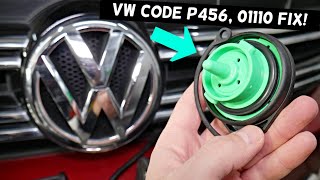
- Loose or Faulty Gas Cap 🔴 High Probability The gas cap seal is a simple rubber O-ring that can dry out, crack, or get deformed over time, especially with exposure to ethanol in fuel. This prevents a proper seal, causing a leak the system detects. It's also common for the tether to get caught under the cap, preventing it from being fully tightened.
How to confirm: Inspect the gas cap's rubber seal for any visible cracks, brittleness, or damage. Ensure it is tightened until it clicks at least once. If the seal looks worn, it's a cheap and easy first part to replace, even if no damage is visible.
Typical fix: Replace the gas cap with a genuine OEM part.
Est. part cost: $30-$50 - Faulty EVAP Purge Valve (N80 Valve) 🔴 High Probability This solenoid valve is a known high-failure part on many VW/Audi 2.0T engines due to its constant operation. It can get stuck slightly open or fail to seal completely, creating a small, constant leak path from the EVAP system to the intake manifold.
How to confirm: With the engine off, unplug the electrical connector and hoses from the valve. Try to blow through it; it should be completely sealed and allow no air to pass. If air passes through, it's faulty. A failing valve may also make a loud, rapid clicking noise. A VW-specific Tech Tip (01-19-06) outlines a vacuum test procedure for this valve.
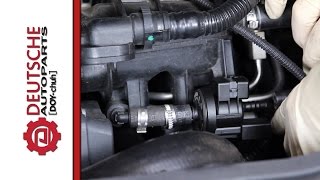
Typical fix: Replace the N80 valve. It is located on top of the intake manifold and is often replaced as an assembly with its connecting hoses. 🎬 Watch this DIY walkthrough to replace the N80 valve assembly.
Est. part cost: $25-$70 - Cracked or Disconnected EVAP Hoses 🟡 Medium Probability The engine bay contains several hard plastic and corrugated EVAP lines. The corrugated line running to the N80 purge valve is particularly susceptible to becoming brittle from constant engine heat cycles and developing hairline cracks.
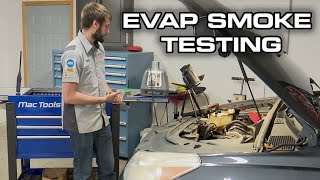
How to confirm: A visual inspection may reveal obvious cracks, but the leaks are often too small to see. The most effective method is a smoke test, which involves filling the EVAP system with low-pressure smoke and looking for where it escapes. 🎬 See how a professional smoke test identifies hidden cracks. Pay close attention to the corrugated hose assembly near the purge valve.
Typical fix: Replace the cracked section of hose or the entire hose assembly. Some owners successfully repair the brittle corrugated line with 3/8" emissions hose as a more affordable alternative to replacing the whole assembly.
Est. part cost: $20-$180
Rare But Worth Checking
- Faulty Leak Detection Pump (LDP): The LDP is what the ECM uses to pressurize the system for testing. If the pump itself is faulty, it can incorrectly report a leak. This is less common than a simple leak but is a possibility if other causes are ruled out after a smoke test finds no leaks.
- Cracked Charcoal Canister: The canister itself, typically located in the rear wheel well area, can develop cracks, but this is uncommon. It's more likely for the connecting hoses or valves to fail. A smoke test will definitively identify a cracked canister. Sometimes the canister can fail internally without showing an external leak on a smoke test, leading to a difficult diagnosis.
Diagnosis Steps

- Check the Gas Cap: Remove and inspect the gas cap. Look for cracks in the rubber seal. Reinstall it and ensure it clicks several times to confirm it's tight. Clear the code and drive for a few days to see if it returns. This is the simplest and most common fix.
- Visual Inspection: Carefully inspect all accessible EVAP hoses in the engine bay, especially the corrugated line running to and from the N80 purge valve. Look for any visible cracks, brittleness, or loose connections.
- Test the N80 Purge Valve: Locate the N80 valve on the engine. Disconnect it and attempt to blow through it. If any air passes, the valve is faulty and must be replaced. This is a very common failure point.
- Perform a Smoke Test: If the above steps do not reveal the issue, the most reliable method is a smoke test. A mechanic will connect a smoke machine to the EVAP service port and fill the system with a harmless, visible smoke. The leak will be revealed by the smoke escaping from the cracked component (hose, canister, filler neck, etc.).
- Inspect Leak Detection Pump (LDP) and Charcoal Canister: During the smoke test, pay close attention to the LDP and charcoal canister area, usually located near the fuel tank by the rear wheel well, as these can also be sources of leaks.
Parts You'll Likely Need

- Fuel Cap
(OEM #3C8201550E (supersedes 3C8201550, 3C8201550A, 3C0201550N))— This is the most frequent and simplest cause. The seal fails over time, causing a pressure leak. It's highly recommended to use a genuine OEM cap as some aftermarket caps do not seal correctly.
Trusted brands: Volkswagen Genuine
OEM price range: $35-$50
Aftermarket price range: $15-$25 - EVAP Purge Regulator Valve (N80)
(OEM #06E906517A (valve only) or 06J133781CE (valve with hose assembly))— A very common failure point on the 2.0T engine that causes a small leak when it fails to close completely. The part number can vary, so confirm with your VIN.
Trusted brands: Bosch (OEM supplier), Volkswagen Genuine
OEM price range: $50-$70
Aftermarket price range: $25-$50 - EVAP Hose Assembly
(OEM #04E133366CQ (confirm with VIN))— The plastic hoses, particularly the corrugated line near the purge valve, can crack from engine heat and vibration. The part number can vary significantly, so confirm with your VIN. Sometimes this is sold as an assembly with the N80 valve.
Trusted brands: Volkswagen Genuine
OEM price range: $80-$180
Aftermarket price range: $50-$100
Related Codes That Often Appear With This One
- P0441 — Incorrect Purge Flow. This often appears with P0456 when the N80 purge valve is malfunctioning, causing both a leak (P0456) and improper flow when commanded open (P0441).
- P0442 — EVAP System Leak Detected (Small Leak). This is a similar code for a slightly larger leak. Seeing both may indicate an intermittent or worsening issue.
- P0455 — EVAP System Leak Detected (Large Leak). Often triggered by a completely detached hose or a gas cap left off entirely.
Technical Service Bulletins (TSBs) & Recalls
- VIN-4-A-PIN APRI (2016 FUEL SYSTEM, OTHER): This is an NHTSA complaint summary, not a formal TSB. It logs owner complaints filed with the NHTSA, and includes mentions of 'MIL-ON, FAULT P0456 IN THE ECM' for the 2016 model year, confirming the code's prevalence.
- VIN-4-A-PIN APRI (2015 AIR BAGS): Similar to the above, this is an NHTSA complaint log that happens to contain reports of P0456 for the 2015 model year
Platform-Specific Known Issues
- Owner Experience: Gas Cap and N80 Valve Sequence: A common repair story on forums involves first replacing the gas cap. When the P0456 code returns after a few drive cycles, the N80 purge valve is replaced next, which permanently resolves the issue. This highlights the top two causes and a logical diagnostic path.
- DIY Repair of Brittle Corrugated Hose: In a Reddit thread, an owner with a P0456 code on a Jetta (sharing the same engine architecture) described a successful DIY fix. After replacing the gas cap and N80 valve didn't work, they found a crack in the corrugated hose. Instead of buying the expensive assembly, they cut the brittle pipe off the barbs and replaced it with a section of 3/8" emissions hose, which fixed the leak and allowed them to pass an emissions test.
Mechanic-Grade Diagnostic Values
- N80 EVAP Purge Valve (06E906517A) Coil Resistance — expected: 15 to 35 Ohms. Failure: A reading outside this range (e.g., open circuit/infinite resistance or a dead short) indicates a failed solenoid coil.
- N80 EVAP Purge Valve Connector Voltage (Ignition On, Engine Off) — expected: Approximately 9V to 12V (Battery Voltage). Failure: Significantly lower voltage, such as 1.25V as noted in one owner's diagnosis, points to a wiring issue, a bad ground, or a problem with the Engine Control Module (ECM) driver circuit.
Hidden / Shadow Codes Worth Checking
- 01110: Evap Control System Very Small Leak Detected. This is the VAG-specific fault code that corresponds directly to the generic OBD-II code P0456. (see via This code is displayed when scanning the vehicle with a VW-specific scan tool like VCDS (VAG-COM) or OBDeleven.)
Scan Tool Commands That Help
- VCDS (VAG-COM): Basic Settings - Group 071 (EVAP System Leak Test) — This function allows a technician to manually initiate the EVAP system's self-test sequence. It seals the system by commanding the vent valve closed and activates the Leak Detection Pump (LDP) to check if the system can hold pressure. This is used to verify a repair is successful or to force a test without having to complete a full drive cycle.
- VCDS (VAG-COM): Output Tests - EVAP Canister Purge Regulator Valve (N80) — This allows the user to directly command the N80 valve to cycle on and off. You should be able to hear the valve clicking, which confirms the ECM can control it and that the solenoid is not seized. This is a quick way to check the electrical integrity and mechanical function of the valve itself.
Wiring & Ground Locations
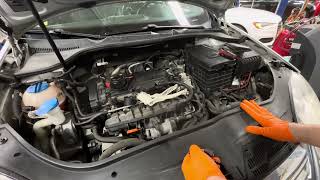
- N80 Valve Location — On the 2.0T TSI engine, the N80 valve is located on the driver's side of the intake manifold, easily accessible from the top of the engine bay.. Knowing the precise location is critical for performing visual inspections, testing for leaks, and replacing the valve, which is a very common failure point for P0456.
- Main Harness Ground — While not specific to just the EVAP system, broken main ground wires are a known issue on Volkswagens. A common chafe/break point is in the rubber boot between the driver's door and the car's body.. A faulty ground can cause erratic behavior and low voltage to various components. In one documented case, a melted ground wire behind the brake booster pump on a 2.0T TSI led to a P0458 (EVAP Purge Control Valve Short to Ground) code, which is related to P0456. This demonstrates that electrical faults, not just physical leaks, can trigger EVAP codes.
Real Owner Repair Stories
- Ross-Tech Forums user (2013 VW CC) — Multiple 'short to ground' fault codes for various components, including P0458 for the EVAP Purge Control Valve (N80).
❌ Tried (didn't work) Initial diagnosis pointed to multiple simultaneous component failures, which was unlikely.
✅ What actually fixed it The root cause was found to be a melted main ground wire located behind the brake booster pump. Repairing the damaged section of the wiring harness resolved all the short-to-ground codes, including the one for the EVAP system. - YouTube Commenter (Unspecified vehicle, but relevant to P0456 diagnosis) — P0456 code.
❌ Tried (didn't work) Replaced the purge valve and the gas cap.
✅ What actually fixed it A smoke test, which should have been done first, revealed the actual leak was from a cracked fuel filler neck.
"I Checked Everything" — The Actual Cause
- In some cases, a smoke test may not reveal a leak if the failure is intermittent or internal to a component. A common scenario is an N80 purge valve that only fails to seal under specific temperature or vacuum conditions, not during a static, low-pressure smoke test. Another possibility is an internal failure of the charcoal canister, where it is no longer able to properly store and release vapors but does not have an external crack that would show smoke.
OEM Part Supersession History
06J133781CA, 06J133781AN, 06J133781BC→06J133781CE— Standard part evolution for improved reliability or manufacturing efficiency. This part is the N80 valve combined with the associated hose assembly.
Heads up: The older part numbers are superseded by 06J133781CE. While an older version might fit, using the latest revision is recommended for reliability.06H906517H→06E906517A (Bosch is OEM)— This is the N80 valve solenoid only, without the hoses. Part was updated for reliability.
Heads up: This is the valve itself. It is often sold with the hose assembly (06J133781CE) but can be purchased separately. Ensure compatibility if buying the valve alone, as the connecting hoses may also be brittle and require replacement.
Helpful Videos
Used OEM Parts in Stock

New Aftermarket Parts Available



The information in this article is provided for general reference and educational purposes only. Vehicle specifications, procedures, and part compatibility can vary by production date, trim level, and region. Always consult your vehicle's factory service manual and verify part numbers before purchasing or performing repairs. Safety-critical components such as airbags, seat belts, and braking systems should be installed by a qualified professional.
- Volkswagen CC:
- 🎬 Helpful Videos
- 🛍️ Shop This Part
- What's Unique About the 2013-2016 Volkswagen CC
- Diagnostic Flowchart
- Symptoms You May Notice
- Most Likely Causes
- Rare But Worth Checking
- Diagnosis Steps
- Parts You'll Likely Need
- Related Codes That Often Appear With This One
- Technical Service Bulletins (TSBs) & Recalls
- Platform-Specific Known Issues
- Mechanic-Grade Diagnostic Values
- Hidden / Shadow Codes Worth Checking
- Scan Tool Commands That Help
- Wiring & Ground Locations
- Real Owner Repair Stories
- "I Checked Everything" — The Actual Cause
- OEM Part Supersession History
- 🎟️ Get 5% Off