

P0456 on 2022 Volkswagen Arteon: Causes of a Very Small EVAP Leak
This code indicates a very small leak in the fuel vapor system. The most common cause is a loose or faulty gas cap, which is a simple and inexpensive fix. However, for the 2022 Arteon, VW has issued a TSB (01-23-07) for an ECM software update that can resolve this code without replacing parts. If the software is up to date, the next most likely culprit is the EVAP purge valve (N80).
- P0456 means your Arteon has a very small leak in the emissions system, and it is not an immediate threat to the engine.
- Always check your gas cap first. Make sure it's tight and the seal is in good condition. This solves the problem more than half the time.
- If the gas cap isn't the issue, the EVAP purge valve (N80) is the next most likely part to fail and is a straightforward DIY replacement for many owners.
- For hard-to-find leaks, a professional smoke test is the most efficient way to locate the source without guessing.
- This is a known issue for the 2022 Arteon, as documented in multiple manufacturer TSBs.
What's Unique About the 2022-2022 Volkswagen ARTEON
While P0456 is a common code across many manufacturers, its appearance on the 2022 Arteon is notable enough that Volkswagen has issued a specific Technical Service Bulletin (TSB 01-23-07) for this model and engine. This TSB advises that an ECM software update may be all that is needed to correct overly sensitive leak detection logic that falsely triggers the P0456 and/or P0442 codes. Therefore, before replacing any parts, a dealership should first check if this software update is required. If the software is current, the diagnostic process reverts to the typical VW failure points: the gas cap and the N80 purge valve.
Diagnostic Flowchart
Tap your situation to follow the diagnostic path that matches what you're seeing on this vehicle.
Symptoms You May Notice
- Check Engine Light is on
- A faint fuel smell near the rear of the car (rare)
- Rough idle or engine shudder, especially right after refueling (symptom of a stuck-open purge valve).
- Difficulty starting the engine immediately after getting gas (symptom of a stuck-open purge valve).
- Gas pump nozzle clicks off repeatedly during refueling (can indicate a clogged canister or vent path, sometimes associated with EVAP codes).
- Replacing oxygen sensors or other unrelated emissions components before properly diagnosing the EVAP system.
- Replacing the charcoal canister when the actual problem is a much cheaper and simpler part like the gas cap or purge valve.
- On a 2022 Arteon, replacing any hardware before checking for and performing the software update specified in TSB 01-23-07.
Most Likely Causes
- Loose or Faulty Gas Cap 🔴 High Probability The gas cap seal is a simple rubber O-ring that can dry out, crack, or get dirty over time, preventing a perfect seal. Ethanol in modern fuels can accelerate the drying process of the rubber. It's also extremely common for the cap to simply not be tightened enough after refueling. It is highly recommended to use an OEM replacement cap, as some aftermarket caps are known to have sealing issues.
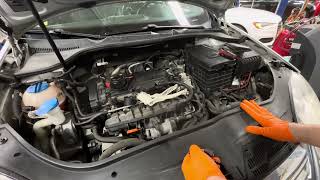
How to confirm: Remove the gas cap and inspect the rubber seal for any cracks, stiffness, or debris. Ensure the cap clicks at least once when tightened. If the seal looks worn, it's best to replace it. A temporary DIY test involves placing a small piece of a plastic bag over the filler neck before tightening the cap to create a better seal, clearing the code, and seeing if it returns 🎬 Watch: A simple DIY fix for common VW EVAP codes. after a few days.
Typical fix: Tighten the cap correctly or replace the entire gas cap with a genuine OEM part. After replacement, the code may need to be cleared with a scanner, or it may clear on its own after several drive cycles.
Est. part cost: $25-$65 - Faulty EVAP Canister Purge Valve (N80 Valve) 🟡 Medium Probability This solenoid valve is a known failure point on many Volkswagen and Audi models. It can get stuck partially open, creating a constant small leak path from the EVAP system to the engine intake. It can also become clogged with charcoal debris from a deteriorating EVAP canister.
How to confirm: The valve is normally closed. With the engine off, disconnect the valve and try to blow through it. If air passes through, the valve is stuck open and has failed. You can also tap the disconnected valve on a clean surface; if black carbon granules fall out, the charcoal canister is likely failing and has contaminated the valve, meaning both may need replacement. A mechanic can also command it open and closed with a scan tool to test its function.
Typical fix: Replace the N80 purge valve. It is typically located in the engine bay, mounted on or near the intake manifold, and is relatively easy to access.
Est. part cost: $35-$80 - Cracked or Disconnected EVAP Hose ⚪ Low Probability Plastic and rubber hoses, especially the corrugated plastic lines in the engine bay, can become brittle from heat and age, leading to small cracks that are difficult to see. A specific weak point noted on similar VW platforms is the corrugated hose running between the firewall and the N80 purge valve.
How to confirm: A visual inspection may reveal an obvious crack or disconnected line, paying close attention to the N80 valve connections. However, the most effective method is to have a mechanic perform a smoke test, which fills the EVAP system with a harmless, visible vapor to pinpoint the exact location of the leak.
Typical fix: Replace the damaged section of hose. Some owners have successfully replaced a cracked corrugated section with a standard 3/8" emissions hose as a durable DIY repair.
Est. part cost: $20-$100
Rare But Worth Checking
- Software/ECM Issue: For the 2022 Arteon specifically, VW issued TSB 01-23-07 because the ECM's software could be too sensitive, falsely detecting a leak. The fix is a software update performed by a dealer, which should be checked before replacing any hardware.
- Leaking EVAP Charcoal Canister: While possible, a cracked canister more often causes a large leak code (P0455) or issues with refueling (gas pump clicks off). It's worth considering if a smoke test leads to the canister area or if the N80 valve is found to be contaminated with charcoal bits.
- Faulty Leak Detection Pump (LDP): The pump itself can fail or have a leaky seal, causing the system to fail its pressure test. This is usually diagnosed with a smoke test or by testing the pump directly with a scan tool.
- Faulty Fuel Tank Pressure (FTP) Sensor: A malfunctioning FTP sensor can send incorrect data to the ECM, making the computer believe there is a leak when there isn't one. This often, but not always, triggers other specific sensor-related codes.
Diagnosis Steps
- Check for Technical Service Bulletins (TSBs): For a 2022 Arteon, the absolute first step at a dealership should be to check if TSB 01-23-07 is applicable. This bulletin addresses a potential software issue causing false P0456 codes, and the fix is an ECM update.
- Check the Gas Cap: This is the number one DIY cause. Remove the cap, inspect the seal for damage or cracks, and reinstall it, making sure it clicks shut. Clear the code and drive for a few days to see if it returns. Consider replacing with an OEM cap if the seal is suspect.
- Visual Inspection: Look over the EVAP hoses in the engine bay, particularly the corrugated line running to and from the N80 purge valve, for any obvious cracks or loose connections.
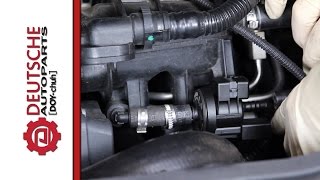
- Test the Purge Valve (N80): Locate the valve in the engine bay. Disconnect it and test if it's leaking by attempting to blow through it; 🎬 Watch: How to test the N80 purge valve yourself. it should be sealed when no power is applied. Tap it on a hard surface to check for falling charcoal debris, which indicates a larger system problem. A resistance check can also be performed; specs vary by engine, but a common range for VW is 22 to 30 ohms.
- Perform a Smoke Test: If the simple checks don't reveal the issue, a smoke test is the definitive diagnostic step. A machine injects vaporized smoke into the EVAP service port. The leak will be revealed by the smoke exiting from the cracked hose, faulty seal, or component.
- Inspect Components: Based on the smoke test results, inspect the identified component (e.g., charcoal canister, leak detection pump, fuel tank pressure sensor) for failure.
Parts You'll Likely Need
- Fuel Tank Cap
(OEM #561-201-550-D)— This is the most common and simplest fix for a P0456 code. The seal fails over time, causing a leak. Using an OEM cap is recommended for a proper seal.
Trusted brands: Genuine Volkswagen, Motorad
OEM price range: $45-$65
Aftermarket price range: $20-$35 - EVAP Canister Purge Valve (N80)
(OEM #06M 906 517 E)— This valve is a common failure point on VWs, getting stuck open and creating a leak that the system detects.
Trusted brands: Genuine Volkswagen, Bosch, Dorman
OEM price range: $35-$70
Aftermarket price range: $25-$50
Related Codes That Often Appear With This One
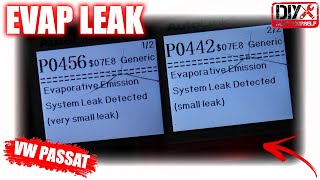
- P0442 — P0442 indicates a 'small leak,' while P0456 indicates a 'very small leak.' They are closely related and often appear together, as noted in VW's own Technical Service Bulletin 01-23-07 for the Arteon. The same fault can sometimes be interpreted differently by the ECM on separate tests.
- P0441 — This code for 'Incorrect Purge Flow' is commonly associated with a failing N80 purge valve, which is also a primary cause of P0456. If the valve is stuck or clogged, it can trigger both flow and leak codes.
Technical Service Bulletins (TSBs) & Recalls
- TSB 01-23-07 (NHTSA ID: 10240420): Titled 'Update Programming DTCs P0456 or P2407 stored in Engine/Motor Control Module'. This is the primary, official TSB for this issue on the 2022
Platform-Specific Known Issues
- Volkswagen has released Technical Service Bulletin 01-23-07 (Transaction No: 2070785/1) specifically for the 2022 Arteon with the 2.0T (DSFB) engine. It states that faults P0456, P0442, or P2407 may be stored in memory due to overly sensitive ECM software. The bulletin advises performing a software update before diagnosing or replacing any components.
Mechanic-Grade Diagnostic Values
- N80 Purge Valve Coil Resistance — expected: 22 to 30 Ω. Failure: A reading outside this range indicates a faulty valve coil. Note: some sources cite 15-25 Ω for other VW engines, but 22-30 is a common spec. A reading of 17.8 Ω was noted on a failed valve.
- N80 Purge Valve Connector Voltage — expected: ~9-12V with ignition on, engine running.. Failure: Significantly lower voltage (e.g., 1.25V) points to a wiring or ECM driver issue, not the valve itself.
- Leak Detection Pump (LDP) Resistance (V144) — expected: Across pins 1 & 3: 640 to 720 Ω. Across pins 2 & 3: 15 to 17 Ω.. Failure: Readings outside these specific ranges indicate a faulty LDP unit.
- Fuel Tank Pressure (FTP) Sensor Voltage — expected: Signal wire should read between 0.5V and 4.5V, varying with tank pressure.. Failure: A voltage stuck at 0V, 5V, or fluctuating erratically suggests a failed sensor or wiring issue.
Hidden / Shadow Codes Worth Checking
- 01110: This is a VAG-specific fault code that directly corresponds to the generic OBD-II code P0456, meaning 'Evap Control System Very Small Leak Detected'. Seeing this code on a VW-specific scanner like VCDS or ODIS confirms the same issue. (see via VCDS, ODIS, or other advanced scanners capable of reading VW-specific codes.)
Scan Tool Commands That Help
- VCDS (VAG-COM): Engine -> Basic Settings -> Group 070 (or IDE00744 for newer UDS controllers) — This command initiates the EVAP system leak test. The controller seals the system and runs the Leak Detection Pump (LDP) to check if pressure holds. It's used to verify a fix or to confirm a leak is present without waiting for the automatic drive cycle test.
- VCDS (VAG-COM): Engine -> Output Tests — This function allows a technician to cycle individual components on and off, including the N80 purge valve and the Leak Detection Pump (LDP). This is useful for confirming if a component is receiving a signal from the ECM and if it clicks or actuates as expected.
- ODIS (Official VW/Audi Software): Guided Fault Finding -> EVAP System Test Plan — ODIS provides a step-by-step guided diagnostic plan for EVAP faults. It will automatically run the necessary tests, prompt the technician for actions, and interpret the results based on factory specifications, making it the most thorough diagnostic method at a dealership.
Wiring & Ground Locations
- Fuse F7 (Engine Bay Fuse Box) — In the main fuse box in the engine compartment.. On the 2022 Arteon (for US markets), the 7.5A fuse in position F7 powers the 'Fuel tank leak diagnostic system control unit'. A blown fuse here would prevent the system from running its self-test, potentially causing faults.
- Main Engine Bay Ground Point — On the chassis frame rail/bulkhead, often near the battery or on the fender wells. VW typically uses brown wires for grounds.. A poor ground for the N80 valve or Leak Detection Pump (LDP) can cause intermittent operation or incorrect voltage readings, leading to false codes or component failure. The ECM grounds the N80 valve to activate it, so a solid ground path is critical.
- N80 Valve Connector — On the N80 valve itself, in the engine bay near the intake manifold.. Pin 1 should have battery voltage (~12V) with the ignition on. Pin 2 is the ground, which is controlled (pulsed) by the ECM. Testing voltage here can differentiate between a bad valve and a wiring/ECM problem.
OEM Part Supersession History
Not specified→06M-906-517-E— This is the current part number for the N80 Purge Valve for the 2022 Arteon.
Heads up: This part number appears to be used from mid-2020 onwards for several VW models including the Arteon, Tiguan, and Golf R.
Model Year Variations Within This Range
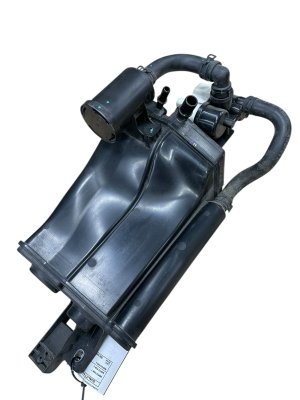
- 2022: The vapor canister part number changed mid-model year. For Arteons built up to 02/28/2022, a different canister is used than for those built from 02/28/2022 onwards. This is critical to know if replacing the canister.
Helpful Videos
![How to Fix P0456 Engine Code in 7 Minutes [7 DIY Methods / Only $3.44]](https://img.youtube.com/vi/njt81AALI3U/mqdefault.jpg)
Used OEM Parts in Stock
New Aftermarket Parts Available



The information in this article is provided for general reference and educational purposes only. Vehicle specifications, procedures, and part compatibility can vary by production date, trim level, and region. Always consult your vehicle's factory service manual and verify part numbers before purchasing or performing repairs. Safety-critical components such as airbags, seat belts, and braking systems should be installed by a qualified professional.
- Volkswagen ARTEON:
- 🎬 Helpful Videos
- 🛍️ Shop This Part
- What's Unique About the 2022-2022 Volkswagen ARTEON
- Diagnostic Flowchart
- Symptoms You May Notice
- Most Likely Causes
- Rare But Worth Checking
- Diagnosis Steps
- Parts You'll Likely Need
- Related Codes That Often Appear With This One
- Technical Service Bulletins (TSBs) & Recalls
- Platform-Specific Known Issues
- Mechanic-Grade Diagnostic Values
- Hidden / Shadow Codes Worth Checking
- Scan Tool Commands That Help
- Wiring & Ground Locations
- OEM Part Supersession History
- Model Year Variations Within This Range
- 🎟️ Get 5% Off