

P0456 on 2015-2021 Ram ProMaster City: EVAP Small Leak Causes and Fixes
On a 2015-2021 Ram ProMaster City with the 2.4L engine, code P0456 is most often caused by a faulty EVAP purge valve (P/N 04627182AA) in the engine bay or a failed leak detection pump/ESIM (P/N 4861962AD) on the charcoal canister. Both are common failure items and are relatively inexpensive DIY fixes. Before replacing parts, always inspect and clean the capless fuel filler neck.
- P0456 on your ProMaster City means there's a small leak in the emissions system, which is not a critical driving issue but will cause an emissions test failure.
- Do not start with expensive diagnostics. The most likely cause is a faulty EVAP purge valve in the engine bay, which is a cheap and easy part to test and replace.
- If the purge valve is not the issue, the next most common culprit is the leak detection pump (ESIM) on the charcoal canister.
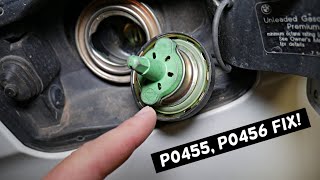
- Because this van has a capless system, check the fuel filler neck for debris or damage as you would a traditional gas cap.
- If these common fixes don't work, a smoke test is the best way to find the source of the leak.
What's Unique About the 2015-2021 Ram PROMASTER CITY
The Ram ProMaster City, based on the Fiat Doblò and sharing its 2.4L engine with vehicles like the Jeep Renegade, uses an Evaporative System Integrity Monitor (ESIM) to test for leaks. This component, also called a leak detection pump, is a known failure point on many Chrysler/Ram products and is often the culprit for P0456. The O-ring that seals the ESIM to the canister is also a frequent failure point and may be the only part needing replacement. Unlike many vehicles, the ProMaster City has a capless fuel filler, so a "loose gas cap" issue points to a problem with the filler neck's spring-loaded seal rather than a traditional cap.
Diagnostic Flowchart
Tap your situation to follow the diagnostic path that matches what you're seeing on this vehicle.
Symptoms You May Notice
- Check Engine Light is on
- A "Check Gas Cap" message may appear on the dashboard
- A faint fuel smell may be noticeable near the vehicle
- No noticeable change in driving performance
- Replacing the charcoal canister when only the attached leak detection pump (ESIM) or its O-ring has failed.
- Assuming a major, hard-to-find leak exists before thoroughly checking the purge valve and ESIM, which are the most common failure points.
- Replacing parts before checking for applicable PCM software updates from a dealership, which can sometimes resolve false P0456 codes.
Most Likely Causes
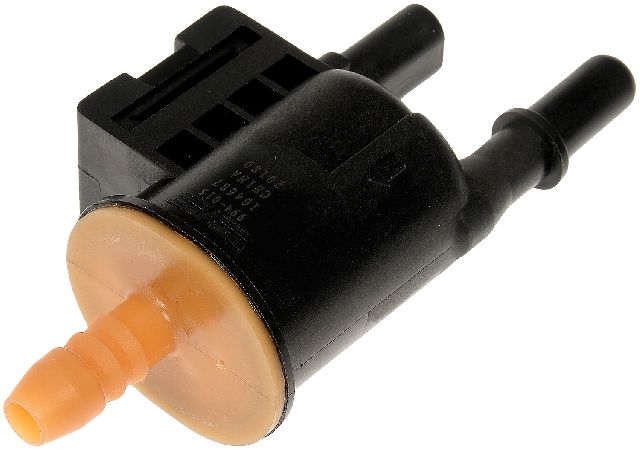
- Faulty EVAP Purge Valve/Solenoid 🔴 High Probability This is a common failure item across many modern vehicles, including those using the 2.4L MultiAir engine. It can get stuck slightly open, creating a small, persistent leak that the system detects during self-tests.
How to confirm: Remove the purge valve from the engine bay. With the valve unplugged and no power applied, try to blow air through it. If any air passes, the valve is stuck open and needs to be replaced.
Typical fix: Replace the purge valve. It is located on the engine's intake manifold and is a simple swap involving two hoses and one electrical connector. The Mopar part number is 04627182AA. 🎬 Watch: A quick walkthrough of the purge valve replacement process.
Est. part cost: $25-$60 - Faulty EVAP Leak Detection Pump (ESIM) 🔴 High Probability The ESIM is a known weak point on many Ram/Chrysler vehicles. It contains a small weighted valve that can fail or get stuck, causing it to incorrectly report a leak. The O-ring sealing it to the canister can also degrade and leak.
How to confirm: The pump is located on the charcoal canister near the fuel tank. A common sign of failure is if the old part makes a rattling sound when shaken. The definitive test is to replace it after other, simpler causes are ruled out, or to perform a smoke test.
Typical fix: Replace the ESIM. This involves accessing the charcoal canister under the vehicle, disconnecting a hose and electrical connector, and twisting the old pump out to install the new one. The Mopar part number is 4861962AD. Always use the new gasket provided.
Est. part cost: $30-$70 - Debris or damage to the capless fuel filler neck 🟡 Medium Probability Instead of a gas cap, this vehicle has a spring-loaded flap. Dirt, debris, or rust on the sealing surface can prevent it from closing properly, causing a small leak.
How to confirm: Visually inspect the fuel filler opening for any dirt, rust, or damage that could prevent a tight seal. Use the white plastic funnel that comes with the vehicle to operate the flap and inspect the inner seal.
Typical fix: Clean the fuel filler neck sealing surface. A recommended method is to spray a solvent like WD-40 on a rag or on the emergency funnel and work it in and out of the filler neck several times to dislodge debris and clean the seals. If the flap mechanism is damaged, the entire filler neck may need replacement.
Est. part cost: $0 for cleaning, $100-$250 for filler neck replacement - Cracked or disconnected EVAP hose ⚪ Low Probability Plastic and rubber hoses can become brittle and crack over time due to heat and age. Rodents have also been known to chew on these lines.
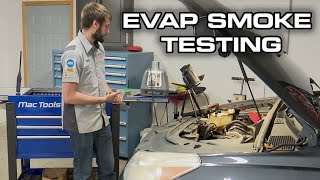
How to confirm: A visual inspection may reveal an obvious crack or disconnection. The most reliable method is to have a professional perform a smoke test, which forces smoke into the EVAP system to reveal the exact location of any leaks. 🎬 Watch: How to perform a smoke test to find leaks.
Typical fix: Replace the damaged section of hose. In some cases, a small crack can be repaired, but replacement is recommended for a permanent fix.
Est. part cost: $10-$50 for hose, $100-$200 for a smoke test
Rare But Worth Checking
- Cracked Charcoal Canister: The canister itself can develop a hairline crack, causing a leak. This is usually found only with a smoke test after all other components have been checked.
- Faulty Fuel Tank Pressure Sensor: While uncommon, the sensor that measures pressure in the system can fail and send incorrect data to the computer, tricking it into thinking there is a leak. This will typically set other codes as well.
Diagnosis Steps
- Read the code with an OBD-II scanner to confirm P0456 is present.
- Inspect the capless fuel filler neck. Ensure the flap moves freely and the sealing surface is clean. Use the vehicle's emergency funnel to work the mechanism and clean it with a cloth and solvent if necessary.
- Visually inspect the EVAP purge valve and its hoses in the engine bay (on the intake manifold) for any obvious cracks or loose connections.
- Test the purge valve. Remove it and try to blow through it while it is disconnected from power. If air passes, it is faulty and must be replaced.
- If the purge valve is good, the next most likely cause is the EVAP Leak Detection Pump (ESIM) located on the charcoal canister under the vehicle, near the fuel tank. Given its high failure rate and low cost, many owners choose to replace it (P/N 4861962AD) as the next step.
- Before replacing the ESIM, inspect its O-ring for cracks or flattening, as it may be the sole cause of the leak.
- If the light returns, check with a Ram dealer for any available Powertrain Control Module (PCM) software updates, referencing TSB #18-008-16 REV. B, which addresses false P0456 codes.
- If no visible leak is found and parts/software do not resolve the issue, the most definitive diagnostic step is a smoke test. This will pinpoint the exact location of the small leak, whether it's a hairline crack in a hose, the canister, or the fuel tank itself.
Parts You'll Likely Need
- Canister Purge Valve / Solenoid
(OEM #04627182AA)— This is a very frequent failure point. It gets stuck slightly open, causing a constant small leak that the system detects.
Trusted brands: Mopar, Dorman, Standard Motor Products
OEM price range: $40-$65
Aftermarket price range: $25-$45 - EVAP Leak Detection Pump (ESIM)
(OEM #4861962AD)— This is the second most common cause on Ram vehicles. It is responsible for the system's self-test, and when it fails, it falsely reports a leak. The part is also listed under superseded numbers 4861962AA and 4861962AB.
Trusted brands: Mopar, Dorman, Standard Motor Products
OEM price range: $50-$80
Aftermarket price range: $30-$50
Related Codes That Often Appear With This One
- P0441 — P0441 (EVAP Purge System Performance) often appears with P0456, as a faulty purge valve can cause both a small leak and incorrect flow. TSB #18-008-16 REV. B notes these can be set together and may be fixed by a PCM update.
- P0455 — This code for a large EVAP leak can sometimes be triggered by the same faulty components (like a purge valve or ESIM) that cause a small leak code.
- P0457 — This code indicates a leak detected due to a loose fuel cap. On a capless system, it points strongly to an issue with the filler neck seal and often accompanies P0456.
Technical Service Bulletins (TSBs) & Recalls
- Bulletin #18-008-16 REV. B: Supersedes previous bulletins and lists P0456 as a DTC that may be resolved with a PCM software update for 2015-2016 models with the 2.4L engine.
- Bulletin #18-030-16: Now superseded by 18-008-16 REV. B, this TSB also listed P0456 as a code potentially fixed by a PCM flash.
- Bulletin #18-063-17 REV. A: Also lists P0456 among several other engine and emissions codes that could indicate the need for a software update on 2016 models.
- Bulletin #1804823: Mentions a specific dealer diagnostic test for P0456, the 'Small Leak Verification Test (SLVT)' performed with the wiTECH tool.
Platform-Specific Known Issues
- Technical Service Bulletin #18-008-16 REV. B (which supersedes #18-030-16) is highly relevant. It indicates that for 2015-2016 models, a Malfunction Indicator Lamp with P0456 (and other codes like P0441) may be caused by overly sensitive software. The fix is to reprogram the Powertrain Control Module (PCM) with the latest software available from a dealer.
- The capless fuel filler system requires periodic cleaning of its seal to prevent small leaks that can trigger a P0456 code. This is a common maintenance oversight.
Mechanic-Grade Diagnostic Values
- Fuel Tank Pressure Sensor Voltage (Key On, Engine Off) — expected: 1.3V to 1.7V at atmospheric pressure. Failure: A reading of 0V or 5V indicates a sensor or wiring fault. A fixed low reading can be caused by an open in the 5V reference wire or a short to ground in the signal wire. A fixed high reading can be caused by an open ground wire.
Scan Tool Commands That Help
- wiTECH (Chrysler/Ram Dealer Tool): Small Leak Verification Test (SLVT) — This is the mandatory first step in dealer diagnosis for P0456. It verifies a leak is currently present before component replacement. It must also be run after a repair (including PCM updates) to confirm the fix, as a standard drive cycle is not sufficient to validate the repair during a single dealer visit.
Wiring & Ground Locations
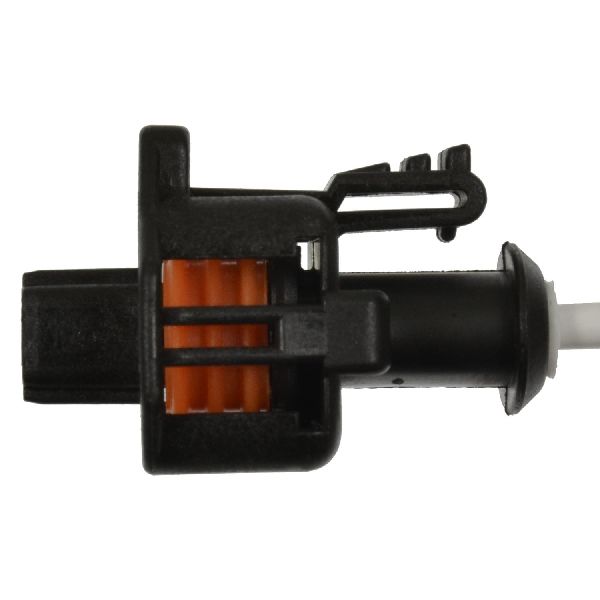
- EVAP Canister Purge Valve Connector — On the intake manifold in the engine bay.. This connector provides power and control to the purge valve. A poor connection or corroded pins can prevent the valve from closing properly, creating a small leak.
- ESIM / Leak Detection Pump Connector — On the ESIM, which is mounted to the charcoal canister near the fuel tank.. This connector powers the leak detection pump. A bad connection can cause the self-test to fail or report incorrect results, triggering a false P0456 code.
- Main Engine/Chassis Grounds — Common locations on Ram trucks include near the battery negative terminal, on the frame rail below the underhood fuse box, and near the windshield wiper motor.. A poor ground connection for the PCM or related sensors can cause erratic voltage readings, potentially leading the PCM to misinterpret sensor data and set false EVAP codes.
Real Owner Repair Stories
- YouTube video by user 'kenny tv' (2014-2018 Ram ProMaster (similar platform)) — Check engine light on with a 'gas cap' message on the dash. Scan showed code P0457 (similar to P0456).
❌ Tried (didn't work) Replacing the gas cap.
✅ What actually fixed it The EVAP leak detection pump (ESIM) and its sealing O-ring were replaced. The pump is the white component located on the charcoal canister near the fuel tank. The fix involved disconnecting one hose and one electrical connector, then twisting the old pump out to install the new one with its new seal.
OEM Part Supersession History
4861962AA, 4861962AB, 4861962AC→4861962AD— Standard part revision and improvement over time.
Heads up: The newer part number 4861962AD is the correct replacement for the earlier versions and should be used for repairs.68283058AA→68536884AA— Part revision for the Fuel Sensor and Tube assembly.
Model Year Variations Within This Range
- 2015-2016: These model years may have overly sensitive software in the Powertrain Control Module (PCM). TSB #18-008-16 REV. B indicates that a P0456 code could be falsely triggered. The official fix is to have a dealer reprogram the PCM with the latest available software, which should be done before replacing hardware.
Helpful Videos

Used OEM Parts in Stock
New Aftermarket Parts Available


The information in this article is provided for general reference and educational purposes only. Vehicle specifications, procedures, and part compatibility can vary by production date, trim level, and region. Always consult your vehicle's factory service manual and verify part numbers before purchasing or performing repairs. Safety-critical components such as airbags, seat belts, and braking systems should be installed by a qualified professional.
- Ram PROMASTER CITY:
- 🎬 Helpful Videos
- 🛍️ Shop This Part
- What's Unique About the 2015-2021 Ram PROMASTER CITY
- Diagnostic Flowchart
- Symptoms You May Notice
- Most Likely Causes
- Rare But Worth Checking
- Diagnosis Steps
- Parts You'll Likely Need
- Related Codes That Often Appear With This One
- Technical Service Bulletins (TSBs) & Recalls
- Platform-Specific Known Issues
- Mechanic-Grade Diagnostic Values
- Scan Tool Commands That Help
- Wiring & Ground Locations
- Real Owner Repair Stories
- OEM Part Supersession History
- Model Year Variations Within This Range
- 🎟️ Get 5% Off