

P0456 on 2014-2020 Ram 2500: Causes and Fixes for Small EVAP Leaks
On a gas-powered Ram 2500, P0456 is most often caused by a loose or faulty gas cap (on 2014-2018 models) or a failed Evaporative System Integrity Monitor (ESIM) switch. Check the gas cap first. If that's not the issue, the ESIM and the EVAP purge valve are the next most likely culprits, with parts costing around $25-$65. In some cases, especially if seen with codes P0335 or P2610, a dealer PCM software update is the required fix per TSBs.
- P0456 is a minor issue that won't leave you stranded but will cause an emissions failure.
- For 2014-2018 models, always check or replace the gas cap with an OEM Mopar part first.
- The two most common failing parts beyond the cap are the EVAP purge valve (in the engine bay) and the ESIM/leak detection pump (by the fuel tank). Both are relatively inexpensive and DIY-friendly.
- If you see other unrelated codes (like P0335 or P2610), be aware that a dealer software update might be the required fix, as noted in TSBs.
- If simple part swaps don't work, a professional smoke test is the best way to find the exact location of the leak without guessing.
What's Unique About the 2014-2020 Ram 2500

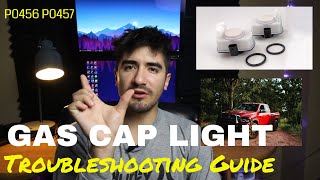
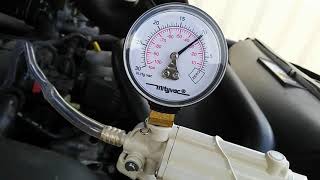
For the Ram 2500, P0456 is a very common code with a few well-documented failure points. While the gas cap is a universal first check, owners and technicians frequently point to the Evaporative System Integrity Module (ESIM) 🎬 Watch: How to replace the ESIM leak detection valve. as a high-failure item specific to many Chrysler/Dodge/Ram products. Additionally, several Technical Service Bulletins (TSBs) show that P0456 can appear with seemingly unrelated powertrain codes (like P0335 Crankshaft Sensor or P2610 PCM Timer), suggesting a potential PCM software glitch that may require a dealer update rather than a physical part replacement. [1, TSB #1810722REVA, TSB #1810822REVA] A recurring theme in owner forums is also rodent damage to the EVAP lines on top of the fuel tank.
Diagnostic Flowchart

Tap your situation to follow the diagnostic path that matches what you're seeing on this vehicle.
Generation note: This range covers the end of the third generation (2014-2018) and the start of the fourth generation (2019-2020). The main difference regarding this code is that 2014-2018 models use a traditional gas cap, which is a very common failure point. The 2019-2020 models use a capless fuel filler system, where the cause is more likely to be debris on the internal seal or a faulty purge valve.
Symptoms You May Notice
- Check Engine Light is on
- A "Check Fuel Cap" or "Gas Cap Loose" message may appear on the dash
- Vehicle hesitation or surge at low speeds, sometimes when turning the steering wheel to its stop (as noted in TSB #18-056-19 REV. A)
- Remote start feature may be disabled
- Failure to pass an emissions/smog test
- A faint fuel smell may be noticeable
- Replacing the gas cap with a cheap aftermarket version that doesn't seal properly, causing the code to return.
- Replacing the charcoal canister when only the attached (and much cheaper) ESIM has failed.
- Replacing EVAP components without first checking for other diagnostic trouble codes, as TSBs indicate P0456 can be falsely triggered by other system faults requiring a PCM update. [1, TSB #1810722REVA, TSB #1810822REVA]
- Installing a new ESIM in the incorrect orientation (upside down), which prevents the gravity-based mechanism from working.
Most Likely Causes

- Loose or Faulty Gas Cap (2014-2018 models) 🔴 High Probability The rubber O-ring on the gas cap degrades, cracks, or gets dirty over time, preventing a proper seal. This is the most common cause for any EVAP leak code on models with a cap.
How to confirm: Ensure the cap is tightened until it clicks multiple times. Inspect the rubber O-ring for cracks, stiffness, or damage. If a "Check Fuel Cap" light is also on, this is the most likely cause.
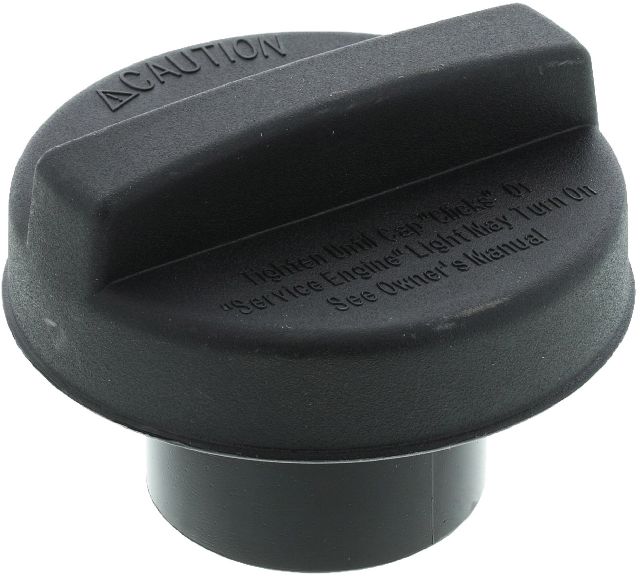
Typical fix: Replace the gas cap. It is highly recommended to use an OEM Mopar part (P/N: 52124512AA), as aftermarket caps are a known cause of this code returning.
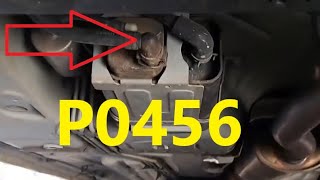
Est. part cost: $20-$35 - Faulty Evaporative System Integrity Module (ESIM) 🔴 High Probability This component, also called a leak detection pump, is a widely documented high-failure item on Ram trucks and many other Stellantis (Chrysler/Dodge/Jeep) vehicles. It is responsible for testing the system's integrity and frequently fails internally. Aftermarket versions are reported by owners to fail quickly or be bad out of the box.
How to confirm: The part is located on the charcoal canister near the fuel tank. A simple test is to remove it and shake it; if it rattles like a baby rattle, it's bad. It can also be tested with a capable scan tool. Crucially, it is gravity-fed and must be installed in the correct orientation to function, a common DIY mistake.
Typical fix: Replace the ESIM. It is a simple twist-lock part. Ensure the new O-ring is seated correctly in the canister port before installing the new ESIM. The Mopar part number has been superseded multiple times, with 4861962AD being a recent version.
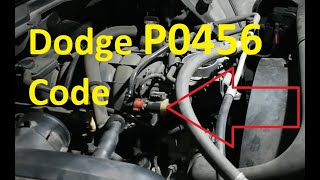
Est. part cost: $25-$75 - Faulty EVAP Purge Valve/Solenoid 🟡 Medium Probability This valve is located in the engine bay and is frequently cycled, leading to wear. It can get stuck slightly open or fail to seal properly, creating a constant small leak. Owners on forums for 5th-gen trucks (2019+) report this as a very common fix.
How to confirm: With the engine off, the valve should be closed. You can remove it and try to blow through it; if air passes, it's faulty. A professional smoke test will also show smoke passing through a bad valve.
Typical fix: Replace the purge valve. It is typically mounted on the passenger side of the engine and is easy to access. Part numbers vary, for the 6.4L HEMI, Mopar P/N 4627694AB is common for 2014-2018 models, while 68498111AA is used on newer trucks.
Est. part cost: $30-$60 - Cracked or Disconnected EVAP Hoses (Rodent Damage) ⚪ Low Probability Rubber and plastic hoses can become brittle and crack from age and heat exposure. A surprisingly common issue reported by Ram owners is rodents chewing through the plastic EVAP lines, particularly on top of the fuel tank where they are hard to see.
How to confirm: A visual inspection of all accessible EVAP lines may reveal obvious damage. However, a smoke test is the most effective method to find tiny, hard-to-see leaks in the hose network. An owner on RamForum.com reported having to splice a chewed line on top of the fuel tank three separate times.
Typical fix: Replace the damaged section of hose. For rodent damage on top of the tank, owners often splice in a piece of rubber vacuum hose as a durable, inexpensive repair.
Est. part cost: $10-$100
Rare But Worth Checking
- PCM Software Glitch: As per TSBs #1810722REVA, #1810822REVA, and #18-056-19 REV. A, this EVAP code can be falsely triggered by other system faults. If you have other codes like P0335 or P2610, a PCM software update at a dealership may be the actual fix. [TSB #1810722REVA, TSB #1810822REVA]
- Debris in Capless Fuel Filler (2019+ models): On newer trucks, a small piece of dirt, a stray blade of grass, or debris can prevent the spring-loaded filler door from sealing completely, which is enough to trigger the P0456 code.
- Cracked Charcoal Canister: This is usually caused by physical damage from road debris or habitually over-filling the fuel tank ('topping off'), which forces liquid fuel into the vapor canister, saturating it and potentially causing codes.
Diagnosis Steps
- Read the code with an OBD-II scanner and check for any other codes present. If P0335 or P2610 are present, investigate TSBs related to a PCM reflash first. [1, TSB #1810722REVA]
- For 2014-2018 models: Inspect the gas cap. Ensure it is tight (at least three clicks). Remove it and check the rubber seal for cracks, dirt, or damage. Clean the seal and filler neck rim.
- For 2019+ models: Inspect the capless fuel filler opening for any debris that could prevent the seal from closing. Clean the seal carefully.
- Clear the code and drive for a few days to see if it returns. The EVAP monitor runs under specific conditions (often with the fuel tank between 1/4 and 3/4 full), so it may take time.
- If the code returns, consider replacing the most common, inexpensive parts first: the gas cap (OEM only) or the EVAP purge solenoid in the engine bay.
- If the code still returns, the next most likely culprit is the ESIM on the charcoal canister. It is a common failure item and relatively inexpensive to replace.
- If the issue persists, the most effective next step is a professional smoke test. This involves injecting a harmless, visible smoke into the EVAP system (usually at the purge line) to precisely locate the source of the leak, which could be a cracked hose or a faulty canister seal.
Parts You'll Likely Need

- Gas Cap (2014-2018)
(OEM #52124512AA)— This is the most frequent cause due to a worn or damaged seal. It's the first and cheapest part to replace.
Trusted brands: Mopar - Evaporative System Integrity Module (ESIM)
(OEM #4861962AD (supersedes 4861962AA, 4861962AB, etc.))— A very high-failure item on many Stellantis vehicles. Located on the charcoal canister, it's responsible for leak detection and often fails internally.
Trusted brands: Mopar
Related Codes That Often Appear With This One
- P0457 — This code indicates a large EVAP leak. It can appear with P0456 if the leak is intermittent or on the borderline between small and large, often pointing to a very loose or missing gas cap.
- P0441 — Indicates incorrect purge flow, often pointing to a faulty EVAP purge valve, which can also cause a P0456 leak code.
- P0335 — Crankshaft Position Sensor Circuit. TSBs #1810722REVA and #1810822REVA note that this code can appear with P0456, suggesting a potential PCM software issue that may require a dealer reflash. [TSB #1810722REVA, TSB #1810822REVA]
- P2610 — PCM Internal Engine Off Timer Performance. TSBs #1810722REVA and #1810822REVA also link this code with P0456, pointing towards a possible PCM software update being needed. [TSB #1810722REVA, TSB #1810822REVA]
Technical Service Bulletins (TSBs) & Recalls

- 1807123: Notes to use wiTECH Small Leak Verification test (SLVT) when P0456 is present.
- 1804823: Mentions the wiTECH Small Leak Verification Test (SLVT) for P0456.
- 1810722REVA: Links P0456 with P0335, P2610, and misfire codes.
- 18-056-19 REV. A: Links P0456 with hesitation/surge symptoms and points to a PCM reflash as the fix.
- 1810822REVA: Links P0456 with P0335 and P2610.
Platform-Specific Known Issues
- The Parts Cannon Experience: An owner of a 2016 Ram 2500 6.4L on RamForum.com documented a months-long battle with P0456. They first replaced the ESIM with an Autozone part, which fixed the code for a month. It returned, and a warranty exchange yielded the same result. A third, different aftermarket part also failed. Finally, they installed an OEM Mopar ESIM, but the light remained. The ultimate fix was replacing the EVAP purge valve in the engine bay, after which the code finally cleared. This highlights the importance of using OEM parts and that multiple components can be at fault.
- Persistent Rodent Damage: On RamForum.com, a 2018 Ram 2500 owner living in a rural area reported getting a P0456 code for the third time. In each instance, the cause was a rodent chewing the plastic EVAP lines located on top of the fuel tank. Their solution was to cut out the chewed section and splice in a piece of vacuum line. For the final repair, they added braided stainless sheathing over the line to prevent future damage.
Mechanic-Grade Diagnostic Values
- EVAP Purge Valve Solenoid Voltage — expected: ~12 Volts (battery voltage). Failure: No voltage present at the connector with key on, engine off.
- EVAP Purge Valve Solenoid Resistance — expected: 14 - 30 Ohms. Failure: A reading of infinite resistance (open circuit) or zero resistance (short circuit) indicates a failed solenoid coil.
- EVAP Purge Valve Mechanical Test — expected: No air should pass through.. Failure: If air can be blown through the valve, it is stuck open and faulty.
- Fuel Tank Pressure (FTP) Sensor Voltage Supply — expected: 5 Volts. Failure: Incorrect or no voltage indicates a wiring or PCM issue.
Scan Tool Commands That Help
- wiTECH (Dealer Scan Tool): Small Leak Verification Test (SLVT) — This is the mandatory factory procedure for diagnosing P0456. It must be run to verify a leak is present before replacing parts and again after the repair to confirm the fix. [5, TSB #1807123] A technician noted this test is more sensitive than a standard smoke test and can detect intermittent leaks that other methods miss. It also specifically tests for an internally leaking purge valve.
- High-End Aftermarket Scanners (e.g., Autel, iCarsoft, Xtool): EVAP System Test / Seal System — These scanners can command the EVAP vent valve/ESIM to close, which seals the system. This is a required step before performing a smoke test to ensure the system is properly prepared for diagnosis.
Wiring & Ground Locations
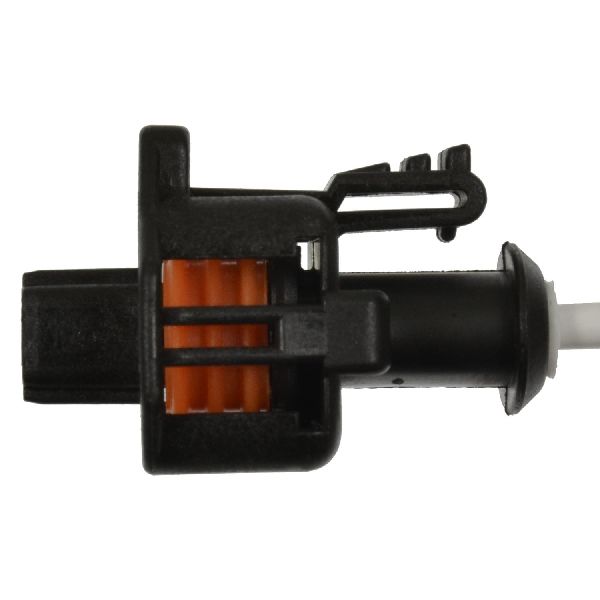
- ESIM Connector — On the charcoal canister, located near the fuel tank at the left rear of the vehicle chassis.. This is the connector for the Evaporative System Integrity Module (ESIM), a primary cause of code P0456. Checking for corrosion or damage at this connector is a valid diagnostic step.
- Fuel Filler Neck — The metal tube where the gas cap is inserted (2014-2018) or where the capless system is housed (2019-2020).. The Fuel Tank Pressure (FTP) sensor is located on the filler neck. More commonly, the rim of the filler neck can corrode or accumulate grit, preventing a proper seal even with a new gas cap, which can cause P0456.
Real Owner Repair Stories
- 5th Gen Rams Forum (2019 Ram) — Check Engine Light with P0456 code.
❌ Tried (didn't work) Resetting the code multiple times.
✅ What actually fixed it Replacing the EVAP purge valve in the engine bay. The part cost approximately $30 and took 15 minutes to replace. - RamForum.com (2017 Ram 1500 3.6L Pentastar V6) — Two codes for a very small leak.
✅ What actually fixed it The user replaced the Evaporative Emissions System Leak Detection Pump (ESIM) with a Dorman brand part. While this likely fixed the leak, it immediately caused the fuel gauge to read incorrectly (showing half a tank when full), indicating a potential incompatibility issue with the aftermarket part. - RamForum.com (2018 Ram 2500 5.7 Hemi) — P0456 code.
❌ Tried (didn't work) A smoke test was performed and no leaks were found.
✅ What actually fixed it The issue was unresolved, but the technician's recommendation after the clean smoke test was to replace the entire fuel tank, suspecting a leak in an integrated, non-serviceable part of the tank assembly.
"I Checked Everything" — The Actual Cause
- A technician on YouTube demonstrated a scenario on a 2013 Chrysler vehicle where the standard EVAP pressure/smoke test passed (or showed an inconclusive bouncing indicator), but the code persisted. The definitive failure was only found by running the wiTECH dealer scan tool's 'Small Leak Verification Test (SLVT),' which is more sensitive and uses a different method (vacuum decay monitored by the FTP sensor) to confirm the leak.
- In a forum post, an owner reported their 2018 Ram 2500 passed a smoke test, leading the mechanic to conclude the leak was from a non-serviceable component integrated into the fuel tank itself, requiring a full tank replacement to fix.
OEM Part Supersession History
4861962AA, 4861962AB, 4861962AC, 4891685AA, 4891685AB→04861962AD— Standard part evolution for improved reliability or manufacturing changes.
Heads up: This is the OEM part number for the Evaporative System Integrity Module (ESIM). While aftermarket versions exist, a documented case showed a Dorman replacement causing fuel gauge reading errors, reinforcing the recommendation to use OEM Mopar parts.
Model Year Variations Within This Range
- 2014-2018: These models use a traditional, screw-on gas cap. A faulty cap or corroded filler neck rim is a primary cause of P0456.
- 2019-2020: These models use a capless fuel filler system. The cause is more likely to be debris on the internal flap's seal or a faulty component elsewhere in the system, like the purge valve.
- 2014-2020: The entire model range uses an Evaporative System Integrity Module (ESIM) which replaced the older Leak Detection Pump (LDP) and separate vent solenoid. Diagnosis relies on the wiTECH Small Leak Verification Test (SLVT), which became standard procedure on 2013+ Chrysler vehicles.
Helpful Videos


Used OEM Parts in Stock


New Aftermarket Parts Available


The information in this article is provided for general reference and educational purposes only. Vehicle specifications, procedures, and part compatibility can vary by production date, trim level, and region. Always consult your vehicle's factory service manual and verify part numbers before purchasing or performing repairs. Safety-critical components such as airbags, seat belts, and braking systems should be installed by a qualified professional.
- Ram 2500:
- 🎬 Helpful Videos
- 🛍️ Shop This Part
- What's Unique About the 2014-2020 Ram 2500
- Diagnostic Flowchart
- Symptoms You May Notice
- Most Likely Causes
- Rare But Worth Checking
- Diagnosis Steps
- Parts You'll Likely Need
- Related Codes That Often Appear With This One
- Technical Service Bulletins (TSBs) & Recalls
- Platform-Specific Known Issues
- Mechanic-Grade Diagnostic Values
- Scan Tool Commands That Help
- Wiring & Ground Locations
- Real Owner Repair Stories
- "I Checked Everything" — The Actual Cause
- OEM Part Supersession History
- Model Year Variations Within This Range
- 🎟️ Get 5% Off