

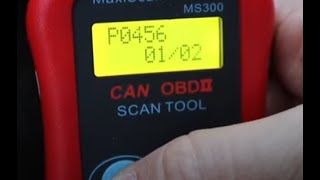
P0456 on 2015-2022 Nissan Versa: EVAP Small Leak Causes and Fixes
For a 2015-2022 Nissan Versa, code P0456 most often means a faulty gas cap or a leaking EVAP vent control valve. Always check the gas cap first. For years, a failed O-ring on the vent valve was the next most common cause, documented in Nissan TSBs. However, a 2022 bulletin update (NTB17-082E) states the O-ring is no longer sold separately and the entire vent control valve assembly should now be replaced.
- P0456 on a Nissan Versa means a very small leak in the fuel vapor system.
- Always start by inspecting and tightening the gas cap. If the seal is bad, replace it with an OEM part.
- If the gas cap is not the issue, the most likely cause is a failed O-ring on the EVAP vent control valve, a known issue covered by Nissan TSBs.
- A smoke test is the most effective way to accurately diagnose the location of the leak.
- The issue is not urgent and won't affect drivability, but it will prevent you from passing an emissions test.
What's Unique About the 2015-2022 Nissan VERSA

While many cars can get a P0456 from a loose gas cap, Nissan vehicles of this era, including the Versa, Sentra, Juke, and Rogue, are particularly known for a leaking seal on the EVAP vent control valve. Nissan issued multiple Technical Service Bulletins (TSBs) about this specific issue. Early versions advised replacing just the O-ring, but the latest guidance (TSB NTB17-082E) from 2022 instructs technicians to replace the entire vent control valve assembly, as the O-ring is no longer offered as a standalone part. This makes the valve assembly a highly probable cause if the gas cap isn't the culprit.
Diagnostic Flowchart
Tap your situation to follow the diagnostic path that matches what you're seeing on this vehicle.
Generation note: This range covers two generations of the Nissan Versa: the end of the second generation (N17, 2015-2019) and the third generation (N18, 2020-2022). The common causes, especially the gas cap and EVAP vent control valve, are relevant to both generations, as confirmed by TSBs that apply to both the N17 and N18 chassis.
Symptoms You May Notice
- Check Engine Light is on
- A faint fuel smell, particularly around the rear of the car near the gas tank or charcoal canister.
- A "Check Gas Cap" message on the dash, if equipped.
- Difficulty starting the engine immediately after refueling (less common with small leaks, but possible if a valve is failing).
- Replacing the entire EVAP vent control valve when only the inexpensive O-ring was needed. While this was a common misdiagnosis for years, Nissan's latest TSB (NTB17-082E) now recommends replacing the whole valve assembly as the O-ring is no longer sold separately.
- Replacing the gas cap repeatedly without performing a smoke test to find the actual leak source, which is often the vent valve.
Most Likely Causes


- Loose or Faulty Gas Cap 🔴 High Probability This is the most common cause for a P0456 on any vehicle. The rubber seal on the cap can wear out, crack, or get dirty, preventing a proper seal. Nissan TSB NTB13-097J specifically notes that a loose cap is a primary trigger for this code. 🎬 Watch: A breakdown of the two most common Nissan fixes.
How to confirm: Remove the gas cap and inspect the rubber O-ring for any cracks, stiffness, or debris. Ensure it is tightened until it clicks at least once. Some owners suggest applying a thin layer of petroleum jelly to the seal as a temporary test.
Typical fix: Clean the cap's seal and the filler neck. If the seal is damaged, replace the gas cap. It is strongly recommended to use an OEM cap to ensure a perfect seal, as aftermarket caps can sometimes fail to seal correctly.
Est. part cost: $15-$40 - Leaking EVAP Vent Control Valve or O-Ring 🔴 High Probability Nissan issued TSBs (like NTB17-082b) specifically for this problem on nearly all 2008 and newer vehicles. The seal where the vent control valve mounts to the charcoal canister fails, causing a small leak. This is the most likely cause after the gas cap.
How to confirm: This requires a smoke test. A technician injects smoke into the EVAP system and will see it leaking from the point where the vent control valve mounts to the charcoal canister. The valve is located at the rear of the car, near the canister, typically behind the passenger-side rear wheel.
Typical fix: Per TSB NTB17-082E (Feb 2022), the official fix is to replace the entire EVAP vent control valve assembly. Previously, technicians were advised to replace only the O-ring (Part No. 16618-JF00A), but Nissan no longer services this part separately. Ensure the mounting surface on the canister is clean before installing the new valve.
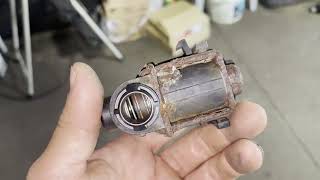
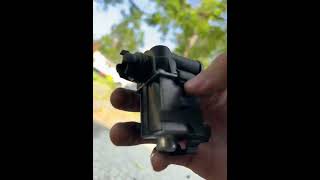
Est. part cost: $50-$100 for the valve assembly - Faulty EVAP Canister Purge Valve 🟡 Medium Probability This valve, located in the engine bay, can get stuck slightly open, causing a leak that the system detects during its self-test.
How to confirm: With the engine off, disconnect the valve and try to blow through it. If any air passes, it is not sealing correctly and is faulty. A scan tool can also be used to command it closed and check for vacuum leaks.
Typical fix: Replace the purge valve. It is typically mounted on or near the engine's intake manifold and is relatively easy to access. The OEM part number is often 14930-3YM0A for this generation.
Est. part cost: $40-$90 - Cracked or Disconnected EVAP Hoses ⚪ Low Probability Rubber hoses can become brittle and crack over time due to age and heat exposure, creating small leaks.
How to confirm: A visual inspection may reveal obvious cracks, but a smoke test is the most reliable method to find tiny leaks in the hose network. Pay close attention to the lines running from the canister to the purge valve in the engine bay.
Typical fix: Replace the specific section of cracked hose.
Est. part cost: $10-$30 for hose material
Rare But Worth Checking
- Cracked Charcoal Canister: The plastic body of the charcoal canister can develop hairline cracks, causing a leak. This is less common than valve failures but is a definite possibility. A smoke test is required for diagnosis.
- Leaking Fuel Tank Filler Neck: Corrosion or damage to the metal pipe leading to the gas tank can cause a leak. This is more common in areas with heavy road salt usage. A smoke test will reveal smoke escaping from the rusted area.
- Cracked Fuel Pump Assembly/Lock Ring Area: In some cases, a very small crack can develop on the top of the fuel tank or on the fuel pump assembly itself, where the lock ring secures it. This can be very difficult to find without a smoke test and careful inspection.
Diagnosis Steps
- Check the Gas Cap: Remove, inspect the seal for damage, and retighten it until it clicks. Clear the code and drive for a few days to see if it returns. The EVAP monitor often runs after the vehicle has been parked for several hours.
- Visual Inspection: Look over the EVAP hoses in the engine bay and under the car near the canister for any obvious cracks, disconnections, or damage.
- Scan Tool Test: Use an advanced scan tool to command the EVAP vent and purge valves to close, then monitor the system's fuel tank pressure sensor to see if it holds a vacuum. This can help isolate a faulty valve.
- Perform a Smoke Test: This is the definitive test. Connect a smoke machine 🎬 See how to use a smoke machine to find leaks. to the EVAP service port. The smoke will fill the system and exit from the location of the leak, making it easy to spot. Pay close attention to the vent valve area on the charcoal canister, as this is the most common leak point on a Versa.
- Isolate Components: If a leak is detected but not visible, the smoke test can be used to isolate and test individual components like the purge valve and vent valve to confirm they are sealing correctly.
Parts You'll Likely Need
- Gas Cap
(OEM #17251-3JA0A)— The seal fails over time. This is the easiest and most common first step. An OEM cap is recommended for a perfect fit.
Trusted brands: Nissan OE, Motorad
OEM price range: $25-$40
Aftermarket price range: $15-$25 - EVAP Vent Control Valve
(OEM #14935-JF02C)— This is the most common failure point after the gas cap. The seal fails, causing a small leak. Per TSB NTB17-082E, the entire valve must be replaced. This part number supersedes previous versions.
Trusted brands: Nissan OE, Hitachi
OEM price range: $50-$100
Aftermarket price range: $35-$70 - EVAP Canister Purge Valve
(OEM #14930-3YM0A)— This valve can fail to close completely, allowing vapors to leak into the engine intake when they shouldn't. It is located in the engine bay. 🎬 Watch: Step-by-step purge valve replacement for 2020-2022 models.
Trusted brands: Nissan OE, Hitachi, Standard Motor Products
OEM price range: $60-$90
Aftermarket price range: $40-$70 - EVAP Vent Control Valve O-Ring
(OEM #16618-JF00A)— NOTE: This part is reportedly no longer sold separately by Nissan per TSB NTB17-082E. For years, this was the primary fix for P0456, as documented in TSB NTB17-082b. Some aftermarket suppliers may still offer it, but the official repair now involves replacing the entire valve.
Trusted brands: Nissan OE (Discontinued)
OEM price range: $5-$15
Aftermarket price range: $5-$10
Related Codes That Often Appear With This One
- P0442 — This code indicates a 'small leak', which is slightly larger than the 'very small leak' of P0456. They share the same causes, and a leak may be borderline between the two thresholds.
- P0455 — This code indicates a 'large leak'. If a component fails catastrophically (e.g., a hose disconnects completely or the gas cap is left off), you may see this code. Sometimes, a faulty repair for P0456 can lead to a P0455 if a component is not installed correctly.
Technical Service Bulletins (TSBs) & Recalls
- NTB17-082b: 'NISSAN; DTC P0456 CAUSED BY EVAP LEAK AT VENT CONTROL VALVE O-RING' - This is the primary TSB that identified the O-ring as a common failure point. It applied to almost all 2008+ Nissan vehicles.
- NTB17-082E: 'DTC P0456 CAUSED BY EVAP LEAK AT VENT CONTROL VALVE O-RING' - The latest revision from Feb 2022, which amends the repair procedure to replace the entire valve assembly instead of just the O-ring.
- NTB13-097J: 'EVAP LEAK DTC P0442, P0455, P0456 INFORMATION' - A general bulletin about EVAP leak codes, which emphasizes checking the gas cap first and outlines the proper diagnostic flow for dealers.
Platform-Specific Known Issues
- Technical Service Bulletin NTB17-082b specifically identifies a faulty O-ring on the vent control valve as a primary cause for P0456 on many Nissan models from 2008 and newer.
Mechanic-Grade Diagnostic Values
- EVAP Canister Purge Valve Solenoid Resistance — expected: 15 to 30 Ohms. Failure: A reading outside this range, or an open circuit (infinite resistance), indicates a failed solenoid coil.
- Fuel Tank Pressure (FTP) Sensor Voltage — expected: Approximately 1.5V with the gas cap off (atmospheric pressure).. Failure: A voltage that is stuck high (near 5V) or low (near 0V) regardless of tank pressure suggests a faulty sensor or wiring issue.
Scan Tool Commands That Help
- Nissan CONSULT-III plus (or advanced aftermarket scanner): EVAP System Leak Check (Active Test) — This function is used to command the EVAP vent control valve closed, sealing the system. The technician can then monitor the fuel tank pressure sensor to see if the system holds vacuum or pressure, confirming a leak is present without needing a smoke machine initially. It's also required before a smoke test to ensure the system is sealed.
- Nissan CONSULT-III plus (or advanced aftermarket scanner): Purge Volume Control Valve Test — This allows a technician to command the purge valve to open and close while monitoring system pressure or vacuum. This can confirm if the purge valve is sticking open or not responding to the computer's command, which would cause a P0456 leak path.
Wiring & Ground Locations
- ECM Connector (E16), Pin 131 — At the Engine Control Module (ECM), which is typically located in the engine bay.. This is the specific pin for the EVAP Control System Pressure Sensor signal. A technician can back-probe this pin to check for the correct voltage signal (approx. 1.5V) directly at the ECM, helping to differentiate between a sensor/wiring issue and a faulty computer.
- ECM Grounds (Pins 159, 162) — At the Engine Control Module (ECM) connector.. A poor ground connection for the ECM can cause erratic sensor readings, including from the fuel tank pressure sensor, potentially leading to a false P0456 code. Verifying ground integrity is a key step in advanced electrical diagnosis.
Real Owner Repair Stories
- Reddit user in /r/Nissan (2015 Nissan Sentra SV (similar EVAP system design)) — Persistent pending P0456 code.
❌ Tried (didn't work) Replaced EVAP purge valve, Replaced fuel tank pressure sensor, Replaced vent control valve, Replaced gas cap
✅ What actually fixed it The owner discovered a ripped hose on top of the fuel tank was the actual cause of the leak.
"I Checked Everything" — The Actual Cause
- In some cases, particularly with very small leaks, a standard smoke test may not visibly show the source of the leak even though the machine's flow meter indicates a leak is present. One owner reported this experience on a 2015 Versa; despite the smoke machine confirming a leak, no smoke was visible until they focused on the fuel filler neck area, eventually replacing the gas cap to solve the issue.
OEM Part Supersession History
14935-JF00A, 14935-JF00B, 14935-JF00C, 14935-JF00D, 14935-JF00E, 14935-JF01B, 14935-JF01C→14935-JF02C— Part has been updated and revised by the manufacturer over time to improve reliability or sourcing.
Heads up: The newest part number, 14935-JF02C, is the correct replacement for all previous versions for this vehicle application.
Helpful Videos
Used OEM Parts in Stock


New Aftermarket Parts Available


The information in this article is provided for general reference and educational purposes only. Vehicle specifications, procedures, and part compatibility can vary by production date, trim level, and region. Always consult your vehicle's factory service manual and verify part numbers before purchasing or performing repairs. Safety-critical components such as airbags, seat belts, and braking systems should be installed by a qualified professional.
- Nissan VERSA:
- 🎬 Helpful Videos
- 🛍️ Shop This Part
- What's Unique About the 2015-2022 Nissan VERSA
- Diagnostic Flowchart
- Symptoms You May Notice
- Most Likely Causes
- Rare But Worth Checking
- Diagnosis Steps
- Parts You'll Likely Need
- Related Codes That Often Appear With This One
- Technical Service Bulletins (TSBs) & Recalls
- Platform-Specific Known Issues
- Mechanic-Grade Diagnostic Values
- Scan Tool Commands That Help
- Wiring & Ground Locations
- Real Owner Repair Stories
- "I Checked Everything" — The Actual Cause
- OEM Part Supersession History
- 🎟️ Get 5% Off