

P0456 on 2008-2015 Nissan Rogue: EVAP Small Leak Causes and Fixes
On a 2008-2015 Nissan Rogue, the P0456 code is most often caused by a loose gas cap or a dried-out O-ring on the EVAP vent control valve located at the rear of the vehicle. Always check the gas cap first. If that's not the issue, the vent valve was the next most common failure. Per a 2022 Nissan TSB, the O-ring is no longer sold separately, and the entire vent valve assembly must be replaced.
- P0456 on your Rogue means a very small emissions leak has been detected.
- Always start by checking your gas cap. Make sure it's tight and the seal is in good condition.
- The second most likely cause is a specific, inexpensive O-ring on the EVAP vent control valve, a known issue covered by Nissan TSBs.
- While you can continue to drive the car, the Check Engine Light will remain on and you will not pass an emissions inspection until it is fixed.
- A professional smoke test is the fastest way to pinpoint the exact location of the leak if the gas cap isn't the problem.
What's Unique About the 2008-2015 Nissan ROGUE

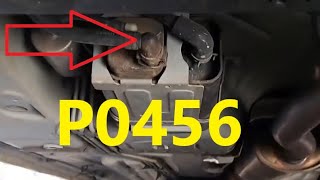
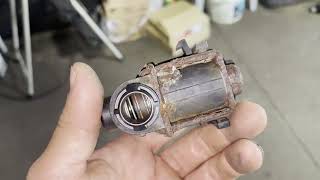
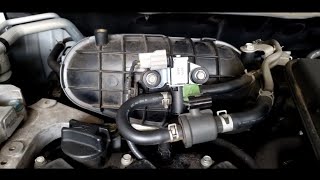
For this generation of Nissan Rogue, the P0456 code is very frequently linked to a specific, well-documented failure point: the O-ring that seals the EVAP canister vent control valve. Nissan issued multiple Technical Service Bulletins (TSBs) 🎬 Watch: A walkthrough of the common O-ring and valve repair. about this exact issue. Initially, these TSBs advised technicians to replace just the small O-ring rather than the entire, more expensive valve or canister assembly. However, the most recent TSB, NTB17-082E issued in February 2022, states that the O-ring is no longer available as a separate service part and the entire vent control valve assembly should be replaced. This makes the repair slightly more expensive than before but still targets a very specific and common failure point.
Diagnostic Flowchart

Tap your situation to follow the diagnostic path that matches what you're seeing on this vehicle.
Generation note: The 2008-2015 range covers two generations of the Nissan Rogue: - First Generation (S35): 2008-2013, and sold as the "Rogue Select" for 2014-2015. - Second Generation (T32): 2014-2015 model years. Both generations are explicitly mentioned in Nissan TSBs regarding the P0456 code, particularly the common issue with the vent control valve. The location of components may vary slightly, but the causes and diagnostic principles are the same. For both generations, the EVAP canister and vent valve are located at the rear of the car on the passenger side, near the muffler and often behind a plastic shield.
Symptoms You May Notice
- Check Engine Light is on
- A faint fuel smell may be noticeable, though this is not common with a very small leak. Some owners on forums report a gas smell when the code is present.
- In rare cases, difficulty refueling (gas pump clicking off prematurely) can occur if the vent valve is stuck closed, though this is more common with other EVAP codes.
- Replacing the entire EVAP canister when only the vent control valve is bad. The TSBs specifically warn against this unless the canister itself is confirmed to be leaking.
- Replacing the purge valve in the engine bay before checking the more common failure points at the rear of the vehicle (gas cap, vent valve).
- Repeatedly replacing the gas cap when the true issue is the vent valve.
Most Likely Causes

- Loose or Worn Gas Cap 🔴 High Probability This is the most common cause for any EVAP code on any vehicle. The cap seal can degrade over time or may not have been tightened properly after refueling. Nissan TSBs NTB13-097 and NTB09-020f specifically call out checking the gas cap first for P0456 codes.
How to confirm: Ensure the gas cap is tightened until it clicks several times. Inspect the rubber seal on the cap for cracks, stiffness, or damage. If it looks worn, it's a cheap replacement.
Typical fix: Tighten or replace the gas cap.
Est. part cost: $15-$40 - Faulty EVAP Vent Control Valve or O-Ring 🔴 High Probability This is the second most common cause after the gas cap. Nissan has issued multiple TSBs (NTB17-082 series) specifically for this failure. The rubber O-ring that seals the valve to the charcoal canister dries out, cracks, and creates a small leak. The valve itself can also fail due to corrosion from its location in the rear wheel well. Many owner forum posts and videos confirm this is a frequent DIY fix.
How to confirm: A technician can command the valve to open and close using a bidirectional scan tool to see if it functions; if it doesn't click, it has failed. A smoke test is the most definitive way to confirm a leak at the O-ring seal. Smoke is introduced into the EVAP system and will be seen escaping from the vent valve/canister mounting point.
Typical fix: Per the latest TSB NTB17-082E, the official repair is to replace the entire EVAP vent control valve assembly. Previously, just the O-ring was replaced. The valve is located on the EVAP canister at the rear of the vehicle, on the passenger side, and is typically a twist-off part held by a single connector.
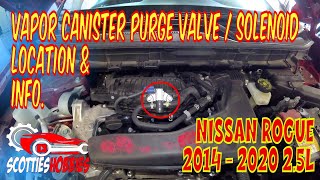
Est. part cost: $50-$100 - Faulty EVAP Canister Purge Volume Control Valve/Solenoid ⚪ Low Probability This valve is located in the engine bay and controls the flow of fuel vapors to the engine. If it sticks slightly open, it can cause a leak code. While less common than the vent valve for P0456, it's a known failure point in the EVAP system.
How to confirm: The valve is normally closed. A technician can command it closed with a scan tool and check for flow. A simple DIY check is to remove the valve and try to blow through it. If air passes, it's stuck open and needs replacement.
Typical fix: Replace the purge valve.
Est. part cost: $40-$90 - Cracked or Disconnected EVAP Hoses ⚪ Low Probability Rubber hoses can become brittle and crack over time due to age and exposure to the elements. This is a possibility on any vehicle, including the Rogue.
How to confirm: Perform a thorough visual inspection of all EVAP lines running from the gas tank, to the canister, and to the engine bay. A smoke test is the most effective way to find a small hose leak.
Typical fix: Replace the damaged section of hose.
Est. part cost: $10-$30
Rare But Worth Checking
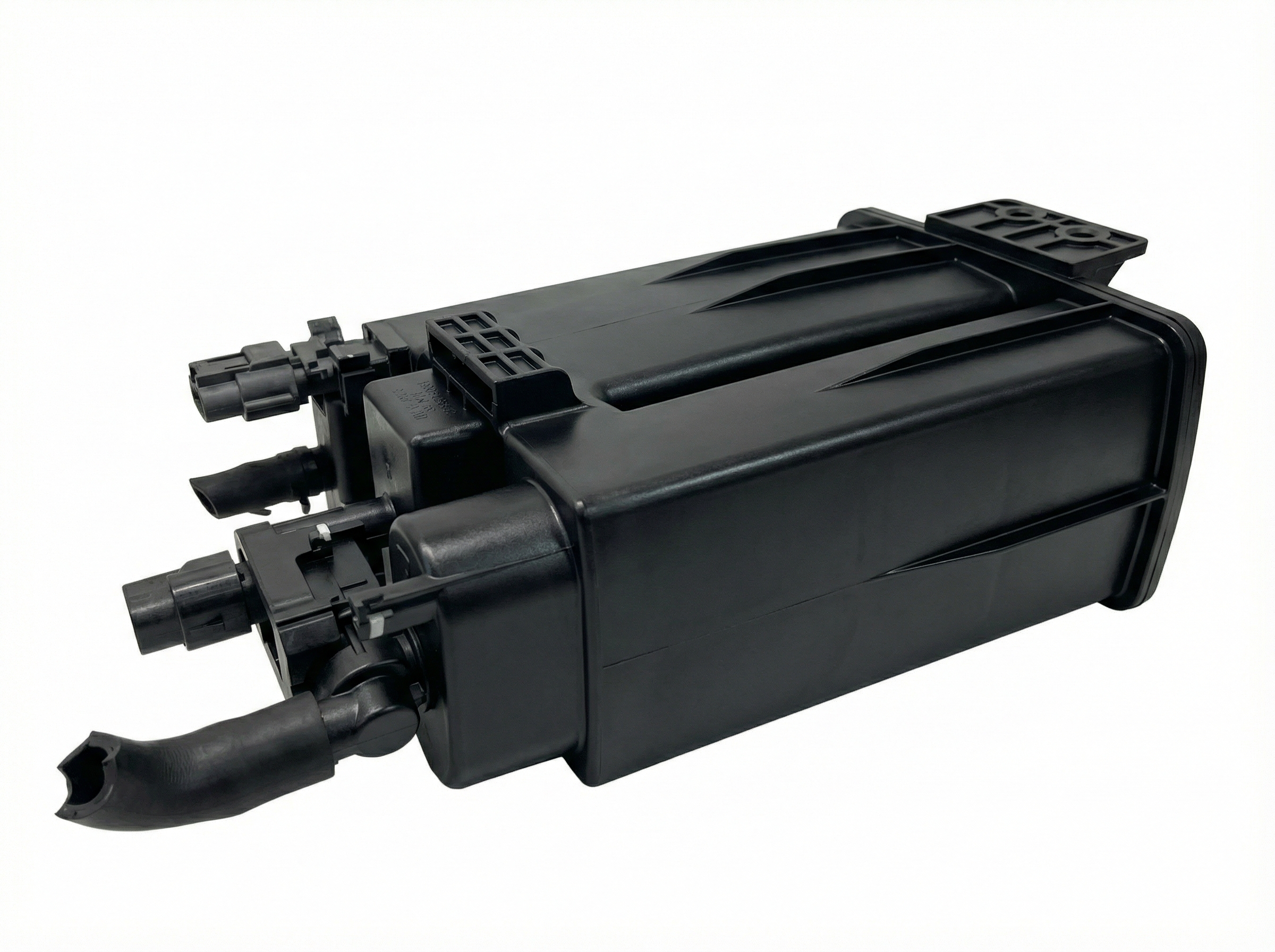
- Cracked EVAP Charcoal Canister: While less common for a small leak, the plastic housing of the canister can develop hairline cracks over time, especially if the vehicle has been exposed to rough roads or impacts from below. This is usually found via a smoke test.
- Leaking Fuel Tank Pressure Sensor: The sensor that monitors system pressure can itself develop a leak at its seal, though this is uncommon and would typically be found with a smoke test.
- Melted fuel pump housing: On some Nissan models like the Sentra, a P0456 code was traced to a very hard-to-find leak where the fuel pump wiring connector housing had melted slightly, creating a tiny hole. This is a very rare cause but has been documented by a Nissan technician after multiple other parts were replaced.
Diagnosis Steps

- Check the Gas Cap: Remove, inspect the seal, and retighten the gas cap until it clicks multiple times. Clear the code and drive for a few days to see if it returns. This is the simplest and most common fix.
- Visual Inspection: Inspect all visible EVAP hoses in the engine bay and around the charcoal canister at the rear of the vehicle. Look for obvious cracks, disconnections, or damage.
- Inspect Vent Control Valve Area: Locate the EVAP canister at the rear of the vehicle, on the passenger side near the muffler. The vent control valve is attached to it. Visually inspect the valve for heavy rust or damage, which is common due to its location.
- Perform a Smoke Test: This is the most effective way to find a small leak. A smoke machine is connected to the EVAP system's service port. Smoke is forced through the system, and any leaks will be visible as smoke escapes. Pay close attention to the gas cap seal, the vent control valve O-ring area, and all hose connections.
- Test Solenoid Function: Using a capable scan tool, a technician can command the vent control valve and purge valve to open and close to test their electronic function. You should hear a click from the valve when it's commanded on/off. A simple DIY bench test involves applying 12V power to the valve's terminals; a healthy valve will click and close.
- Isolate and Repair: Once the source of the leak is found, replace the faulty component. If the leak is at the vent valve, replace the entire vent valve assembly per the latest Nissan TSB.
Parts You'll Likely Need
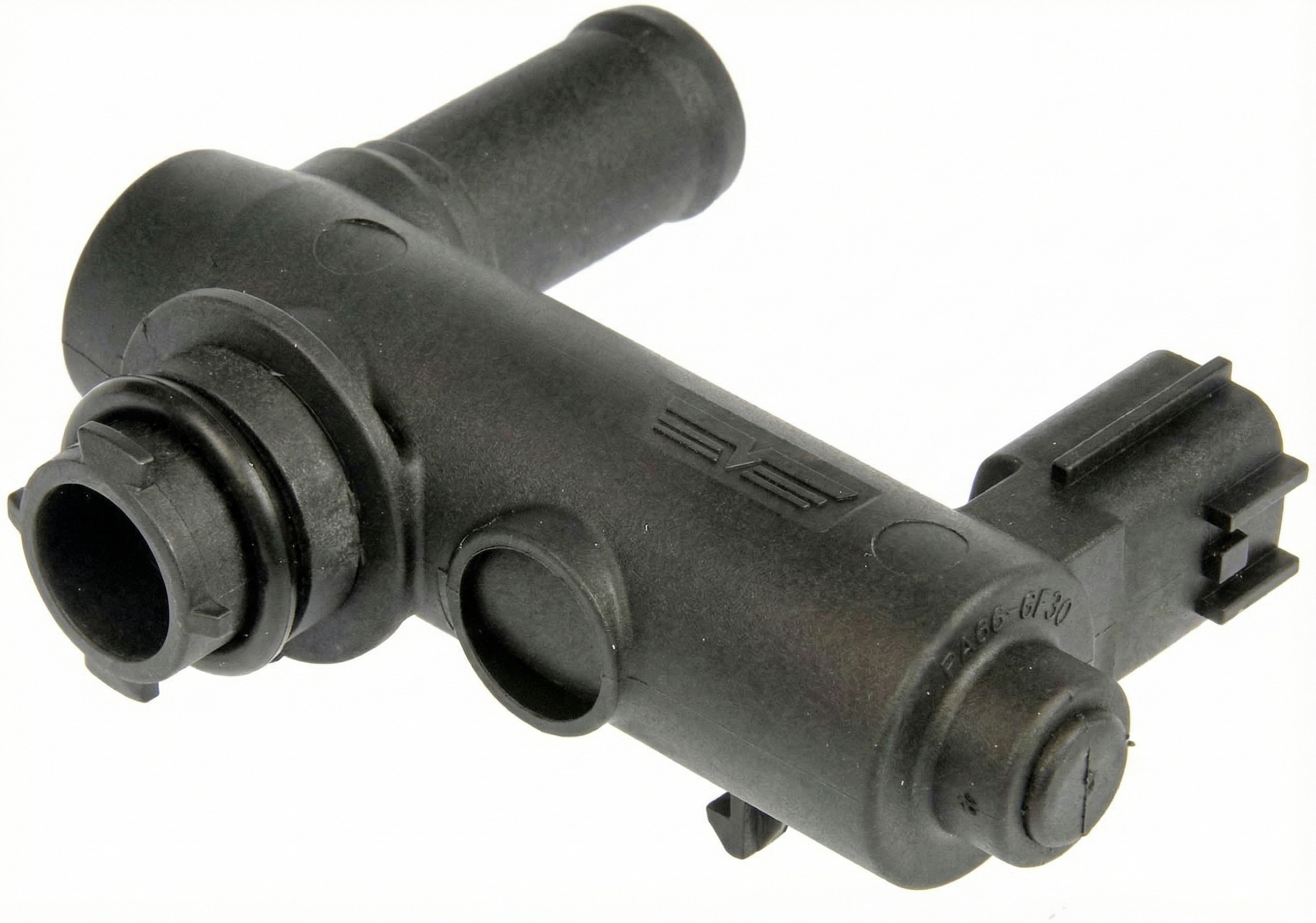
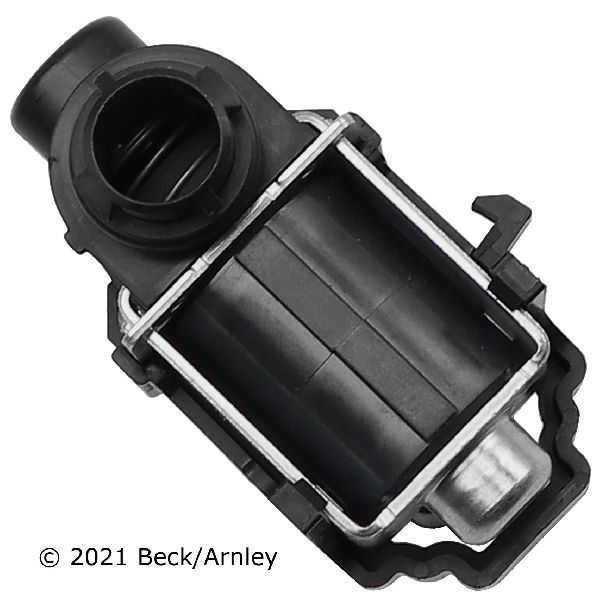
- EVAP Canister Vent Control Valve
(OEM #14935-JF00E)— This is the most common failure point after the gas cap, as documented in multiple TSBs. The original O-ring is no longer sold separately, so the entire valve must be replaced. The part is known to corrode due to its location. Part number 14935-JF00E has been superseded by several newer versions, including 14935-JF02C.
Trusted brands: Nissan (OEM), Dorman, Bosch
OEM price range: $60-$100
Aftermarket price range: $40-$80 - Fuel Cap
(OEM #17251-79961)— The gas cap is the most frequent cause of all EVAP leak codes due to improper tightening or a worn-out seal. Part number 17251-79961 is a common OEM cap for this era.
Trusted brands: Nissan (OEM), Stant
OEM price range: $25-$40
Aftermarket price range: $15-$25 - EVAP Vent Control Valve O-Ring
(OEM #16618-JF00A)— This was the original fix per older TSBs. However, TSB NTB17-082E from Feb 2022 states this part is no longer available for service, and the entire valve assembly must be replaced instead. It is listed here for historical context as many older forum posts will reference it.
Trusted brands: Nissan (OEM)
OEM price range: $5-$15
Aftermarket price range: N/A
Related Codes That Often Appear With This One
- P0442 — This indicates a medium-sized EVAP leak. If the small leak from P0456 worsens (e.g., a crack in a hose grows), it can trigger a P0442.
- P0455 — This indicates a large EVAP leak. It's often seen if the gas cap is missing entirely or a major hose is disconnected. It can appear alongside P0456 if the system has multiple leak points or the test fails under different conditions.
- P0448 — This code specifically points to a problem with the vent control valve circuit or the valve itself being stuck closed, which can sometimes accompany a leak code if the valve is failing intermittently.
Technical Service Bulletins (TSBs) & Recalls
- NTB17-082e: DTC P0456 CAUSED BY EVAP LEAK AT VENT CONTROL VALVE O-RING
- NTB17-082a: NISSAN; DTC P0456 CAUSED BY EVAP LEAK AT VENT CONTROL VALVE O-RING
- NTB13-097g: ALL MODEL YEAR 2012 AND NEWER NISSAN VEHICLES; EVAP LEAK DTC P0442, P0455, P0456 INFORMATION
Platform-Specific Known Issues
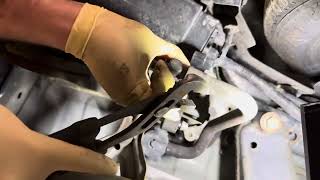
- Confirmed DIY Repair Experience: Multiple owners on forums and in video tutorials have successfully resolved the P0456 code by replacing the EVAP canister vent control valve. The process involves removing the rear passenger wheel, taking down a plastic splash shield, and then twisting the old valve off the canister. It is often a tool-free removal for the valve itself after the connector is unplugged.
Mechanic-Grade Diagnostic Values
- EVAP Canister Purge Valve Resistance — expected: 30 to 38 ohms (when engine is cool). Failure: A reading outside this range indicates a faulty valve coil.
- EVAP Canister Vent Control Valve Resistance — expected: 48 to 65 ohms. Failure: A reading outside this range suggests the solenoid coil is bad.
Scan Tool Commands That Help
- Nissan CONSULT-III plus (or capable bidirectional scanner): Active Test: 'Vent Control Valve' — Used to command the vent control valve on and off (closed and open) to check for a response. A technician should be able to hear the valve click when activated. If no click is heard, it points to a faulty valve or a wiring/command issue.
- Nissan CONSULT-III plus (or capable bidirectional scanner): Active Test: 'Purge Volume Control' — Used to command the purge valve in the engine bay to open and close. This helps verify if the purge valve is stuck open (a potential leak source) or is not responding to commands.
- Smoke Machine with flow meter: EVAP System Leak Test — After commanding the vent valve closed with a scan tool, a smoke machine is used to pressurize the system. The machine's flow meter gauge (often a floating ball) should drop to zero, indicating the system is sealed. If the ball keeps bouncing, it confirms a leak is present, even if visible smoke is not immediately apparent.
Wiring & Ground Locations
- EVAP Canister Vent Control Valve — Under the right rear of the vehicle, mounted directly to the EVAP charcoal canister, near the muffler.. This is the location of the most common failure point. The connector and wiring are exposed to road debris and moisture, which can cause corrosion and connection issues, in addition to the valve itself failing.
- EVAP Canister Purge Volume Control Solenoid Valve — In the engine bay, typically on the right front side of the engine for the 2008-2013 'Rogue Select' (S35).. This is a less common but possible cause. Knowing its location in the engine bay is critical for diagnosis to differentiate it from the vent valve at the rear.
Real Owner Repair Stories
- Reddit user mlemb (2016 Nissan Rogue) — P0456 code, Check Engine Light. Another user in the same thread with a 2015 Rogue reported a gasoline smell and the light turning on when the tank was half full.
❌ Tried (didn't work) The original poster did not list other attempts, but a common theme in forums is replacing the gas cap first without success.
✅ What actually fixed it The user replaced the Vapor Canister Vent Valve themselves, stating the O-rings are known to go bad and linked directly to a relevant TSB. - YouTube channel 'Pine Hollow Auto Diagnostics' (2010 Nissan Rogue) — Intermittent P0456 code that eventually became a P0442 (small leak) and was also accompanied by a P0448 (vent control valve circuit) code.
❌ Tried (didn't work) Resetting the code initially worked for a month before it returned.
✅ What actually fixed it Diagnosis using a bidirectional scan tool showed the vent control valve was not clicking when commanded. A test light confirmed the control circuit was good, isolating the failure to the valve itself. The mechanic cleaned the valve with WD-40 as a temporary measure, which restored function, confirming the valve was sticking internally. The final recommendation was to replace the vent solenoid.
"I Checked Everything" — The Actual Cause
- A technician diagnosing a 2019 Rogue with P0456 found a scenario where a smoke test could be misleading. Even with the system sealed, the vent valve itself can leak internally, not from the O-ring seal, but through the valve's plunger mechanism. When commanding the valve closed and applying vacuum, the valve failed to hold, confirming it was bad. In another case, a technician noted that even if you can't see smoke, the flow meter ball on the smoke machine will indicate if a leak is present. By systematically blocking off parts of the system, he isolated the leak to the vent valve itself, even though the O-ring was not leaking.
OEM Part Supersession History
14935-JF00A / 14935-JF00B / 14935-JF00C / 14935-JF00D / 14935-JF00E→14935-JF02C— Standard part evolution and potential design improvements to address the common failure.
Heads up: The newer part numbers are generally backward-compatible for this application. It is always recommended to use the latest available part number.
Model Year Variations Within This Range
- 2014-2015: The 2014 model year is a split. Nissan continued to sell the first-generation (S35) Rogue as the 'Rogue Select' through 2015, while also introducing the fully redesigned second-generation (T32) Rogue in 2014. While both use a 2.5L engine and suffer from the same P0456 causes, there may be minor differences in part numbers for other components or routing of EVAP lines. However, the primary culprit, the vent control valve, is shared across many Nissan platforms and the diagnosis remains the same.
Helpful Videos
Used OEM Parts in Stock
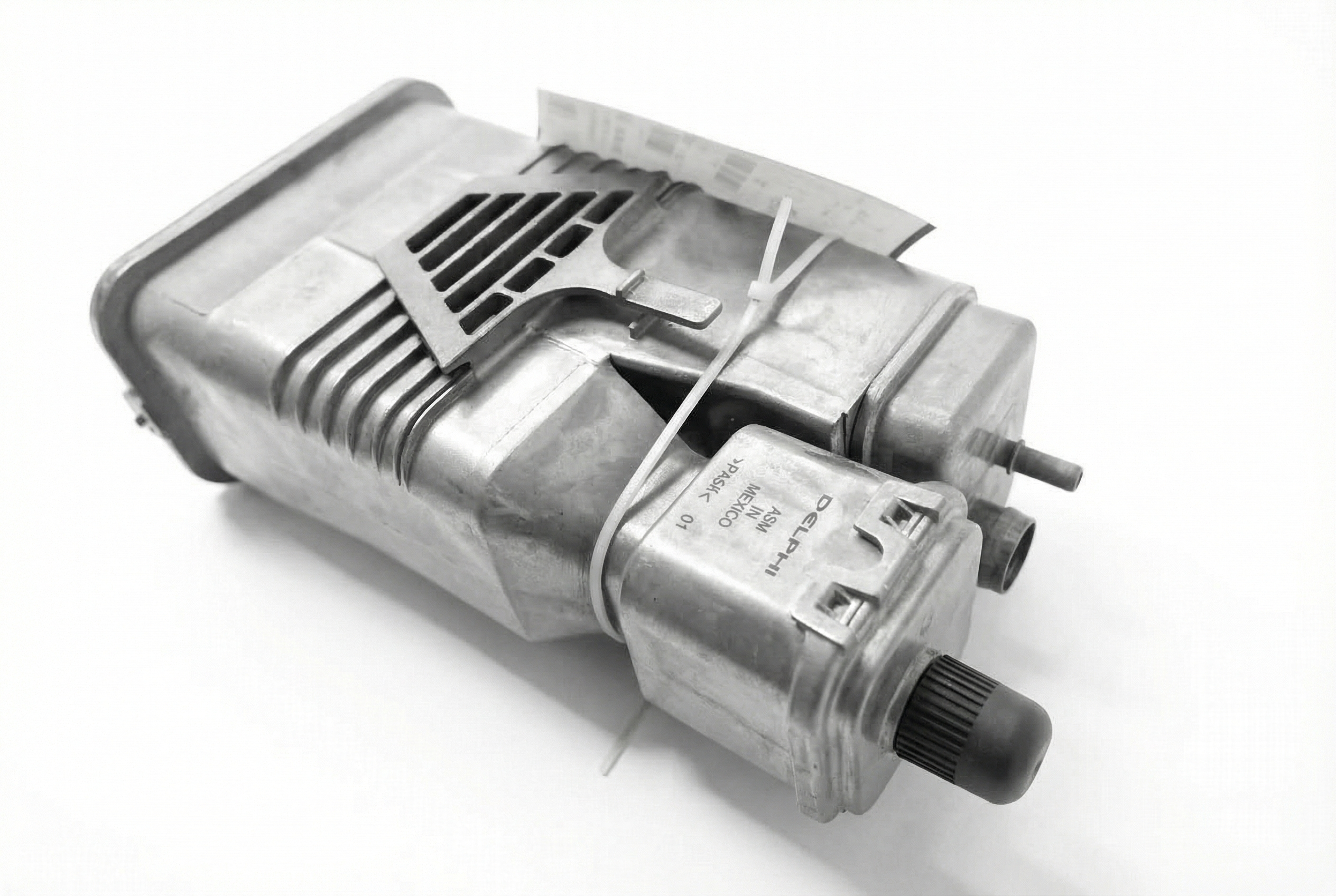
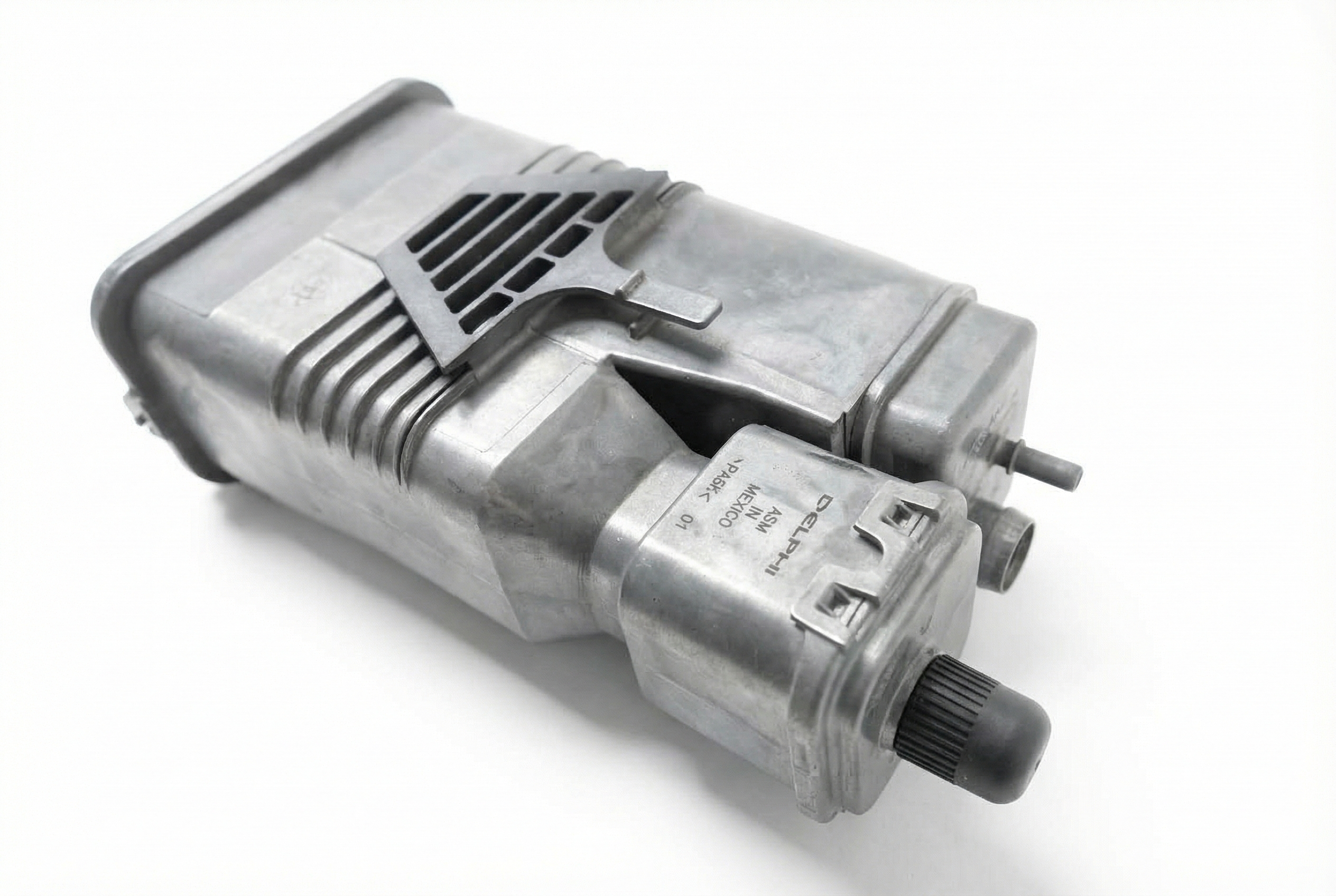
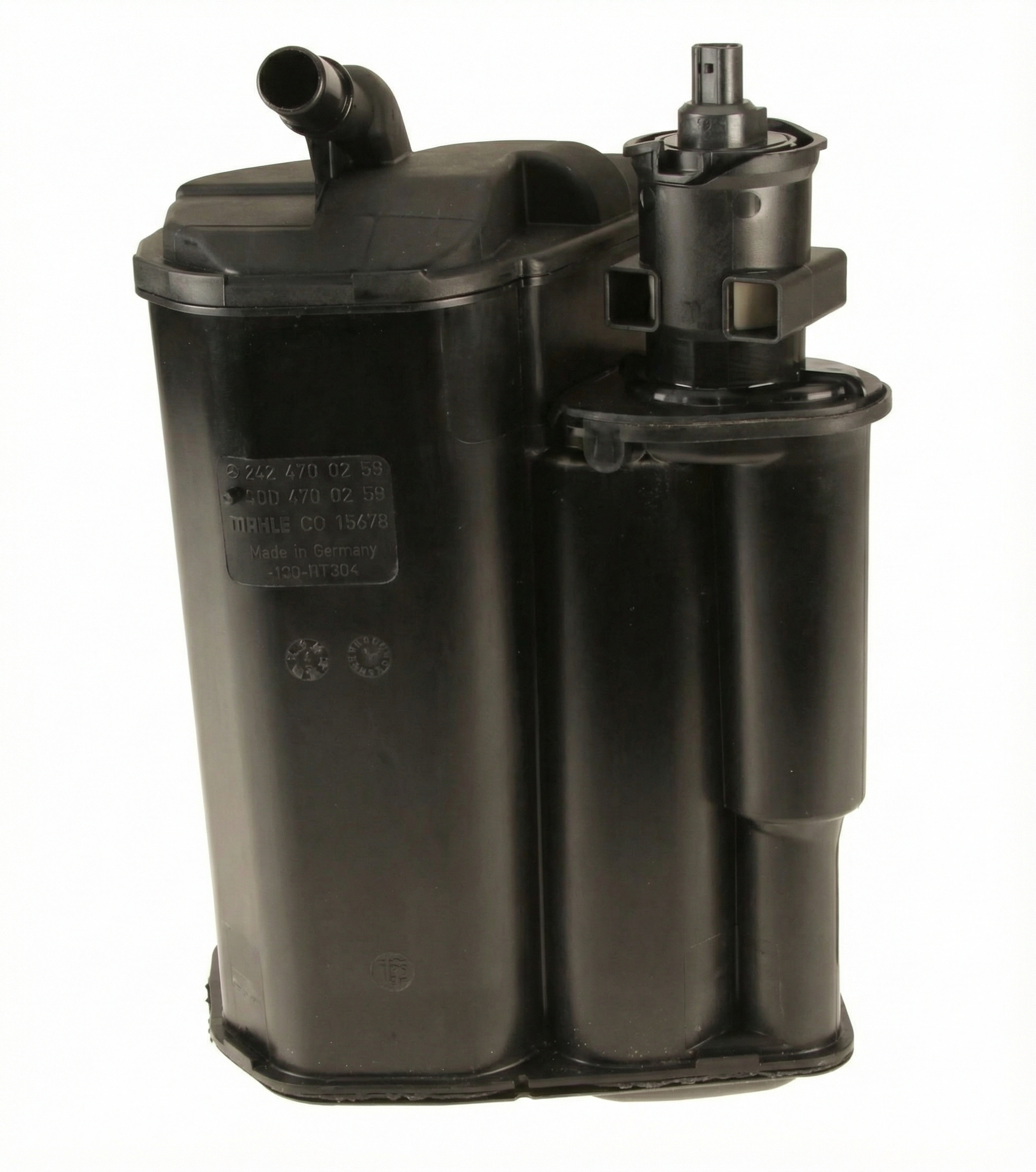
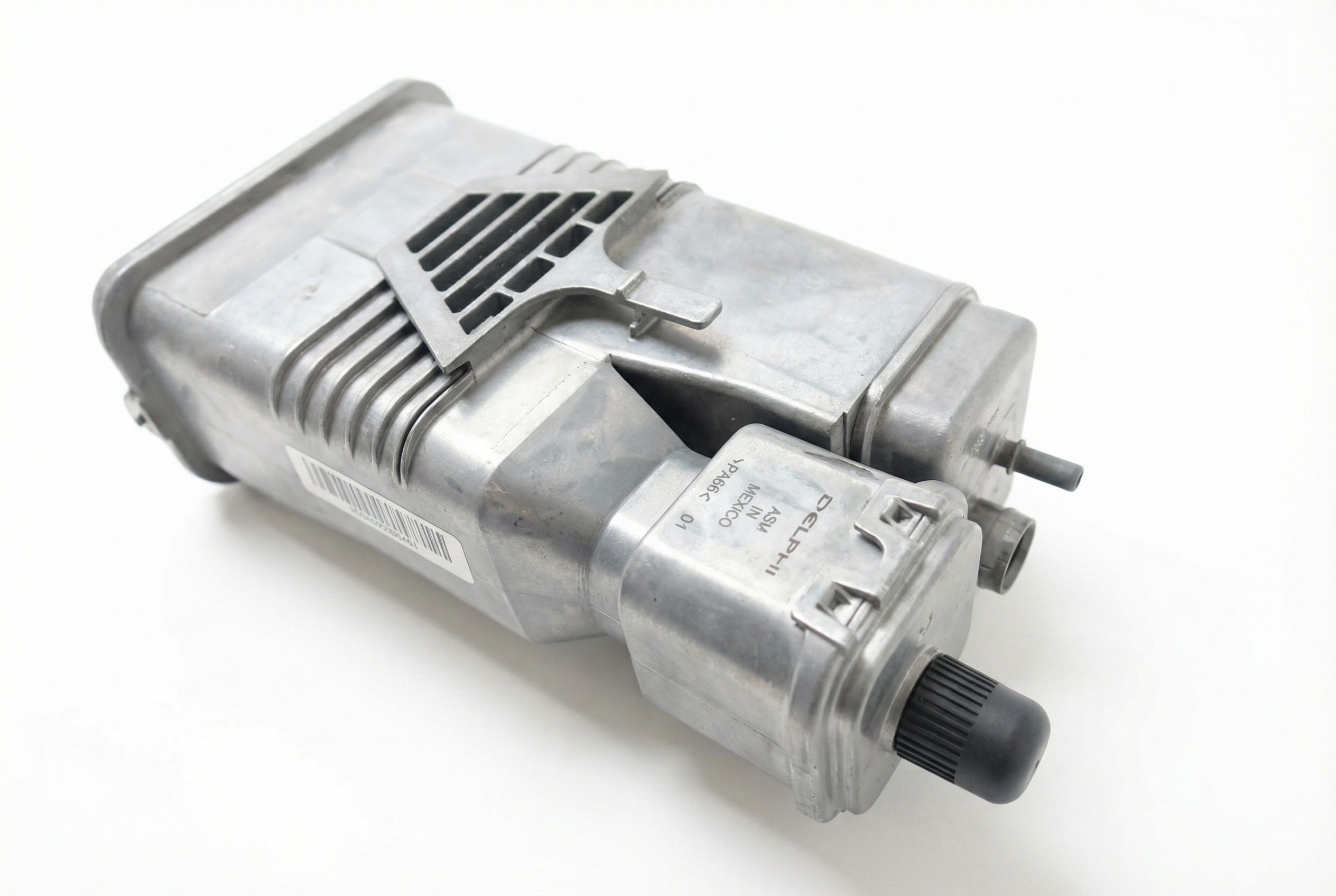
New Aftermarket Parts Available


The information in this article is provided for general reference and educational purposes only. Vehicle specifications, procedures, and part compatibility can vary by production date, trim level, and region. Always consult your vehicle's factory service manual and verify part numbers before purchasing or performing repairs. Safety-critical components such as airbags, seat belts, and braking systems should be installed by a qualified professional.
- Nissan ROGUE:
- 🎬 Helpful Videos
- 🛍️ Shop This Part
- What's Unique About the 2008-2015 Nissan ROGUE
- Diagnostic Flowchart
- Symptoms You May Notice
- Most Likely Causes
- Rare But Worth Checking
- Diagnosis Steps
- Parts You'll Likely Need
- Related Codes That Often Appear With This One
- Technical Service Bulletins (TSBs) & Recalls
- Platform-Specific Known Issues
- Mechanic-Grade Diagnostic Values
- Scan Tool Commands That Help
- Wiring & Ground Locations
- Real Owner Repair Stories
- "I Checked Everything" — The Actual Cause
- OEM Part Supersession History
- Model Year Variations Within This Range
- 🎟️ Get 5% Off