

P0456 on 2013-2020 Nissan Pathfinder: EVAP Small Leak Causes and Fixes
For a 2013-2020 Nissan Pathfinder, code P0456 is most often caused by a failed O-ring on the EVAP vent control valve, located on the charcoal canister. Replacing this small seal is a common, inexpensive fix. Always check the gas cap first for tightness and a good seal.
- P0456 indicates a very small leak in the EVAP system.
- Always start with the simplest fix: check that your gas cap is tight and its seal is intact.
- The most probable cause on a 2013-2020 Pathfinder is a failed O-ring on the EVAP vent control valve, a known issue documented by Nissan.
- Replacing the O-ring is an inexpensive DIY job that often solves the problem without needing to replace the entire valve.
- If the issue persists, a smoke test is the most effective way to find the exact location of the leak.
What's Unique About the 2013-2020 Nissan PATHFINDER

On the R52 generation Pathfinder, Nissan has specifically identified a common failure point that leads to the P0456 code. Multiple Technical Service Bulletins (TSBs) point directly to the O-ring that seals the EVAP vent control valve to the charcoal canister. This O-ring can dry out, crack, and fail, creating the exact small leak the system is designed to detect. While a loose gas cap is a common cause on any vehicle, this specific O-ring failure is a well-documented issue for this platform and its relatives like the Infiniti QX60.
Diagnostic Flowchart
Tap your situation to follow the diagnostic path that matches what you're seeing on this vehicle.
Symptoms You May Notice
- Check Engine Light is on
- A faint smell of gasoline, particularly after refueling or when parked in an enclosed space.
- A 'loose gas cap' warning on the dashboard may appear, even if the cap is tight.
- Difficulty starting the engine immediately after refueling (less common with a small leak, but possible if the vent valve itself is failing).
- Replacing the entire EVAP vent control valve when only the inexpensive O-ring has failed. Nissan TSB NTB17-082b specifically advises to replace only the O-ring if the valve itself is functional.
- Replacing the gas cap with a cheap aftermarket version, which may not seal correctly and can cause the code to return.
Most Likely Causes

- EVAP Vent Control Valve O-Ring Failure 🔴 High Probability Nissan has issued multiple TSBs (NTB17-082b, NTB17-082E) specifically for this issue on the Pathfinder and many other models. The O-ring is exposed to the elements under the vehicle and can degrade over time, becoming hard and brittle.
How to confirm: Visually inspect the O-ring where the vent control valve mounts to the charcoal canister for cracks or signs of drying out. A smoke test is the definitive way to confirm the leak location; smoke will be seen escaping from the junction of the valve and canister.
Typical fix: Replace the vent control valve O-ring. Nissan TSB NTB17-082b explicitly states 'DO NOT REPLACE the vent control valve' if only the O-ring is the cause. The valve is removed with a simple quarter-turn. The mounting surfaces must be cleaned before installing the new, unlubricated O-ring. NOTE: Some sources report Nissan may no longer sell the O-ring separately, requiring replacement of the entire valve assembly.
Est. part cost: $5-$15 - Loose or Faulty Gas Cap 🟡 Medium Probability This is a common cause for P0456 on all vehicles. The gas cap seal can wear out, or it may not have been tightened correctly after refueling. Owners and mechanics often report that using a non-OEM (aftermarket) gas cap can cause this code to appear, as the seal may not be precise enough.
How to confirm: Ensure the gas cap is tightened until it clicks at least once. Inspect the rubber seal on the cap for cracks, dirt, or damage. If the cap has been replaced with an aftermarket version, consider it a prime suspect.
Typical fix: Tighten the cap. If the seal is damaged or you are using an aftermarket cap, replace it with a new OEM part for the best fit. After replacement, the code must be cleared, and the vehicle driven through several drive cycles for the EVAP monitor to run and confirm the fix.
Est. part cost: $20-$40 - Faulty EVAP Vent Control Valve ⚪ Low Probability The valve is located under the vehicle near the rear wheel, exposing it to road grime and moisture which can cause the internal solenoid to fail, sticking open or closed. Dirt can also clog the valve, preventing it from sealing properly.
How to confirm: With a capable scan tool, command the valve to close and see if it holds pressure during a smoke test. You can also apply 12v power to the solenoid to see if it actuates (clicks). If the valve is commanded closed but still allows smoke or air to pass, it is faulty.
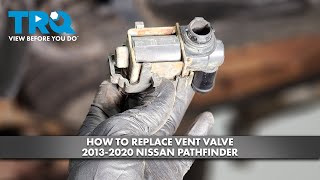
Typical fix: Replace the EVAP vent control valve. The replacement part typically includes a new O-ring. The valve is removed by depressing a tab and twisting it counter-clockwise out of the canister.
Est. part cost: $50-$100 - Faulty EVAP Canister Purge Valve ⚪ Low Probability This valve is located in the engine bay, often on the intake manifold, and can get stuck open, creating a constant vacuum leak within the EVAP system.
How to confirm: The purge valve is normally closed when the engine is off. Remove the valve and try to blow through it; if air passes, it's stuck open and faulty. A vacuum leak at idle that disappears when the valve's electrical connector is unplugged also points to a faulty valve.
Typical fix: Replace the purge valve. This is typically a very accessible part held on by one or two bolts.
Est. part cost: $40-$90
Rare But Worth Checking
- Cracked or Disconnected EVAP Hoses: Hoses, especially small vacuum lines in the engine bay, can become brittle and crack over time. A visual inspection and smoke test can identify these leaks. One owner on a Reddit forum fixed a persistent P1456 (a related Nissan code) after finding a stretchy, deteriorated rubber hose connecting to the charcoal canister.
- Cracked Charcoal Canister: While less common for a small leak, a hairline crack in the plastic body of the canister can occur, requiring a smoke test to find. This is more often associated with larger leak codes like P0455.
Diagnosis Steps

- Check the gas cap. Remove it, inspect the seal for damage, and reinstall it, ensuring it clicks several times. If it's an aftermarket cap, consider replacing it with an OEM part as a first step.
- Clear the code with a scan tool and drive for a few days to see if the light returns. The EVAP monitor runs under specific conditions (e.g., stable temperatures, specific fuel level), so it may take time to re-test the system.
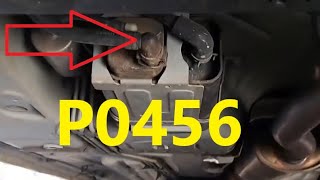
- If the light returns, perform a detailed visual inspection. Get under the vehicle and locate the charcoal canister and vent control valve, which are behind the driver's side rear wheel, between the spare tire and bumper. Look for any obvious cracks on the valve, canister, or connecting hoses.
- If the leak source is not obvious, perform a smoke test. This is the most effective method. Introduce smoke into the EVAP service port in the engine bay and look for smoke escaping from any component in the system. Pay extremely close attention to the O-ring where the vent control valve meets the canister, as this is the most likely leak point.
- Based on the smoke test results, replace the component identified as leaking. If it's the O-ring, only replace the O-ring.
- If no leak is found with the smoke test, test the vent and purge valve solenoids for proper electrical function using a scan tool or by applying 12V power.
Parts You'll Likely Need

- EVAP Vent Control Valve O-Ring
(OEM #16618-JF00A)— This is the most common failure point identified by Nissan's own Technical Service Bulletins for the P0456 code on this vehicle.
Trusted brands: Nissan OE
OEM price range: $10-$20
Aftermarket price range: $5-$15 - Fuel Filler Cap
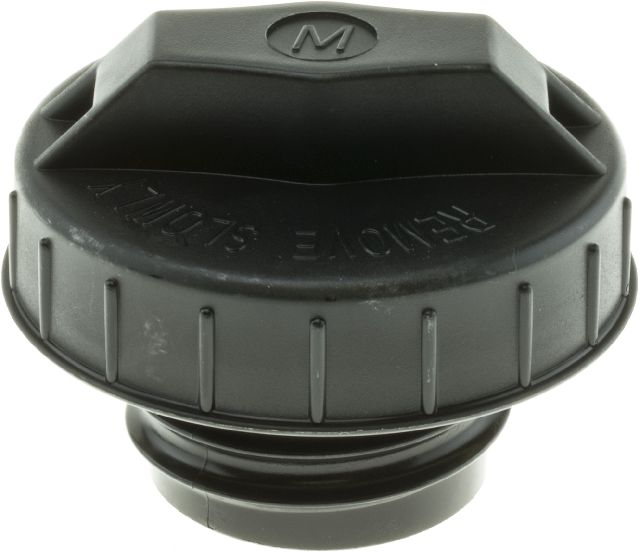
(OEM #17251-3JA0C)— A worn or improperly sealed gas cap is a frequent cause of small EVAP leaks. Using an OEM cap is recommended for a perfect seal, as aftermarket caps are a known source of issues.
Trusted brands: Nissan OE
OEM price range: $25-$40
Aftermarket price range: $15-$30 - EVAP Vent Control Valve / Solenoid
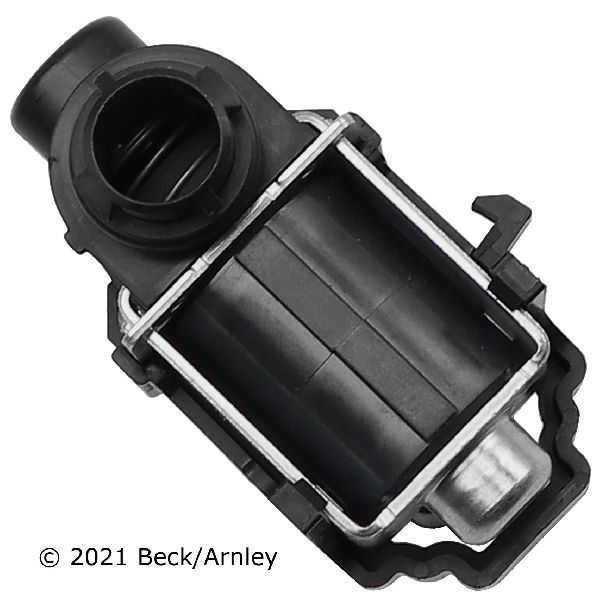
(OEM #14935-JF02C)— If the valve itself fails (gets stuck or the solenoid dies), it will need to be replaced. It is located on the charcoal canister and is a common DIY repair. This part number supersedes several previous versions including 14935-JF00A, 14935-JF00B, etc.
Trusted brands: Nissan OE, Hitachi, Bosch, Dorman, Standard Motor Products (SMP)
OEM price range: $60-$120
Aftermarket price range: $40-$80
Related Codes That Often Appear With This One
- P0442 — This code indicates a medium-sized EVAP leak. If the small leak from P0456 worsens, it can trigger a P0442.
- P0455 — This code indicates a large EVAP leak. It's less common to see with P0456, but a component failure like a vent valve stuck wide open could potentially trigger multiple leak codes.
Technical Service Bulletins (TSBs) & Recalls
- NTB17-082b: DTC P0456 CAUSED BY EVAP LEAK AT VENT CONTROL VALVE O-RING.
- NTB17-082E: DTC P0456 CAUSED BY EVAP LEAK AT VENT CONTROL VALVE O-RING.
- NTB13-097J: EVAP LEAK DTC P0442, P0455, P0456 INFORMATION.
- ITB17-042c: An Infiniti TSB that mirrors the Nissan TSB, confirming the issue on the QX60 platform mate.
Platform-Specific Known Issues
- Nissan TSB NTB17-082b, NTB17-082E, and NTB17-082a specifically call out a leaking O-ring on the EVAP vent control valve as the cause for P0456. The fix is to replace the O-ring, not the entire valve assembly.
- A YouTube video for a 2014 Pathfinder with P0456 demonstrated a successful fix by replacing the EVAP vent control valve (solenoid) after a gas cap replacement did not solve the issue, confirming this common repair path.
Mechanic-Grade Diagnostic Values
- EVAP Canister Vent Control Valve Solenoid Resistance — expected: 48 - 65 Ohms. Failure: A reading of 0 Ohms (short circuit) or infinite/OL (open circuit).
- EVAP Canister Purge Valve Solenoid Resistance — expected: 30 - 38 Ohms. Failure: A reading significantly outside this range, or 0/OL, indicates a faulty solenoid coil.
Hidden / Shadow Codes Worth Checking
- Mode $06, TID:$82: This Test ID is associated with the EVAP system monitor on some Nissan vehicles. A scan tool that can interpret Mode $06 data may show test values and limits for the small leak test under this identifier. A failing value here can point to an issue even before a permanent DTC is set. (see via An advanced OBD-II scan tool with Mode $06 functionality. Nissan-specific definitions may be required to interpret the raw data.)
Scan Tool Commands That Help
- Nissan CONSULT-III plus: Active Test for EVAP Vent Control Valve — This command is used to manually close the normally-open vent valve. This is a required step before performing a smoke test to ensure the EVAP system is sealed for an accurate leak diagnosis.
Wiring & Ground Locations
- E9, E15 — Located in the left rear of the engine compartment.. Ground point E9 is specified as the ground for the Engine Control Module (ECM) and the shields for the Air/Fuel ratio sensors. A poor ground here can cause a variety of erratic sensor readings and control module behavior, potentially impacting the EVAP monitor's accuracy.
- M57, M61 — Located on the left side of the dash.. These are primary interior ground points. While not directly tied to the EVAP solenoids, they ground various control units that communicate with the ECM over the CAN bus. A fault in a major ground could cause communication errors that might be misinterpreted.
- B19, B27, B28 — Located in the left rear cargo area and behind the left rear quarter panel.. These ground points are physically closest to the EVAP canister and vent control valve at the rear of the vehicle. While not explicitly listed for the EVAP system, checking their integrity is wise when diagnosing electrical faults with rear-mounted components.
Real Owner Repair Stories
- YouTube user 'WTMA' (2014 Nissan Pathfinder) — Check Engine Light with code P0456.
❌ Tried (didn't work) Replacing the gas cap (Part No. 17251-3JA0C).
✅ What actually fixed it The EVAP vent control valve/solenoid was faulty. Replacing it with Nissan part number 14935-JF02C and clearing the code resolved the issue. - Reddit user 'Canon_Cowboy' (Vehicle not specified, but general P0456 discussion.) — Check Engine Light with code P0456 returned after a month.
❌ Tried (didn't work) Initial diagnosis pointed to a bad gas cap.
✅ What actually fixed it The user confirmed that the final fix was replacing the EVAP purge valve located in the engine bay.
"I Checked Everything" — The Actual Cause
- In some cases, a vehicle can have a P0456 code but pass a physical smoke test. One potential cause is a software glitch in the Powertrain Control Module (PCM). The logic for running the EVAP monitor may be too sensitive, falsely triggering a leak code. In these instances, checking for available PCM software updates (a reflash) from the manufacturer is a valid diagnostic step.
- A smoke test may show no leaks if the leak is internal to a component. For example, the vent valve may click when commanded by a scan tool, but its internal seal may be worn, allowing a very small amount of air to pass through when it should be fully closed. This leak is inside the system and won't be visible externally with smoke.
OEM Part Supersession History
14935-JF00A, 14935-JF00B, 14935-JF00C, 14935-JF00D, 14935-JF00E, 14935-JF01B, 14935-JF01C→14935-JF02C— Revisions by the manufacturer to improve reliability or address known failure modes of the EVAP vent control valve.
Model Year Variations Within This Range
- 2013-2020: There is conflicting information regarding the service procedure for the common vent valve O-ring leak. TSB NTB17-082b instructs technicians to replace only the O-ring (P/N 16618-JF00A). However, some parts guides and repair sources state that Nissan may no longer offer the O-ring as a separate part, making the official repair a replacement of the entire vent valve assembly. Technicians should verify parts availability before quoting a repair.
Helpful Videos
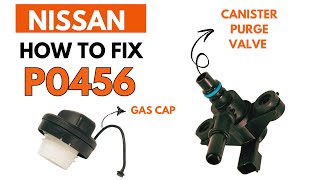
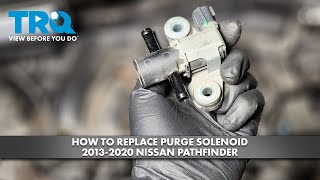
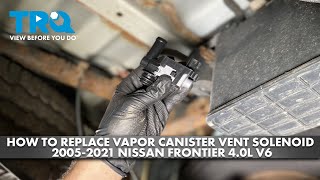
![How to Fix P0456 Engine Code in 7 Minutes [7 DIY Methods / Only $3.44]](https://img.youtube.com/vi/njt81AALI3U/mqdefault.jpg)
Used OEM Parts in Stock
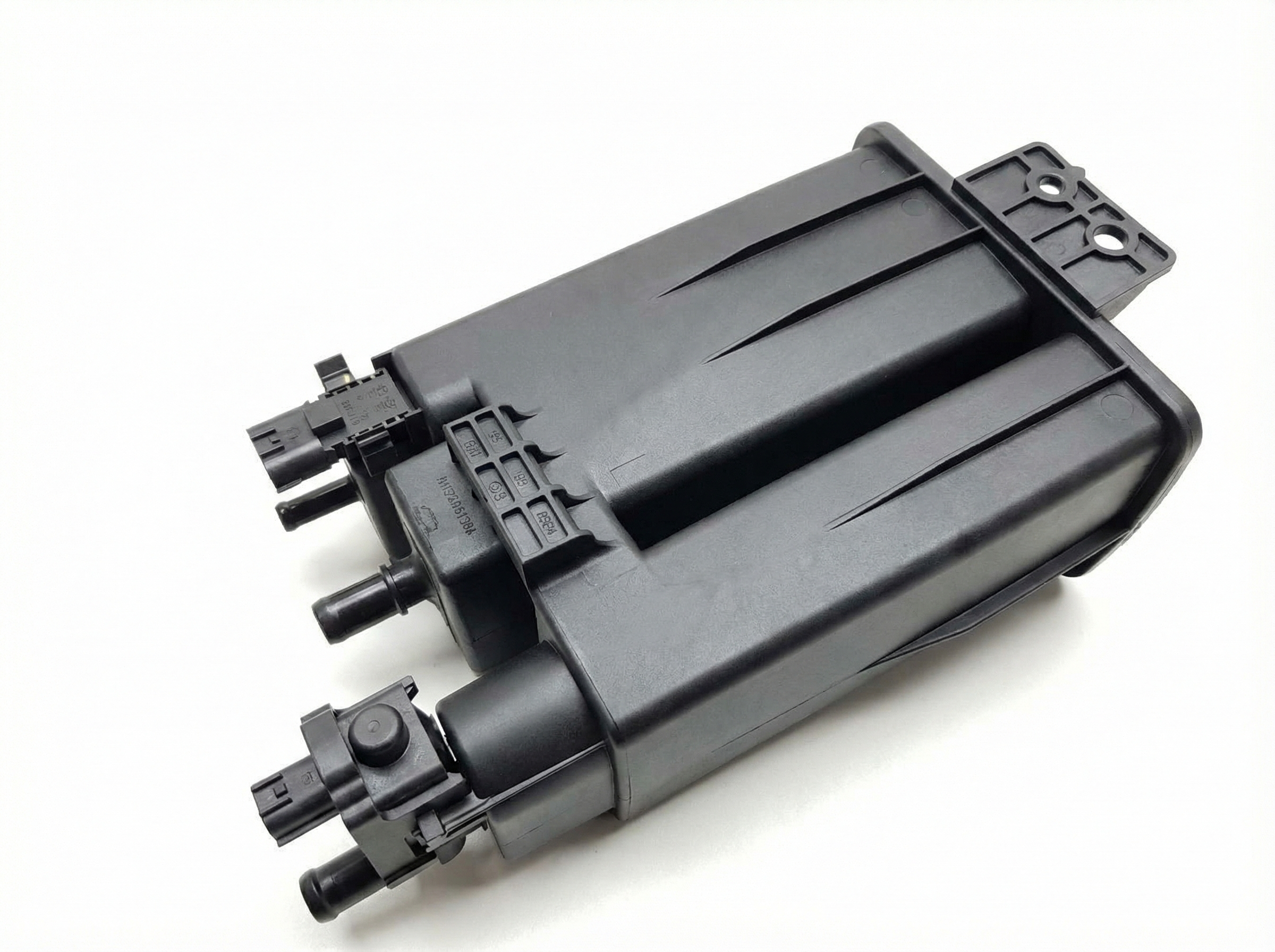

New Aftermarket Parts Available


The information in this article is provided for general reference and educational purposes only. Vehicle specifications, procedures, and part compatibility can vary by production date, trim level, and region. Always consult your vehicle's factory service manual and verify part numbers before purchasing or performing repairs. Safety-critical components such as airbags, seat belts, and braking systems should be installed by a qualified professional.
- Nissan PATHFINDER:
- 🎬 Helpful Videos
- 🛍️ Shop This Part
- What's Unique About the 2013-2020 Nissan PATHFINDER
- Diagnostic Flowchart
- Symptoms You May Notice
- Most Likely Causes
- Rare But Worth Checking
- Diagnosis Steps
- Parts You'll Likely Need
- Related Codes That Often Appear With This One
- Technical Service Bulletins (TSBs) & Recalls
- Platform-Specific Known Issues
- Mechanic-Grade Diagnostic Values
- Hidden / Shadow Codes Worth Checking
- Scan Tool Commands That Help
- Wiring & Ground Locations
- Real Owner Repair Stories
- "I Checked Everything" — The Actual Cause
- OEM Part Supersession History
- Model Year Variations Within This Range
- 🎟️ Get 5% Off