

P0456 on 2005-2012 Nissan Frontier: EVAP Small Leak Causes and Fixes
For a 2005-2012 Nissan Frontier, code P0456 is most often caused by a loose or faulty gas cap, or a leaking EVAP canister vent control valve assembly at the rear of the truck. Always check the gas cap first, as it's a free fix. If that doesn't work, the vent control valve is the next most likely culprit, a known issue covered by Nissan TSBs.
- Always check the gas cap first. Make sure it's tight and the seal is clean and intact. This is the most common and cheapest fix.
- If the gas cap isn't the issue, the next most likely culprit on a 2005-2012 Frontier is the EVAP canister vent control valve O-ring, as documented in a Nissan TSB.
- When replacing parts like the gas cap or EVAP valves, using OEM parts from brands like Nissan or Hitachi is highly recommended to ensure proper fit and function.
- A smoke test is the most reliable way to find the exact location of a small EVAP leak if visual inspection doesn't reveal the cause.
- This code does not affect vehicle safety or drivability, but it will cause an emissions test failure.
What's Unique About the 2005-2012 Nissan FRONTIER

On the second-generation (D40) Nissan Frontier, the P0456 code is notoriously common. While a loose gas cap is a frequent trigger on any vehicle, Nissan issued specific Technical Service Bulletins (TSBs) for the Frontier and other models pointing to a high failure rate of the EVAP canister vent control valve. This specific component, located near the charcoal canister at the rear of the truck, is a known weak point. Originally, the issue was a dried-out O-ring, but later TSB revisions state the entire valve assembly should be replaced.
Diagnostic Flowchart
Tap your situation to follow the diagnostic path that matches what you're seeing on this vehicle.
Symptoms You May Notice
- Check Engine Light is on
- A 'loose gas cap' warning message may appear on the dash display.
- A faint smell of fuel, particularly around the rear of the vehicle (less common).
- No noticeable change in driving performance.
- Replacing the entire charcoal canister when only the vent control valve is bad.
- Replacing the purge valve in the engine bay before checking the more common gas cap and rear vent valve.
- Assuming a new aftermarket gas cap is good. Many owners on Reddit and forums report issues with non-OEM caps failing to seal correctly, causing the P0456 code to persist until an OEM cap is installed.
Most Likely Causes


- Loose or Faulty Gas Cap 🔴 High Probability This is the most common cause for any vehicle. The gas cap seal can wear out, get dirty, or simply not be tightened correctly after refueling. Nissan TSB NTB13-097J directly addresses this as a primary cause for P0456.
How to confirm: Remove the gas cap, inspect the rubber seal for cracks or debris, and clean it. Reinstall the cap, ensuring it clicks at least once. Clear the code and see if it returns after a few drive cycles. Some owners apply petroleum jelly to the O-ring to get a better temporary seal for testing.
Typical fix: Tighten the cap. If the seal is damaged or the problem persists, replace the gas cap. It is highly recommended to use an OEM (Original Equipment Manufacturer) cap, as many owners on forums report that aftermarket caps fail to seal properly and do not resolve the code.
Est. part cost: $25-$50 for OEM - Faulty EVAP Canister Vent Control Valve (Solenoid) or Seal 🔴 High Probability Nissan issued TSB NTB17-082E, specifically identifying a leak where the vent control valve mounts to the canister as a primary cause for P0456 on the Frontier (D40). The component is exposed to the elements under the truck bed and is prone to failure.
How to confirm: Visually inspect the vent control valve where it mounts to the charcoal canister (located near the spare tire). A smoke test is the definitive method; smoke will be seen escaping from the seal or a crack in the valve housing. One owner on a forum found the electrical connector's seal had expanded, preventing it from locking properly and causing an issue.
Typical fix: Replace the entire EVAP canister vent control valve assembly. While older TSBs advised replacing just the O-ring, the latest revision (NTB17-082E) states the O-ring is no longer a separate service part and the full valve assembly must be replaced. 🎬 See how to test and replace the vent control valve.
Est. part cost: $50-$110 - Cracked or Disconnected EVAP Hoses ⚪ Low Probability Rubber hoses can become brittle and crack with age and exposure to heat and cold cycles. This is not specific to the Frontier but is a possibility on any aging vehicle, especially on the lines near the canister and filler neck.
How to confirm: Visually inspect all accessible EVAP lines running from the gas tank to the charcoal canister and up to the engine bay. A smoke test is the most effective way to find a small crack in a hose that isn't visually obvious.
Typical fix: Replace the cracked section of hose with fuel-vapor-rated tubing and new clamps.
Est. part cost: $10-$30
Rare But Worth Checking
- Faulty EVAP Purge Solenoid/Valve: This valve is located in the engine bay and is normally closed. If it sticks open, it can cause a leak code. It's less common for a P0456 than the rear vent valve, but still possible. You can test it by removing it and trying to blow through it; if air passes, it's stuck open and faulty.
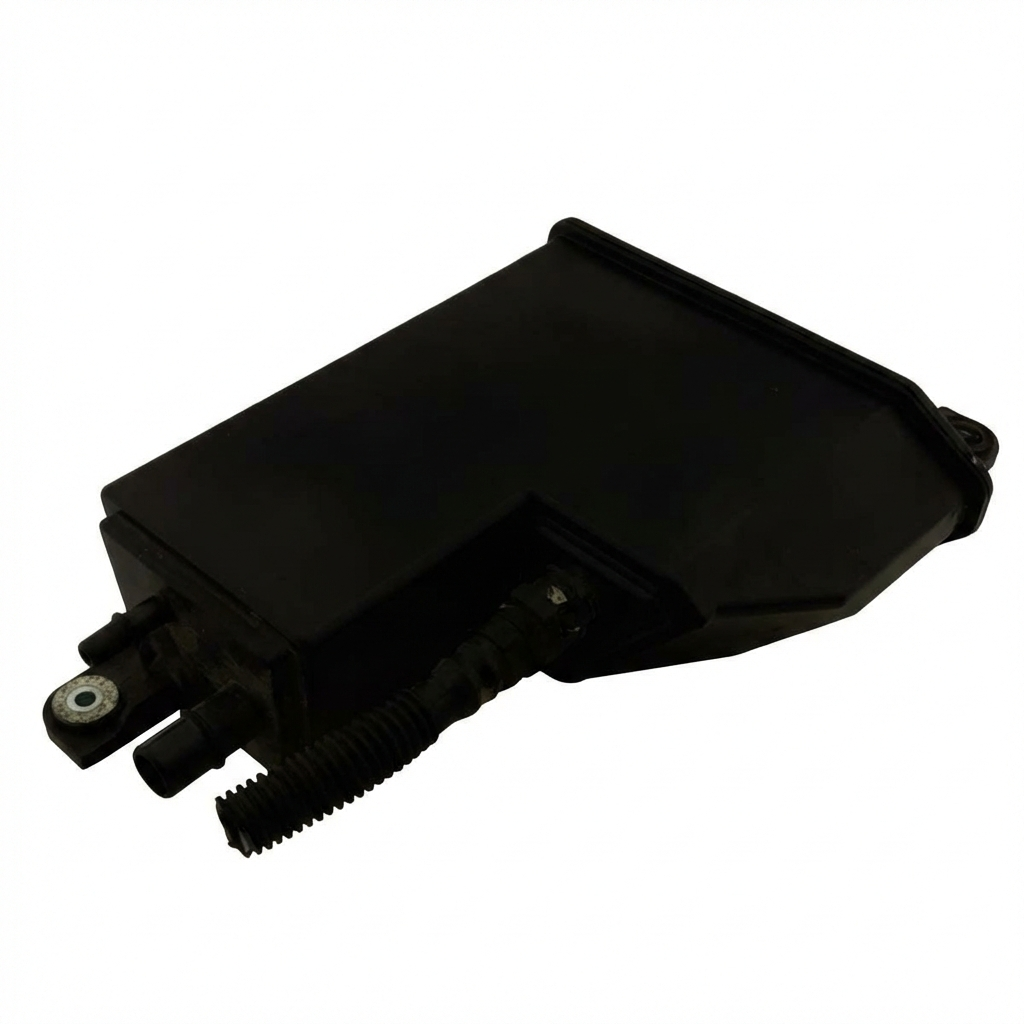
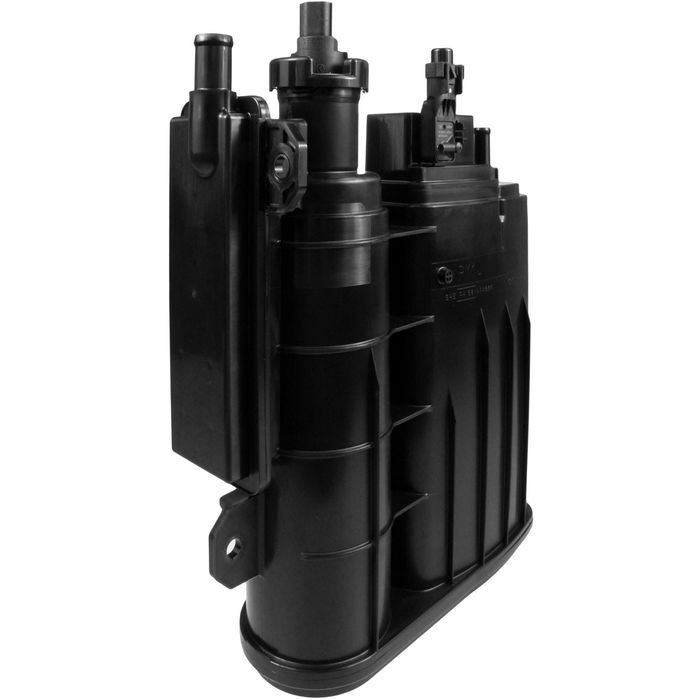
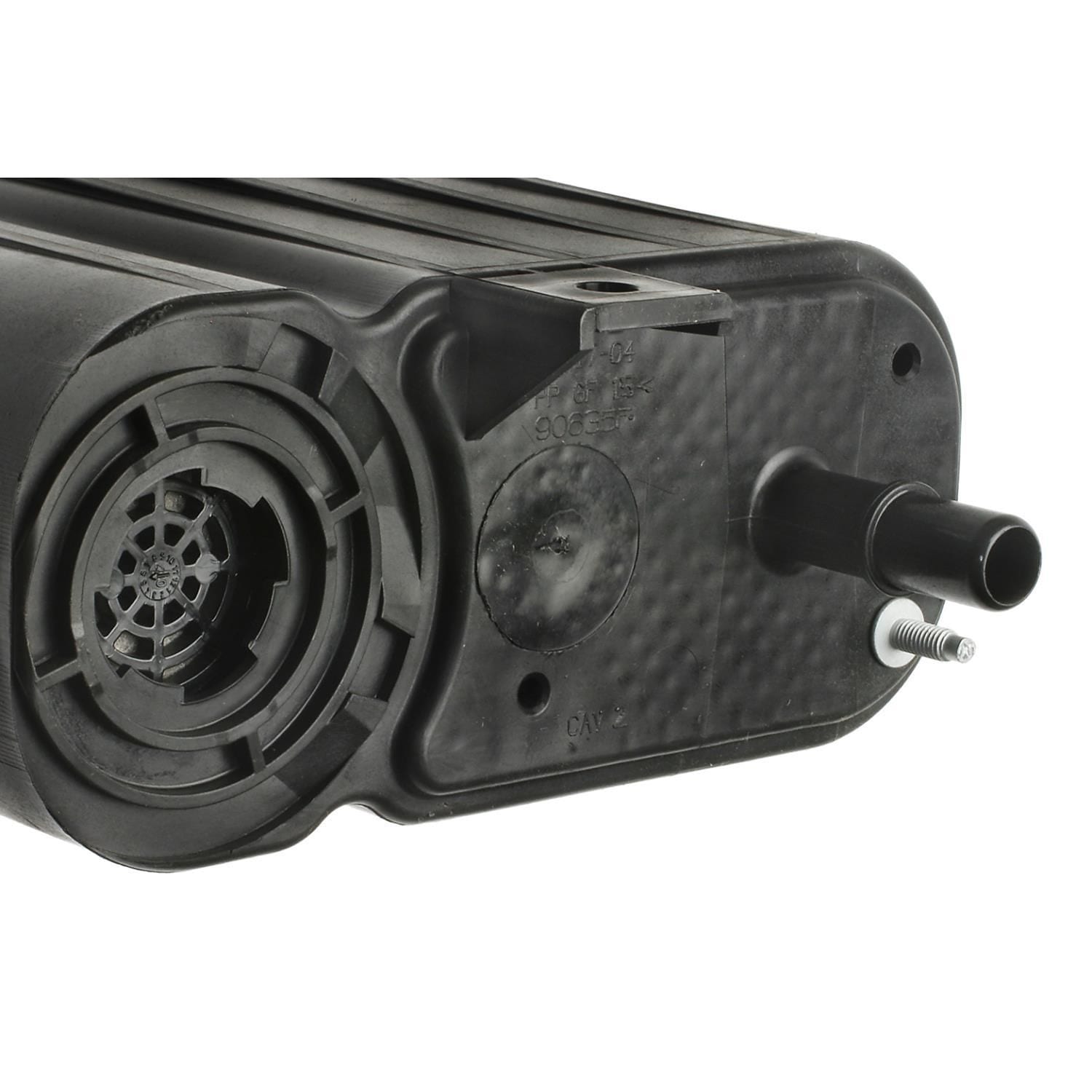
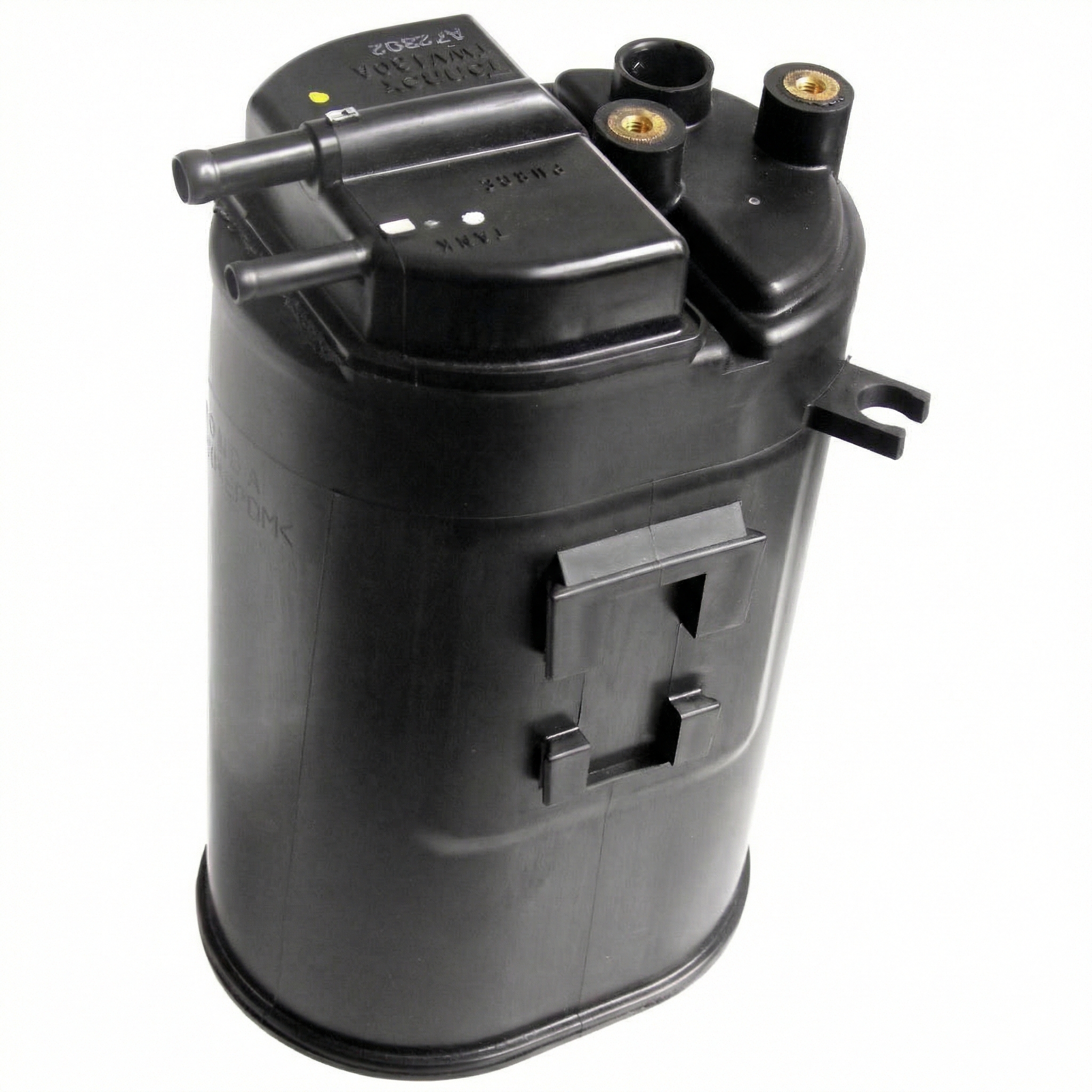
- Cracked Charcoal Canister: The plastic housing of the canister itself can develop small cracks from age or impact from road debris, though this is uncommon. A smoke test would be required to confirm a leak from the canister body itself.
- Leaking Fuel Tank Filler Neck: Rust or corrosion on the filler neck where the gas cap seals can prevent a proper seal, even with a new cap. While a TSB for leaking filler neck seals exists for newer, capless Nissan models, the principle applies: a poor sealing surface will cause a leak. Lightly sanding the corrosion and cleaning the surface can sometimes solve the issue.
Diagnosis Steps

- Check for a 'Loose Gas Cap' message on the dashboard.
- Inspect the gas cap. Ensure it is tight and clicks multiple times. Clean the seal and the filler neck rim. If the seal is cracked or worn, replace the cap with an OEM part.
- Clear the code with an OBD-II scanner. The EVAP monitor runs under specific conditions (often related to fuel level and temperature changes), so it may take several days of driving to see if the light returns.
- If the code returns, locate the EVAP canister and vent control valve. On the Frontier, this is typically mounted to a bracket near the spare tire.
- Carefully inspect the vent control valve and its connection to the canister. Per Nissan TSBs, this is a known failure point.
- Visually inspect all nearby EVAP hoses for obvious cracks, brittleness, or loose connections. Pay close attention to small rubber hoses which can dry rot.
- For a definitive diagnosis, perform a smoke test. Introduce smoke into the EVAP service port (if equipped) or a disconnected purge line in the engine bay. Look for where smoke escapes. 🎬 Watch a mechanic perform a professional EVAP smoke test. Common leak points are the gas cap, vent valve assembly, or a cracked hose.
- If no external leaks are found, test the vent and purge solenoids. The rear vent valve is normally open and should close when 12V is applied. The engine bay purge valve is normally closed and should not allow air to pass when unpowered.
Parts You'll Likely Need
- Fuel Cap — This is the most frequent and easiest fix. The seal wears out or the cap is not tightened properly. Using an OEM cap is strongly recommended as aftermarket versions are a common source of continued problems.
Trusted brands: Nissan (OEM)
OEM price range: $25-$50
Aftermarket price range: $15-$25 - EVAP Canister Vent Control Valve
(OEM #14935-JF00A)— This is the next most likely part to fail after the gas cap, as identified in multiple Nissan TSBs. The entire assembly must be replaced as the O-ring is no longer sold separately. Superseded part numbers include 14935-JF00B, 14935-JF00C, 14935-JF00D, 14935-JF00E, and 14935-JF02C.
Trusted brands: Nissan (OEM), Hitachi, Bosch
OEM price range: $80-$110
Aftermarket price range: $40-$70
Related Codes That Often Appear With This One
- P0442 — This code indicates a 'medium' EVAP leak. A small leak (P0456) can worsen over time and trigger a P0442.
- P0455 — This code indicates a 'large' EVAP leak. If a component like the vent valve fails completely or a hose becomes disconnected, you may see this code along with P0456.
Technical Service Bulletins (TSBs) & Recalls
- The primary TSB for this issue. It identifies a leak at the vent control valve O-ring as the cause for P0456. The latest version, amended in 2022, reverses earlier advice and now states the entire valve assembly must be replaced, as the O-ring is no longer available as a separate service part. It applies to the Frontier, Xterra, Titan, and many other Nissan models.
- A general information bulletin for EVAP codes P0442, P0455, and P0456. It emphasizes that a loose fuel filler cap is a primary cause and instructs technicians to check it first. It also notes that vehicles are equipped with a 'loose gas cap' warning light.
Platform-Specific Known Issues
- Nissan Technical Service Bulletin NTB17-082E specifically calls out the EVAP vent control valve as a common cause of P0456. It advises technicians that if a leak is confirmed at the valve-to-canister mounting point, the entire valve assembly must be replaced.
- Owner experiences on forums for the D40 Frontier and its platform-mate, the N50 Xterra, overwhelmingly point to a three-step diagnosis: 1) Tighten/clean the gas cap, 2) Replace the gas cap with an OEM part, 3) Replace the EVAP canister vent control valve assembly.
Mechanic-Grade Diagnostic Values
- EVAP Canister Vent Control Valve Solenoid Resistance — expected: Approximately 32 Ohms. A general acceptable range is 20-50 Ohms.. Failure: A reading of infinite resistance (open circuit) or zero resistance (short circuit) indicates a failed solenoid coil.
- EVAP Purge Volume Control Solenoid (in engine bay) Vacuum Test — expected: When unpowered, the valve should be closed and hold a vacuum of ~20 inHg for at least 3-5 minutes with no decay.. Failure: Any drop in vacuum indicates the valve is not sealing properly and is leaking internally.
- EVAP Fuel Tank Pressure (FTP) Sensor Voltage — expected: Should fall within the 0.5V to 4.5V range during a self-test.. Failure: Voltage that is stuck, out of range, or does not respond to pressure changes can indicate a faulty sensor, tricking the ECU into setting a P0456 code.
Scan Tool Commands That Help
- Nissan CONSULT or equivalent professional scan tool: EVAP System Active Test / Vent Valve Close — This command is essential for diagnosis. It manually closes the normally-open vent control valve, sealing the entire EVAP system. This must be done before performing a smoke test or pressure test to accurately find the source of a leak.
Wiring & Ground Locations
- EVAP Canister Vent Control Valve — Mounted on or near the charcoal canister, which is located under the truck bed near the spare tire, typically on the passenger-side frame rail.. This is the most common failure point after the gas cap. The 2-pin electrical connector can be tested here; with the key on, one pin should have ~12V power, and the other is the ground controlled by the ECM.
- EVAP Canister Purge Volume Control Solenoid Valve — Located in the engine bay, typically on or near the intake manifold.. A less common cause, but if it sticks open, it will create a leak path. Its function can be tested here by checking for vacuum pass-through when unpowered.
- Main Chassis Grounds — Various points on the frame and body. For a 2008 Frontier, ground distribution points are detailed in service wiring diagrams.. A poor ground for the ECM or the EVAP components can cause erratic sensor readings or solenoid malfunction, potentially leading to a false P0456 code.
Real Owner Repair Stories
- Reddit user on r/nissanfrontier (Nissan Frontier (year not specified)) — Check Engine Light with P0456 code.
❌ Tried (didn't work) Clearing the code without a physical fix.
✅ What actually fixed it The user first applied Vaseline to the gas cap O-ring as a test, which made the light go away temporarily. This confirmed the leak was at the cap. The final, permanent fix was replacing the fuel cap. - YouTube channel 'White House Farm' (Nissan Frontier (year not specified, D40 body style)) — Intermittent Check Engine Light that would come on and off for months with code P0456.
❌ Tried (didn't work) Initially suspected the fuel cap based on a BlueDriver scan tool suggestion.
✅ What actually fixed it The owner replaced the EVAP canister vent control valve (solenoid) located at the rear of the truck. This resolved the recurring code.
"I Checked Everything" — The Actual Cause
- If a smoke test reveals no external leaks, the leak may be internal to a component. A common culprit is the EVAP canister purge valve (in the engine bay) being contaminated with charcoal debris from a deteriorating canister. The valve may not show an external leak but will fail to seal completely, causing the system to fail its pressure test.
- The EVAP vent control valve itself can leak internally past its seal when commanded closed by the scan tool. Smoke would then be seen exiting the fresh air intake side of the valve, which can be missed if the technician is only looking for leaks in the lines.
OEM Part Supersession History
14935-JF00A→14935-JF02C— Revisions to improve reliability and sealing.
Heads up: The full list of superseded part numbers for the EVAP Canister Vent Control Valve includes 14935-JF00A, 14935-JF00B, 14935-JF00C, 14935-JF00D, 14935-JF00E, 14935-JF01B, and 14935-JF01C. All are replaced by the latest version, 14935-JF02C. Using cheap aftermarket versions is a common cause for the code returning.
Model Year Variations Within This Range
- 2005-2021: The official repair procedure for a leak at the vent control valve O-ring has changed. An older TSB (NTB17-082b) from 2019 instructed technicians to replace only the O-ring (P/N 16618-JF00A). However, the most current TSB (NTB17-082E, amended 2022) states this O-ring is no longer a separate service part and the entire vent control valve assembly must be replaced, making the repair more expensive but more robust.
Helpful Videos
Used OEM Parts in Stock
New Aftermarket Parts Available



The information in this article is provided for general reference and educational purposes only. Vehicle specifications, procedures, and part compatibility can vary by production date, trim level, and region. Always consult your vehicle's factory service manual and verify part numbers before purchasing or performing repairs. Safety-critical components such as airbags, seat belts, and braking systems should be installed by a qualified professional.
- Nissan FRONTIER:
- 🎬 Helpful Videos
- 🛍️ Shop This Part
- What's Unique About the 2005-2012 Nissan FRONTIER
- Diagnostic Flowchart
- Symptoms You May Notice
- Most Likely Causes
- Rare But Worth Checking
- Diagnosis Steps
- Parts You'll Likely Need
- Related Codes That Often Appear With This One
- Technical Service Bulletins (TSBs) & Recalls
- Platform-Specific Known Issues
- Mechanic-Grade Diagnostic Values
- Scan Tool Commands That Help
- Wiring & Ground Locations
- Real Owner Repair Stories
- "I Checked Everything" — The Actual Cause
- OEM Part Supersession History
- Model Year Variations Within This Range
- 🎟️ Get 5% Off