

P0456 on 2003-2009 Nissan 350Z: EVAP Small Leak Causes and Fixes
For a 2003-2009 Nissan 350Z, the P0456 code is most often caused by a loose gas cap or a failed O-ring on the EVAP vent control valve. Always check the gas cap first, as it's a free fix. If that doesn't solve it, the vent valve O-ring is the next most likely culprit. Per recent Nissan TSBs, the official repair is now to replace the entire vent control valve assembly, not just the O-ring.
- P0456 on a 350Z indicates a very small leak in the fuel vapor (EVAP) system.
- Always check the gas cap first. Make sure it's tight and the seal is intact. This is the most common and cheapest fix.
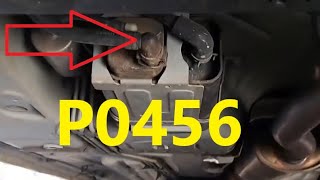
- The second most likely cause, specific to this Nissan platform, is a failed O-ring on the EVAP vent control valve located at the rear of the car.
- The car is safe to drive with this code, but it will cause an automatic failure on an emissions test.
- A professional smoke test is the fastest way to accurately pinpoint the source of the leak if the gas cap isn't the issue.
What's Unique About the 2003-2009 Nissan 350Z
While a loose gas cap is a common cause on any car, the Nissan 350Z (Z33) and its FM platform-mates are particularly susceptible to a leaking O-ring on the EVAP vent control valve, located near the charcoal canister at the rear of the vehicle. Nissan has issued multiple Technical Service Bulletins (TSBs), with the latest being NTB17-082E, specifically identifying this O-ring as a common failure point that causes the P0456 code. While earlier bulletins advised replacing just the O-ring, the most recent guidance states the O-ring is no longer sold as a separate service part and the entire vent control valve assembly must be replaced. This makes it a much higher probability cause on a 350Z compared to other vehicles.
🎬 Watch: The two most common P0456 fixes for your Nissan.Diagnostic Flowchart
Tap your situation to follow the diagnostic path that matches what you're seeing on this vehicle.
Symptoms You May Notice
- Check Engine Light is on
- A faint fuel smell near the rear of the car, though this is uncommon.
- Difficulty starting or rough idle in rare cases if a purge valve fails and allows excess vapor into the engine.
- In one forum-documented case, a user reported jerking when coming to a stop and a lower-than-normal idle in conjunction with P0456 and other codes.
- Replacing the entire EVAP canister when only the vent control valve or its O-ring is leaking.
- Replacing the purge valve in the engine bay when the leak is at the vent valve in the rear of the car.
- Using a cheap aftermarket gas cap that doesn't seal properly, leading to a repeat of the P0456 code.
Most Likely Causes
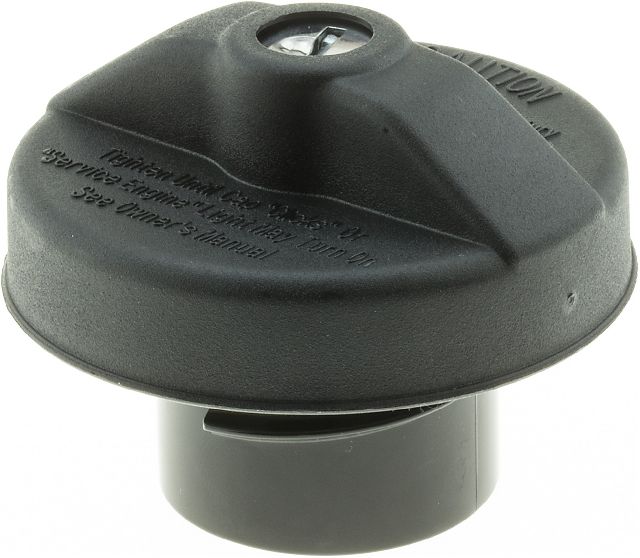
- Loose or Faulty Gas Cap 🔴 High Probability This is the most common cause on any vehicle, often due to not tightening the cap until it clicks or the seal wearing out over time. It is highly recommended to use a genuine OEM cap if replacing, as some aftermarket caps are known to cause sealing issues.
How to confirm: Remove the gas cap and inspect the rubber seal for cracks, dirt, or damage. Reinstall it, ensuring you turn it until it clicks several times. Clear the code and drive for a few days to see if it returns.
Typical fix: Tighten the cap correctly. If the seal is damaged or the problem persists, replace the gas cap.
Est. part cost: $15-$40 - Leaking EVAP Vent Control Valve or O-Ring 🔴 High Probability Nissan has identified this as a common failure point in TSBs NTB17-082E, NTB09020F, NTB17-082a, and NTB17-082b. The rubber O-ring degrades over time, causing a small leak where the valve mounts to the EVAP canister. This is a well-documented issue on the 350Z and related Infiniti models.
How to confirm: A smoke test is the definitive way to confirm. A technician will introduce smoke into the EVAP system and look for it escaping from the vent control valve/canister area. Visually, the O-ring may appear cracked or flattened upon removal of the valve. The valve is located at the rear of the car, on the charcoal canister.
Typical fix: Replace the entire EVAP vent control valve assembly. Per the latest TSB NTB17-082E (Feb 2022), the O-ring (part # 16618-JF00A) is no longer serviced separately, and the official fix is to replace the complete valve. Earlier TSBs like NTB17-082b did advise replacing only the O-ring.
Est. part cost: $5-$15 for the O-ring (if found separately), $80-$150 for the complete valve assembly. - Faulty EVAP Canister Purge Volume Control Solenoid Valve 🟡 Medium Probability This valve, typically located in the engine bay, can fail by getting stuck open or closed, preventing the EVAP system from sealing properly for its test. On the 350Z, it is located at the right rear of the engine compartment.
How to confirm: With the engine running, you can sometimes feel for vacuum at the valve's port or hear a clicking sound. A more definitive test involves applying voltage to see if it actuates correctly or performing a smoke test. The valve is normally closed, so if you can blow through it when it's disconnected, it is stuck open and has failed.
Typical fix: Replace the purge solenoid valve.
Est. part cost: $70-$150 - Cracked or Disconnected EVAP Hoses ⚪ Low Probability Rubber hoses throughout the EVAP system can become brittle and crack with age and exposure to engine heat and the elements.
How to confirm: Visually inspect all accessible EVAP lines running from the gas tank, to the charcoal canister, and to the engine bay. A smoke test will quickly reveal any cracks or disconnections.
Typical fix: Replace the cracked section of hose.
Est. part cost: $10-$30
Rare But Worth Checking
- Cracked EVAP (Charcoal) Canister: The plastic housing of the canister itself can develop hairline cracks over time, leading to a leak. This is less common than valve or hose failures but is a possibility. A smoke test is the best way to identify a cracked canister. Some owners perform an 'EVAP canister delete', though this is not recommended for street-driven vehicles.
- Faulty Fuel Tank Pressure (FTP) Sensor: If the sensor that measures the system's pressure is faulty, it can incorrectly report a leak to the ECM when one doesn't exist. This is typically diagnosed after all other potential leak sources have been ruled out.
Diagnosis Steps
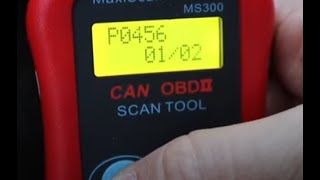
- Read the code with an OBD-II scanner to confirm P0456 is present.
- Inspect the gas cap. Ensure it is tight and the seal is not cracked or dirty. Tighten it until it clicks, clear the code, and drive for a few days.
- If the code returns, perform a visual inspection of all accessible EVAP hoses under the hood and near the rear axle for obvious cracks or disconnections.
- Locate the EVAP canister and vent control valve at the rear of the vehicle, near the differential and passenger side exhaust. Inspect the area for any signs of damage.
- The most effective next step is to have a smoke test performed. This involves injecting pressurized smoke into the EVAP system's service port. Smoke will visibly exit from the source of the leak.
- Pay close attention to the area where the vent control valve mounts to the canister, as this is the most likely leak point according to Nissan TSBs.
- If the smoke test reveals no leaks, the purge or vent valves may be malfunctioning electrically, or the fuel tank pressure sensor may be faulty. Test the purge valve in the engine bay for function (it should be closed with no power).
Parts You'll Likely Need
- Fuel Filler Cap (Gas Cap)
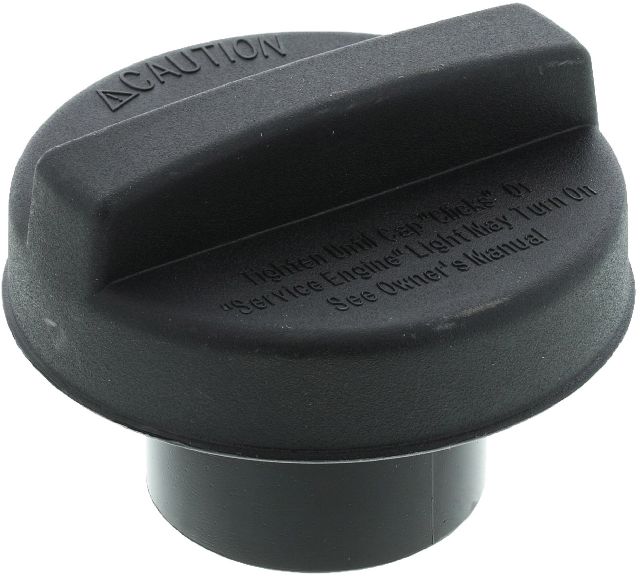
(OEM #17251-79961)— This is the most frequent cause of P0456. The seal wears out or the cap is not tightened properly.
Trusted brands: Nissan OEM, Gates, Stant
OEM price range: $25-$40
Aftermarket price range: $10-$20 - EVAP Canister Vent Control Valve
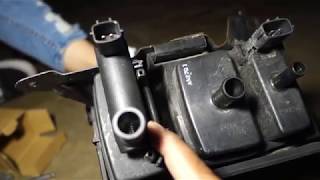
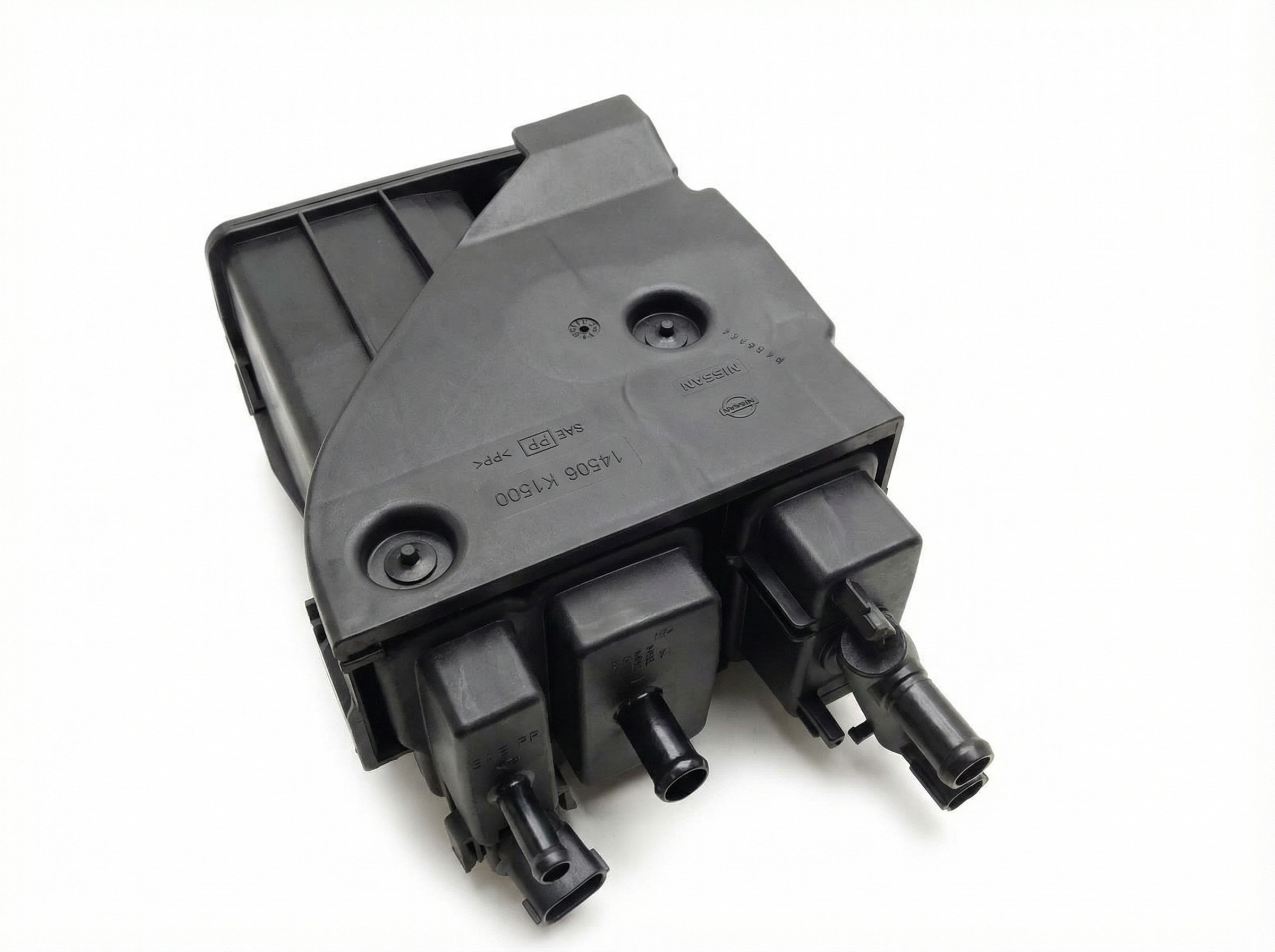
(OEM #14935-AM60B (may be superseded by 14935-JF02C))— This is the most common vehicle-specific failure. The valve's O-ring seal fails, or the valve solenoid sticks. Per TSB NTB17-082E, the entire assembly must now be replaced. It is located on the charcoal canister at the rear of the car.
Trusted brands: Nissan OEM, Dorman, Standard Motor Products
OEM price range: $100-$150
Aftermarket price range: $60-$90 - EVAP Vent Control Valve O-Ring
(OEM #16618-JF00A)— Specifically cited in older Nissan TSBs as the primary fix for P0456. The original O-ring degrades and causes a leak. IMPORTANT: As of TSB NTB17-082E (Feb 2022), Nissan no longer services this O-ring separately and recommends replacing the entire valve assembly.
Trusted brands: Nissan OEM
OEM price range: $5-$15
Aftermarket price range: $2-$10
Related Codes That Often Appear With This One
- P0442 — This code indicates a 'medium' EVAP leak. If the small leak from P0456 worsens over time (e.g., a crack in a hose grows), it may eventually trigger a P0442.
- P0455 — This code indicates a 'large' EVAP leak. It often appears with P0456 if the gas cap was left off completely or a major hose has disconnected.
Technical Service Bulletins (TSBs) & Recalls
- NTB17-082E: DTC P0456 CAUSED BY EVAP LEAK AT VENT CONTROL VALVE O-RING
- NTB09020F: SERVICE INFORMATION [for EVAP leak DTCs P0442, P0455, P0456]
- NTB17-082a: NISSAN; DTC P0456 CAUSED BY EVAP LEAK AT VENT CONTROL VALVE O-RING
- NTB17-082b: NISSAN; DTC P0456 CAUSED BY EVAP LEAK AT VENT CONTROL VALVE O-RING
Platform-Specific Known Issues
- Nissan Technical Service Bulletin NTB17-082E (updated Feb 2022) explicitly states that DTC P0456 is often caused by an EVAP leak at the vent control valve O-ring, and the updated repair procedure is to replace the entire vent control valve assembly.
- Nissan TSB NTB09020F notes that a loose fuel fill cap is a potential cause for P0456, P0442, and P0455 codes.
- Forum discussions on my350z.com frequently cite the gas cap and vent control valve as the fix. One user noted a strong fuel smell after filling the tank, which accompanied the P0456 code, pointing towards a leak in the upper part of the system.
Mechanic-Grade Diagnostic Values
- EVAP Canister Purge Volume Control Solenoid or Vent Control Valve Coil Resistance — expected: 20 - 50 Ohms. Failure: A reading of infinity (open circuit) or zero (short circuit) indicates a failed solenoid coil.
- EVAP Canister Purge Valve Vacuum Decay Test — expected: The valve should hold a vacuum of 15-20 inHg for several minutes (3-5) without any drop.. Failure: Any drop in vacuum indicates the valve is not sealing properly and is leaking internally.
Scan Tool Commands That Help
- Nissan CONSULT-III plus: EVAP System Leak Check (Active Test) — Used to verify a repair is complete without needing a smoke machine. The tool commands the system to seal itself and monitors for pressure loss.
- Nissan CONSULT-III plus: Close Vent Control Valve (Active Test) — This is the first step in any manual leak diagnosis. It commands the vent valve to close, sealing the system so a technician can introduce smoke or check for pressure hold.
- Advanced Bidirectional Scanners: Purge Volume Control — Allows a technician to command the purge valve open to varying degrees to check for proper mechanical operation and listen for clicking.
Wiring & Ground Locations
- EVAP Canister Vent Control Valve Connector — On the EVAP canister, located at the rear of the vehicle, typically above the rear suspension/exhaust on the passenger side.. This 2-terminal connector provides power and ground to the vent valve. Corrosion or damage here, common due to its exposed location, can prevent the valve from closing fully during the self-test, causing a P0456 leak code.
- EVAP Canister Purge Volume Control Solenoid Valve Connector — At the right rear of the engine compartment.. A loose or corroded connector at this valve can cause it to stick partially open, creating a leak path that the system detects during its test, triggering a P0456 code.
- ECM (Engine Control Module) — Behind the right side of the dashboard, accessible by removing the kick panel.. All EVAP component wiring terminates at the ECM. If valves and sensors test good, checking for continuity from the component connector back to the ECM connector pins is the next step to rule out a wiring fault.
- Ground Points B5, B6 — On the passenger compartment floor, near the front.. These are body ground points. While not directly tied to the EVAP system in diagrams, poor grounds in this area can cause a variety of strange electrical issues, and verifying all grounds are clean and tight is a good practice during electrical diagnosis.
Real Owner Repair Stories
- my350z.com forum user 'MikeBit' (2006 Nissan 350Z) — P0456 code, strong fuel smell in the cabin when the gas tank is full, and a rattling noise from the passenger side rear of the car over bumps.
❌ Tried (didn't work) Ensuring gas cap was tight.
✅ What actually fixed it The user's symptoms strongly point towards a leak in the EVAP canister area, with the rattling suggesting a potentially broken component within the canister assembly itself. The final fix was not posted, but the combination of fuel smell on a full tank and the P0456 code is a classic indicator of a leak at the top of the fuel/EVAP system, such as the fuel pump assembly O-ring or the EVAP canister/vent valve assembly.
"I Checked Everything" — The Actual Cause
- If a smoke test comes back clean, the issue is almost certainly not a physical leak but an electrical or sensor-related problem. The most likely causes are: 1) A faulty EVAP vent control valve that is not closing fully when commanded, but seals well enough to not show an obvious leak. 2) A faulty Fuel Tank Pressure (FTP) sensor that is incorrectly reporting a pressure drop to the ECM. 3) An intermittent wiring issue to one of the EVAP solenoids that only manifests under certain conditions.
OEM Part Supersession History
14935-AM600, 14935-AM60A→14935-AM60B— Updated design for the EVAP Canister Vent Control Valve.
Heads up: These parts are generally interchangeable for the 2003-2008 350Z.14935-JF00A through 14935-JF00E→14935-JF02C— This is a newer series of vent control valves used on many Nissan models. While 14935-AM60B is the direct replacement for the 350Z, some parts suppliers may list this newer part as a compatible alternative.
Heads up: While it may be functionally similar, always verify fitment with the specific vehicle's VIN. The physical housing or connector could differ slightly. Sticking with the 14935-AM60B is the safest option for a direct fit on the 350Z.
Model Year Variations Within This Range
- 2003-2006 (VQ35DE) vs. 2007-2009 (VQ35HR): While the fundamental operation of the EVAP system is the same, the engine and some surrounding components changed significantly with the introduction of the VQ35HR engine in 2007. However, for the P0456 code, the primary culprits (gas cap, vent control valve, purge valve) and their locations remain largely consistent across all model years of the 350Z.
Helpful Videos
Used OEM Parts in Stock
New Aftermarket Parts Available


The information in this article is provided for general reference and educational purposes only. Vehicle specifications, procedures, and part compatibility can vary by production date, trim level, and region. Always consult your vehicle's factory service manual and verify part numbers before purchasing or performing repairs. Safety-critical components such as airbags, seat belts, and braking systems should be installed by a qualified professional.
- Nissan 350Z:
- 🎬 Helpful Videos
- 🛍️ Shop This Part
- What's Unique About the 2003-2009 Nissan 350Z
- Diagnostic Flowchart
- Symptoms You May Notice
- Most Likely Causes
- Rare But Worth Checking
- Diagnosis Steps
- Parts You'll Likely Need
- Related Codes That Often Appear With This One
- Technical Service Bulletins (TSBs) & Recalls
- Platform-Specific Known Issues
- Mechanic-Grade Diagnostic Values
- Scan Tool Commands That Help
- Wiring & Ground Locations
- Real Owner Repair Stories
- "I Checked Everything" — The Actual Cause
- OEM Part Supersession History
- Model Year Variations Within This Range
- 🎟️ Get 5% Off