

P0456 on 2006-2010 Mazda MX-5: EVAP Very Small Leak Causes and Fixes
For a 2006-2010 Mazda MX-5, a P0456 code is most often caused by a loose or faulty gas cap. Before buying any parts, tighten the cap until it clicks multiple times, clear the code, and drive for a few days. If it returns, a new OEM gas cap (Part No. FE02-42-250B) is an inexpensive and likely fix. If the cap isn't the issue, the next most common culprit is the purge solenoid valve in the engine bay.
- P0456 indicates a 'very small leak' in the emissions system and is not a critical mechanical issue.
- Always start by checking the gas cap. Ensure it's tight (clicked multiple times) and the seal is in good condition. This resolves the issue in a majority of cases.
- If a new gas cap is needed, an OEM (Original Equipment Manufacturer) part (P/N: FE02-42-250B) is strongly recommended to ensure a perfect seal.
- If the gas cap is not the issue, the next most likely cause is a faulty purge valve (P/N: LFG1-18-741B for '06-'08 models), which is a common and well-documented failure.
- Finding a very small leak without a smoke machine is very difficult; it is the standard professional method for a reason.
What's Unique About the 2006-2010 Mazda MX-5
The 2006-2010 Mazda MX-5 (NC generation) is not uniquely prone to this code compared to other vehicles. Like many cars, the most frequent trigger is simply an improperly tightened gas cap. Mazda has issued multiple service bulletins, such as TSB 01-008/15, for various models emphasizing that customers often don't tighten the fuel cap sufficiently, leading to this specific code. While other parts can fail, starting with the simplest and most common cause—the gas cap—is the most effective diagnostic approach for the NC Miata. A notable vehicle-specific issue is the location and part number for the purge solenoid valve, which differs between the 2006-2008 (NC1) and 2009-2010 (NC2) models.
Diagnostic Flowchart
Tap your situation to follow the diagnostic path that matches what you're seeing on this vehicle.
Symptoms You May Notice
- Check Engine Light is on.
- A faint fuel smell may be noticeable, though this is less common with a very small leak.
- No noticeable impact on drivability or engine performance.
- In some cases where the purge valve is failing, a hard start or rough idle immediately after refueling may occur.
- Replacing the charcoal canister or other expensive EVAP components before verifying the gas cap is sealing correctly and performing a smoke test to confirm the leak location.
- Using a cheap aftermarket gas cap that does not seal as well as the OEM part, causing the code to persist.
Most Likely Causes
- Loose or Faulty Gas Cap 🔴 High Probability This is the most common cause across most vehicles, including Mazdas. Mazda TSB 01-008/15 confirms this is the first thing to check, as customers often undertighten the cap.
How to confirm: Ensure the gas cap is tightened until it clicks several times. Inspect the cap's rubber O-ring seal for cracks, stiffness, or damage. Clean the filler neck sealing surface.
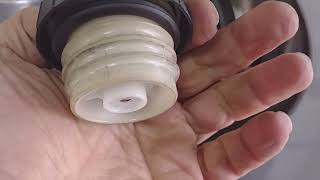
Typical fix: Tighten the cap and clear the code. If the seal is damaged or the code returns, replace the gas cap with a genuine OEM part (Mazda P/N: FE02-42-250B). 🎬 Watch: Why the gas cap is the most common culprit.
Est. part cost: $25-$45 - Faulty Purge Solenoid Valve 🟡 Medium Probability This valve is frequently activated and can wear out over time, getting stuck slightly open and causing a small leak. It's a known failure point on the NC Miata.
How to confirm: The valve is normally closed. With the valve removed, you should not be able to blow air through it. On a 2006-2008 model, it is located in the engine bay on the driver's side, near the oil dipstick. A scan tool can also command it to open and close to check for response as per TSB 01-002-18-3417.
Typical fix: Replace the purge solenoid valve. For 2006-2008 models, the OEM part is LFG1-18-741B. 🎬 Watch: How to replace the purge valve on NC1 models. The part and procedure are different for 2009+ models.
Est. part cost: $60-$90 - Cracked or Disconnected EVAP Hose 🟡 Medium Probability Rubber hoses become brittle with age and exposure to engine heat cycles, leading to small cracks that are often invisible to the naked eye.
How to confirm: Visually inspect all accessible EVAP lines between the engine, charcoal canister, and fuel tank. A smoke test is the most effective way to find a leak that isn't visible.
Typical fix: Replace the cracked section of hose.
Est. part cost: $5-$25 - Faulty Canister Vent Valve/Solenoid ⚪ Low Probability This valve, located near the charcoal canister at the rear of the car, can fail and not seal the system properly during the self-test.
How to confirm: This valve is normally open and is commanded closed by the PCM to seal the system for a leak test. A capable scan tool can actuate the valve to test its function.
Typical fix: Replace the vent valve.
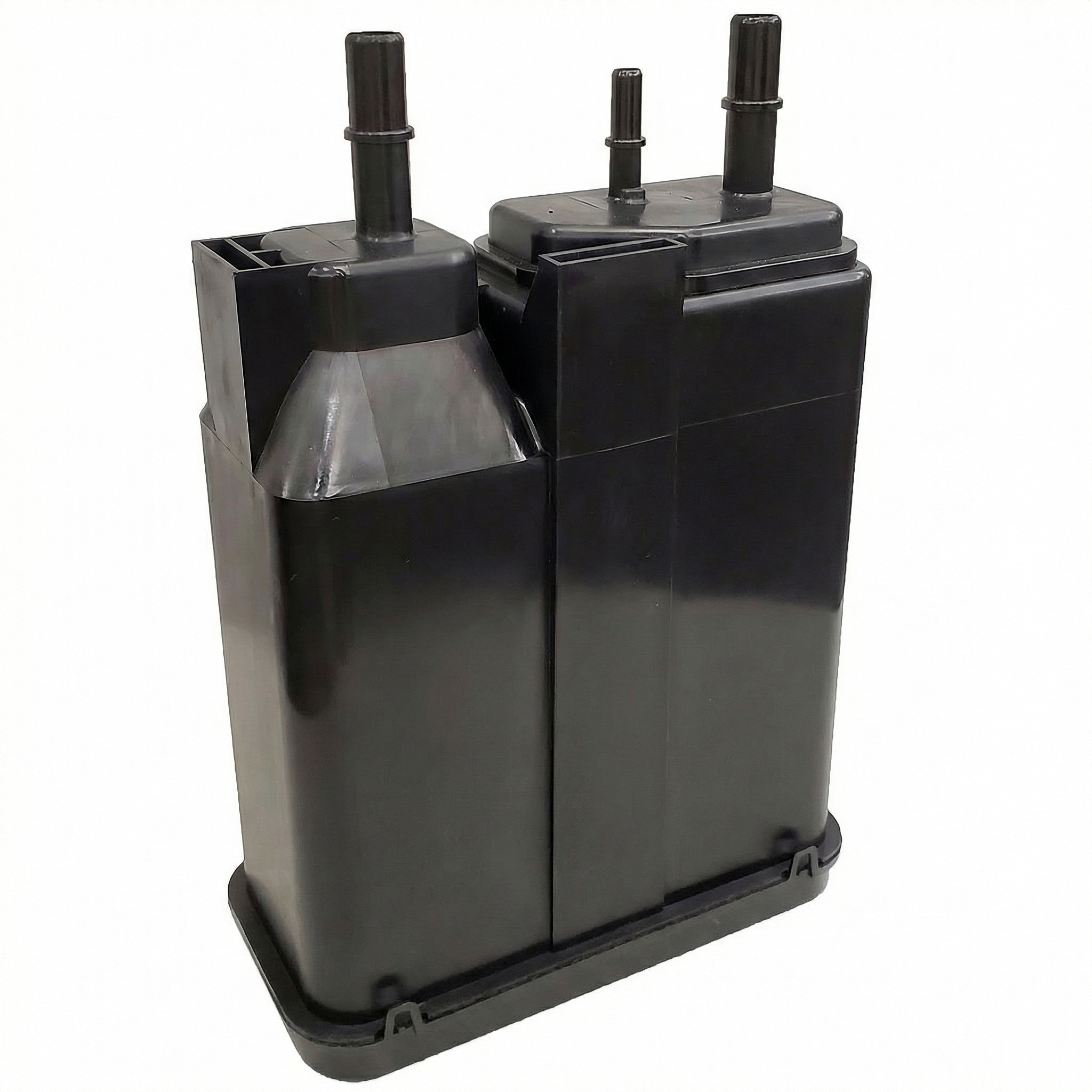
Est. part cost: $50-$100 - Cracked Charcoal Canister ⚪ Low Probability The plastic canister body can develop hairline cracks from age or road debris impact. This part (OEM P/N: L3P5-13-970) is shared with the Mazda5.
How to confirm: A smoke test is the best method, as smoke will be visibly escaping from the crack in the canister body.
Typical fix: Replace the charcoal canister assembly.
Est. part cost: $150-$250
Rare But Worth Checking
- Leaking Fuel Filler Neck: Corrosion or dirt on the sealing surface of the filler neck can prevent even a new gas cap from sealing properly. Cleaning the surface with a cloth is a crucial diagnostic step. In some cases, the metal neck itself can develop rust holes, requiring a smoke test to identify.
- Faulty Fuel Tank Pressure Sensor: A faulty sensor can incorrectly report a pressure drop to the PCM, triggering the code even if no leak exists. This is rare and usually accompanied by other codes.
Diagnosis Steps
- Read the code with an OBD-II scanner to confirm P0456 is present.
- Inspect the gas cap. Remove it, check the seal for cracks or wear, and reinstall it, ensuring it clicks at least three times.
- Clean the fuel filler neck sealing surface with a cloth to ensure a good seal.
- Clear the code with the scanner and drive the vehicle for a few days. The EVAP monitor runs under specific conditions (often during cooldown with a specific fuel level), so the light may not turn off immediately.
- If the code returns, consider replacing the gas cap with a genuine OEM part (FE02-42-250B) as it is the most common and inexpensive fix.
- If the code still persists, perform a thorough visual inspection of all accessible EVAP hoses and components. On the 2006-2008 MX-5, pay close attention to the purge solenoid valve (P/N: LFG1-18-741B) located near the oil dipstick in the engine bay.
- If no visual faults are found, the most effective next step is to have a professional perform a smoke test. This test fills the EVAP system with low-pressure smoke, making even the smallest leaks easy to spot visually. 🎬 See how a small EVAP leak is diagnosed and fixed.
- Based on the smoke test results, replace the leaking component, whether it's a hose, valve, or the canister itself.
Parts You'll Likely Need
- Fuel Cap (Gas Cap)
(OEM #FE02-42-250B (or GN3E-42-250B))— This is the most frequent cause of a P0456 code due to improper tightening or a worn seal. Using an OEM cap is highly recommended as aftermarket caps can have sealing issues.
Trusted brands: Mazda OE
OEM price range: $25-$45
Aftermarket price range: $15-$25 - Vapor Canister Purge Valve (Purge Solenoid)
(OEM #LFG1-18-741B (for 2006-2008 models))— This is the second most common failure point after the gas cap. It can get stuck partially open, creating a very small leak and can sometimes cause a P2187 lean code as well.
Trusted brands: Bosch, Dorman, Mazda OE
OEM price range: $60-$90
Aftermarket price range: $40-$70
Related Codes That Often Appear With This One
- P0442 — This code indicates a 'small leak,' whereas P0456 indicates a 'very small leak.' They point to the same type of failure, just of a different magnitude, and are often caused by the same components.
- P0455 — This code indicates a 'large leak.' Seeing it with P0456 is less common but could suggest an intermittent or worsening issue in the EVAP system. A very loose gas cap can sometimes trigger this code.
- P2187 — System Too Lean at Idle. This code can appear alongside EVAP codes if the purge solenoid valve is stuck open, creating a vacuum leak that allows un-metered air (fuel vapor) into the intake manifold at idle.
Technical Service Bulletins (TSBs) & Recalls
- 01-002/18 (also listed as 01-002-18-3417): A general TSB from Mazda outlining the diagnostic flowchart for various EVAP leak codes (P0441, P0442, P0455, P0456) on multiple models including the 2006-2015 MX-5. It provides steps for testing components like the purge solenoid valve.
- 01-008/15: Confirms that Mazda identifies the fuel cap as the most likely cause for P0456 across many models, often due to the user not tightening it sufficiently.
Platform-Specific Known Issues
- Purge Solenoid Valve Difference (NC1 vs. NC2): The purge solenoid valve, a common failure item, is different for the 2006-2008 (NC1) and 2009-2010 (NC2) models. For the NC1, the part number is LFG1-18-741B and it is easily accessible in the engine bay near the dipstick. Owners of 2009+ models should verify the correct part number and location as it differs.
Mechanic-Grade Diagnostic Values
- Purge Solenoid Coil Resistance — expected: Typically 15-30 Ohms, but varies with temperature. One non-vehicle-specific example showed 36 Ohms at ~55-60°F.. Failure: A reading that is significantly out of range (open loop/OL or very high resistance) indicates a failed internal coil.
- Purge Solenoid Voltage Supply — expected: Battery voltage (~12V) should be present at the connector with the key on, engine off.. Failure: No voltage suggests a wiring or fuse issue upstream of the solenoid.
Scan Tool Commands That Help
- Mazda M-MDS or equivalent professional scanner: EVAP System Leak Test / Purge and Vent Valve Actuation — Used to command the canister vent valve closed to seal the system for a smoke test. Also used to command the purge solenoid open and closed to check for mechanical function (sticking) and to observe the effect on O2 sensor readings and fuel trims. Note: Mazda has discontinued the M-MDS guided leak test on some models in favor of using a manual smoke tester.
Wiring & Ground Locations
- Engine Compartment Ground — A common ground point is located on the left front strut tower in the engine bay.. The Purge Solenoid Valve is located in the engine bay and relies on a solid ground connection. A corroded or loose ground here could cause intermittent electrical faults for the solenoid, mimicking a failed part.
- Rear Chassis Ground — A factory ground point exists near the trunk latch assembly.. The canister vent valve and fuel tank pressure sensor are located at the rear of the vehicle. A poor ground in this area could affect their operation and lead to incorrect sensor readings or valve actuation failures.
Real Owner Repair Stories
- Reddit user '187hp' recounting a friend's repair (Mazda (model not specified, but symptoms are universal)) — P0456 code.
❌ Tried (didn't work) Cleaning the gas cap and filler neck area., Replacing the gas cap.
✅ What actually fixed it A smoke test revealed two small rust holes in the metal fuel filler neck itself. The neck had to be replaced. - YouTube channel 'MZR Auto' (2009 Mazda 6 (similar EVAP system principles)) — P0456 code.
❌ Tried (didn't work) The owner had previously replaced the gas cap, leading the mechanic to initially suspect other components.
✅ What actually fixed it A smoke test showed a significant leak from the gas cap area. The cap the owner had installed was an incorrect aftermarket part that did not seal properly. Replacing it with the correct cap fixed the leak.
OEM Part Supersession History
FEY2-42-250→FE02-42-250B— Standard part revision/update.LFG1-18-741, LFG1-18-741A→LFG1-18-741B— Standard part revision/update for the 2006-2008 model year purge solenoid.
Model Year Variations Within This Range
- 2006-2008 (NC1): Uses Purge Solenoid Valve P/N LFG1-18-741B, located in the engine bay near the oil dipstick.
- 2009-2010 (NC2): Uses a different Purge Solenoid Valve part number and location than the earlier NC1 models.
Helpful Videos


Used OEM Parts in Stock
New Aftermarket Parts Available


The information in this article is provided for general reference and educational purposes only. Vehicle specifications, procedures, and part compatibility can vary by production date, trim level, and region. Always consult your vehicle's factory service manual and verify part numbers before purchasing or performing repairs. Safety-critical components such as airbags, seat belts, and braking systems should be installed by a qualified professional.
- Mazda MX-5:
- 🎬 Helpful Videos
- 🛍️ Shop This Part
- What's Unique About the 2006-2010 Mazda MX-5
- Diagnostic Flowchart
- Symptoms You May Notice
- Most Likely Causes
- Rare But Worth Checking
- Diagnosis Steps
- Parts You'll Likely Need
- Related Codes That Often Appear With This One
- Technical Service Bulletins (TSBs) & Recalls
- Platform-Specific Known Issues
- Mechanic-Grade Diagnostic Values
- Scan Tool Commands That Help
- Wiring & Ground Locations
- Real Owner Repair Stories
- OEM Part Supersession History
- Model Year Variations Within This Range
- 🎟️ Get 5% Off