

P0456 on 2011-2017 Kia Rio: EVAP Small Leak Causes & Fixes
For a 2011-2017 Kia Rio, a P0456 code is most often caused by a loose or faulty gas cap. If that's not the issue, the next most likely culprit is a failing Canister Close Valve (CCV), a known issue covered by a Technical Service Bulletin (TSB). The original faulty CCV has a black port, while the improved replacement is tan/ivory. A new OEM gas cap costs $25-$40, while a CCV replacement is around $25-$70 for the part.
- Always check the gas cap first for a P0456 code. It's the easiest and most common fix.
- For 2012-2017 Kia Rios, the Canister Close Valve (CCV) is a known failure point documented by Kia and should be a primary suspect if the gas cap is okay.
- A smoke test is the most reliable diagnostic tool to find the exact source of a small leak, saving you from replacing unnecessary parts.
- For 2012-2014 models, check with a dealer about a potential ECM software update if no physical leaks can be found.
What's Unique About the 2011-2017 Kia RIO

The 3rd generation Kia Rio (UB; 2012-2017) and its platform-mate, the Hyundai Accent (RB), have specific, documented issues related to the P0456 code. Kia issued a Technical Service Bulletin (TSBFUE040) pointing directly to the Canister Close Valve (CCV) sticking open as a common cause. The TSB notes the improved part has a different seal material and a tan port instead of the original black one. Additionally, other TSBs were released for ECM software updates on 2012-2014 models to correct overly sensitive leak detection logic, which could falsely trigger this code.
Diagnostic Flowchart

Tap your situation to follow the diagnostic path that matches what you're seeing on this vehicle.
Generation note: This range covers the end of the 2nd generation (JB; 2011) and the entire 3rd generation (UB; 2012-2017). The most critical, well-documented issues from Kia TSBs, such as the faulty Canister Close Valve (TSBFUE040) and necessary ECM updates (TSBENG146R1), specifically apply to the 3rd generation (2012-2017) models.
Symptoms You May Notice
- Check Engine Light is on
- A faint fuel smell, especially around the gas cap or rear of the vehicle
- No noticeable impact on drivability or engine performance
- Replacing the purge valve in the engine bay when the more common failure point on this vehicle is the canister close valve (CCV) at the rear, as specified in TSB FUE040.
- Replacing multiple EVAP components without first performing a smoke test to accurately locate the source of the leak.
- Continuing to replace parts when the vehicle's ECM software has not been checked for required updates that address overly sensitive leak detection.
Most Likely Causes

- Loose or Faulty Gas Cap 🔴 High Probability This is the most common cause for a P0456 on any vehicle. The rubber O-ring on the cap can wear out, crack, or get dirty, preventing a proper seal. Some owners report the original cap no longer 'clicking' when tight, indicating a failure.
How to confirm: Ensure the cap is tightened until it clicks multiple times. Inspect the cap's seal for any cracks, dirt, or damage. A temporary test can be applying a thin layer of petroleum jelly to the O-ring to see if it helps create a seal. A smoke test will definitively show a leak from the cap area.
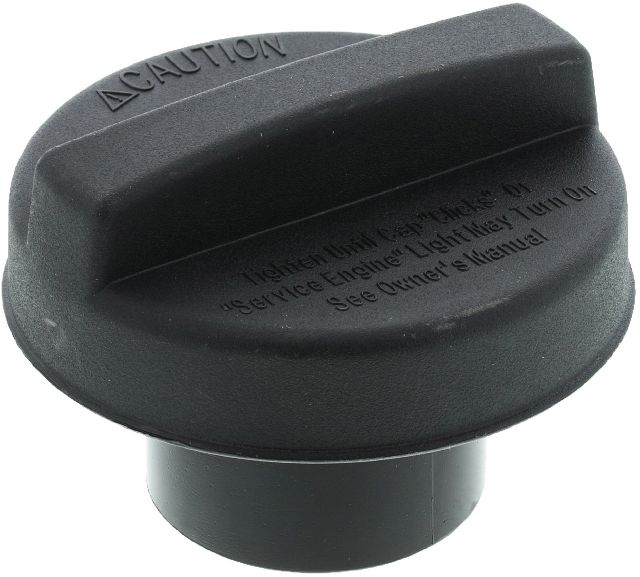
Typical fix: Clean the cap and filler neck sealing surfaces. If the seal is damaged or the cap is worn, replace it. It is strongly recommended to use a genuine OEM cap (Part No. 31010-3L600U) as aftermarket caps can have sealing issues.
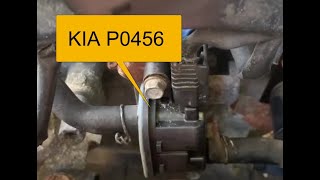
Est. part cost: $25-$40 for OEM - Faulty Canister Close Valve (CCV) 🔴 High Probability Kia issued TSB #TSBFUE040 specifically for 2012-2017 Rio models due to the CCV sticking open. The TSB notes the original part has a black port, while the improved replacement part (31453-3K600FFF) has a tan/ivory port and better seal material. 🎬 See how to locate and replace the canister close valve.
How to confirm: Visually inspect the valve, located on the charcoal canister assembly under the rear of the vehicle. If the electrical port is black, it is the original, failure-prone design. A smoke test is the best method; if the valve is stuck open, smoke will exit from it when the valve should be commanded closed.
Typical fix: Replace the Canister Close Valve with the updated OEM part. This is a relatively simple replacement involving disconnecting hoses and an electrical connector. The platform-mate Hyundai TSB also recommends replacing the 'Air Drain Case' (filter) at the same time.
Est. part cost: $25-$70 - Outdated ECM Software 🟡 Medium Probability Kia released TSBs #TSBENG146R1 and #TSB-ENG118R2 for 2012-2014 Rio models, indicating the original software logic was too sensitive and could trigger P0456 incorrectly. This has been confirmed by owners who fixed the code with a software update after replacing parts did not work.
How to confirm: A Kia dealership or a qualified shop with access to Kia's service information can check your vehicle's VIN to see if the software update has been performed.
Typical fix: The Kia dealership reprograms the Engine Control Module (ECM) with the updated software.
Est. part cost: $0 if covered under a campaign, otherwise dealer labor rates apply ($100-$200). - Cracked or Disconnected EVAP Hose/Line 🟡 Medium Probability Hoses, especially in the engine bay near the purge valve or under the car near the canister, can become brittle and crack over time due to heat and age. Clamps can also rust and fail.
How to confirm: Visually inspect all accessible EVAP hoses running from the engine bay to the fuel tank. A smoke test is the most reliable way to pinpoint a small crack that isn't visible.
Typical fix: Replace the cracked section of hose and any failing clamps.
Est. part cost: $5-$50
Rare But Worth Checking
- Faulty EVAP Purge Valve: While less common than the CCV for this specific code, the purge valve (located in the engine bay on top of the engine) can fail by not closing completely, creating a small leak.
- Cracked Charcoal Canister: Physical damage to the plastic canister housing from road debris or impact can cause a leak. This is usually obvious during a visual inspection or will be a major source of smoke during a smoke test.
- Faulty Fuel Tank Pressure Sensor (FTPS): A malfunctioning sensor can incorrectly report a leak to the ECM even when the system is sealed. This is often diagnosed after a smoke test finds no leaks and the gas cap and CCV are known to be good. One owner of a newer Kia with a persistent P0456 found the internal check valve in the FTPS was bleeding off pressure, causing the code.
- Cracked Fuel Filler Neck: Rust can form on the metal fuel filler neck where the gas cap seals, creating an uneven surface that prevents a good seal. In other cases, the neck itself can develop a crack, which would be found with a smoke test.
Diagnosis Steps
- Read the code with an OBD-II scanner to confirm P0456 is present. 🎬 Watch: A mechanic diagnoses a P0456 leak on a 2016 Rio.
- Inspect the gas cap. Ensure it is tight and clicks when closed. Check the rubber seal for cracks or dirt. Clean it and clear the code. Drive for a few days to see if the light returns. If the cap is suspect, replace it with an OEM part (31010-3L600U).
- If the light returns, perform a visual inspection of the Canister Close Valve (CCV) under the rear of the vehicle. Per TSB FUE040, if the electrical port is black, the valve is the original failure-prone design and is highly suspect. The updated part has a tan/ivory port.
- Perform a visual inspection of all accessible EVAP hoses and lines between the engine and the fuel tank for obvious cracks or disconnections.
- If no obvious issues are found, the most effective next step is a professional smoke test. This involves feeding low-pressure smoke into the EVAP system to see where it escapes.
- During the smoke test, pay close attention to the gas cap area, the canister close valve (CCV), the purge valve in the engine bay, and all hose connection points.
- If the CCV is leaking or has the old black-port design, replace it with the updated part (31453-3K600FFF).
- If no leaks are found with a smoke test, contact a Kia dealer to verify if your vehicle's VIN is eligible for an ECM software update per TSBs #TSBENG146R1 or #TSB-ENG118R2. An owner on a Hyundai forum with the same platform fixed their P0456 with this update after replacing parts failed to solve it.
- If no leaks are found and the software is up to date, the Fuel Tank Pressure Sensor (FTPS) should be tested for internal failure, as it can cause the code without an external leak. A manual test can be performed by monitoring FTPS voltage while inducing vacuum, per Kia's advanced diagnostic procedures.
Parts You'll Likely Need
- Canister Close Valve
(OEM #31453-3K600FFF)— This part is cited in manufacturer TSB FUE040 as a primary cause for P0456 on 2012-2017 Rio models due to sticking open. The TSB specifies replacing the original part (with a black port) with this updated version (with a tan/ivory port).
Trusted brands: Genuine Kia
OEM price range: $60-$95
Aftermarket price range: $25-$70 - Fuel Cap
(OEM #31010-3L600U)— A worn or damaged gas cap seal is the simplest and most frequent cause of small EVAP leaks. Aftermarket caps are often problematic, making the OEM version the recommended fix.
Trusted brands: Genuine Kia, Gates, Motorad
OEM price range: $25-$40
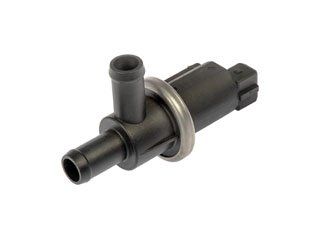
Aftermarket price range: $15-$25 - Canister Purge Valve
(OEM #28910-26900)— Though less common for this specific code on the Rio, a purge valve stuck slightly open can also cause a small leak. This OEM number is commonly cross-referenced to the Dorman 911-808 aftermarket part for the 1.6L engine.
Related Codes That Often Appear With This One
- P0455 — This indicates a large EVAP leak. It can appear with P0456 if the leak source (like a stuck CCV) is intermittent or worsening. TSB #TSBFUE040 mentions both codes together as a result of a stuck-open CCV.
- P0442 — This indicates a medium-sized EVAP leak. The same faulty components can cause any of the three leak codes (P0442, P0455, P0456) depending on the severity of the leak at the time of the system's self-test.
Technical Service Bulletins (TSBs) & Recalls

- TSBFUE040: 2012-2017 Rio - EVAP leak codes P0455/P0456 caused by a stuck Canister Close Valve (CCV).
- TSBENG146R1: 2012-2014 Rio - ECM software upgrade to address P0456 and other DTCs.
- TSB-ENG118R2: 2012-2013 Rio - ECM software upgrade to address P0456 and other DTCs.
- PS469: General recommendation for manual EVAP testing for small leak codes like P0456.
- Hyundai TSB 18-FL-002: For the platform-mate 2012-2016 Hyundai Accent, also citing P0456 caused by the CCV and recommending its replacement.
Platform-Specific Known Issues
- TSB #TSBFUE040: Notes that on 2012-2017 Rio models, the Check Engine Light may illuminate with codes P0455 and P0456 due to the Canister Close Valve (CCV) being stuck open. It instructs technicians to replace the old valve (black port) with an improved part (tan port).
- TSB #TSBENG146R1 & #TSB-ENG118R2: Advise of an available ECM software upgrade for 2012-2014 Rio models to resolve MIL illumination with code P0456, among others, due to overly sensitive detection logic.
- TSB #PS469: Recommends performing a manual EVAP test (like a smoke test) for hard-to-find small leaks associated with code P0456.
Mechanic-Grade Diagnostic Values
- Fuel Tank Pressure Sensor (FTPS) voltage during manual leak test — expected: After drawing a partial vacuum to achieve 1.0V-1.4V, the voltage should not change more than 0.300V over one minute.. Failure: A voltage change greater than 0.300V in one minute indicates a leak in the system.
- Fuel Tank Pressure Sensor (FTPS) voltage during manual restriction test — expected: While pulsing the Purge Control Solenoid Valve (PCSV) to ground for 25 seconds, voltage should remain above 1.5V.. Failure: If voltage drops below 1.5V, it indicates a restriction in the EVAP vent system (e.g., clogged canister, hose, or CCV).
Scan Tool Commands That Help
- Kia GDS (Global Diagnostic System): Actuation Test — To manually command the Canister Close Valve (CCV) and Purge Control Solenoid Valve (PCSV) open or closed. This is essential for isolating components and sealing the system before a smoke test.
- Kia GDS (Global Diagnostic System): Resetting Adaptive Values — After replacing an EVAP system component, this function can be used to clear learned values from the ECM, which may help the system relearn faster with the new part.
Wiring & Ground Locations
- Canister Close Valve (CCV) Control Wire — At the electrical connector for the Canister Close Valve, located on the charcoal canister assembly under the rear of the vehicle.. A technician can manually test the CCV by grounding the blue control wire at the valve's connector. This should force the valve closed, sealing the vent side of the EVAP system for diagnostic purposes without a scan tool.
Real Owner Repair Stories
- YouTube channel 'MTLCARGUY' (2015 Kia Rio) — Check Engine Light with code P0456.
❌ Tried (didn't work) Visual inspection of the gas cap and fuel filler neck showed no issues.
✅ What actually fixed it Upon inspecting under the vehicle, a hose clamp on a vapor line near the charcoal canister was found to be completely rusted through. Replacing the rusted clamp with a new stainless steel one resolved the leak and the code did not return. - Reddit user in r/kiacarnivals (2025 Kia Carnival (newer model, but demonstrates a key diagnostic principle)) — Persistent P0456 Check Engine Light shortly after purchase.
❌ Tried (didn't work) Dealer smoke-tested the EVAP system and found no external leaks., Reseating and checking the gas cap.
✅ What actually fixed it A technician found the Fuel Tank Pressure Sensor (FTPS) was malfunctioning internally. An internal one-way check valve within the sensor itself was bleeding off pressure, causing the ECU to detect a leak. Replacing the FTPS (P/N 31435-2J000) resolved the code. - YouTube channel 'The Car Doctor' (2016 Kia Rio) — Check Engine Light with code P0456.
❌ Tried (didn't work) A vacuum test on the purge valve showed it was okay.
✅ What actually fixed it A smoke test was performed, and the system pressure gauge showed a definitive leak. The technician noticed dirt/residue around the gas cap and could hear smoke escaping from the area. After applying a temporary sealant to the cap's O-ring, the system held pressure perfectly, proving a bad gas cap was the sole cause.
"I Checked Everything" — The Actual Cause
- In a documented case on a newer Kia, a persistent P0456 code with no leaks found during a smoke test was ultimately caused by a faulty Fuel Tank Pressure Sensor (FTPS). The sensor had an internal failure where a check valve was bleeding off pressure, a fault that is impossible to detect with an external smoke test but which the ECU correctly identifies as a system leak.
When the Usual Fixes Don't Work
- While the gas cap and the Canister Close Valve (CCV) are the most common culprits for a P0456 on this vehicle, they are not the only causes. In cases where these parts have been replaced and a smoke test reveals no leaks, the root cause can be more elusive. One confirmed fix in such a scenario was the replacement of the Fuel Tank Pressure Sensor (FTPS) due to an internal, non-visible leak. Another owner replaced both the gas cap and the purge valve, only to have the code return, indicating the fault lay elsewhere in the system, such as a cracked hose or the CCV mentioned in the TSB. This highlights the importance of comprehensive diagnostics, including checking for TSBs and performing advanced electrical tests, rather than simply replacing the most common parts.
OEM Part Supersession History

31453-3K600→31453-3K600FFF— The original Canister Close Valve (CCV) with a black electrical port was prone to sticking open. The updated part features a tan/ivory port and improved rubber seal material to prevent this failure.
Model Year Variations Within This Range
- 2012-2014: These model years may have overly sensitive software logic for EVAP leak detection. Kia released TSBs #TSBENG146R1 and #TSB-ENG118R2 to update the ECM software, which can resolve a P0456 code even if no mechanical fault is present.
- 2012-2017 (built before March 28, 2016): These vehicles were originally equipped with a failure-prone Canister Close Valve (CCV) with a black port. TSB #TSBFUE040 recommends replacing it with an updated part (31453-3K600FFF) with a tan port if a P0456 or P0455 is present.
Helpful Videos
Used OEM Parts in Stock
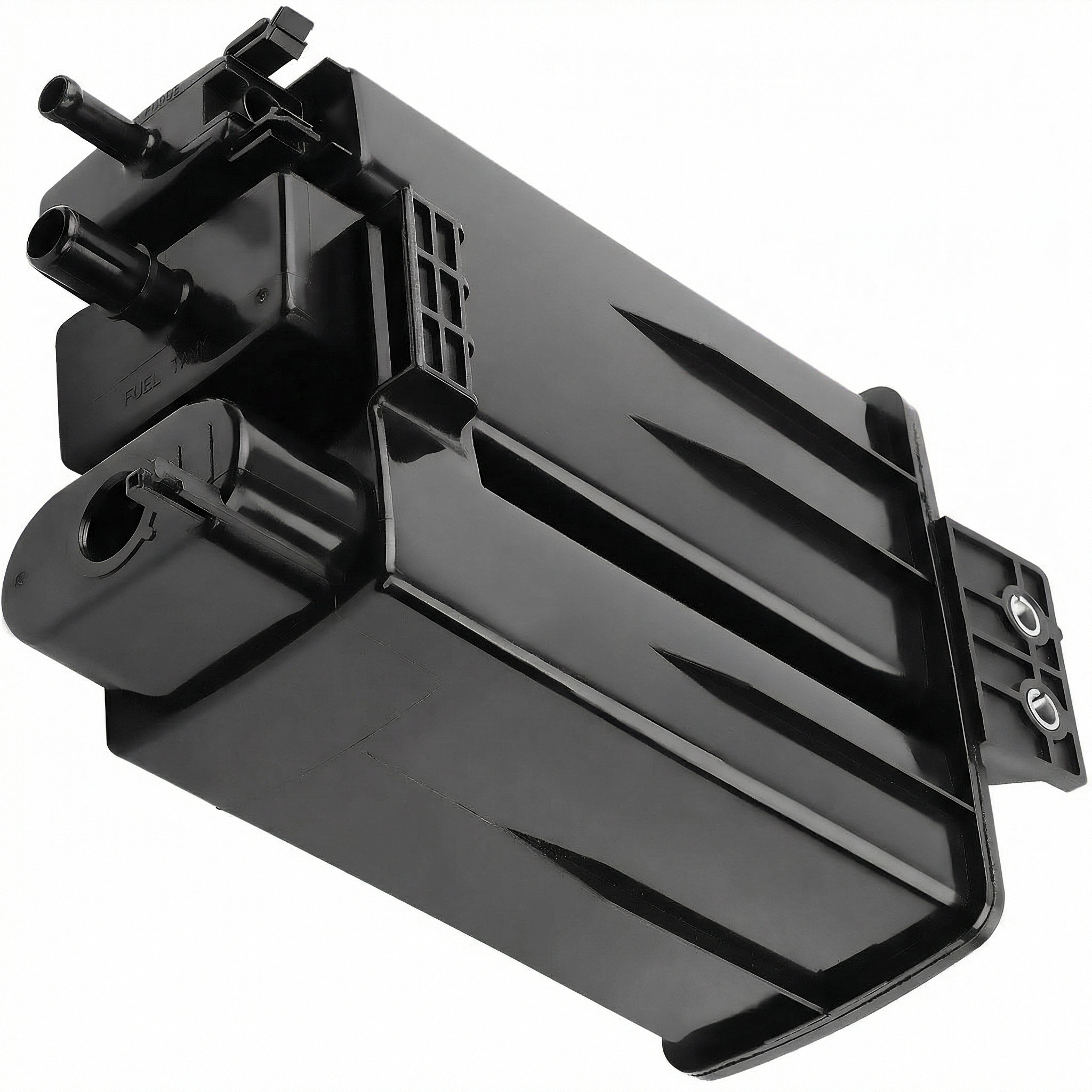
New Aftermarket Parts Available


The information in this article is provided for general reference and educational purposes only. Vehicle specifications, procedures, and part compatibility can vary by production date, trim level, and region. Always consult your vehicle's factory service manual and verify part numbers before purchasing or performing repairs. Safety-critical components such as airbags, seat belts, and braking systems should be installed by a qualified professional.
- Kia RIO:
- 🎬 Helpful Videos
- 🛍️ Shop This Part
- What's Unique About the 2011-2017 Kia RIO
- Diagnostic Flowchart
- Symptoms You May Notice
- Most Likely Causes
- Rare But Worth Checking
- Diagnosis Steps
- Parts You'll Likely Need
- Related Codes That Often Appear With This One
- Technical Service Bulletins (TSBs) & Recalls
- Platform-Specific Known Issues
- Mechanic-Grade Diagnostic Values
- Scan Tool Commands That Help
- Wiring & Ground Locations
- Real Owner Repair Stories
- "I Checked Everything" — The Actual Cause
- When the Usual Fixes Don't Work
- OEM Part Supersession History
- Model Year Variations Within This Range
- 🎟️ Get 5% Off