

P0456 on 2012-2019 Jeep Compass: Causes and Fixes for Small EVAP Leaks
The P0456 code on a Jeep Compass indicates a very small leak in the evaporative emissions (EVAP) system. The most common causes are a loose or faulty gas cap, a bad EVAP purge valve, or a cracked leak detection pump (ESIM). Start by checking the gas cap and the fuel filler neck for rust.
- P0456 is a minor issue that won't stop you from driving, but it will cause you to fail an emissions test.
- Always start with the simplest and cheapest fix: check that your gas cap is tight and its seal is intact. Also, check the filler neck for rust.
- If a new gas cap doesn't fix it, the next most likely parts to fail are the EVAP purge valve (in the engine bay) or the leak detection pump/ESIM (on the charcoal canister by the rear wheel).
- A professional smoke test is the fastest way to accurately find the leak if it's not obvious, saving you from replacing unnecessary parts.
What's Unique About the 2012-2019 Jeep COMPASS

The 2012-2019 Jeep Compass spans two distinct generations (MK and MP), which use slightly different EVAP components. A common failure point on these vehicles is the Evaporative System Integrity Module (ESIM), also known as a leak detection pump, which is mounted on the charcoal canister. This white plastic module is known to develop cracks or internal failures, causing the P0456 code. In a diagnostic video for a 2017 Jeep Patriot (a platform mate), a technician noted the ESIM was faulty because the internal plunger was loose and rattled when shaken, unlike a new part. Manufacturer Technical Service Bulletins (TSBs) repeatedly mention this code and recommend a specific dealer-level diagnostic, the "wiTECH Small Leak Verification Test (SLVT)," to pinpoint the leak, indicating it's a known issue. [Bulletin #1801923, Bulletin #1804823]
Diagnostic Flowchart

Tap your situation to follow the diagnostic path that matches what you're seeing on this vehicle.
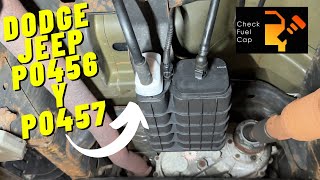
Generation note: The specified year range covers two generations of the Jeep Compass: - First Generation (MK): 2012-2017 - Second Generation (MP): 2017-2019 While the fundamental causes are similar, part designs and locations (like the purge valve and charcoal canister) can differ. For example, the purge valve on the MK generation is often located near the airbox or down below the brake booster. On the MP generation with the 2.4L engine, it's under a foam cover near the intake manifold. The ESIM/leak detection pump is located on the charcoal canister near the rear driver's side wheel on both generations. Always verify the correct part for your specific model year.
Symptoms You May Notice
- Check Engine Light is on.
- A "gascap" message may appear on the dashboard.
- A faint fuel smell, though this is rare.
- Vehicle may stall or run rough immediately after refueling (often points to a bad purge valve stuck open).
- Difficulty starting the engine after filling the gas tank.
- Replacing the charcoal canister when only the small, inexpensive ESIM/leak detection pump attached to it has failed.
- Repeatedly replacing the gas cap when the actual leak is from the purge valve, a cracked hose, or rust on the fuel filler neck.
Most Likely Causes

- Loose, Damaged, or Incorrect Gas Cap 🔴 High Probability This is the most common cause for any EVAP code on any vehicle. The seal can wear out, or the cap may not be tightened properly. Using a non-OEM cap can also cause issues.
How to confirm: Ensure the cap is tightened until it clicks at least three times. Inspect the rubber O-ring for cracks or damage. Also, inspect the fuel filler neck for rust or debris that could prevent a good seal; this is a known issue on Compasses and their platform mates. Some owners temporarily fix the seal by applying Vaseline to the gas cap O-ring.
Typical fix: Clean the filler neck rim with sandpaper or a file and replace the gas cap. This is an inexpensive first step. 🎬 Watch: This quick video shows how to fix gas cap codes. Always opt for an OEM Mopar cap if possible, as aftermarket caps are a frequent source of recurring codes.
Est. part cost: $15-$40 - Faulty EVAP Purge Valve/Solenoid 🟡 Medium Probability The purge valve can get stuck open or closed, or develop a small internal leak, which is a common failure on many Chrysler/Jeep products. When stuck open, it can cause stalling after refueling.
How to confirm: With the engine running, disconnect the vapor line from the valve and feel for suction with your finger; there should be no vacuum at idle when the valve is not commanded on. A more definitive test involves applying power and vacuum to the valve to see if it holds, or simply trying to blow through it when disconnected (no air should pass).
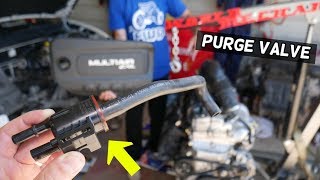
Typical fix: Replace the purge valve. On the MK Compass, it can be difficult to access below the brake booster. On the MP Compass, it is typically under a foam cover on the engine. 🎬 Watch: How to locate and replace the 2.4L purge valve.
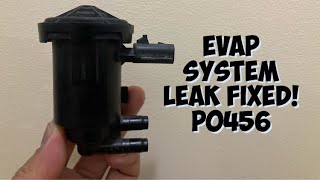
Est. part cost: $40-$70 - Cracked or Faulty Leak Detection Pump (ESIM) 🟡 Medium Probability The Evaporative System Integrity Module (ESIM) is a known weak point. The white plastic housing, especially on the module attached to the charcoal canister, can develop hairline cracks or internal failures, causing a small leak. This is a very common failure on Jeep Compass, Patriot, and Grand Cherokee models.
How to confirm: A smoke test is the best method. Smoke is forced into the EVAP system, and a leak will be visible coming from the ESIM housing. Visually inspect the white plastic module for any visible cracks. Another diagnostic trick is to remove the ESIM and shake it; if it rattles, the internal mechanism is likely broken and it needs to be replaced.
Typical fix: Replace the ESIM module. It twists into the charcoal canister, which is located near the rear driver's side wheel, often behind the wheel well liner. 🎬 See this walkthrough on how to replace the ESIM module.
Est. part cost: $30-$60 - Cracked or Disconnected EVAP Hoses ⚪ Low Probability Over time, rubber and plastic hoses can become brittle and crack, especially in areas with engine heat or exposure to the elements.
How to confirm: Visually inspect all accessible EVAP lines running from the fuel tank, to the charcoal canister, and to the purge valve in the engine bay. A smoke test is the most effective way to find a small hose leak.
Typical fix: Replace the damaged section of hose.
Est. part cost: $10-$50
Rare But Worth Checking
- Cracked Charcoal Canister: Less common than the ESIM or purge valve failing, but the canister body itself can crack from road debris or age, causing a leak.
- Leaking Fuel Filler Neck: The metal tube leading to the gas tank can rust and develop pinhole leaks, preventing the system from sealing. This is more common in regions that use road salt and has been documented by owners as the root cause after multiple other parts were replaced.
- Leaking Fuel Tank Gasket: On some Jeeps, the gasket for the fuel pump/sending unit on top of the gas tank can fail, causing a leak that is difficult to find without a smoke test.
Diagnosis Steps
- Check the Gas Cap and Filler Neck: This is the simplest and most common fix. Remove the cap, inspect the seal for cracks, and check the filler neck for rust or dirt. Reinstall the cap, ensuring it clicks several times. Clear the code and drive for a few days to see if it returns. If the neck is rusty, it must be sanded smooth to create a seal.
- Visual Inspection: Look over all visible EVAP hoses in the engine bay and under the vehicle near the fuel tank. Look for any obvious cracks, breaks, or loose connections.
- Inspect the Purge Valve: Locate the purge valve in the engine bay. With the engine off, disconnect the hoses and try to blow through it. If air passes, it's stuck open and needs replacement. Alternatively, with the engine running, check for vacuum on the canister side of the valve; there should be none at idle.
- Inspect the ESIM (Leak Detection Pump): Locate the charcoal canister near the rear driver's side wheel. Inspect the white plastic ESIM module attached to it for any visible cracks. Remove it (it twists off) and shake it. If it rattles, the internal components have failed and it should be replaced.
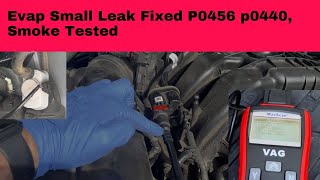
- Perform a Smoke Test: If the simple checks don't reveal the issue, a smoke test is the definitive diagnostic step. A machine injects low-pressure smoke into the EVAP service port. The leak will be revealed by the escaping smoke. This is the most reliable way to find pinhole leaks in hoses, the canister, or the filler neck. This is the method shops use and is equivalent to the dealer's SLVT test. [Bulletin #1801923]
Parts You'll Likely Need

- Gas Cap
(OEM #Mopar 52124512AA)— The seal wears out over time or the cap isn't tightened correctly, making it the most frequent cause of P0456. Rust on the filler neck can also prevent a good seal.
Trusted brands: Mopar, Stant
OEM price range: $25-$40
Aftermarket price range: $15-$25 - EVAP Purge Valve / Solenoid
(OEM #Mopar 4891741AC (for 2012-2017 MK models))— This valve is a common failure item that can leak internally, causing a small leak code and sometimes stalling after refueling.
Trusted brands: Mopar, Dorman, Standard Motor Products
OEM price range: $50-$80
Aftermarket price range: $40-$70 - EVAP Leak Detection Pump (ESIM)
(OEM #Mopar 04861963AD (for MP models), Mopar 04861961AD (for MK models))— Also called an Evaporative System Integrity Module, this part is a known weak point that cracks or fails internally, causing this specific code.
Trusted brands: Mopar, Dorman
OEM price range: $40-$70
Aftermarket price range: $30-$60
Related Codes That Often Appear With This One
- P0455 — Indicates a large EVAP leak. Sometimes a failing component can trigger both small and large leak codes at different times.
- P0457 — Specifically indicates a leak due to a loose or missing fuel cap. If you see this with P0456, the gas cap or filler neck is the prime suspect.
- P0335 — This Crankshaft Position Sensor code was noted alongside P0456 in TSB #18-048-16 and its revision. This is likely due to a software issue addressed by a PCM update rather than a direct mechanical relationship.
Technical Service Bulletins (TSBs) & Recalls
- 1801923
- 1804823
- 18-048-16
- 18-048-16 REV. A
Platform-Specific Known Issues
- YouTube - Jeep Compass Gas cap easy fix P0455 P0456 P0457 — A common story on forums for the Jeep Compass and its platform-mate, the Patriot, involves owners who replaced the gas cap multiple times to no avail. The actual problem was a rusty fuel filler neck lip, which prevented the new cap's gasket from sealing properly. The fix was to stuff a rag into the neck to catch debris, then sand the metal lip smooth before installing a new OEM gas cap.
- Reddit r/AskAMechanic — On a Reddit thread, a 2014 Jeep Compass owner described a persistent issue where the vehicle would want to stall for the first portion of a tank after every fill-up. The community consensus pointed directly to a faulty EVAP purge valve that was likely stuck open, allowing raw fuel vapor to flood the intake manifold after refueling.
- YouTube - Diagnosing P0456 on a 2017 Jeep Patriot — In a diagnostic video for a P0456 code on a 2017 Jeep Patriot, the technician found the leak was not in the hoses after a smoke test. The problem was the ESIM (Evaporative System Integrity Module). He demonstrated that the old, faulty module's internal plunger was loose and made a rattling sound when shaken, while the new replacement part was solid and silent. This provides a quick physical check for a failed ESIM.
Mechanic-Grade Diagnostic Values
- EVAP Purge Valve/Solenoid Functionality — expected: No air should pass through the valve when it is disconnected and not energized.. Failure: If you can blow air through the valve with it disconnected, it is stuck open and faulty.
- Fuel Tank Pressure (FTP) Sensor Voltage — expected: The sensor is a 3-wire component with a 5-volt reference, a ground, and a signal wire. The signal voltage should change as the system pressure changes during an EVAP test.. Failure: No 5-volt reference at the connector (with key on), or a signal voltage that is stuck and does not change when a vacuum is applied to the system.
- Scan Tool Live Data - ESIM/NVLD Switch Status — expected: During an EVAP test cycle (engine running, purge commanded), the switch status should change from 'Open' to 'Closed' as the system pulls a vacuum.. Failure: The switch fails to close, indicating a leak. If it closes but opens again very quickly, it indicates a small leak.
Scan Tool Commands That Help
- wiTECH (Dealer Tool): Small Leak Verification Test (SLVT) — This is the manufacturer-specified automated test to confirm the presence of a small leak, as mentioned in multiple TSBs. It is the most definitive way to verify the fault condition before manual diagnosis.
- Professional Scan Tool (e.g., Autel): Monitor EVAP System Live Data (EUM/NVLD Switch Status) — Used to observe the EVAP system's ability to seal itself. Watching the switch status change from open to closed confirms the system can pull a vacuum. The time it takes for the switch to reopen indicates the size of the leak.
Wiring & Ground Locations
- PCM Connector C1, Pin 4 — At the Powertrain Control Module (PCM) on a 2017 Compass 2.4L.. This pin (K52 circuit, Dark Blue/White wire) is the control for the EVAP Purge Valve. It can be tested for proper signal from the PCM.
- PCM Connector C1, Pin 41 — At the Powertrain Control Module (PCM) on a 2017 Compass 2.4L.. This pin (N7 circuit, Dark Blue/Orange wire) is the signal from the Fuel Tank Pressure sensor. It can be tested to see if the PCM is receiving a valid pressure reading.
- PCM Connector C1, Pins 51, 52, 53 — At the Powertrain Control Module (PCM) on a 2017 Compass 2.4L.. These are primary ground pins (Z909 circuit, Black wires) for the PCM. A poor ground here can cause erratic behavior in any system the PCM controls, including the EVAP system.
Real Owner Repair Stories
- YouTube video creator (Jeep Compass (MK generation)) — Check Engine Light with codes P0455, P0456, P0457, and a 'gascap' message on the dashboard.
❌ Tried (didn't work) Taking it to a shop several times., Replacing the gas cap multiple times.
✅ What actually fixed it The owner discovered significant rust buildup on the metal rim of the fuel filler neck. They stuffed the neck with a paper towel to protect it, then used a file and sandpaper to clean the rust off the rim until it was smooth. This allowed the new gas cap to create a proper seal. - YouTube video creator (Vehicle with P0456) — Check Engine Light with code P0456.
❌ Tried (didn't work) Replacing the purge valve., Replacing the gas cap.
✅ What actually fixed it After the initial parts replacements failed, a smoke test was performed. The smoke test revealed that the fuel filler neck itself was leaking, which required replacement.
"I Checked Everything" — The Actual Cause
- In a diagnostic video on a 2017 Jeep Patriot (platform mate), a technician performed a smoke test and initially saw no leaks from any hoses or the canister. The key step was to locate the vent hose leading to the ESIM (Evaporative System Integrity Module) and manually clamp it shut. With the vent path blocked, the system held smoke pressure perfectly, proving there were no other leaks. This process of elimination confirmed the leak was occurring through the ESIM itself, which is designed to vent but was not sealing correctly when required.
When the Usual Fixes Don't Work
- While replacing the gas cap is the most common advice for a P0456 code, numerous owner accounts for the Jeep Compass and its platform mates indicate this often does not fix the problem. A recurring theme is that after one or more replacement caps fail to resolve the issue, the actual cause is found to be corrosion on the fuel filler neck's sealing surface. Sanding this surface smooth to allow a proper seal is the correct fix in these cases, highlighting that the integrity of the sealing surface is just as important as the cap itself.
OEM Part Supersession History
4891741AA→04891741AC (or 4891741AC)— Standard part revision by the manufacturer.
Model Year Variations Within This Range
- 2012-2017 (MK Generation): The EVAP system on this generation uses a mechanical Evaporative System Integrity Module (ESIM) as its vent valve. Unlike many other vehicles where the vent valve is an electronic solenoid, this module cannot be commanded closed with a scan tool. This is a critical distinction for diagnosis, as a technician must manually block the vent hose to isolate the ESIM during a smoke test.
Helpful Videos
Used OEM Parts in Stock


New Aftermarket Parts Available


The information in this article is provided for general reference and educational purposes only. Vehicle specifications, procedures, and part compatibility can vary by production date, trim level, and region. Always consult your vehicle's factory service manual and verify part numbers before purchasing or performing repairs. Safety-critical components such as airbags, seat belts, and braking systems should be installed by a qualified professional.
- Jeep COMPASS:
- 🎬 Helpful Videos
- 🛍️ Shop This Part
- What's Unique About the 2012-2019 Jeep COMPASS
- Diagnostic Flowchart
- Symptoms You May Notice
- Most Likely Causes
- Rare But Worth Checking
- Diagnosis Steps
- Parts You'll Likely Need
- Related Codes That Often Appear With This One
- Technical Service Bulletins (TSBs) & Recalls
- Platform-Specific Known Issues
- Mechanic-Grade Diagnostic Values
- Scan Tool Commands That Help
- Wiring & Ground Locations
- Real Owner Repair Stories
- "I Checked Everything" — The Actual Cause
- When the Usual Fixes Don't Work
- OEM Part Supersession History
- Model Year Variations Within This Range
- 🎟️ Get 5% Off