

P0456 on 2014-2021 Jeep Cherokee: EVAP Small Leak Causes and Fixes
For a 2014-2021 Jeep Cherokee, code P0456 most often points to a faulty Evaporative System Integrity Module (ESIM) or its seal, located on the charcoal canister. This is a well-documented failure point, and shaking the old module may produce a rattling sound. Other common causes include a loose gas cap or a cracked EVAP purge valve hose in the engine bay. Replacing the ESIM is a common DIY fix costing around $20-$40, and many owners have successfully resolved the code this way.
- P0456 on a 2014-2021 Cherokee indicates a very small leak in the EVAP (emissions) system.
- The most likely cause is a faulty Evaporative System Integrity Module (ESIM) or its seal, located near the rear driver's side wheel.
- Always check the gas cap first; make sure it's tight and the seal is intact.
- Other potential causes are cracked EVAP hoses in the engine bay or a faulty purge valve.
- If a smoke test finds no leak, the problem could be a software glitch that requires a dealer to update the PCM.
What's Unique About the 2014-2021 Jeep CHEROKEE

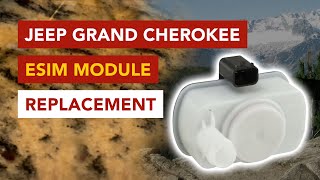
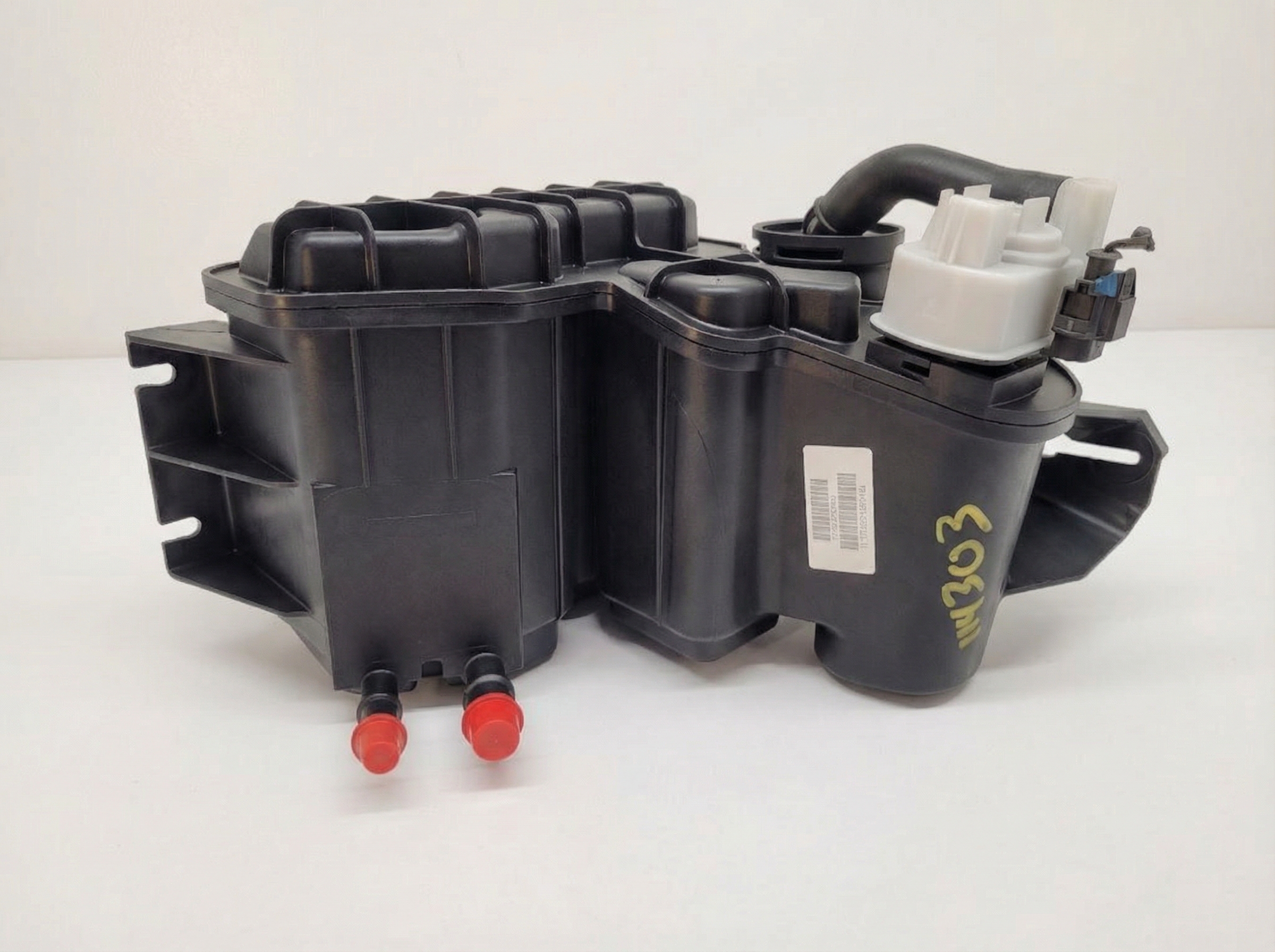
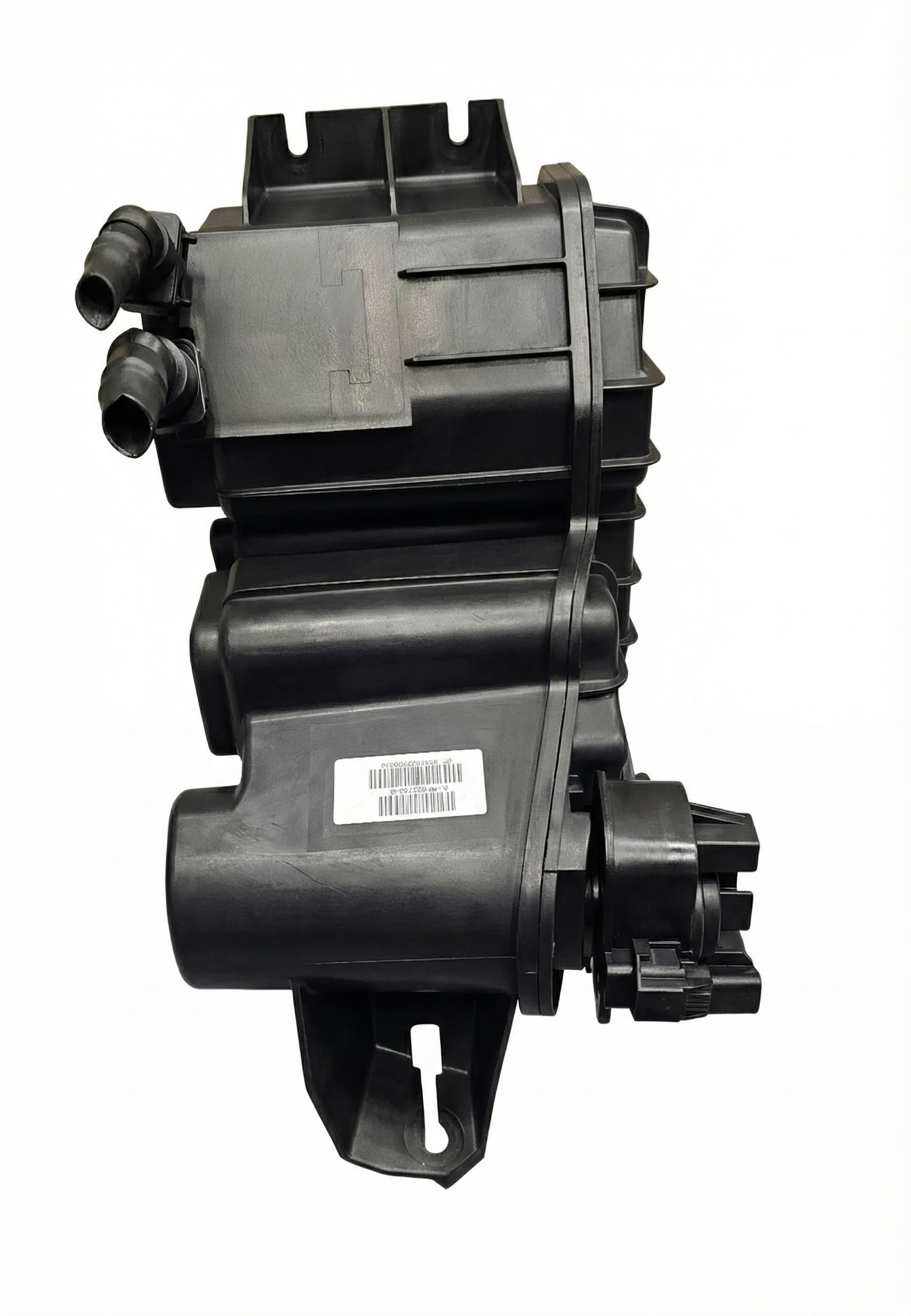
On the 2014-2021 (KL generation) Jeep Cherokee, a very common failure point for the P0456 code is the Evaporative System Integrity Module (ESIM), also called a leak detection pump. This white plastic module, attached to the EVAP canister near the rear driver's side wheel, is known to develop cracks in its housing or have its o-ring seal fail. Additionally, several Technical Service Bulletins (TSBs) note that this code can sometimes be triggered by overly sensitive software, requiring a PCM update from the dealer, even if no physical leak is present.
Diagnostic Flowchart

Tap your situation to follow the diagnostic path that matches what you're seeing on this vehicle.
Symptoms You May Notice

- Check Engine Light is on
- A message about a loose fuel cap may appear on the dash.
- A faint fuel smell, particularly around the rear of the vehicle near the driver's side wheel well.
- Slight decrease in fuel economy
- For models with capless fuel fillers, difficulty inserting the fuel nozzle or a flap that doesn't seal properly.
- Replacing the purge valve when the actual leak is the ESIM or a cracked hose. A proper diagnosis with a smoke machine is crucial to avoid replacing the wrong parts.
Most Likely Causes

- Faulty or cracked Evaporative System Integrity Module (ESIM) or seal 🔴 High Probability The white plastic housing of the ESIM, mounted to the charcoal canister, is a widely-documented weak point on this platform. It can develop small cracks or the internal valve mechanism can fail, causing a leak. The o-ring that seals it to the canister can also degrade.
How to confirm: A smoke test is the most effective method; smoke will be seen escaping from the ESIM housing or its seal. Many owners confirm a bad ESIM by removing it and shaking it; if it rattles, the internal components have likely failed. The part is located by removing the driver's side rear wheel and pulling back the wheel well liner.
Typical fix: Replace the ESIM and its o-ring seal. This is a common DIY repair that involves twisting the old module counter-clockwise to remove it from the charcoal canister.
Est. part cost: $20-$50 - Loose, worn, or incorrect gas cap 🟡 Medium Probability This is a universal cause for EVAP codes. The cap's seal wears out, preventing a seal. Some owners on forums report that only an OEM Mopar cap will solve the issue, as some aftermarket caps do not seal correctly. For capless systems, dirt on the sealing flap can cause a leak.
How to confirm: Ensure the cap is tightened until it clicks. Inspect the rubber seal for cracks or deformities. For capless systems, clean the metal flap and surrounding area with a rag and solvent, then operate the flap several times with the provided funnel to clear debris.
Typical fix: Replace the gas cap with a quality OEM part. For capless systems, cleaning the filler neck seal often resolves the issue.
Est. part cost: $15-$35 - Cracked or disconnected EVAP purge valve hose 🟡 Medium Probability The plastic EVAP lines in the engine bay are exposed to constant heat cycles and can become brittle and crack, especially at the connection point to the purge valve itself.
How to confirm: Visually inspect the EVAP lines on top of the engine. The crack is often found right at the plastic fitting that connects to the purge solenoid. A smoke test will definitively show smoke billowing from the cracked hose under the engine cover.
Typical fix: Replace the cracked hose assembly. Some owners perform a DIY repair using a section of 3/8" fuel-rated rubber hose and clamps as a more durable alternative to the brittle OEM plastic.
Est. part cost: $30-$70 - Faulty EVAP Purge Solenoid/Valve ⚪ Low Probability The purge valve can get stuck partially open or closed, or develop a small internal leak, which disrupts the system's ability to seal for its pressure test. This is less common than the ESIM or a hose leak for this specific code.
How to confirm: A mechanic can command the valve to open and close with a bidirectional scan tool. It can also be removed and tested for leaks by trying to blow air through it when it should be closed. It is located on top of the engine, under the plastic engine cover.
Typical fix: Replace the purge valve. It is typically held in place by a simple bracket and has two hose connections and one electrical connector.
Est. part cost: $25-$60
Rare But Worth Checking
- PCM software glitch: Multiple TSBs, including 18-093-19 and 18-024-19, confirm that the P0456 code can be falsely triggered by overly sensitive monitoring software. If a thorough smoke test reveals no leaks, a PCM update at the dealership is the specified fix.
- Cracked charcoal canister: While less common than the ESIM failing, the main body of the canister itself can develop a hairline crack, leading to a leak that is typically found with a smoke test.
- Leaking fuel filler neck: On vehicles with a traditional gas cap, rust or damage to the metal tube where the cap seals can prevent a proper seal. On capless systems, the spring-loaded door mechanism can fail or get stuck.
Diagnosis Steps
- Inspect the gas cap or capless filler. For caps, check the seal for damage and retighten until it clicks. For capless systems, clean the sealing flap with a solvent-moistened rag. Clear the code and drive for a few days.
- Perform a thorough visual inspection of all accessible EVAP hoses in the engine bay. Remove the plastic engine cover and carefully check the line connecting to the purge valve for hairline cracks.
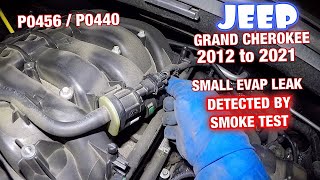
- If the light returns, a professional smoke test is the most reliable way to find the exact location of a small leak. This involves injecting pressurized smoke into the EVAP service port.
- During the smoke test, pay close attention to the ESIM (located on the charcoal canister behind the driver's side rear wheel well liner), as this is a very common failure point.
- If no leak is found with a smoke test, the issue may be a faulty ESIM that is leaking internally or a software issue. Shaking the ESIM to listen for a rattle is a common informal test.
- If no physical leaks are found, consult a dealership about checking for relevant PCM software updates as mentioned in TSBs #18-093-19 and #18-024-19.
Parts You'll Likely Need
- Evaporative System Integrity Module (ESIM)
(OEM #4861962AB, superseded by 4861962AD)— This is the most frequently cited cause of P0456 on this specific vehicle. The plastic housing cracks or the internal valve fails.
Trusted brands: Mopar, Dorman (P/N: 310-233), Duralast (P/N: EMS1002)
OEM price range: $40-$60
Aftermarket price range: $20-$40 - Fuel Cap
(OEM #52124512AA (Example, verify by VIN))— A worn gas cap seal is a common cause for all EVAP leaks and is an inexpensive first diagnostic step. Not applicable to capless models.
Trusted brands: Mopar, Stant
OEM price range: $25-$35
Aftermarket price range: $15-$25 - EVAP Purge Valve / Solenoid
(OEM #4891730AC (Example for 2.4L, verify by VIN))— Can get stuck or develop an internal leak, though less common than the ESIM for this code. Located under the engine cover.
Trusted brands: Mopar, Bosch, Standard Motor Products
OEM price range: $40-$60
Aftermarket price range: $25-$50
Related Codes That Often Appear With This One
- P0457 — Indicates a leak detected, often interpreted by the system as a loose fuel cap. It frequently appears with P0456 when the ESIM or its seal is the root cause.
- P0455 — Indicates a large EVAP leak. While P0456 is for a small leak, a component on the verge of failing completely might trigger both codes at different times.
- P06EF — This code for 'Engine Restart Performance' is mentioned alongside P0456 in several manufacturer TSBs (e.g., #18-024-19), suggesting a potential software-related link between the two that can be fixed with a PCM flash.
- P2610 — Mentioned in TSB #1807722 and #1802021 along with P0456, indicating a possible software correlation investigated by the manufacturer.
Technical Service Bulletins (TSBs) & Recalls
- 1804823: wiTECH Small Leak Verification Test (SLVT) - P0456-EVAP SYSTEM SMALL LEAK
- 18-161-22: P0456 - EVAP System Small Leak
- 1806420: P0456 - EVAP System Small Leak
- 1807722: P0456 - EVAP System Small Leak
- 1802021: P0456 - EVAP System Small Leak
- 18-024-19 REV. C: Flash: Powertrain Control Module (PCM) Updates for P0456
- 18-093-19: Flash: Powertrain Control Module (PCM) Updates
Platform-Specific Known Issues
- Multiple Technical Service Bulletins (TSBs), including #1804823, #18-161-22, #1806420, #1807722, and #1802021, mention P0456 and recommend using the dealer's wiTECH scan tool for a Small Leak Verification Test (SLVT).
- TSBs #18-093-19 and #18-024-19 REV. C specifically address P0456 as a condition that may be resolved by a Powertrain Control Module (PCM) software update, indicating a known software glitch can trigger the code without a physical leak.
Scan Tool Commands That Help
- wiTECH (Dealer Scan Tool): Small Leak Verification Test (SLVT) — This is the mandatory first diagnostic step for P0456 according to multiple TSBs (#1804823, #18-095-21). It must be run to verify a leak is present before replacing parts and again after the repair to confirm the fix, as a road test is not sufficient.
Wiring & Ground Locations
- ESIM (Evaporative System Integrity Module) — Mounted on the charcoal canister, located behind the driver's side rear wheel well liner.. This is the most common failure point for P0456 on this vehicle. Its location requires removing the wheel and liner for access.
- EVAP Purge Valve/Solenoid — Located on top of the engine, under the plastic engine cover.. This is a common location for cracked hoses due to engine heat cycles, and the valve itself can fail.
- EVAP System Service Port — Typically a green-capped port on an EVAP line in the engine bay, used for connecting a smoke machine.. This is the primary access point for a technician to perform a smoke test to find the physical source of the leak.
- EVAP System Fuse — In some earlier models, this may be Fuse #7 in the main engine fuse box under the hood.. If present, a blown fuse would disable an EVAP component. However, on many newer models in this range, the system is controlled directly by the PCM without a dedicated fuse.
Real Owner Repair Stories
- BobIsTheOilGuy forum user (2015 Jeep Grand Cherokee (with capless fuel system)) — Recurring P0456 Check Engine Light.
❌ Tried (didn't work) Clearing the code with a scan tool.
✅ What actually fixed it The capless fuel filler neck was dirty. The owner cleaned the visible area with a rag and denatured alcohol, then sprayed a solvent (WD-40) into the mechanism while working the flap open and closed with the emergency funnel. The code did not return after this cleaning. - YouTube channel 'White One Auto, LLC' (2018 Jeep Grand Cherokee, 72,000 miles) — P0456 Check Engine Light.
✅ What actually fixed it A visual inspection under the engine cover revealed the plastic EVAP hose was completely broken off at the purge valve connection. Replacing the hose assembly fixed the issue. - YouTube channel 'The G Automotive and More' (2019 Jeep Cherokee 3.2L) — P0456 small evaporative leak.
✅ What actually fixed it A smoke test showed smoke leaking from the ESIM module. Upon removal, a crack was visible where the white and black plastic sections of the module housing are joined. Replacing the ESIM (leak detection pump) resolved the leak. - Reddit user in r/GrandCherokee (2018 Jeep Grand Cherokee Limited) — P0456 error code appeared immediately after purchase.
❌ Tried (didn't work) Initial smoke test showed a 'leak' from a filter component attached to the ESIM.
✅ What actually fixed it Replacing the ESIM module itself fixed the problem. The user concluded that the ESIM's internal valve was stuck open, allowing smoke to pass through it and exit out of the vent filter (which is its normal function when venting). The actual fault was the ESIM, not the filter where the smoke was seen.
"I Checked Everything" — The Actual Cause
- If a smoke test shows no leaks, the cause could be a dirty or faulty capless fuel filler neck seal. Debris can prevent the flap from sealing correctly, but a smoke machine's adapter might seal properly, masking the issue. Cleaning the filler neck flap and mechanism has been reported to fix the code.
- A smoke test may show smoke exiting the ESIM's vent filter. This is not necessarily a leak. It can indicate that the ESIM's internal valve is stuck open, which is the actual failure. The root cause is the faulty ESIM, not the filter it is venting through.
- According to multiple TSBs, the P0456 code can be triggered by overly sensitive PCM software. If a thorough smoke test and the wiTECH SLVT find no physical leak, the official fix is a PCM software update at a dealership.
OEM Part Supersession History
4861962AA, 4861962AB, 4861962AC→4861962AD— Part revision and improvement by the manufacturer to address common failure modes like cracking of the plastic housing.
Heads up: The newest part number, 4861962AD, is the correct direct replacement for the earlier versions and should be used for all repairs.
Model Year Variations Within This Range
- All: Vehicles in this range may have either a traditional twist-on gas cap or a capless fuel filler system. The diagnostic process for the fuel filler area differs accordingly. Capless systems require cleaning the internal flap and seal.
- Varies by year: Some earlier models may have a dedicated EVAP system fuse (e.g., Fuse #7 in the under-hood fuse box), while later models integrate this control into the Powertrain Control Module (PCM) directly. If a fuse is not present in the documented location, it is likely PCM-controlled.
Helpful Videos
Used OEM Parts in Stock

New Aftermarket Parts Available


The information in this article is provided for general reference and educational purposes only. Vehicle specifications, procedures, and part compatibility can vary by production date, trim level, and region. Always consult your vehicle's factory service manual and verify part numbers before purchasing or performing repairs. Safety-critical components such as airbags, seat belts, and braking systems should be installed by a qualified professional.
- Jeep CHEROKEE:
- 🎬 Helpful Videos
- 🛍️ Shop This Part
- What's Unique About the 2014-2021 Jeep CHEROKEE
- Diagnostic Flowchart
- Symptoms You May Notice
- Most Likely Causes
- Rare But Worth Checking
- Diagnosis Steps
- Parts You'll Likely Need
- Related Codes That Often Appear With This One
- Technical Service Bulletins (TSBs) & Recalls
- Platform-Specific Known Issues
- Scan Tool Commands That Help
- Wiring & Ground Locations
- Real Owner Repair Stories
- "I Checked Everything" — The Actual Cause
- OEM Part Supersession History
- Model Year Variations Within This Range
- 🎟️ Get 5% Off