

P0456 on 2012-2016 Hyundai Veloster: EVAP Very Small Leak Causes and Fixes
For a 2012-2016 Hyundai Veloster, code P0456 most often means you have a loose gas cap or a faulty canister purge valve. Always check the gas cap first, as it's a free fix. Many owners report that only a genuine Hyundai OEM gas cap will solve the problem. If that doesn't work, the purge valve is the next likely culprit, costing around $25-$60 for the part.
- Always start with the simplest fix: tighten your gas cap. If the seal looks worn, replace it with a genuine OEM part.
- The canister purge valve is the second most likely culprit and is a relatively inexpensive and easy part to replace for a DIYer.
- If the gas cap and purge valve don't fix the issue, a professional smoke test is the most effective way to find the leak.
- This code will cause an automatic failure on an emissions test, so it must be resolved to stay compliant.
What's Unique About the 2012-2016 Hyundai VELOSTER
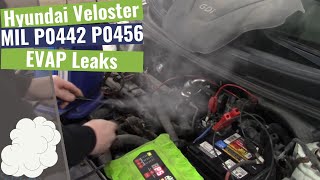
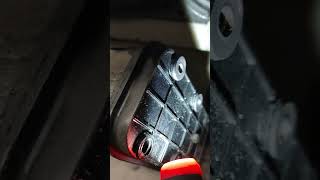
While P0456 is a generic code, the 2012-2016 Veloster has a few common failure points. Many owners report issues with the canister purge valve failing. Additionally, a professional diagnostic video on a 2013 Veloster showed that the EVAP canister itself can crack where the mounting bolts attach, causing a leak that is difficult to spot without a smoke test. 🎬 Watch: Diagnostic video showing a cracked Veloster EVAP canister. This canister cracking issue is notorious on 2012 and newer Hyundai/Kia vehicles. Using a non-OEM gas cap has also been reported by many owners on forums to cause persistent issues that are only resolved by purchasing a genuine Hyundai cap.
Diagnostic Flowchart
Tap your situation to follow the diagnostic path that matches what you're seeing on this vehicle.
Symptoms You May Notice
- Check Engine Light is on
- A faint smell of fuel, particularly outside the vehicle (less common with a very small leak, but can occur).
- Slight decrease in fuel mileage over time.
- In rare cases of a clogged canister (a different EVAP issue), symptoms can include difficulty starting, rough idle, or the gas pump nozzle clicking off repeatedly when fueling.
- Replacing the oxygen (O2) sensors, which are not related to the EVAP system.
- Repeatedly replacing an aftermarket gas cap with another aftermarket one, when an OEM cap is needed to seal properly.
Most Likely Causes
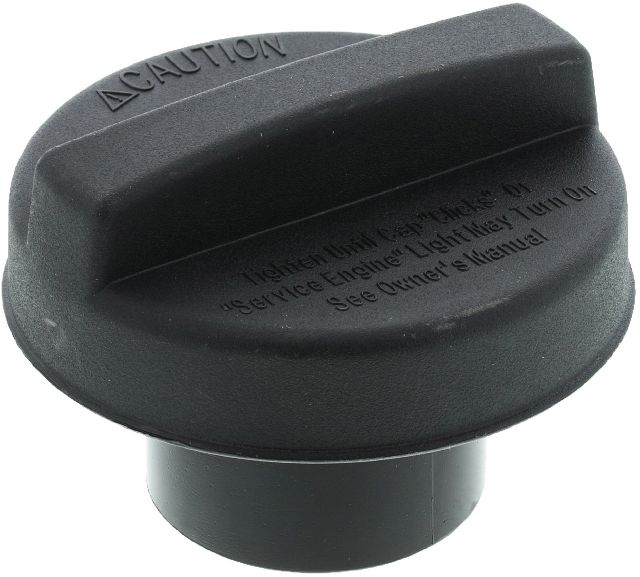
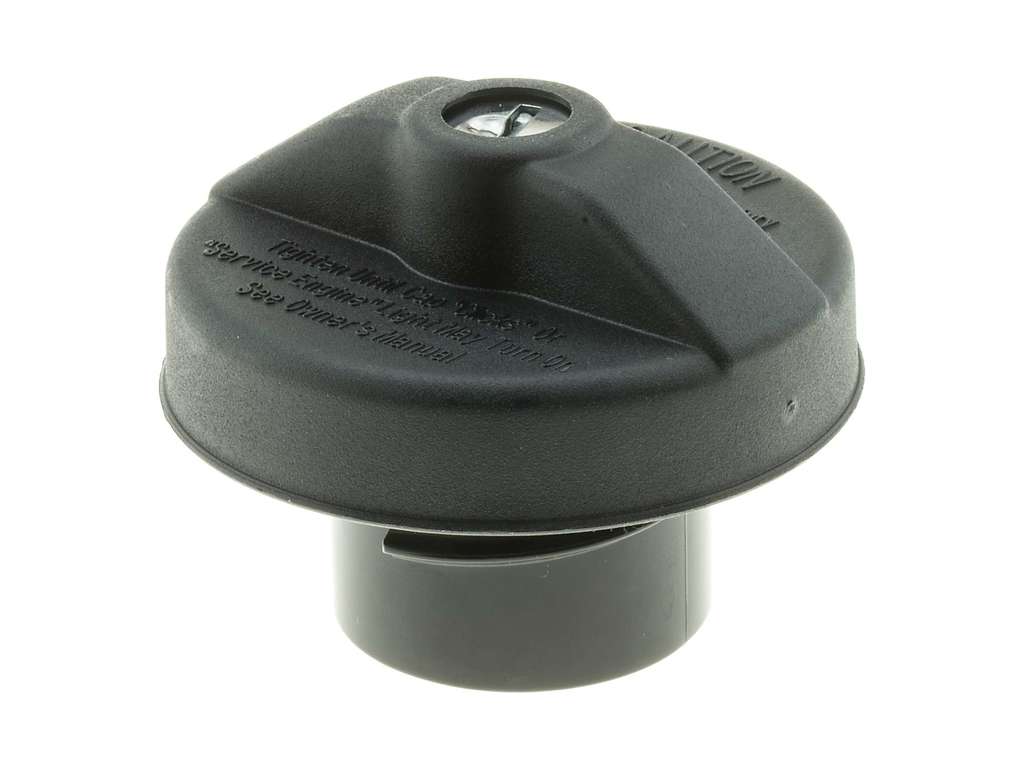
- Loose or Faulty Gas Cap 🔴 High Probability This is the most common cause for any vehicle. Caps wear out, and aftermarket caps are widely reported by Veloster owners to not seal correctly. Multiple forum threads detail owners chasing the P0456 code, replacing other parts, only to find the fix was a genuine OEM Hyundai gas cap.
How to confirm: Ensure the cap is tightened until it clicks. Inspect the rubber O-ring seal for cracks or damage. If it's an aftermarket cap (e.g., Duralast from AutoZone), it is a highly suspect part even if new.
Typical fix: Tighten or replace the gas cap, preferably with a Genuine Hyundai part (OEM P/N: 31010-3L600).
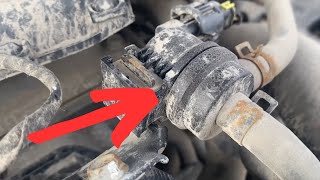
Est. part cost: $15-$40 - Faulty Canister Purge Valve (PCSV) 🔴 High Probability This is a very common failure item on many Hyundai models from this era, including the Veloster. The valve, located in the engine bay near the intake manifold, can get stuck open or closed, causing a leak in the system.
How to confirm: With the engine running, disconnect the hose leading from the valve towards the EVAP canister and feel the valve's port for vacuum. There should be no suction at idle. If there is constant suction, it's stuck open. The part is relatively inexpensive, leading many owners to replace it after checking the gas cap.
Typical fix: Replace the canister purge valve. It is located in the engine bay, mounted via a rubber bracket. 🎬 See this walkthrough for replacing the purge valve.
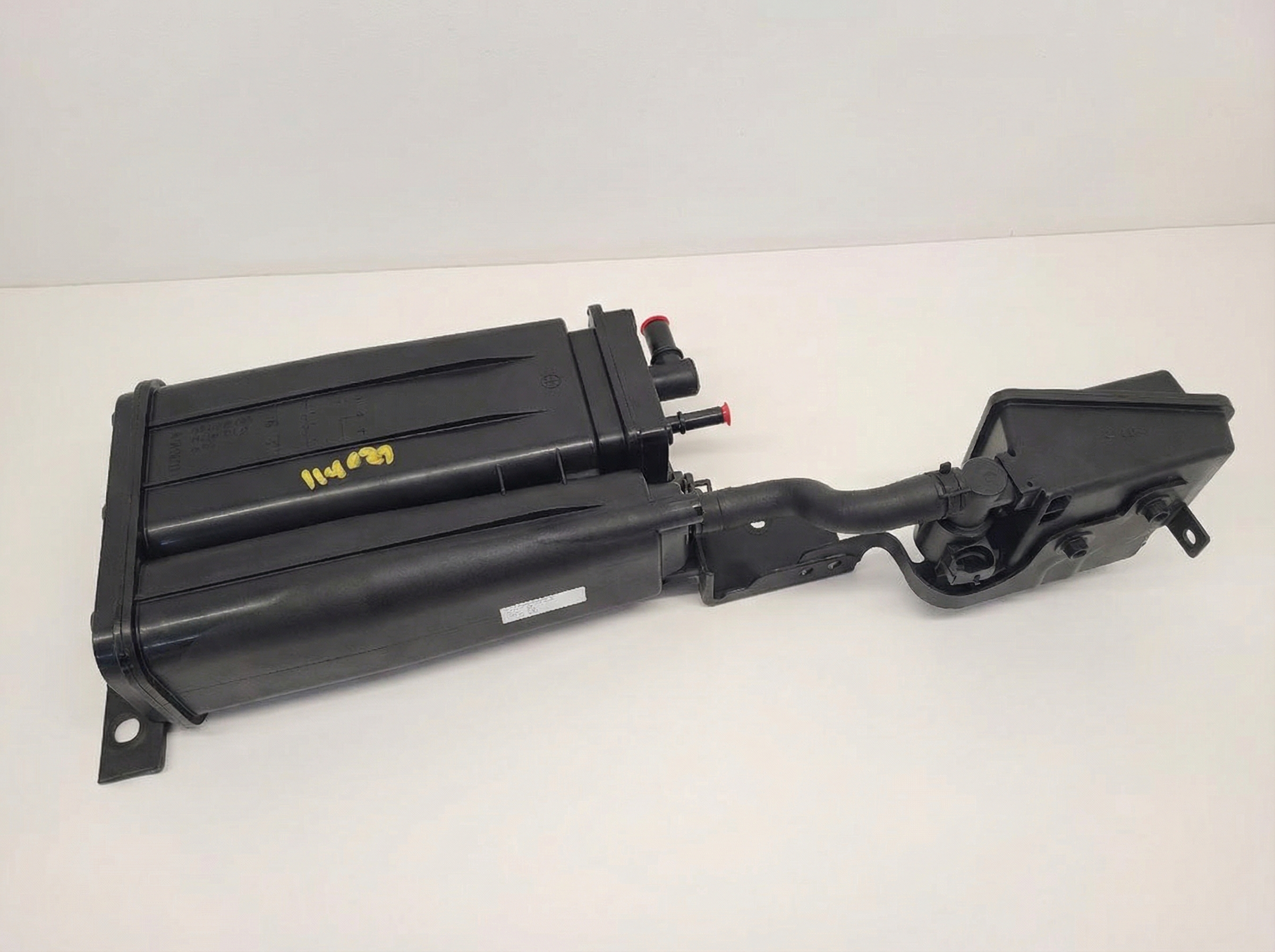
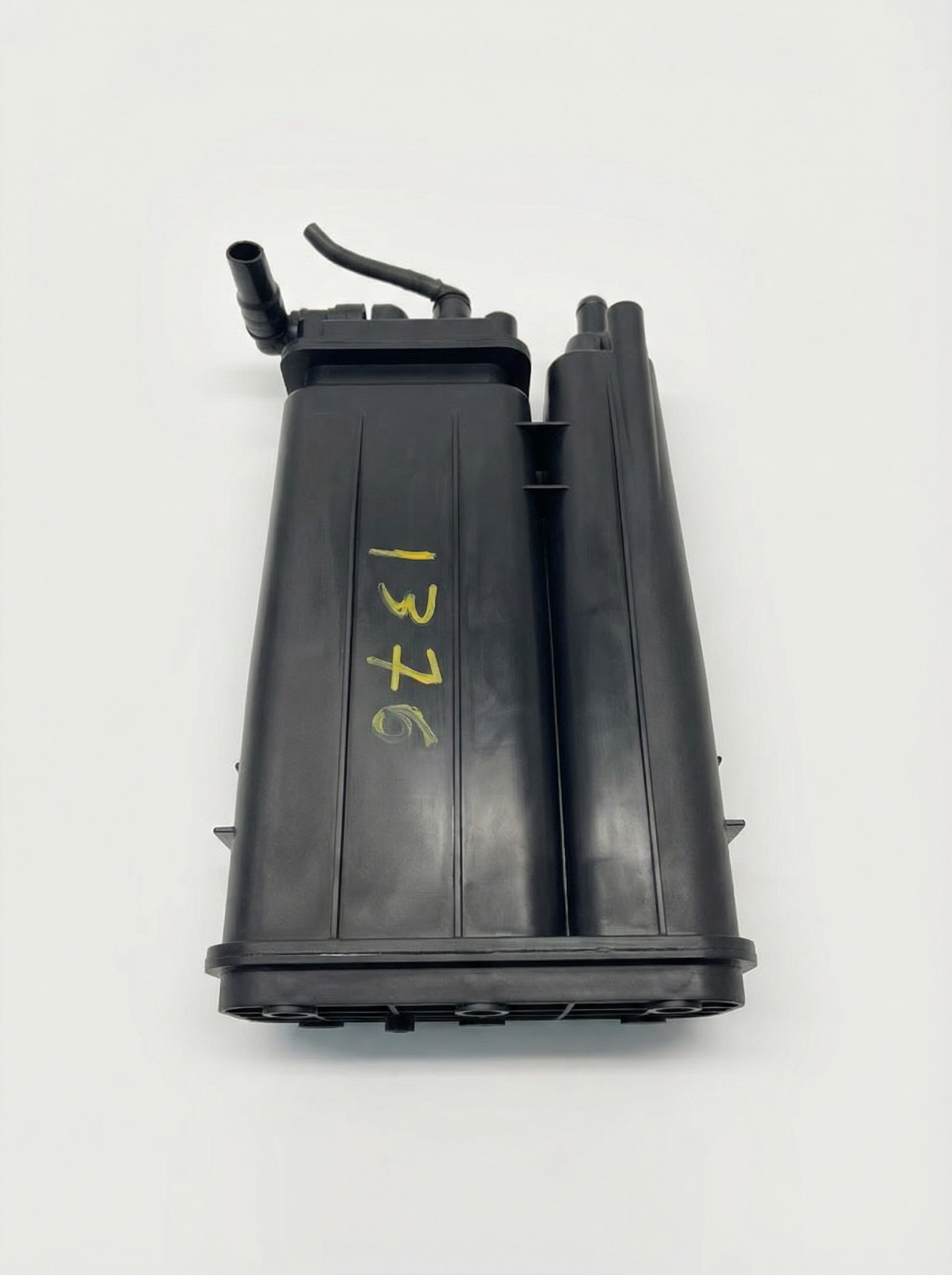
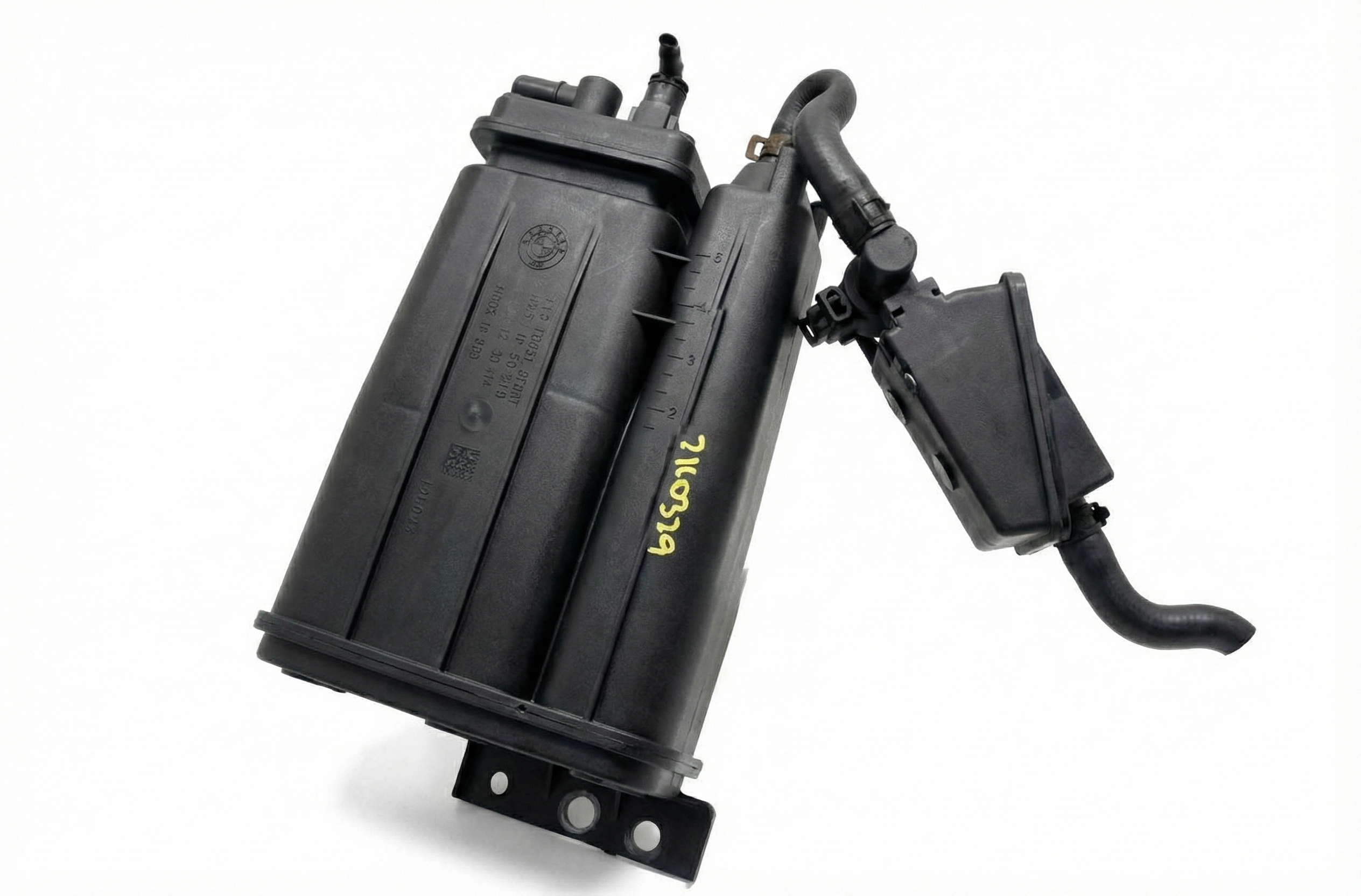
Est. part cost: $25-$60 - Cracked EVAP Canister 🟡 Medium Probability Diagnostic videos and technician comments confirm that the plastic body of the EVAP canister can develop hairline cracks near the mounting bolt locations. This is a known issue on many 2012+ Hyundai and Kia models. Rust on the chassis can put stress on the plastic mounting points, causing them to crack.
How to confirm: This almost always requires a smoke test. A mechanic will fill the EVAP system with smoke and look for where it escapes. The leak is often seen coming from the body of the canister itself, near the mounting tabs.
Typical fix: Replace the entire EVAP/charcoal canister assembly. There was a warranty extension (TSB 17-FL-002) for this issue on some first-gen Velosters, but it may have expired based on the vehicle's age and mileage.
Est. part cost: $150-$250 - Faulty Canister Close Valve (CCV) / Vent Valve ⚪ Low Probability The TSB #5NP-Q7J2C-07 for the 2016 Veloster links P0456 with other codes related to the Canister Close Valve, indicating it can be a point of failure. This valve is attached to the EVAP canister itself.
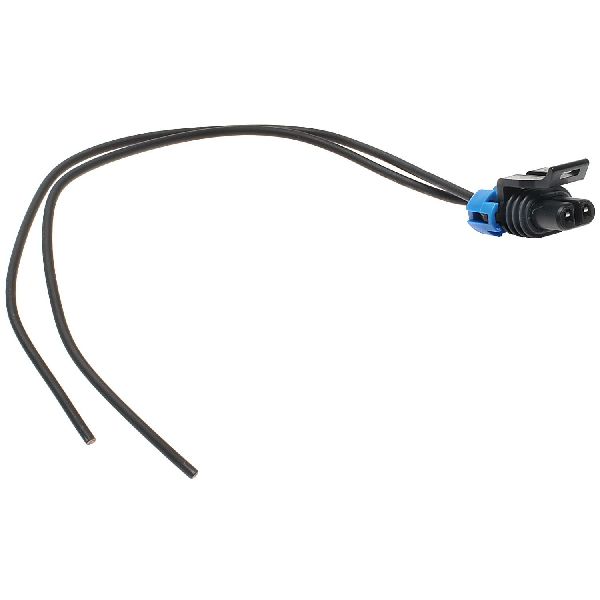
How to confirm: This valve is normally open and closes when the system runs a self-test. It can be tested with a capable scan tool to command it closed, followed by a smoke test to see if it's leaking. A user on a forum for a similar Hyundai model fixed their P0456 by replacing this part after the purge valve didn't solve it.
Typical fix: Replace the canister close valve, which is typically mounted on the EVAP canister at the rear of the vehicle.
Est. part cost: $100-$165
Rare But Worth Checking
- Cracked or Disconnected EVAP Hoses: While less common than valve failures, rubber hoses can become brittle and crack over time. A rusted-off hose clamp on a vent hose was the cause of a P0456 on a similar Kia Rio. A visual inspection and smoke test are the best ways to find this.
- Leaking Fuel Filler Neck: Rust or corrosion on the metal tube leading to the gas tank can create small pinholes that cause a leak. This is more common in regions that use road salt. A smoke test will reveal smoke escaping from the filler neck area if this is the cause.
- Leaking Fuel Pump O-Ring: A user on a Veloster forum reported their P0456 code appeared after replacing the fuel pumps, suspecting a seal (O-ring) was not seated correctly, causing a leak at the top of the fuel tank.
Diagnosis Steps
- Check the Gas Cap: Remove and reinstall the gas cap, ensuring it clicks at least once. Inspect the seal for any cracks or wear. If the cap is not a genuine Hyundai part, replacing it with an OEM one is a highly recommended first step, even if it looks fine. Clear the code and drive for a few days to see if it returns.
- Visual Inspection: Look over all accessible EVAP hoses running from the engine bay to the rear of the car for obvious cracks, disconnections, or damage. Pay attention to hose clamps, especially on platform mates like the Kia Rio where a rusted clamp was the culprit.
- Test the Purge Valve (PCSV): Locate the purge valve on the intake manifold. With the engine at idle, disconnect the hose that runs from the valve back towards the canister (not the one on the intake manifold itself). Place your finger over the port on the valve; there should be no suction. If you feel vacuum, the valve is stuck open and needs replacement.
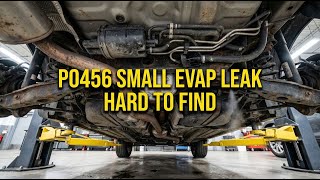
- Professional Smoke Test: If the simple checks don't reveal the issue, the next step is a smoke test. A mechanic will inject pressurized smoke into the EVAP system via the service port. The smoke will escape from the point of the leak, making it easy to identify. 🎬 Watch: How to diagnose a small leak before buying parts. Common areas to watch are the EVAP canister body near the mounting bolts, the fuel filler neck, and all hose connections.
Parts You'll Likely Need
- Gas Cap
(OEM #31010-3L600)— This is the most frequent and easiest fix. The seal wears out, and aftermarket caps are notorious for not sealing correctly on this platform.
Trusted brands: Genuine Hyundai
OEM price range: $25-$40
Aftermarket price range: $15-$25 - Vapor Canister Purge Valve
(OEM #28910-26900)— A very common failure point on Hyundai vehicles that causes this code. It's an easy and relatively cheap part to replace. Note: Fitment data for this part number does not explicitly list the Veloster, but it fits many contemporary Hyundai/Kia models with similar EVAP systems. Always verify with VIN.
Trusted brands: Genuine Hyundai, Dorman, Standard Motor Products
OEM price range: $45-$70
Aftermarket price range: $25-$50 - Canister Close Valve / Vent Valve
(OEM #31430-1Y000)— This valve can fail to seal the system during self-tests, triggering a leak code. It is mentioned as a potential issue in a manufacturer TSB and has fixed the issue for owners of similar models.
Trusted brands: Genuine Hyundai, Dorman
OEM price range: $115-$165
Aftermarket price range: $80-$120
Related Codes That Often Appear With This One
- P0442 — This indicates a 'small leak' (larger than P0456). They often appear together if a leak is intermittent or worsening. It was seen with P0456 in a diagnostic video on a Veloster where the canister was found to be cracked.
- P0455 — This indicates a 'large leak'. If you see this with P0456, it could mean a component has failed completely, such as a purge valve stuck wide open. It is cited alongside P0456 in TSB #5NP-Z2J3V-04.
- P0449 — This code points specifically to a problem in the 'Canister Closed Valve (CCV) - Restricted Vent Circuit'. Its appearance with P0456 strongly suggests the CCV or its wiring is the root cause, as noted in TSB #5NP-Q7J2C-07.
Technical Service Bulletins (TSBs) & Recalls
- 5NP-Q7J2C-07: Mentions P0456 in conjunction with other EVAP codes like P0455, P0449 (Canister Closed Valve), and P0451 for the 2016 Veloster.
- 5NP-Z2J3V-04: Lists P0456 as a potential EVAP leak code for the 2012 Veloster.
- 17-FL-002: A past warranty extension for 2012-2018 Velosters (among others) for charcoal canisters prone to cracking at the canister insert nuts. While likely expired for most vehicles, it confirms the canister is a known failure point.
Platform-Specific Known Issues
- A known issue on some Hyundai mo
Mechanic-Grade Diagnostic Values
- Fuel Tank Pressure (FTP) Sensor Voltage — expected: Approximately 2.5 volts with the key on, engine off (KOEO) at atmospheric pressure.. Failure: Voltage significantly higher or lower than 2.5V at KOEO, or voltage that doesn't change when vacuum is applied to the system.
- Canister Purge Valve (PCSV) Function — expected: The valve should be fully closed when de-energized (car off, connector unplugged). No air should pass through.. Failure: If you can blow air through the valve when it is unplugged, it is stuck open and faulty.
Scan Tool Commands That Help
- Professional Scan Tool (e.g., Autel, GDS): Canister Shut Off Valve (or Vent Valve) On/Off — This bidirectional command is essential for performing a smoke test. A technician commands the valve closed to seal the EVAP system, then introduces smoke to see where it leaks out.
Real Owner Repair Stories
- Reddit user on r/veloster (2016 Veloster Turbo) — P0456 code appeared after replacing the high and low pressure fuel pumps.
❌ Tried (didn't work) The user had previously fixed a leak by replacing the purge valve, gas cap, and charcoal canister.
✅ What actually fixed it The user suspected the cause was a missing or improperly seated O-ring on the fuel pump assembly that was not included with the new parts, causing a leak at the top of the tank. The thread implies this was the next step, though a final confirmation was not posted. - Hyundai-Forums user 'tomneu2002' (2004 Hyundai Elantra (similar EVAP system design)) — Persistent P0456 code.
❌ Tried (didn't work) New hose clamps on canister, Replaced canister, filter, canister close valve, and fuel tank pressure sensor with junkyard parts, Replaced purge control solenoid with junkyard part, Replaced 10 feet of EVAP hose and clamps
✅ What actually fixed it After passing a smoke test on the main EVAP system, the user introduced smoke into the engine side of the purge valve and discovered the leak was between the charcoal air canister and the air filter box, a part of the system not typically pressurized during a standard test.
"I Checked Everything" — The Actual Cause
- In a documented repair on a similar Hyundai model, the standard EVAP smoke test revealed no leaks, yet the P0456 code persisted. The actual cause was a leak in the air intake path for the EVAP system, specifically between the charcoal air canister and the air filter box. This is typically missed because this section is not pressurized during a standard EVAP leak test, which focuses on the sealed portion from the gas cap to the purge valve.
OEM Part Supersession History
31010-3L500, 31010-2F500, 31010-2D600, 31010-2C800, 31010-2C700→31010-3L600— Part has been updated by the manufacturer over time.
Heads up: Using an aftermarket gas cap is a very common cause for the P0456 code to persist even after replacement. It is highly recommended to use the genuine OEM part (31010-3L600) to ensure a proper seal.28910-26900→No supersession found
Heads up: This part number appears to be stable for the vehicle range.
Model Year Variations Within This Range
- 2012-2016: There are no significant documented variations in the EVAP system parts or P0456 diagnosis within this model year range. The issue of the EVAP canister cracking at the mounting points is common to the entire first generation, as evidenced by Hyundai TSB 17-FL-002 which extended the warranty for this part on models from 2012 through 2018.
Helpful Videos


Used OEM Parts in Stock
New Aftermarket Parts Available


The information in this article is provided for general reference and educational purposes only. Vehicle specifications, procedures, and part compatibility can vary by production date, trim level, and region. Always consult your vehicle's factory service manual and verify part numbers before purchasing or performing repairs. Safety-critical components such as airbags, seat belts, and braking systems should be installed by a qualified professional.
- Hyundai VELOSTER:
- 🎬 Helpful Videos
- 🛍️ Shop This Part
- What's Unique About the 2012-2016 Hyundai VELOSTER
- Diagnostic Flowchart
- Symptoms You May Notice
- Most Likely Causes
- Rare But Worth Checking
- Diagnosis Steps
- Parts You'll Likely Need
- Related Codes That Often Appear With This One
- Technical Service Bulletins (TSBs) & Recalls
- Platform-Specific Known Issues
- Mechanic-Grade Diagnostic Values
- Scan Tool Commands That Help
- Real Owner Repair Stories
- "I Checked Everything" — The Actual Cause
- OEM Part Supersession History
- Model Year Variations Within This Range
- 🎟️ Get 5% Off