

P0456 on 2012-2016 Hyundai Accent: Causes and Fixes for a Very Small EVAP Leak
For a 2012-2016 Hyundai Accent, code P0456 is most often caused by a loose or faulty gas cap. If that's not the issue, check for a rusted hose clamp on the EVAP lines near the charcoal canister at the rear of the car, or a faulty canister purge valve in the engine bay. A sticking Canister Close Valve (CCV) is also a known issue for this platform, confirmed by service bulletins.
- P0456 on your Accent means a very small leak in the fuel vapor system.
- Always start by checking the gas cap. Make sure it's tight and the seal is intact.
- The next most likely cause on this specific car is a rusted-out hose clamp on an EVAP hose near the rear wheel/spare tire area. This is a very cheap fix.
- If the cap and clamps are good, the canister purge valve in the engine bay is the next part to inspect.
- This code will not stop you from driving the car, but it will cause you to fail an emissions test.
What's Unique About the 2012-2016 Hyundai ACCENT

On the fourth-generation Hyundai Accent (2012-2017) and its sibling, the Kia Rio, a common and specific failure point for P0456 is a rusted-out spring clamp on one of the EVAP hoses near the charcoal canister and canister close valve. While gas caps and purge valves fail on all cars, this particular issue with a simple hose clamp is a well-documented, inexpensive, and highly probable fix for this specific platform. 🎬 Watch: How to find and fix the common rusted clamp. Additionally, Kia issued service bulletins for the platform-mate Rio pointing to a sticking Canister Close Valve (CCV) and overly sensitive ECM leak detection logic on 2012-2014 models, which may also apply to the Accent.
Diagnostic Flowchart

Tap your situation to follow the diagnostic path that matches what you're seeing on this vehicle.
Symptoms You May Notice
- Check Engine Light is on.
- A faint fuel smell may be noticeable, but this is not always present.
- In some cases, a stuck-open purge valve can create a vacuum leak, leading to a rough idle or difficulty starting, especially after refueling.
- Replacing the expensive charcoal canister when the problem is a simple, cheap hose clamp or gas cap.
- Repeatedly replacing a Canister Close Valve (CCV) with aftermarket parts when an OEM part or a different root cause (like a wiring issue or ECM logic) is the problem.
Most Likely Causes


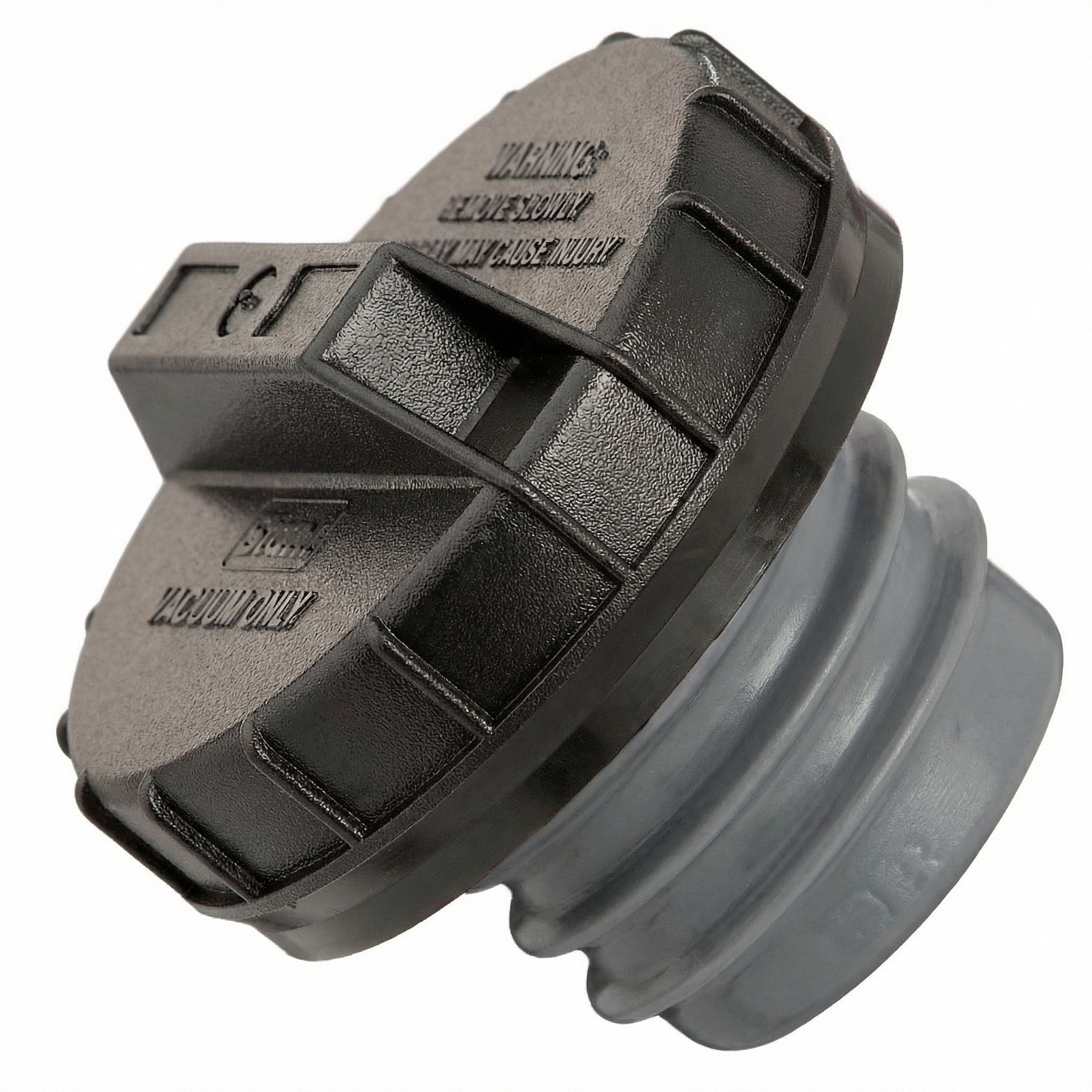
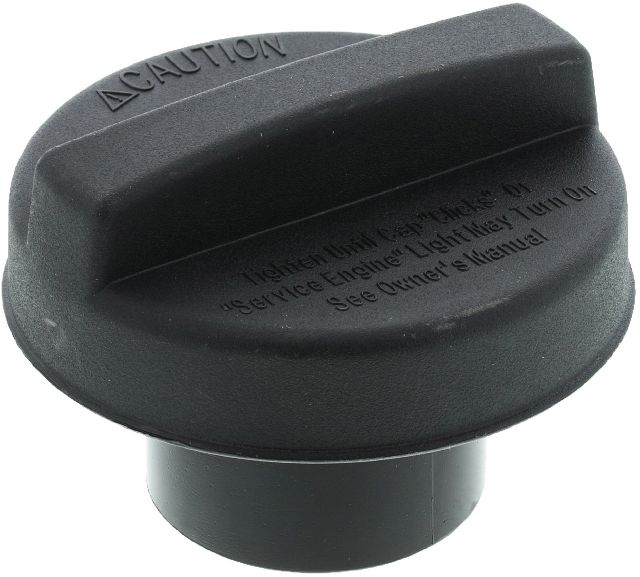
- Loose or Faulty Gas Cap 🔴 High Probability This is the most common cause for any vehicle. The cap's seal can degrade over time or it may simply not have been tightened correctly after refueling.
How to confirm: Ensure the gas cap is tightened until it clicks at least three times. Inspect the rubber O-ring on the cap for cracks or damage. If the light returns after tightening, a new cap is a cheap and effective next step. However, many owners report that replacing the cap does not solve the issue, indicating the need for further diagnosis.
Typical fix: Tighten or replace the gas cap.
Est. part cost: $10-$25 - Rusted EVAP Hose Clamp 🔴 High Probability Video evidence on the identical Kia Rio platform shows the small spring clamp securing the vent hose on the charcoal canister port is prone to rusting completely through, creating a small leak.
How to confirm: Safely raise the rear of the vehicle and visually inspect the hoses and clamps around the charcoal canister (located near the spare tire well). Look for a clamp that is visibly rusted, broken, or missing. The clamp may fall apart with finger pressure.
Typical fix: Replace the rusted spring clamp with a new stainless steel worm-gear clamp for better longevity.
Est. part cost: $1-$5 - Faulty Canister Purge Valve (CPV) 🟡 Medium Probability The purge valve (also called a purge solenoid) is an electromechanical part that can get stuck open, creating a constant small leak path from the EVAP system to the engine intake. This is a common failure point reported by owners.
How to confirm: The valve is located in the engine bay, on or near the intake manifold. With the engine off, disconnect the valve and try to blow through it. If air passes through, the valve is stuck open and is faulty; it should be normally closed. You can also test it by applying 12V power to its terminals; it should click open and allow air to pass.
Typical fix: Replace the canister purge valve. This is a relatively simple DIY job. 🎬 See this walkthrough for replacing the engine bay purge valve.
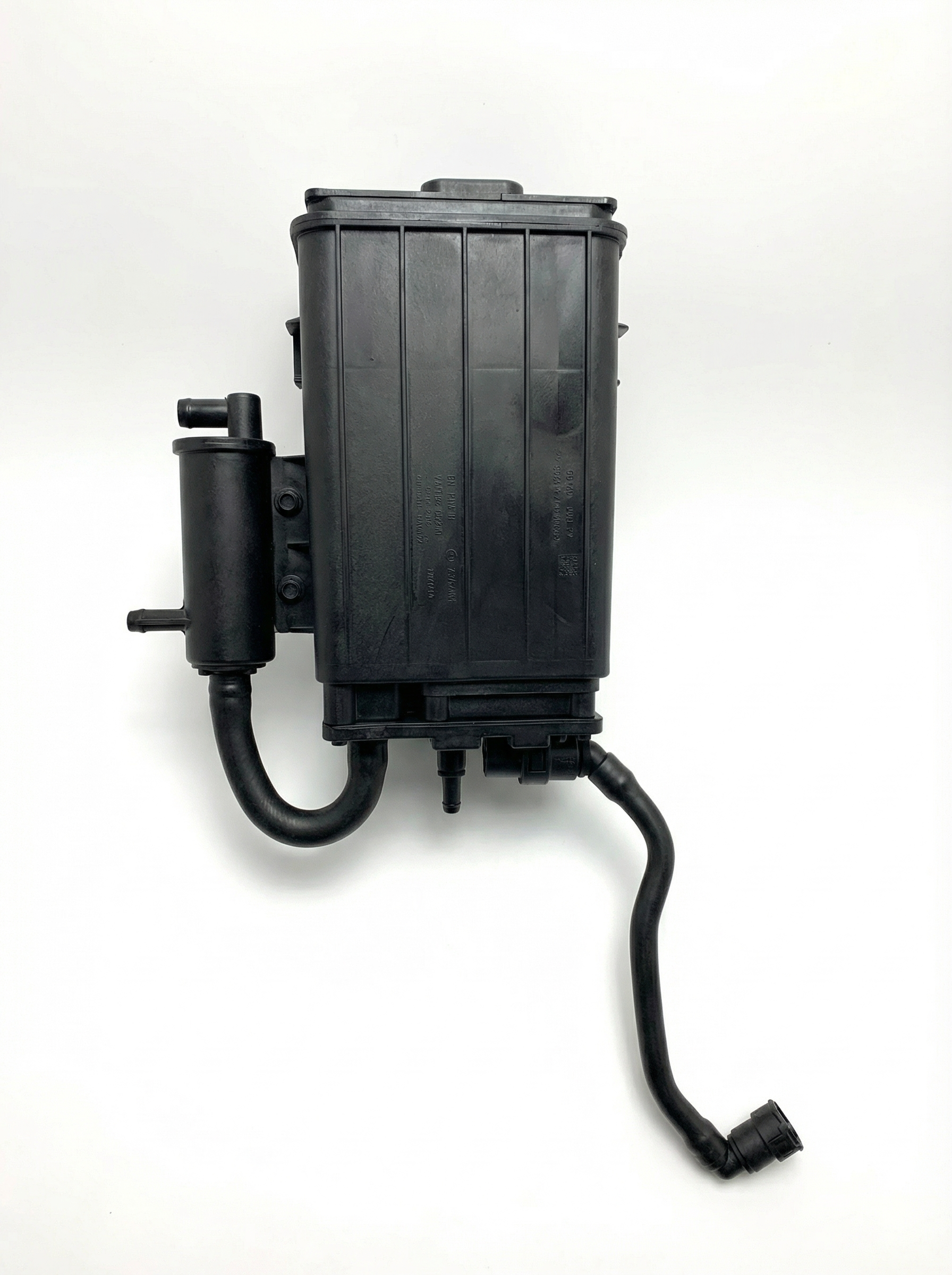
Est. part cost: $25-$60 - Faulty Canister Close Valve (CCV) 🟡 Medium Probability This valve, located at the rear of the car near the charcoal canister, is designed to seal the system for pressure testing. A Kia TSB for the identical Rio platform (TSBFUE040) identifies this valve sticking open as a common cause for P0456. A Hyundai TSB (18-FL-002) reportedly confirms this for the Accent as well.
How to confirm: This is more difficult to test without a capable scan tool to command it closed. The Kia TSB notes the improved replacement part has a tan/ivory colored port, while the original faulty part has a black port; a visual inspection may reveal which version you have. A smoke test is the most reliable way to confirm a leak at the CCV.
Typical fix: Replace the canister close valve. The Kia TSB recommends replacing it with an improved part.
Est. part cost: $40-$80
Rare But Worth Checking
- Faulty ECM Logic: For 2012-2014 models in particular, the original Engine Control Module (ECM) software may have overly sensitive logic for detecting EVAP leaks. Kia released TSBs (TSBENG146R1, TSB-ENG118R2) for the Rio to update the software. If other components check out, a dealer may need to perform a software update. One owner on a forum reported a PCM update ultimately fixed their P0456 code after other parts failed to.
- Cracked EVAP Hose: While the clamps are more likely to fail, the rubber hoses themselves can become brittle and crack over time, especially in harsh climates. A smoke test is the best way to find a very small crack in a hose.
- Cracked Charcoal Canister: The plastic body of the charcoal canister can develop hairline cracks from age or impact from road debris, causing a leak. This is usually found during a smoke test.
- Leaking Fuel Filler Neck: Rust or corrosion on the rim of the fuel filler neck can prevent the gas cap from creating a perfect seal, leading to a leak.
Diagnosis Steps
- Read the code with an OBD-II scanner to confirm P0456 is present.
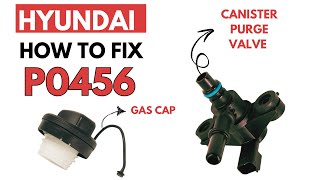
- Inspect the gas cap. Ensure it is tight (clicks multiple times). Check the seal for cracks or damage. If in doubt, replace it, clear the code, 🎬 Watch: Two quick DIY methods to clear the P0456 code. and drive for a few days to see if it returns.
- If the code returns, perform a thorough visual inspection of the EVAP system. Start with the engine bay, checking the hoses connected to the canister purge valve.
- Safely raise the vehicle and inspect the components at the rear. Pay very close attention to the small hose clamps on the lines connected to the charcoal canister and canister close valve. Look for any that are heavily rusted or broken.
- Test the canister purge valve in the engine bay. It should be closed (not allow air to pass through) when unpowered.
- Check for any open campaigns or TSBs related to ECM software updates for EVAP system logic, especially for 2012-2014 models, as this could be the root cause.
- If no visual faults are found, the most effective next step is to have a smoke test performed. This involves injecting low-pressure smoke into the EVAP system and watching for where it escapes, pinpointing the exact location of the leak.
Parts You'll Likely Need
- Gas Cap
(OEM #31010-3L600 / 31010-3L600U)— This is the most frequent and easiest first step for a P0456 code, though it is often not the final solution. The seal wears out or the cap is left loose.
Trusted brands: Hyundai (OEM), Gates, Stant
OEM price range: $20-$30
Aftermarket price range: $10-$20 - Canister Purge Valve / Solenoid
(OEM #28910-26900)— A common failure point that gets stuck open, causing a persistent small leak. It's located in the engine bay and is relatively easy to replace.
Trusted brands: Bosch, Standard Motor Products (SMP), Hyundai (OEM)
OEM price range: $45-$65
Aftermarket price range: $25-$50 - Hose Clamp — Specifically for the 2012-2016 Accent/Rio platform, the factory spring clamps on the rear EVAP lines are prone to rusting through, creating a leak.
OEM price range: $1-$5
Aftermarket price range: $1-$5
Related Codes That Often Appear With This One
- P0455 — This code indicates a large EVAP leak. If a component fails catastrophically (like a hose completely disconnecting), you might see this code instead of, or along with, P0456. The provided TSB lists them together. [Bulletin #5NP-R8G4T-07]
- P0449 — This code points to a problem with the EVAP vent valve/solenoid circuit. A faulty vent valve (another name for the CCV) can cause leak codes like P0456. The provided TSB lists them together. [Bulletin #5NP-R8G4T-07]
Technical Service Bulletins (TSBs) & Recalls
- 5NP-R8G4T-07: A 2018 TSB for the 2012 model year lists P0456 as a potential DTC related to the engine and engine cooling system, alongside other EVAP codes like P0455 and P0449.
Platform-Specific Known Issues
- A Technical Service Bulletin for 2012 models mentions P0456 in a list of potential EVAP codes, confirming it's a known issue for this vehicle range. [Bulletin #5NP-R8G4T-07]
- Owners and mechanics have specifically identified rusted-through hose clamps on the EVAP lines near the charcoal canister as a common cause of P0456 on this platform.
- A TSB for the platform-mate Kia Rio (TSBFUE040) points to a faulty Canister Close Valve (CCV) as a primary cause for P0456, recommending replacement with an improved part.
- TSBs for the 2012-2014 Kia Rio (TSBENG146R1, TSB-ENG118R2) indicate that an ECM software update may be required to fix overly sensitive leak detection logic.
Mechanic-Grade Diagnostic Values
- Canister Purge Valve (PCSV) Coil Resistance — expected: 22.0 - 26.0 Ω at 68°F (20°C). Failure: A reading of infinite resistance (open circuit) or near-zero resistance (short circuit) indicates a faulty solenoid coil.
- Fuel Tank Pressure Sensor - Supply Voltage — expected: 4.9 - 5.1 Volts. Failure: No voltage or significantly lower voltage indicates a wiring or ECM problem.
- Fuel Tank Pressure Sensor - Ground Circuit Voltage — expected: 0.5 Volts or less. Failure: Higher voltage indicates a bad ground connection.
- Fuel Tank Pressure Sensor - Signal Voltage (Atmospheric Pressure) — expected: 1.5 - 3.5 Volts (1500 - 3500 mV) with fuel cap off. Failure: Voltage outside this range with the system open to the atmosphere suggests a faulty sensor.
Scan Tool Commands That Help
- Hyundai GDS (or equivalent professional scanner): EVAP System Leakage Test — This is a guided test that commands the vehicle's EVAP system to perform a self-test. It should be used after a repair to confirm the fix before clearing the code and waiting for a drive cycle.
- Hyundai GDS (or equivalent professional scanner): Canister Close Valve (CCV) Actuation / Active Test — This bidirectional command manually opens and closes the CCV. It is essential for diagnosis, allowing a technician to seal the EVAP system on command to perform a smoke or vacuum decay test, verifying the CCV's function.
Wiring & Ground Locations
- Canister Close Valve (CCV) — On the left side of the rear suspension, near the charcoal canister.. This valve must seal for the system to hold pressure. Knowing its location is key for visual inspection, testing, and replacement.
- Canister Purge Control Solenoid Valve (PCSV) — On top of the engine, near the intake manifold, under the plastic engine cover.. This is a primary failure point. Its location in the engine bay makes it easy to access for testing (blowing through it) and replacement.
- ECM/PCM — In the engine compartment, at the left rear.. The ECM controls and monitors the entire EVAP system. Its location is needed for any advanced wiring diagnostics or if an ECM replacement is required.
- Ground: GM03 — Top left side of the dash.. A poor ground connection for components controlled by the Body Control Module or instrument panel could indirectly affect system warnings, though it's not a primary cause for this code.
Real Owner Repair Stories
- YouTube channel 'MTLCARGUY' (2015 Kia Rio (platform-mate to the Accent)) — Check Engine Light with code P0456.
❌ Tried (didn't work) Inspection of the gas cap and fuel filler neck, which were found to be in good condition.
✅ What actually fixed it A visual inspection under the rear of the vehicle revealed a completely rusted-through spring clamp on the charcoal canister's vent hose. The clamp was so corroded it fell apart with finger pressure. Replacing this single clamp with a new stainless steel worm-gear clamp resolved the P0456 code.
"I Checked Everything" — The Actual Cause
- In some cases, a P0456 code can be present even when a professional smoke test shows no leaks. This can occur when there is no physical leak, but rather a software glitch in the Powertrain Control Module (PCM) that causes it to incorrectly report a leak. The proper fix in this scenario is not to replace parts, but to have a dealership perform a PCM software update or 'flash' to correct the faulty logic.
OEM Part Supersession History
314201r500→31420-1R500-DS— Part update or number standardization.
Heads up: This part number is specific to 2012 - 2014 models. Later models use a different canister.
Model Year Variations Within This Range
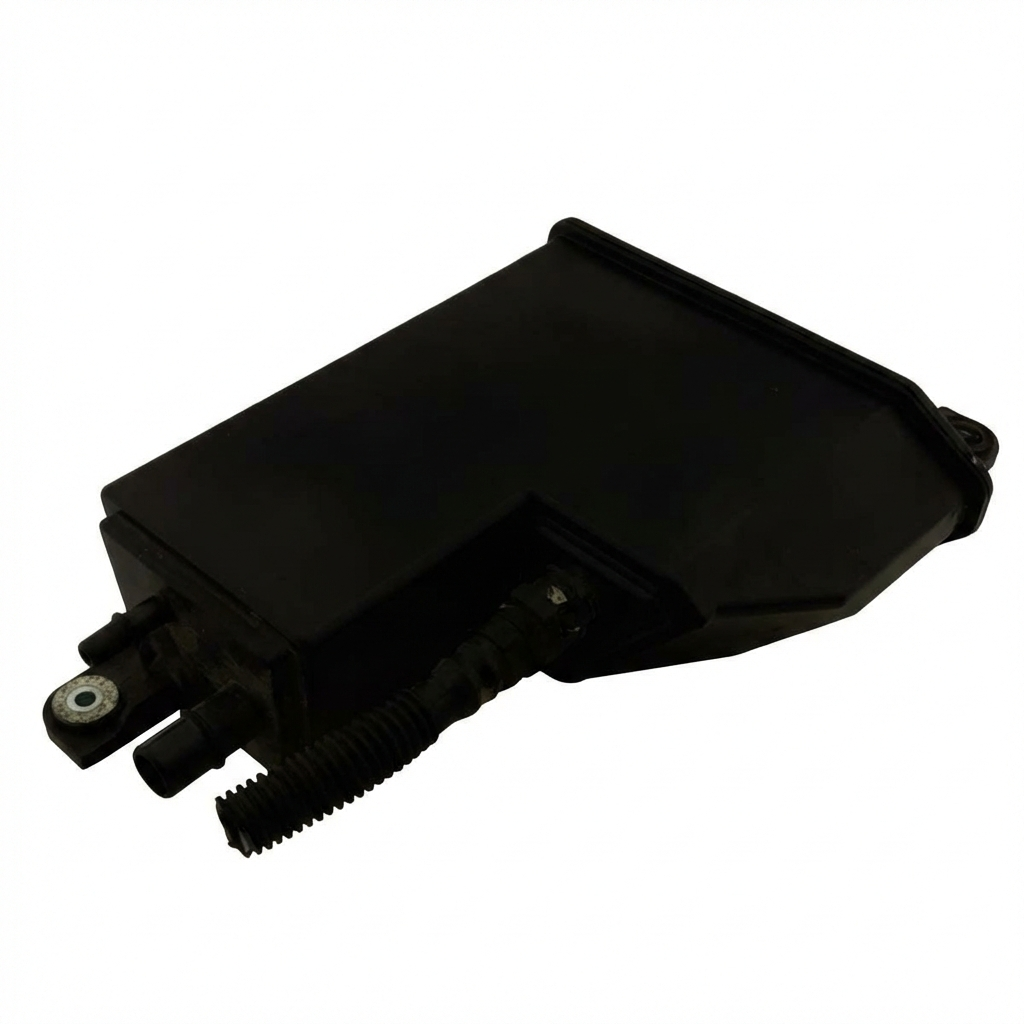
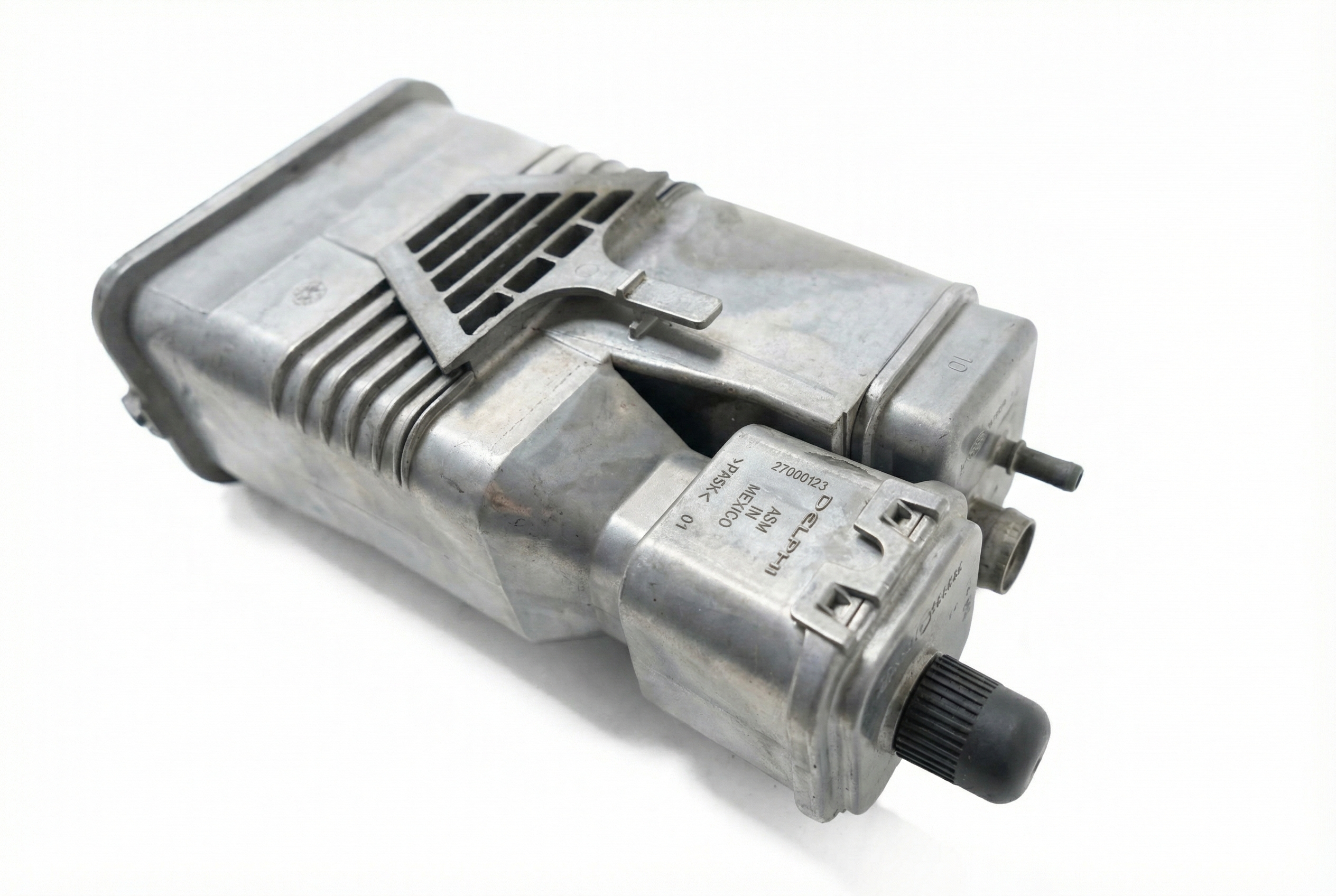
- 2012 - 2014 (up to 12/31/2014): The vapor canister assembly uses part number 31420-1R500-DS. Models built in 2015 and later use a different part, making it crucial to verify the build date or VIN when ordering a replacement canister.
Helpful Videos
![How to Fix HYUNDAI P0456 Engine Code in 3 Minutes [2 DIY Methods / Only $4.44]](https://img.youtube.com/vi/C3a7D0_xwUs/mqdefault.jpg)
Used OEM Parts in Stock
New Aftermarket Parts Available


The information in this article is provided for general reference and educational purposes only. Vehicle specifications, procedures, and part compatibility can vary by production date, trim level, and region. Always consult your vehicle's factory service manual and verify part numbers before purchasing or performing repairs. Safety-critical components such as airbags, seat belts, and braking systems should be installed by a qualified professional.
- Hyundai ACCENT:
- 🎬 Helpful Videos
- 🛍️ Shop This Part
- What's Unique About the 2012-2016 Hyundai ACCENT
- Diagnostic Flowchart
- Symptoms You May Notice
- Most Likely Causes
- Rare But Worth Checking
- Diagnosis Steps
- Parts You'll Likely Need
- Related Codes That Often Appear With This One
- Technical Service Bulletins (TSBs) & Recalls
- Platform-Specific Known Issues
- Mechanic-Grade Diagnostic Values
- Scan Tool Commands That Help
- Wiring & Ground Locations
- Real Owner Repair Stories
- "I Checked Everything" — The Actual Cause
- OEM Part Supersession History
- Model Year Variations Within This Range
- 🎟️ Get 5% Off