

P0456 on 2012-2019 Honda Odyssey: EVAP Very Small Leak Causes and Fixes
For a 2012-2019 Honda Odyssey, code P0456 most often means the gas cap is loose or its seal has failed (on 2012-2017 models) or the capless fuel filler is dirty or faulty (2018+ models). Before buying any parts, tighten the cap until it clicks several times or clean the capless filler neck. Clear the code and drive. If it returns, a new OEM gas cap (for 2012-2017) is the next most likely and affordable fix.
- P0456 on a 2012-2019 Odyssey indicates a very small leak in the fuel vapor system.
- Always check the gas cap first. Make sure it's tight. A worn-out cap is the most likely culprit, and a Honda TSB confirms this for the 2012 model.
- If you replace the gas cap, use a genuine OEM part from Honda to avoid persistent issues.
- If the gas cap isn't the problem, the next most likely causes are the EVAP purge valve or a cracked hose.
- A professional smoke test is the fastest way to find the leak if it's not the gas cap.
What's Unique About the 2012-2019 Honda ODYSSEY

For this era of Honda Odyssey, the P0456 code is very frequently traced back to the fuel fill area. A Technical Service Bulletin (TSB 13-097) for the 4th generation (2011-2017) specifically identifies a faulty fuel fill cap as a primary cause. Owners and mechanics often report that using aftermarket gas caps can cause the code to return, making an OEM Honda cap the recommended replacement. For the 5th generation (2018+), the vehicle uses a capless fuel filler system. On these models, the cause is often debris preventing the filler neck's internal flap from sealing correctly, or a failure of the filler neck assembly itself.
Diagnostic Flowchart
Tap your situation to follow the diagnostic path that matches what you're seeing on this vehicle.
Generation note: This range covers two generations: the fourth (2011-2017) and the fifth (2018-2019). The fundamental causes for P0456 are similar, but the specific parts differ. The 4th gen uses a traditional gas cap (OEM Part # 17670-T3W-A01), which is the most common failure point. The 5th gen uses a capless system, where dirt in the filler neck or a faulty filler neck assembly (Part # 06160-TG7-A12 for the related Honda Pilot) are common culprits. A video for a '18 Odyssey showed a broken EVAP pressure sensor on the canister as the cause, highlighting that other components can still fail.
Symptoms You May Notice

- Check Engine Light is on
- A message on the dashboard to "Check Fuel Cap" may appear (more common on 2012-2017 models).
- A faint fuel smell is possible, though less common for a very small leak.
- On some models, the remote start feature may be disabled when a Check Engine Light is active.
- Replacing the purge valve or other components before checking the gas cap. Always start with the simplest and most common cause.
- Using a cheap aftermarket gas cap, which often do not seal as well as the OEM Honda part and can cause the code to return.
Most Likely Causes

- Loose, Faulty, or Dirty Gas Cap / Fuel Filler Neck 🔴 High Probability For 2011-2017 models, Honda TSB 13-097 directly links P0456 to a faulty fuel fill cap that may feel like it's sticking or slipping when tightened. The rubber O-ring degrades over time. For 2018+ models with a capless system, dirt and debris can prevent the internal flap from sealing, causing a leak.
How to confirm: For 2011-2017: Ensure the gas cap is tightened until it clicks multiple times. Inspect the rubber seal on the cap for cracks, dirt, or signs of wear. For 2018+: Visually inspect the capless filler opening for debris. Use the vehicle's supplied funnel to gently work the internal flap open and closed, helping to dislodge any dirt. Clean the sealing surface with a rag.
Typical fix: First, try cleaning and re-securing the cap or cleaning the capless filler neck. If the code returns, replace the gas cap with a new OEM part (Honda #17670-T3W-A01) for 2011-2017 models. If cleaning the capless system on a 2018+ model doesn't work, the filler neck assembly may need replacement.
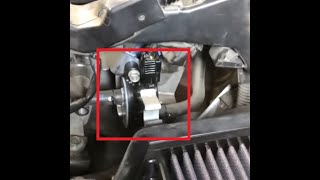
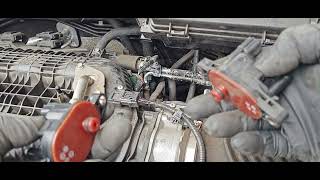
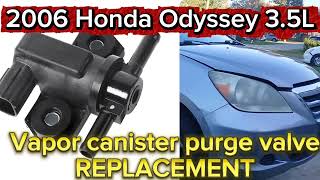
Est. part cost: $25-$60 for an OEM gas cap, $150-$250 for a filler neck assembly. - EVAP Canister Purge Valve Failure 🟡 Medium Probability The purge valve is a solenoid that opens and closes frequently, and it can get stuck slightly open, causing a small leak. It's a common failure item across many Honda models and is typically located in the engine bay.
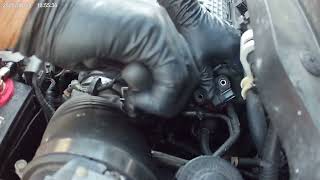
How to confirm: The purge valve is normally closed when the engine is off. You can remove it and try to blow through it; if air passes, it's stuck open and faulty. A mechanic can also command it to close with a scan tool and see if it holds a vacuum. A simple test is to disconnect the electrical connector and the hose from the charcoal canister side, start the engine, and feel for any vacuum at the valve's port; there should be none if it's working correctly.
Typical fix: Replacement of the purge valve solenoid. It is usually accessible in the engine bay and held by one or two bolts and hose clamps, making it a relatively simple DIY job.
Est. part cost: $40-$100 - Cracked or Damaged EVAP Hoses ⚪ Low Probability Rubber hoses can become brittle and develop tiny cracks over time due to heat and age. These cracks can be just large enough to trigger a small leak code.
How to confirm: A visual inspection may reveal obvious cracks, but the best method is a smoke test. A mechanic injects low-pressure smoke into the EVAP system (usually through the purge valve line) and looks for where it escapes.
Typical fix: Replacement of the cracked section of hose.
Est. part cost: $10-$30 - Cracked EVAP Charcoal Canister ⚪ Low Probability The canister itself, usually located under the vehicle near the fuel tank, can develop cracks from road debris or age. A Reddit user with a 2013 Odyssey fixed P0456 by replacing a cracked canister.
How to confirm: A smoke test is the most effective way to confirm a leak in the canister body. Visual inspection may show cracks or damage, especially if there is evidence of an impact.
Typical fix: Replacement of the entire charcoal canister assembly. Part numbers vary by generation, for example, 17011-TK8-A01 for 2011-2017 models and 17011-TRX-A01 for 2018+ models.
Est. part cost: $100-$250
Rare But Worth Checking
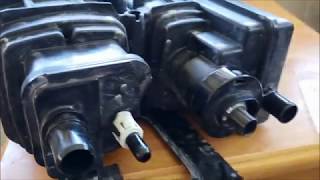
- Faulty EVAP Vent Solenoid: This valve, located on or near the charcoal canister, is normally open and closes to allow the system to be tested. It can fail to close completely, creating a leak. It's less common than the purge valve but a known failure point.
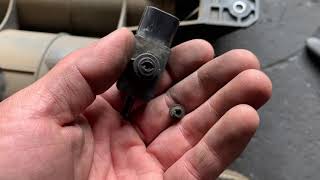
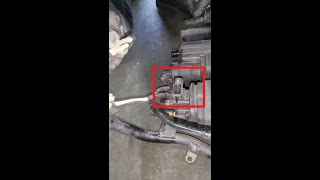
- Broken Fuel Tank Pressure (FTP) Sensor: A video of a 2018 Odyssey with P0456, P0455, and P0453 showed the nipple on the pressure sensor, located on the charcoal canister, had broken off, causing the leak. The part number shown was TN499500-4000.
- Rusted Fuel Filler Neck: In regions where road salt is used, the metal fuel filler neck (the pipe leading to the tank) can rust and develop pinhole leaks, triggering a P0456 code. This is more common on older, higher-mileage vehicles and is best diagnosed with a smoke test. A similar issue is documented on the platform-mate Honda Pilot.
Diagnosis Steps
- Read the code with an OBD-II scanner to confirm P0456.
- For 2012-2017 models: Inspect the gas cap. Remove it, check the seal for damage, and reinstall it, ensuring it clicks several times.
- For 2018-2019 models: Inspect the capless fuel filler opening for dirt or debris. Clean the seal with a cloth and use the emergency funnel to operate the mechanism a few times to ensure it moves freely.
- Clear the code with the scanner and drive for a few days (multiple drive cycles) to see if the Check Engine Light returns. Note that some permanent DTCs may require a specific drive cycle to clear.
- If the light returns on a 2012-2017, replace the gas cap with a genuine OEM Honda part (17670-T3W-A01) as the next step.
- If the problem persists, perform a thorough visual inspection of all accessible EVAP hoses in the engine bay and under the vehicle for obvious cracks or disconnections.
- If no visual faults are found, the most effective next step is a professional smoke test to pinpoint the exact location of the small leak.
- Based on the smoke test results, test or replace the identified faulty component, which could be a purge valve, vent valve, hose, or the charcoal canister itself.
Parts You'll Likely Need
- Fuel Cap (2011-2017)
(OEM #17670-T3W-A01)— This is the most frequent cause of P0456 on the 4th generation Honda Odyssey, as confirmed by a TSB and extensive owner reports.
Trusted brands: Honda (OEM)
OEM price range: $30-$50
Aftermarket price range: $15-$30 - EVAP Canister Purge Valve
(OEM #36162-R70-A01 (example, verify by VIN))— This solenoid is a common failure point that can get stuck partially open, causing a small leak.
Trusted brands: Denso, Bosch, Standard Motor Products
OEM price range: $70-$120
Aftermarket price range: $40-$80 - EVAP Vapor Canister
(OEM #17011-TK8-A01 (2011-17), 17011-TRX-A01 (2018+))— Though less common, the canister can crack from road debris or age, or the integrated sensors can fail, leading to a leak that requires replacement.
Trusted brands: Honda (OEM), Dorman
OEM price range: $200-$300
Aftermarket price range: $100-$200
Related Codes That Often Appear With This One
- P0455 — This code indicates a large EVAP leak. Seeing it with P0456 can mean the leak is intermittent or on the borderline between small and large. The 2012 Odyssey TSB mentions both codes appearing for a faulty gas cap.
- P0442 — This indicates a medium-sized EVAP leak. It can appear alongside P0456 if the leak size is inconsistent or changing.
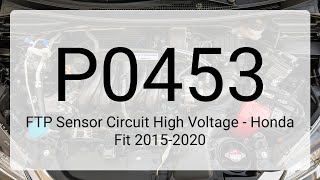
- P0453 — Indicates a problem with the Fuel Tank Pressure (FTP) sensor circuit (high input). This was seen on a 2018 Odyssey along with P0455 and P0456 when the sensor itself was physically broken.
Technical Service Bulletins (TSBs) & Recalls
- Honda TSB 13-097: Notes that for 2012-2013 models (and applicable to the generation), DTC P0455 and/or P0456 can be set by a faulty fuel fill cap. This TSB was originally for a window issue but is often cross-referenced in forums for the EVAP code.
- NHTSA Service Bulletin from 2014-02-18: Confirms that for a 2012 Odyssey, DTC P0456 can be set by a faulty fuel fill cap.
Platform-Specific Known Issues
- A TSB for the 2012 model year explicitly states that the MIL may come on with DTC P0456 due to a fuel fill cap that is loose or has a stick-slip feeling when tightened.
- On 2018+ models with the capless fuel filler, debris lodging in the sealing flap is a common cause of P0456. A specific funnel, included with the vehicle, should be used to clean and actuate the flap.
Mechanic-Grade Diagnostic Values
- EVAP Canister Purge Valve Solenoid Resistance — expected: 15 to 30 Ohms. Failure: A reading far outside this range indicates a damaged internal circuit.
- Fuel Tank Pressure (FTP) Sensor Voltage — expected: Approximately 2.5V with the system at atmospheric pressure (e.g., gas cap off). Voltage should decrease with vacuum and increase with pressure.. Failure: Voltage stuck high or low, or not changing when pressure/vacuum is applied. A 2019 Odyssey with a bad sensor showed voltage going down when pressure was applied, opposite of normal operation.
Hidden / Shadow Codes Worth Checking
- Mode $06, Test ID: $B4: This is not a trouble code, but a test ID within the generic OBD-II Mode $06 data. For some Hondas, Test ID $B4 is one of the tests that make up the EVAP monitor for detecting a 'very small leak'. (see via Use an aftermarket scan tool capable of displaying Mode $06 data. A value of zero for this test ID can indicate that this specific portion of the EVAP monitor has not run, which can be a clue when trying to clear a permanent P0456 code.)
Scan Tool Commands That Help
- Honda PGM Tester (HDS): EVAP System Function Test — This function, available in HDS software, commands the vehicle's PCM to run the same EVAP self-test it performs during normal operation. It can be used to confirm the integrity of the system after a repair or to help diagnose intermittent leaks by forcing the test to run in the service bay.
- Advanced Aftermarket Scan Tool (e.g., iCarsoft, Autel): EVAP Smoke Test Mode / Close Vent Solenoid — This bidirectional command manually closes the EVAP vent solenoid, sealing the system. This is a required step before introducing smoke with a smoke machine to find the physical location of a leak.
Wiring & Ground Locations
- Main Ground Points — Hondas are noted for having potential ground issues. A major ground point is often located in the rear panel area. Other key grounds are on the engine and transmission.. A poor ground can cause erratic voltage readings from sensors like the FTP sensor or improper operation of solenoids like the purge or vent valve. While not a primary cause, cleaning main ground points by removing paint and using a star washer can prevent chasing electrical gremlins.
Real Owner Repair Stories
- YouTube video by 'Ah Duuu' (2018 Honda Odyssey 3.5L) — Check Engine Light with codes P0453, P0455, and P0456.
❌ Tried (didn't work) Initial diagnosis pointed to a leak in the EVAP system.
✅ What actually fixed it A smoke test revealed smoke escaping from the Fuel Tank Pressure (FTP) sensor on the charcoal canister. The plastic nipple on the sensor itself had physically broken off. Replacing the FTP sensor (Part # TN499500-4000 shown in video) and clearing the codes resolved the issue. - Reddit user on r/HondaOdyssey (2013 Honda Odyssey with 201,000 miles) — Check Engine Light with codes P0455 and P0456.
❌ Tried (didn't work) Checked the gas cap., Checked the purge valve., Checked the vent valve.
✅ What actually fixed it After the common parts checked out, a smoke machine was used. The leak was traced to a cracked charcoal/vapor canister. The user noted a large dent in the underbody shield next to the canister, suggesting it was damaged by road debris. Replacing the cracked canister fixed the codes.
OEM Part Supersession History
17670-SJA-A02, 17670-SNA-A02, 17670-TR0-A01, 17670-TR0-A11→17670-T3W-A01— Standard part evolution and consolidation by the manufacturer.
Model Year Variations Within This Range
- 2018-2019: The 2018 model year marked a full redesign (5th generation). The engine gained power (280 hp vs 248 hp), and new 9-speed or 10-speed transmissions were introduced, though combined MPG remained the same at 22. The fuel tank capacity was reduced to 19.5 gallons. Most significantly for diagnostics, the infotainment and driver-assist technology was completely updated, and the interior featured the new 'Magic Slide' seats.
- 2012-2017: This 4th generation used a traditional gas cap (17670-T3W-A01) which is the most common failure point for P0456. The EVAP system components, while functionally similar to the 5th gen, may have different part numbers and locations. For example, the charcoal canister for 2011-17 is part #17011-TK8-A01.
Helpful Videos
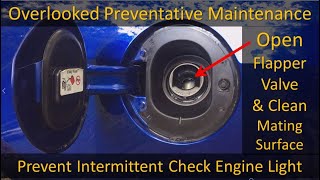
![How to Fix P0456 Engine Code in 3 Minutes [2 DIY Methods / Only $4.44]](https://img.youtube.com/vi/v_QDSjd1-Lw/mqdefault.jpg)

Used OEM Parts in Stock


New Aftermarket Parts Available



The information in this article is provided for general reference and educational purposes only. Vehicle specifications, procedures, and part compatibility can vary by production date, trim level, and region. Always consult your vehicle's factory service manual and verify part numbers before purchasing or performing repairs. Safety-critical components such as airbags, seat belts, and braking systems should be installed by a qualified professional.
- Honda ODYSSEY:
- 🎬 Helpful Videos
- 🛍️ Shop This Part
- What's Unique About the 2012-2019 Honda ODYSSEY
- Diagnostic Flowchart
- Symptoms You May Notice
- Most Likely Causes
- Rare But Worth Checking
- Diagnosis Steps
- Parts You'll Likely Need
- Related Codes That Often Appear With This One
- Technical Service Bulletins (TSBs) & Recalls
- Platform-Specific Known Issues
- Mechanic-Grade Diagnostic Values
- Hidden / Shadow Codes Worth Checking
- Scan Tool Commands That Help
- Wiring & Ground Locations
- Real Owner Repair Stories
- OEM Part Supersession History
- Model Year Variations Within This Range
- 🎟️ Get 5% Off