

P0456 on 2017-2021 Ford Transit: EVAP Small Leak Causes and Fixes
For a 2017-2021 Ford Transit, code P0456 most often means you have a dirty capless fuel filler seal, a loose gas cap, or a kinked EVAP vent line near the fuel filler neck. Before buying parts, clean the capless fuel filler opening with the vehicle's funnel, check that the gas cap (if equipped) is tight, and inspect the nearby hoses for kinks as outlined in Ford's TSB 21-2106.
- Always check your gas cap or capless fuel filler first; it's the simplest and most common fix.
- On a Ford Transit, specifically inspect the EVAP hoses near the fuel filler for kinks, as this is a known issue (TSB 21-2106).
- Do not immediately replace the purge valve; test it first or have it tested. It's a commonly misdiagnosed part for this code on this vehicle.
- If you experience slow fueling along with the check engine light, the kinked hose mentioned in TSB 21-2106 is the most probable cause.
- If simple checks don't reveal the problem, a smoke test is the most effective way to find the tiny leak.
What's Unique About the 2017-2021 Ford TRANSIT

On this specific generation of Ford Transit (built on or before Nov 30, 2020), a P0456 code is frequently caused by a simple mechanical issue rather than a failed electronic part. Ford issued a Technical Service Bulletin (TSB 21-2106) pointing to a kinked EVAP vent hose as a common culprit, which can also cause the fuel pump to shut off repeatedly during fill-ups. The official fix is as simple as securing the hose with a zip tie. Another bulletin (SSM 50306) warns technicians that the canister purge valve is often replaced unnecessarily when it's actually fully functional, suggesting other causes should be investigated first.
Diagnostic Flowchart

Tap your situation to follow the diagnostic path that matches what you're seeing on this vehicle.
Symptoms You May Notice
- Check Engine Light is on.
- Difficulty filling the fuel tank (gas pump nozzle clicks off repeatedly).
- A faint fuel smell near the vehicle is possible, but rare with a very small leak.
- Remote start feature may be disabled.
- Replacing the canister purge valve without performing the simple diagnostic test (checking for vacuum at idle). Ford TSB SSM 50306 specifically notes that returned purge valves are often found to be fully functional, indicating misdiagnosis is common.
Most Likely Causes

- Loose or Faulty Gas Cap / Dirty Capless Fuel Filler Seal 🔴 High Probability The capless filler seal is exposed to dust and debris, which can prevent it from sealing properly, causing a leak. This is a very common issue on all Ford vehicles with the 'Easy Fuel' system.
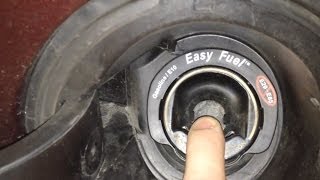
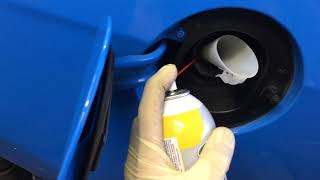
How to confirm: For capless systems, inspect the seal for debris. A common DIY fix involves wiping the filler opening, spraying it with a lubricant like WD-40 or silicone spray, and inserting/removing the emergency funnel (found with the spare tire tools) 🎬 Watch: How to clean the capless filler seal properly. several times to clean the internal sealing flaps. For traditional caps, ensure it is tightened until it clicks at least three times.
Typical fix: Clean the capless filler neck seal as described above. If that fails, the filler neck assembly may need replacement. For traditional caps, tighten or replace the cap.
Est. part cost: $0-$50 - Kinked EVAP Fresh Air Vent Line 🔴 High Probability Ford identified this as a specific manufacturing issue on 2017-2021 Transits (built before 11/30/2020) in TSB 21-2106. The routing of the line makes it susceptible to kinking.
How to confirm: Visually inspect the EVAP hoses near the fuel filler neck and along the frame for any sharp bends or kinks. The issue is often found where the hose routes near other components.
Typical fix: Straighten the kinked line and secure it with a zip tie to prevent it from kinking again, as per the TSB.
Est. part cost: $0-$5 - Faulty Canister Purge Valve 🟡 Medium Probability This valve is a known failure point across many Ford models. While TSB SSM 50306 warns against misdiagnosis, the purge valve can still fail by not sealing completely, creating a small leak.
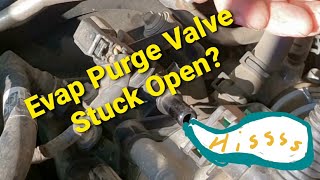
How to confirm: With the engine running and the valve's electrical connector unplugged, disconnect the hose leading from the canister to the valve. Place your finger over the port on the valve. 🎬 See this quick test for a stuck open purge valve. If you feel any suction, the valve is stuck open and is faulty.
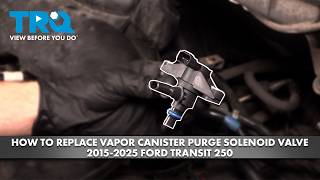
Typical fix: Replace the canister purge valve, which is typically located in the engine bay near the intake manifold. 🎬 Watch: How to replace the canister purge solenoid valve.
Est. part cost: $40-$140 - Cracked or Disconnected EVAP Hose 🟡 Medium Probability Rubber and plastic hoses become brittle over time due to heat and environmental exposure, leading to small cracks, especially at connection points.
How to confirm: A visual inspection may reveal obvious cracks, but a smoke test is the most effective method. This involves injecting vaporized mineral oil into the EVAP system and watching for where the smoke escapes.
Typical fix: Replace the damaged section of hose.
Est. part cost: $10-$60 - Faulty EVAP Vent Solenoid ⚪ Low Probability The vent solenoid, located near the charcoal canister, can fail to close properly during the system's self-test, creating a leak path. Corrosion is a common cause of failure on trucks and vans where the part is exposed.
How to confirm: Requires a capable scan tool to command the valve closed, followed by a smoke test to see if it leaks. Can also be tested for electrical integrity with a multimeter.
Typical fix: Replace the vent solenoid.
Est. part cost: $50-$110
Rare But Worth Checking
- Cracked Charcoal Canister: The plastic housing of the canister can develop hairline cracks from age or impact from road debris. This is usually found with a smoke test.
- Faulty Fuel Tank Pressure (FTP) Sensor: The sensor itself can fail and give false readings, making the computer think there is a leak when there isn't one. This is uncommon and usually accompanied by other sensor-specific codes.
Diagnosis Steps

- Read the code with an OBD-II scanner to confirm P0456 and check for any other related codes.
- Inspect the gas cap (if equipped) for a tight seal and check the O-ring for cracks. On capless systems, visually inspect the filler neck opening for debris.
- Perform the capless fuel filler cleaning procedure: wipe the opening, lubricate, and work the emergency funnel in and out to clean the internal seals.
- Visually inspect the EVAP hoses, especially around the fuel filler neck, for the specific kink described in TSB 21-2106.
- Inspect all other accessible EVAP hoses and lines for obvious cracks, damage, or disconnections.
- If no visual faults are found, test the canister purge valve in the engine bay for leakage at idle by checking for vacuum on its inlet port.
- If the cause is still not found, the most reliable method is to have a professional perform a smoke test to pinpoint the exact location of the very small leak.
Parts You'll Likely Need
- Fuel Tank Filler Cap
(OEM #FC1061)— Often the cause of small EVAP leaks due to a worn seal or not being tightened properly. Note: Many Transits have a capless system and do not use a traditional cap.
Trusted brands: Motorcraft, Stant
OEM price range: $25-$40
Aftermarket price range: $15-$30 - Canister Purge Valve
(OEM #AU5Z-9C915-E (supersedes AU5Z-9C915-B))— A common failure point that can get stuck slightly open, causing a small leak into the engine intake. TSB SSM 50306 warns against replacing it without proper diagnosis.
Trusted brands: Motorcraft, Dorman
OEM price range: $60-$140
Aftermarket price range: $40-$80 - Vapor Canister Vent Solenoid
(OEM #9U5Z-9F945-C)— This valve must seal the EVAP system for pressure testing. If it fails to close completely, it will cause a leak code. It is often located near the charcoal canister and can be damaged by corrosion.
Trusted brands: Motorcraft, Dorman
OEM price range: $70-$110
Aftermarket price range: $50-$80
Related Codes That Often Appear With This One
- P1450 — Stands for 'Unable to Bleed Up Fuel Tank Vacuum'. It often appears with P0456 when a purge valve is stuck open or a vent line is blocked/kinked. This is a very common pairing.
- P0455 — Indicates a 'Gross Leak Detected'. Sometimes a leak can start small (P0456) and grow larger, or the computer may set both codes depending on test conditions.
- P0171 / P0174 — These are 'System Too Lean' codes. A significant EVAP leak, particularly from a stuck-open purge valve, can create a vacuum leak that allows unmetered air into the intake, causing a lean condition. TSB 21-2106 also lists these codes as a possible result of the kinked vent line.
- P0451 — Relates to the 'EVAP Pressure Sensor Range/Performance'. This can be triggered by the same kinked hose mentioned in TSB 21-2106.
Technical Service Bulletins (TSBs) & Recalls
- TSB 21-2106: Addresses a slow fuel fill condition and multiple EVAP DTCs, including P0456, caused by a kinked fresh air vent line on Transits built on or before 30-Nov-2020.
- SSM 50306: Warns that canister purge valves are often replaced unnecessarily for various EVAP codes and are frequently found to be fully functional upon return.
Platform-Specific Known Issues
- TSB 21-2106: Kinked Fresh Air Vent Line: Some 2017-2021 Transits built on or before 30-Nov-2020 may have a kinked evaporator emissions fresh air vent line. This can cause P0456 and other EVAP codes, and also make it difficult to fill the fuel tank. The official fix is to straighten the line and secure it with a zip tie to prevent the kink from reoccurring.
- SSM 50306: Purge Valve Misdiagnosis: Ford has noted that for P0456 and other EVAP codes on 2020-2021 models, returned canister purge valves have been tested and found to be fully functional, cautioning against replacing this part without thorough diagnosis.
- Capless Fuel Filler Seal Contamination: Like many modern Fords, the Transit's capless 'Easy Fuel' system can accumulate dirt in the sealing flap, preventing a proper seal and triggering a small leak code. Regular cleaning with the provided funnel is often the fix.
Mechanic-Grade Diagnostic Values
- EVAP Canister Purge Valve Coil Resistance — expected: 30 to 38 Ohms (for standard valve) or 2.5 to 6 Ohms (for electronic valve). Failure: A reading outside the specified range indicates a faulty internal coil.
- EVAP Canister Vent Solenoid Coil Resistance — expected: 48 to 65 Ohms. Failure: A reading outside this range suggests the solenoid coil is damaged.
- Fuel Tank Pressure (FTP) Sensor Signal Voltage — expected: Approx. 2.5V at atmospheric pressure (Key On, Engine Off), changing with vacuum/pressure. Should be between 0.5V and 4.5V during operation.. Failure: Voltage stuck at 0V, 5V, or not changing when vacuum is applied indicates a faulty sensor or wiring issue.
- FTP Sensor Reference Voltage — expected: 5 Volts. Failure: No voltage or incorrect voltage points to a wiring or PCM issue, not a sensor fault.
Hidden / Shadow Codes Worth Checking
- Permanent DTC (PDTC): A P0456 code may be stored as a 'Permanent DTC' after a repair. This type of code cannot be cleared with a standard scan tool or by disconnecting the battery. (see via Visible on most modern OBD-II scanners. The vehicle's computer will clear the PDTC on its own after it confirms the repair is successful by running and passing its internal self-tests. In California, for example, an emissions test can pass with a PDTC present if the vehicle has been driven at least 200 miles and has completed 15 warm-up cycles since the codes were last cleared.)
Scan Tool Commands That Help
- Ford IDS (or equivalent professional scanner): Output State Control (OSC) / Actuator Test — This function is critical for diagnosing intermittently sticking valves. A technician can command the purge valve or vent solenoid to cycle on and off to see if it fails to seal after being activated. This can reveal a failure that a static smoke test might miss.
- Ford IDS (or equivalent professional scanner): EVAP System Leak Test — This is a PCM-controlled procedure that seals the EVAP system and uses the FTP sensor to monitor for a pressure drop, verifying if a leak exists after a repair has been performed.
Real Owner Repair Stories
- YouTube user 'French lake auto parts' (2016 Ford Transit 3500) — Check Engine Light with codes P1450 and P0456.
❌ Tried (didn't work) Not specified, video goes directly to the successful diagnosis.
✅ What actually fixed it The canister purge valve was stuck open, leaking vacuum at idle. Replacing the purge valve solenoid resolved both codes. The diagnostic method shown was to check for suction on the valve's inlet port with the engine running and the electrical connector unplugged. - YouTube user 'Repairs and Stuff' (2014 Ford Explorer (similar EVAP system and valve)) — Check Engine Light with code P0456.
❌ Tried (didn't work) Checked gas cap and filler neck area, which were fine.
✅ What actually fixed it The purge valve was leaking due to internal contamination. The creator disassembled the valve, cleaned the internal seal and housing of debris, and reassembled it with JB Weld, which fixed the leak. He suggested that a less invasive fix could be to energize the valve with 12V and blow soapy water and compressed air through it to clean it internally.
"I Checked Everything" — The Actual Cause
- A common failure pattern on Ford vehicles is an intermittently sticking canister purge valve. A technician may perform a smoke test and find no leaks because the valve is sealed at that moment. However, after the engine runs and the PCM cycles the valve, it can stick slightly open, creating the small leak. The correct diagnosis is to use a scan tool to command the purge valve open and closed several times, then re-check for a leak with a vacuum gauge on the inlet port. If it leaks vacuum after being cycled, it is faulty.
OEM Part Supersession History
7U5Z-9F945-D, 7U5Z-9F945-E→9U5Z-9F945-C— Part has been updated by the manufacturer.
Heads up: The part is listed under many names, including 'Vapor Canister Vent Solenoid' and 'Vapor Canister Purge Solenoid'. It is critical to verify the part's location and function for the specific vehicle, as the names can be used interchangeably by parts suppliers.
Model Year Variations Within This Range
- 2017-2020 (built on or before 30-Nov-2020): These models are specifically called out in TSB 21-2106 as being prone to a kinked evaporator emissions fresh air vent line, which can cause P0456 and slow fuel filling. Later models presumably have revised hose routing.
Helpful Videos
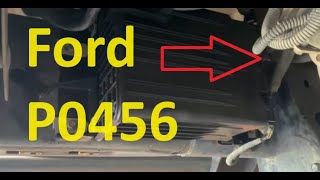
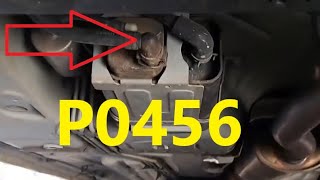
Used OEM Parts in Stock
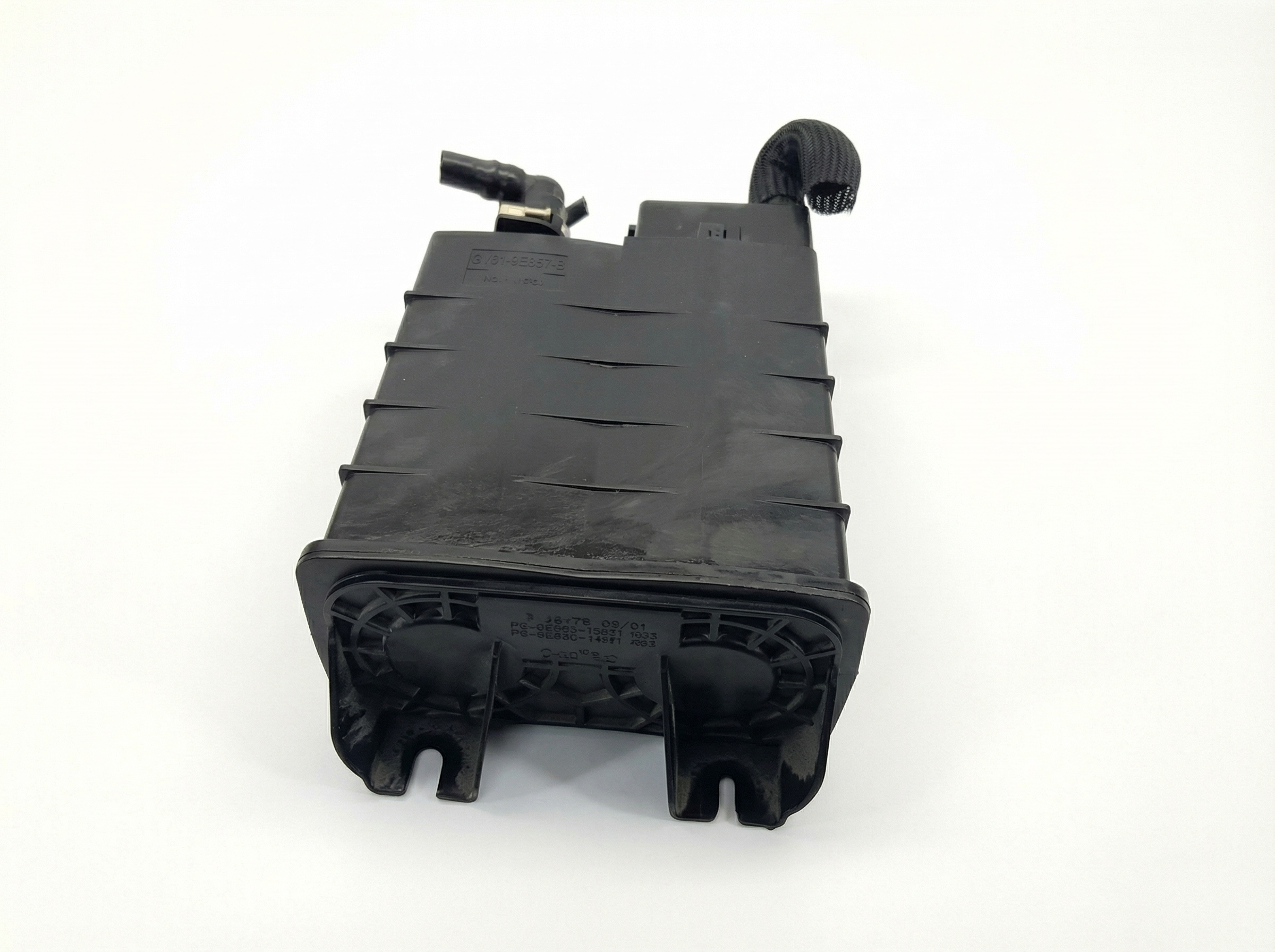
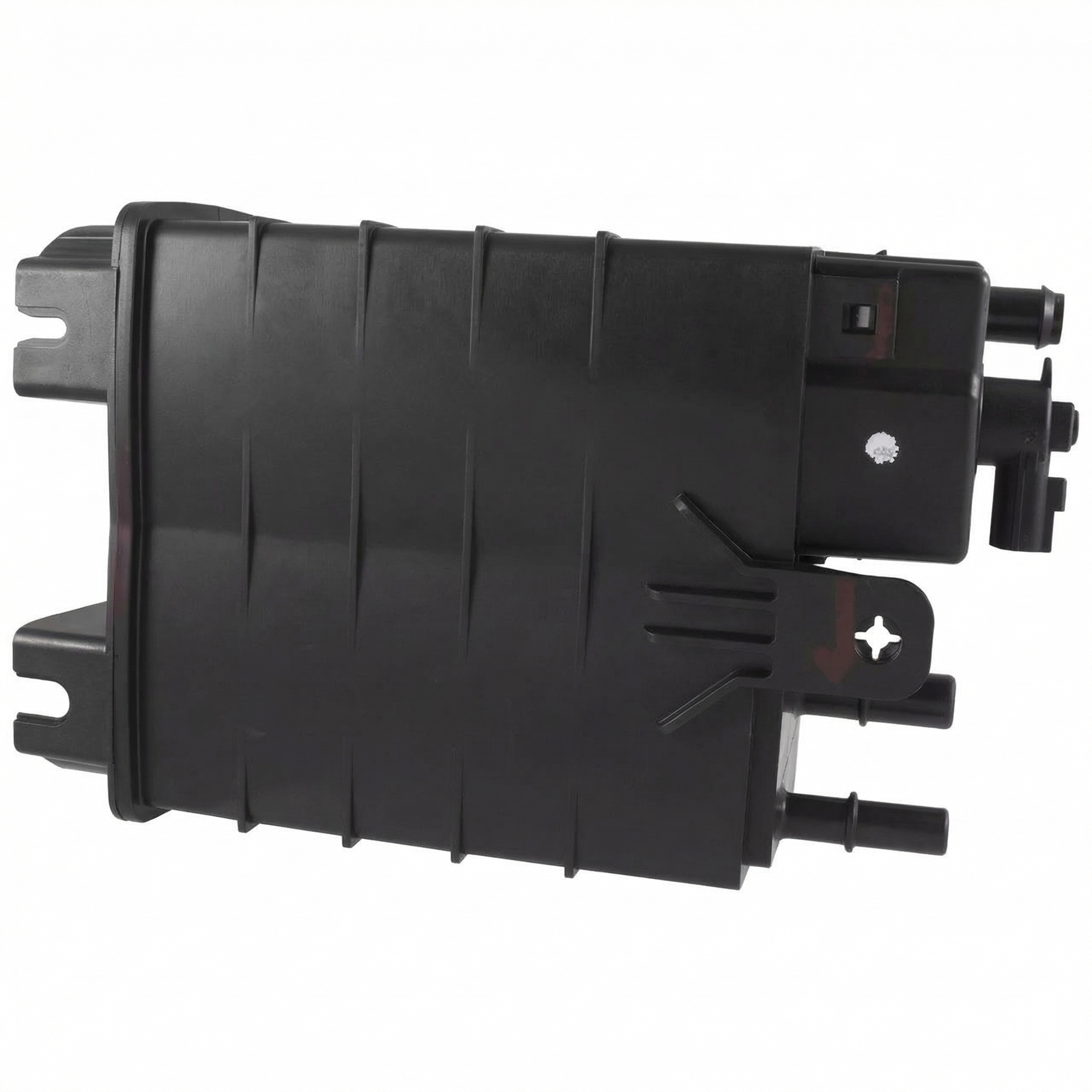
New Aftermarket Parts Available


The information in this article is provided for general reference and educational purposes only. Vehicle specifications, procedures, and part compatibility can vary by production date, trim level, and region. Always consult your vehicle's factory service manual and verify part numbers before purchasing or performing repairs. Safety-critical components such as airbags, seat belts, and braking systems should be installed by a qualified professional.
- Ford TRANSIT:
- 🎬 Helpful Videos
- 🛍️ Shop This Part
- What's Unique About the 2017-2021 Ford TRANSIT
- Diagnostic Flowchart
- Symptoms You May Notice
- Most Likely Causes
- Rare But Worth Checking
- Diagnosis Steps
- Parts You'll Likely Need
- Related Codes That Often Appear With This One
- Technical Service Bulletins (TSBs) & Recalls
- Platform-Specific Known Issues
- Mechanic-Grade Diagnostic Values
- Hidden / Shadow Codes Worth Checking
- Scan Tool Commands That Help
- Real Owner Repair Stories
- "I Checked Everything" — The Actual Cause
- OEM Part Supersession History
- Model Year Variations Within This Range
- 🎟️ Get 5% Off