

P0456 on 2012-2017 Ford Focus: EVAP Leak Causes and Fixes
On a 2012-2017 Ford Focus, code P0456 is almost always caused by a failing canister purge valve. This is a well-documented issue that led to a recall (18S32) and a subsequent Customer Satisfaction Program (24N07) that extends the warranty on the valve. The part is relatively inexpensive (~$40-$90) and easy to replace, making it a common DIY fix.
- P0456 on a 2012-2017 Focus is most likely a bad canister purge valve.
- Check if your vehicle is covered by Ford's recall 18S32 or customer satisfaction program 24N07 before paying for repairs.
- Symptoms like stalling after getting gas are a strong indicator that the purge valve is the culprit.
- The replacement part is a complete assembly (valve and hoses) with OEM part number BV6Z-9D289-R.
- This is a relatively simple DIY repair that can be done in under 30 minutes with basic tools.
What's Unique About the 2012-2017 Ford FOCUS

The 2012-2017 Ford Focus is notoriously prone to this specific code due to a high failure rate of the canister purge valve. The problem was so widespread that Ford issued a safety recall (18S32) for approximately 1.5 million Focus vehicles with 2.0L engines. A stuck-open purge valve not only triggers EVAP codes but can also cause an excessive vacuum in the fuel tank, leading to stalling, inaccurate fuel gauge readings, and even deformation of the plastic fuel tank itself. While a TSB (17-0016) specifically mentions this issue for the 2.3L Focus RS, owner complaints and the larger recall confirm it's a major issue for the more common 2.0L models as well. The issue is so persistent that Ford later introduced Customer Satisfaction Program 24N07, extending the warranty on the canister purge valve to 15 years with unlimited miles for a one-time replacement.
Diagnostic Flowchart

Tap your situation to follow the diagnostic path that matches what you're seeing on this vehicle.
Symptoms You May Notice

- Check Engine Light is on
- Engine stalling, especially after refueling or at low speeds.
- Difficulty starting the engine immediately after getting gas.
- Fluctuating or inaccurate fuel gauge.
- Rough idle or engine hesitation.
- Faint smell of fuel (less common with a small leak).
- Audible clicking or buzzing from the purge valve in the engine bay.
- Replacing the gas cap (this vehicle does not have one).
- Replacing the charcoal canister before properly diagnosing the purge valve, which is the most common failure point.
- Assuming a smoke test that finds no leaks means the system is fine; a faulty purge valve can stick intermittently and may not be caught by a single test.
Most Likely Causes

- Faulty Canister Purge Valve 🔴 High Probability This is a known weak point on this platform, leading to Ford recall 18S32 and Customer Satisfaction Program 24N07. The valve can get stuck open, causing a constant vacuum pull on the fuel tank that the system interprets as a leak and can lead to a collapsed fuel tank.
How to confirm: With the engine off, disconnect the vapor line from the purge valve. There should be no vacuum present. You can also try to blow through the valve; if air passes through, it's stuck open and faulty. With the engine running and the valve's electrical connector unplugged, a vacuum gauge or your finger placed on the valve's intake port should feel zero vacuum; if it shows vacuum, the valve is bad. This issue is often seen with code P1450.
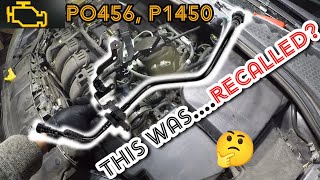
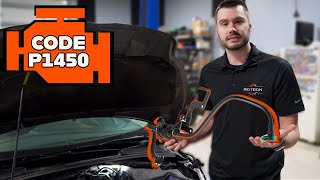
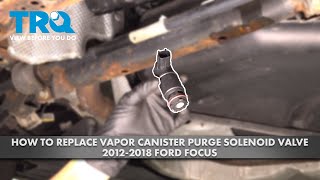
Typical fix: Replace the canister purge valve and the attached vapor lines. It is typically sold as a complete assembly. The repair is straightforward and can be done in under 30 minutes. 🎬 Watch: How to diagnose and replace the purge valve assembly.
Est. part cost: $40 - $90 - Debris in Capless Fuel Filler Neck 🟡 Medium Probability The Focus uses a capless fuel filler system. Dirt, dust, and debris can get into the sealing flap, preventing it from closing properly and creating a small leak that triggers the P0456 code.
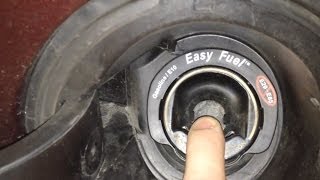
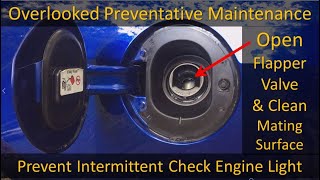
How to confirm: Visually inspect the fuel filler opening for any debris or damage. Use the special funnel provided with the vehicle to work the flap open and closed. Clean the sealing area with a lint-free rag and a suitable cleaner like isopropyl alcohol or WD-40. 🎬 See these quick tips for cleaning your capless fuel filler.
Typical fix: Thoroughly clean the fuel filler neck opening and the internal seal. If the seal is damaged or cleaning doesn't resolve the issue, the filler neck assembly may need to be replaced.
Est. part cost: $0 for cleaning, $100 - $200 for filler neck replacement - Cracked or Disconnected EVAP Hoses ⚪ Low Probability Hoses can become brittle and crack over time due to heat and age, especially at connection points.
How to confirm: Visually inspect all accessible EVAP system hoses between the engine, purge valve, and charcoal canister for cracks or loose connections. A smoke test is the most effective way to find a leak that isn't obvious.
Typical fix: Replace the damaged section of hose. Sometimes the quick-connect fittings can be difficult to remove and may require breaking the old locking tabs.
Est. part cost: $10 - $50
Rare But Worth Checking
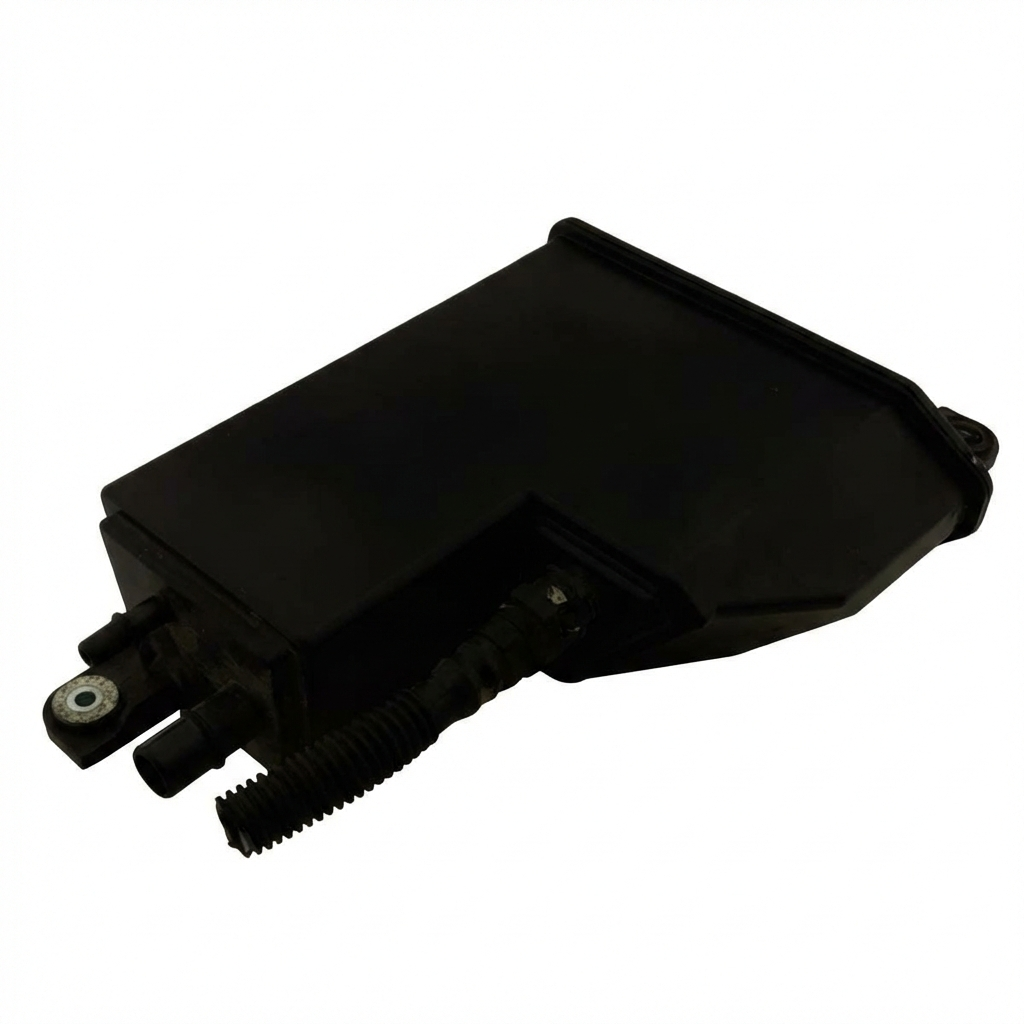
- Leaking Charcoal Canister: The canister itself can develop hairline cracks, or the vent valve attached to it can fail, causing a leak. This is less common than the purge valve but is a possible cause if other checks don't find the issue, especially if a user has replaced the purge valve multiple times to no effect.
- Faulty Fuel Tank Pressure Sensor: The sensor that measures pressure in the EVAP system can fail and send incorrect readings to the computer, making it think there is a leak when there isn't one. This will usually be accompanied by other codes and is less common than a physical leak.
Diagnosis Steps
- Check for any recalls or customer satisfaction programs. Ford has issued recall 18S32 and Customer Satisfaction Program 24N07 for the purge valve. Contact a dealer with your VIN to check eligibility.
- Inspect the capless fuel filler neck for debris. Clean it thoroughly with a cloth and a safe solvent, and operate the internal flap with the vehicle's supplied funnel to ensure it moves freely and seals.
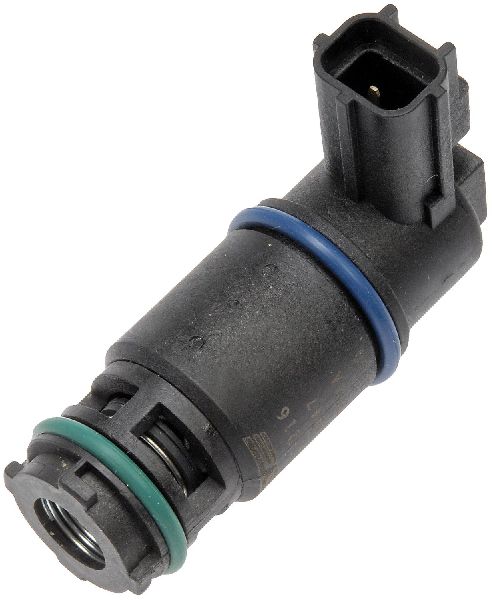
- Locate the canister purge valve in the engine bay. It's a small solenoid with two hoses and an electrical connector, mounted near the intake manifold.
- With the engine off, disconnect the vapor line and the electrical connector from the purge valve. Try to blow through it. If any air passes, the valve is stuck open and must be replaced.
- If the purge valve seems good, visually inspect all accessible EVAP hoses for obvious cracks, especially at the connection points.
- If no visible leaks are found, the most reliable next step is to have a professional perform a smoke test. This involves feeding low-pressure smoke into the EVAP system to pinpoint the exact location of the small leak.
- If multiple purge valves have been replaced and the code persists, investigate the charcoal canister and vent valve, or check for wiring issues to the purge valve.
Parts You'll Likely Need
- Canister Purge Valve / Vapor Separator Tube Assembly
(OEM #BV6Z-9D289-R)— This is the most frequent cause of P0456 on the 2012-2017 Focus. It is a known faulty part subject to a recall and extended warranty. The part number BV6Z-9D289-R supersedes older versions like BV6Z-9D289-A and -B. The Motorcraft equivalent part number is CX2349.
Trusted brands: Motorcraft (OEM), Dorman (994-043), Bosch
OEM price range: $60-$90
Aftermarket price range: $40-$70
Related Codes That Often Appear With This One
- P1450 — Stands for 'Unable to Bleed Up Fuel Tank Vacuum.' A purge valve stuck open causes constant engine vacuum to pull on the fuel tank, preventing it from bleeding up, which triggers this code alongside P0456. This is a very common pairing for this specific vehicle issue. 🎬 Watch: Fixing stalling issues and P1450 codes after refueling.
- P144A — Stands for 'Evaporative Emission System Purge Vapor Line Restricted/Blocked.' This can be triggered by issues related to the purge valve and lines, and is mentioned in TSB 17-0016 along with P0456 and P1450.
- P0443 — Stands for 'Evaporative Emission System Purge Control Valve Circuit.' This code points more directly to an electrical fault with the purge valve circuit, but can sometimes appear with leak codes if the valve is malfunctioning electrically and mechanically.
Technical Service Bulletins (TSBs) & Recalls
- TSB 17-0016: Addresses an intermittently sticking canister purge valve causing codes P0456, P1450, and/or P144A on 2016-2017 Focus RS models with the 2.3L engine.
- TSB 19-2323: While not directly for P0456, this TSB for other models indicates that Ford sometimes issues PCM software updates to correct how the system detects and responds to EVAP issues, which was part of the fix for recall 18S32.
Platform-Specific Known Issues
- Ford Recall 18S32 (NHTSA 18V-735): Ford recalled 1.5 million 2012-2018 Focus models for a canister purge valve that can stick open, causing engine stalls, inaccurate fuel gauges, and potential fuel tank deformation. The fix involves a PCM software update and, if necessary, replacement of the purge valve and other EVAP components.
- Ford Customer Satisfaction Program 24N07: This program, issued in late 2024, extends the warranty on the canister purge valve to 15 years with unlimited miles, providing a one-time replacement if it fails and exhibits symptoms like a rough run, stalling, or MIL illumination.
- Real Owner Experience: A user on r/FordFocus reported getting P0456 and P1450, with sputtering and stalling after filling the gas tank. Replacing the purge valve fixed the P1450 and stalling, but the P0456 persisted even after a dealer replaced the valve and a collapsed fuel tank, highlighting that sometimes the issue can be complex.
Mechanic-Grade Diagnostic Values
- Fuel Tank Pressure (FTP) Sensor Voltage (Key On, Engine Off) — expected: 2.6 - 2.65 Volts. Failure: A static voltage outside this range could indicate a sensor or wiring issue. If voltage drops immediately upon starting the engine, it strongly suggests the purge valve is stuck open.
- EVAP System Test Target Vacuum — expected: Approx. -8.0 inches of water (in-H2O). Failure: If the PCM commands the purge valve open to pull a vacuum for a leak test and cannot achieve this target, it will set a gross leak code (P0455). If the vacuum significantly exceeds this value, it can trigger P1450, indicating a restriction or stuck-open purge valve.
Hidden / Shadow Codes Worth Checking
- Mode $06, Test ID $82: This is not a hidden code, but a test monitor result accessible via advanced scan tools. Test ID $82 on many Ford platforms corresponds to the 'EVAP System 0.020" Leak Test'. Before setting a P0456, the PCM may show this test as failing in Mode $06 data, giving a technician an early look at the test results. (see via Ford IDS (dealer tool) or professional-grade OBD2 scanner with Mode $06 capabilities.)
Scan Tool Commands That Help
- Ford IDS (Integrated Diagnostic System): Manual EVAP System Test / Active Commands — This function allows a technician to take manual control of EVAP components. You can command the Canister Vent Valve closed and the Purge Valve closed, then monitor the FTP sensor. If pressure (voltage) rises, the system is sealed. You can also command the purge valve open and closed to verify its mechanical function while monitoring FTP sensor data or physically checking for vacuum.
Wiring & Ground Locations
- Main Engine Bay Ground — Bolted to the chassis underneath the airbox, in front of the battery.. A poor ground at this primary location can cause a host of electrical issues, including erratic sensor readings and improper solenoid operation, potentially affecting the purge valve circuit.
- G107 — Right side of the engine compartment.. This is a key ground point for components on the right side of the engine, where the EVAP canister purge valve is located on some Focus models.
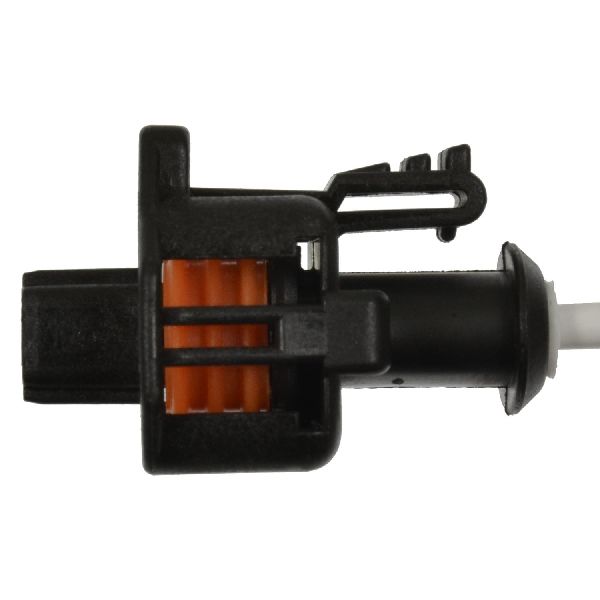
- Canister Purge Valve Connector — On the purge valve solenoid itself, near the intake manifold.. This 2-pin connector provides power and control. One pin is voltage supply (VPWR) from a fuse, and the other is the control signal from the PCM, which rapidly grounds and un-grounds the circuit to operate the valve. Checking for voltage and a pulsing ground signal here is a key electrical diagnostic step.
Real Owner Repair Stories
- Reddit r/FordFocus user (2012 Ford Focus SE) — Check Engine Light with codes P1450 and P0456, engine sputtering and stalling after refueling.
❌ Tried (didn't work) Initial DIY purge valve replacement (fixed P1450 and stalling, but not P0456)., Dealer replacement of purge valve., Dealer replacement of collapsed fuel tank., Smoke test performed by a trusted independent mechanic (found no leaks).
✅ What actually fixed it The issue was never resolved. The owner sold the car with the persistent P0456 code, highlighting that even after replacing the most common cause and passing a smoke test, the problem can persist, pointing towards a more complex electrical or intermittent issue. - Reddit r/FordFocus user (2018 Ford Focus) — Check Engine Light with code P0456, no noticeable driving issues.
❌ Tried (didn't work) Initially thought it was a gas cap issue before realizing the car is capless.
✅ What actually fixed it Replacing the canister purge valve. The user confirmed the fix took about ten minutes and resolved the code.
"I Checked Everything" — The Actual Cause
- In a documented case on a 2012 Focus, the P0456 code persisted even after the purge valve and fuel tank were replaced by a dealer. A subsequent smoke test at an independent shop found no leaks. This indicates the fault was not a static physical leak but likely an intermittent component failure (e.g., the purge valve sticking only under specific conditions), a faulty Fuel Tank Pressure sensor giving false readings, or a wiring harness issue.
When the Usual Fixes Don't Work
- While replacing the canister purge valve is the correct fix for P0456 in the vast majority of cases, there is owner-documented evidence of this repair failing to resolve the code. One owner of a 2012 Focus had the purge valve replaced multiple times (both DIY and by a dealer), had the fuel tank replaced due to deformation, and passed a smoke test, yet the P0456 code remained. This serves as strong counter-evidence to the assumption that the purge valve is the *only* cause and underscores that in persistent cases, advanced electrical diagnosis of the FTP sensor circuit and wiring harness is required.
OEM Part Supersession History
BV6Z-9D289-A, BV6Z-9D289-B→BV6Z-9D289-R— Ford often updates part numbers to reflect design improvements or manufacturing changes aimed at increasing reliability. Given the high failure rate of this valve, the new revision is intended to be more durable.
Model Year Variations Within This Range
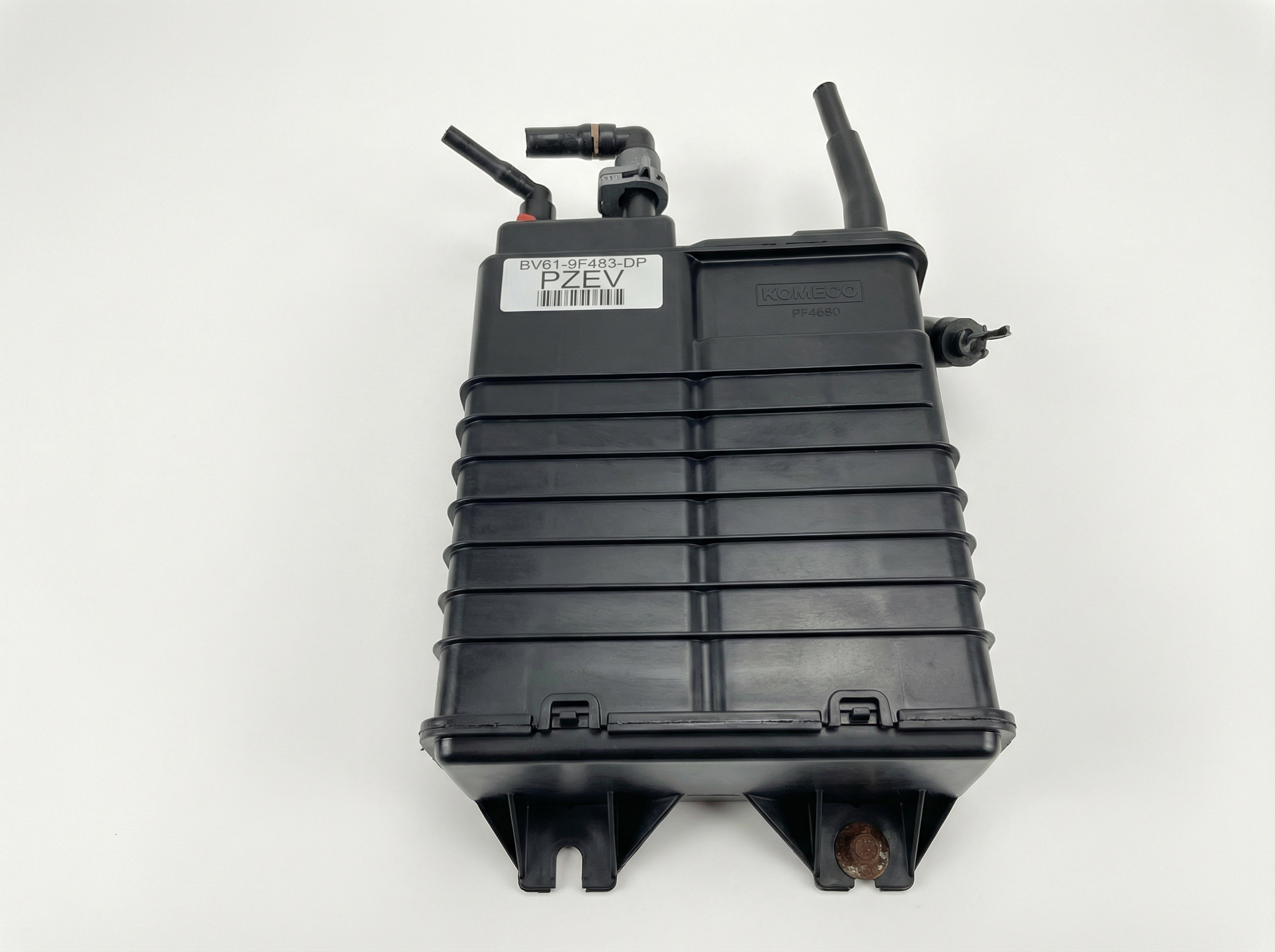
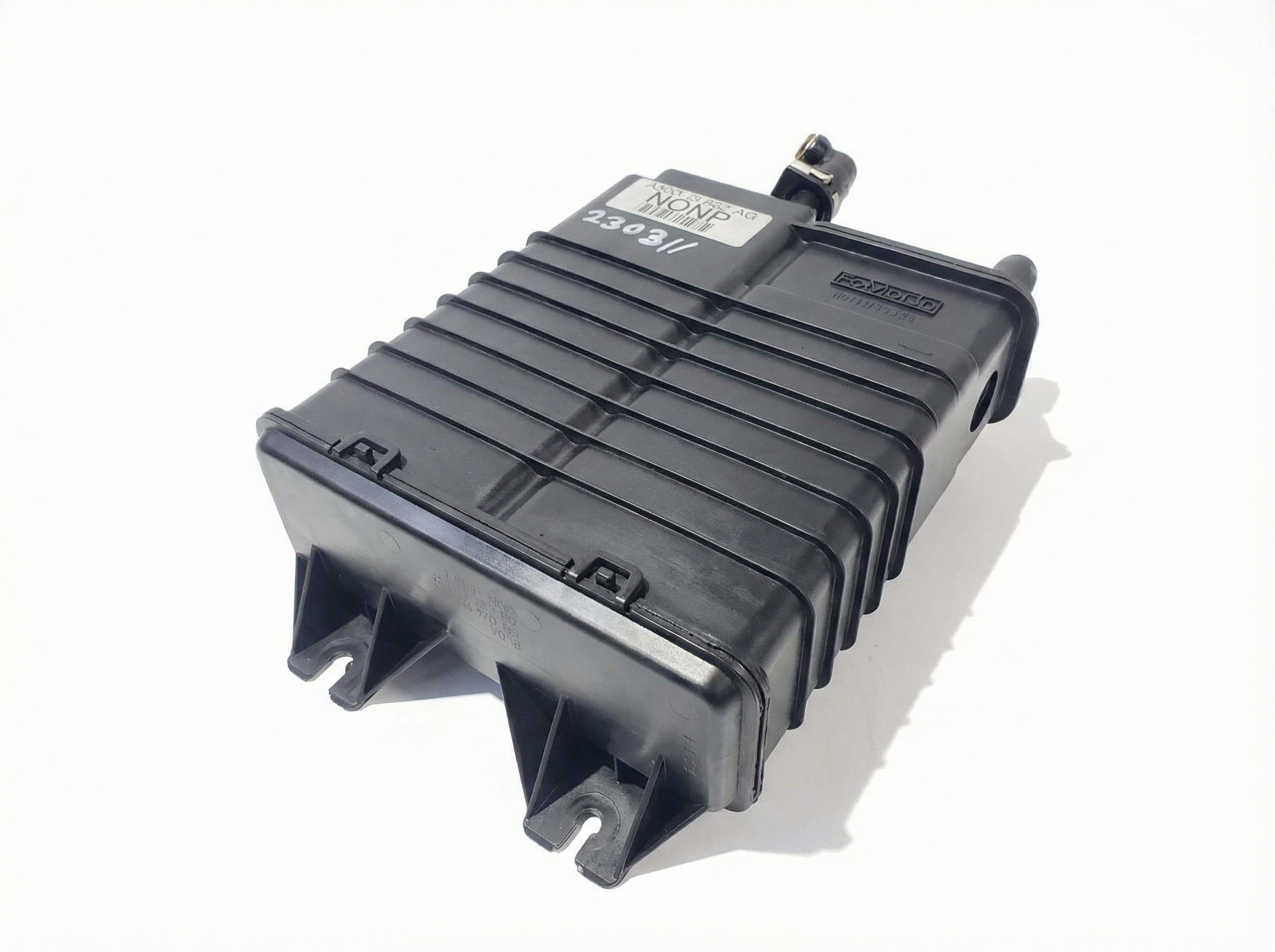
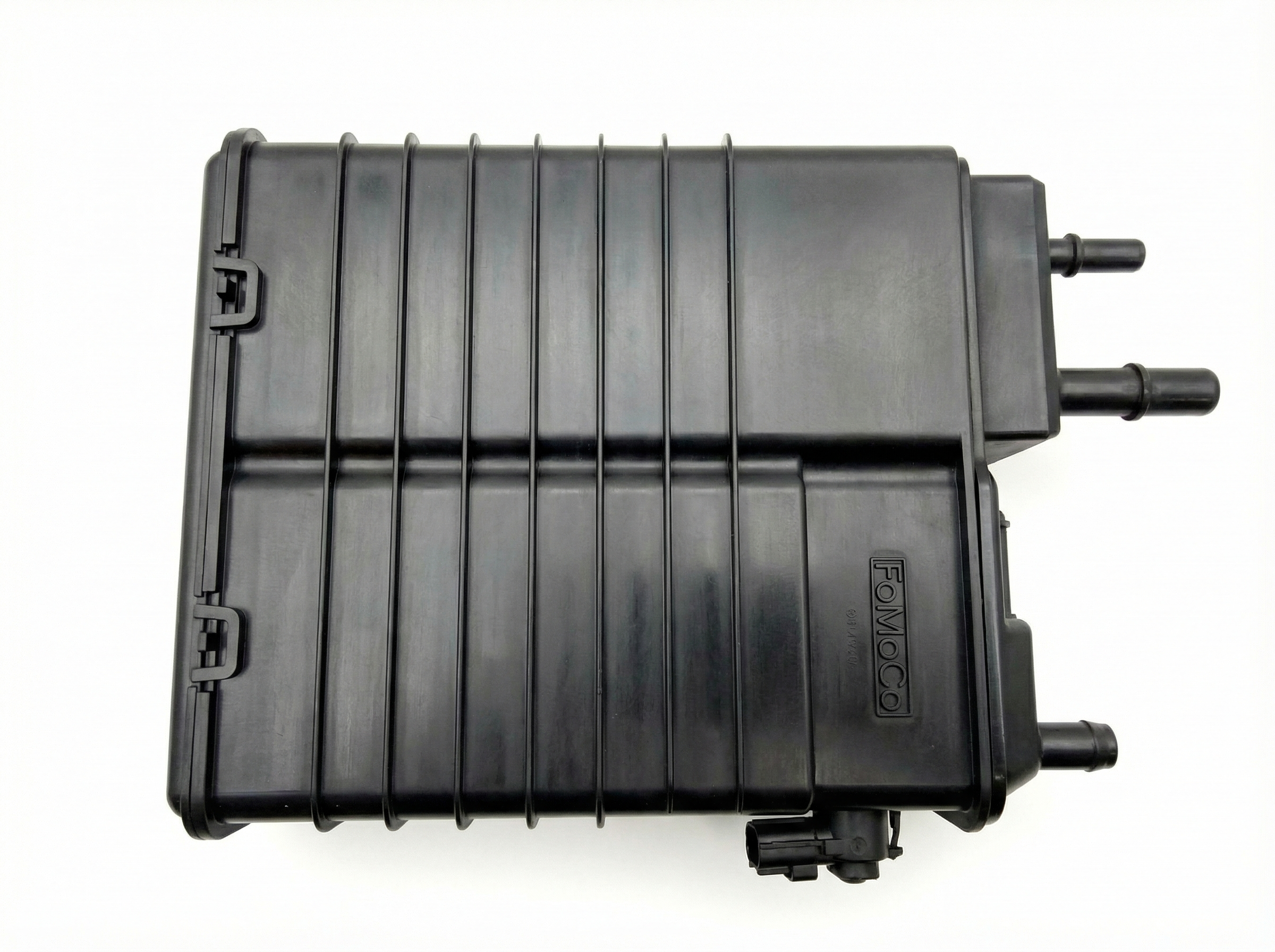
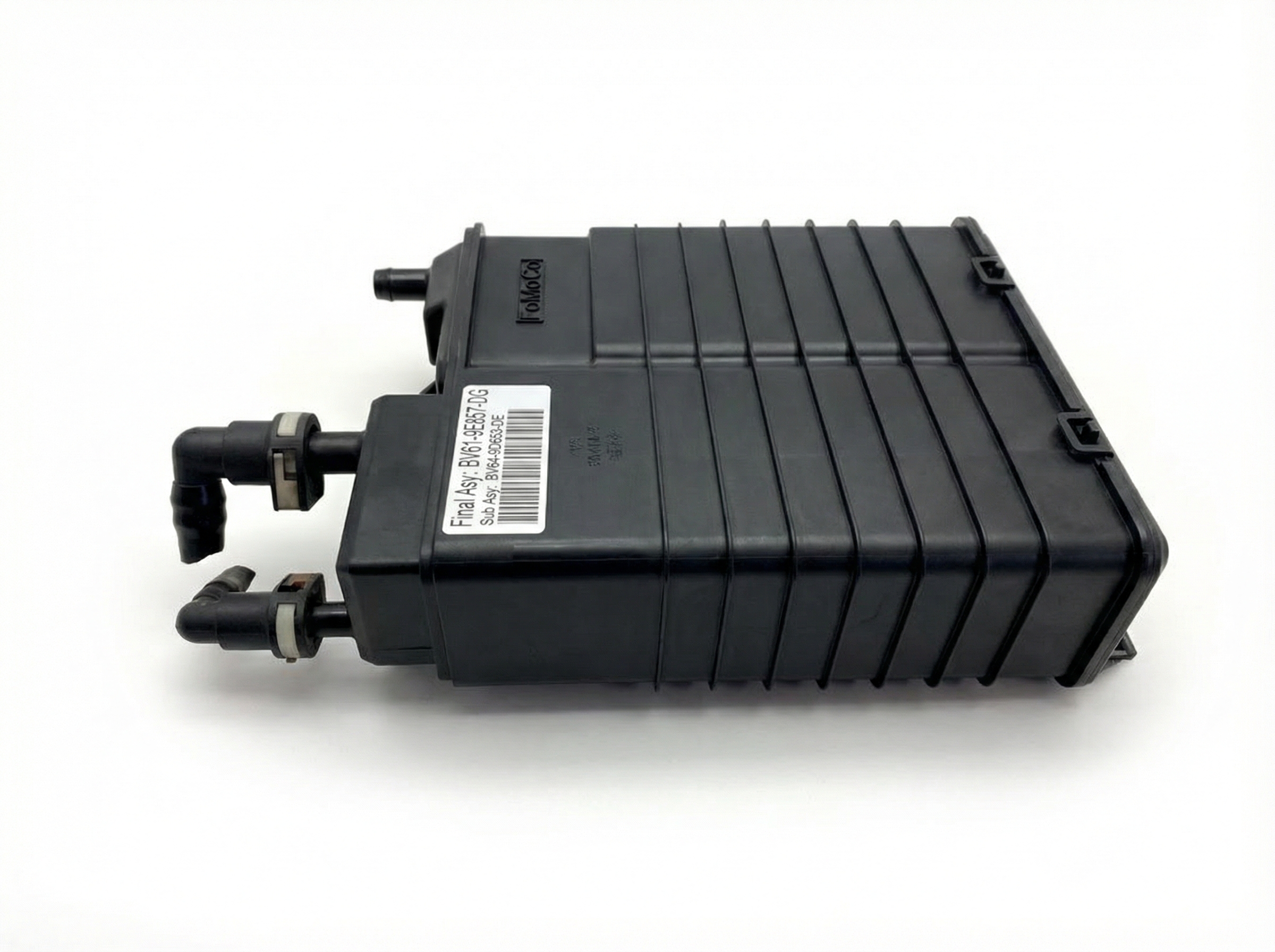
- 2012-2018: A critical variation is not year-based, but emissions-system based. Vehicles can have either a PZEV (Partial Zero-Emission Vehicle) or a standard Federal (non-PZEV) emissions system. The vapor canisters for these two systems are different and are NOT interchangeable. A technician must check the Vehicle Emission Control Information (VECI) label under the hood to order the correct canister if it requires replacement.
Helpful Videos




Used OEM Parts in Stock
New Aftermarket Parts Available


The information in this article is provided for general reference and educational purposes only. Vehicle specifications, procedures, and part compatibility can vary by production date, trim level, and region. Always consult your vehicle's factory service manual and verify part numbers before purchasing or performing repairs. Safety-critical components such as airbags, seat belts, and braking systems should be installed by a qualified professional.
- Ford FOCUS:
- 🎬 Helpful Videos
- 🛍️ Shop This Part
- What's Unique About the 2012-2017 Ford FOCUS
- Diagnostic Flowchart
- Symptoms You May Notice
- Most Likely Causes
- Rare But Worth Checking
- Diagnosis Steps
- Parts You'll Likely Need
- Related Codes That Often Appear With This One
- Technical Service Bulletins (TSBs) & Recalls
- Platform-Specific Known Issues
- Mechanic-Grade Diagnostic Values
- Hidden / Shadow Codes Worth Checking
- Scan Tool Commands That Help
- Wiring & Ground Locations
- Real Owner Repair Stories
- "I Checked Everything" — The Actual Cause
- When the Usual Fixes Don't Work
- OEM Part Supersession History
- Model Year Variations Within This Range
- 🎟️ Get 5% Off