

P0456 on 2020-2024 Ford Explorer: Causes and Fixes for a Small EVAP Leak
The P0456 code on a 2020-2024 Ford Explorer indicates a very small leak in the evaporative emissions (EVAP) system. The most common causes are a poorly sealed capless fuel filler neck or a faulty canister purge valve. However, a known issue on this platform is a damaged wiring harness at connector C1198, which should be inspected before replacing parts. Some owners also report hard starting after refueling as a key symptom of a bad purge valve.
- P0456 on a 2020-2024 Explorer is a minor issue, but it will cause an emissions test failure.
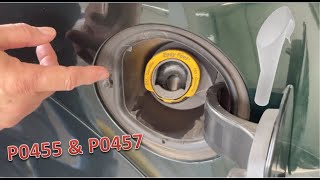
- Before buying any parts, first clean the capless fuel filler neck using the vehicle's funnel.
- A known issue on this specific Explorer model is a damaged wiring harness at connector C1198 on the driver's side frame; inspect this area carefully.
- Do not replace the purge valve without first testing it and ruling out simpler causes like the fuel filler seal and wiring.
- If the problem persists, a PCM software update from a Ford dealer might be the solution, as noted in a TSB.
What's Unique About the 2020-2024 Ford EXPLORER

For the 2020-2024 Ford Explorer, the P0456 code has specific documented causes beyond the usual suspects. Ford has issued multiple Technical Service Bulletins (TSBs) pointing to a wiring harness connection (C1198) on the driver's side frame as a frequent source of this and other EVAP-related codes. [SSM 51247, SSM 50348] Another TSB warns that canister purge valves are often replaced unnecessarily and that other issues, like wiring or software, should be ruled out first. [SSM 50306] The Lincoln Aviator, a platform mate, shares these same vulnerabilities.
Diagnostic Flowchart

Tap your situation to follow the diagnostic path that matches what you're seeing on this vehicle.
Symptoms You May Notice
- Check Engine Light is on.
- A faint smell of fuel, particularly around the rear of the vehicle.
- Slight decrease in fuel economy over time.
- Hard starting or rough running immediately after refueling (strong indicator of a faulty purge valve).
- Immediately replacing the canister purge valve without checking the gas cap seal, wiring, or performing a smoke test. Ford TSB SSM 50306 specifically warns that returned purge valves are often found to be fully functional.
- Replacing the fuel cap on a capless system. The issue is with the filler neck seal, not a non-existent cap.
Most Likely Causes

- Capless Fuel Filler Neck Not Sealing 🔴 High Probability The capless system can accumulate dirt and debris, preventing the internal flap from sealing correctly, creating a small leak. This is a very common issue across many Ford models with this system.
How to confirm: Visually inspect the fuel filler opening for any debris. Use the funnel provided with the vehicle to insert and remove it a few times to clean the seal and ensure it closes properly. Some owners spray a small amount of lubricant like WD-40 on the funnel to help clean and lubricate the seal mechanism.
Typical fix: Clean the filler neck opening with a rag and the funnel. If the seal is damaged or the cleaning doesn't resolve the issue, the fuel filler neck assembly may need to be replaced.
Est. part cost: $0 for cleaning, $150-$300 for a replacement filler neck assembly. - Damaged Wiring at Connector C1198 🔴 High Probability Ford TSBs SSM 51247 and SSM 50348 specifically identify this connector, located on the driver's side lower frame, as a common point of failure for EVAP system wiring. It is located underneath the brake lines near the electric brake booster (EBB).
How to confirm: Locate connector C1198 on the driver's side lower frame area underneath the brake lines and inspect the wiring harness for any signs of corrosion, damage, or loose pin connections. TSB SSM 51247 directs technicians to Wiring Diagram Cell 22-12 for VREF wire details.
Typical fix: Repair the damaged section of the wiring harness and ensure the connector is secure. This may involve soldering and heat-shrinking the wires or replacing connector pins.
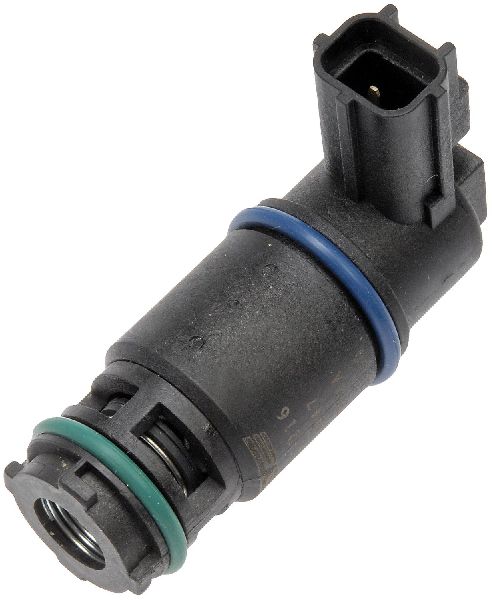
Est. part cost: $5-$20 for wiring repair supplies. - Faulty Canister Purge Valve 🟡 Medium Probability The purge valve can get stuck partially open, creating a constant small leak. This is a common failure part. A key symptom is difficulty starting the engine right after filling the gas tank. TSB SSM 50306 notes this part is often misdiagnosed, so other causes should be ruled out first.
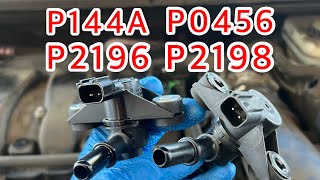
How to confirm: Remove the valve (located on the engine) and try to blow through it. With no power applied, it should be closed and not allow air to pass. If you can blow through it, it has failed.
Typical fix: Replace the canister purge valve. On the 2.3L engine, it is easily accessible after removing the engine cover. On the 3.0L, it is more involved and may require moving A/C lines for access.
Est. part cost: $30-$80 - Cracked or Disconnected EVAP Hose ⚪ Low Probability
How to confirm: Visually inspect all accessible EVAP hoses between the fuel tank, charcoal canister, and engine for cracks, brittleness, or loose connections. A smoke test is the most effective way to find a hard-to-see leak.
Typical fix: Replace the damaged section of hose.
Est. part cost: $10-$50
Rare But Worth Checking
- PCM Software Update Needed: TSB 25-2112 indicates that in some cases, the P0456 code may be triggered due to the software calibration in the Powertrain Control Module (PCM) being too sensitive. An update from a Ford dealer may be required to resolve a persistent code.
- Leaking Fuel Filler Hose: One owner on the 'Explorer ST Forum' reported that the dealer found a leak in the fuel filler tube/hose near the gas tank that required replacement to fix the P0456 code.
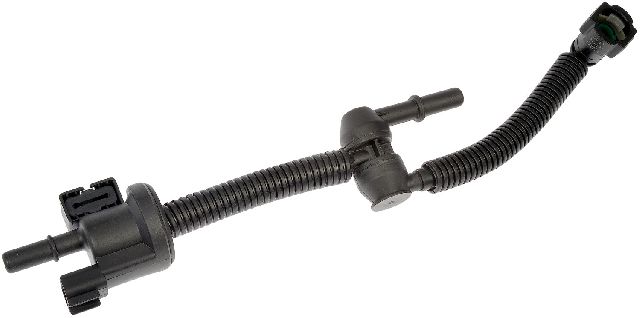
- Faulty EVAP Vent Solenoid: While less common than the purge valve for a small leak, the vent solenoid (usually located near the charcoal canister) can also fail to close properly, causing a leak. This is often accompanied by other codes.
Diagnosis Steps

- Verify the check engine light is on and code P0456 is present using an OBD-II scanner.
- Inspect the capless fuel filler neck. Clean any dirt or debris from the opening. Use the vehicle's funnel to operate the flap several times to ensure it moves freely and seals correctly.
- Clear the code and drive the vehicle for a few days, including at least one drive cycle, to see if the code returns. Note that a 'permanent' code will only clear after the vehicle's self-test runs and passes.
- If the code returns, locate and inspect the wiring harness at connector C1198 on the driver's side lower frame, as detailed in TSBs SSM 51247 and SSM 50348. Look for any corrosion or physical damage to wires and pins.
- If you experience hard starting after refueling, the canister purge valve is a strong suspect. Locate it on the engine, disconnect it, and attempt to blow through it. If air passes, the valve is faulty and needs replacement.
- Visually inspect all accessible EVAP hoses for obvious cracks, damage, or disconnections.
- If the above steps do not reveal the cause, the most effective next step is to have a professional perform a smoke test. This involves injecting a harmless, visible smoke into the EVAP system to pinpoint the exact location of the small leak.
Parts You'll Likely Need
- Canister Purge Valve
(OEM #AU5Z-9C915-B (Motorcraft CX-2349) - Note: Part numbers can vary by engine and model year. A different part, GL3Z-9B325-B, has also been mentioned in forums.)— This valve can fail by sticking open, causing a constant small leak. It's a common failure point in many EVAP systems, often indicated by hard starts after fueling.
Trusted brands: Motorcraft, Dorman, Bosch
OEM price range: $45-$90
Aftermarket price range: $30-$60 - Fuel Filler Neck
(OEM #L1MZ-9034-Y (For Hybrid models))— The internal seal of the capless filler neck can wear out or be damaged by debris, preventing a proper seal and causing a small leak. Cleaning is the first step, but replacement is needed if the seal is compromised.
Trusted brands: Ford (OEM)
OEM price range: $150-$300
Aftermarket price range: $100-$200 - Fuel Filler Neck Funnel — Not a replacement part, but essential for cleaning and diagnosing the capless fuel filler system, which is a primary cause of this code.
OEM price range: $5-$15
Aftermarket price range: $5-$10
Related Codes That Often Appear With This One
- P0455 — Indicates a large EVAP leak. It can appear with P0456 if the nature of the leak changes or if there are multiple issues. Both are mentioned in TSB SSM 51247.
- P04F0 — Related to the EVAP system high-pressure side. TSBs SSM 51247 and SSM 50348 link this code to the same C1198 wiring issue.
- P0451 — Indicates a fault with the EVAP system pressure sensor. This can also be caused by the C1198 wiring issue mentioned in TSBs SSM 51247 and SSM 50348.
- P0496 — Indicates high purge flow. TSBs SSM 51247 and SSM 50306 mention this code can appear alongside P0456 due to wiring faults or a stuck-open purge valve.
Technical Service Bulletins (TSBs) & Recalls
- TSB 25-2112: Notes that P0456 may be due to EVAP system concerns or the PCM software level.
- SSM 51247: Points to the wiring harness connection at connector C1198 as a potential cause for P0456 and other EVAP DTCs, specifically on the 2.3L engine.
- SSM 50348: Also identifies the wiring harness at connector C1198 as a likely culprit before replacing any components.
- SSM 50306: Warns against prematurely replacing the EVAP canister purge valve, as tested units were often found to be fully functional.
Platform-Specific Known Issues
- A recurring issue documented in Ford TSBs SSM 51247 and SSM 50348 is a faulty wiring harness connection at connector C1198 on the driver's side lower frame. This can cause P0456 and a host of other EVAP codes.
- TSB 25-2112 suggests that the vehicle's PCM software may be too sensitive and require an update from a Ford dealership to resolve a persistent P0456 code.
- The canister purge valve on the 3.0L EcoBoost V6 engine is located in a difficult-to-reach position near the firewall, making replacement more challenging than on the 2.3L engine.
Scan Tool Commands That Help
- FORScan or Ford IDS: EVAP System Leak Test — This is a bidirectional command that seals the EVAP system (by closing the vent solenoid) and monitors the Fuel Tank Pressure (FTP) sensor to verify if a leak is present. It's the factory-prescribed way to test the system's integrity after a repair or when diagnosing an intermittent leak.
- Generic OBD-II Scanner: Clear/Erase Codes — After performing a repair, such as replacing the purge valve or cleaning the filler neck, the code must be cleared. However, a 'permanent' code will only be fully removed after the vehicle's own EVAP monitor self-test runs and passes, which may take several drive cycles.
Wiring & Ground Locations

- C1198 — On the driver's side lower frame area, located underneath the brake lines that route near the electric brake booster (EBB).. This connector is a known weak point identified in Ford TSBs SSM 51247 and SSM 50348. Damage or corrosion to the pins or wiring at this location can directly cause P0456 and other related EVAP codes by disrupting signals from components like the fuel tank pressure sensor.
- Fuse F2 (Underhood) — In the underhood fuse box (Battery Junction Box).. According to wiring diagrams for the 2020 Explorer, this fuse provides power to the Canister Purge Valve, among other emissions components. A fault with this fuse or its circuit would prevent the purge valve from operating correctly.
Real Owner Repair Stories
- Explorer ST Forum user (2020-2024 Ford Explorer (specific year not stated)) — Check Engine Light with code P0456.
❌ Tried (didn't work) Clearing the code multiple times., Initial dealer diagnosis was inconclusive.
✅ What actually fixed it The dealer eventually found and replaced a leaking fuel filler tube/hose located near the gas tank. - YouTube video by Wes Barton (2016 Ford Explorer (5th Gen, but demonstrates identical purge valve test)) — Check Engine Light with code P0456.
✅ What actually fixed it Replacing the canister purge valve. The old valve was confirmed faulty by blowing through it; air passed through when it should have been sealed. The new valve did not allow air to pass.
OEM Part Supersession History
AU5Z-9C915-B→AU5Z-9C915-E— Part revision by the manufacturer, likely for improved durability or material changes.
Heads up: The new part number AU5Z-9C915-E is the direct replacement and should be used. While the older part may be available from aftermarket sources, using the latest OEM revision is recommended.
Model Year Variations Within This Range
- 2020-2022 (2.3L Engine): TSBs SSM 51247 and SSM 51132 specifically call out 2020-2022 models with the 2.3L engine as being prone to the C1198 connector wiring issue. While the issue may exist on other years/engines, it is officially documented for this specific subset.
Helpful Videos
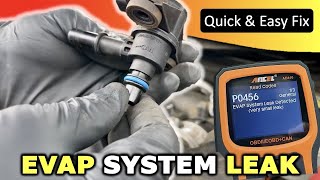
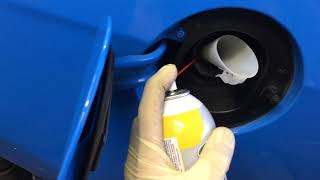

![How to Fix P0456 Engine Code in 7 Minutes [7 DIY Methods / Only $3.44]](https://img.youtube.com/vi/njt81AALI3U/mqdefault.jpg)
Used OEM Parts in Stock
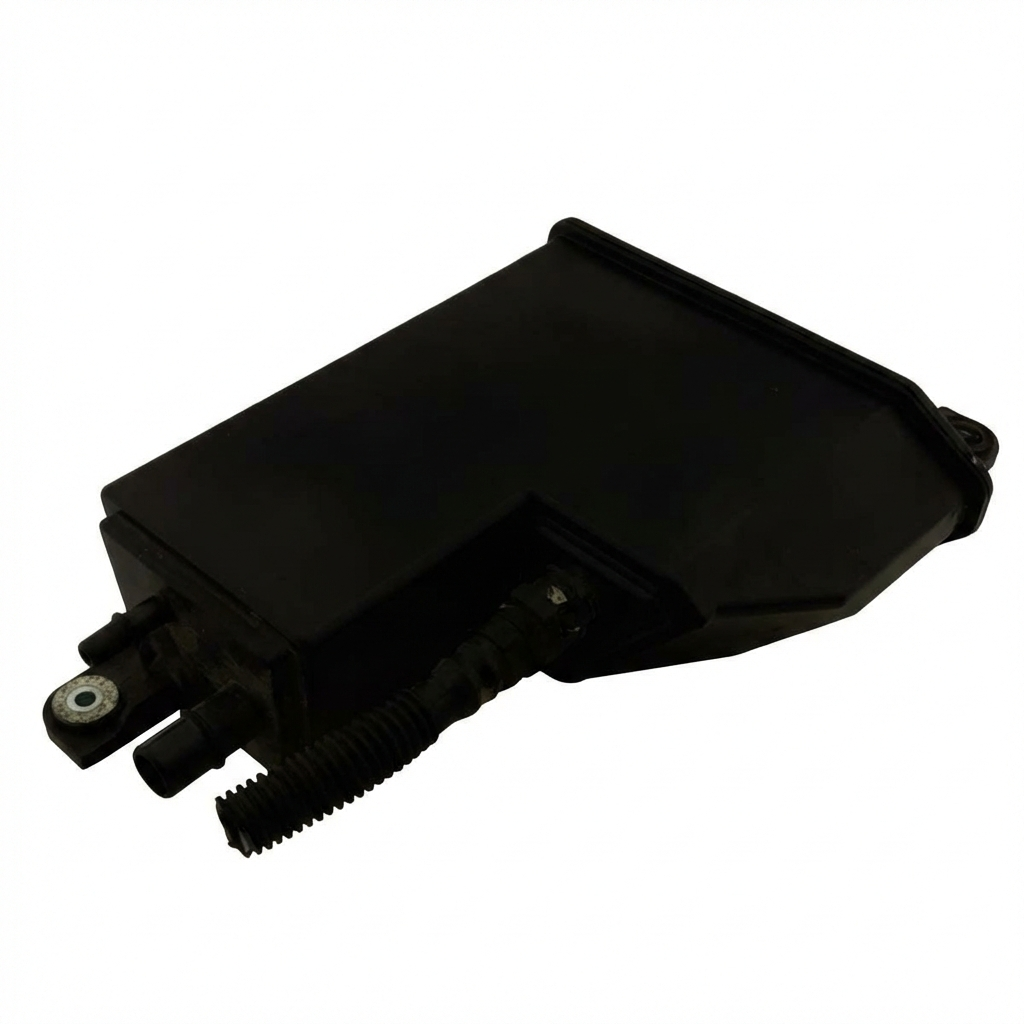
New Aftermarket Parts Available


The information in this article is provided for general reference and educational purposes only. Vehicle specifications, procedures, and part compatibility can vary by production date, trim level, and region. Always consult your vehicle's factory service manual and verify part numbers before purchasing or performing repairs. Safety-critical components such as airbags, seat belts, and braking systems should be installed by a qualified professional.
- Ford EXPLORER:
- 🎬 Helpful Videos
- 🛍️ Shop This Part
- What's Unique About the 2020-2024 Ford EXPLORER
- Diagnostic Flowchart
- Symptoms You May Notice
- Most Likely Causes
- Rare But Worth Checking
- Diagnosis Steps
- Parts You'll Likely Need
- Related Codes That Often Appear With This One
- Technical Service Bulletins (TSBs) & Recalls
- Platform-Specific Known Issues
- Scan Tool Commands That Help
- Wiring & Ground Locations
- Real Owner Repair Stories
- OEM Part Supersession History
- Model Year Variations Within This Range
- 🎟️ Get 5% Off