

P0456 on 2017-2019 Ford Escape 2.0L EcoBoost: Causes and Fixes for a Small EVAP Leak
For a 2017-2019 Ford Escape with a P0456 code, the most common cause is a faulty canister purge valve located in the engine bay. Another frequent issue is a leak at the capless fuel filler neck. A replacement purge valve is relatively inexpensive and accessible for DIY replacement. Before replacing parts, a thorough cleaning of the fuel filler neck is recommended.
- P0456 on a 2017-2019 Escape 2.0L is a minor issue, usually indicating a very small leak in the fuel vapor system.
- The most probable cause is a bad canister purge valve, which is a relatively cheap and easy part to replace for a DIYer.
- A second common cause is a poor seal on the capless fuel filler neck, which should be inspected and cleaned before replacing any parts.
- If you experience difficulty starting the car right after getting gas, it strongly points to a stuck-open purge valve.
- Do not replace parts randomly; a simple vacuum test can confirm a bad purge valve, while a smoke test is needed for other, less obvious leaks.
What's Unique About the 2017-2019 Ford Escape

The 2017-2019 Ford Escape uses a capless "Easy Fuel" system, which can be a common source for this leak code if the spring-loaded door fails to seal properly due to dirt or wear. Additionally, the canister purge valve is a very frequent failure point on this platform. Some owners report that a stuck-open purge valve can cause difficulty starting the vehicle immediately after refueling. Ford has also issued recalls and service bulletins for related EVAP issues on other models, sometimes involving PCM software updates to better detect purge valve problems. TSB 19-2171 specifically points to checking for loose or partially connected EVAP vapor lines on the 2017-2019 Escape with the 2.0L engine. Manufacturer Bulletin #SSM 46525 further notes that vehicles may exhibit an illuminated MIL with P0456 alongside a rough idle and slow fuel fill concern.
Symptoms You May Notice

- Check Engine Light is on.
- Difficulty starting the engine immediately after refueling, which may require multiple crank attempts followed by a rough idle for 30-45 seconds.
- A faint smell of gasoline (rare for a very small leak).
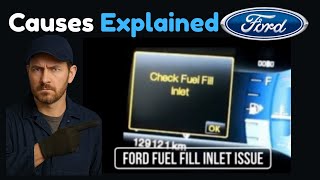
- "Check Fuel Fill Inlet" message may appear on the dashboard. 🎬 Watch this video to fix common capless fuel inlet issues.
- Vehicle stalling more frequently, as reported in NHTSA ODI #11643510.
- Replacing the gas cap. This vehicle does not have a traditional gas cap; the leak is more likely from the purge valve or the capless filler neck itself.
- Unnecessarily replacing the canister purge valve. Ford TSB SSM 50306 warns that many returned purge valves test fully functional, and advises a full EVAP system leak test before replacing the part to avoid misdiagnosis.
Most Likely Causes

- Faulty Canister Purge Valve 🔴 High Probability This is a widely reported failure item on many Ford EcoBoost platforms. The valve, which is normally closed, gets stuck open, creating a constant vacuum leak that the system detects.
How to confirm: With the engine running, disconnect the EVAP line from the purge valve. There should be zero vacuum present at the valve's port when its electrical connector is unplugged. If you feel suction with your finger or a vacuum gauge shows any reading (e.g., 18-19 inHg), the valve is stuck open and needs replacement. A good valve will read zero vacuum when unplugged.
Typical fix: Replace the canister purge valve assembly. On the 2.0L EcoBoost, it is located in the engine bay, often near the intake manifold, and is accessible for DIY replacement. 🎬 See how to test and replace the purge valve yourself. Some owners opt for a repair kit which involves cutting the old valve out and splicing a new one in with supplied connectors.
Est. part cost: $40-$120 - Leaking Capless Fuel Filler Neck 🟡 Medium Probability The "Easy Fuel" system's spring-loaded flap can accumulate dirt, dust, and debris, preventing its internal seal from closing properly.
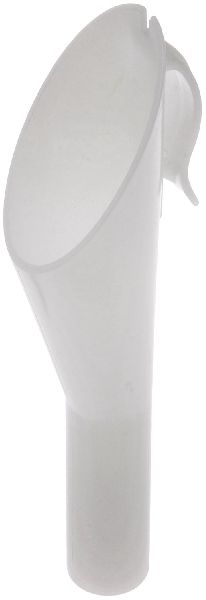
How to confirm: Visually inspect the fuel filler opening for debris. Use the white plastic funnel that came with the vehicle to work the flap open and closed 10-15 times. You can spray a silicone lubricant (do not use harsh chemicals like brake cleaner) around the seal and work it in with the funnel to clean and rehydrate it. If this provides a temporary fix, the seal is likely the issue.
Typical fix: Thoroughly clean the sealing surface of the fuel filler neck with a cloth and compressed air. If cleaning does not resolve the issue or the seal is damaged, the entire fuel filler neck assembly must be replaced.
Est. part cost: $100-$220 - Cracked or Disconnected EVAP Hose ⚪ Low Probability Plastic and rubber hoses can become brittle over time due to heat and age. TSB 19-2171 specifically notes that on 2017-2019 Escapes with the 2.0L engine, several EVAP vapor line connections can be loose or partially connected, causing leaks. NHTSA ODI #11633558 describes an inspection where an EVAP system related disconnect was found on the line.
How to confirm: A visual inspection may reveal obvious cracks, but a smoke test is the most effective method. This involves injecting smoke into the EVAP system and looking for where it escapes. Per TSB 19-2171, technicians should physically push and pull on the four vapor line quick connections and the canister purge valve connection to verify they are secure.
Typical fix: Replace the damaged hose section or securely reconnect any loose fittings.
Est. part cost: $10-$50
Rare But Worth Checking
- Faulty EVAP Canister Vent Solenoid: Located near the charcoal canister by the fuel tank, this valve can also fail, though it is less common for this code than the purge valve in the engine bay.
- Cracked EVAP (Charcoal) Canister: Physical damage to the canister from road debris or impact can cause a leak. On some 2020 models, this was noted as a potential issue from vehicle transport damage (SSM 49313).
- Faulty Fuel Tank Pressure Sensor: This sensor reports pressure data to the PCM. If it fails, it can send incorrect information, leading the computer to believe there is a leak when there isn't one. NHTSA ODI #11643510 mentions a diagnosis involving the EVAP system switch alongside P0456.
Diagnosis Steps

- Read the code with an OBD-II scanner to confirm P0456 and check for any other related codes like P1450 or P2196.
- Inspect the capless fuel filler neck for debris or damage. Use the vehicle's emergency funnel to operate the flap, cleaning the seal with a cloth and silicone spray.
- Locate the canister purge valve in the engine bay. It's a small solenoid with hoses and an electrical connector, typically mounted on or near the intake manifold.
- With the engine running for a few minutes (to ensure the valve is being commanded by the PCM), disconnect the electrical connector from the purge valve.
- Disconnect the hose leading from the purge valve towards the intake manifold.
- Place your finger over the port on the purge valve itself. If you feel any suction (vacuum), the valve is stuck open and must be replaced. A good valve will have zero vacuum at this port when unplugged.
- If the purge valve test passes, check EVAP hose connections per TSB 19-2171 by physically pushing and pulling on them to ensure they are secure.
- If no obvious cause is found, the next step is to perform a smoke test on the EVAP system to find the source of the small leak. This involves injecting smoke into the system's service port and watching for where it escapes. 🎬 Watch this step-by-step guide on diagnosing a small EVAP leak.
Parts You'll Likely Need
- Canister Purge Valve / Fuel Vapour Separator Tube
(OEM #F2GZ-9D289-A (or F2GZ-9D289-B))— This is the most frequent failure point causing a P0456 code on this vehicle. It gets stuck open, creating a constant leak in the EVAP system. The part is often an assembly with attached hoses.
Trusted brands: Motorcraft, Dorman, Standard Motor Products
OEM price range: $60-$120
Aftermarket price range: $40-$80 - Fuel Filler Neck
(OEM #CV6Z-9034-AG)— The seal on the capless 'Easy Fuel' system can fail or get contaminated, preventing the system from holding pressure. The entire neck assembly must be replaced if cleaning doesn't work.
Trusted brands: Motorcraft, Dorman (577-990), Spectra Premium (FN1160)
OEM price range: $120-$200
Aftermarket price range: $80-$150 - Capless Fuel System Funnel
(OEM #8U5Z-17B068-B)— This tool is essential for cleaning and testing the capless fuel filler neck. It may be missing from the vehicle.
Trusted brands: Motorcraft
OEM price range: $5-$15
Related Codes That Often Appear With This One
- P1450 — This code means 'Unable to Bleed Up Fuel Tank Vacuum.' It often appears with P0456 when the canister purge valve is stuck open, causing excessive vacuum that the system cannot vent properly. This is a classic combination pointing directly to a failed purge valve.
- P2196 — This code indicates 'O2 Sensor Signal Biased/Stuck Rich (Bank 1, Sensor 1).' A stuck-open purge valve can allow un-metered fuel vapors into the intake manifold, causing a rich running condition that this sensor detects. NHTSA ODI #11601267 notes this code appearing alongside P0456 and coolant burn issues.
- P04F0 — This code for 'EVAP System Leak Detected (Incorrect Purge Flow)' can be caused by loose or partially connected EVAP vapor lines, as noted in TSB 19-2171 for this specific vehicle and engine.
Technical Service Bulletins (TSBs) & Recalls
- 18S32 - Safety Recall for PCM software on other Ford models not detecting a stuck-open canister purge valve (CPV), which can cause P0456, P1450, and fuel tank deformation.
- SSM 50306 - Advises technicians to perform specific EVAP system tests before replacing the canister purge valve on 2020-2021 models, as many returned parts are functional.
- TSB 19-2171 - For 2017-2019 Escape/MKC 2.0L, advises checking for loose EVAP vapor line connections as a first step for certain EVAP codes.
- Bulletin #SSM 46525 - Notes that some 2017 Escape and MKC vehicles with 1.5L, 2.0L, or 2.3L engines may exhibit P0456 and P1450, potentially accompanied by rough idle or slow fuel fill concerns.
Platform-Specific Known Issues
- A recall (18S32) was issued for some Ford vehicles (primarily 2012-2018 Focus with 2.0L engines) for a PCM software issue that did not adequately detect a stuck-open canister purge valve. While the Escape was not the primary vehicle, the issue highlights the commonality of purge valve failures and their effects, which include triggering codes P0456 and P1450 and potentially deforming the fuel tank.
- A Special Service Message (SSM 50306) was issued for 2020-2021 Escapes and other models noting that returned EVAP canister purge valves were often found to be fully functional, advising technicians to perform specific diagnostic tests (EVAP Leak Test and CPV Check via FDRS) before replacing parts.
- TSB 19-2171 was issued for 2017-2019 Escape/MKC models with the 2.0L engine for codes P04F0 and P144C, directing technicians to check for loose or partially connected EVAP vapor lines before performing other
Mechanic-Grade Diagnostic Values
- Fuel Tank Pressure (FTP) Sensor Voltage — expected: Approx. 2.5V - 2.7V at atmospheric pressure (Key On, Engine Off, fuel cap open).. Failure: Stuck high near 5.0V or low near 0.0V. Voltage should decrease from baseline as vacuum is applied.
- Canister Purge Valve Solenoid Resistance — expected: 15 to 30 Ohms across the two electrical pins.. Failure: A reading far outside this range (e.g., open circuit or shorted) indicates a failed internal coil.
- Canister Purge Valve Power Supply — expected: Battery voltage (~12V) on one pin of the connector with Key On.. Failure: No voltage indicates a wiring or fuse issue. The PCM supplies ground to activate the valve.
- Mode $06 EVAP Monitor Test for 0.020" leak — expected: The test value should be below the maximum calibrated limit. This is viewed on a capable scan tool.. Failure: If the test value exceeds the maximum limit, the PCM flags a failure and will set P0456. This confirms the PCM is detecting a leak, not a sensor rationality fault.
Scan Tool Commands That Help
- Ford IDS / FORScan / High-End Bidirectional Scanner: EVAP System Test (On-Demand Self-Test) — This is a critical diagnostic step to verify a repair or to force the EVAP monitor to run without a full drive cycle. The tool commands the vent and purge valves closed to seal the system, then monitors the FTP sensor for vacuum decay to confirm the system is sealed.
- Ford IDS / FORScan / High-End Bidirectional Scanner: Purge Valve Solenoid Duty Cycle Control — Used to test for an intermittently sticking purge valve. A technician can command the valve to open and close multiple times while checking for vacuum on the port to see if it ever fails to seal completely.
Wiring & Ground Locations
- G103 — Right side of the engine compartment.. A poor ground connection for components in the engine bay can cause erratic behavior in sensors and solenoids, including the canister purge valve.
- Canister Purge Valve Connector — On the purge valve assembly, near the intake manifold.. One pin should have battery voltage with the key on. The other pin is the control (ground) from the PCM. Checking for power here is a primary step in diagnosing a non-responsive valve.
- Fuel Tank Pressure (FTP) Sensor — On the EVAP canister assembly, which is typically located near the fuel tank.. The sensor has three wires: a 5V reference, a ground, and a signal wire. Damage to this harness can cause incorrect pressure readings, leading to a false P0456 code.
Real Owner Repair Stories
- Reddit user comment in r/AskMechanics (2017 Ford Escape 2.0L EcoBoost) — P0456 Check Engine Light
❌ Tried (didn't work) Not specified, but the advice was direct.
✅ What actually fixed it A user identifying as a 10-year Ford technician stated the most likely cause is the 'Under hood one,' referring to the canister purge valve, corroborating the common failure analysis. - NHTSA ODI #11595075 — An owner reported that a Ford service department noted the P0456 code but cleared it without advising repair. Later, the owner began to notice a rough crank with the vehicle.
Documented NHTSA Reports
- NHTSA ODI #11643510 — An owner reported the vehicle was stalling more frequently. A diagnostic check retrieved codes P0456, P0451, and P1450.
- NHTSA ODI #11633558 — A diagnostic test revealed multiple codes including P0456 and P1450. Upon inspection at a dealership, an EVAP system related disconnect was found on the line.
- NHTSA ODI #11601267 — An owner reported a check engine light with P0456 and P1456 (unable to bleed fuel tank) alongside misfire codes P0300, P0302, and P0316.
"I Checked Everything" — The Actual Cause
- In some cases across various manufacturers, a P0456 code can be present even when a smoke test and leak-down test show no physical leaks. The root cause can be a software glitch in the Powertrain Control Module (PCM) where the leak detection thresholds are too sensitive. The fix in these situations is a PCM software update (a 'flash') performed by a dealership or a properly equipped independent shop. While documented on other brands, this possibility aligns with Ford's history of issuing software-related TSBs for EVAP issues.
OEM Part Supersession History
F2GZ-9D289-A→F2GZ-9D289-B— Standard part revision by the manufacturer, likely for improved durability or material changes to address the common failure mode.
Heads up: The new part number (F2GZ-9D289-B) is the correct service replacement for the original.
Diagnostic Flowchart
Real Owner Stories
Aggregated from forums and TSBs cited above. Mileages and costs reflect what owners reported in those sources.
2018 Ford Escape Titanium 2.0L — 70000 miles
Symptoms: Check engine light came on with code P0456. The vehicle was running fine for the most part, but the owner noticed issues specifically when fueling.
What fixed it: Owner was seeking diagnostic advice; typical fixes for this specific fueling symptom involve replacing the canister purge valve or cleaning the capless filler neck.
Source hint: Reddit r/MechanicAdvice
2017 Ford Escape 2.0L
Symptoms: Triggered EVAP codes P0456 and P1450.
What fixed it: Mechanic confirmed the purge valve was bad by blowing through it. Installed a repair kit by cutting the old valve out and splicing a new one in with supplied connectors, rather than replacing the full assembly.
Source hint: YouTube video titled 'Ford 2.0 p0456 p1640 evap code diagnostic 2017 escape quick fix'
Ford Escape (Year/Engine unspecified)
Symptoms: Check engine light illuminated with a P0456 small EVAP leak code.
What fixed it: Performed a smoke test which isolated the leak directly to the fuel filler neck. Replaced the entire fuel filler neck assembly.
Source hint: Reddit r/fordescape thread titled 'Evap Leak from Fuel Filler Neck'
2017 Ford Edge 2.0L
Symptoms: Experienced classic P0456 symptoms, most notably hard starting immediately after filling up the gas tank.
What fixed it: Community identified the canister purge valve as the culprit, which is a shared component and common fix on this platform-mate.
Source hint: Ford Edge Forum thread titled '2017 Edge with the annoying P0456'
Related OBD-II Codes
Frequently Asked Questions
Does TSB 19-2171 apply to my 2017-2019 Ford Escape 2.0L for code P0456?
Why does my Escape struggle to start and idle roughly right after I get gas?
What does the 'Check Fuel Fill Inlet' warning mean on my dashboard?
How can I test if the canister purge valve is bad on my 2.0L EcoBoost?
Is the purge valve covered under Recall 18S32 for the Ford Escape?
Can I fix the capless fuel filler neck leak myself?
Real Owner Stories
Aggregated from forums and TSBs cited above. Mileages and costs reflect what owners reported in those sources.
2018 Ford Escape Titanium 2.0L — 70000 miles
Symptoms: Check engine light came on with code P0456. The vehicle was running fine for the most part, but the owner noticed issues specifically when fueling.
What fixed it: Owner was seeking diagnostic advice; typical fixes for this specific fueling symptom involve replacing the canister purge valve or cleaning the capless filler neck.
Source hint: Reddit r/MechanicAdvice
2017 Ford Escape 2.0L
Symptoms: Triggered EVAP codes P0456 and P1450.
What fixed it: Mechanic confirmed the purge valve was bad by blowing through it. Installed a repair kit by cutting the old valve out and splicing a new one in with supplied connectors, rather than replacing the full assembly.
Source hint: YouTube video titled 'Ford 2.0 p0456 p1640 evap code diagnostic 2017 escape quick fix'
Ford Escape (Year/Engine unspecified)
Symptoms: Check engine light illuminated with a P0456 small EVAP leak code.
What fixed it: Performed a smoke test which isolated the leak directly to the fuel filler neck. Replaced the entire fuel filler neck assembly.
Source hint: Reddit r/fordescape thread titled 'Evap Leak from Fuel Filler Neck'
2017 Ford Edge 2.0L
Symptoms: Experienced classic P0456 symptoms, most notably hard starting immediately after filling up the gas tank.
What fixed it: Community identified the canister purge valve as the culprit, which is a shared component and common fix on this platform-mate.
Source hint: Ford Edge Forum thread titled '2017 Edge with the annoying P0456'
Related OBD-II Codes
Frequently Asked Questions
Does TSB 19-2171 apply to my 2017-2019 Ford Escape 2.0L for code P0456?
Why does my Escape struggle to start and idle roughly right after I get gas?
What does the 'Check Fuel Fill Inlet' warning mean on my dashboard?
How can I test if the canister purge valve is bad on my 2.0L EcoBoost?
Is the purge valve covered under Recall 18S32 for the Ford Escape?
Can I fix the capless fuel filler neck leak myself?
Related OBD-II Codes
Frequently Asked Questions
Does TSB 19-2171 apply to my 2017-2019 Ford Escape 2.0L for code P0456?
Why does my Escape struggle to start and idle roughly right after I get gas?
What does the 'Check Fuel Fill Inlet' warning mean on my dashboard?
How can I test if the canister purge valve is bad on my 2.0L EcoBoost?
Is the purge valve covered under Recall 18S32 for the Ford Escape?
Can I fix the capless fuel filler neck leak myself?
Related OBD-II Codes
Frequently Asked Questions
Does TSB 19-2171 apply to my 2017-2019 Ford Escape 2.0L for code P0456?
Why does my Escape struggle to start and idle roughly right after I get gas?
What does the 'Check Fuel Fill Inlet' warning mean on my dashboard?
How can I test if the canister purge valve is bad on my 2.0L EcoBoost?
Is the purge valve covered under Recall 18S32 for the Ford Escape?
Can I fix the capless fuel filler neck leak myself?
Helpful Videos
Used OEM Parts in Stock

New Aftermarket Parts Available


The information in this article is provided for general reference and educational purposes only. Vehicle specifications, procedures, and part compatibility can vary by production date, trim level, and region. Always consult your vehicle's factory service manual and verify part numbers before purchasing or performing repairs. Safety-critical components such as airbags, seat belts, and braking systems should be installed by a qualified professional.
- Ford Escape:
- 🎬 Helpful Videos
- 🛍️ Shop This Part
- What's Unique About the 2017-2019 Ford Escape
- Symptoms You May Notice
- Most Likely Causes
- Rare But Worth Checking
- Diagnosis Steps
- Parts You'll Likely Need
- Related Codes That Often Appear With This One
- Technical Service Bulletins (TSBs) & Recalls
- Platform-Specific Known Issues
- Mechanic-Grade Diagnostic Values
- Scan Tool Commands That Help
- Wiring & Ground Locations
- Real Owner Repair Stories
- Documented NHTSA Reports
- "I Checked Everything" — The Actual Cause
- OEM Part Supersession History
- Diagnostic Flowchart
- Real Owner Stories
- 2018 Ford Escape Titanium 2.0L — 70000 miles
- 2017 Ford Escape 2.0L
- Ford Escape (Year/Engine unspecified)
- 2017 Ford Edge 2.0L
- Related OBD-II Codes
- Frequently Asked Questions
- Real Owner Stories
- 2018 Ford Escape Titanium 2.0L — 70000 miles
- 2017 Ford Escape 2.0L
- Ford Escape (Year/Engine unspecified)
- 2017 Ford Edge 2.0L
- Related OBD-II Codes
- Frequently Asked Questions
- Related OBD-II Codes
- Frequently Asked Questions
- Related OBD-II Codes
- Frequently Asked Questions
- 🎟️ Get 5% Off