

P0456 Ford Escape 2013-2020: EVAP Small Leak Causes and Fixes
For a 2013-2020 Ford Escape, code P0456 is most often caused by a faulty canister purge valve, especially if you also have stalling issues after refueling. Cleaning the capless fuel filler neck is the first easy check, but the purge valve (OEM Part # CV6Z-9D289-S for 2.0L) is the most probable part to fail. Expect to pay $40-$100 for the part and it's a common DIY fix.
- P0456 on a 2013-2020 Escape is a small leak in the fuel vapor system.
- If you experience stalling or rough running after getting gas, the canister purge valve is the most likely cause, per Ford TSB 16-0075.
- Always start diagnosis by cleaning the capless fuel filler neck seal.
- Testing the purge valve is a simple DIY task; if it holds vacuum when unplugged, it's bad.
- If the purge valve is good, a professional smoke test is the best way to find the leak.
What's Unique About the 2013-2020 Ford ESCAPE

On the 2013-2020 Ford Escape, P0456 is frequently linked to specific, well-documented component failures. Unlike a generic EVAP leak, this code on an Escape is very often accompanied by drivability symptoms like stalling or rough running immediately after refueling, a problem Ford addressed directly in a Technical Service Bulletin (TSB 16-0075). This TSB points squarely at a faulty canister purge valve as the cause for both the code and the stalling issue on earlier models in this range. The platform's capless fuel filler system also presents a unique potential leak point not found on cars with traditional gas caps, which can get dirt in the seal.
Diagnostic Flowchart

Tap your situation to follow the diagnostic path that matches what you're seeing on this vehicle.
Generation note: This range covers the third generation (2013-2019) and the first model year of the fourth generation (2020) Escape. The most documented issues, particularly the faulty purge valve addressed in TSBs, relate primarily to the 2013-2019 models. However, the general diagnostic principles apply to both generations, and even newer models report the same purge valve failures.
Symptoms You May Notice

- Check Engine Light is on
- Stalling, hard starting, or fluctuating engine RPM immediately after refueling.
- A faint smell of gasoline.
- Slight decrease in fuel economy over time.
- Car struggles to start right after filling the gas tank, but starts normally otherwise.
- Replacing the charcoal canister or vent valve before properly testing the purge valve. The purge valve is a much more frequent failure point and is easier to access and test.
- Unnecessary purge valve replacement. TSB #SSM 50306 notes that purge valves are often replaced unnecessarily when the leak is elsewhere, emphasizing the need for proper diagnosis (like a smoke test) if the purge valve passes its vacuum test.
Most Likely Causes

- Faulty Canister Purge Valve 🔴 High Probability This is a very common failure part on many Ford models of this era. TSB 16-0075 specifically identifies a faulty purge valve as the cause for P0456 and associated stalling-after-refueling issues on the 2013 Escape. The valve fails by sticking partially open, creating a constant small vacuum leak into the intake manifold, which the PCM detects.
How to confirm: With the engine running, disconnect the EVAP hose from the purge valve. Place your finger or a glove over the port on the valve. If you feel any suction (vacuum) while the valve's electrical connector is unplugged, the valve is stuck open and needs to be replaced. You can also try blowing through the disconnected valve; if air passes through, it is bad.
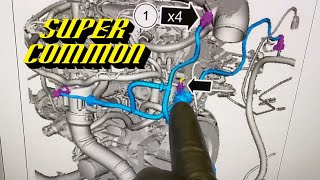
Typical fix: Replace the canister purge valve assembly. It is typically located on or near the engine's intake manifold and comes with attached hoses. 🎬 Watch: How to diagnose and replace the purge valve assembly.
Est. part cost: $40-$100 - Debris or Faulty Seal in Capless Fuel Filler Neck 🟡 Medium Probability The capless system's spring-loaded flap is the primary seal for the fuel tank. Dirt, grit, or corrosion on the sealing surface can prevent it from closing properly, causing a small leak. Owners on forums have noted this as a recurring issue.
How to confirm: Visually inspect the opening for any debris. Use the emergency fuel funnel (usually stored with the spare tire tools) to open and close the flap several times to dislodge any stuck particles. Clean the metal sealing surface with a cloth and a solvent like isopropyl alcohol.
Typical fix: Thoroughly clean the filler neck opening. If cleaning doesn't work and a smoke test confirms the leak is here, the entire fuel filler neck assembly must be replaced.
Est. part cost: $5-$15 for cleaning supplies, $150-$300 for a new filler neck assembly. - Cracked or Disconnected EVAP Hose ⚪ Low Probability The plastic and rubber hoses in the EVAP system can become brittle with age and heat cycles, leading to small cracks, particularly at connection points.
How to confirm: A visual inspection may reveal an obvious crack or disconnected line, but a definitive diagnosis requires a smoke test. A mechanic will inject low-pressure smoke into the EVAP system and look for where it escapes.
Typical fix: Replace the specific section of cracked hose or the entire hose assembly if it's a complex part.
Est. part cost: $10-$50 for a simple hose, or more for a complex assembly.
Rare But Worth Checking
- Faulty EVAP Canister Vent Valve: This valve is located near the fuel tank and charcoal canister. While it can fail by sticking, it is a less common cause for a P0456 code on this vehicle compared to the engine-bay-mounted purge valve.
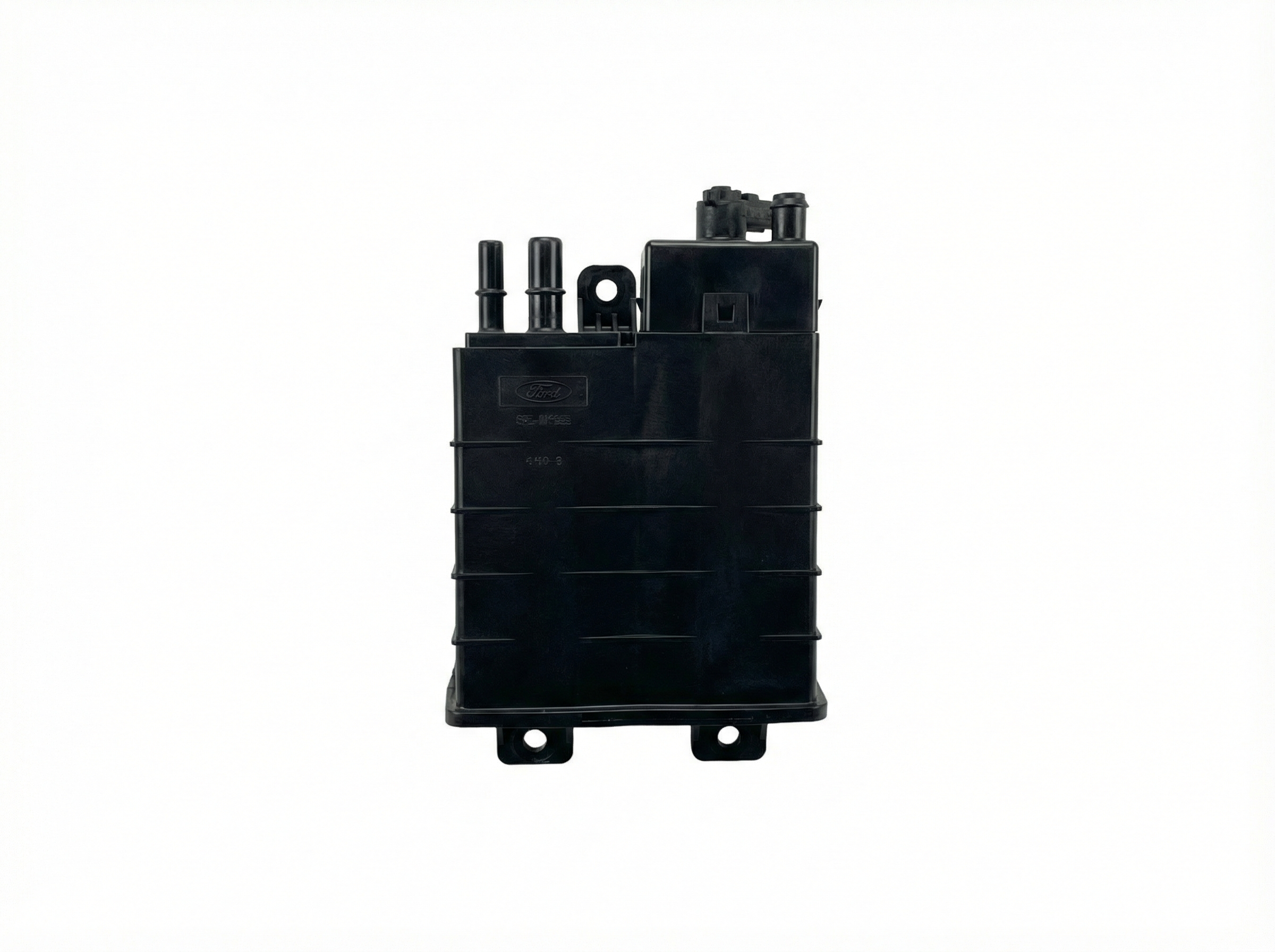
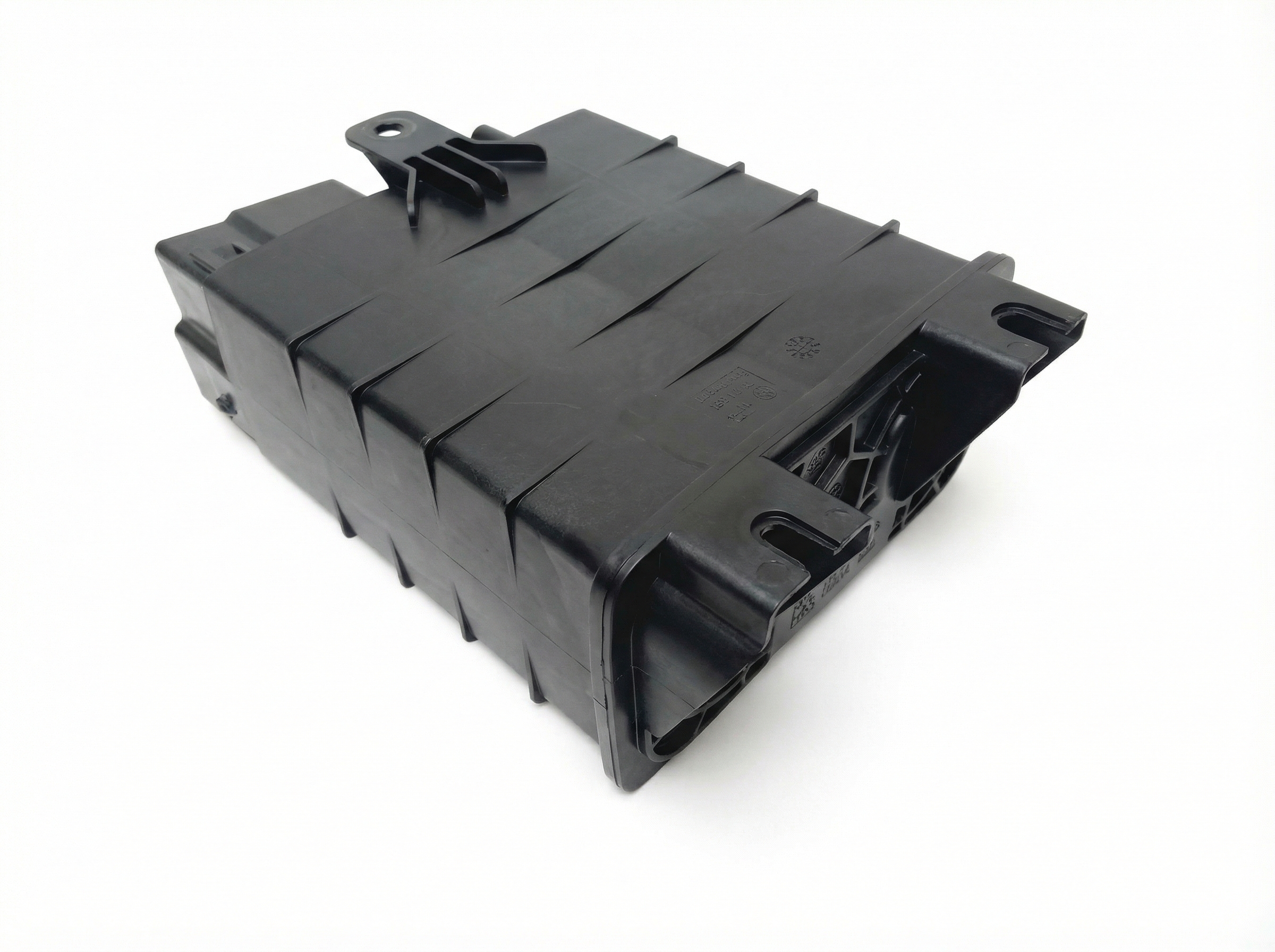
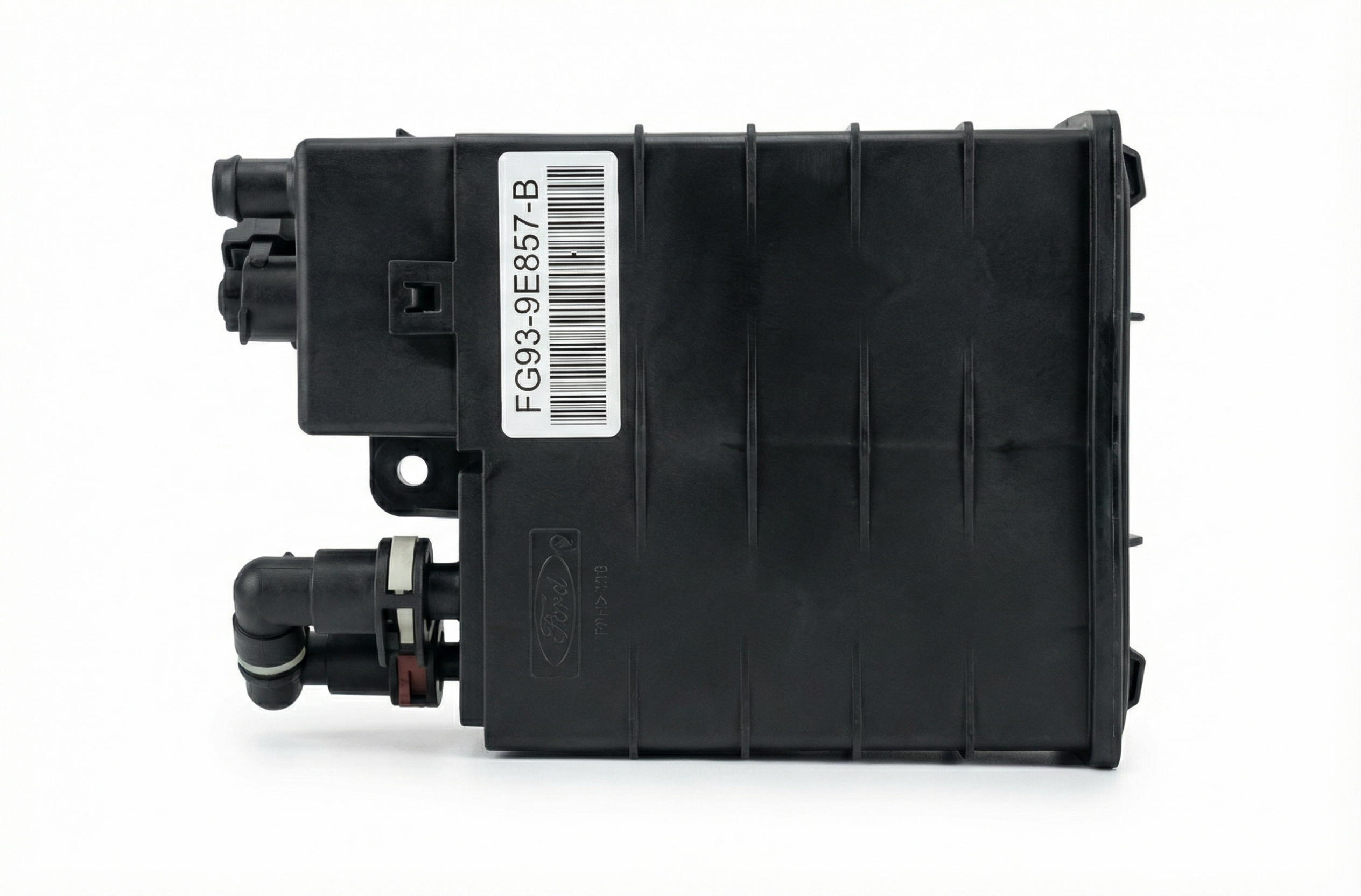
- Cracked Charcoal Canister: Physical damage from road debris or age can cause the plastic body of the charcoal canister to crack, creating a leak. This is usually found during a smoke test.
- Faulty Fuel Tank Pressure (FTP) Sensor: A malfunctioning FTP sensor can send incorrect data to the PCM, making it believe there is a leak when there isn't one. This can sometimes trigger P0456, often along with other sensor-specific codes like P0451.
Diagnosis Steps
- Read the codes with an OBD-II scanner to confirm P0456 and check for any other related codes like P1450.
- Inspect the capless fuel filler neck. Look for debris and clean the sealing surface. Use the emergency funnel to work the flap open and closed a few times.
- If symptoms include stalling after refueling, proceed to test the canister purge valve. With the engine running, disconnect the vapor line from the valve. If vacuum is felt at the valve's port (with the electrical connector unplugged), the valve is faulty and must be replaced. A helpful video demonstration can be found at https://www.youtube.com/watch?v=X-Y5YsaXxJE.
- If the purge valve test passes, the next step is to perform a smoke test on the EVAP system. This is the most effective way to locate small, hard-to-find leaks in hoses, the filler neck, or the charcoal canister.
- Based on the smoke test results, replace the leaking component, which could be a hose, the filler neck, or the canister itself.
- After the repair, clear the codes and perform a drive cycle to allow the EVAP monitor to run and confirm the fix. This may take several days of normal driving.
Parts You'll Likely Need
- Canister Purge Valve / Vapor Canister Purge Solenoid
(OEM #CV6Z-9D289-S (replaces CV6Z-9D289-R, -H, -F, -D, -C for 2.0L), CV6Z-9D289-B (1.6L), EJ7Z-9D289-A (1.5L))— This is the most common failure part for P0456 on this vehicle, as documented by Ford's own service bulletins and extensive owner reports.
Trusted brands: Motorcraft, Dorman, Standard Motor Products
OEM price range: $60-$120
Aftermarket price range: $30-$70 - Fuel Tank Filler Neck
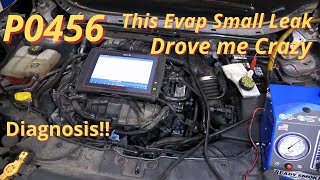
(OEM #EJ7Z-9034-D (example, varies by year/model))— The seal on the capless filler neck can wear out or be damaged, causing a persistent small leak that cleaning cannot fix. 🎬 See this quick diagnostic walkthrough for the P0456 code. This is the second most likely cause after the purge valve.
Trusted brands: Motorcraft
OEM price range: $200-$300
Aftermarket price range: $150-$250
Related Codes That Often Appear With This One
- P1450 — Stands for 'Unable to Bleed Up Fuel Tank Vacuum'. This code is frequently seen with P0456 and strongly indicates a purge valve 🎬 Watch: Step-by-step fix for P1450 hesitation and stalling issues. that is stuck open. TSB 16-0075 lists both codes together as the primary indicators for this common issue.
- P0455 — Indicates a large EVAP leak. It can sometimes appear with P0456 if the system has multiple leaks or if the computer's leak detection threshold is borderline. TSB #SSM 46525 mentions these codes can appear together.
- P0451 — Relates to the 'EVAP System Pressure Sensor'. An owner complaint (ODI #11643510) reported this code along with P0456, suggesting a potential sensor issue or a leak affecting the sensor's readings.
- P0443 — Indicates a fault in the purge valve's electrical circuit. Seeing this with P0456 further points to the purge valve assembly as the root cause, either due to an internal electrical failure or a wiring issue.
Technical Service Bulletins (TSBs) & Recalls
- 16-0075: Addresses hard start/no start/stall after refueling with DTCs P1450 and/or P0456 on 2013 Escapes, 2013-2014 Fusions, and 2013-2014 MKZs. Recommends purge valve replacement.
- SSM 46525: Notes that 2017 Escapes and MKCs may exhibit an illuminated MIL with DTCs P0455, P0456, P144C and/or P1450.
- SSM 50306: Warns against unnecessarily replacing EVAP canister purge valves, as testing showed returned parts were functional, suggesting other leak sources.
- TSB 21-2020: Pertains to 2020 models, where P0456 can appear with other codes due to a PCM calibration issue affecting the fuel gauge.
- SSM 49313: Points to potential carbon canister damage during vehicle transportation as a cause for P0456 on some 2020 Escapes.
Platform-Specific Known Issues
- TSB 16-0075 specifically addresses 2013 Escapes (and other Fords) that exhibit a hard start, no start, or stall after refueling, along with codes P1450 and/or P0456, identifying the fix as a replacement of the canister purge valve.
- An owner of a 2014 Escape reported stalling after refueling with code P0456, reinforcing the issue described in the TSB.
- An owner of a 2018 Escape reported codes P0456, P0451, and P1450 along with stalling, indicating this cluster of codes points to a common EVAP system fault.
- A Reddit user with a 2017 Escape reported P0456 and a hard start after getting gas, which was resolved by replacing the purge valve for under $100 in parts.
Mechanic-Grade Diagnostic Values
- EVAP System Test Pressure (Small Leak Test) — expected: System should hold vacuum/pressure. During a test, the PCM looks for a pressure drop.. Failure: A pressure change indicating a leak equivalent to a 0.020-inch (0.508 mm) orifice triggers P0456.
- Fuel Tank Pressure (FTP) Sensor Reading at Idle (Purge Valve Test) — expected: With the purge valve commanded closed and the vent valve commanded open, the FTP sensor should show near 0 inH2O (atmospheric pressure).. Failure: If the FTP sensor shows a steady drop into vacuum (e.g., towards -8.0 inH2O), it indicates the purge valve is stuck open and leaking vacuum into the tank.
Hidden / Shadow Codes Worth Checking
- P1000: This is not a fault code, but an informational code indicating that the OBD-II readiness monitors have not yet completed since the last time the codes were cleared. If this code is present, the EVAP monitor has not run, and you cannot be certain the P0456 fault is truly fixed. (see via Standard OBD-II scanner or FORScan.)
Scan Tool Commands That Help
- FORScan / Ford IDS: EVAP System Leak Test — This is a guided, key-on-engine-off (KOEO) test that commands the purge and vent solenoids to seal the system and monitors the FTP sensor to check for leaks. It's a much faster way to verify a leak than waiting for the drive cycle monitor to run.
- FORScan / Ford IDS: Vapor Management Valve (VMV) & Canister Vent (CV) Solenoid PIDs — Use live data to monitor the commanded state (On/Off or Duty Cycle %) of the purge (VMV) and vent (CV) solenoids while also watching the Fuel Tank Pressure (FTP) PID. This allows you to command the valves and see the immediate effect on tank pressure, confirming if they are stuck or responding correctly.
Wiring & Ground Locations
- G104 / G105 — At the left front corner of the engine compartment, near the Battery Junction Box (BJB).. These are primary engine compartment grounds. A poor ground connection here can cause erratic behavior or failure of various electronic components, including the PCM's ability to correctly control and monitor the EVAP purge valve.
- G108 — Located on the front of the engine.. This is a key engine block ground. Intermittent or poor connection here could potentially affect sensors and solenoids mounted directly to the engine, including the purge valve.
- EVAP Purge Valve Connector — On the purge valve itself, located on or near the intake manifold.. A wiring diagram for a 1.5L model shows a White/Brown wire as a shared power feed from a fuse in the Battery Junction Box to the purge valve and other components. A fault on this circuit could trigger codes for multiple components simultaneously.
Real Owner Repair Stories
- Fiesta ST Forum (Ford Fiesta ST (similar EVAP system and components)) — Check Engine Light with codes P0456 and P1450, plus stalling after refueling.
❌ Tried (didn't work) Waiting for the code to clear on its own., Exercising the capless fuel filler flap with a funnel.
✅ What actually fixed it Replacing the canister purge valve assembly for a second time. The first replacement part had failed again after only 5,000 miles. - YouTube - KIT'S Auto and Truck Repair (Ford Escape (year not specified, but Gen 3 body style)) — Codes P0456 (small EVAP leak) and P2196 (O2 sensor signal stuck rich).
❌ Tried (didn't work) The technician suspected the O2 sensor initially but decided to diagnose the EVAP code first.
✅ What actually fixed it A smoke test revealed the canister purge valve was stuck open, allowing smoke (and un-metered fuel vapor) to enter the intake manifold constantly. The technician concluded the stuck-open purge valve was causing the rich condition and the P2196 code, and that replacing the purge valve would resolve both issues. - YouTube - Tim's Garage (2017 Ford Escape 2.0L EcoBoost) — Codes P0456 and P1450.
✅ What actually fixed it The canister purge valve was confirmed bad by blowing through it (air passed through when it should be closed). The technician used a repair kit, cutting the old valve out of the hose assembly and splicing in a new valve, which was easier and cheaper than replacing the entire hose assembly.
"I Checked Everything" — The Actual Cause
- In a documented case on a 2012 Ford Focus (which shares a similar EVAP system design), a user reported a persistent P0456 code even after a dealership smoke test found no leaks. The user had already replaced the purge valve to fix a P1450 code, but the P0456 remained. The dealership also replaced the fuel tank due to it being collapsed (a classic symptom of a stuck purge valve), but the P0456 code still did not go away, leaving the issue unresolved even after standard procedures were followed. This highlights rare cases where the fault may be intermittent or related to a component that passes a static smoke test.
When the Usual Fixes Don't Work
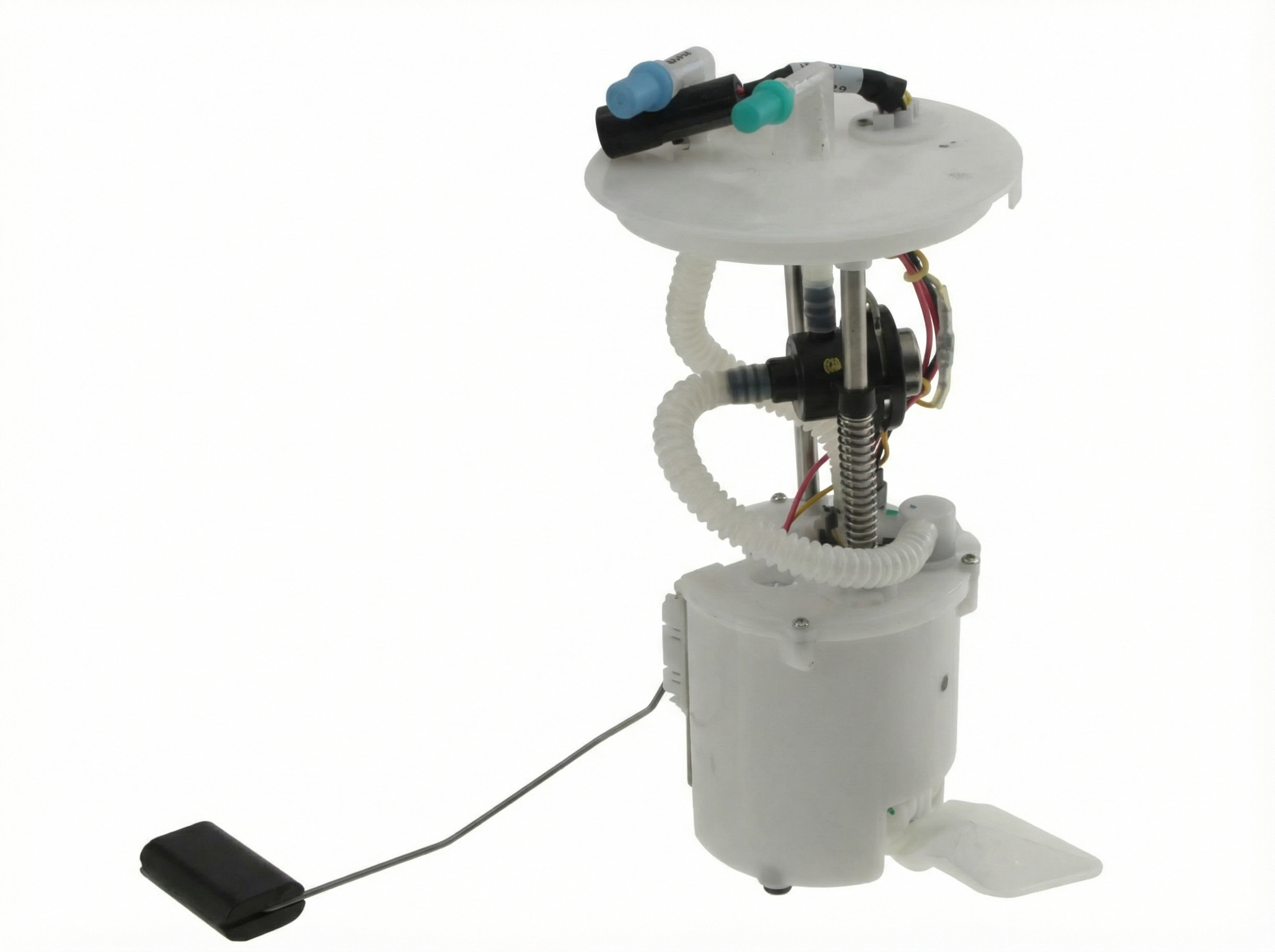
- While the canister purge valve is the most common fix, it is not a guaranteed solution. TSB #SSM 50306 explicitly warns that Ford has received many returned purge valves that tested as fully functional, meaning technicians may be replacing them unnecessarily. If a new purge valve does not fix the code, a professional smoke test is the next required step to find the actual leak source, which could be a cracked hose, a faulty vent solenoid, or a bad seal on the fuel filler neck or fuel pump assembly.
OEM Part Supersession History
CV6Z-9D289-C, -D, -F, -H, -R→CV6Z-9D289-S— Ford periodically updates parts to improve reliability or address known failure modes. This series of supersessions for the 2.0L engine's purge valve assembly indicates multiple revisions over time.
Heads up: While all listed parts are for the same application, it is always recommended to use the latest available part number (CV6Z-9D289-S) to benefit from the most recent design improvements.
Model Year Variations Within This Range
- 2013-2016 vs 2017-2019: The 1.6L EcoBoost engine was used from 2013-2016 and was replaced by a 1.5L EcoBoost engine for the 2017-2019 model years. While functionally similar, they use different purge valve assemblies with unique part numbers (1.6L: CV6Z-9D289-B/T, 1.5L: EJ7Z-9D289-A). The 2.0L EcoBoost and 2.5L non-turbo engines were available across more of the generation.
- 2013-2019 (Gen 3) vs 2020 (Gen 4): The 2020 model year marked the beginning of the 4th generation Escape with all-new engine options (1.5L 3-Cyl, new 2.0L, Hybrid, PHEV). While the EVAP system principles are the same, the physical parts, locations, and part numbers for components like the purge valve are completely different from the 3rd generation.
Helpful Videos
Used OEM Parts in Stock

New Aftermarket Parts Available


The information in this article is provided for general reference and educational purposes only. Vehicle specifications, procedures, and part compatibility can vary by production date, trim level, and region. Always consult your vehicle's factory service manual and verify part numbers before purchasing or performing repairs. Safety-critical components such as airbags, seat belts, and braking systems should be installed by a qualified professional.
- Ford ESCAPE:
- 🎬 Helpful Videos
- 🛍️ Shop This Part
- What's Unique About the 2013-2020 Ford ESCAPE
- Diagnostic Flowchart
- Symptoms You May Notice
- Most Likely Causes
- Rare But Worth Checking
- Diagnosis Steps
- Parts You'll Likely Need
- Related Codes That Often Appear With This One
- Technical Service Bulletins (TSBs) & Recalls
- Platform-Specific Known Issues
- Mechanic-Grade Diagnostic Values
- Hidden / Shadow Codes Worth Checking
- Scan Tool Commands That Help
- Wiring & Ground Locations
- Real Owner Repair Stories
- "I Checked Everything" — The Actual Cause
- When the Usual Fixes Don't Work
- OEM Part Supersession History
- Model Year Variations Within This Range
- 🎟️ Get 5% Off