

P0456 on 2021-2024 Ford Bronco 2.7L EcoBoost: Causes and Fixes for Small EVAP Leak
For the 2.7L EcoBoost Bronco, code P0456 is frequently caused by a software issue fixed by a dealer update under TSB 24-2409. If the software is current, the next most likely cause is a dirty capless fuel filler neck, which can be cleaned at home for free. If those steps fail, the EVAP purge valve is a possible, though often misdiagnosed, culprit.
- For a 2.7L EcoBoost Bronco, your first step should be to check with a Ford dealer about TSB 24-2409, as a free software update may be the fix.
- The second step, which is free and easy, is to thoroughly clean the capless fuel filler neck seal with a cloth and the vehicle's emergency funnel.
- Do not replace the EVAP purge valve without confirming it has failed; it is a common point of misdiagnosis for this vehicle.
- Driving with this code is safe, but you will not be able to pass an emissions inspection until it is resolved.
What's Unique About the 2021-2024 Ford Bronco
Unlike many vehicles where a P0456 code immediately points to a bad gas cap or purge valve, the 2021-2023 Bronco with the 2.7L EcoBoost engine has a well-documented history of this code being triggered by a software calibration issue in the powertrain control module. Ford has issued a specific Technical Service Bulletin (TSB 24-2409) to address this, making a trip to the dealer for a software update a primary, and often free, fix under warranty. Misdiagnosis of the purge valve is so common that Ford also issued a separate bulletin (SSM 50306) advising technicians against replacing it without thorough testing.
Symptoms You May Notice
- Check Engine Light is on
- Inability to pass an emissions inspection
- Remote start may be disabled by the system
- Rarely, a slight fuel odor outside the vehicle
- Difficulty starting immediately after refueling, which may require pressing the accelerator to start.
- Stuttering or rough idle when pulling into parking spots or at low speeds.
- Replacing the EVAP canister purge valve without first checking for TSBs or cleaning the fuel filler neck. Ford has specifically warned against this with SSM 50306.
- Assuming a major leak exists without first performing the simple, free diagnostic steps.
Most Likely Causes
- PCM Software Calibration Issue 🔴 High Probability Ford identified a sensitivity in the PCM software for 2021-2023 Broncos with the 2.7L engine that could falsely trigger a P0456 code. The TSB explicitly states the code may be due to the software level and has no effect on vehicle operation.
How to confirm: Contact a Ford dealership and provide your vehicle's VIN. Ask if TSB 24-2409 is open and applicable to your vehicle. The TSB corrects the issue with a PCM software update, which takes about 0.3 hours of labor.
Typical fix: Dealer reprograms the Powertrain Control Module (PCM) to the latest calibration using the Ford Diagnostic & Repair System (FDRS).
Est. part cost: $0 (if under warranty) - Dirty or Debris in Capless Fuel Filler Neck 🟡 Medium Probability The capless system has a spring-loaded door with a seal that can be compromised by dirt, dust, or fuel residue, preventing a perfect seal. This is a common issue across many Ford models with this system.
How to confirm: Visually inspect the fuel filler opening for any debris. Use the funnel provided with the vehicle to cycle the internal door a few times to see if it moves freely or feels gritty.
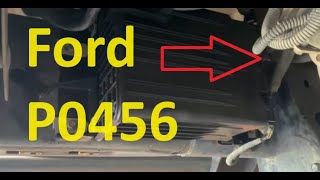
Typical fix: Use a clean, lint-free cloth and a small amount of rubbing alcohol or a plastic-safe solvent to wipe the seal inside the fuel filler neck. Insert and remove the emergency fuel funnel 15-20 times to dislodge debris and ensure the flap seats correctly. 🎬 Watch: Two simple DIY methods to clear this code for cheap. Applying a light lubricant like WD-40 or silicone spray to the funnel can help clean and lubricate the seal.
Est. part cost: $0 - Faulty EVAP Canister Purge Valve ⚪ Low Probability While a common failure on many cars, Ford has stated this part is often misdiagnosed on the Bronco. However, it can still fail by sticking slightly open, causing a small leak. This failure can be intermittent.
How to confirm: Remove the valve (typically located on top of the engine). With the valve disconnected from its electrical connector, try to blow through it. If any air passes through, the valve is faulty and needs to be replaced. It should be normally closed.
Typical fix: Replace the canister purge valve. This is often a 15-minute DIY job.
Est. part cost: $50-$90
Rare But Worth Checking
- Cracked or Disconnected EVAP Hose: The numerous plastic and rubber hoses in the EVAP system can become brittle or be damaged by road debris, causing a small, hard-to-find leak. A smoke test is the best way to locate such a leak.
- Faulty EVAP Vent Solenoid: This valve, located near the charcoal canister by the fuel tank, can fail to close completely, creating a leak. It's less common to fail than the purge valve but is a possible cause.
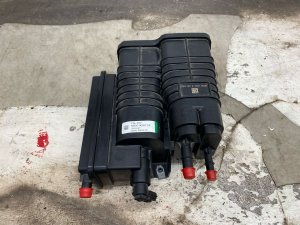
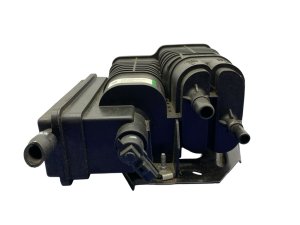
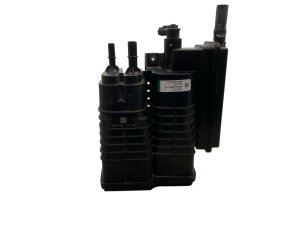
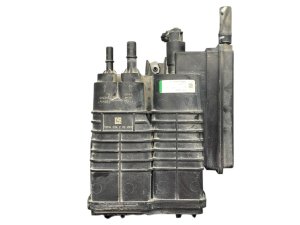
- Cracked EVAP Charcoal Canister: Physical damage to the canister from road debris or consistently over-filling the fuel tank ('topping off') can cause cracks and trigger this code.
- Leaking Fuel Filler Neck Assembly: If cleaning the capless filler neck does not resolve the issue, the entire assembly itself may have a fault in its sealing mechanism, requiring replacement.
Diagnosis Steps
- Check for TSBs: Contact a Ford dealer with your VIN to see if TSB 24-2409 (PCM software update for P0456) is applicable and has been performed. This is the most important first step for the 2.7L engine on 2021-2023 models.
- Inspect and Clean Fuel Filler: Visually inspect the capless fuel filler neck for dirt or debris. Use compressed air to blow out the area. Then, use the vehicle's emergency fuel funnel to cycle the internal flap 15-20 times. Clean the sealing surface with a clean cloth and a plastic-safe lubricant like silicone spray or WD-40.
- Clear Code and Drive: After cleaning the filler neck, clear the code with an OBD-II scanner and drive for a few days. The EVAP monitor often runs after the vehicle has sat overnight with a fuel level between 1/4 and 3/4 tank.
- Test the Purge Valve: If the code returns, locate the EVAP purge valve on the engine. Disconnect it and try to blow through it. If air passes, it has failed and needs replacement. Some owners report this as a quick 15-minute fix.
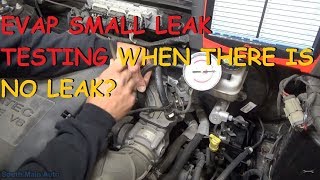
- Perform a Smoke Test: If the cause is still not found, the most effective diagnostic method is to have a professional (or use a DIY kit) perform an EVAP smoke test. This involves feeding pressurized smoke into the system to visually identify the source of the leak from a hose, the canister, or the filler neck assembly. 🎬 Watch: How to find a small EVAP leak you can't see.
Parts You'll Likely Need
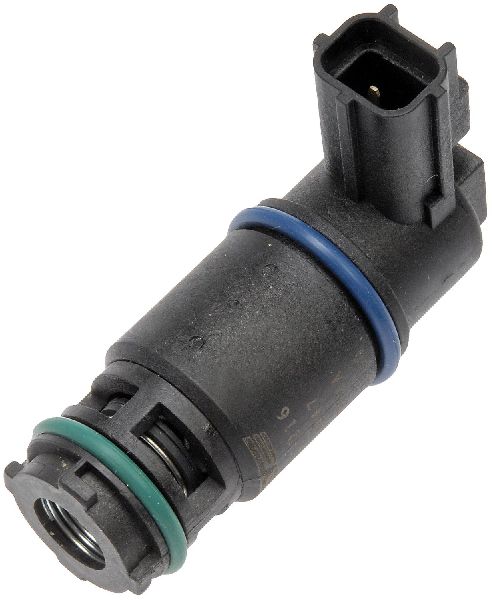
- EVAP Canister Purge Valve
(OEM #MB3Z-9D289-D (Supersedes previous versions))— Though often misdiagnosed, it can be the cause if it fails and sticks open. It's a relatively inexpensive and easy part to replace as a DIY project.
Trusted brands: Motorcraft, Duralast (PV967), Bosch
OEM price range: $50-$90
Aftermarket price range: $35-$60 - Emergency Fuel Filler Funnel
(OEM #Check vehicle owner's manual for specific part number.)— This part is essential for cleaning and testing the capless fuel filler neck and for adding fuel from a can. It should have come with the vehicle, but if it's missing, a replacement is needed.
Trusted brands: Motorcraft
OEM price range: $10-$20
Aftermarket price range: $5-$15 - Fuel Filler Neck Assembly
(OEM #MB3Z-9034-A)— If cleaning the capless filler repeatedly fails to solve the problem, the entire assembly may have a faulty seal and require replacement.
Trusted brands: Motorcraft
OEM price range: $150-$205
Related Codes That Often Appear With This One
- P1450 — This code means 'Unable to Bleed Up Fuel Tank Vacuum' and is very common on Fords with a stuck-open purge valve. If you see P1450 with P0456, the purge valve becomes a much more likely culprit.
- P0496 — This code indicates 'EVAP Flow During a Non-Purge Condition', often pointing directly to a purge valve that is stuck open. Seeing this with P0456 strongly suggests the purge valve is the root cause. 🎬 See this breakdown of common Ford EVAP system causes and fixes.
Technical Service Bulletins (TSBs) & Recalls
- TSB 24-2409: 2.7L EcoBoost - Illuminated Malfunction Indicator Lamp (MIL) With Diagnostic Trouble Code (DTC) P0456. Affects 2021-2023 models.
- SSM 50306: Warns against unnecessarily replacing the EVAP canister purge valve on various 2021-2022 Ford models for EVAP codes.
Platform-Specific Known Issues
- TSB 24-2409: Some 2021-2023 Bronco vehicles with a 2.7L EcoBoost engine may show an illuminated MIL with DTC P0456 due to the PCM software level. This is corrected by a software update and has no effect on vehicle operation.
- SSM 50306: Ford has noted that on many 2021+ vehicles, including the Bronco, EVAP canister purge valves are often replaced unnecessarily for this code. Full system diagnosis is recommended before replacement.
Mechanic-Grade Diagnostic Values
- Fuel Tank Pressure (FTP) Sensor Voltage (Key-On-Engine-Off, system at atmospheric pressure) — expected: 2.4V - 2.6V. Failure: A voltage reading significantly outside this range with the fuel filler open suggests a faulty sensor, wiring, or a blocked line. A reading of 0V or 5V indicates an electrical fault (short/open).
- Fuel Tank Pressure (FTP) Sensor Voltage during Purge — expected: Voltage should drop below the static 2.4-2.6V range as the purge valve opens and creates a vacuum.. Failure: If voltage does not drop when the purge valve is commanded open, it indicates a blockage or a non-functioning purge valve. If voltage drops without the purge valve being commanded, the valve may be stuck open.
Hidden / Shadow Codes Worth Checking
- Mode $06, Test ID $3B, Comp ID $80: This corresponds to the 'EVAP Monitor (0.040")' test. While not the P0456 (0.020") test, failure here can be an early indicator of a leak that is borderline. A passing value with a P0456 might suggest an intermittent issue. (see via Advanced OBD-II scanner capable of displaying Mode $06 data, such as Ford's IDS or high-end consumer scan tools.)
- Mode $06, Test ID $3C: This is the specific monitor for the 0.020" small leak test that directly corresponds to DTC P0456. Monitoring the raw test values can show how close to the pass/fail threshold the system is operating. (see via Advanced OBD-II scanner capable of displaying Mode $06 data.)
Scan Tool Commands That Help
- Ford IDS (Integrated Diagnostic System) or equivalent (FDRS): Manual EVAP System Test / EVAP System Leak Test — This function allows a technician to manually command the canister vent solenoid (CVS) and canister purge solenoid (CPS/purge valve) to seal and test the system on demand, rather than waiting for the PCM's automatic monitor to run. It's used to verify the integrity of the system after a repair or to pinpoint a leak by monitoring FTP sensor voltage while manually controlling the valves.
- Ford IDS (or other high-level bidirectional scanner): Datalogger for FTP, VMV # (Vapor Management Valve current), CVV # (Canister Vent Valve duty cycle) — Used to observe the live behavior of the EVAP system components. A technician can watch the FTP voltage respond to the commanding of the vent and purge valves to confirm correct operation or diagnose a fault. For example, if the purge valve is commanded closed but FTP voltage drops, it confirms the valve is stuck open.
Wiring & Ground Locations
- EVAP Canister Purge Valve Connector — On the 2.7L EcoBoost, the purge valve is located on top of the engine, near the intake manifold.. A poor connection, corrosion, or damaged wiring at this connector can prevent the purge valve from operating correctly, potentially causing it to remain slightly open or closed, leading to a failed EVAP test. The connector is a 2-wire setup.
- Fuel Tank Pressure (FTP) Sensor — On the Bronco, the FTP sensor is part of a tube assembly located on top of the fuel tank, requiring the tank to be removed for access.. This sensor provides the primary data for the P0456 test. While sensor failure is less common than leaks, a faulty sensor providing incorrect voltage readings can mimic a leak and trigger the code. Its inaccessible location makes it a last-resort replacement.
- Main Body/Chassis Grounds — Key ground points are located in the kick-panel areas up front and behind the trim panels in the rear cargo area. There is no single dedicated EVAP ground; the components ground through the main body harness.. A poor body ground can cause a variety of electrical issues, including erratic sensor readings. While not a primary cause for P0456, verifying clean and tight main ground connections is a good practice if multiple, seemingly unrelated electrical faults are present.
Real Owner Repair Stories
- Bronco6G.com forum user (2022 Ford Bronco Sasquatch) — Check Engine Light with code P0456.
❌ Tried (didn't work) Initial dealer visit resulted in clearing the code, which returned., A smoke test was performed and passed, indicating no visible leaks.
✅ What actually fixed it Despite the passed smoke test, the technician followed pinpoint tests which led to testing the purge valve. The purge valve failed its internal leak test and was replaced, which resolved the code. - Bronco6G.com forum user (2021 Ford Bronco) — Check Engine Light with code P0456 at ~1000 miles.
❌ Tried (didn't work) Dealer performed a software update/reset, but the light came back on.
✅ What actually fixed it The owner eventually took it back to the dealer. The final resolution posted by another user in the thread was that their similar issue was fixed by replacing the fuel filler neck assembly after cleaning it did not work.
"I Checked Everything" — The Actual Cause
- A known pattern on this vehicle involves the EVAP system passing a smoke test, yet the P0456 code persists. In at least one documented case, the root cause was a faulty EVAP canister purge valve that had an internal failure not detectable by a standard smoke test but was found through specific pinpoint electrical tests performed by the dealer. This highlights why Ford issued SSM 50306, warning against replacing the valve without full diagnosis, as it can fail in ways a simple smoke test won't catch.
OEM Part Supersession History
MB3Z-9D289-A, MB3Z-9D289-B, MB3Z-9D289-C→MB3Z-9D289-D— Standard part revision and improvement by the manufacturer. Later revisions often address underlying failure modes or manufacturing inconsistencies found in earlier versions.N/A→WPT-1274— This is the part number for the vapor canister purge solenoid connector pigtail, used for repairing a damaged connector without replacing the entire engine harness.
Model Year Variations Within This Range
- 2021-2023: These model years are specifically called out in TSB 24-2409 for the P0456 software sensitivity issue. While the 2024 model may still experience the code from other causes, it is less likely to be due to this specific software glitch, which was likely corrected in its production calibration.
Diagnostic Flowchart
Other Known Issues on This Vehicle
Issues unrelated to this code that are worth knowing about as an owner of this generation:
- 2.7L EcoBoost Valvetrain Defect 🔴 High — Primarily affects engines built before October 2021. Failures often occur at very low mileage (<10,000 miles). NHTSA opened an investigation (DP22-001, EA23002) after reports of catastrophic engine failure. (Ref: NHTSA Investigation EA23002)
- Hard Top Quality and Leaking Issues 🟠 Medium — Widespread complaints, particularly on early production models (2021-2022), regarding poor fitment, delamination, and water leaks from the roof panels.
- Cracked Front Differential Frame Mount 🟠 Medium — Some 2021-2024 vehicles may exhibit a clunking noise from the front end, leading to the discovery of a cracked front differential bracket. (Ref: TSB 24-2408)
- Steering Rack and Tie Rod Failures 🔴 High — Multiple recalls and owner complaints regarding failing steering components, including steering racks and tie rods, which can lead to a loss of steering control. (Ref: Multiple recalls)
- 10R60/10R80 Automatic Transmission Issues 🟠 Medium — Some owners report harsh shifting, delayed engagement, or other transmission performance problems. Ford has issued TSBs for software updates and valve body repairs on similar platforms using this transmission. (Ref: TSB 23-2123 (on related platforms))
Used vs. New Parts: Buying Guide for This Vehicle
When a used part is the smart pick: For this repair, used parts are generally not recommended for the electronic components. However, a used Fuel Filler Neck Assembly (MB3Z-9034-A) from a low-mileage donor vehicle could be a cost-effective option if the seal is inspected and found to be pliable and free of damage.
Donor-vehicle mileage cap: roughly under 30000 miles for the part to have meaningful remaining life.
What to inspect on the donor part:
- For a Fuel Filler Neck: Inspect the inner seal for any tears, hardening, or debris. Ensure the spring-loaded flap moves freely and seals tightly.
- For any used part, check for physical damage, cracks, or signs of extreme environmental exposure (e.g., heavy corrosion from salt-belt vehicles).
OEM-only on this vehicle (don't cheap out):
- EVAP Canister Purge Valve: Given the known sensitivity and misdiagnosis issues, using a new, genuine Motorcraft part (latest revision MB3Z-9D289-D) is strongly recommended to ensure compatibility and reliability. Aftermarket versions may not meet the precise calibration required, leading to recurring codes.
Aftermarket brands forum-validated for this vehicle:
- For this specific issue on this new of a vehicle platform, sticking with OEM Motorcraft parts is the safest bet. While brands like Bosch or Duralast are generally reputable, there is not enough long-term data from the Bronco community to confidently recommend them for this sensitive EVAP component yet.
Brands owners have reported issues with on this vehicle:
- Unnamed, no-brand parts from online marketplaces should be avoided. The EVAP system's leak detection is highly sensitive, and parts with poor quality control are very likely to fail the PCM's self-test and cause the code to return.
Real Owner Stories
Aggregated from forums and TSBs cited above. Mileages and costs reflect what owners reported in those sources.
2021-2023 Ford Bronco 2.7L EcoBoost
Symptoms: Illuminated Malfunction Indicator Lamp (MIL) with DTC P0456; the code has no effect on actual vehicle operation.
What fixed it: Dealer reprogrammed the Powertrain Control Module (PCM) to the latest calibration per TSB 24-2409.
Cost: $0
Source hint: TSB 24-2409: 2.7L EcoBoost - Illuminated Malfunction Indicator Lamp (MIL) With Diagnostic Trouble Code (DTC) P0456
2022 Ford Bronco Sasquatch
Symptoms: Check engine light; smoke test performed by dealer found no external leaks.
What fixed it: Replacement of the purge valve after it was tested and found to have an internal fault.
Source hint: Bronco6G.com thread titled 'Check Engine Light Issues 2022 Bronco Sas'
2021 Ford Bronco 2.7L EcoBoost
Symptoms: Recurring P0456 code; dealer first performed a software update and then replaced the EVAP system, but the code returned.
What fixed it: The source illustrates a diagnostic challenge where initial repairs failed; a smoke test was recommended to properly identify the leak.
Source hint: Bronco6G.com thread titled 'Check engine light p0456 bronco'
Related OBD-II Codes
Frequently Asked Questions
Does TSB 24-2409 apply to my 2021-2023 Bronco 2.7L EcoBoost?
Will my 2021-2024 Ford Bronco fail an emissions inspection with a P0456 code?
Can a P0456 code disable my Bronco's remote start feature?
Is the EVAP canister purge valve a common failure point on the 2.7L Bronco?
How much does it cost to fix the P0456 software issue at a Ford dealer?
Can I fix a P0456 on my Bronco just by cleaning the fuel filler?
Helpful Videos
![How to Fix P0456 Engine Code in 3 Minutes [2 DIY Methods / Only $4.44]](https://img.youtube.com/vi/v_QDSjd1-Lw/mqdefault.jpg)
Used OEM Parts in Stock
New Aftermarket Parts Available


The information in this article is provided for general reference and educational purposes only. Vehicle specifications, procedures, and part compatibility can vary by production date, trim level, and region. Always consult your vehicle's factory service manual and verify part numbers before purchasing or performing repairs. Safety-critical components such as airbags, seat belts, and braking systems should be installed by a qualified professional.
- Ford Bronco:
- 🎬 Helpful Videos
- 🛍️ Shop This Part
- What's Unique About the 2021-2024 Ford Bronco
- Symptoms You May Notice
- Most Likely Causes
- Rare But Worth Checking
- Diagnosis Steps
- Parts You'll Likely Need
- Related Codes That Often Appear With This One
- Technical Service Bulletins (TSBs) & Recalls
- Platform-Specific Known Issues
- Mechanic-Grade Diagnostic Values
- Hidden / Shadow Codes Worth Checking
- Scan Tool Commands That Help
- Wiring & Ground Locations
- Real Owner Repair Stories
- "I Checked Everything" — The Actual Cause
- OEM Part Supersession History
- Model Year Variations Within This Range
- Diagnostic Flowchart
- Other Known Issues on This Vehicle
- Used vs. New Parts: Buying Guide for This Vehicle
- Real Owner Stories
- 2021-2023 Ford Bronco 2.7L EcoBoost
- 2022 Ford Bronco Sasquatch
- 2021 Ford Bronco 2.7L EcoBoost
- Related OBD-II Codes
- Frequently Asked Questions
- 🎟️ Get 5% Off