

P0456 on 2020-2023 Dodge Charger: EVAP Small Leak Causes and Fixes
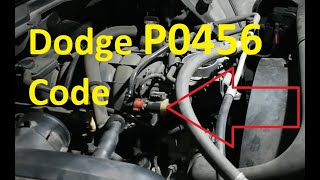
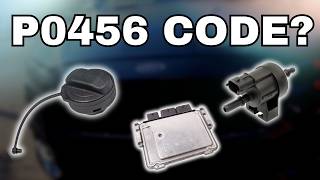
This code means a small leak has been detected in the evaporative emissions system. The most common fixes are tightening or replacing the gas cap (on models so equipped), or replacing the EVAP purge valve or ESIM pump. A gas cap costs around $20-$35, while a purge valve is typically $25-$60 and an ESIM is $40-$90.
- Always start with the simplest solution: check that your gas cap is tight and inspect its seal for damage. Replacing it with an OEM Mopar cap is a cheap and highly effective first step.
- The second most likely culprit is the EVAP purge valve located on the engine, which is a relatively inexpensive and accessible part to replace.
- Be aware that a software update may be the actual fix. TSB #1809423 indicates that the PCM may need reprogramming by a dealer.
- If simple fixes don't work, a smoke test is the most reliable and cost-effective way to find the exact source of the leak before replacing more expensive components.
- This code will not prevent you from driving the car, but it will cause you to fail an emissions inspection.
What's Unique About the 2020-2023 Dodge CHARGER

For this generation of Dodge Charger, a unique and important consideration for the P0456 code is a known software issue. A Technical Service Bulletin (TSB 18-094-23) was issued for 2022 6.4L models, indicating that the code can be falsely triggered and the solution is to reprogram the Powertrain Control Module (PCM). Additionally, many modern Dodge vehicles use an Evaporative System Integrity Monitor (ESIM) to test the system, and this component itself (or its seal) is a very common failure point. Some newer models in this range also feature a capless fuel filler system, eliminating the gas cap as a potential cause and shifting focus to other components like the filler neck's flap seal.
Diagnostic Flowchart

Tap your situation to follow the diagnostic path that matches what you're seeing on this vehicle.
Symptoms You May Notice
- Check Engine Light is on
- A 'loose fuel cap' message may appear on the dashboard (on models with a gas cap)
- A faint smell of gasoline (in rare cases)
- Remote start feature may be disabled by the system until the fault is cleared
- Replacing the expensive charcoal canister when the actual problem is the cheap, simple-to-replace ESIM or its seal attached to it.
- Replacing multiple parts without performing a smoke test, which is the most effective way to pinpoint the exact location of a small physical leak.
- Repeatedly replacing the gas cap when the true issue is a faulty ESIM, a common experience reported by owners.
Most Likely Causes

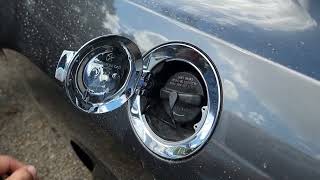
- Loose, Damaged, or Incorrect Gas Cap 🔴 High Probability The gas cap is frequently handled, making its seal prone to wear or user error. However, note that some 2020-2023 models have a capless fuel system, making this cause irrelevant for those vehicles.
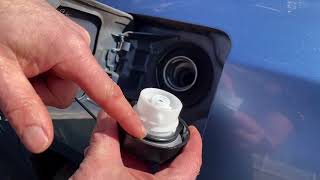
How to confirm: For cars with a cap, inspect it for cracks in the plastic or the rubber O-ring seal. Ensure it is tightened until it clicks at least once. Even if it looks good, the seal can degrade. For capless systems, inspect the spring-loaded flap in the filler neck for debris or damage preventing a proper seal.
Typical fix: First, try tightening the cap. If the code returns, replace the gas cap. It is highly recommended to use an OEM Mopar part, as aftermarket caps can fail to seal correctly. For capless systems, clean the filler neck opening.
Est. part cost: $20-$35 - Faulty EVAP Purge Valve/Solenoid 🟡 Medium Probability The purge valve is an electromechanical part that cycles frequently, leading to eventual wear. It can get stuck slightly open, creating a small leak that is often undetectable without a smoke test.
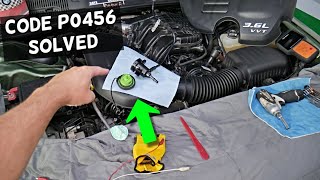
How to confirm: The purge valve is typically located on the engine. You can test it by applying power to see if it actuates, or by removing it and trying to blow through it (it should be closed when no power is applied). A definitive diagnosis is done with a smoke test.
Typical fix: Replacement of the EVAP purge valve assembly. This is a relatively simple replacement on top of the engine.
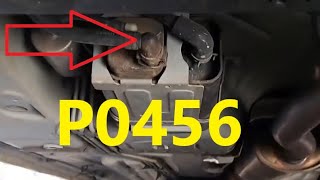
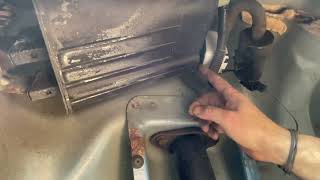
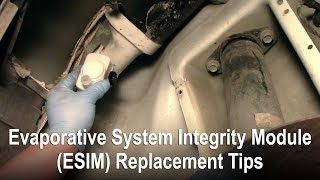
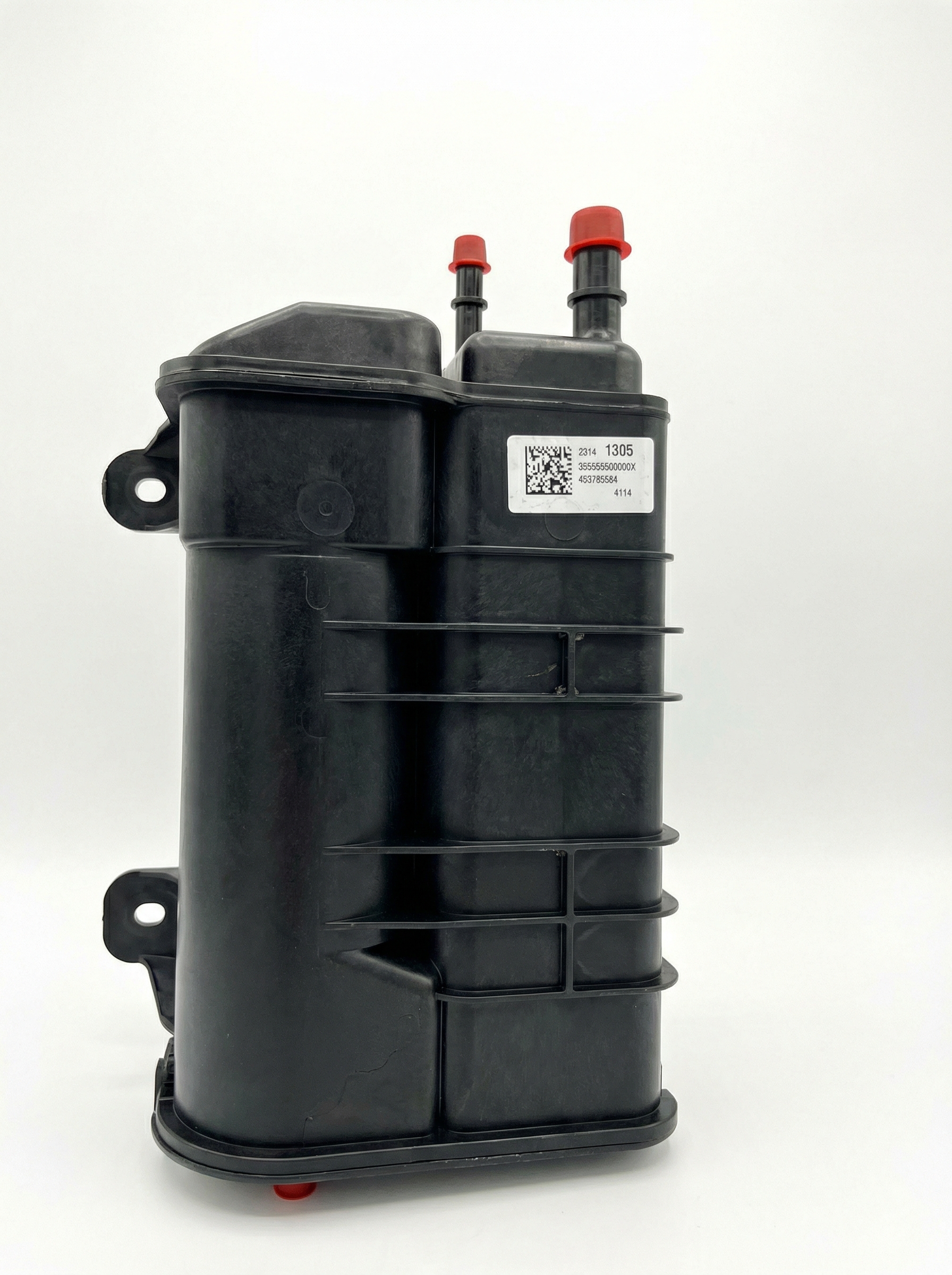
Est. part cost: $25-$60 - Faulty EVAP Leak Detection Pump / ESIM 🟡 Medium Probability This component, located behind the passenger-side rear wheel well liner, contains a weighted switch and a seal that can fail. Forum users and even a Dodge service advisor report this is a very common failure, often after owners have already replaced the gas cap and purge valve to no avail. The seal itself can degrade, causing a leak even if the pump is functional.
How to confirm: This is typically diagnosed after other, more common causes are ruled out. A smoke test may not reveal a faulty ESIM; sometimes the internal mechanism fails its self-test. Given its high failure rate, some owners replace it proactively. It is located by twisting it out of the charcoal canister.
Typical fix: Replacement of the ESIM and its seal. It is highly recommended to replace the seal at the same time.
Est. part cost: $40-$90 - Outdated Powertrain Control Module (PCM) Software ⚪ Low Probability As identified in TSB 18-094-23, 2022 Chargers with the 6.4L V8 may have software that is too sensitive in its leak detection parameters, falsely triggering the code.
How to confirm: A Dodge dealership or a qualified shop with a wiTECH scan tool can check the current software calibration ID of the PCM and determine if the update specified in the TSB is applicable and has not yet been performed.
Typical fix: Reprogramming the PCM with the updated software. This must be done at a dealership or a properly equipped independent shop.
Est. part cost: $0-$200 (depending on warranty/dealership) - Cracked or Disconnected EVAP Hose ⚪ Low Probability Rubber and plastic hoses in the engine bay and under the car are exposed to heat and the elements, which can cause them to become brittle and crack over time. A common failure point is a hose near the fuel tank.
How to confirm: A visual inspection may reveal an obvious crack or disconnection. However, the most effective method is a smoke test, which forces smoke into the EVAP system and makes even tiny leaks visible as smoke escapes from the crack.
Typical fix: Replacing the damaged section of hose or the entire hose assembly.
Est. part cost: $15-$50
Rare But Worth Checking
- Cracked Charcoal Canister: The canister itself can develop hairline cracks, especially if the vehicle has sustained an underbody impact. This is usually found with a smoke test. The entire assembly can be replaced.
- Leaking Fuel Filler Neck: Corrosion or damage to the metal or plastic pipe leading to the gas tank can cause a small leak that is difficult to spot without a smoke test. This is especially relevant on capless systems if the flap seal is compromised.
- Leaking Fuel Pump or Sender Seal: The fuel pump and secondary fuel level sender are located under the rear seat and sealed to the tank with large O-rings. These seals can degrade and cause a leak, which can be found by smoke testing or sometimes by a fuel smell inside the cabin.
Diagnosis Steps

- Read the code with an OBD-II scanner to confirm P0456 and check for any other related codes.
- Determine if your vehicle has a traditional gas cap or a capless system. If it has a cap, inspect it. Remove it, check the seal for cracks or damage, and retighten it until it clicks several times. If capless, inspect the filler neck opening for debris holding the flap open.
- Clear the code with the scanner and drive the vehicle for a few days to see if the light returns. Some systems require several drive cycles to re-test.
- If the light returns, perform a thorough visual inspection of all accessible EVAP hoses in the engine bay and under the vehicle, looking for obvious cracks, damage, or disconnections.
- Locate and inspect the EVAP purge valve in the engine bay. Check its electrical connector and hoses.
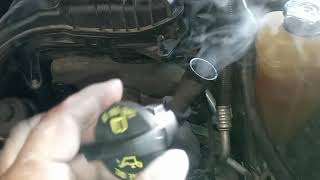
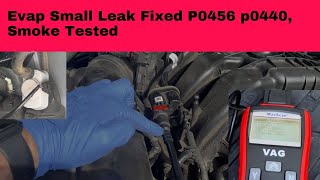
- If no obvious issues are found, the next step is to perform a smoke test. This involves injecting smoke into the EVAP system via the service port and looking for where it escapes. Check around the gas cap, filler neck, all hoses, the purge valve, and the charcoal canister area.
- If the smoke test reveals no leaks, the prime suspects become the ESIM or a software issue. Inspect and consider replacing the ESIM and its seal, located behind the rear passenger-side wheel well liner.
- If you have a 2022 6.4L model, contact a Dodge dealer to check if your vehicle is eligible for the software update outlined in TSB 18-094-23.
Parts You'll Likely Need
- Fuel Tank Cap
(OEM #5278632AG)— This is a common failure point for models with a cap. The seal wears out or the cap is not tightened properly. Using an OEM part is crucial for a proper seal.
Trusted brands: Mopar
OEM price range: $25-$35
Aftermarket price range: $15-$25 - Canister Purge Valve / Solenoid
(OEM #68422661AA (for 3.6L V6), 4627694AB (for 5.7L/6.4L V8))— This valve is a common failure item that gets stuck partially open, causing a small, constant leak that the system detects. Part numbers can vary by engine.
Trusted brands: Mopar, Bosch, Standard Motor Products
OEM price range: $40-$60
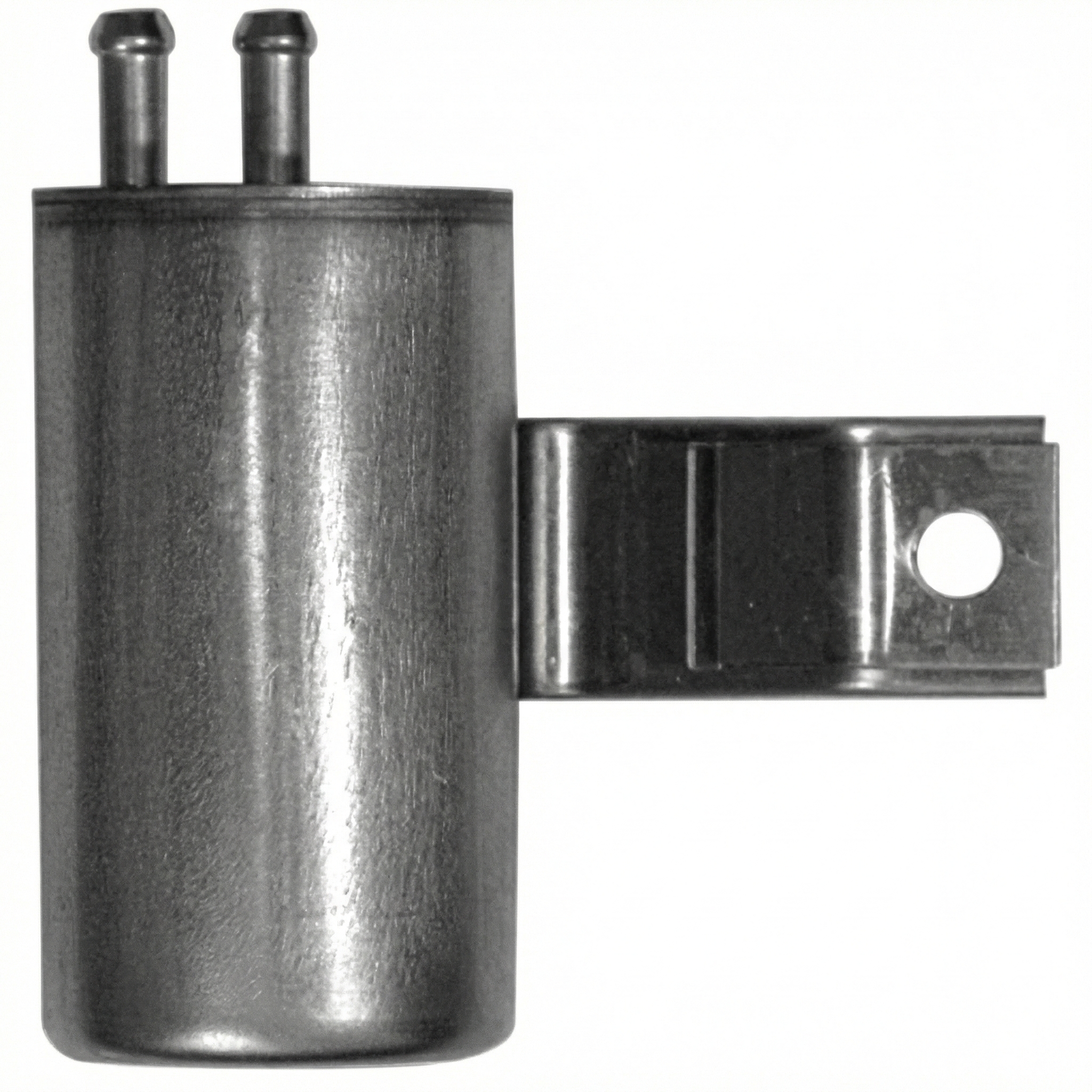
Aftermarket price range: $25-$45 - EVAP System Integrity Module (ESIM) / Leak Detection Pump
(OEM #04861959AD (supersedes 4861959AC))— For persistent
Trusted brands: Mopar, Duralast
OEM price range: $40-$90
Aftermarket price range: $35-$60
Related Codes That Often Appear With This One
- P0455 — This code for a 'Large EVAP Leak' can appear with P0456 if the leak is intermittent or on the borderline between small and large. TSB 18-094-23 also groups these codes together.
- P0457 — This code specifically means 'EVAP System Leak Detected (Gas Cap Loose/Off)'. If the primary issue is the gas cap, you may see this code alongside P0456.
- P0440 — This is a general EVAP system failure code. TSB 18-094-23 notes that it can be set along with P0456.
- P0441 — This code indicates 'Incorrect Purge Flow'. If the purge valve is failing, it can cause both a leak (P0456) and incorrect flow (P0441). TSB 18-094-23 also lists this as a related code.
Technical Service Bulletins (TSBs) & Recalls

- 1809423: Addresses P0456 among other EVAP codes, suggesting a potential fix is reprogramming the PCM.
- 1804823: Confirms the code definition and references the official Small Leak Verification Test (SLVT) procedure.
Platform-Specific Known Issues
- TSB 18-094-23: PCM Software Update: For 2022 Dodge Chargers with the 6.4L V8, a PCM software update may be required to correct the sensitivity of the EVAP leak detection monitor, which could falsely trigger codes P0456, P0455, P0440, or P0441.
- Capless Fuel System: Some models in this year range are equipped with a capless fuel filler. For these vehicles, the common 'loose gas cap' cause is not applicable. Diagnosis should instead focus on the integrity of the filler neck's spring-loaded door and seal.
- ESIM Failure Commonality: Across the Charger/Challenger/300 platform, the ESIM (Evaporative System Integrity Module) located on the charcoal canister is a frequent point of failure for P0456, often more so than the gas cap or purge valve. Many owners report solving the code by replacing this part after other attempts failed.
Mechanic-Grade Diagnostic Values
- EVAP Purge Valve Solenoid Resistance — expected: Approximately 14-50 Ohms, varies with temperature.. Failure: An open circuit (infinite resistance) or a dead short (zero resistance) indicates a failed solenoid coil.
- ESIM Internal Switch Function (Bench Test) — expected: With ground applied to the input pin, the output pin should also go to ground only when pressure is applied to the canister side or vacuum is applied to the vent side.. Failure: If the switch does not change state (remains open or closed) when pressure/vacuum is applied, the internal switch is faulty.
- Scan Tool Live Data: EVAP System Pressure — expected: During a purge cycle, the system should develop a vacuum (negative pressure), for example, -500 Pascals. When the engine is shut off, this vacuum should decay very slowly.. Failure: A rapid decay of vacuum back towards 0 Pa after the engine is off indicates a leak. If the system passes a smoke test but still sets the code, it points to a faulty ESIM not reading the pressure correctly.
Scan Tool Commands That Help
- wiTECH (Dealer Tool): Small Leak Verification Test (SLVT) — This is the manufacturer-specified automated test to confirm a small leak. It's mentioned in TSB #1804823 and is the definitive functional test after a visual inspection and smoke test.
- Professional Scan Tool: Purge Solenoid Duty Cycle / Purge Vapor Test — To functionally test the purge solenoid. The command opens the valve while the technician monitors short-term fuel trims and O2 sensor data. A functioning valve will cause fuel trims to go rich as fuel vapors are introduced into the intake.
Wiring & Ground Locations
- Front Fuse Box (IPM) — Under the hood, on the passenger side of the engine bay.. Contains fuses and a relay related to the engine management and EVAP system. Specifically, check fuses F31, F34, F35, F37 and relay 63.
- Rear Fuse Box — In the trunk, behind the car battery, under the carpet liner.. Contains relays for the EVAP system. Specifically, check relays 14 and 29.
- ESIM Connector — Behind the passenger-side rear wheel well liner, attached to the charcoal canister.. This is the electrical connection for the ESIM. A poor connection or corroded pins can cause communication issues and trigger EVAP codes. The connector must be disconnected to replace the ESIM.
Real Owner Repair Stories
- YouTube comment on 'Auto Repair Guys' video (2014 Dodge Charger SXT) — Persistent P0456 check engine light.
❌ Tried (didn't work) Replacing the vapor canister control valve (purge valve).
✅ What actually fixed it Replacing the 'vapor Leak detection pump' (ESIM). The owner used a Duralast brand part. The check engine light turned off the next day after driving for about 20 miles. - YouTube video by 'P0455 P0456 FIX!!' (Dodge Charger (year not specified, but LD platform)) — P0455 and P0456 codes, 'gas cap' warning on dash.
❌ Tried (didn't work) Initial inspection did not reveal the leak.
✅ What actually fixed it A smoke test revealed a crack in a hard plastic EVAP line located in the passenger rear wheel well area. The owner repaired it by cutting out the cracked section and splicing in a new piece of fuel-rated rubber hose.
"I Checked Everything" — The Actual Cause
- In some cases, the EVAP system will pass a smoke test (meaning there are no physical leaks), yet the P0456 code persists. The root cause is often a faulty Evaporative System Integrity Monitor (ESIM). The ESIM contains an internal, weighted switch that can fail mechanically or electrically. This failure means the ESIM cannot correctly report the system's pressure status to the ECU, causing the ECU to believe there is a leak even when the system is sealed.
When the Usual Fixes Don't Work
- While replacing the gas cap and purge valve are common first steps, numerous owner accounts for this platform report that these actions did not fix the P0456 code. The problem was ultimately resolved by replacing the EVAP System Integrity Module (ESIM) and its seal, located on the charcoal canister. This suggests the ESIM has a higher failure rate on these vehicles than service manuals might imply, and it should be considered a primary suspect if the gas cap is confirmed to be good.
OEM Part Supersession History
4861959AA, 4861959AB, 4861959AC→04861959AD— Component revision and improvement by the manufacturer.
Heads up: The newest part number, 04861959AD, is the correct service replacement for the previous versions.
Model Year Variations Within This Range
- 2020-2023: While the EVAP system location is consistent, the presence of a traditional gas cap versus a capless fuel filler system varies by model year and trim. This changes the first diagnostic step, as a loose/faulty gas cap is a primary cause on equipped models, but irrelevant on capless models.
Helpful Videos
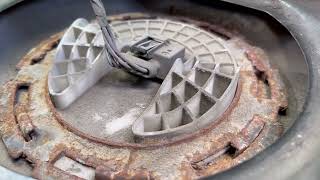
Used OEM Parts in Stock
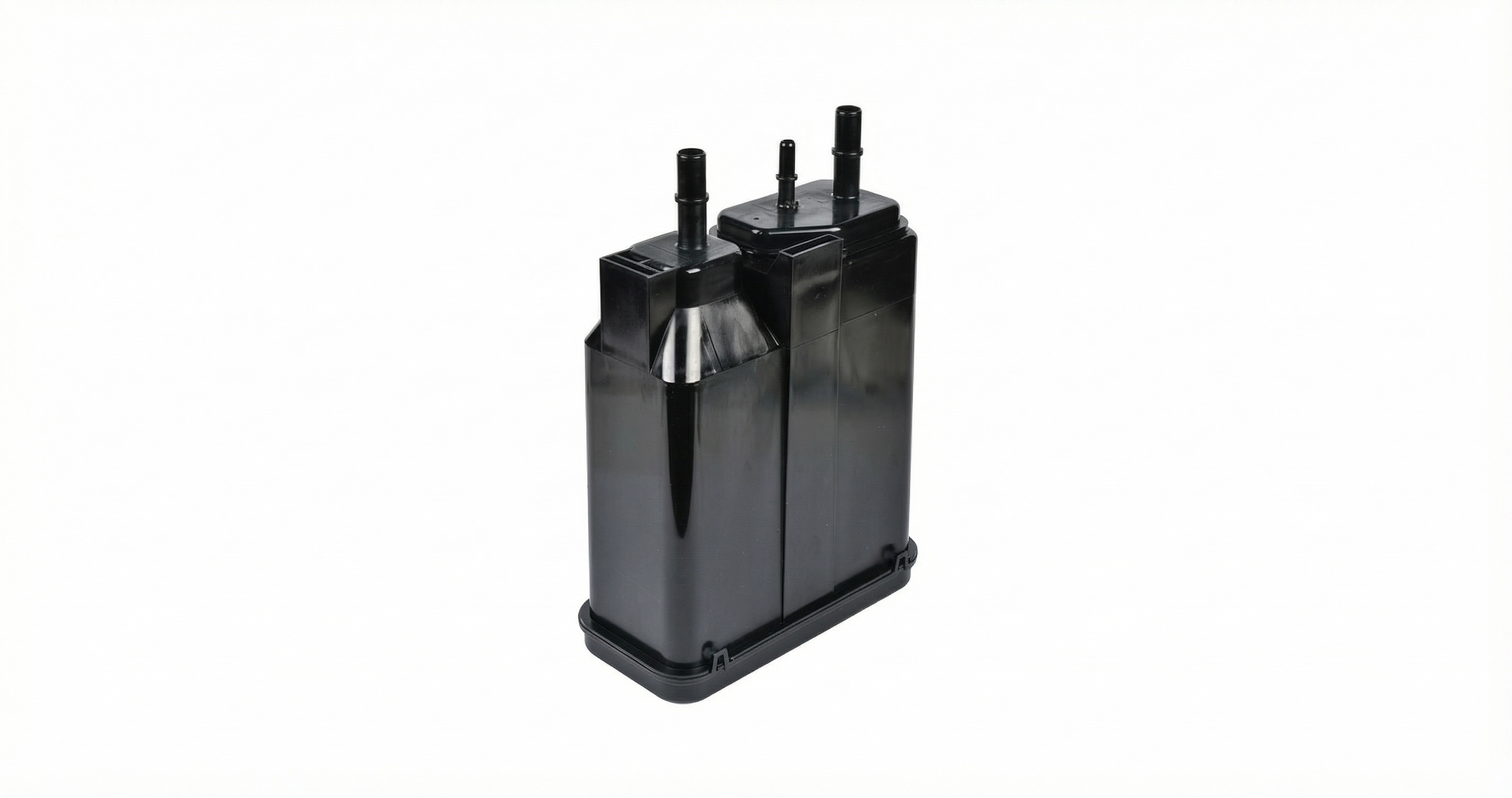


New Aftermarket Parts Available


The information in this article is provided for general reference and educational purposes only. Vehicle specifications, procedures, and part compatibility can vary by production date, trim level, and region. Always consult your vehicle's factory service manual and verify part numbers before purchasing or performing repairs. Safety-critical components such as airbags, seat belts, and braking systems should be installed by a qualified professional.
- Dodge CHARGER:
- 🎬 Helpful Videos
- 🛍️ Shop This Part
- What's Unique About the 2020-2023 Dodge CHARGER
- Diagnostic Flowchart
- Symptoms You May Notice
- Most Likely Causes
- Rare But Worth Checking
- Diagnosis Steps
- Parts You'll Likely Need
- Related Codes That Often Appear With This One
- Technical Service Bulletins (TSBs) & Recalls
- Platform-Specific Known Issues
- Mechanic-Grade Diagnostic Values
- Scan Tool Commands That Help
- Wiring & Ground Locations
- Real Owner Repair Stories
- "I Checked Everything" — The Actual Cause
- When the Usual Fixes Don't Work
- OEM Part Supersession History
- Model Year Variations Within This Range
- 🎟️ Get 5% Off