

P0456 on 2012-2016 Dodge Grand Caravan: EVAP Small Leak Causes and Fixes
For a 2012-2016 Dodge Grand Caravan, a P0456 code is most often caused by a faulty gas cap or a failing Evaporative System Integrity Monitor (ESIM) switch. Start by checking the gas cap for a good seal, but suspect the ESIM switch if the light returns. An ESIM is relatively inexpensive (~$25-$50) and easy to replace. In some cases, a simple PCM software update at the dealership can also resolve an erroneous code.
- Always check the gas cap first for a P0456 code; it's the simplest and most common fix.
- On the 2012-2016 Grand Caravan, the ESIM switch is the second most likely culprit and is known to fail frequently.
- A professional smoke test is the fastest way to find the source of the leak if it's not the gas cap.
- Before replacing parts, check with a dealer to see if your van needs a PCM software update, which could resolve the code.
- When replacing the ESIM or gas cap, using OEM Mopar parts is often recommended to ensure a proper seal and avoid repeat issues.
What's Unique About the 2012-2016 Dodge CARAVAN

On this generation of Dodge Grand Caravan (and other Chrysler/Dodge vehicles of the era), the P0456 code is very frequently linked to a specific component called the Evaporative System Integrity Monitor (ESIM) switch. This part replaced the older, more complex Leak Detection Pump (LDP) system and is known for a high failure rate. Additionally, a manufacturer Technical Service Bulletin (TSB) points to a unique issue where water can get into the EVAP lines, causing the ESIM to fail and trigger this code. A PCM software update, outlined in TSB #18-050-16 REV. A, can also resolve false P0456 codes, indicating the logic for detecting the leak can be overly sensitive.
Diagnostic Flowchart

Tap your situation to follow the diagnostic path that matches what you're seeing on this vehicle.
Symptoms You May Notice
- Check Engine Light is on.
- A faint fuel smell may be present, but this is uncommon for a small leak.
- No noticeable change in vehicle performance.
- Replacing the purge valve when the ESIM switch is the actual problem. While the purge valve can fail, the ESIM is a more frequent failure point for this specific code on these vans.
- Replacing other EVAP components before getting a dealership to check for and apply the PCM software update from TSB #18-050-16 REV. A, which can resolve false positives for this code.
Most Likely Causes


- Loose or Faulty Gas Cap 🔴 High Probability The gas cap seal is a simple rubber O-ring that degrades over time, becoming hard and brittle, which prevents a proper seal. This is a common failure point on all vehicles. Many owners and mechanics strongly recommend using an OEM Mopar cap, as aftermarket caps are frequently reported to not seal correctly and fail to resolve the code.
How to confirm: First, ensure the cap is tightened until it clicks. Inspect the rubber seal for cracks, stiffness, or damage. If it looks worn, it's suspect. A new OEM cap is a cheap first diagnostic step.
Typical fix: Replace the gas cap. It's highly recommended to use an OEM Mopar part (P/N: 5278632AG), as some aftermarket caps have been reported to not seal correctly and perpetuate the issue.
Est. part cost: $15-$35 - Faulty EVAP System Integrity Monitor (ESIM) Switch 🔴 High Probability This specific part has a very high failure rate on Chrysler/Dodge products of this era. A TSB also notes that water ingestion into the EVAP system can directly cause the ESIM to fail. The internal mechanism can stick, tricking the computer into thinking there is a leak.
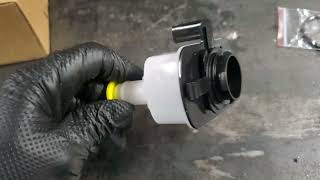
How to confirm: After ruling out the gas cap, this is the next most likely part. Diagnosis often involves a smoke test; if no leaks are found elsewhere, the ESIM is the presumed culprit. 🎬 Watch: A walkthrough of the most common ESIM failure and fix. The switch is located on the charcoal canister near the rear of the vehicle, behind the gas tank.
Typical fix: Replace the ESIM switch. It twists into the charcoal canister with a quarter-turn motion. Access is from underneath the vehicle.
Est. part cost: $25-$50 - Cracked or Disconnected EVAP Hoses/Lines 🟡 Medium Probability The plastic and rubber hoses in the EVAP system, particularly those in the engine bay and the short rubber connectors, become brittle with age and heat cycles and can crack.
How to confirm: A visual inspection may reveal obvious cracks, especially on the purge valve lines in the engine bay, which are often located under the air filter box. A smoke test is the definitive way to find small, hard-to-see cracks in the hose network.
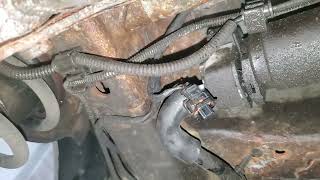
Typical fix: Replace the specific section of cracked hose. A common failure point is a short rubber connector hose located under the air cleaner box that connects two metal tubes. 🎬 Watch: How to find and replace a cracked rubber connector hose.
Est. part cost: $20-$100 - Faulty EVAP Purge Valve/Solenoid ⚪ Low Probability The purge valve can get stuck slightly open, creating a leak path that the system detects. While it can fail, it is considered a less frequent cause for P0456 on this platform compared to the ESIM.
How to confirm: The purge valve is normally closed. With the engine off, disconnect the hose leading to the charcoal canister and try to blow through it. If air passes, the valve is stuck open and faulty. It is located in the engine bay.
Typical fix: Replace the purge valve. This requires removing the air filter housing for access.
Est. part cost: $25-$60
Rare But Worth Checking
- Water Ingestion in EVAP System: A specific TSB (#9003665) for the 2015 model year mentions that if P0456 is present and the ESIM needs replacement, the technician should check the vapor line, fresh air filter, and frame rail blocker for signs of water ingestion. This suggests a potential design or assembly issue allowing water to enter the system and cause failures.
- Leaking Charcoal Canister: The plastic housing of the charcoal canister itself can develop cracks over time, leading to a leak. This is less common than a faulty ESIM or hose, but is often found with a smoke test.
- Leaking Fuel Tank Sending Unit Seal: On modified wheelchair vans where the fuel tank is replaced or altered, the seal for the fuel pump/sending unit can be a source of leaks if not installed perfectly. In some cases, the plastic nipple on the fuel pump assembly itself can crack, requiring a new fuel pump module.
- Broken Fuel Filler Neck Flapper Door: For capless fuel filler systems, the small metal flapper door that seals the opening can break or go missing, which will prevent the system from sealing and immediately cause an EVAP code.
Diagnosis Steps
- Inspect and Tighten the Gas Cap: Remove the gas cap, check the seal for cracks or damage, and ensure it's the correct type for the vehicle. Tighten it until it clicks at least three times. Clear the code. It may take several drive cycles for the light to go out on its own if the problem is fixed.
- Check for PCM Software Updates: Before replacing parts, contact a Dodge dealer or qualified shop to check if your vehicle's VIN is eligible for the software update described in TSB #18-050-16 REV. A. This TSB specifically addresses erroneous P0456 codes.
- Visual Inspection: Look over the EVAP hoses in the engine bay, especially around the purge valve (under the airbox), for any obvious cracks, brittleness, or loose connections.
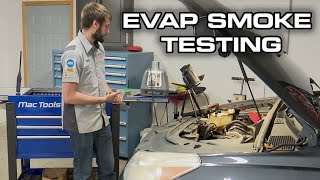
- Perform a Smoke Test: This is the most effective way to find a physical leak. A machine forces low-pressure, vapor-like smoke into the EVAP system, typically through the purge valve line. Smoke will exit from any crack or leak point, making it visible. This test will 🎬 See how to perform a smoke test to find small leaks. quickly identify leaks in hoses, the charcoal canister, or other components.
- Inspect the ESIM Switch: If a smoke test reveals no external leaks, the ESIM switch itself is the most likely cause. It is located on the charcoal canister, which is under the rear of the vehicle near the spare tire. Check the area for signs of water intrusion as noted in TSB #9003665.
- Test the Purge Valve: Disconnect the valve (located in the engine bay) and test to see if it's leaking internally (stuck open) as described in the 'Common Causes' section.
Parts You'll Likely Need
- Evaporative System Integrity Monitor (ESIM) Switch
(OEM #04861963AD)— This is a very high-failure part on Dodge/Chrysler vehicles of this era and a primary cause of P0456 after the gas cap is ruled out. The part number has been superseded multiple times (from AA, AB, AC), indicating revisions to the design.
Trusted brands: Mopar, Standard Motor Products (SMP), Dorman
OEM price range: $35-$75
Aftermarket price range: $25-$40 - Fuel Cap
(OEM #5278632AG)— The seal wears out over time, causing the most common and easiest-to-fix EVAP leak. Using an OEM cap is strongly advised to avoid compatibility issues.
Trusted brands: Mopar, Stant, Gates
OEM price range: $25-$35
Aftermarket price range: $15-$25 - EVAP Purge Valve / Solenoid
(OEM #04891741AC)— Can get stuck open, causing a persistent small leak. It's a common cause, though less so than the ESIM on this platform. This part number supersedes 4891741AA.
Trusted brands: Mopar, Bosch, Delphi
OEM price range: $40-$70
Aftermarket price range: $25-$50
Related Codes That Often Appear With This One
- P0455 — This code indicates a 'Large EVAP Leak.' If a small leak (P0456) gets worse, or if a component fails more significantly (like a large crack in a hose), it can trigger a P0455.
- P0457 — This code means 'EVAP System Leak Detected (Fuel Cap Loose/Off).' It often appears with P0456 if the gas cap is the root cause.
Technical Service Bulletins (TSBs) & Recalls
- 9003665: Notes that if replacing the ESIM for a P0456, to check for water ingestion in the vapor line and fresh air filter.
- 18-050-16 REV. A: Lists a PCM software update that addresses several engine and transmission issues, including fixing false P0456 codes.
- 1804823: Mentions the use of a Small Leak Verification Test (SLVT) with the wiTECH scan tool for diagnosing P0456.
Platform-Specific Known Issues
- A PCM software update may be required to resolve false P0456 codes, as per TSB #18-050-16 REV. A. This bulletin notes that the PCM can be reprogrammed to fix erroneous triggers for this specific code.
- Water can enter the EVAP system's fresh air filter and vapor lines, causing the ESIM to fail and trigger a P0456 code, according to TSB #9003665.
Mechanic-Grade Diagnostic Values
- EVAP Purge Valve Solenoid Resistance — expected: 14.4 Ohms. Failure: An open circuit (infinite resistance) or a value significantly different from the expected reading indicates a faulty solenoid coil.
- ESIM Switch Signal Voltage (at PCM) — expected: 5.0V or 12.0V (depending on vehicle configuration) when the switch is open.. Failure: 0V when the switch is open, or voltage that does not drop to near 0V when a vacuum is applied to the system, indicates a faulty switch or wiring issue.
- Long-Term Fuel Trim (LTFT) at idle vs. 3000 RPM — expected: Below 10% at idle.. Failure: If LTFT is normal at idle but jumps significantly (e.g., to 13% or higher) when the engine is revved, it can indicate a vacuum leak, which could be from the EVAP system.
Scan Tool Commands That Help
- wiTECH (Chrysler/Dodge/Jeep Dealer Tool): Small Leak Verification Test (SLVT) — This is a mandatory first step in dealer diagnosis for P0456. It must be run to verify a leak is present before replacing parts and must be run again after the repair to confirm the fix. A standard road test will not confirm the repair for this code.
- wiTECH or high-end bidirectional scanner: EVAP Purge Solenoid Actuation Test — This command manually opens and closes the purge solenoid. A technician can use this to verify the solenoid clicks and that it seals properly when commanded closed during a smoke or vacuum test.
Wiring & Ground Locations
- Engine to Chassis Ground Strap — On the 3.6L Pentastar, a critical braided ground strap connects from a post on the upper engine mount (driver's side) to the chassis.. This ground is known to corrode and break. While not directly part of the EVAP circuit, poor grounding can cause a host of erratic electrical issues and false codes from various sensors and modules, including the PCM which monitors the EVAP system.
- ESIM Connector Ground — The ESIM switch is located on the charcoal canister, under the rear of the vehicle near the gas tank.. The connector for the ESIM is exposed to road salt and moisture, which can lead to corrosion and a bad ground connection, causing the switch to fail to report its status to the PCM correctly.
Real Owner Repair Stories
- YouTube user 'Alex Fix It All' (2009 Dodge Grand Caravan) — Check engine light with code P0457 (often related to P0456).
❌ Tried (didn't work) A smoke test was performed and the purge valve was tested and found to be working correctly.
✅ What actually fixed it The technician inspected the ESIM switch connector and found it was heavily corroded with green residue from road salt. The switch itself was providing no ground signal. Replacing the ESIM switch resolved the issue. - YouTube user 'The Flat Rate Mechanic' (2012 Dodge Grand Caravan 3.6L) — Reoccurring check engine light with code P0456.
❌ Tried (didn't work) Gas cap was inspected and confirmed to be good., A full EVAP system smoke test was performed and no leaks were found., The purge valve was manually tested and confirmed not to be leaking.
✅ What actually fixed it Based on the high failure rate of the part and the fact that all other tests passed, the ESIM switch was replaced. This is identified as the most common cause on this platform after ruling out the gas cap and physical leaks.
"I Checked Everything" — The Actual Cause
- In many documented cases for this platform, a smoke test will pass with no leaks found, yet the P0456 code persists. The most common cause in this scenario is an internally failing Evaporative System Integrity Monitor (ESIM) switch. The switch mechanism fails without creating an external leak, tricking the PCM into believing a leak exists.
- A weak or failing battery can cause low system voltage, which may lead to erratic sensor readings and false trouble codes, including P0456. In one documented case on a similar Chrysler platform, replacing a 5-year-old battery that was causing no other obvious symptoms finally resolved a persistent P0456 code after all common EVAP parts had already been replaced.
When the Usual Fixes Don't Work
- While the most common fixes involve the gas cap or ESIM switch, there are cases where the root cause is electrical. On a similar platform, a persistent P0456 that was not resolved by replacing the gas cap, purge valve, and ESIM was ultimately fixed by replacing old main and auxiliary batteries. The theory is that low voltage from the aging batteries caused a sensor in the EVAP system to malfunction and give a false reading.
OEM Part Supersession History
4861963AA, 4861963AB, 4861963AC→04861963AD— The part has been revised multiple times by the manufacturer, which typically indicates design improvements to increase reliability and address the high failure rate.
Heads up: Part number 04861963AD is specified for vehicles built after September 4, 2013. While it may fit earlier models, using the latest specified part is recommended.
Model Year Variations Within This Range
- 2013-2016: A change in the recommended ESIM switch part number (to 04861963AD) occurred for vehicles built after September 4, 2013, suggesting a potential design update mid-generation.
Helpful Videos
We Have This Part in Stock


The information in this article is provided for general reference and educational purposes only. Vehicle specifications, procedures, and part compatibility can vary by production date, trim level, and region. Always consult your vehicle's factory service manual and verify part numbers before purchasing or performing repairs. Safety-critical components such as airbags, seat belts, and braking systems should be installed by a qualified professional.
- Dodge CARAVAN:
- 🎬 Helpful Videos
- 🛍️ Shop This Part
- What's Unique About the 2012-2016 Dodge CARAVAN
- Diagnostic Flowchart
- Symptoms You May Notice
- Most Likely Causes
- Rare But Worth Checking
- Diagnosis Steps
- Parts You'll Likely Need
- Related Codes That Often Appear With This One
- Technical Service Bulletins (TSBs) & Recalls
- Platform-Specific Known Issues
- Mechanic-Grade Diagnostic Values
- Scan Tool Commands That Help
- Wiring & Ground Locations
- Real Owner Repair Stories
- "I Checked Everything" — The Actual Cause
- When the Usual Fixes Don't Work
- OEM Part Supersession History
- Model Year Variations Within This Range
- 🎟️ Get 5% Off