

P0456 on 2017-2021 Chrysler Pacifica Hybrid: Causes and Fixes for Small EVAP Leaks
This code means a small leak was found in the evaporative emissions system. For the Pacifica Hybrid, which has a capless fuel filler, the most common causes are a faulty EVAP purge valve under the hood or a bad leak detection pump (ESIM) and its seal near the driver's side rear wheel. Check and clean the fuel filler flap first, then suspect these parts. A smoke test is the best diagnostic tool.
- P0456 on a Pacifica Hybrid indicates a very small leak in the fuel vapor system.
- Do not look for a gas cap to tighten; this vehicle has a capless system. Check the filler flap for debris first.
- The most likely culprits are the EVAP purge valve (under the hood) or the leak detection pump/ESIM (in the rear driver's side wheel well).
- A professional smoke test is the fastest and most accurate way to find the exact location of the leak.
- The vehicle is safe to drive, but the issue should be fixed to pass emissions testing and prevent minor fuel economy loss.
What's Unique About the 2017-2021 Chrysler PACIFICA PLUG-IN HYBRID

Unlike many vehicles where a loose gas cap is the number one cause of a P0456 code, the 2017-2021 Chrysler Pacifica Hybrid uses a capless fuel filler system. This means the problem is almost never a traditional gas cap. Instead, issues are more frequently traced to specific components like the EVAP purge valve under the engine cover or the leak detection pump (also called an ESIM or Evaporative System Integrity Monitor) located near the charcoal canister in the driver's side rear wheel well.
Diagnostic Flowchart

Tap your situation to follow the diagnostic path that matches what you're seeing on this vehicle.
Symptoms You May Notice
- Check Engine Light is on
- A faint fuel smell, possibly near the rear of the vehicle
- Slightly reduced fuel economy
- Difficulty starting immediately after refueling (less common)
- Code may appear intermittently at first but then become persistent.
- Replacing the gas cap. This vehicle does not have a traditional, removable gas cap, so this common advice for P0456 does not apply.
Most Likely Causes

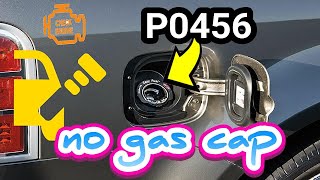
- Faulty EVAP Purge Valve/Solenoid 🔴 High Probability The purge valve is a very common failure point on many Chrysler models. It can get stuck slightly open, causing a small, persistent leak that the system detects. 🎬 Watch: A mechanic explains the P0456 code and common causes. Video evidence from mechanics shows the valve failing a smoke test when commanded closed.
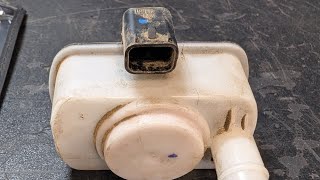
How to confirm: A smoke test is definitive. With the valve commanded closed by a scan tool, a technician can introduce smoke into the system; if smoke is seen escaping from the purge valve outlet, it has failed. A capable scanner can also show the valve's commanded position vs. the system's ability to hold a vacuum.
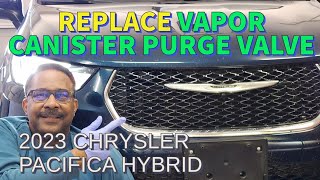
Typical fix: Replacement of the EVAP purge valve. It is located on top of the engine under the plastic cover and is held in by two bolts and two hose connections, making it a relatively simple DIY replacement. 🎬 Watch this step-by-step guide to replacing the EVAP purge valve.
Est. part cost: $25-$70 - Failed Leak Detection Pump (ESIM) or Seal 🔴 High Probability Chrysler vehicles use an Evaporative System Integrity Monitor (ESIM) to test the system. This component itself can fail, but more commonly, its rubber O-ring seal on the charcoal canister degrades, creating the very leak it's supposed to detect.
How to confirm: A smoke test is the most effective method. Smoke is introduced into the EVAP system, and if it's seen escaping from the ESIM unit or its seal on the charcoal canister, the part is confirmed bad. A mechanic can isolate the canister by disconnecting other lines to prove the leak is from the ESIM.
Typical fix: Replace the ESIM and its O-ring seal. This part is located in the driver's side rear wheel well, mounted directly to the charcoal canister. Access requires removing the wheel and fender liner. The part twists to lock and unlock.
Est. part cost: $20-$50 - Debris in Capless Fuel Filler Flap 🟡 Medium Probability The capless system relies on a spring-loaded flap to seal the fuel tank. Dirt, dust, or corrosion can prevent this flap from closing completely, creating a small leak. This is a common first check for owners.
How to confirm: Visually inspect the fuel filler opening. Use a clean cloth to wipe around the sealing surface. Ensure the metal flap is clean and springs back to a fully closed position after being pushed open.
Typical fix: Clean the fuel filler neck opening with a clean cloth and a small amount of solvent if needed. If the spring mechanism is broken or the seal is damaged, the entire fuel filler neck assembly must be replaced.
Est. part cost: $0 for cleaning, $150-$300 for filler neck assembly - Cracked or Disconnected EVAP Hose ⚪ Low Probability Over time, the rubber and plastic hoses in the EVAP system can become brittle and develop small cracks, especially at connection points or where they are secured by clips.
How to confirm: A visual inspection may reveal obvious cracks, but a smoke test is the definitive way to find a small hose leak. Smoke will be visible escaping from the cracked area, which can be anywhere from the engine bay to the fuel tank.
Typical fix: Replace the specific section of cracked hose. In some cases, a small crack can be repaired, but replacement is recommended for a long-term fix.
Est. part cost: $10-$40
Rare But Worth Checking
- Cracked Charcoal Canister: While not common for causing a *small* leak (it usually causes a large leak code like P0455), a hairline crack in the plastic housing of the canister can trigger a P0456. This is usually found via a smoke test after all other components have been checked.
- Faulty Powertrain Control Module (PCM) Software: In some cases, particularly if no leak can be found with a smoke machine, the P0456 code may be triggered by a software glitch. Chrysler has issued TSBs for other models for this exact issue, and mechanics report that a PCM flash update can be the solution.
Diagnosis Steps
- Inspect the capless fuel filler neck for any debris that may be preventing the flap from sealing completely. Clean if necessary.
- Visually inspect all accessible EVAP hoses under the hood and around the rear of the vehicle for obvious cracks, disconnections, or damage.
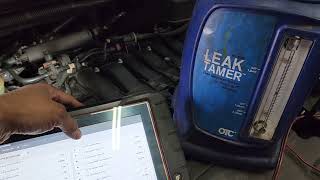
- The most effective diagnostic step is to perform a smoke test. 🎬 See how to perform a smoke test on a Pacifica. A machine fills the EVAP system with a harmless, visible smoke under low pressure.
- Observe where the smoke escapes. Common leak points are the purge valve (under the engine cover), the ESIM/leak detection pump (driver's side rear wheel well), or hose connections.
- Professional Technique: To isolate the rear components, a technician can introduce smoke at the canister and disconnect/plug the lines going to the fuel tank and purge valve. If smoke still leaks, the fault is confirmed to be the canister, ESIM, or ESIM seal.
- Once the leak is located, replace the faulty component.
- Crucial Final Step: Per TSB #18-048-23, the repair MUST be verified using the dealer's wiTECH Small Leak Verification Test (SLVT). A simple drive cycle is not sufficient to confirm the fix.
Parts You'll Likely Need

- Vapor Canister Purge Valve / Solenoid
(OEM #04627694AB)— This is a very common failure point. It gets stuck slightly open, causing a small leak that triggers the P0456 code.
Trusted brands: Mopar, Dorman, Standard Motor Products
OEM price range: $40-$70
Aftermarket price range: $25-$50 - EVAP System Integrity Monitor (ESIM) / Leak Detection Pump
(OEM #4861962AB (supersedes 4861962AA), 04861962AD)— This is the Chrysler-specific part used to test the system. The unit itself or its O-ring seal can fail, creating the leak it's supposed to detect. This is a very common fix.
Trusted brands: Mopar, Dorman
OEM price range: $30-$50
Aftermarket price range: $20-$40 - Fuel Filler Neck — Only needed if the spring-loaded flap in the capless system is damaged and fails to seal properly.
Trusted brands: Mopar
OEM price range: $150-$300
Aftermarket price range: $100-$200
Related Codes That Often Appear With This One
- P0440 — This is a general EVAP system malfunction code that can sometimes appear with more specific leak codes like P0456, indicating a general problem in the system that the computer is trying to pinpoint.
- P0441 — This code for 'Incorrect Purge Flow' can be triggered if the purge valve is not functioning correctly, which can also be the root cause of the P0456 leak.
- P0455 — This code for a 'Large EVAP Leak' can sometimes appear alongside P0456 if a small leak worsens over time or if the system is experiencing multiple issues. One owner reported P0455 appearing after initially only having P0456.
Technical Service Bulletins (TSBs) & Recalls
- 18-048-23: wiTECH Small Leak Verification Test (SLVT) - P0456-EVAP SYSTEM SMALL LEAK. This TSB is informational, instructing technicians that it is mandatory to use the SLVT to diagnose and, more importantly, to verify the fix. It explicitly states a road test is not a valid method to confirm a P0456 repair.
Platform-Specific Known Issues
- A Technical Service Bulletin (TSB #18-048-23) exists for a 'wiTECH Small Leak Verification Test (SLVT)' related to code P0456. It mandates using this specific dealer tool to verify a repair is successful, as a normal drive cycle will not immediately confirm the fix.
- Some owners have reported that a software update (flash) for the Powertrain Control Module (PCM) can resolve a false P0456 code if no physical leak can be found with a smoke test.
- One owner on Reddit reported a persistent P0456 code for two years following a dealership recall repair. After replacing the ESIM (emissions pump near the rear driver's tire) themselves, they discovered the old part had a significant crack, finally resolving the issue.
Mechanic-Grade Diagnostic Values
- EVAP Purge Valve Solenoid Resistance — expected: 14-30 Ohms at room temperature.. Failure: An open circuit (infinite resistance) or a reading significantly outside the expected range indicates a faulty solenoid coil.
- EVAP Purge Valve Connector Voltage — expected: Battery voltage (~12V) on one pin with Key On, Engine Off.. Failure: Low or no voltage suggests a wiring or PCM driver issue, not a faulty valve.
- ESIM Switch Voltage (via Scan Tool) — expected: ~4.5 Volts when the system is open to atmosphere (no vacuum/pressure).. Failure: Voltage does not drop to near 0V when vacuum is applied, or is stuck high/low, indicating a faulty internal switch.
- Fuel Tank Pressure (FTP) Sensor Voltage — expected: Typically fluctuates between 0.5V and 4.5V. A baseline reading with no pressure or vacuum is often around 1.5V.. Failure: Voltage is stuck at 0V, 5V, or does not change when the system is tested, indicating a faulty sensor or wiring.
Hidden / Shadow Codes Worth Checking
- Mode $06, Test ID $39: On many Chrysler platforms, this Test ID corresponds to the onboard monitor for the 0.020" (small) leak test. A failing value in the raw data can confirm the condition that sets the P0456 code, sometimes before the code becomes persistent. (see via A professional scan tool with Mode $06 data capability is required.)
Scan Tool Commands That Help
- wiTECH (Dealer Tool): Small Leak Verification Test (SLVT) — Mandated by TSB #18-048-23 for both diagnosing a P0456 and, crucially, verifying the repair is successful. It uses the fuel tank pressure sensor to confirm the system is sealed, providing a pass/fail result without requiring a multi-day drive cycle.
- Professional Scan Tool: EVAP Purge Solenoid Control — Used during a smoke test to command the purge valve to 0% (closed). If smoke passes through the valve when it is commanded closed, the valve is faulty and leaking internally.
Wiring & Ground Locations
- EVAP Purge Valve Connector — On top of the engine, under the plastic 3.6L engine cover. It is a 2-wire connector.. Provides power and the control signal from the PCM. A damaged connector or wiring can prevent the valve from closing, causing a leak. Pigtail repair kits (e.g., Standard Motor Products XD879QH) are available.
- ESIM Connector — On the ESIM unit, which is attached to the charcoal canister in the driver's side rear wheel well.. This 2-pin connector provides a constant ground and the signal path for the internal switch. A bad connection can prevent the PCM from seeing the switch status. CRITICAL: The ESIM must be installed with this connector oriented at the 3 o'clock position for the internal gravity-based weights to function correctly.
Real Owner Repair Stories
- YouTube user 'Charles Revamp' (2015 Dodge Dart (similar Chrysler EVAP system)) — P0456 Check Engine Light.
❌ Tried (didn't work) Replacing the gas cap, Replacing the EVAP purge valve solenoid
✅ What actually fixed it Replacing the Evaporative System Integrity Module (ESIM) finally resolved the code, which did not return after more than 1,000 miles of driving. - Reddit user 'notofyourworld' (2018 Jeep Grand Cherokee (similar Chrysler EVAP system)) — P0456 Check Engine Light.
❌ Tried (didn't work) Smoke test showed a leak from a filter attached to the ESIM.
✅ What actually fixed it Replacing the ESIM (specifically a Dorman aftermarket part) resolved the issue. The theory was the internal valve in the ESIM was stuck, allowing vapor to escape through its atmospheric filter. The CEL turned off after a drive cycle.
"I Checked Everything" — The Actual Cause
- A faulty ESIM switch. The EVAP system can be perfectly sealed (passing a smoke test), but if the electrical switch inside the ESIM fails, it cannot report the sealed state to the PCM, which then sets the P0456 code assuming a leak. This requires electrical testing of the ESIM switch to diagnose.
- A PCM software glitch. Multiple TSBs and technician reports confirm that on some Chrysler models, the PCM software is too sensitive and can falsely trigger a P0456 code. If a smoke test finds no leak, checking for an available PCM flash update is a required diagnostic step.
- An internal failure of the charcoal canister. In some rare cases, the canister can fail internally in a way that causes a leak under specific test conditions but does not show up during a standard smoke test.
When the Usual Fixes Don't Work
- While the purge valve and ESIM are the most common causes, owners should not rule out a software issue. Multiple owners and technicians have reported chasing this code by replacing parts, only to find that a PCM software update was the ultimate fix. TSB #18-095-19 specifically notes that a P0456 code can be caused by a software issue, and advises performing the wiTECH SLVT to verify a physical leak before assuming it's a software fault.
OEM Part Supersession History
4861962AA, 4861962AB, 4861962AC→04861962AD— Component revision and improvement for the EVAP System Integrity Monitor (ESIM).
Heads up: The newest part number is generally recommended and is a direct replacement for the older versions.
Helpful Videos

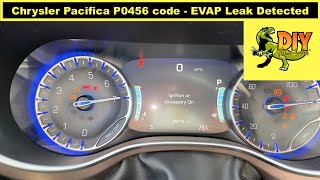
Used OEM Parts in Stock
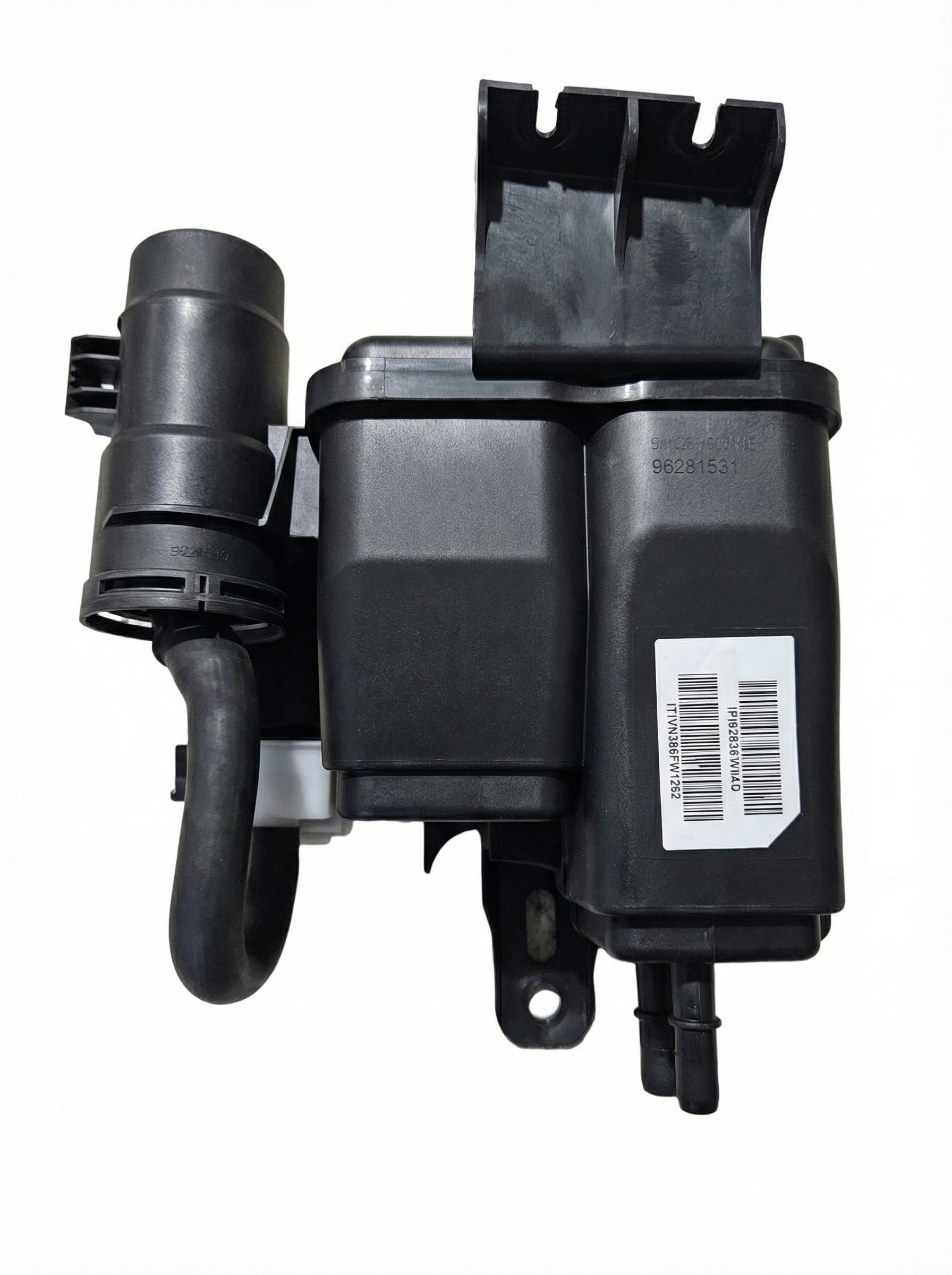
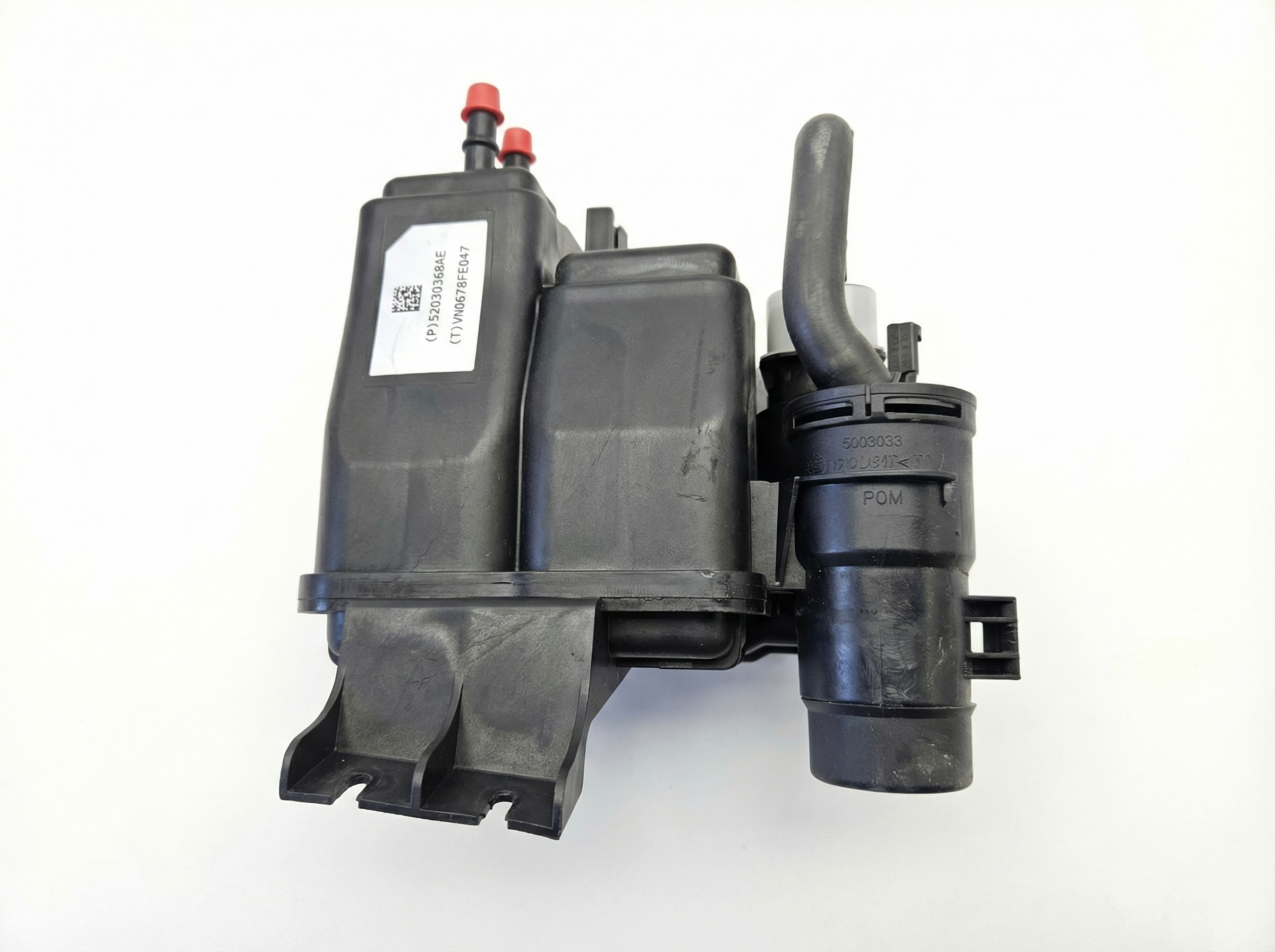
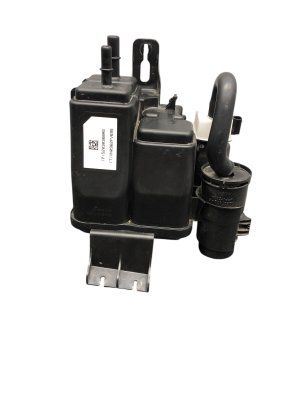
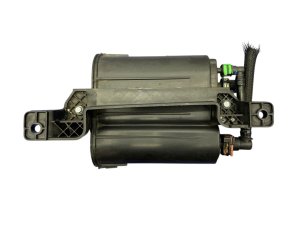
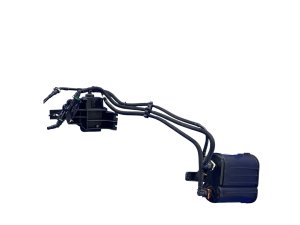
New Aftermarket Parts Available

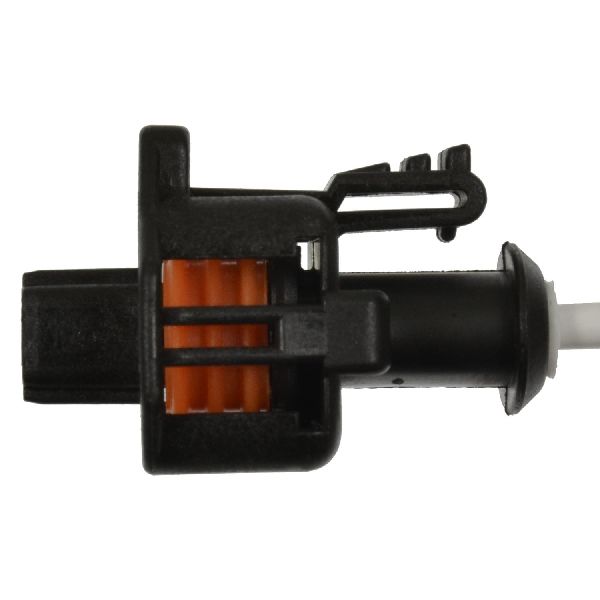

The information in this article is provided for general reference and educational purposes only. Vehicle specifications, procedures, and part compatibility can vary by production date, trim level, and region. Always consult your vehicle's factory service manual and verify part numbers before purchasing or performing repairs. Safety-critical components such as airbags, seat belts, and braking systems should be installed by a qualified professional.
- Chrysler PACIFICA PLUG-IN HYBRID:
- 🎬 Helpful Videos
- 🛍️ Shop This Part
- What's Unique About the 2017-2021 Chrysler PACIFICA PLUG-IN HYBRID
- Diagnostic Flowchart
- Symptoms You May Notice
- Most Likely Causes
- Rare But Worth Checking
- Diagnosis Steps
- Parts You'll Likely Need
- Related Codes That Often Appear With This One
- Technical Service Bulletins (TSBs) & Recalls
- Platform-Specific Known Issues
- Mechanic-Grade Diagnostic Values
- Hidden / Shadow Codes Worth Checking
- Scan Tool Commands That Help
- Wiring & Ground Locations
- Real Owner Repair Stories
- "I Checked Everything" — The Actual Cause
- When the Usual Fixes Don't Work
- OEM Part Supersession History
- 🎟️ Get 5% Off