

P0456 on 2020-2023 Chrysler 300: EVAP Small Leak Causes and Fixes
P0456 indicates a small leak in the evaporative emissions system. The most common cause is a loose or faulty gas cap. If the cap is secure, the next most likely culprits are the EVAP purge valve or a software issue requiring a dealer to reprogram the powertrain control module (PCM) as noted in a manufacturer TSB. On these vehicles and their platform mates, a failed Evaporative System Integrity Monitor (ESIM) is also a very frequent cause.
- Always check the gas cap first. Ensure it's tight and the seal is in good condition before attempting any other repairs.
- Be aware of TSB #1809223. A software update at the dealership might be the correct and only fix, saving you from buying unnecessary parts.
- If the gas cap and software are good, the most likely failed parts are the purge valve (in the engine bay) or the ESIM/LDP (near the rear wheel).
- A professional smoke test is the most effective way to find the physical location of a small leak if it's not one of the common component failures.
What's Unique About the 2020-2023 Chrysler 300
For the 2020-2023 Chrysler 300 and its platform mates like the Dodge Charger, this code can be misleading. While physical parts are common causes, Chrysler has issued Technical Service Bulletins (TSBs) indicating that a software glitch can falsely trigger P0456. TSB #18-092-23 specifically addresses this on 2022 models with the 5.7L V8 engine, requiring a PCM reprogram. Similar software updates exist for other models and years, making it crucial to check for applicable TSBs before replacing expensive components. Furthermore, a high failure rate of the Evaporative System Integrity Monitor (ESIM) on the LX platform means it should be a primary suspect after the gas cap is ruled out.
Diagnostic Flowchart
Tap your situation to follow the diagnostic path that matches what you're seeing on this vehicle.
Symptoms You May Notice
- Check Engine Light is on
- A faint fuel smell, particularly around the rear of the car or after refueling
- Gas cap warning message on the dashboard (if equipped)
- Difficulty refueling (pump clicks off repeatedly), which can be related to a blocked vent path
- Replacing the charcoal canister when the actual problem is a small, inexpensive hose connected to it or the ESIM mounted on it.
- Replacing multiple EVAP components when the root cause is a software issue that requires a PCM reflash per TSB #18-092-23.
- Repeatedly replacing the gas cap when the actual failure is the ESIM/Leak Detection Pump. 🎬 Watch: A helpful guide to fixing common P0456 leak sources.
Most Likely Causes
- Loose, Damaged, or Incorrect Gas Cap 🔴 High Probability The gas cap is the most frequently handled part of the fuel system. Human error (not tightening it enough) or simple wear of the rubber seal are very common. The seal can develop cracks over time, breaking the system's seal.
How to confirm: Remove the gas cap and inspect the rubber O-ring for cracks, stiffness, or damage. Ensure it is an OEM Mopar cap, as aftermarket caps can sometimes cause issues. Tighten the cap until it clicks at least three times, clear the code, and drive for a few days to see if the light returns.
Typical fix: Replace the gas cap. It's an inexpensive and easy first step.
Est. part cost: $15-$40 - Powertrain Control Module (PCM) Software Update Needed 🟡 Medium Probability Chrysler issued TSB #18-092-23 for 2022 5.7L V8 models, indicating the logic for detecting EVAP leaks was too sensitive and could set a false P0456 code. This is a known software issue, not a physical part failure, and similar TSBs exist for other FCA vehicles.
How to confirm: A Chrysler dealership or a qualified shop with a wiTECH scan tool can check your PCM's current software calibration against the latest version. If outdated and the symptoms match, the TSB applies.
Typical fix: Reprogram the PCM with the updated software. The labor time for TSB #18-092-23 is listed as 0.2 hours. 🎬 See how a professional technician reflashes a Chrysler PCM.
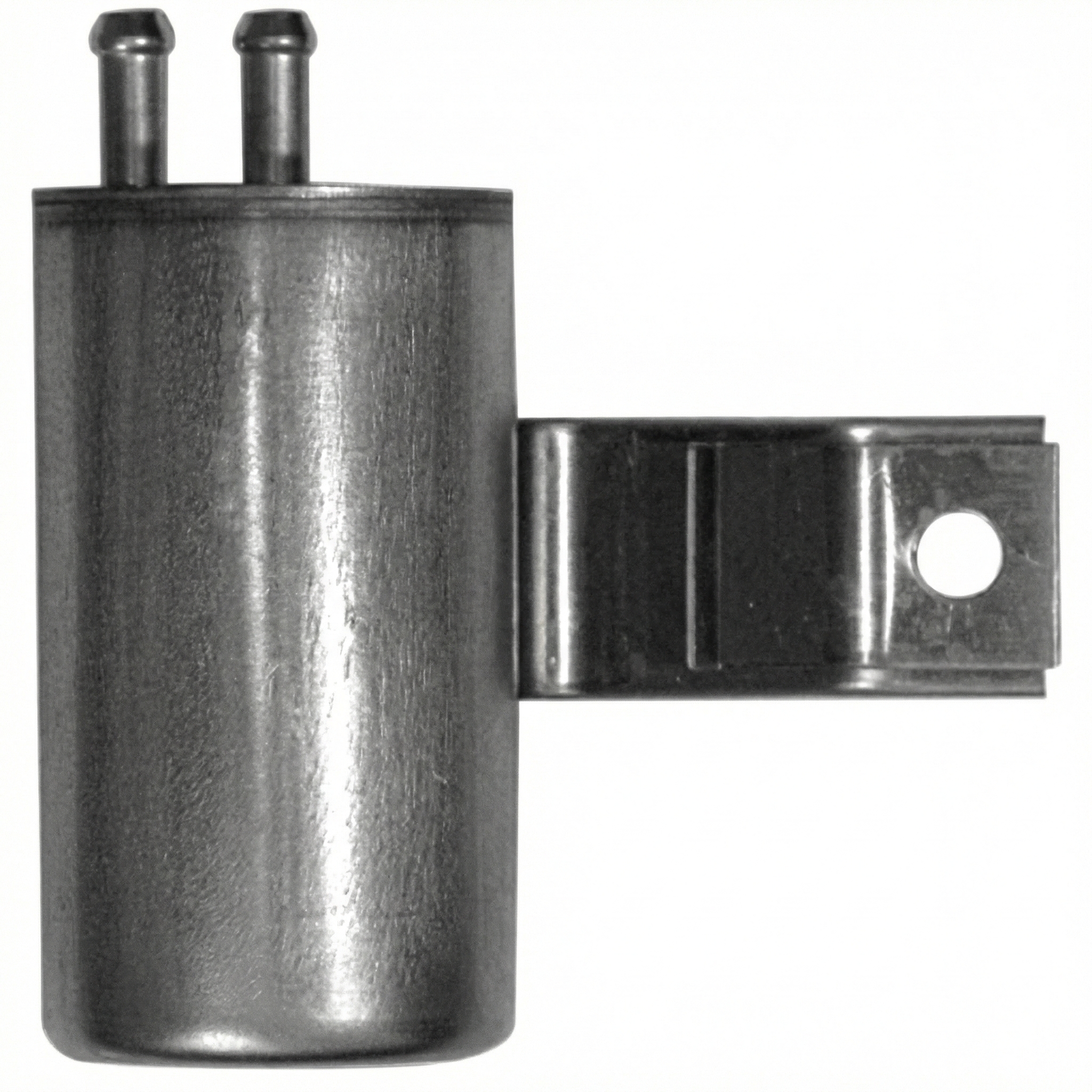
Est. part cost: $0 (if under warranty) - Faulty Evaporative System Integrity Monitor (ESIM) / Leak Detection Pump (LDP) 🟡 Medium Probability This component, which performs the leak test, is a known high-failure item on Chrysler/Dodge/Jeep platforms. The internal mechanism can break, causing it to rattle when shaken and incorrectly report a leak. It is often the true culprit when a new gas cap doesn't solve the code.
How to confirm: The ESIM is located on the charcoal canister, accessible by removing the rear passenger-side wheel well liner. A definitive sign of failure is if the old part rattles when shaken, while the new part does not. A mechanic can also test its electrical function; it should close a switch and output a ground signal when vacuum is applied.
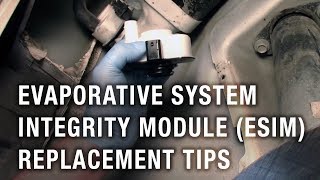
Typical fix: Replace the ESIM assembly. It is removed with a simple counter-clockwise twist after disconnecting the hose and electrical connector. 🎬 Watch: This video shows how to replace the ESIM assembly.
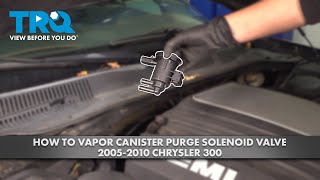
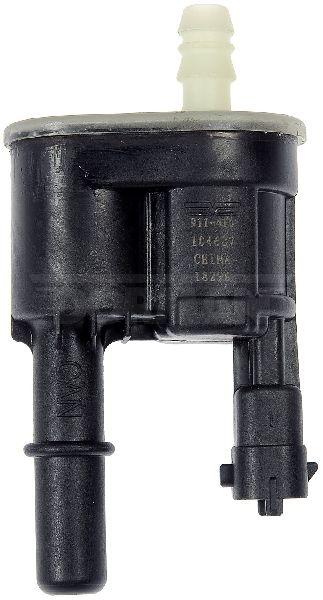
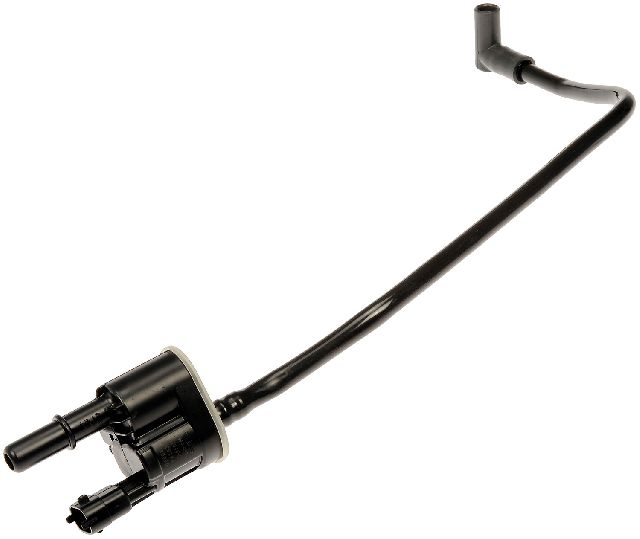
Est. part cost: $50-$100 - Faulty EVAP Purge Valve/Solenoid 🟡 Medium Probability The purge valve controls the flow of fuel vapors to the engine. It can get stuck slightly open, creating a small leak path that the system detects. This is a common failure point on many modern vehicles.
How to confirm: The purge valve is typically located on the engine. With the engine off and electrical connector unplugged, it should be closed and not allow air or vacuum to pass through. A mechanic can also command it open and closed with a scan tool to test its function.
Typical fix: Replace the EVAP purge valve.
Est. part cost: $30-$70 - Cracked or Disconnected EVAP Hoses ⚪ Low Probability The rigid plastic hoses used in the EVAP system can become brittle over time due to heat and age, leading to small cracks, especially at connection points. Rodents have also been known to chew on these lines.
How to confirm: A visual inspection of hoses in the engine bay and around the canister may reveal obvious cracks. However, a smoke test is the definitive method. A mechanic injects low-pressure smoke into the EVAP system and looks for where it escapes.
Typical fix: Replace the cracked section of hose. Some owners splice in a section of fuel-rated rubber hose as a durable repair.
Est. part cost: $10-$50
Rare But Worth Checking
- Leaking Charcoal Canister: The plastic housing of the canister itself can develop hairline cracks. This is usually found only with a smoke test after all other common causes have been ruled out.
- Leaking Fuel Filler Neck: Corrosion or damage to the metal or plastic tube leading to the gas tank can cause a leak. This is more common in older vehicles or those in rust-prone climates but can also happen if work was recently performed on the fuel system.
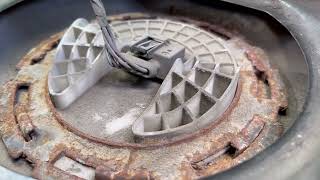
- Leaking Fuel Pump Seal: The O-ring sealing the fuel pump module to the top of the gas tank can fail, creating a leak. This might be accompanied by a strong fuel smell inside the car, especially after refueling. A smoke test is the best way to confirm this.
Diagnosis Steps
- Read the code with an OBD-II scanner to confirm P0456 is present.
- Inspect the gas cap. Ensure it is tight (at least three clicks). Remove it and check the seal for any cracks or damage. If in doubt, an OEM Mopar cap is an inexpensive first replacement.
- Clear the code and drive for a few days. The EVAP monitor runs under specific conditions (e.g., overnight), so it may take time for the light to return if the problem persists.
- If the light returns, contact a Chrysler dealer or qualified shop to inquire about TSB #18-092-23 (especially for 5.7L V8 models) or other applicable software updates for your VIN. This can save significant diagnostic time and money.
- If software is not the issue, inspect and test the ESIM/Leak Detection Pump. Remove the rear passenger-side wheel well liner to access it. Disconnect the ESIM and shake it; if it rattles, it is broken internally and needs replacement.
- Visually inspect the EVAP purge valve and its connecting hoses in the engine bay for any obvious cracks or loose connections. Pay close attention to the rigid plastic lines at their connection points.
- If the leak source is still not found, a professional smoke test is the next step. This involves feeding low-pressure smoke into the EVAP system to precisely locate the source of the small leak, which could be a cracked hose, canister, or fuel tank seal.
Parts You'll Likely Need
- Gas Cap
(OEM #68484447AB or 52030377AB)— This is the most common and cheapest first step for a P0456 code due to improper tightening or a worn seal.
Trusted brands: Mopar, Stant
OEM price range: $25-$40
Aftermarket price range: $15-$25 - Evaporative System Integrity Monitor (ESIM)
(OEM #4861962AD)— A very common failure item on this platform that leads to a false leak code. Often the true cause if a new gas cap doesn't solve the issue.
Trusted brands: Mopar, Standard Motor Products
OEM price range: $60-$100
Aftermarket price range: $40-$70
Related Codes That Often Appear With This One
- P0440 — This is a general EVAP system failure code that can appear alongside more specific leak codes like P0456. TSB #18-092-23 explicitly lists them together.
- P0455 — Indicates a large EVAP leak. Sometimes a component failure can be intermittent or worsen, triggering a small leak code one day and a large leak code the next.
- P0441 — Indicates incorrect purge flow. This often points directly to a problem with the purge valve, which can also cause a P0456 if it's not sealing correctly.
- P0457 — Indicates an EVAP leak caused by a loose or missing fuel cap. It often appears with P0456 if the cap is the primary issue.
Technical Service Bulletins (TSBs) & Recalls
- Bulletin #1809223: Notes that P0456 (and other EVAP codes) may be resolved by reprogramming the PCM.
- Bulletin #1804823: References the specific dealer-level diagnostic test (wiTECH SLVT) used to verify a P0456 leak.
Platform-Specific Known Issues
- A known software issue can cause a false P0456. TSB #1809223 addresses this by recommending a PCM software update. This should be investigated before replacing parts.
- TSB #1804823 confirms the use of the wiTECH Small Leak Verification Test (SLVT) as the official diagnostic procedure, highlighting the need for specific tools for accurate diagnosis.
Mechanic-Grade Diagnostic Values
- EVAP Purge Valve/Solenoid Coil Resistance — expected: Approximately 14-22 Ohms.. Failure: A reading far outside this range, or an open circuit (infinite resistance), indicates a failed coil.
- ESIM Signal Voltage (Key On, Engine Off, System Sealed) — expected: 5.0V or 12.0V (depending on PCM) on the signal wire with the connector unplugged (open circuit). Around 1.8V when connected but system is at atmospheric pressure.. Failure: When vacuum is applied to the ESIM, the internal switch should close, pulling the signal voltage to ~0V (ground). If the voltage does not drop to 0V under vacuum, the switch is faulty.
Hidden / Shadow Codes Worth Checking
- Mode $06, Test ID $39 (example): Mode $06 data provides raw results from the PCM's last self-test. For EVAP, this includes specific test IDs for different leak sizes (e.g., 0.040", 0.020"). A failing value on the 0.020" leak test (often TID $39 on older Chryslers) can confirm the P0456 without being a separate 'shadow code'. (see via A professional scan tool with Mode $06 capability. The tool will display the Test ID (TID), Component ID (CID), a measured value, and the min/max allowable limits.)
Scan Tool Commands That Help
- wiTECH (or equivalent high-end scan tool): Small Leak Verification Test (SLVT) — This is the definitive test to confirm or deny a small leak after a repair or when a smoke test is inconclusive. The PCM runs an active test by creating a vacuum and monitoring decay with the FTP sensor, which is more reliable than the passive monitor. The TSB for P0456 also refers to this test.
- wiTECH (or equivalent bi-directional scan tool): Purge Solenoid Actuation — Used to command the purge solenoid open and closed to verify its mechanical function. While commanding it closed, a technician can check if it's properly sealing and holding vacuum.
Wiring & Ground Locations
- ESIM Connector — On the charcoal canister, typically accessed by removing the rear passenger-side wheel well liner.. This is the component that detects the leak. It has a two-wire connector; one wire is a constant ground, and the other is the 5V or 12V signal wire from the PCM. Poor connection or wire damage here will cause false codes.
- G305 (example from similar platform) — On older but related platforms, this ground is located in the rear of the vehicle, near the trunk.. Wiring diagrams for the previous generation show this ground point servicing the 'Evap system monitor switch' (ESIM). A corroded or loose ground here would interrupt the signal from the ESIM, leading to a false code.
- Purge Valve Connector — On the engine, with one hose from the charcoal canister and one to the intake manifold.. This connector provides power and control signal to the purge valve. A bad connection can prevent the valve from closing properly, creating a leak.
Real Owner Repair Stories
- YouTube channel 'Pine Hollow Auto Diagnostics' (2013 Dodge Avenger (similar EVAP system with ESIM and FTP sensor)) — P0456 (Small EVAP Leak)
❌ Tried (didn't work) A standard EVAP smoke/pressure test passed, showing no leak.
✅ What actually fixed it A chafed EVAP line running to the purge solenoid under the hood was found. The leak was so small it was only visible when spraying Mopar leak detector fluid on the line while pressurizing it to 2-3 PSI, significantly higher than a standard smoke test. - YouTube channel 'Jeep, Dodge, Chrysler 2012 to 2019 Evap Small Leak Fixed' (Jeep Wrangler (uses the same ESIM system)) — P0456 and P0440
❌ Tried (didn't work) Visual inspection of engine bay hoses revealed no cracks.
✅ What actually fixed it A smoke test revealed faint smoke leaking directly from the white plastic body of the ESIM itself. Replacing the ESIM and its O-ring, located on the charcoal canister in the driver's side rear wheel well, resolved the codes.
"I Checked Everything" — The Actual Cause
- The PCM requires a software update per TSB #18-092-23. The leak detection logic is too sensitive and falsely triggers the code. No physical leak exists, so a smoke test will always pass.
- The ESIM has failed internally. The system is sealed and will pass a smoke test, but the ESIM's internal switch is broken and cannot correctly signal the sealed state to the PCM. Shaking the part to see if it rattles is a common confirmation of this failure.
- A very small, intermittent leak in a hose or line that only opens under vacuum or vibration. A static, low-pressure smoke test may not be sufficient to reveal it. The vehicle's own test, which pulls a vacuum, triggers the fault.
When the Usual Fixes Don't Work
- In multiple documented cases, a standard smoke test passed with no visible leaks, leading mechanics to suspect a faulty sensor or PCM. However, the actual cause was a component that failed in a way a smoke test couldn't detect. One instance was a faulty ESIM that was internally broken but not leaking externally. Another was a chafed EVAP line that only leaked under vacuum or higher pressure, not the low pressure of a smoke machine. This highlights that a 'clean' smoke test does not rule out all physical faults for a P0456 code on these vehicles.
OEM Part Supersession History
68484447AA→68484447AB— Standard part revision/update by manufacturer.
Heads up: This is a direct, compatible replacement.4861962AD (ESIM)→Multiple similar parts exist (e.g., 4861959AA, 4861959AB, 4861959AC)— Part variations for different models/years within the FCA family.
Heads up: While many ESIM units look identical, it is critical to verify the correct part number for the specific vehicle's VIN, as internal calibration may differ.
Model Year Variations Within This Range
- 2022 (5.7L Engine): A specific Technical Service Bulletin (TSB #18-092-23) exists for these models where a PCM software update is the required fix for a false P0456, not a part replacement.
- 2020-2023: The ESIM signal circuit voltage may be 5V or 12V depending on the specific Powertrain Control Module installed in the vehicle. This is important for accurate electrical diagnosis.
Helpful Videos
Used OEM Parts in Stock


New Aftermarket Parts Available


The information in this article is provided for general reference and educational purposes only. Vehicle specifications, procedures, and part compatibility can vary by production date, trim level, and region. Always consult your vehicle's factory service manual and verify part numbers before purchasing or performing repairs. Safety-critical components such as airbags, seat belts, and braking systems should be installed by a qualified professional.
- Chrysler 300:
- 🎬 Helpful Videos
- 🛍️ Shop This Part
- What's Unique About the 2020-2023 Chrysler 300
- Diagnostic Flowchart
- Symptoms You May Notice
- Most Likely Causes
- Rare But Worth Checking
- Diagnosis Steps
- Parts You'll Likely Need
- Related Codes That Often Appear With This One
- Technical Service Bulletins (TSBs) & Recalls
- Platform-Specific Known Issues
- Mechanic-Grade Diagnostic Values
- Hidden / Shadow Codes Worth Checking
- Scan Tool Commands That Help
- Wiring & Ground Locations
- Real Owner Repair Stories
- "I Checked Everything" — The Actual Cause
- When the Usual Fixes Don't Work
- OEM Part Supersession History
- Model Year Variations Within This Range
- 🎟️ Get 5% Off