

P0456 on 2014-2015 Audi Q7: EVAP System Very Small Leak Causes and Fixes
For a 2014-2015 Audi Q7, code P0456 most often points to a faulty or loose gas cap. Before buying parts, check that the cap is tight and the seal is not cracked. If the light returns, the next most common culprit is a failing EVAP Purge Valve (N80), which is a relatively inexpensive and accessible part to replace, located on top of the throttle body on the 3.0T engine. A smoke test is the most definitive way to find the leak if these simple checks fail.
- P0456 means your Q7 has a very small leak in the emissions system; it is not a safety or major mechanical issue.
- Always start with the simplest fix: check that your gas cap is tight and its seal isn't cracked. This resolves the issue a significant amount of the time.
- The second most likely culprit is the N80 EVAP Purge Valve, which is an affordable part and accessible for DIY replacement.
- If these simple fixes don't work, a professional smoke test is the best way to find the leak without guessing and replacing unnecessary parts.
- Be aware that Audi has issued a TSB indicating this code can sometimes appear without a real leak, potentially requiring a dealer software update.
What's Unique About the 2014-2015 Audi Q7
On this generation of Audi Q7, the P0456 code is a straightforward "very small leak" warning. However, a key difference noted in manufacturer documents is that this code can sometimes be triggered even when no physical leak exists in the EVAP system, pointing towards potential software glitches or overly sensitive sensor logic. While the most common causes are still physical parts like the gas cap or N80 valve, this possibility makes a thorough diagnosis important before replacing more expensive components like the Leak Detection Pump (LDP). TSBs specifically mention a potential software update to correct this.
Diagnostic Flowchart
Tap your situation to follow the diagnostic path that matches what you're seeing on this vehicle.
Symptoms You May Notice
- Check Engine Light is on
- A faint smell of fuel, particularly around the gas cap area or outside the vehicle.
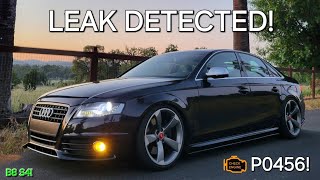
- No noticeable impact on driving performance. 🎬 Watch: A quick overview of EVAP leak causes and symptoms.
- In rare cases, difficulty starting immediately after refueling if the purge valve is stuck open.
- Replacing the fuel tank pressure sensor when it is accurately reporting a leak caused by another component.
- Immediately replacing expensive parts like the charcoal canister or LDP before checking the gas cap and N80 valve.
Most Likely Causes
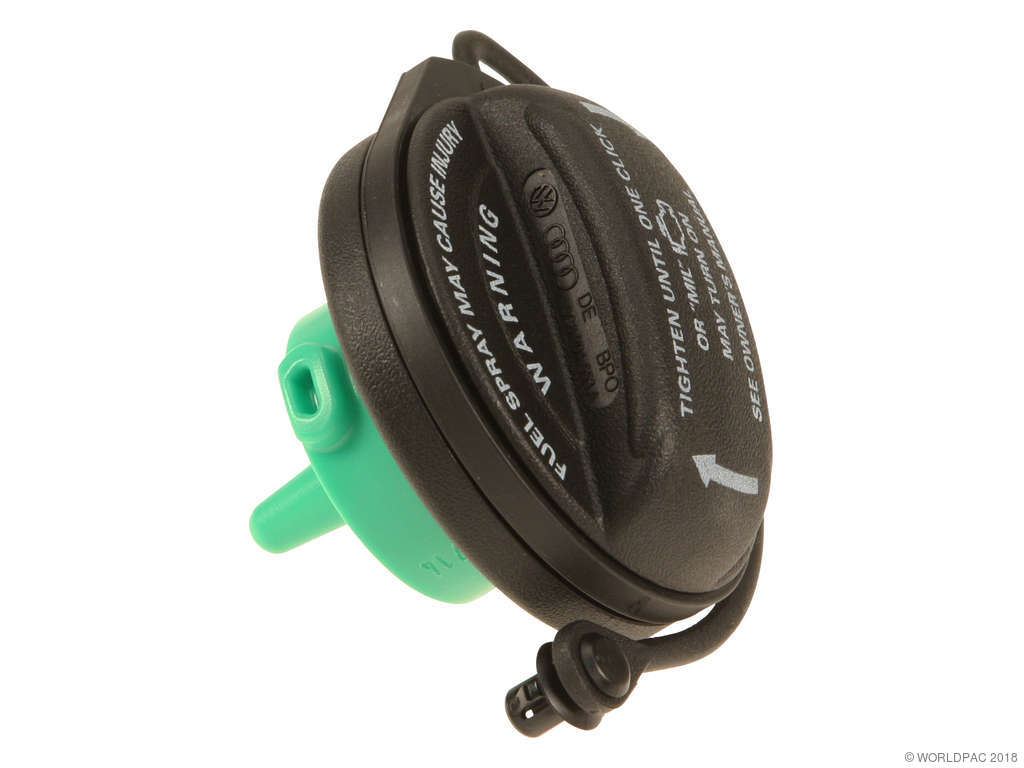
- Loose or Faulty Gas Cap 🔴 High Probability The gas cap seal is a rubber component that degrades over time with exposure to fuel vapors and weather, leading to small cracks that break the EVAP system's seal. This is the most common cause for P0456 across all VW/Audi platforms.
How to confirm: Inspect the gas cap for any visible cracks or damage on the rubber O-ring. Ensure the cap clicks several times when tightened. If the seal looks worn, it's a likely culprit. An OEM replacement is often recommended as some aftermarket caps do not seal correctly.
Typical fix: Replace the gas cap with a new OEM or high-quality aftermarket part. The OEM part number is often cited as 7L8201550D.
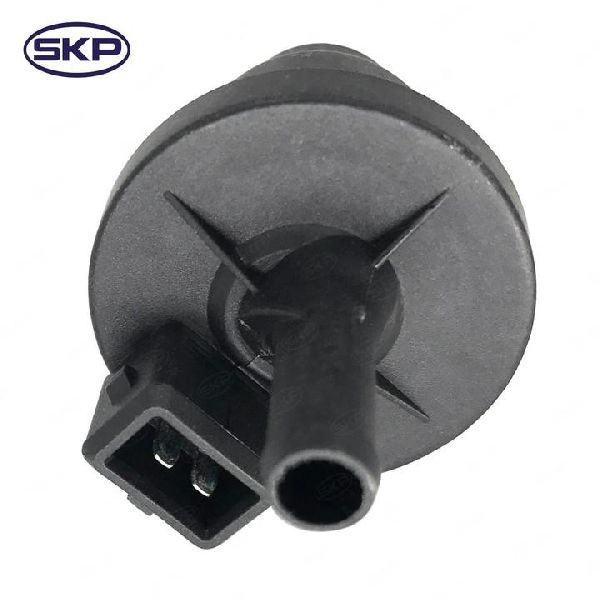
Est. part cost: $20-$75 - EVAP Purge Valve (N80) Failure 🟡 Medium Probability The N80 valve is an electromechanical part that cycles frequently. Over time, it can get stuck partially open due to carbon buildup or internal failure, creating a small leak path.
How to confirm: With the engine off, the valve should be closed. You can remove the valve and try to blow through it; if air passes, it has failed. A mechanic can also command it open and closed with a scan tool (like VCDS) to test its function and listen for a clicking sound.
Typical fix: Replace the N80 purge valve. It is typically located in the engine bay and is accessible for DIY replacement.
Est. part cost: $30-$100 - Cracked or Disconnected EVAP Hoses ⚪ Low Probability Rubber and plastic hoses in the engine bay and underneath the vehicle can become brittle with age and heat cycles, leading to small, hard-to-see cracks, especially at connection points.
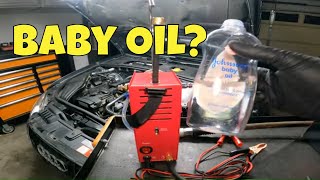
How to confirm: A visual inspection may reveal obvious damage, but a smoke test is the most effective method. 🎬 Watch: How to use a smoke tester to find leaks. A mechanic injects low-pressure smoke into the EVAP system and looks for where it escapes.
Typical fix: Replace the specific cracked hose or reconnect a loose fitting. Small hose clamps can be used to secure loose connections.
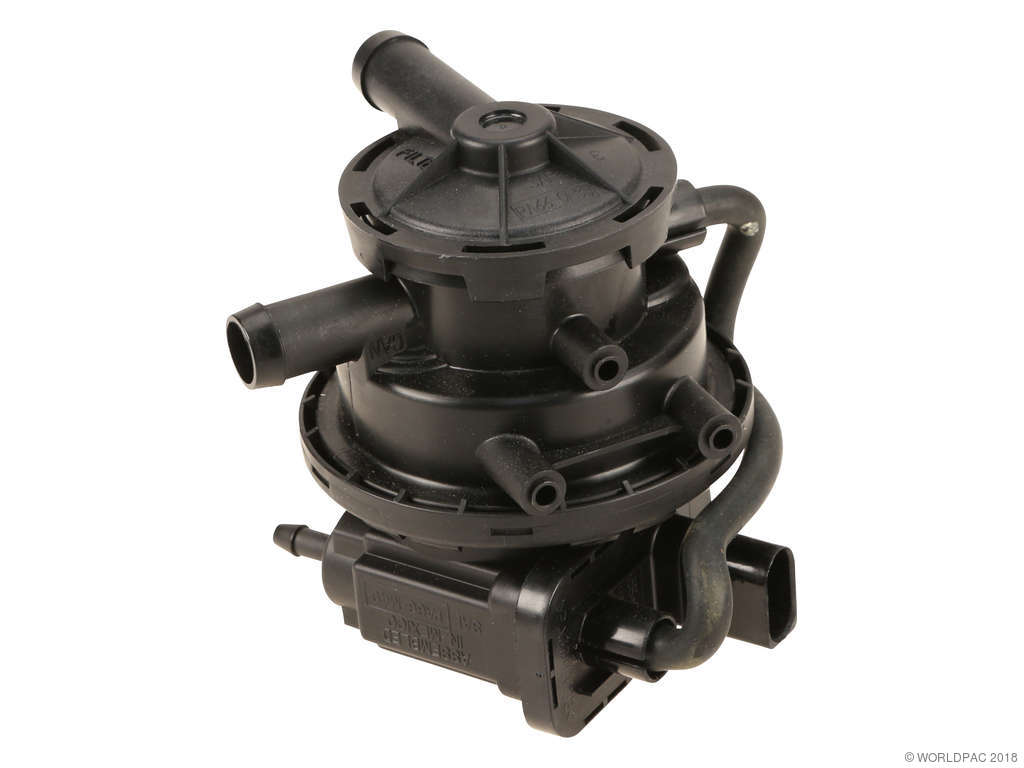
Est. part cost: $15-$75 - Faulty Leak Detection Pump (LDP) ⚪ Low Probability The LDP is the component that pressurizes the system for the leak test. It can develop internal leaks or electrical faults, causing it to report a system leak incorrectly. It is located behind the driver-side rear wheel arch liner.
How to confirm: This requires advanced diagnostics, often with a manufacturer-specific scan tool to run tests on the LDP itself. A smoke test that isolates the pump can also confirm if the pump itself is leaking. A bench test can be performed by applying power and seeing if it holds pressure (e.g., by inflating a balloon).
Typical fix: Replace the Leak Detection Pump. An updated part number 7L8-906-271-A is mentioned in some technical documents.
Est. part cost: $250-$400
Rare But Worth Checking
- Cracked Charcoal Canister: While not common for a *very small* leak, the plastic housing of the charcoal canister can develop hairline cracks from road debris or age. This is usually found during a smoke test. Overfilling the fuel tank is a primary cause of canister failure by saturating the charcoal with liquid fuel.
- Engine Control Module (ECM) Software Issue: As per TSB #A011510 2039888-, the P0456 code can be stored without any actual leak being present. If all physical components test good, a software update at an Audi dealership may be the required fix. Ross-Tech also notes TPI 2021418 for a possible flash update on 2013-2015 Q7s.
- Leaking Fuel Filler Neck: In some cases, the metal fuel filler neck or the small vent hose running alongside it can develop rust or cracks, creating a leak that passes a smoke test if the test is not administered correctly at the cap adapter.
Diagnosis Steps
- Read the code with an OBD-II scanner to confirm P0456 is the primary code.
- Inspect the gas cap. Remove it, check the rubber seal for cracks or brittleness, and ensure it's the correct cap for the vehicle.
- Tighten the gas cap until it clicks multiple times. Clear the code with the scanner and drive for a few days to see if the light returns. The EVAP monitor runs under specific conditions (often during cooldown with a specific fuel level), so it may take time.
- If the light returns, visually inspect all accessible EVAP hoses in the engine bay for obvious cracks, disconnection, or damage. Pay close attention to connection points.
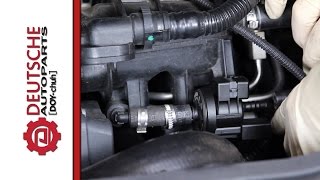
- Locate and test the N80 EVAP Purge Valve. On the 3.0T, it's on the throttle body. 🎬 See this DIY walkthrough for replacing the N80 valve. Disconnect it and try to blow through it; no air should pass. You can also use a scan tool to activate it and listen for a click.
- If the simple checks do not reveal the issue, the most reliable next step is a professional smoke test. This will pressurize the system with visible smoke, making even the smallest leaks easy to spot on hoses, the charcoal canister, or the Leak Detection Pump.
- If a smoke test reveals no leaks, refer to TSB #A011510 2039888- and TPI 2021418, and consider a dealership visit for a potential ECM software update.
Parts You'll Likely Need
- Gas Cap
(OEM #7L8201550D)— This is the most frequent cause of P0456. The seal wears out, causing a pressure leak that the system detects.
Trusted brands: Audi Genuine, Blau, Motorad
OEM price range: $40-$75
Aftermarket price range: $15-$30 - EVAP Canister Purge Valve (N80 Valve)
(OEM #06E906517A)— This valve controls the flow of fuel vapors to the engine. It's a common failure item that gets stuck open, creating a constant small leak.
Trusted brands: Bosch, Audi Genuine
OEM price range: $70-$110
Aftermarket price range: $25-$60 - Leak Detection Pump (LDP)
(OEM #7L8906271A)— If other components are confirmed to be sealed, the pump itself may have an internal leak or fault, triggering the code. TPI 2040924 suggests this as an updated part.
Trusted brands: Bosch, Audi Genuine
OEM price range: $300-$400
Aftermarket price range: $150-$250
Related Codes That Often Appear With This One
- P0441 — Incorrect Purge Flow. This often appears with P0456 when the N80 purge valve is malfunctioning, affecting both system sealing and vapor flow.
- P0442 — EVAP System Leak Detected (Small Leak). This is a similar code for a slightly larger leak. Seeing both may indicate an intermittent or worsening issue.
Technical Service Bulletins (TSBs) & Recalls
- A011510 2039888-: MIL on for P0456 with no actual leak found.
- A01165920409242: Explains the official procedure for an EVAP system pressure test to diagnose P0456.
- A011651 2040924-: Confirms the definition of P0456 as a 'very small leak' and notes that drivability is not affected. Also references an updated LDP.
- TPI 2021418: Mentions a possible ECM software flash update for 2013-2015 Q7 models to correct false P0456 codes.
Platform-Specific Known Issues
- TSB #A011510 2039888- notes that the Check Engine Light can come on with DTC P0456 stored, even with no actual leak in the EVAP system, suggesting a potential software or sensor logic issue that may require an ECM flash.
- TSB #A011651 2040924- specifically addresses P0456 on the 2014-2015 Q7 3.0T, outlining that the cause can be a sporadic leak in either the main EVAP system or the Leak Detection Pump (LDP) itself. It may recommend an updated LDP part number 7L8-906-271-A.
Mechanic-Grade Diagnostic Values
- Leak Detection Pump (LDP) V144 internal resistance — expected: Between pins 1 & 3: 640 to 720 Ω. Between pins 2 & 3: 15 to 17 Ω.. Failure: Readings outside of these ranges indicate a faulty LDP.
- EVAP Purge Valve (N80) internal resistance — expected: 15 to 25 Ω. Failure: A reading significantly outside this range suggests the valve's solenoid coil is bad.
- Voltage supply to EVAP Purge Valve (N80) connector — expected: 12V+ (Battery Voltage) at Pin 1 with key on.. Failure: No voltage indicates a wiring or fuse issue upstream of the valve.
Hidden / Shadow Codes Worth Checking
- Permanent DTC: After clearing a fault like P0456, it may be stored as a 'Permanent DTC' in the ECM. This type of code cannot be cleared with a standard scanner function and will only be removed by the ECM after it successfully runs the EVAP monitor test and confirms the repair. (see via VCDS or other advanced VW/Audi scan tools.)
Scan Tool Commands That Help
- VCDS (VAG-COM): Engine (01) -> Basic Settings -> IDE00553 Automatic test sequence — To force the vehicle to run the complete EVAP monitor and other readiness tests while stationary. This is useful for verifying a repair without having to perform a lengthy drive cycle. The user must hold the brake and accelerator pedals down during the test.
- VCDS (VAG-COM): Engine (01) -> Basic Settings -> Evaporation system test (e.g., IDE00744) — To run a specific diagnostic test on the EVAP system to check for leaks. This can help confirm if the system is sealed after a repair.
- VCDS (VAG-COM): Engine (01) -> Readiness (Function 15) — To check the status of all emissions-related monitors, including the EVAP system. After a repair, this screen will show if the EVAP test has run successfully ('Pass') or is still incomplete ('Fail or incomplete').
Wiring & Ground Locations
- EVAP Canister Purge Regulator Valve 1 (N80) Fuse — Fuse 12 (10A) on fuse panel B (left side of instrument panel).. This fuse provides power to the N80 valve. If the fuse is blown, the valve cannot operate, but this would typically cause a circuit code, not a leak code. It's a good preliminary check.
- Leak Detection Pump (LDP) (V144) Fuse — Fuse SA5 (15A) in the fuse panel.. This fuse supplies power to the LDP. A blown fuse would prevent the LDP from running its test, which could lead to a fault code.
- Ground Connection 609 — In the plenum chamber, right side.. This is a key ground point for various engine and chassis components. A poor ground here could potentially cause erratic behavior in EVAP system sensors or solenoids.
- Ground Connection 45 — Behind the instrument panel, center.. This ground point serves multiple interior and dash-related electronics. While less direct, a fault here could affect control module communication related to the EVAP system.
Real Owner Repair Stories
- Reddit user comment (Audi (model not specified, but behavior is relevant)) — Check Engine Light with code P0456.
❌ Tried (didn't work) Initial diagnosis was unclear.
✅ What actually fixed it The user replaced the EVAP purge valve (N80). After replacement, the check engine light turned off on its own after some driving and did not return, confirming the fix. - YouTube user comment (Vehicle not specified, but common P0456 scenario) — P0456 code.
❌ Tried (didn't work) Replaced the purge valve., Replaced the gas cap.
✅ What actually fixed it A smoke test, which should have been the first step after the gas cap, revealed the leak was actually from the fuel filler neck. - AudiWorld Forums user (2011 Audi Q7) — Check Engine Light with code P2404 (LDP Sense Circuit), but often related to P0456 causes.
❌ Tried (didn't work) Extensive diagnostics.
✅ What actually fixed it The gas cap's rubber O-ring was compressed and cracked. Replacing the gas cap for around $13 cleared the code immediately.
"I Checked Everything" — The Actual Cause
- A common reason for a smoke test to show no leaks when one exists is technician error. If the technician pinches off the charcoal canister's vent valve hose to seal the system for the test, they may inadvertently bypass a leaking vent valve itself. The proper test involves commanding the valve closed with a scan tool and then checking for leaks.
- Per TSB #A011510 2039888-, the P0456 code can be stored with no physical leak present in the system. If a thorough smoke test confirms the system is sealed, the root cause may be an ECM software issue requiring a dealer-installed update.
When the Usual Fixes Don't Work
- While the gas cap and N80 valve are the most common culprits, owners should not discount the possibility of a software issue. TSBs A011510 and TPI 2021418 exist specifically because vehicles were triggering P0456 even with a perfectly sealed physical system. If a smoke test comes back clean, pursuing a software update at a dealership is a valid and necessary diagnostic step before replacing more expensive parts like the LDP.
OEM Part Supersession History
06E906517→06E906517A— Updated design or material for the EVAP Purge Valve (N80). The 'A' revision is the current replacement part.
Heads up: The parts are interchangeable; 06E906517A is the correct replacement for the older version.Unknown→7L8906271A— Updated Leak Detection Pump (LDP) recommended in TPI 2040924 to address issues with P0456 codes.
Heads up: This is the recommended replacement part when the original LDP is suspected to be faulty.
Helpful Videos
Used OEM Parts in Stock
New Aftermarket Parts Available


The information in this article is provided for general reference and educational purposes only. Vehicle specifications, procedures, and part compatibility can vary by production date, trim level, and region. Always consult your vehicle's factory service manual and verify part numbers before purchasing or performing repairs. Safety-critical components such as airbags, seat belts, and braking systems should be installed by a qualified professional.
- Audi Q7:
- 🎬 Helpful Videos
- 🛍️ Shop This Part
- What's Unique About the 2014-2015 Audi Q7
- Diagnostic Flowchart
- Symptoms You May Notice
- Most Likely Causes
- Rare But Worth Checking
- Diagnosis Steps
- Parts You'll Likely Need
- Related Codes That Often Appear With This One
- Technical Service Bulletins (TSBs) & Recalls
- Platform-Specific Known Issues
- Mechanic-Grade Diagnostic Values
- Hidden / Shadow Codes Worth Checking
- Scan Tool Commands That Help
- Wiring & Ground Locations
- Real Owner Repair Stories
- "I Checked Everything" — The Actual Cause
- When the Usual Fixes Don't Work
- OEM Part Supersession History
- 🎟️ Get 5% Off