

P0455 on 2014-2016 Toyota Corolla: EVAP Gross Leak Causes and Fixes
For a 2014-2016 Toyota Corolla, the P0455 code is most often caused by a loose or faulty gas cap. A specific Technical Service Bulletin (T-SB-0086-16) also points to a misaligned fuel filler neck preventing a proper seal. Always check the gas cap first; an OEM replacement is inexpensive, around $20-$30, and often solves the problem.
- The most likely cause for P0455 on your Corolla is a loose or faulty gas cap.
- Always check that the gas cap clicks when you tighten it. If it doesn't, or the seal is worn, replace it with an OEM part.
- A specific Toyota TSB (T-SB-0086-16) points to a faulty cap or misaligned fuel filler neck as a known issue on this model.
- If a new gas cap doesn't fix the problem, the next most common causes are a faulty purge valve or a leak that requires a smoke test to find.
- This code will not stop you from driving the car, but it will cause an automatic failure on an emissions test.
What's Unique About the 2014-2016 Toyota COROLLA

For this specific generation of Corolla, Toyota issued a Technical Service Bulletin (T-SB-0086-16) that directly addresses the P0455 and P0456 codes. The bulletin highlights that many vehicles may have a fuel cap that doesn't click or has no spring return, or the fuel filler neck itself may be out of position, preventing a proper seal. This TSB applies specifically to Corollas built at the TMMMS plant (VIN starting with 5YF) before a production change. This makes the gas cap and filler neck area a primary and well-documented starting point for diagnosis, more so than on many other vehicles.
Diagnostic Flowchart

Tap your situation to follow the diagnostic path that matches what you're seeing on this vehicle.
Symptoms You May Notice
- Check Engine Light is on
- A faint smell of fuel, particularly around the gas cap area or rear of the vehicle.
- Gas cap does not 'click' when tightened or feels loose.
- In rare cases when accompanied by P0441, difficulty starting the car immediately after refueling.
- Replacing the purge valve when the actual problem is a simple loose gas cap. Always check the gas cap first.
- Using a cheap, aftermarket gas cap which fails to seal properly, leading to a repeat of the P0455 code.
- Replacing other EVAP components before performing a smoke test to confirm the exact location of the leak. A smoke test can prevent unnecessary parts replacement and is the definitive way to find leaks in hoses or the canister.
Most Likely Causes

- Loose, Damaged, or Incorrect Gas Cap 🔴 High Probability A Toyota TSB (T-SB-0086-16) specifically identifies a faulty fuel cap that exhibits a 'no click' or 'no spring return' condition as a primary cause for this code on 2014-2016 Corollas. This is the most common and easiest fix for P0455 across all vehicles, with many owners confirming a new OEM cap resolves the issue.
How to confirm: Ensure the gas cap is tightened until it clicks at least once. Inspect the cap's rubber O-ring seal for cracks, stiffness, or damage. If it looks worn, doesn't click, or is an aftermarket brand, it's suspect. A gas cap tether getting caught under the seal can also cause a leak.
Typical fix: Replace the gas cap. It is highly recommended to use a genuine OEM Toyota part (Part No. 77300-07030) to ensure a perfect seal, as aftermarket caps are a known source of recurring EVAP codes.
Est. part cost: $20-$30 - Misaligned Fuel Filler Neck 🟡 Medium Probability The same TSB (T-SB-0086-16) notes that on some vehicles, the fuel filler neck may be out of position, preventing the gas cap from sealing correctly. This is a known issue specific to this Corolla platform.
How to confirm: Visually inspect the opening of the filler neck. If the gas cap appears to make contact with the surrounding body panel or fuel shield before it can fully seal, the neck may be misaligned. The TSB provides a detailed inspection procedure with diagrams.
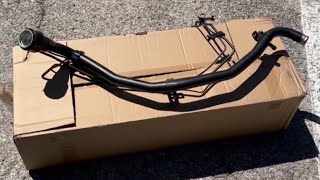
Typical fix: A technician will loosen the filler neck mounting bolts (typically 12mm and 10mm), reposition it correctly so it protrudes properly from the body, and then retighten the bolts. The TSB outlines this adjustment procedure, which takes under an hour. 🎬 Watch: Step-by-step guide to replacing a Toyota fuel filler neck.
Est. part cost: $0 (if adjusted), $150-$250 (if neck needs replacement) - Faulty Canister Purge Valve (VSV) 🟡 Medium Probability The purge valve (often called a Vacuum Switching Valve or VSV by Toyota) can get stuck open, creating a constant vacuum leak that the system interprets as a gross leak. This is a common failure part on many Toyota models.
How to confirm: The valve is located in the engine bay, under the plastic engine cover, near the intake. 🎬 Watch: How to replace the purge valve solenoid on your Corolla. With the engine off, you can remove the valve and try to blow through it; it should be closed. If air passes through, it's stuck open and faulty. A mechanic can also command it open and closed with a scan tool.
Typical fix: Replace the canister purge valve. It is held by a small bolt and connected by two hoses and an electrical connector.
Est. part cost: $80-$130 - Cracked or Disconnected EVAP Hoses ⚪ Low Probability Over time, rubber hoses can become brittle, crack, or disconnect from their fittings, creating a leak. This is common on all vehicles as they age, especially on the lines connected to the purge valve or charcoal canister.
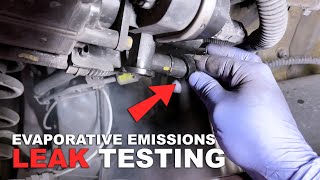
How to confirm: A visual inspection of all accessible EVAP lines between the engine, charcoal canister, and fuel tank may reveal obvious damage. The most effective method is a smoke test, where a mechanic injects low-pressure smoke into the EVAP system and looks for where it escapes.
Typical fix: Replace the cracked or broken section of hose.
Est. part cost: $10-$50
Rare But Worth Checking
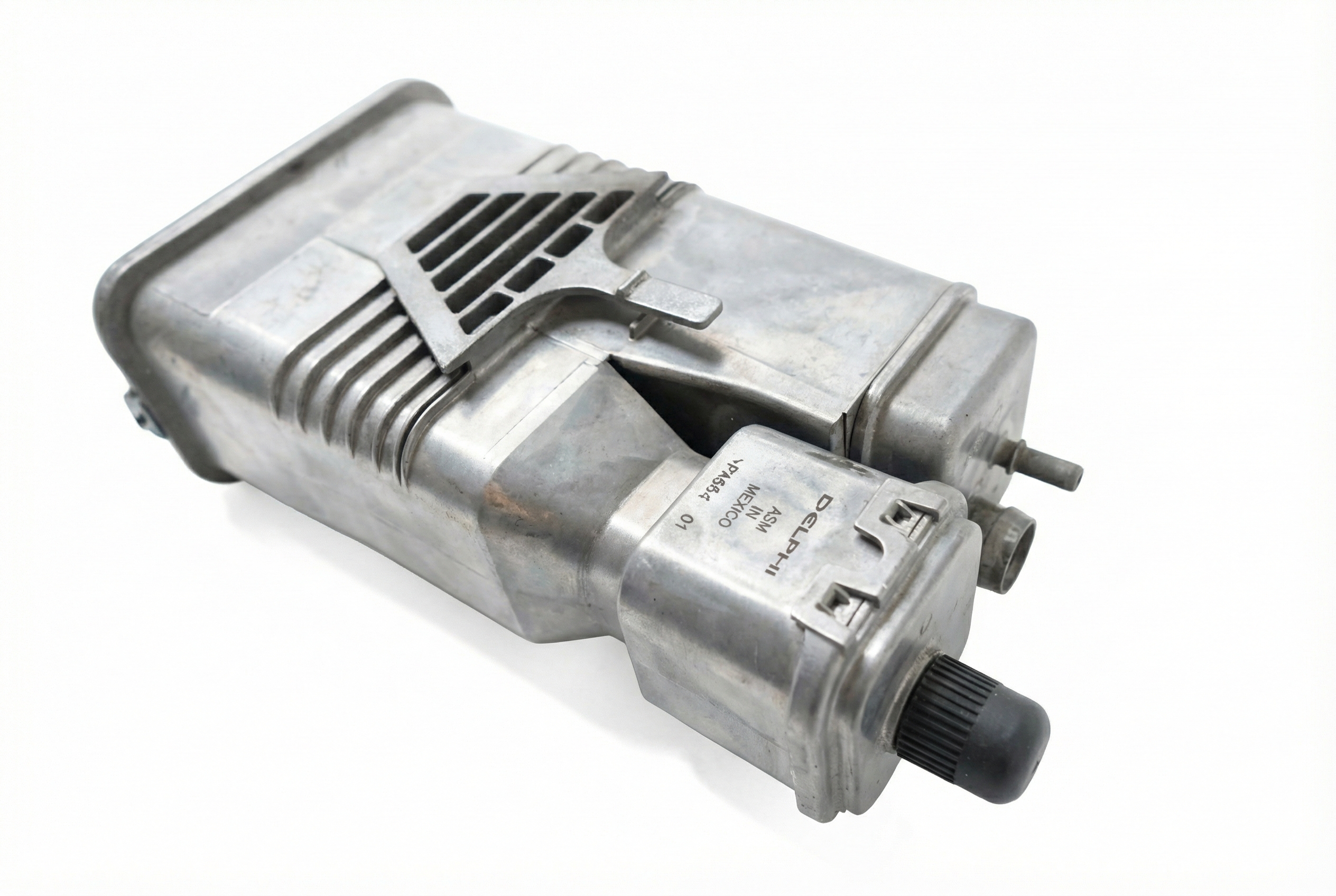
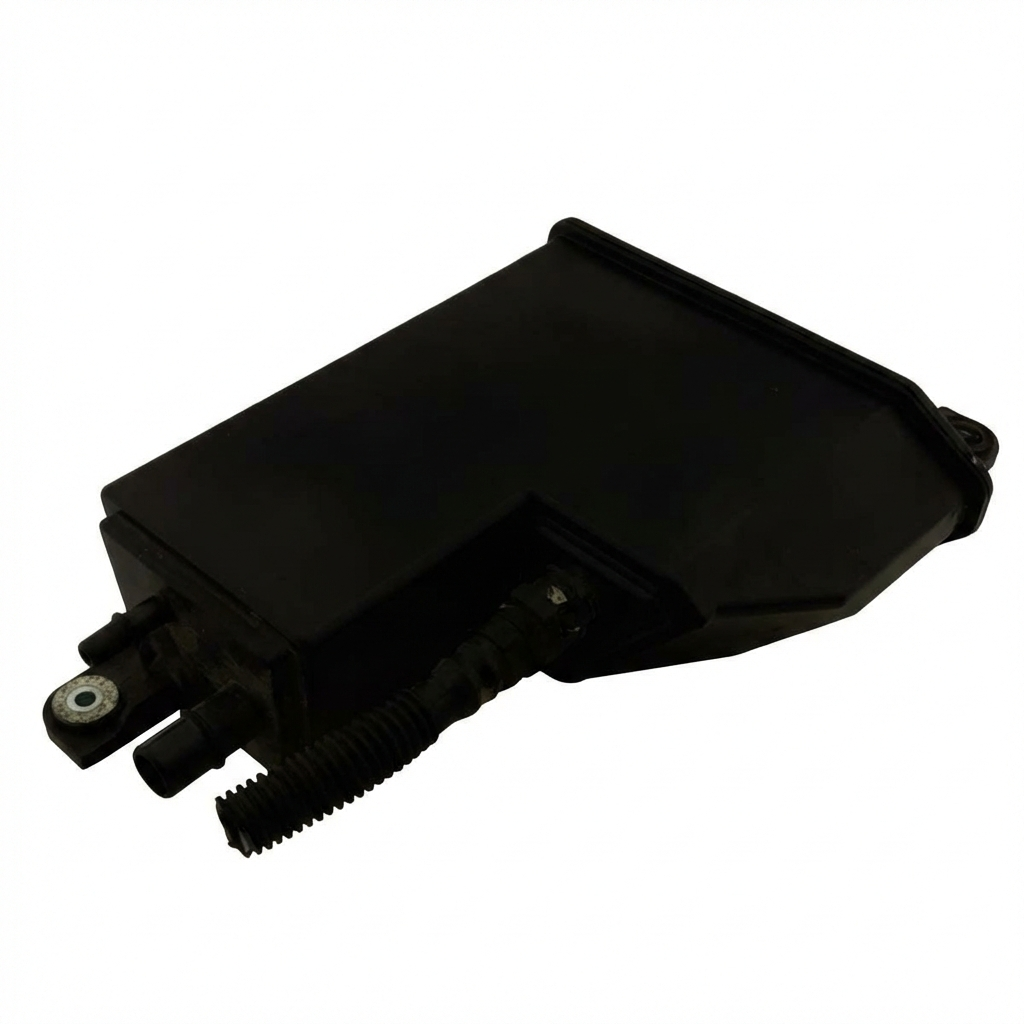
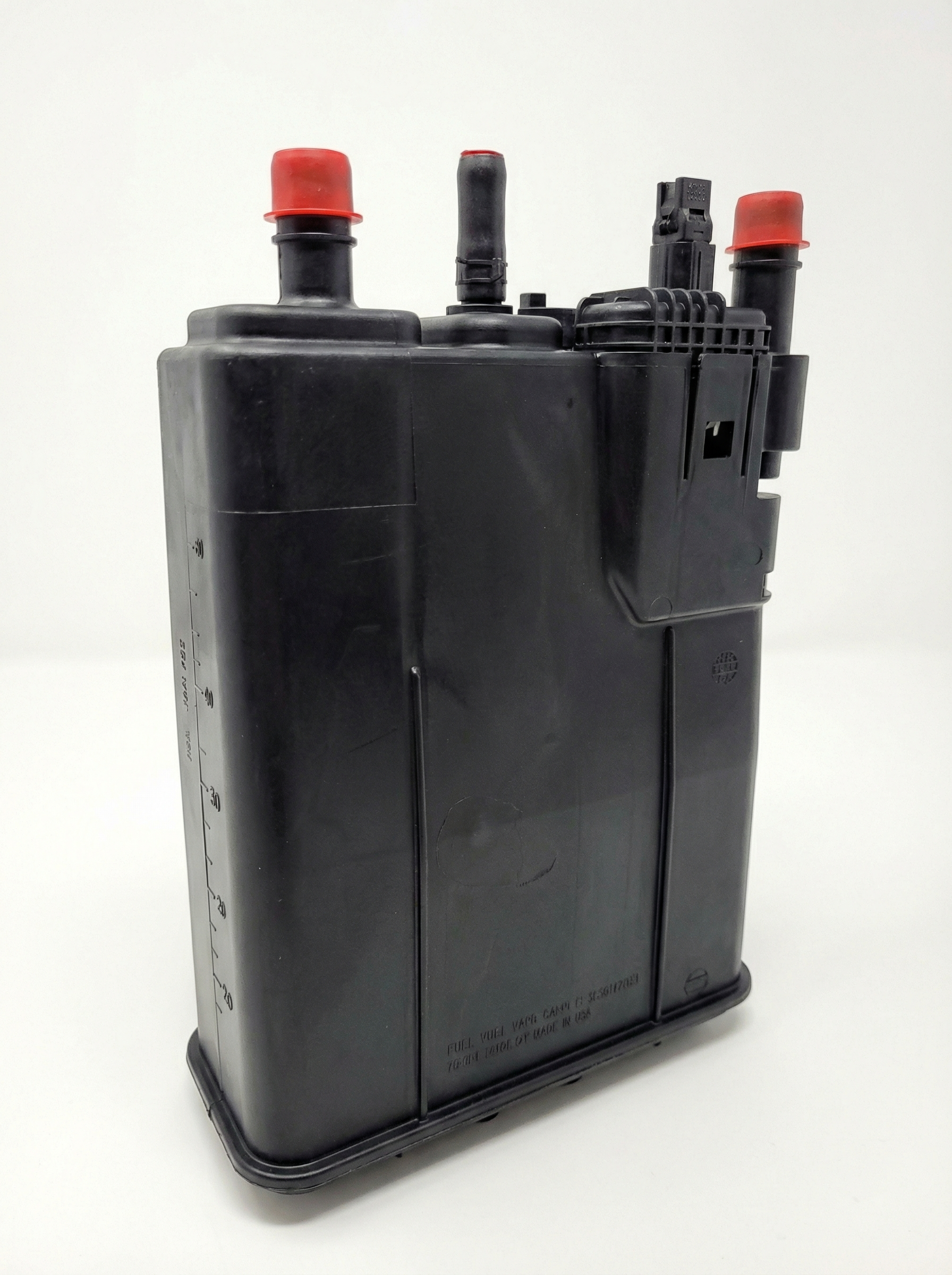
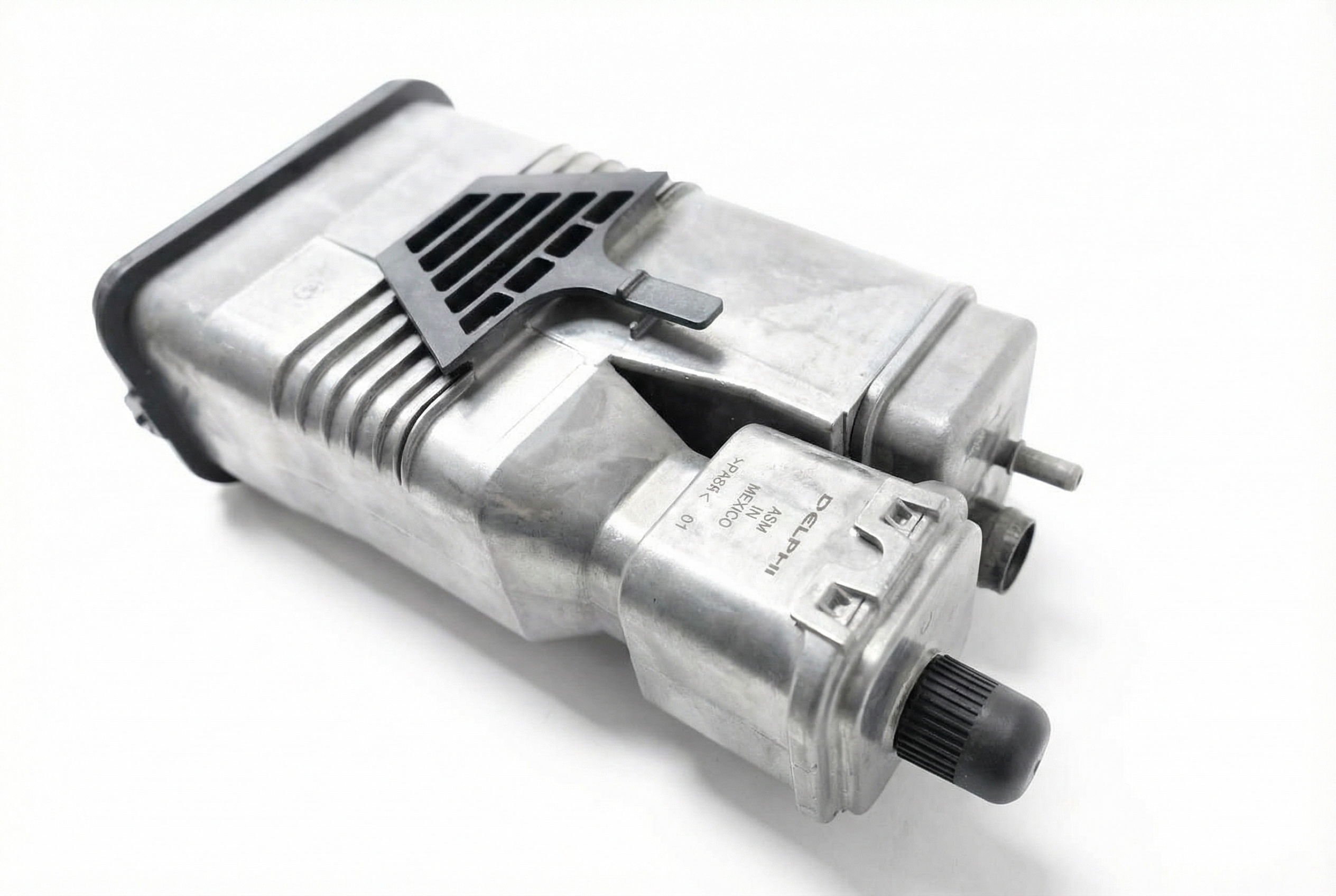
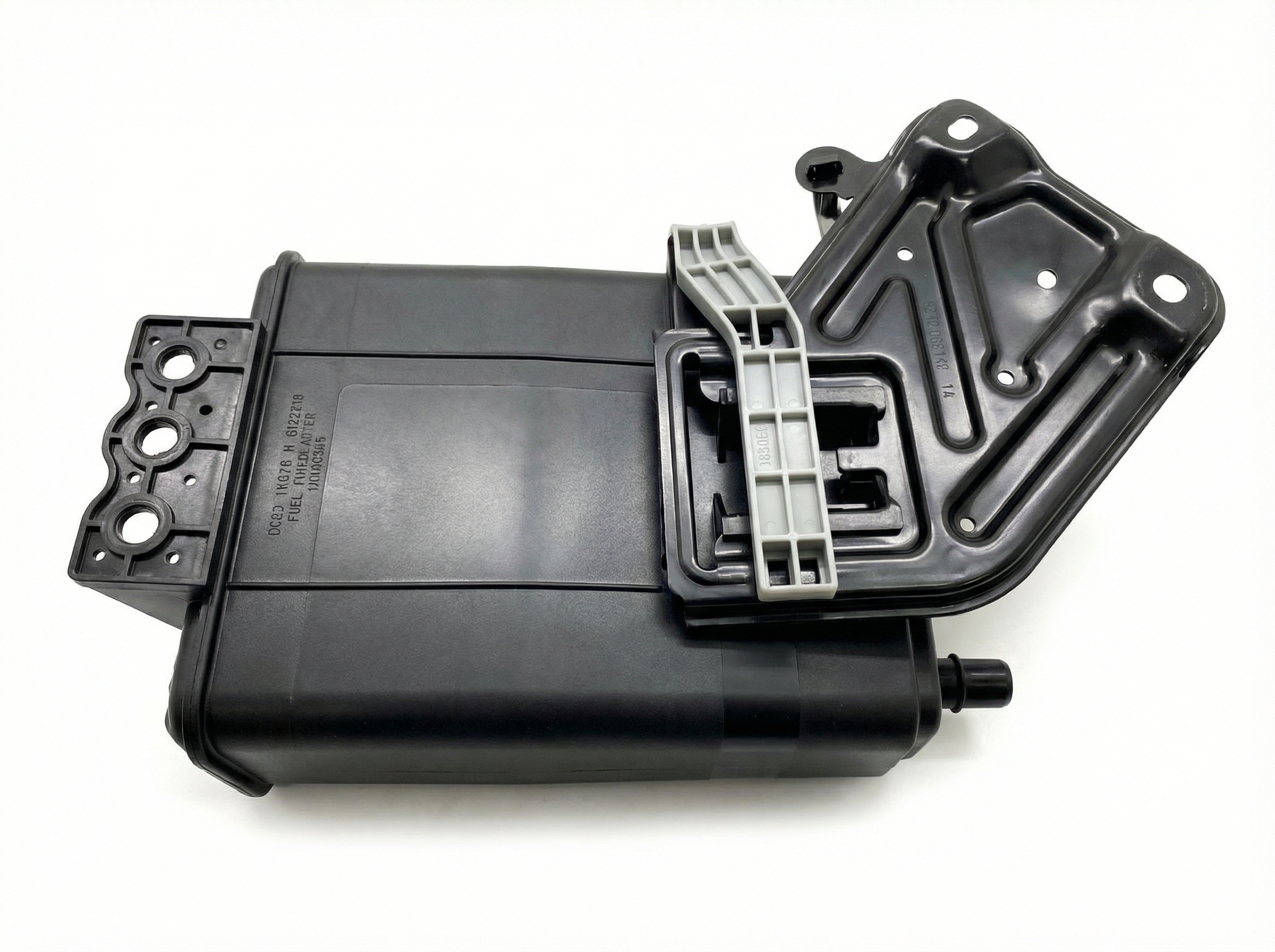
- Cracked Charcoal Canister: The charcoal canister is a plastic box filled with activated carbon that stores fuel vapors. While durable, it can be damaged by road debris or develop cracks with age, causing a large leak. It is located under the rear of the car near the fuel tank. A smoke test is the best way to confirm a leak from the canister body. Replacement can be expensive, with parts alone costing over $320.
- Faulty EVAP Vent Valve: This valve is normally open and closes to seal the system for a leak test. If it fails to close, the system will report a gross leak. On this Corolla, the vent valve is integrated into the EVAP leak detection pump assembly, located on the charcoal canister under the rear of the car. Testing can be done with a bi-directional scan tool to command it closed and check for function.
Diagnosis Steps

- Read the code with an OBD-II scanner to confirm P0455 is present.
- Inspect the gas cap. Remove it, check for any cracks in the seal, and ensure it is the correct type for the vehicle.
- Reinstall the gas cap, making sure to tighten it until it clicks several times. Clear the code and drive for a few days to see if it returns. The EVAP monitor runs under specific conditions (fuel level between 1/4 and 3/4, after sitting).
- If the code returns, purchase a new OEM gas cap (Toyota P/N: 77300-07030). This is an inexpensive and very common fix.
- If a new cap does not resolve the issue, inspect the fuel filler neck for misalignment as described in TSB T-SB-0086-16. Check if the cap is hitting the body before sealing.
- Inspect the canister purge valve (VSV) in the engine bay under the engine cover. Remove it and check if it's stuck open by blowing through it.
- Visually inspect all accessible EVAP hoses for obvious cracks or disconnections, particularly around the purge valve and the charcoal canister area under the rear of the car.
- If the leak source is still not found, the most effective next step is to have a professional smoke test performed on the EVAP system to pinpoint the exact location of the leak.
Parts You'll Likely Need
- Fuel Tank Cap
(OEM #77300-07030)— This is the most frequent cause of P0455 and is specifically called out in a TSB for this vehicle. The original cap's seal can fail or it may not tighten correctly. Using an OEM cap is critical.
Trusted brands: Toyota (OEM)
OEM price range: $20-$30
Aftermarket price range: $15-$25 - Vapor Canister Purge Valve / Solenoid
(OEM #90910-12283)— A common failure point that can stick open, causing a large, permanent leak in the EVAP system. Often triggers P0441 at the same time.
Trusted brands: Toyota (OEM), Denso, Dorman
OEM price range: $80-$100
Aftermarket price range: $40-$70 - Fuel Filler Neck
(OEM #77201-02190 (example, verify by VIN))— A TSB identifies that the filler neck can be misaligned, preventing a seal. While often just an adjustment, severe corrosion or damage could require replacement.
Trusted brands: Toyota (OEM)
OEM price range: $150-$250
Aftermarket price range: $100-$180
Related Codes That Often Appear With This One
- P0456 — This code is for a 'Small EVAP Leak.' It can appear alongside P0455 if the system's leak detection parameters are met for both small and large leaks during different tests. The TSB for the Corolla specifically mentions both codes (P0455 and P0456) being caused by the same gas cap or filler neck issue.
- P0441 — This code indicates 'Incorrect Purge Flow.' A purge valve that is stuck open or closed, or a major leak in the system, can disrupt the expected flow of vapors, triggering this code along with P0455. A symptom of a stuck-open purge valve can be difficulty starting after refueling.
Technical Service Bulletins (TSBs) & Recalls
- T-SB-0086-16: Some 2014 – 2016 model year Corolla vehicles may exhibit a “No Click” and/or “No Spring Return” condition from the fuel cap... MIL ON may occur with DTC P0455, P0456... the fuel filler neck may be out of position.
Platform-Specific Known Issues
- TSB T-SB-0086-16: Specifically for 2014-2016 Corollas built at the TMMMS plant (VIN starts with '5YF'), this bulletin addresses a condition where the fuel cap may not click or return properly, or the fuel filler neck may be misaligned, causing P0455 and P0456. The fix involves inspecting for contact between the cap and body, and if necessary, loosening three bolts to adjust
Mechanic-Grade Diagnostic Values
- Canister Purge Valve (VSV) internal resistance — expected: 15 to 30 Ohms (general range). Failure: A reading far outside this range indicates a damaged internal circuit in the valve.
- Canister Purge Valve (VSV) power source voltage — expected: Battery voltage (approx. 11-14 Volts). Failure: No voltage indicates a problem in the wiring or fuse, not the valve itself.
Hidden / Shadow Codes Worth Checking
- Mode 6 Data: While not a 'shadow code,' Mode 6 provides detailed results from the ECM's self-tests, including the EVAP monitor. It can show test values (e.g., pressure decay measurements) that are close to the failure threshold, providing clues to intermittent or developing leaks before a DTC is set. (see via An advanced OBD-II scan tool or Toyota's Techstream software can access and display Mode 6 data.)
Scan Tool Commands That Help
- Toyota Techstream: Active Test: Activate the VSV for Evap Control — This command allows a technician to manually cycle the purge valve on and off to check its mechanical function. While the test is active, you can feel for suction at the valve's vacuum port to confirm it opens and closes correctly.
- Toyota Techstream: Utility: Evaporative System Check (Automatic Mode) — This is an automated, multi-step procedure that commands the vehicle's EVAP system to perform a full leak test sequence. It's used to verify a repair or to force the EVAP monitor to run without having to perform a full drive cycle.
Wiring & Ground Locations
- Canister Purge Valve (VSV) — In the engine bay, on top of the engine, underneath the plastic engine cover. It has two hoses and a 2-wire electrical connector.. This is a primary failure point. A stuck-open valve will cause a P0455. Its location is needed for testing and replacement.
- EVAP Leak Detection Pump / Vent Valve — At the rear of the vehicle on the driver's side, mounted directly on the charcoal canister, which is located near the rear wheel.. This component seals the EVAP system for testing. If it fails to close or is corroded, it will cause a gross leak code.
- Purge Valve Connector — On the purge valve itself in the engine bay.. This is a 2-terminal, 2-wire connector used for electrical testing (resistance, voltage). It is described as a male connector with a 17-inch harness pigtail available for repairs.
OEM Part Supersession History
90910-12283→90910-AC004— Manufacturer update/revision.
Heads up: The new part number is the correct replacement for the original.77740-02220→N/A— N/A
Heads up: This charcoal canister part number is for the Corolla sedan ONLY. It is not interchangeable with the canister for the iM hatchback (P/N 77740-12750), which has a different shape and mounting.
Model Year Variations Within This Range
- 2016: The 2016 Scion iM (later rebadged as Corolla iM) is a hatchback and uses a different charcoal canister (P/N 77740-12750) than the standard Corolla sedan (P/N 77740-02220). The parts are not interchangeable.
- 2014-2016: TSB T-SB-0086-16, which addresses the misaligned fuel filler neck, only applies to Corollas built at the TMMMS plant, identifiable by a VIN starting with '5YF', and built before a specific production change.
Helpful Videos


Used OEM Parts in Stock
New Aftermarket Parts Available


The information in this article is provided for general reference and educational purposes only. Vehicle specifications, procedures, and part compatibility can vary by production date, trim level, and region. Always consult your vehicle's factory service manual and verify part numbers before purchasing or performing repairs. Safety-critical components such as airbags, seat belts, and braking systems should be installed by a qualified professional.
- Toyota COROLLA:
- 🎬 Helpful Videos
- 🛍️ Shop This Part
- What's Unique About the 2014-2016 Toyota COROLLA
- Diagnostic Flowchart
- Symptoms You May Notice
- Most Likely Causes
- Rare But Worth Checking
- Diagnosis Steps
- Parts You'll Likely Need
- Related Codes That Often Appear With This One
- Technical Service Bulletins (TSBs) & Recalls
- Platform-Specific Known Issues
- Mechanic-Grade Diagnostic Values
- Hidden / Shadow Codes Worth Checking
- Scan Tool Commands That Help
- Wiring & Ground Locations
- OEM Part Supersession History
- Model Year Variations Within This Range
- 🎟️ Get 5% Off