

P0455 on 2017-2019 Nissan Versa Note: EVAP Large Leak Causes and Fixes
For a 2017-2019 Nissan Versa Note, code P0455 is most often caused by a loose or faulty gas cap. If the cap is secure, the next most likely cause is a failed EVAP canister vent control valve located near the fuel tank. A new gas cap is about $25-$40, while the vent valve is a more involved but common repair.
- Always check your gas cap first. Ensure it is tight and the seal is not cracked before attempting any other repairs.
- If the gas cap is not the issue, the EVAP canister vent control valve, located at the rear of the car by the fuel tank, is the next most likely part to have failed.
- A professional smoke test is the fastest and most accurate way to find the exact source of an EVAP leak if it is not obvious.
- Driving with P0455 is not dangerous, but it will cause you to fail an emissions test and releases harmful fuel vapors into the atmosphere.
What's Unique About the 2017-2019 Nissan VERSA NOTE
On many Nissan vehicles, including the Versa Note, the EVAP canister vent control valve (sometimes called a vent solenoid) is a very common failure point that leads to code P0455. This part is located at the rear of the car near the charcoal canister, typically between the passenger-side rear wheel and the muffler, and is exposed to road dirt, moisture, and debris which can cause it to fail or get stuck open. While the gas cap is always the first thing to check, this specific valve is a well-documented weak point on the platform.
Diagnostic Flowchart
Tap your situation to follow the diagnostic path that matches what you're seeing on this vehicle.
Symptoms You May Notice
- Check Engine Light is on
- A faint or strong smell of gasoline, especially around the rear of the vehicle.
- Slight decrease in fuel mileage over time.
- Difficulty starting the car immediately after refueling (less common, but possible if the purge valve is the cause).
- A "Loose Fuel Cap" warning on the dashboard, if equipped.
- Replacing the purge valve (in the engine bay) when the more common failure is the vent control valve (at the rear of the car).
- Replacing other EVAP components before checking if the gas cap was simply loose or replacing it with a cheap aftermarket cap that doesn't seal properly.
- Replacing the vent control valve but failing to replace the associated o-ring/gasket, causing the leak to persist.
Most Likely Causes
- Loose, Damaged, or Incorrect Gas Cap 🔴 High Probability This is the most common cause for P0455 on all vehicles. The rubber O-ring on the cap can dry out, crack, or get dirty, preventing a proper seal. Nissan's own Technical Service Bulletins (TSBs) identify this as the primary cause to investigate.
How to confirm: Ensure the gas cap is tightened until it clicks at least once. Inspect the cap and its rubber seal for any visible cracks, tearing, or hardening. If the seal is damaged or you hear air hissing after tightening, it needs replacement. An aftermarket cap is a common source of the problem; owners on forums often report that only a genuine OEM cap will solve the issue.
Typical fix: Tighten the cap. If the light returns or the cap is damaged, replace it with a new one. Using a genuine OEM Nissan cap is highly recommended as some aftermarket caps may not seal correctly.
Est. part cost: $25-$40 - Faulty EVAP Canister Vent Control Valve/Solenoid 🟡 Medium Probability This is a very common failure point on Nissans. Located near the charcoal canister at the rear of the vehicle, it's exposed to road grime and moisture, which can cause the solenoid to stick open, creating a large leak. Spiders have also been known to build webs inside the valve, causing a blockage.
How to confirm: The valve is normally open. A mechanic can command it closed with a scan tool and perform a smoke test; if smoke exits the valve, it has failed. It can also be removed and tested by applying 12V power; it should click and close. If it doesn't, it's faulty. Visually, it's a black plastic component attached to the charcoal canister with a twist-lock mechanism.
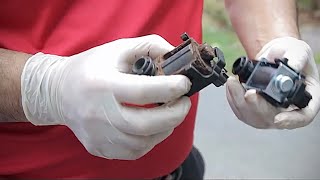
Typical fix: Replace the EVAP canister vent control valve. This part is located near the charcoal canister under the rear of the car, often accessible by removing a small splash shield. It is important to ensure the o-ring gasket is also replaced and seated correctly. 🎬 See this walkthrough for replacing a faulty vent control valve.
Est. part cost: $60-$90 - Cracked or Disconnected EVAP Hose ⚪ Low Probability Rubber hoses throughout the EVAP system can become brittle and crack with age and exposure to heat cycles. A large crack or a hose that has popped off a fitting will cause a P0455 code.
How to confirm: A visual inspection may reveal an obviously disconnected or cracked hose. The most reliable method is a professional smoke test, which will force smoke through the EVAP system, making any leaks visible. Inexpensive DIY smoke testers can also be purchased or made.
Typical fix: Replace the damaged section of hose or reconnect any disconnected lines.
Est. part cost: $10-$50 - Faulty EVAP Canister Purge Valve/Solenoid ⚪ Low Probability Less common for a large leak code than the vent valve, but this valve can fail by sticking open. This creates a constant leak path from the EVAP canister to the engine intake.
How to confirm: The purge valve is normally closed when the engine is off. Remove the valve (located in the engine bay, with two hoses and a wiring harness) and try to blow through it. If air passes through, the valve is stuck open and needs to be replaced.
Typical fix: Replace the purge valve. It is typically an easy-to-access part in the engine compartment. 🎬 Watch: A pro's guide to replacing your purge valve correctly.
Est. part cost: $80-$210
Rare But Worth Checking
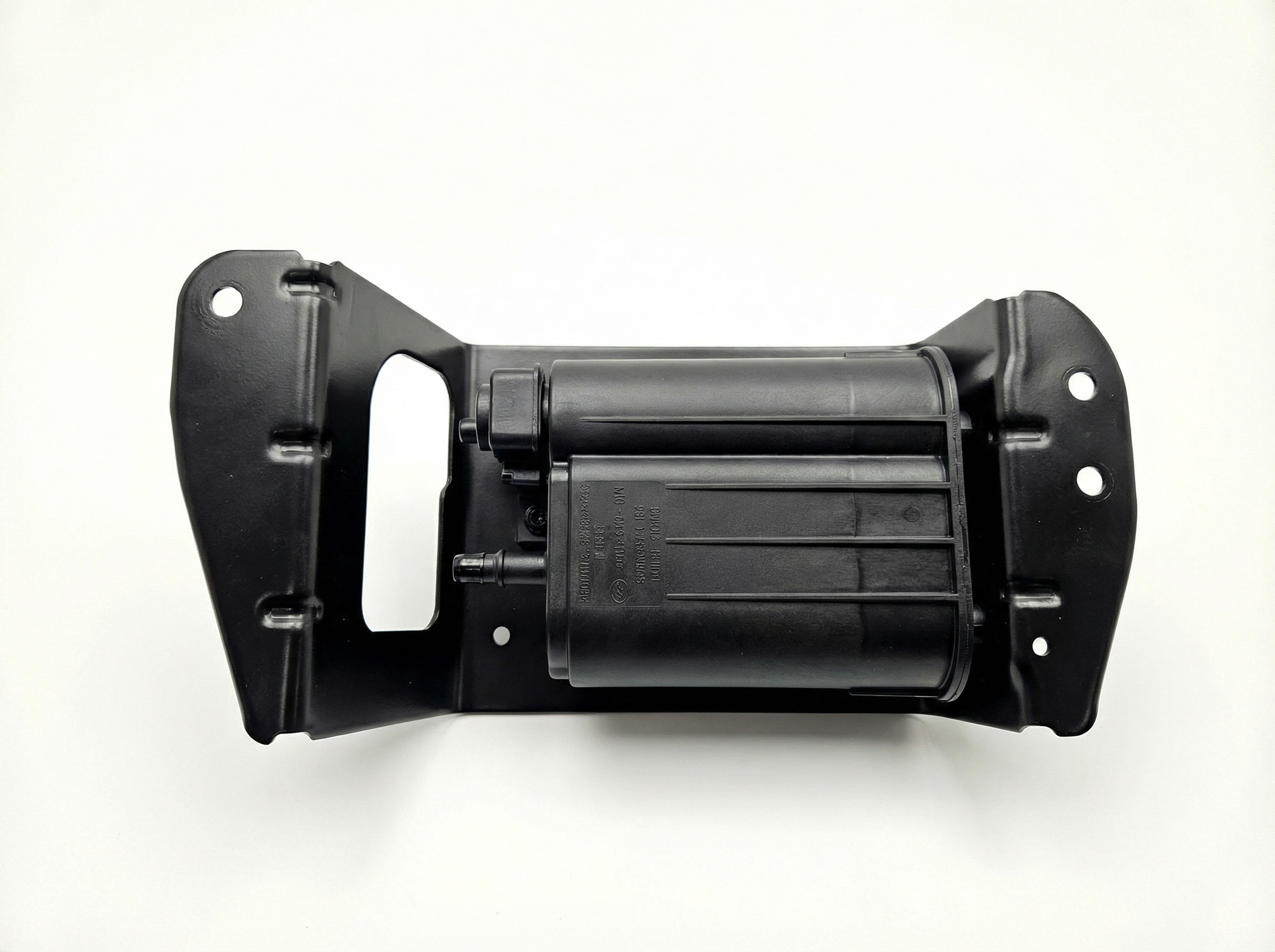
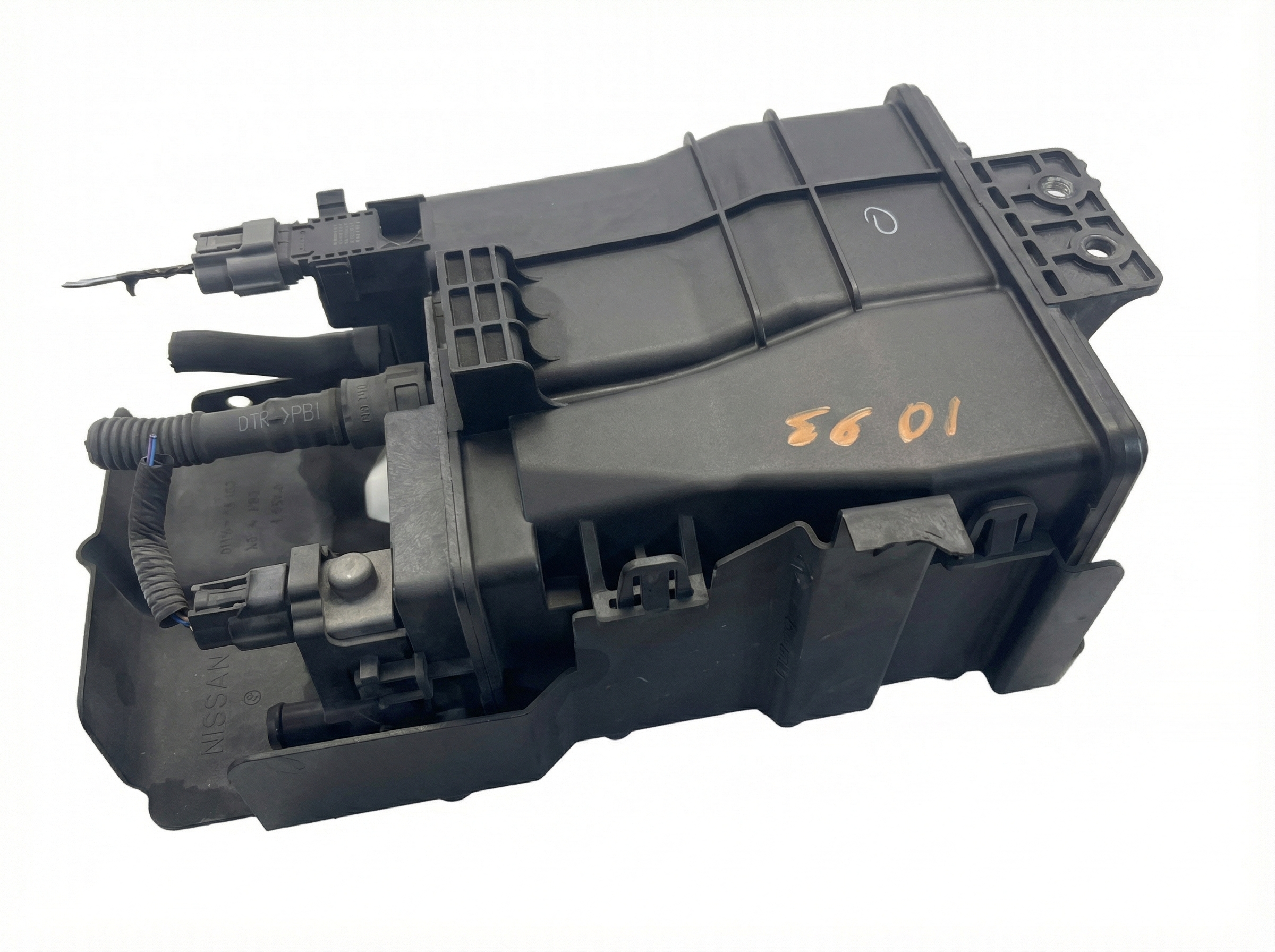
- Cracked EVAP Charcoal Canister: The plastic housing of the canister itself can be damaged by road debris, causing a large leak. This is usually found during a smoke test.
- Rusted or Damaged Fuel Filler Neck: The metal pipe where the gas cap screws on can rust or get damaged, preventing the cap from creating a proper seal. This is more common in regions that use road salt.
- Faulty Fuel Tank Pressure (FTP) Sensor: Rarely, the sensor that detects pressure in the system can fail and send incorrect data to the computer, making it think there is a leak when there isn't one. This often sets other sensor-specific codes as well.
Diagnosis Steps
- Check the gas cap. Remove it, inspect the seal for cracks or damage, and retighten it until it clicks several times. Clear the code. Nissan's TSB explicitly states that a test drive is not an effective way to confirm the repair; the system will re-test on its own under specific conditions.
- If the code returns, purchase a genuine OEM Nissan gas cap. Many owner experiences confirm that aftermarket caps fail to resolve the issue.
- If a new OEM cap does not fix the issue, perform a thorough visual inspection of all accessible EVAP hoses between the engine bay and the fuel tank, looking for obvious cracks or disconnections.
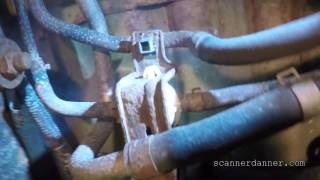
- Locate the EVAP canister vent control valve near the charcoal canister at the rear of the vehicle, typically between the rear passenger wheel and the muffler. 🎬 Watch: Locate the EVAP canister and purge solenoid on your Versa. Inspect it and its wiring for damage.
- The most effective next step is to have a smoke test performed. A machine fills the EVAP system with a harmless, visible smoke. The smoke will exit from the point of the leak, quickly identifying the source, whether it's a hose, the vent valve, the purge valve, or the canister itself.
- Based on the smoke test results, test the specific component. Test the vent valve and purge valve for correct electrical and mechanical operation (opening and closing on command).
- If no leaks are found with a smoke test, the Fuel Tank Pressure (FTP) sensor may be faulty and providing incorrect readings. This would require testing the sensor's output with a multimeter or advanced scan tool.
Parts You'll Likely Need
- Fuel Cap
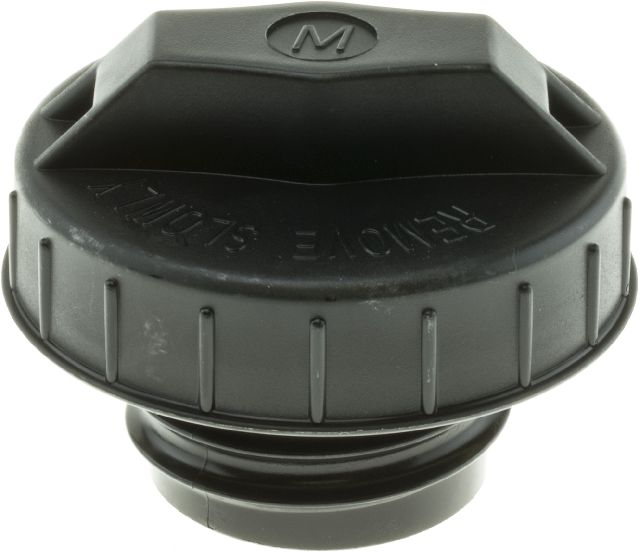
(OEM #17251-1NM0D)— This is the most frequent and simplest fix. The seal wears out over time, causing a large leak that triggers P0455. Owner forums and Nissan TSBs point to this as the first part to replace.
Trusted brands: Nissan (OEM)
OEM price range: $25-$40
Aftermarket price range: $15-$30 - EVAP Canister Vent Control Valve
(OEM #14935-JF00E (or superseded part 14935-JF02C))— A very common failure item on Nissan vehicles that causes EVAP leak codes. It gets stuck open due to exposure to road debris and moisture, causing the system to fail its leak test.
Trusted brands: Nissan (OEM), Bosch, Dorman, Standard Motor Products
OEM price range: $60-$90
Aftermarket price range: $40-$70 - EVAP Canister Purge Valve
(OEM #14930-1KC1A)— Less common than the vent valve for this code, but it can fail by sticking open, creating a leak.
Trusted brands: Hitachi, Dorman, Autotecnica
OEM price range: $205-$275
Aftermarket price range: $50-$150
Related Codes That Often Appear With This One
- P0442 — This indicates a small EVAP leak. If a large leak (P0455) is intermittent, the system might first detect it as a small leak.
- P0456 — This indicates a very small EVAP leak. It can appear alongside P0455 if the system has multiple leaks of different sizes or if a component is failing intermittently.
Technical Service Bulletins (TSBs) & Recalls
- NTB13-097J: EVAP LEAK DTC P0442, P0455, P0456 INFORMATION
Platform-Specific Known Issues
- Nissan has issued multiple Technical Service Bulletins, including NTB13-097J, regarding EVAP leak codes P0442, P0455, and P0456. The TSB provides a diagnostic flowchart that starts with checking the gas cap and advises against using a test drive to confirm a fix, as it will 'only waste time'. It directs technicians to use a smoke machine or a specific Nissan diagnostic tool (CONSULT-III plus) to perform a leak check.
Mechanic-Grade Diagnostic Values
- EVAP Canister Purge Valve Solenoid Resistance — expected: 15 - 38 Ohms. Failure: A reading significantly outside this range, or an open/short circuit, indicates a failed solenoid coil.
- Fuel Tank Pressure (FTP) Sensor Voltage (Key On, Engine Off, Gas Cap Off) — expected: Approximately 1.3V - 1.7V. Failure: A reading stuck high (e.g., 5V) or low (e.g., 0.3V) regardless of actual tank pressure points to a faulty sensor or wiring issue. A reading of ~1.5V represents atmospheric pressure.
Scan Tool Commands That Help
- Nissan CONSULT or advanced bidirectional scanner: EVAP System Leak Test / Vent Valve Control — This command is essential before performing a smoke test. The vent valve is normally open, so it must be commanded closed to seal the system. Applying smoke without closing this valve will cause the smoke to exit immediately from the vent, preventing proper diagnosis.
- Nissan CONSULT or advanced bidirectional scanner: Purge Volume Control Valve Test — This function allows the technician to command the purge valve to open and close to check its mechanical operation and its effect on the system, helping to determine if it is stuck open or closed.
Wiring & Ground Locations
- Passenger Compartment Fuse Box — Located on the driver's side of the instrument panel, behind a cover.. This panel contains fuses for various electronic modules, including potentially the Engine Control Module (ECM) which controls the EVAP system.
- Engine Compartment Fusible Link Box — Located on the battery's positive terminal.. This box contains main fusible links that provide power to critical systems and fuse boxes throughout the vehicle.
Real Owner Repair Stories
- Reddit r/MechanicAdvice (2009 Nissan Versa (N16 generation, but EVAP components and failure logic are highly similar to the 2017-2019 Note)) — Check Engine Light with code P0455.
❌ Tried (didn't work) Replacing the gas cap twice.
✅ What actually fixed it The user was confused by the interchangeable use of 'purge valve' and 'vent valve' online. The community clarified that for a P0455 large leak, the 'vent valve' (located at the rear of the car by the charcoal canister) is the much more likely culprit than the 'purge valve' (located in the engine bay), especially after the gas cap has been ruled out. This is due to the vent valve's exposure to road debris.
"I Checked Everything" — The Actual Cause
- If a smoke test is performed correctly (meaning the EVAP vent control valve was commanded shut with a scan tool) and no leaks are found, the P0455 code is very unlikely to be a physical leak. The cause is almost certainly electronic. The two most likely culprits are a faulty Fuel Tank Pressure (FTP) sensor sending incorrect voltage readings to the computer, or an intermittent failure of the EVAP vent control valve that functions correctly during the test but sticks open during a real-world drive cycle.
OEM Part Supersession History
14935-JF00E→14935-JF02C— Likely an updated design to improve durability and prevent the common sticking/failure issue.
Heads up: This part has been superseded multiple times. Previous part numbers include 14935-JF00A, 14935-JF00B, 14935-JF00C, 14935-JF00D, 14935-JF01B, and 14935-JF01C. Using the latest revision (14935-JF02C) is recommended for the most updated design.
Model Year Variations Within This Range
- 2018-2019: The OEM EVAP Canister assembly has a different part number for 2018-2019 models compared to 2014-2017 models, indicating a design change to the canister itself.
- 2018-2019: Some 2018-2019 Versa Note models are eligible for a voluntary service campaign (ID: P9336) which involves reprogramming the Engine Control Module (ECM). This software update can affect how the emissions system is monitored and may be a necessary step if other diagnostic procedures do not resolve an EVAP code.
Helpful Videos

Used OEM Parts in Stock
New Aftermarket Parts Available


The information in this article is provided for general reference and educational purposes only. Vehicle specifications, procedures, and part compatibility can vary by production date, trim level, and region. Always consult your vehicle's factory service manual and verify part numbers before purchasing or performing repairs. Safety-critical components such as airbags, seat belts, and braking systems should be installed by a qualified professional.
- Nissan VERSA NOTE:
- 🎬 Helpful Videos
- 🛍️ Shop This Part
- What's Unique About the 2017-2019 Nissan VERSA NOTE
- Diagnostic Flowchart
- Symptoms You May Notice
- Most Likely Causes
- Rare But Worth Checking
- Diagnosis Steps
- Parts You'll Likely Need
- Related Codes That Often Appear With This One
- Technical Service Bulletins (TSBs) & Recalls
- Platform-Specific Known Issues
- Mechanic-Grade Diagnostic Values
- Scan Tool Commands That Help
- Wiring & Ground Locations
- Real Owner Repair Stories
- "I Checked Everything" — The Actual Cause
- OEM Part Supersession History
- Model Year Variations Within This Range
- 🎟️ Get 5% Off