

P0455 on 2011-2017 Nissan JUKE: EVAP Large Leak Causes and Fixes
For a 2011-2017 Nissan Juke, the P0455 code is most often caused by a loose or faulty gas cap. If tightening or replacing the cap (~$15-$40) doesn't work, the next most likely culprit is a failed EVAP vent control valve (Part #14935-JF00B or superseded) located near the charcoal canister at the rear of the vehicle. This is a very common failure point on Nissans of this era.
- Always check the gas cap first. Make sure it's tight and the seal isn't cracked. This is the easiest and most common fix.
- If the gas cap isn't the problem, the EVAP vent control valve located at the rear of the car is the next most likely culprit.
- Using a genuine Nissan (OEM) gas cap is recommended, as aftermarket versions can sometimes cause sealing issues.
- While you can drive with this code, you will fail an emissions test, so it's best to address it promptly.
- If simple checks don't reveal the problem, a smoke test is the most effective way to find the exact source of the leak.
What's Unique About the 2011-2017 Nissan JUKE
On Nissan vehicles from this era, including the Juke, the P0455 code is very frequently linked to just two main components: the gas cap and the EVAP vent control valve. Nissan issued multiple Technical Service Bulletins (TSBs) highlighting that a loose fuel fill cap is a primary cause for this code. [⭐ NTB09020F, ⭐ NTB13-097J] Beyond the cap, the vent control valve, located on or near the charcoal canister at the rear of the vehicle, is a known failure point that can get stuck open due to dirt and age, causing a large leak that the system detects. Forum discussions among Nissan owners confirm that replacing this specific valve often resolves the code after the gas cap has been ruled out.
Diagnostic Flowchart
Tap your situation to follow the diagnostic path that matches what you're seeing on this vehicle.
Symptoms You May Notice
- Check Engine Light is on
- A faint smell of fuel, particularly around the rear of the vehicle.
- A "Check Gas Cap" message on the dashboard, if equipped.
- Difficulty filling the gas tank (fuel pump nozzle clicks off prematurely).
- Replacing the purge valve in the engine bay when the more common failure is the vent control valve at the rear of the vehicle.
- Replacing the entire charcoal canister when only the attached vent control valve has failed. The valve is available as a separate, much cheaper part.
Most Likely Causes
- Loose or Faulty Gas Cap 🔴 High Probability This is the most common cause, as confirmed by multiple Nissan TSBs (e.g., NTB09020F, NTB13-097J). The cap's seal can wear out, get cracked, or it may simply not have been tightened correctly after refueling. Using a non-OEM cap can also cause sealing issues.
How to confirm: Inspect the gas cap for any visible cracks or damage to the rubber O-ring or seal. Remove and retighten it until it clicks several times. Clear the code and drive for a few days to see if it returns.
Typical fix: Replace the gas cap with a new one. It is highly recommended to use a genuine OEM Nissan cap, as some aftermarket caps may not seal properly.
Est. part cost: $15-$40 - EVAP Vent Control Valve Failure 🟡 Medium Probability This valve is located at the rear of the car near the charcoal canister, where it is exposed to road dirt and moisture. It can become clogged with debris or the internal solenoid can fail, causing it to stick open and create a large leak. This is a widely reported failure on many Nissan models.
How to confirm: The valve is normally open. You can test it by applying 12V power to its terminals; a working valve will click shut. If it doesn't click or is stuck open, it needs replacement. A smoke test is the definitive way to confirm it's leaking after commanding it closed with a scan tool.
Typical fix: Replace the EVAP vent control valve. This part is a twist-lock fit into the charcoal canister and requires no special tools, though pliers may be needed to release the electrical connector if it's dirty.
Est. part cost: $40-$90 - EVAP Canister Purge Volume Control Solenoid Valve ⚪ Low Probability This valve is located in the engine bay and controls the flow of fuel vapors to the engine. While less common to fail than the vent valve, it can get stuck open, causing a constant vacuum leak that the system may interpret as a large leak.
How to confirm: This valve is normally closed. Disconnect it and try to blow through it. If air passes through, it is stuck open and faulty. You can also check for vacuum at the valve with the engine running when it should be closed.
Typical fix: Replace the purge valve.
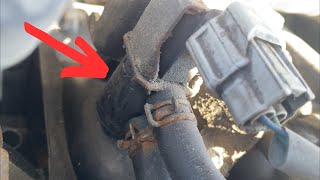
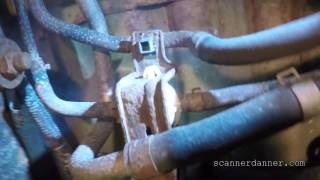
Est. part cost: $60-$150 - Cracked or Disconnected EVAP Hose ⚪ Low Probability Over time, the rubber and plastic hoses in the EVAP system can become brittle and crack, especially those exposed to the elements under the car or heat in the engine bay.
How to confirm: A visual inspection may reveal an obvious crack or disconnected hose. However, smaller cracks are difficult to see, and a smoke test is the most effective method to find the exact location of the leak.
Typical fix: Replace the damaged section of hose or add a clamp to a loose connection.
Est. part cost: $10-$50
Rare But Worth Checking
- Cracked Charcoal Canister: The plastic housing of the charcoal canister itself can develop a crack from road debris or age, creating a large leak. This is usually found during a smoke test after all other components have been checked.
- Leaking Fuel Filler Neck: The metal pipe leading from the gas cap to the fuel tank can rust and develop holes, causing a major leak. This is more common in regions that use road salt in the winter and is often found via smoke test.
- Faulty Fuel Tank Pressure Sensor: In rare cases, the sensor that measures pressure in the EVAP system can fail and send incorrect data to the computer, making it think there is a leak when there isn't one.
- Loose Fuel Pump Locking Ring: A large leak can occur at the top of the fuel tank if the locking ring that secures the fuel pump assembly is not fully tightened. One owner on a Nissan forum reported this issue after a previous fuel pump replacement, which caused fuel to spill out when the tank was full.
Diagnosis Steps
- Check the Gas Cap: Ensure it is tight and clicks. Inspect the seal for cracks or wear. If in doubt, replace it with an OEM part, clear the code, and drive for a few days. This is the first step recommended by Nissan TSB NTB13-097J. [⭐ NTB13-097J, 23]
- Visual Inspection: Look over all accessible EVAP hoses in the engine bay and under the car near the fuel tank for obvious cracks, disconnections, or damage. Pay attention to the fuel filler neck for signs of rust or damage.
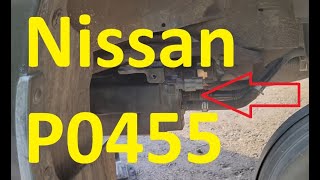
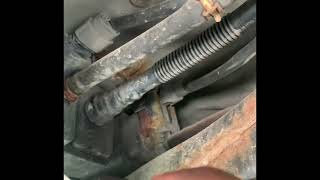
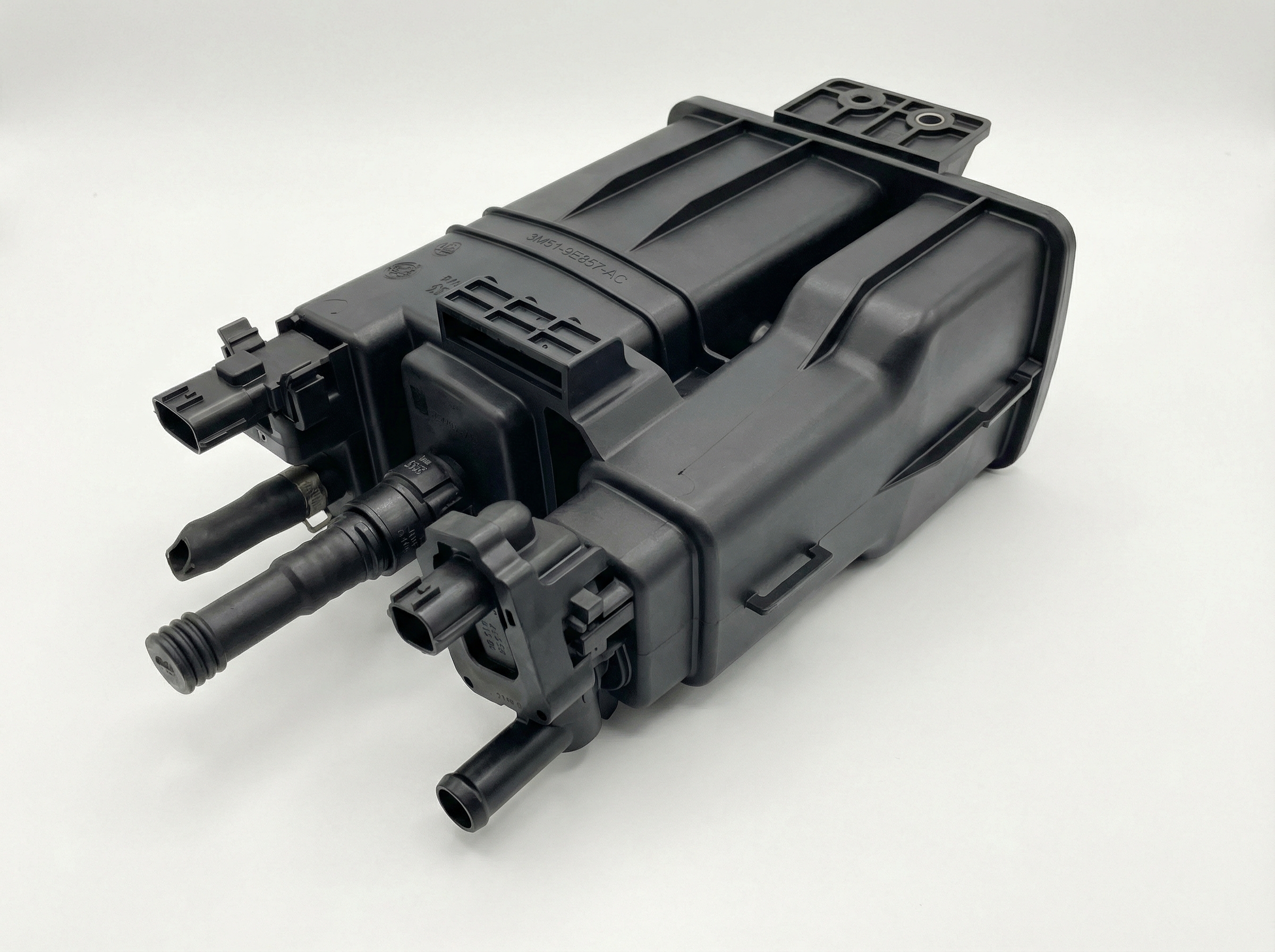
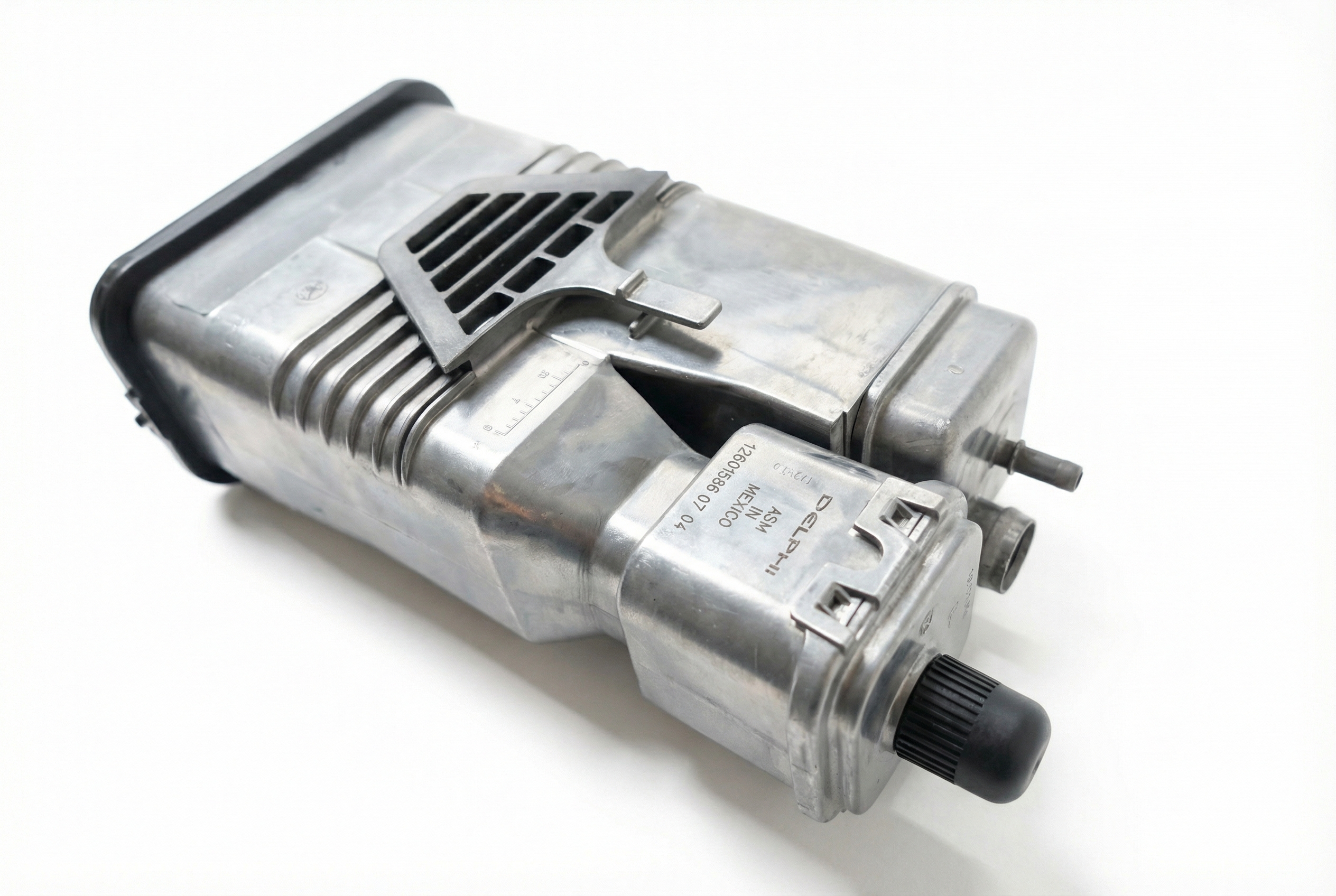
- Inspect the EVAP Vent Control Valve: Locate the charcoal canister at the rear of the vehicle, typically near the passenger-side rear wheel. The vent valve is attached to it. Check for visible damage or cracks.
- Test the EVAP Vent Control Valve: Disconnect the valve. It should be open by default. Apply 12V from a battery source to the electrical pins. A healthy valve will make an audible click and close. If it doesn't, it is faulty and needs replacement.
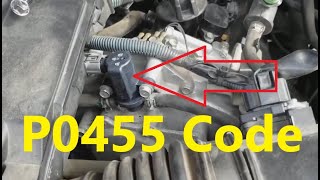
- Test the EVAP Purge Valve: Locate the purge valve in the engine bay. Disconnect it and attempt to blow through it. No air should pass. If it does, the valve is stuck open and must be replaced.
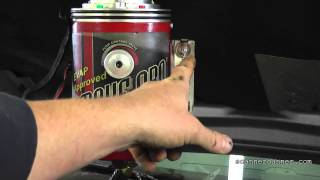
- Perform a Smoke Test: If the cause is still not found, the most reliable method is to use an automotive smoke machine. Introduce smoke into the EVAP service port and look for where the smoke escapes. Before starting, you must use a scan tool to command the vent valve closed to seal the system for the test. This will pinpoint the exact location of the leak, whether it's a hose, the canister, the filler neck, or the top of the fuel tank.
Parts You'll Likely Need
- Fuel Filler Cap
(OEM #17251-1F20A)— This is the most frequent cause of P0455 on a Nissan Juke, as noted in manufacturer TSBs. The seal fails over time. [⭐ NTB09020F]
Trusted brands: Nissan (OEM)
OEM price range: $25-$40
Aftermarket price range: $15-$25 - EVAP Canister Vent Control Valve
(OEM #14935-JF00B, 14935-JF00C, 14935-JF00D, 14935-JF00E)— A very common failure point on Nissans. It gets stuck open due to dirt and age, causing a large leak. Replacing this valve often resolves the code when the gas cap is not the issue. The part number has been superseded several times.
Trusted brands: Nissan (OEM), Bosch, Dorman
OEM price range: $60-$85
Aftermarket price range: $35-$60 - EVAP Canister Purge Valve
(OEM #14930-1KC0A)— Less common than the vent valve, but can get stuck open, causing this code. It's located in the engine bay.
Trusted brands: Nissan (OEM), Hitachi
Related Codes That Often Appear With This One
- P0456 — This code for a 'Very Small Leak' can sometimes appear alongside P0455 if the system's self-tests detect different leak sizes under varying conditions. Nissan TSBs group them together as they share the same diagnostic procedure. [⭐ NTB13-097J, ⭐ NTB09020F]
- P0442 — This code for a 'Small Leak' is also a companion code. The TSBs from Nissan group P0442, P0455, and P0456 together as general EVAP leak codes with similar diagnostic paths, often starting with the gas cap. [⭐ NTB13-097J, ⭐ NTB09020F]
Technical Service Bulletins (TSBs) & Recalls
- NTB13-097J: EVAP LEAK DTC P0442, P0455, P0456 INFORMATION
- NTB09020F: SERVICE INFORMATION - EVAP DTC P0442, P0455, P0456 STORED
- NTB13-097g: ALL MODEL YEAR 2012 AND NEWER NISSAN VEHICLES; EVAP LEAK DTC P0442, P0455, P0456 INFORMATION
- NTB13-097D: ALL MODEL YEAR 2012 AND NEWER NISSAN VEHICLES; EVAP LEAK DTC P0442, P0455, P0456 INFORMATION
Platform-Specific Known Issues
- Nissan has released multiple Technical Service Bulletins (TSBs) regarding EVAP codes P0442, P0455, and P0456. TSB NTB13-097J, which applies to all 2012 and newer Nissan vehicles, provides a specific diagnostic flow chart. It instructs technicians to first confirm proper fuel cap installation before proceeding to any other tests, as it is the most common cause. The bulletin explicitly states that test-driving the vehicle for these DTCs is a waste of time and the formal diagnostic procedure must be followed.
Mechanic-Grade Diagnostic Values
- EVAP Vent Valve Connector Voltage — expected: Approximately 12V from one pin to ground with key on, engine off.. Failure: A user-reported reading of 9.7V was observed during diagnosis, though the component was still functional; a complete lack of voltage would indicate a wiring issue.
- Fuel Tank Pressure (FTP) Sensor Reading on Scan Tool — expected: The system should be able to pull down pressure (create a vacuum) and hold it during an EVAP self-test.. Failure: During a test, the pressure reading fails to drop, or drops and then rises back to near-atmospheric pressure very quickly, indicating a large leak.
Scan Tool Commands That Help
- Professional Scan Tool (e.g., Nissan Consult): EVAP System Leak Test — To command the onboard computer to perform a self-test of the entire EVAP system, which involves closing the vent valve and monitoring the fuel tank pressure sensor for a leak.
- Professional Scan Tool (e.g., Nissan Consult): Vent Valve Control — To manually command the EVAP vent valve to close. This is a required step before performing a smoke test to ensure the system is sealed.
- Professional Scan Tool (e.g., Nissan Consult): Purge Valve Control — To manually cycle the purge valve to check for response (audible clicking) and to see if it affects engine idle, which can help diagnose if it's stuck open or closed.
Wiring & Ground Locations
- EVAP Canister Vent Control Valve — Under the right rear of the vehicle, mounted directly on the charcoal canister.. This is the location of the most common mechanical failure point after the gas cap. The connector here provides power and the ECM's switched ground signal to operate the valve.
- ECM Ground — A ground distribution diagram indicates a primary ground for the ECM is located in the left side of the engine compartment.. A poor ground for the Engine Control Module (ECM) can cause erratic behavior and incorrect readings from any sensor it controls, including the EVAP pressure sensor and solenoids.
- Body Ground — A ground wire is located near the headlights, running from the engine to the body.. Corrosion at this main body ground connection can cause a variety of electrical issues, potentially affecting the power supply or signals for EVAP components.
Real Owner Repair Stories
- Car Talk Community user 'jspe8437' (2004 Nissan Sentra (similar EVAP system and common issues)) — P0455 code, CEL would light up, go out, and come back on.
❌ Tried (didn't work) Applying vaseline to the gas cap gasket., Replacing the gas cap with a new aftermarket (Stant) cap., Replacing the aftermarket cap with a new OEM cap.
✅ What actually fixed it The user performed detailed diagnostics, confirming the purge valve was normally closed and the vent valve was normally open by blowing through them and testing with 12V power. They noted the vent valve connector read 9.7V. The final fix was not explicitly stated in the available thread, but the extensive diagnosis ruled out the most common parts, pointing towards a more elusive leak in a hose or the canister itself. - YouTube Comment (Unspecified vehicle, common P0455 issue) — P0455 code after failing state inspection.
❌ Tried (didn't work) Replacing the gas cap., Replacing the EVAP vent and purge solenoids.
✅ What actually fixed it The final cause was a rusted fuel filler neck that was leaking.
OEM Part Supersession History
14935-JF00A / 14935-JF00B→14935-JF00C -> 14935-JF00D -> 14935-JF00E -> 14935-JF02C— Progressive design updates by the manufacturer to improve reliability and address failures.
Heads up: No known incompatibilities. The latest part number, 14935-JF02C, is the correct replacement for all previous versions for this application.
Model Year Variations Within This Range
- 2011-2017: The Nissan Juke F15 generation had a facelift for the 2015 model year, but the core EVAP system components, common failure points (gas cap, vent control valve), and diagnostic procedures for code P0455 remained consistent across this entire year range.
Helpful Videos

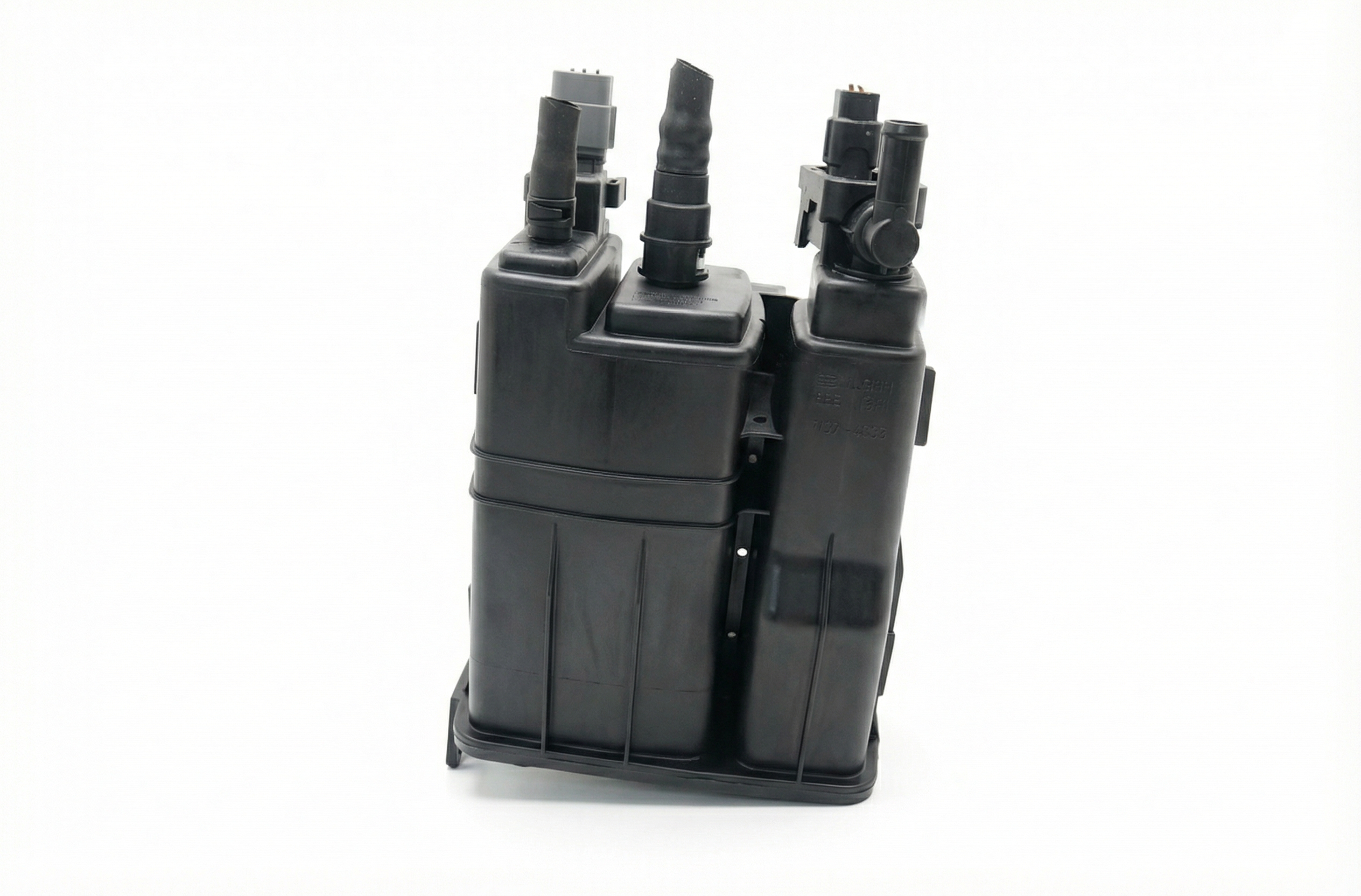
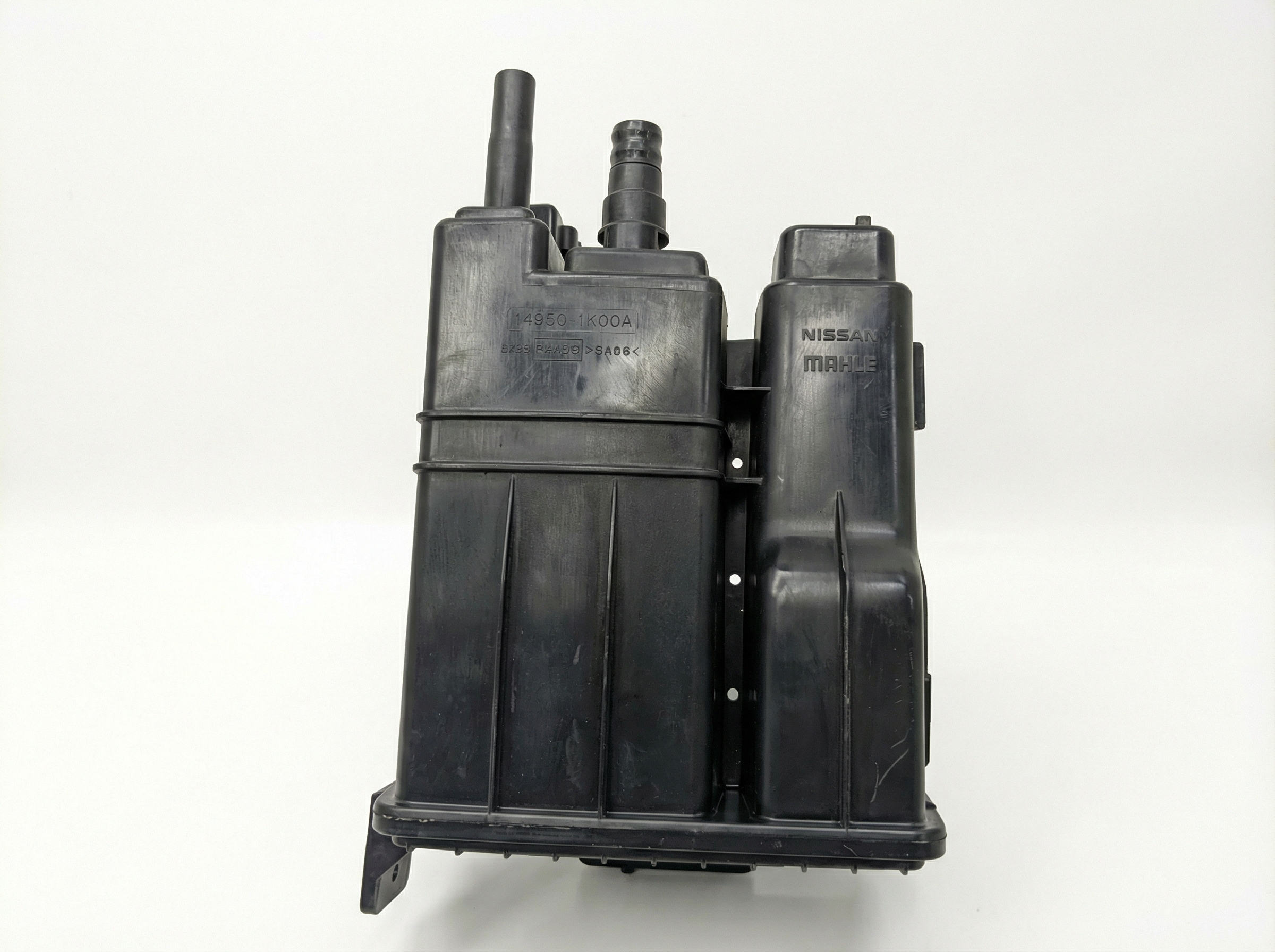
Used OEM Parts in Stock
New Aftermarket Parts Available


The information in this article is provided for general reference and educational purposes only. Vehicle specifications, procedures, and part compatibility can vary by production date, trim level, and region. Always consult your vehicle's factory service manual and verify part numbers before purchasing or performing repairs. Safety-critical components such as airbags, seat belts, and braking systems should be installed by a qualified professional.
- Nissan JUKE:
- 🎬 Helpful Videos
- 🛍️ Shop This Part
- What's Unique About the 2011-2017 Nissan JUKE
- Diagnostic Flowchart
- Symptoms You May Notice
- Most Likely Causes
- Rare But Worth Checking
- Diagnosis Steps
- Parts You'll Likely Need
- Related Codes That Often Appear With This One
- Technical Service Bulletins (TSBs) & Recalls
- Platform-Specific Known Issues
- Mechanic-Grade Diagnostic Values
- Scan Tool Commands That Help
- Wiring & Ground Locations
- Real Owner Repair Stories
- OEM Part Supersession History
- Model Year Variations Within This Range
- 🎟️ Get 5% Off