

P0455 on 2015-2022 Nissan Frontier: EVAP Gross Leak Causes and Fixes
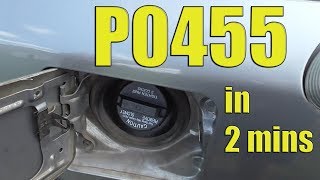
For a 2015-2022 Nissan Frontier, code P0455 most often means you have a loose or faulty gas cap. Before buying any parts, tighten the cap until it clicks and clear the code. If it returns, a new OEM gas cap is an inexpensive first step. The next most common cause, especially on this platform, is a failed EVAP vent control valve near the rear of the truck, which gets stuck open due to dirt or age.
- P0455 means your Frontier has a large leak in its fuel vapor recovery system.
- Always check the gas cap first. Make sure it's tight and the seal isn't cracked. This is the most common and cheapest fix.
- If the gas cap isn't the issue, the next most likely culprit on a Frontier is the EVAP canister vent valve located at the rear of the truck.
- You can continue to drive the truck, but you will fail an emissions test and may experience a slight fuel smell until the leak is fixed.
- A smoke test is the most reliable professional method to pinpoint the exact location of a leak if it's not an obvious component.
What's Unique About the 2015-2022 Nissan FRONTIER
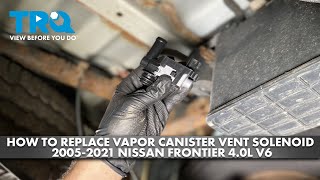
 🎬 Watch: Step-by-step guide to replacing the vent solenoid." loading="eager" fetchpriority="high" style="max-width:100%;height:auto;border-radius:6px;display:block;box-shadow:0 2px 8px rgba(0,0,0,0.1);" />
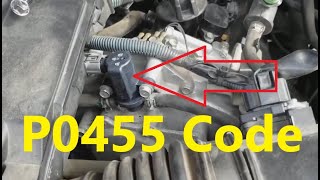
The Nissan Frontier's EVAP system, particularly on the long-running second generation (D40), is known for issues with the vent control valve located near the charcoal canister by the spare tire. This valve is normally open and is commanded closed by the ECM to test the system. Due to its location, it is highly susceptible to dust, dirt, and even spider webs, which can cause the valve to stick open, creating the large leak that 🎬 See how a sticking vent valve causes this code. triggers a P0455 code. While a loose gas cap is always the first suspect, the vent valve is a very common point of failure specific to this platform.
Diagnostic Flowchart

Tap your situation to follow the diagnostic path that matches what you're seeing on this vehicle.
Generation note: The 2015-2022 range covers two Frontier generations. The 2015-2021 models are the second generation (D40), and the 2022 model is the start of the third generation (D41). While the EVAP system principles are the same, some part numbers and locations may differ. Notably, the D40 received a new 3.8L V6 engine for 2020-2021, which was then carried into the D41. The D40 platform is shared with the Nissan Xterra and Suzuki Equator, which exhibit the same P0455 issues.
Symptoms You May Notice
- Check Engine Light is on
- A faint smell of fuel, particularly around the rear of the truck.
- Potentially a slight decrease in fuel economy
- Difficulty filling the gas tank (fuel pump nozzle clicks off repeatedly), which can indicate a clogged canister or stuck vent valve.
- Replacing the purge valve in the engine bay when the more common failure point on the Frontier is the vent valve at the rear of the truck.
- Immediately assuming a major component has failed before replacing the gas cap with a genuine OEM part, which fixes the issue a significant amount of the time.
Most Likely Causes

- Loose, Incorrect, or Faulty Gas Cap 🔴 High Probability This is the most common cause for a P0455 on any vehicle. The gas cap seal can wear out, or the cap may not have been tightened properly after refueling. Many owners confirm that using a cheap, aftermarket cap can cause the code to return; an OEM cap is strongly recommended.
How to confirm: Inspect the gas cap for cracks or a worn, brittle rubber seal. Remove and retighten the cap, ensuring it clicks at least once. Clear the code and see if it returns. A visual inspection may not be enough, as internal components can fail.
Typical fix: Replace the gas cap with a new OEM part. Aftermarket caps can sometimes have sealing issues, leading to a repeat code.
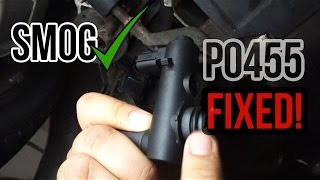
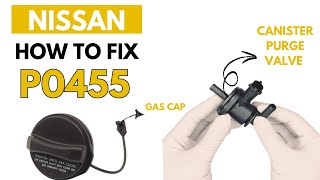
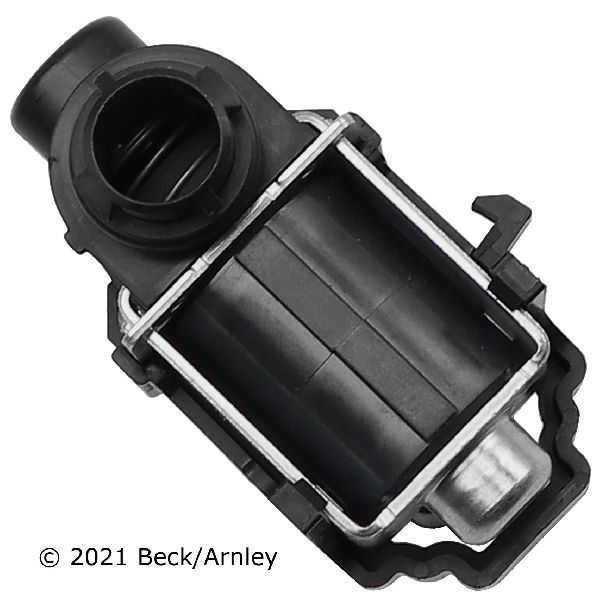
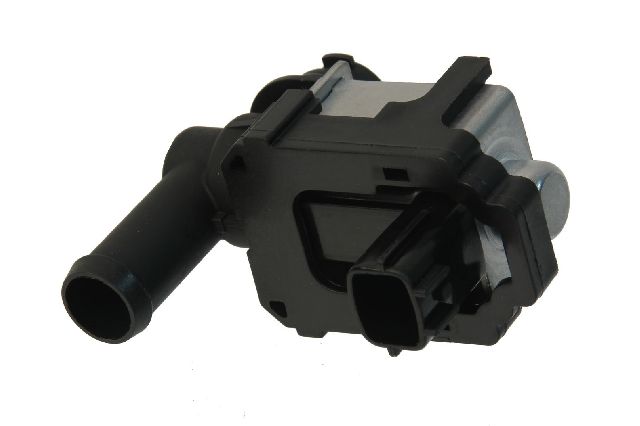
Est. part cost: $15-$40 - Failed EVAP Canister Vent Control Valve/Solenoid 🔴 High Probability On Nissan trucks, this valve is a very common failure point. It is located near the charcoal canister at the rear of the vehicle and can get stuck open due to dirt, dust, or internal failure, causing a large leak. Owners have reported finding everything from fine dust to spider webs clogging the mechanism.
How to confirm: The valve is normally open. You can remove it (it usually twists out of the canister) and apply 12V power to its terminals; it should click and close. If it doesn't, or if it's visibly stuck open with no power, it has failed. A smoke test will also show smoke exiting from the valve if it's stuck open.
Typical fix: Replace the EVAP canister vent control valve. It typically twists into the EVAP canister assembly. Applying a small amount of silicone grease to the new O-ring can make installation easier.
Est. part cost: $40-$100 - Cracked or Disconnected EVAP Hose 🟡 Medium Probability Rubber and plastic hoses can become brittle and crack over time due to age and exposure to the elements under the truck. An owner on YouTube found a P0455 was caused by a mouse chewing through an EVAP line, which they repaired with a section of heater hose.
How to confirm: Visually inspect all EVAP lines running from the fuel tank to the charcoal canister and up to the engine bay. A smoke test is the most effective way to find a cracked hose, as smoke will pour out of the leak location.
Typical fix: Replace the damaged section of the hose. Small sections can be affordably repaired with correctly-sized vacuum or fuel vapor hose.
Est. part cost: $10-$50 - Failed EVAP Purge Valve/Solenoid ⚪ Low Probability While less common for a large leak code than the vent valve, the purge valve (located in the engine bay) can fail by getting stuck open.
How to confirm: The purge valve is normally closed. With the engine off, disconnect the hose leading to the intake manifold and try to blow through it. If air passes through, the valve is stuck open and has failed.
Typical fix: Replace the purge valve.
Est. part cost: $30-$80
Rare But Worth Checking
- Cracked EVAP Charcoal Canister: The canister itself can be damaged by road debris or become internally saturated and fail, causing a leak. This is usually a last resort after checking all other components.
- Leaking Fuel Tank or Filler Neck: Rust or physical damage can cause a leak in the fuel tank or the pipe leading to it, which will trigger a P0455 code. This is more common in areas with heavy road salt usage.
- Loose Fuel Pump Lock Ring: A user on a Nissan forum discovered their P0455 was caused by a fuel pump that was not properly secured. The lock ring had loosened over time, creating a large leak at the top of the fuel tank. This was discovered after noticing a strong fuel smell when filling the tank.
Diagnosis Steps
- Read the code with an OBD-II scanner to confirm P0455 is present.
- Inspect the gas cap for any visible damage to the seal. Tighten it until it clicks several times. Clear the code and drive the vehicle to see if the light returns.
- If the light returns, replace the gas cap with a new OEM part as a low-cost, high-probability fix. Many forum users report that only an OEM cap will solve the problem.
- If the code persists, perform a visual inspection of all accessible EVAP hoses between the engine, fuel tank, and charcoal canister for obvious cracks or disconnections.
- Locate the EVAP canister vent control valve near the charcoal canister at the rear of the truck, often near the spare tire. It is normally open at rest.
- Test the vent valve by removing it (typically a quarter-turn twist) and applying 12V power to the pins. It should click closed. If it doesn't actuate, or if it's stuck open, it needs replacement.
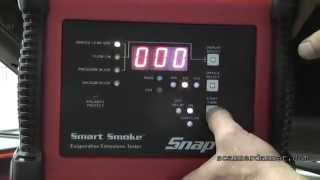
- For hard-to-find leaks, perform a smoke test. Introduce smoke into the EVAP service port and look for smoke escaping from any component in the system (hoses, canister, valves, or the fuel tank itself).
- Locate and test the purge valve in the engine bay. Ensure it is closed at rest (no power) by attempting to blow through it.
- If no other leaks are found, inspect the fuel tank filler neck for rust or damage and check the fuel pump lock ring for tightness, especially if you smell fuel after filling up.
Parts You'll Likely Need
- Fuel Cap
(OEM #17251-ZZ62D (supersedes 17251-EZ30A, 17251-ZZ60A, etc.))— This is the most frequent and simplest cause of a P0455 code due to a worn seal or improper tightening. Using an OEM cap is highly recommended.
Trusted brands: Nissan (OEM)
OEM price range: $25-$40
Aftermarket price range: $15-$30 - EVAP Canister Vent Control Valve
(OEM #14935-JF02C (latest, supersedes 14935-JF00A, 14935-JF00B, 14935-JF00E, etc.))— A very common failure point on Nissan trucks. It gets stuck open due to debris or wear, causing the system to fail its pressure test.
Trusted brands: Nissan (OEM), Dorman, Standard Motor Products, Bosch
OEM price range: $60-$100
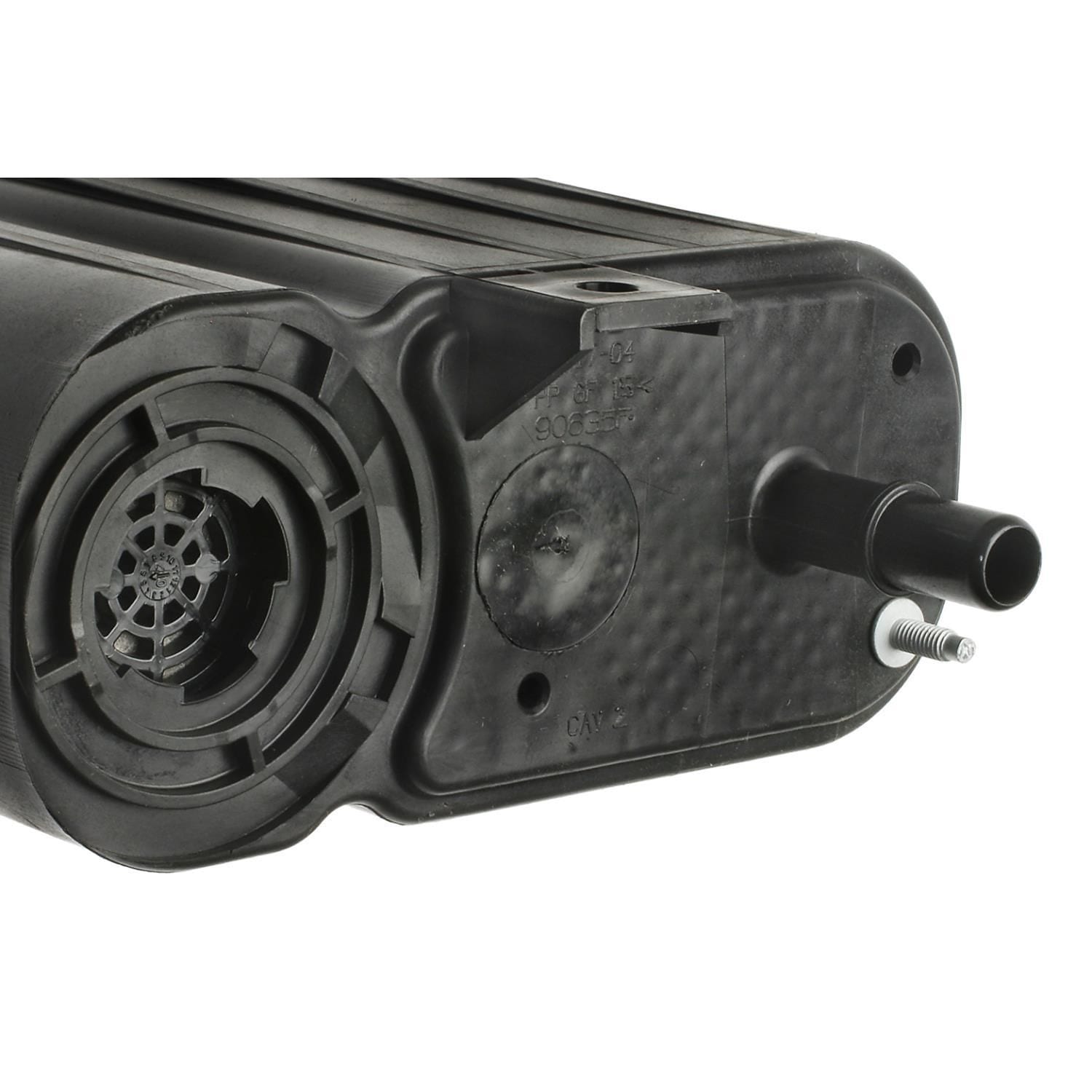
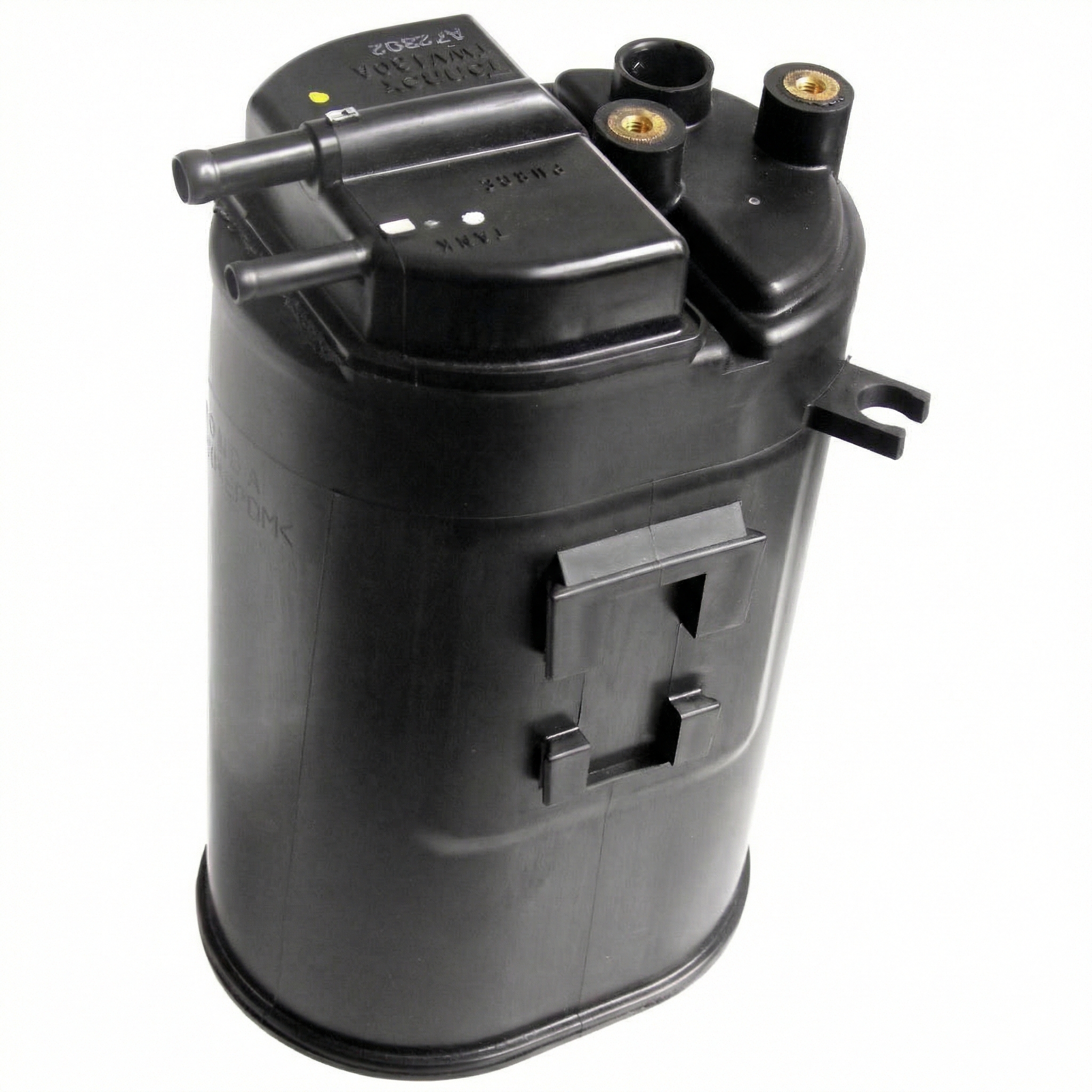
Aftermarket price range: $40-$80 - EVAP Charcoal Canister
(OEM #14950-EA200 (for D40 models), 14950-9BT0A (for 2020+ 3.8L models))— The canister can crack from debris or age, or the vent valve (which is often replaced with it) fails. Part number varies by generation and engine.
Trusted brands: Nissan (OEM)
OEM price range: $200-$300
Aftermarket price range: $150-$250
Related Codes That Often Appear With This One
- P0442 — Indicates a small EVAP leak. You might see this code appear alongside or intermittently with P0455 if the leak size is borderline or if multiple leaks of different sizes are present.
- P0456 — Indicates a very small EVAP leak. Like P0442, it points to a leak in the same system, just of a different magnitude. It's common to see these codes together as a leak worsens over time.
Technical Service Bulletins (TSBs) & Recalls
- NTB13-097J: EVAP LEAK DTC P0442, P0455, P0456 INFORMATION
- NTB13-097g: ALL MODEL YEAR 2012 AND NEWER NISSAN VEHICLES; EVAP LEAK DTC P0442, P0455, P0456 INFORMATION
- NTB13-097D: ALL MODEL YEAR 2012 AND NEWER NISSAN VEHICLES; EVAP LEAK DTC P0442, P0455, P0456 INFORMATION
Platform-Specific Known Issues
- Nissan has issued multiple Technical Service Bulletins (TSBs) including NTB13-097J and its various revisions (NTB13-097g, NTB13-097D, etc.) regarding EVAP leak codes P0442, P0455, and P0456. These bulletins do not pinpoint a specific faulty part, but rather provide a standardized diagnostic flowchart for technicians to follow, starting with checking the gas cap.
Mechanic-Grade Diagnostic Values
- EVAP Canister Vent Control Valve Solenoid Resistance — expected: ~32 Ohms. Failure: A reading significantly different from the specification suggests a damaged solenoid winding.
- EVAP Canister Purge Valve Solenoid Resistance — expected: 30 - 38 Ohms. Failure: An open circuit (infinite resistance) or a reading outside this range indicates a bad valve.
- Fuel Tank Pressure (FTP) Sensor Signal Voltage (Key On, Engine Off, Gas Cap Open) — expected: Approximately 2.5 Volts. Failure: A reading of 5V may indicate a bad sensor, while a reading near 0V could point to a wiring issue.
Scan Tool Commands That Help
- Nissan CONSULT or equivalent professional scanner: Actuator Test: Vent Control Valve — This command is used to manually close the normally-open vent valve. This is a required first step before performing a smoke test to properly seal the EVAP system and check for leaks. If the valve doesn't click or close when commanded, it points to a failure of the valve or its wiring.
Real Owner Repair Stories
- RepairPal user mbas51 (2002 Nissan Frontier (similar D22/D40 platform issue)) — P0455 code, failed emissions test.
❌ Tried (didn't work) Replaced the knock sensor and the EVAP canister vent control valve.
✅ What actually fixed it The code returned after spending $600 on parts and labor, indicating the leak was elsewhere. The final fix was not posted, but highlights the importance of a proper smoke test before replacing parts, as the initial diagnosis was incorrect. - YouTube channel 'ScannerDanner' (2007 Nissan Frontier) — P0455 EVAP gross leak code.
❌ Tried (didn't work) N/A - professional diagnosis was the first step.
✅ What actually fixed it Using a scan tool's bidirectional control, the technician commanded the vent valve closed but heard no click. A smoke test showed smoke exiting the vent valve, confirming it was stuck open. Even though the system held pressure once the vent was manually blocked (meaning no other leaks), the valve itself was faulty because it would not respond to the computer's command to close. Replacing the vent control valve fixed the issue.
"I Checked Everything" — The Actual Cause
- In a detailed diagnostic video by ScannerDanner on a 2007 Frontier, the technician performed a smoke test. After commanding the vent valve closed with a scan tool, he found it was stuck open and was the source of the 'leak'. However, once he manually plugged the vent valve outlet, the rest of the EVAP system showed no leaks and held pressure perfectly. This is a critical distinction: a smoke test might appear 'clean' for the rest of the system (hoses, tank, canister), but the P0455 is caused by the vent valve itself failing to do its job of sealing the system for the test. The root cause was the failed valve, not a separate crack or hole elsewhere.
OEM Part Supersession History
14935-JF00A, 14935-JF00B, 14935-JF00C, 14935-JF00D, 14935-JF00E→14935-JF02C— Nissan has updated this common-fail part multiple times to improve reliability and sealing against debris.
Heads up: The latest part number, 14935-JF02C, is the recommended replacement for all previous versions and is widely cited as the fix for recurring EVAP codes that cheaper aftermarket valves fail to solve.
Model Year Variations Within This Range
- 2015-2019: These models use the 4.0L V6 (VQ40DE). The EVAP system components, like canister 14950-EA200, are specific to this engine and chassis.
- 2020-2021: These D40 models received the new 3.8L V6 (VQ38DD). While the EVAP system layout is similar, some parts, like the charcoal canister (14950-9BT0A), were updated for the new engine.
- 2022: This is the first year of the 3rd generation (D41) Frontier. It carries over the 3.8L V6 but features a redesigned chassis and a revised EVAP system. While the vent valve remains a likely culprit for P0455, part numbers and locations may differ from the D40.
Helpful Videos

Used OEM Parts in Stock



New Aftermarket Parts Available


The information in this article is provided for general reference and educational purposes only. Vehicle specifications, procedures, and part compatibility can vary by production date, trim level, and region. Always consult your vehicle's factory service manual and verify part numbers before purchasing or performing repairs. Safety-critical components such as airbags, seat belts, and braking systems should be installed by a qualified professional.
- Nissan FRONTIER:
- 🎬 Helpful Videos
- 🛍️ Shop This Part
- What's Unique About the 2015-2022 Nissan FRONTIER
- Diagnostic Flowchart
- Symptoms You May Notice
- Most Likely Causes
- Rare But Worth Checking
- Diagnosis Steps
- Parts You'll Likely Need
- Related Codes That Often Appear With This One
- Technical Service Bulletins (TSBs) & Recalls
- Platform-Specific Known Issues
- Mechanic-Grade Diagnostic Values
- Scan Tool Commands That Help
- Real Owner Repair Stories
- "I Checked Everything" — The Actual Cause
- OEM Part Supersession History
- Model Year Variations Within This Range
- 🎟️ Get 5% Off