

P0455 on 2007-2014 Nissan Altima: Causes and Fixes for EVAP Gross Leaks
On a 2007-2014 Nissan Altima, code P0455 is most often caused by a loose or faulty gas cap. If the cap is secure, the next most likely culprit is a failed EVAP canister vent control valve located at the rear of the car. A new OEM gas cap costs $25-$40, while a new vent valve is around $60-$110. Many owners on forums confirm that replacing one of these two parts resolves the code.
- P0455 indicates a large leak in the evaporative emissions system.
- Always check the gas cap first. Make sure it's tight and the seal is intact. This is the most common and cheapest fix.
- If the gas cap isn't the problem, the EVAP canister vent control valve (located at the rear of the car) is the next most likely part to have failed.
- The vehicle is safe to drive with this code, but it will fail an emissions test and is releasing pollutants into the atmosphere.
- A smoke test is the most reliable way to find the exact source of the leak if it's not one of the common components.
What's Unique About the 2007-2014 Nissan ALTIMA

For this era of Nissan Altima, which spans the fourth (L32) and fifth (L33) generations, EVAP system codes are extremely common. While a loose gas cap is a frequent cause on any car, these Altimas are particularly known for failures of the EVAP canister vent control valve. This is a well-documented weakness across many Nissan models of the period, including the Maxima, Rogue, and Murano. Nissan has issued multiple Technical Service Bulletins (TSBs) acknowledging EVAP leak issues, often pointing to this specific valve or its seal. Owners on forums like Reddit and NissanClub frequently resolve persistent P0455 codes by replacing this valve, located near the charcoal canister at the rear of the vehicle, after confirming the gas cap is good.
Diagnostic Flowchart
Tap your situation to follow the diagnostic path that matches what you're seeing on this vehicle.
Generation note: This range covers the fourth generation (L32, 2007-2012) and the first two years of the fifth generation (L33, 2013-2014). The primary causes and fixes for P0455, especially the gas cap and EVAP vent control valve, are common to both generations and shared with other Nissan models from this period.
Symptoms You May Notice
- Check Engine Light is on
- A faint smell of fuel, especially around the rear of the car or near the gas cap area
- A "Loose Fuel Cap" message may appear on the instrument cluster (though the code can set without it)
- Difficulty filling the gas tank (fuel pump nozzle clicks off repeatedly), which can indicate a stuck-closed vent valve or clogged canister
- Replacing the O2 sensors. Oxygen sensors are not related to the EVAP system.
- Replacing the purge valve in the engine bay when the more common failure is the vent valve at the rear of the car.
- Replacing the gas cap with a cheap aftermarket version that doesn't seal properly, leading the technician to believe the cap is not the issue.
Most Likely Causes

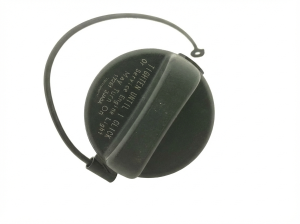
- Loose, Damaged, or Incorrect Fuel Filler Cap 🔴 High Probability The gas cap is a simple wear item. Its rubber seal can dry out, crack, or get dirty, preventing a proper seal. This is the most common cause for any EVAP leak code. TSB NTB09-020F specifically calls out a loose fuel fill cap as a likely cause for 2007-2011 models. TSB NTB13-097J reiterates this for 2012 and newer models.
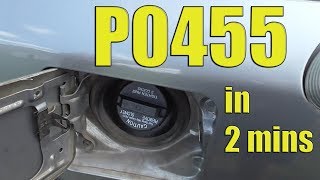
How to confirm: Remove the cap and inspect the rubber O-ring for cracks, stiffness, or debris. Ensure you hear it click at least once when tightening. If the seal looks worn, it's best to replace it. Many owners report that only a genuine Nissan OEM cap will solve the problem, as some aftermarket caps fail to seal correctly.
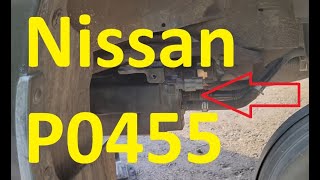
Typical fix: Tighten the cap until it clicks. If the seal is bad, replace the fuel cap. Using a genuine OEM cap is highly recommended. 🎬 Watch: A breakdown of common Nissan P0455 causes and fixes.
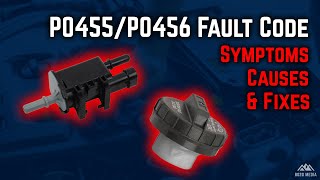
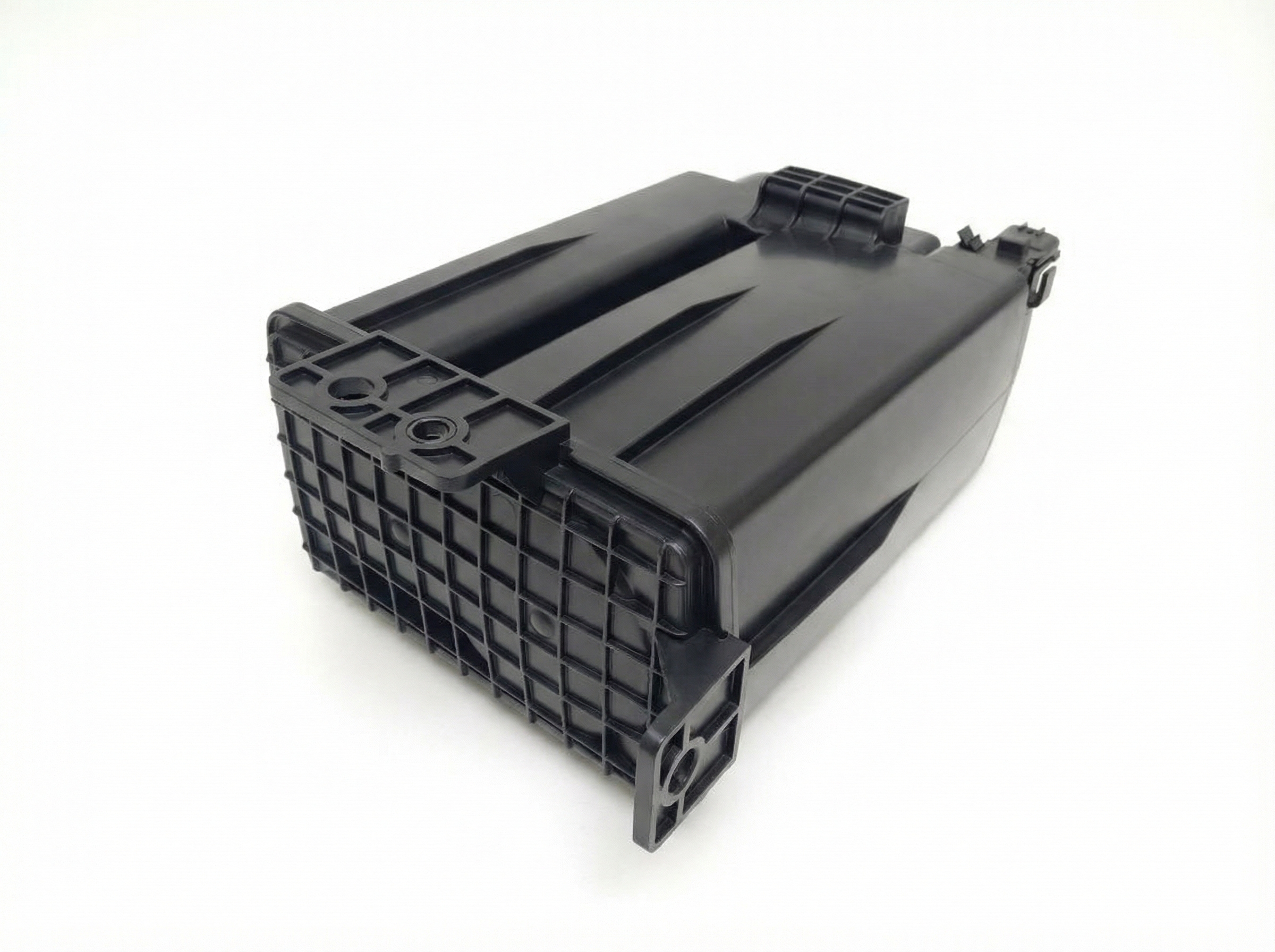
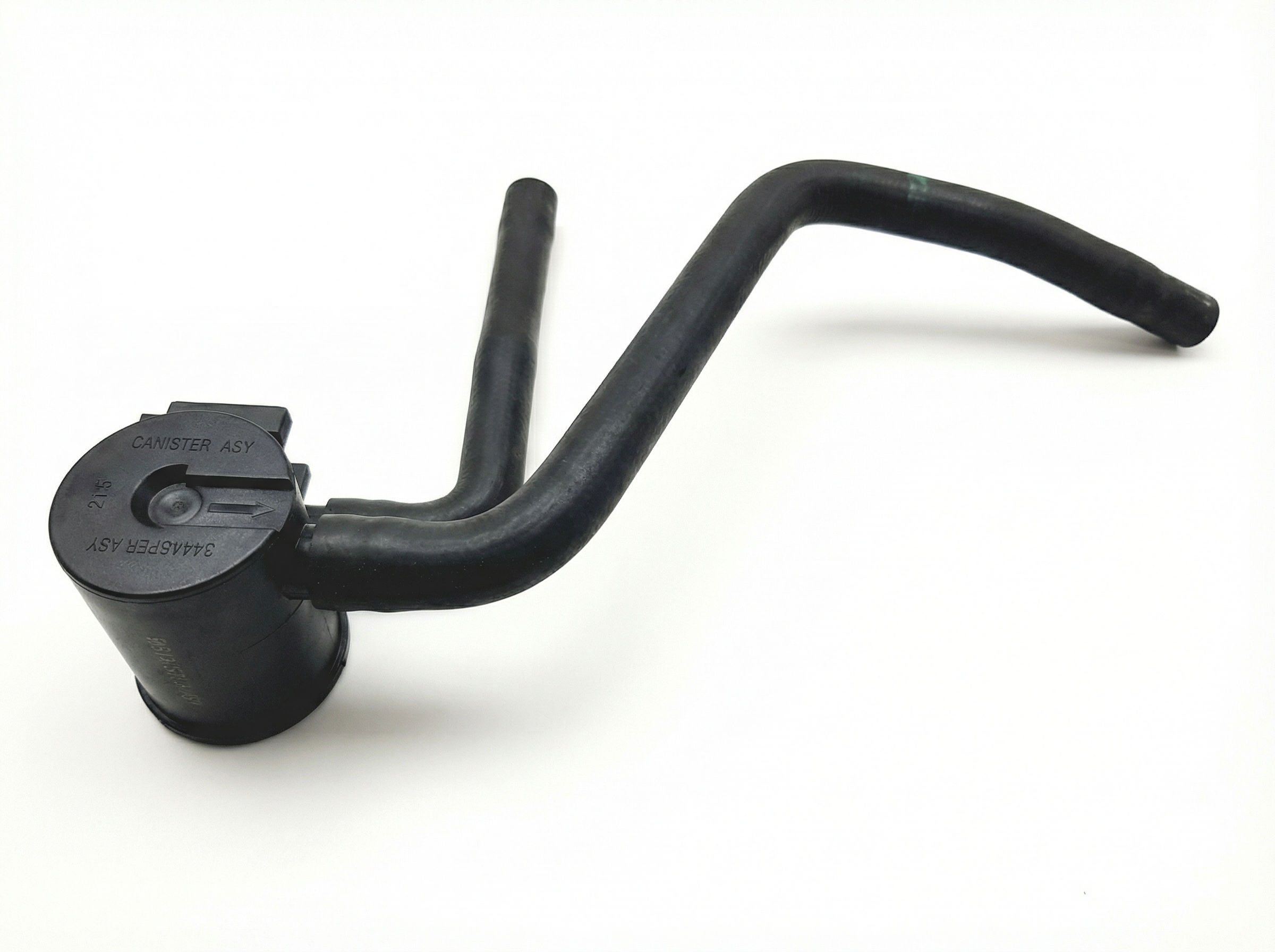
Est. part cost: $25-$40 - Failed EVAP Canister Vent Control Valve 🔴 High Probability This is a notoriously common failure point on Nissans of this era. The valve's solenoid can fail, or it can get stuck open due to dirt and debris, creating a large leak. The O-ring that seals it to the canister can also crack, which is addressed in TSB NTB17-082E for the related P0456 code.
How to confirm: The valve is located on the EVAP canister near the rear driver's side of the vehicle. It can be tested by applying 12V power to its terminals; a healthy valve will make an audible click and close (it is normally open). A definitive diagnosis is a smoke test; if the valve is stuck open, smoke will exit from it when the system is sealed and pressurized.
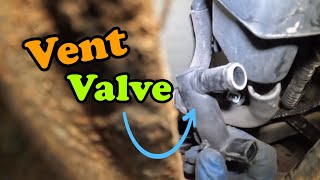
Typical fix: Replace the EVAP canister vent control valve and its O-ring. The valve twists into the canister and is held by a small lock tab. The replacement is a common DIY job. 🎬 See this step-by-step vent valve replacement walkthrough.
Est. part cost: $60-$110 - Cracked or Disconnected EVAP Hose 🟡 Medium Probability Rubber hoses become brittle over time with exposure to heat and the elements, leading to cracks. A large crack or a hose that has popped off a fitting will cause a gross leak.
How to confirm: Visually inspect all accessible EVAP hoses running from the fuel tank area to the engine bay. A smoke test is the most effective way to find a leak in the hose network, as smoke will pour out of any crack or disconnection. One owner found a leak in the hose right next to the charcoal canister.
Typical fix: Replace the cracked section of hose or the entire hose assembly.
Est. part cost: $10-$50 - Failed EVAP Purge Valve/Solenoid ⚪ Low Probability The purge valve, located in the engine bay, can fail and get stuck open, creating a constant vacuum leak into the intake manifold and an EVAP system leak. While less common than the rear vent valve for P0455, it can still be the cause.
How to confirm: Remove the valve and try to blow through it. It is a normally-closed valve, so if air passes through, it has failed. You can also test it with a 12V source to see if the solenoid clicks.
Typical fix: Replace the purge valve.
Est. part cost: $40-$90
Rare But Worth Checking
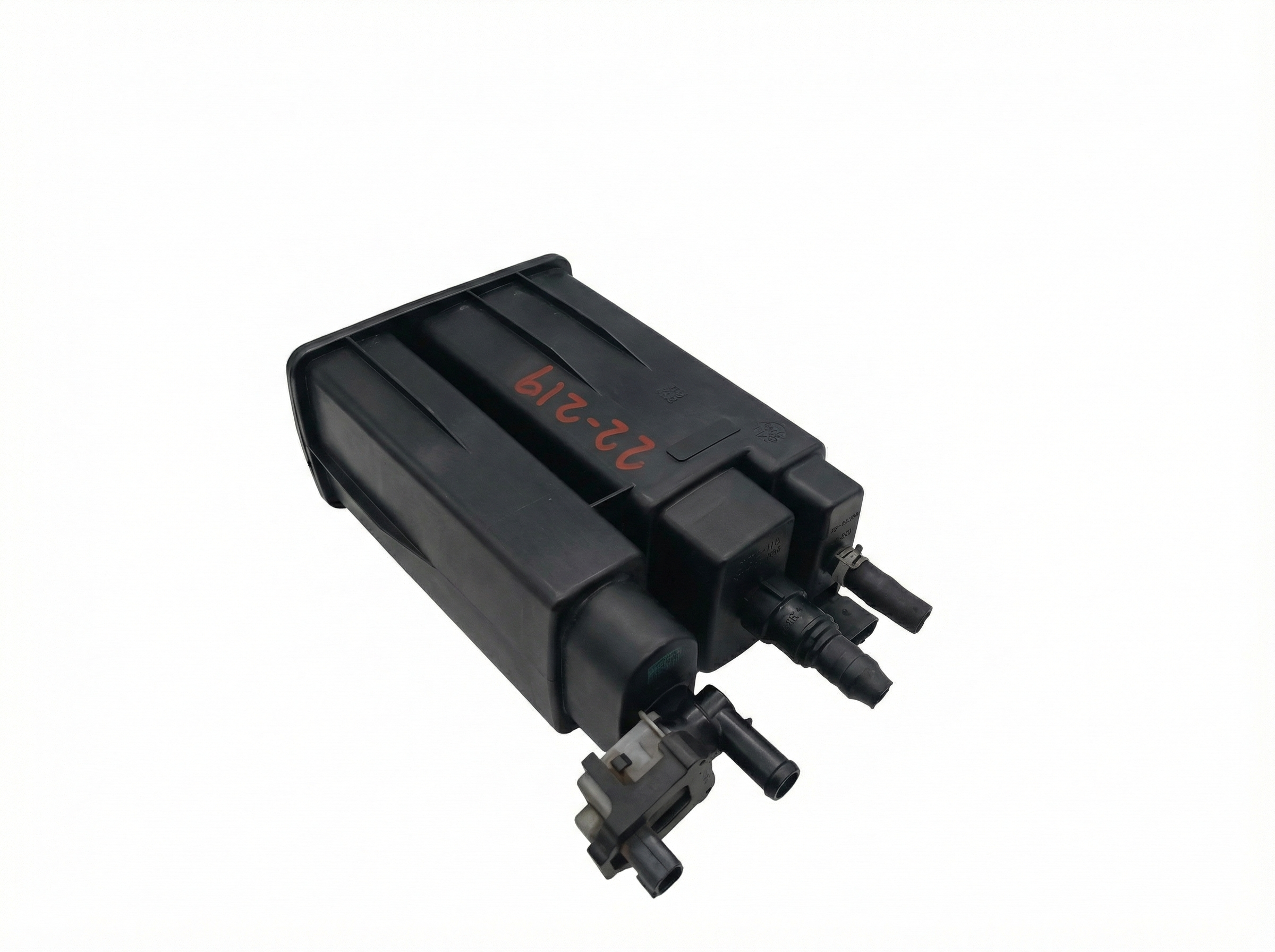
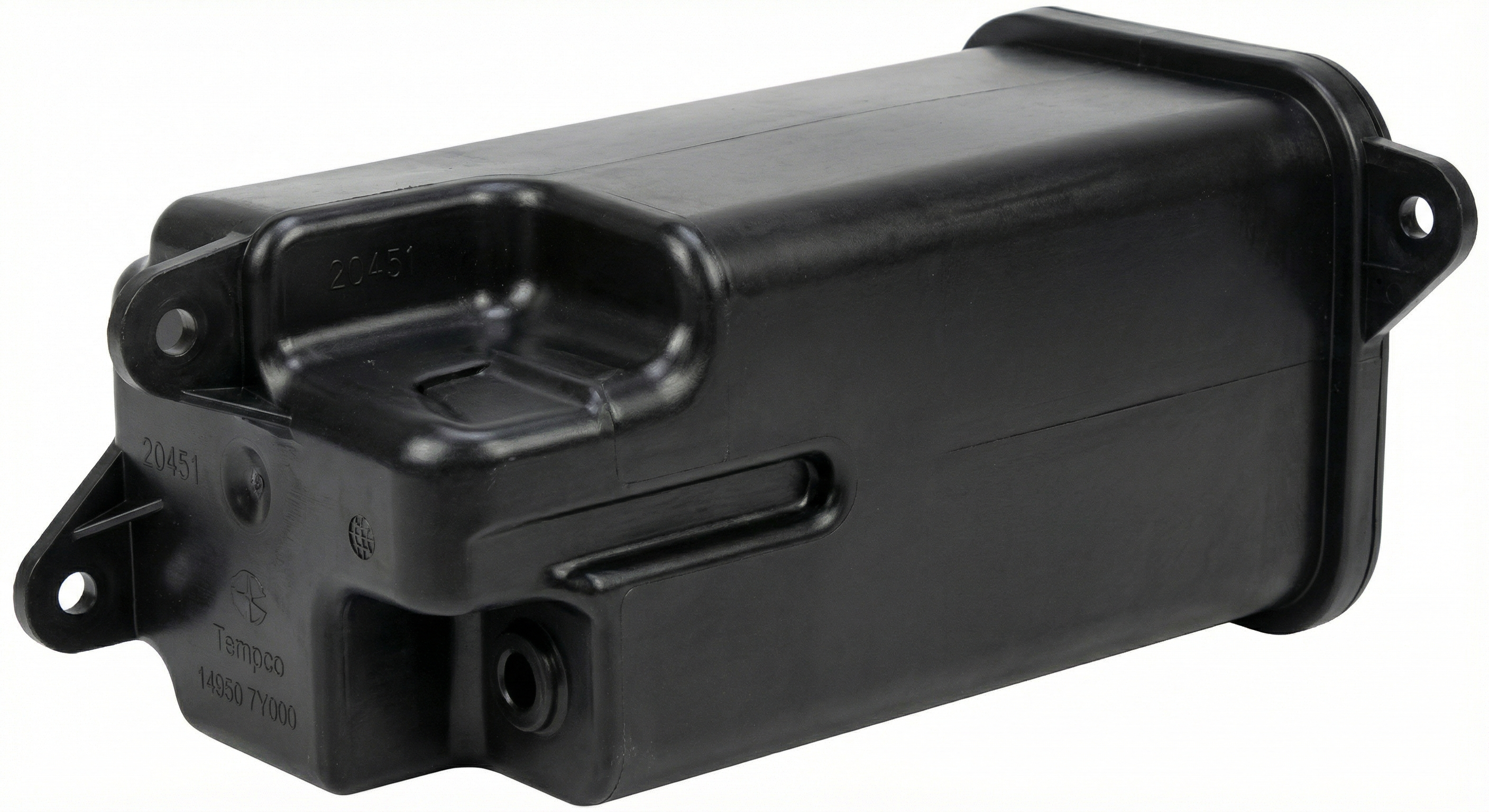
- Cracked Charcoal Canister: The plastic housing of the canister itself can develop cracks from road debris impact or age, creating a large leak. This is usually found during a smoke test and is a more expensive repair.
- Leaking Fuel Tank Filler Neck: The metal tube where you insert the fuel nozzle can rust and develop holes, especially in regions that use road salt. This creates a large, un-sealable leak in the system that will trigger P0455.
- Faulty Fuel Tank Pressure Sensor: In rare cases, the sensor that monitors EVAP system pressure can fail and send incorrect data to the computer, making it think there is a large leak when there isn't one.
Diagnosis Steps

- Check the gas cap. Remove it, inspect the seal for damage, and retighten it until it clicks. Clear the code and drive for a few days. Many owners on forums state this is the first and most crucial step.
- If the code returns, purchase a genuine OEM Nissan gas cap. Some owners have reported that even new-looking aftermarket caps failed to solve the issue, but an OEM cap did.
- If the code persists, perform a visual inspection of the EVAP system. Look under the car near the rear driver's side wheel for the black plastic charcoal canister and the attached vent valve. Check for any obviously cracked or disconnected hoses.
- Locate the EVAP canister vent control valve on the charcoal canister. Inspect it for visible cracks. You can test its function by applying 12V power and listening for a click. A YouTube video from 'Valley Mobile Automotive' shows the replacement process on a 2007 Altima, which is very similar for the whole generation range.
- Inspect the EVAP purge valve in the engine bay. Ensure it's not stuck open by removing it and attempting to blow through it. Air should not pass when it is unpowered.
- If no obvious issues are found, a smoke test is the most definitive diagnostic method. A mechanic will inject pressurized smoke into the EVAP service port. The smoke will escape from the location of the leak, making it easy to pinpoint whether it's a hose, valve, canister, or the filler neck.
Parts You'll Likely Need

- Fuel Filler Cap
(OEM #17251-JA01B (for 2007-2012 models), 17251-3JA0A (for 2013-2014 models))— This is the most frequent cause of P0455. The seal wears out over time. TSBs NTB09-020F and NTB13-097J both list this as the first item to check.
Trusted brands: Nissan OE
OEM price range: $25-$40
Aftermarket price range: $15-$25 - EVAP Canister Vent Control Valve
(OEM #14935-JF00B (Supersedes 14935-JF02C))— This is the second most common failure for P0455 on this platform. The valve gets stuck or its O-ring seal fails, a known issue on many Nissans.
Trusted brands: Nissan OE, Hitachi, Bosch, Dorman
OEM price range: $80-$110
Aftermarket price range: $50-$80
Related Codes That Often Appear With This One
- P0442 — This code is for a small EVAP leak. It can sometimes appear alongside P0455 if the system has multiple leaks of different sizes or if the computer's leak detection criteria are met for both thresholds.
- P0456 — This code is for a very small EVAP leak. It's common for a failing component like a vent valve seal to start as a very small leak (P0456) and worsen over time into a large leak (P0455).
Technical Service Bulletins (TSBs) & Recalls

- NTB13-097J: EVAP LEAK DTC P0442, P0455, P0456 INFORMATION
- NTB09-020F: 2007-2011 EVAP LEAK DTC P0442, P0455, P0456 INFORMATION
- NTB17-082E: DTC P0456 CAUSED BY EVAP LEAK AT VENT CONTROL VALVE O-RING
Platform-Specific Known Issues
- Nissan TSB NTB09-020F directly states that for 2007-2011 models, a loose fuel fill cap is a primary suspect for code P0455 and related EVAP codes.
- Nissan TSB NTB13-097J extends this guidance to all 2012 and newer Nissan vehicles, outlining a diagnostic flowchart that begins with checking the gas cap before proceeding to a smoke test.
- The EVAP canister vent control valve is a well-documented weak point on many Nissan models from this period, frequently causing P0455. Forum discussions and mechanic videos consistently point to this part as a top cause after the gas cap.
Mechanic-Grade Diagnostic Values
- EVAP Purge Valve/Solenoid Resistance — expected: Approximately 20 Ohms. Failure: A significantly higher (open circuit) or lower (shorted) resistance value.
- EVAP Purge Valve/Solenoid Vacuum Test — expected: Zero vacuum should be felt or measured at the canister-side port when the engine is running and the valve's electrical connector is disconnected.. Failure: Feeling any vacuum with a wet finger or measuring any vacuum with a gauge indicates the normally-closed valve is stuck open mechanically.
Hidden / Shadow Codes Worth Checking
- Mode $06, Monitor ID $3C (and others): While not a 'shadow code' in the traditional sense, Mode $06 data provides the raw test results from the ECU's last EVAP system self-test. A technician can view the test values for system pressure decay to see if it failed marginally or catastrophically, which can help differentiate between large and small leaks before a smoke test. (see via An advanced OBD-II scan tool that supports Mode $06 data. The specific Test IDs (TID) under the EVAP Monitor ID (MID) correspond to different phases of the leak test.)
Scan Tool Commands That Help
- Nissan CONSULT or professional bidirectional scan tool (e.g., Autel): EVAP System Test / Vent Valve Control — This is a critical step during a smoke test. The P0455 code indicates a large leak, and the vent valve is normally open. To test the rest of the system for leaks, the technician must use the scan tool to command the vent valve closed. If smoke immediately exits the vent valve before it is commanded shut, the valve is confirmed to be stuck open.
Wiring & Ground Locations
- EVAP Canister Vent Control Valve Connector — On the EVAP canister, located beneath the vehicle near the rear driver's side wheel.. This is the connector for the most common electrical failure point. Technicians need to access it to test for power and ground, and to command the valve with a 12V source to check for mechanical function (listening for a click).
- Ground Points E9 / E15 — Located in the lower left (driver's) side of the engine compartment.. These are primary ground points in the engine bay. While not exclusively for the EVAP system, a poor ground connection at these common points can cause intermittent or faulty operation of engine bay components like the EVAP purge valve.
Real Owner Repair Stories
- YouTube channel 'ScannerDanner' (2010 Nissan Altima) — Check Engine Light with codes P0455 and P0442.
❌ Tried (didn't work) Initial visual inspection did not reveal the leak.
✅ What actually fixed it The EVAP canister vent control valve was stuck open. This was confirmed using a smoke machine and a bidirectional scan tool. With the smoke machine running, smoke poured out of the vent valve. When the technician used the scan tool to command the valve closed, the smoke stopped, confirming the valve was the source of the leak. Replacing the vent valve fixed the issue. - YouTube channel 'GoTech' (2008 Nissan Altima) — Check Engine Light with code P0455.
❌ Tried (didn't work) The technician tested the purge valve and vent valve with a scan tool and confirmed they were clicking, but this did not identify the physical leak.
✅ What actually fixed it A smoke test revealed a crack in a plastic hose nipple coming directly off the fuel tank assembly. The technician noted this would typically require an expensive replacement of the hose assembly and dropping the tank. As a temporary, low-cost solution for the student owner, the crack was sealed with JB Weld, which resolved the leak.
OEM Part Supersession History
14935-AM60A, 14935-AM60B, 14935-JF00A→14935-JF00B (and later 14935-JF02C)— Standard part revision and consolidation by the manufacturer to improve reliability or streamline inventory. This part is used across a vast number of Nissan and Infiniti models.
Heads up: The newer part numbers are generally backwards compatible. However, always verify fitment with the vehicle's VIN as minor connector or housing changes can occur.14930-JA10A, 14930-JA10B→14930-JA10D— Part revision for the engine bay-mounted EVAP Purge Valve/Solenoid.
Model Year Variations Within This Range
- 2007-2012 (L32) vs 2013-2014 (L33): The 2013 model year marked a full redesign (L33 generation). While the EVAP system components and common failures (gas cap, vent valve) are largely the same, the physical layout and access points under the vehicle may differ slightly. For example, videos show the vent valve on the L33 is easily accessible by turning it counter-clockwise to unlock and remove it from the canister. The principle of operation and the part numbers for the valves often remained the same across the generation change.
Helpful Videos
Used OEM Parts in Stock
New Aftermarket Parts Available


The information in this article is provided for general reference and educational purposes only. Vehicle specifications, procedures, and part compatibility can vary by production date, trim level, and region. Always consult your vehicle's factory service manual and verify part numbers before purchasing or performing repairs. Safety-critical components such as airbags, seat belts, and braking systems should be installed by a qualified professional.
- Nissan ALTIMA:
- 🎬 Helpful Videos
- 🛍️ Shop This Part
- What's Unique About the 2007-2014 Nissan ALTIMA
- Diagnostic Flowchart
- Symptoms You May Notice
- Most Likely Causes
- Rare But Worth Checking
- Diagnosis Steps
- Parts You'll Likely Need
- Related Codes That Often Appear With This One
- Technical Service Bulletins (TSBs) & Recalls
- Platform-Specific Known Issues
- Mechanic-Grade Diagnostic Values
- Hidden / Shadow Codes Worth Checking
- Scan Tool Commands That Help
- Wiring & Ground Locations
- Real Owner Repair Stories
- OEM Part Supersession History
- Model Year Variations Within This Range
- 🎟️ Get 5% Off