

P0455 on 2011-2015 Mazda MX-5: EVAP Gross Leak Causes and Fixes
For a 2011-2015 Mazda MX-5, the P0455 code almost always points to a loose or faulty gas cap. Before buying any parts, tighten the cap until it clicks multiple times, clear the code, and drive. If it returns, a new OEM gas cap (Part No. NE51-42-250) is an inexpensive and highly effective first step, typically costing under $35. Other causes like a stuck purge solenoid are possible but far less common on this platform.
- P0455 means your MX-5 has a large leak in the emissions system that contains fuel vapors.
- Always check your gas cap first. Make sure it's tight. If the light comes back, a new OEM-spec cap is the next logical step.
- This code will not affect how your car drives, but it will cause an automatic failure on an emissions test.
- If a new gas cap doesn't fix the issue, the next most likely causes are the purge valve or a cracked hose, which can be found with a visual inspection or a smoke test.
What's Unique About the 2011-2015 Mazda MX-5
On the third-generation (NC) Mazda MX-5, the EVAP system is relatively straightforward and not known for systemic design flaws. The most common trigger for a P0455 is simply a gas cap that wasn't tightened properly after refueling. Owner experiences on forums like Miata.net and Reddit frequently confirm that checking and tightening the gas cap is the first and most effective step. While various valves and hoses can fail, they are less common culprits than on some other vehicles from the same era. One owner noted the code appeared after the car sat for long periods in high humidity and resolved itself with regular driving, suggesting a borderline seal issue.
Diagnostic Flowchart
Tap your situation to follow the diagnostic path that matches what you're seeing on this vehicle.
Symptoms You May Notice
- Check Engine Light is on
- A faint smell of fuel, particularly around the rear of the car or in the garage after parking (uncommon).
- Hard starting or rough idle immediately after refueling (indicative of a stuck-open purge valve).
- Replacing the charcoal canister immediately. The canister is often replaced when the actual fault is a much cheaper and simpler component like a valve or the gas cap. A smoke test should be performed before condemning an expensive part like the canister.
Most Likely Causes
- Loose or Faulty Gas Cap 🔴 High Probability This is the most common cause for any vehicle, including the MX-5. The seal on the cap can wear out, or the cap may not have been tightened correctly. Forum users repeatedly confirm this as the first and most frequent fix.
How to confirm: Ensure the gas cap is tightened until it clicks at least 2-3 times. Clear the code. If it returns, inspect the cap's rubber gasket for cracks, stiffness, or deformities. A cap tether getting caught under the seal can also cause a leak.
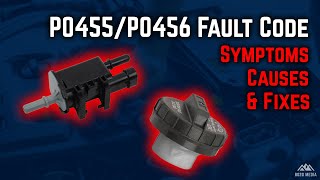
Typical fix: Replace the gas cap with a new, OEM part. Aftermarket caps can sometimes fail 🎬 See how to fix a P0455 code for under five dollars. to seal properly.
Est. part cost: $15-$35 - Failed EVAP Purge Solenoid/Valve 🟡 Medium Probability The purge valve, located in the engine bay, is a common failure point on many vehicles. It can get stuck open, creating a constant vacuum leak into the EVAP system. This part is shared with other Mazda models of the era.
How to confirm: With the engine off, remove the valve and try to blow through it. It is a normally-closed valve, so if air passes through, it is stuck open and needs replacement. A mechanic can also command it open and closed with a scan tool to test its function. On the NC Miata, it is located on the driver's side of the engine bay, near the dipstick.
Typical fix: Replace the purge solenoid valve. It is held in a rubber mount and connected by two hoses and an electrical plug.
Est. part cost: $50-$100 - Failed EVAP Canister Vent Valve/Solenoid ⚪ Low Probability This valve is located near the charcoal canister at the rear of the car, above the differential. It is normally open and closes during the EVAP system self-test. It can get stuck open due to dirt or age, preventing the system from sealing.
How to confirm: This valve must be commanded closed with a diagnostic scan tool to test if it seals properly. A smoke test is the most effective way to confirm a leak at this valve. Accessing it requires raising the rear of the vehicle.
Typical fix: Replace the canister vent valve. It typically twists into the charcoal canister.
Est. part cost: $60-$120 - Cracked or Disconnected EVAP Hose ⚪ Low Probability Rubber hoses can become brittle and crack over time due to heat and age. A disconnected or cracked hose, particularly around the charcoal canister or purge valve, will cause a large leak.
How to confirm: Visually inspect all accessible EVAP lines between the engine bay, the fuel tank, and the charcoal canister. The definitive method is a smoke test, which forces smoke into the system to reveal the exact location of any leaks.
Typical fix: Replace the damaged section of hose.
Est. part cost: $10-$40
Rare But Worth Checking
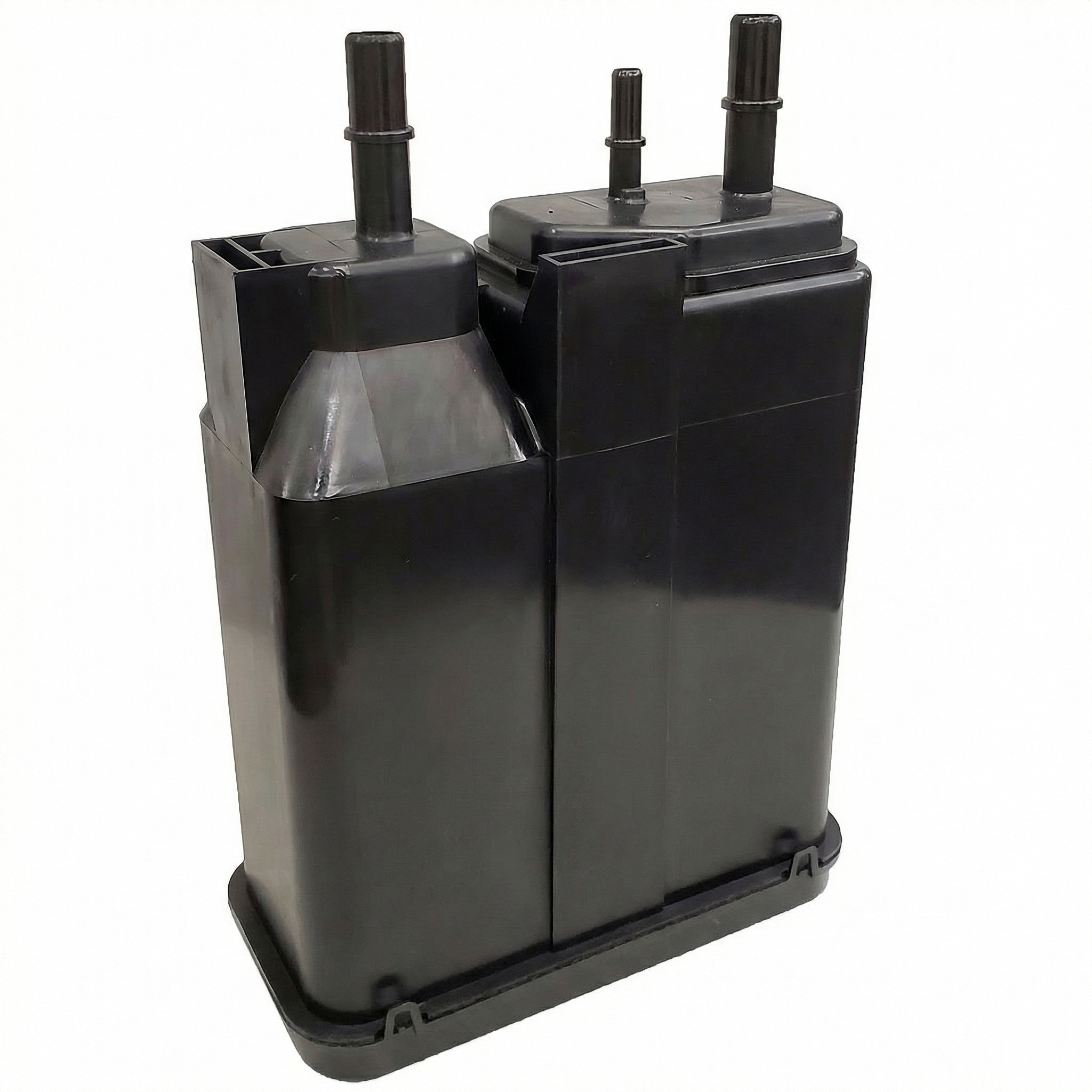
- Cracked Charcoal Canister: The charcoal canister itself, located above the rear differential, can develop a crack from road debris or age, creating a leak. This is uncommon and should be visually inspected during a smoke test if other causes are ruled out. Replacement can cost over $300.
- Damaged Fuel Filler Neck: Rust or physical damage to the metal tube leading to the gas tank can prevent the gas cap from sealing properly. This is more common in regions where road salt is used. One owner found rust flakes from the filler neck inside the fuel tank. Repair can be extensive, sometimes requiring cutting and welding of the quarter panel.
- Leaking Fuel Pump Gasket: The gasket that seals the fuel pump assembly to the top of the fuel tank can fail, causing a large EVAP leak and a strong fuel smell inside the cabin. One owner of an older Miata traced a P0455 to loose mounting screws on the fuel pump cover after a pump replacement.
Diagnosis Steps
- Check the Gas Cap: Remove and reinstall the gas cap, ensuring it clicks multiple times. Clear the trouble code with a scanner. A loose cap is the most common fix.
- Drive and Monitor: Drive the vehicle for a few days. The EVAP monitor runs under specific conditions (typically fuel level between 15-85% and after a cold start), so it may take time for the light to return if a problem still exists.
- Inspect the Gas Cap Seal: If the light returns, remove the cap and carefully inspect the rubber O-ring for cracks, stiffness, or damage. If it looks worn, replace the cap with an OEM part (NE51-42-250).
- Visual Inspection: Visually inspect the EVAP purge valve and its hoses in the engine bay (driver's side, near dipstick) for obvious cracks or disconnections. Also, inspect the hoses around the charcoal canister at the rear of the car if accessible.
- Test the Purge Valve: With the engine off, disconnect the purge valve and attempt to blow through it. If air passes, the valve is stuck open and is faulty.
- Perform a Smoke Test: If the cause is still not apparent, the most reliable diagnostic step is a professional smoke test. A machine fills the EVAP system with a harmless, visible smoke, and any leak from a hose, the canister, vent valve, or filler neck will be quickly revealed by escaping smoke. 🎬 Watch: How to find an EVAP leak using a smoke tester.
Parts You'll Likely Need
- Fuel Tank Cap
(OEM #NE51-42-250)— This is the most frequent cause of a P0455 code due to a worn seal or improper tightening. It's the cheapest and easiest part to replace first. Note: This part number was superseded by NE51-42-250A, but both refer to the correct cap for the NC generation.
Trusted brands: Mazda (OEM)
OEM price range: $25-$35
Aftermarket price range: $15-$25 - EVAP Purge Solenoid Valve
(OEM #L518-18-741)— This valve is a common failure point that gets stuck open, causing a large leak. It's located in the engine bay and is relatively easy to access and replace. This part is also used on other Mazdas like the Mazda3 and Mazda6 from the same era.
Trusted brands: Mazda (OEM), Bosch, Dorman, Standard Motor Products
OEM price range: $80-$110
Aftermarket price range: $40-$70
Related Codes That Often Appear With This One
- P0442 — This code indicates a small EVAP leak. Sometimes a component is beginning to fail and may initially set a P0442 before the leak worsens and triggers a P0455.
- P0456 — This code indicates a very small EVAP leak. Similar to P0442, it can be a precursor to a larger leak code as a component degrades.
- P2187 — This code means "System Too Lean at Idle." A purge valve that is stuck open can cause this code to appear alongside P0455, as it creates a vacuum leak that introduces unmetered air into the intake manifold.
Technical Service Bulletins (TSBs) & Recalls
- 01-002-18-3417: "Some vehicles may have a MIL illumination with DTC's P0441, P0442, P0455, or P0456 stored in memory. To determine the location of the evaporative system leak, follow the repair procedure below."
Platform-Specific Known Issues
- Mazda issued Technical Service Bulletin #01-002-18-3417 which includes DTC P0455. It does not identify a single faulty component but provides a generic, multi-step diagnostic procedure for finding the location of an evaporative system leak, confirming that this code is part of a known diagnostic path for the vehicle.
Mechanic-Grade Diagnostic Values
- EVAP Purge Solenoid (LF82/L518) resistance — expected: 30 - 38 Ohms (when engine is cool). Failure: A reading significantly outside this range, or an open circuit (infinite resistance), indicates a failed solenoid coil.
- EVAP Canister Vent Solenoid resistance — expected: 20 - 50 Ohms. Failure: A reading outside this range suggests the solenoid coil is damaged.
- Purge Solenoid control wire voltage (Key On, Engine Off) — expected: Should read battery voltage (approx. 12V). Failure: A reading of 0V on the control wire when the feed wire has 12V indicates an open circuit within the solenoid's coil.
Scan Tool Commands That Help
- Mazda IDS (Integrated Diagnostic System): Datalogger > Manual EVAP Test — This function allows a technician to manually control EVAP components to isolate a leak. You can command the normally-open canister vent valve to close and the normally-closed purge valve to open, then monitor the Fuel Tank Pressure (FTP) sensor to see if the system holds a vacuum.
- Mazda IDS (or equivalent bidirectional scanner): Active Command: Vapor Management Valve / Canister Purge Valve — Used to individually toggle the purge valve on and off. While commanding it on, you should hear a click and be able to detect vacuum at the valve's inlet port. This confirms the valve's mechanical and electrical function.
- Mazda IDS (or equivalent bidirectional scanner): Active Command: Canister Vent Valve — Used to command the normally-open vent valve to close. This is a critical step before performing a smoke test, as it seals the system. If smoke escapes from the vent with the valve commanded closed, the valve is faulty.
Wiring & Ground Locations
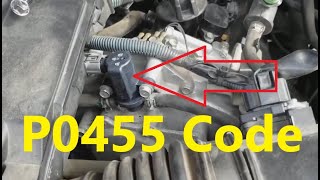
- Purge Solenoid Valve — Located on the left side of the engine compartment, near the oil dipstick.. This is the location for visual inspection of the valve and its associated hoses and electrical connector, which are common points of failure.
- G1 — Ground point located at the left rear corner of the engine compartment.. A poor ground at this location could potentially affect various engine management systems. While not a direct cause, checking major grounds is good practice when diagnosing electrical faults.
- G7 — Ground point located at the center rear of the engine compartment.. Similar to G1, ensuring this ground is clean and tight is important for overall system stability when troubleshooting persistent electronic issues.
Real Owner Repair Stories
- Reddit user 'Indianb0y017' in r/Miata (NC Mazda MX-5 (year not specified, but within 2006-2015 range)) — P0455 code
❌ Tried (didn't work) Using the old gas cap, even when tightened authoritatively, would still intermittently throw the code.
✅ What actually fixed it Replacing the gas cap with a new, compatible aftermarket cap resolved the P0455 code, and the fix was confirmed to have lasted over two years.
"I Checked Everything" — The Actual Cause
- In one documented case for an NC Miata, a repair shop performed a smoke test which led them to replace the charcoal canister. However, the P0455 code returned shortly after the repair. The owner was then advised to replace the gas cap, implying the original smoke test either missed the gas cap leak or was misinterpreted, leading to an expensive and unnecessary canister replacement.
When the Usual Fixes Don't Work
- While a smoke test often points to a faulty hose or canister, there are owner reports where this diagnosis was incorrect. In one instance, a shop replaced the charcoal canister on an NC Miata to fix a P0455 code, but the light returned. The actual, and much cheaper, solution was a faulty gas cap that was likely not tested correctly during the initial diagnosis. This highlights that even with professional tools, the most common and simple cause should never be overlooked.
OEM Part Supersession History
LF82-18-740→L518-18-741 (Likely)— Part update or supplier change.
Heads up: There is significant confusion in parts catalogs between these two numbers for the NC Miata purge solenoid. LF82-18-740 is listed for the 2.0L/2.5L engines in this era, but sources specific to the MX-5 often cite L518-18-741. They appear physically similar, but owners should verify the correct part for their VIN before purchasing to avoid fitment issues.
Model Year Variations Within This Range
- 2011-2015: No significant variations in the EVAP system, diagnosis, or common P0455 causes have been documented within the 2011-2015 (NC2/NC3) model years. The primary difference is with pre-2009 (NC1) models.
Helpful Videos
![How to Fix P0455 Engine Code in 3 Minutes [2 DIY Methods / Only $4.61]](https://img.youtube.com/vi/b-o1a2XuVN4/mqdefault.jpg)
Used OEM Parts in Stock
New Aftermarket Parts Available


The information in this article is provided for general reference and educational purposes only. Vehicle specifications, procedures, and part compatibility can vary by production date, trim level, and region. Always consult your vehicle's factory service manual and verify part numbers before purchasing or performing repairs. Safety-critical components such as airbags, seat belts, and braking systems should be installed by a qualified professional.
- Mazda MX-5:
- 🎬 Helpful Videos
- 🛍️ Shop This Part
- What's Unique About the 2011-2015 Mazda MX-5
- Diagnostic Flowchart
- Symptoms You May Notice
- Most Likely Causes
- Rare But Worth Checking
- Diagnosis Steps
- Parts You'll Likely Need
- Related Codes That Often Appear With This One
- Technical Service Bulletins (TSBs) & Recalls
- Platform-Specific Known Issues
- Mechanic-Grade Diagnostic Values
- Scan Tool Commands That Help
- Wiring & Ground Locations
- Real Owner Repair Stories
- "I Checked Everything" — The Actual Cause
- When the Usual Fixes Don't Work
- OEM Part Supersession History
- Model Year Variations Within This Range
- 🎟️ Get 5% Off