

P0455 on 2020-2021 Lincoln Corsair: EVAP Gross Leak Causes and Fixes
P0455 on a 2020-2021 Lincoln Corsair signifies a large leak in the evaporative emissions (EVAP) system. The most common causes are a loose or faulty gas cap or a damaged vapor canister. A technical service bulletin specifically notes that 2020 models can suffer from canister damage that occurred during shipping. Always check the gas cap first before proceeding with more complex diagnostics.
- P0455 indicates a large leak in the EVAP emissions system.
- For the 2020-2021 Corsair, always start by checking the capless fuel filler for a proper seal.
- Be aware of TSB #SSM 49313, which points to potential shipping damage to the charcoal canister on 2020 models as a specific cause.
- Do not automatically replace the purge valve; TSB #SSM 50306 warns it is often misdiagnosed.
- A professional smoke test is the most reliable way to find the leak if it is not obvious from a visual inspection.
What's Unique About the 2020-2021 Lincoln CORSAIR
For the 2020 Lincoln Corsair, a specific Technical Service Bulletin (TSB #SSM 49313) was issued regarding the P0455 code. It states that the carbon canister may have been damaged during vehicle transportation, leading to a leak. This issue is also seen on its platform-mate, the Ford Escape. Another TSB (#SSM 50306) cautions that the canister purge valve is often suspected, but returned parts have been tested and found to be fully functional, suggesting it is frequently misdiagnosed.
Diagnostic Flowchart
Tap your situation to follow the diagnostic path that matches what you're seeing on this vehicle.
Symptoms You May Notice
- Check Engine Light is on
- A noticeable fuel smell, particularly around the rear of the vehicle
- Difficulty refueling (gas pump clicks off repeatedly before the tank is full).
- A 'Check Fuel Fill Inlet' message may appear on the dashboard.
- Replacing the canister purge valve without proper diagnosis. TSB #SSM 50306 explicitly states that returned purge valves from vehicles with this code were often found to be fully functional, indicating other root causes.
Most Likely Causes
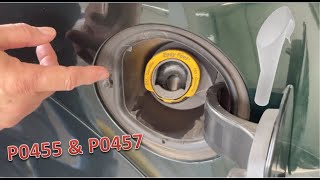
- Loose, Damaged, or Incorrect Gas Cap 🔴 High Probability This is the most common cause for a P0455 code on any vehicle, as the cap is a critical sealing point of the EVAP system. The Corsair has a capless fuel filler system, so the issue would be with the internal sealing flap.
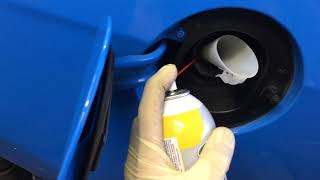
How to confirm: Visually inspect the capless filler neck for debris or damage that could prevent the spring-loaded door from sealing properly. Ensure it closes completely after fueling. You can use a rag to clean the sealing surface; some owners report using a small amount of WD-40 on a rag to clean grime from the seal.
Typical fix: Clean the sealing surface of the fuel filler neck. If the internal mechanism is damaged, the filler neck assembly will need to be replaced.
Est. part cost: $150-$250 for a fuel filler neck assembly - Damaged Carbon (Charcoal) Canister 🟡 Medium Probability TSB #SSM 49313 specifically identifies that the carbon canister on some 2020 Corsair and Ford Escape models may have been damaged during vehicle transportation. Additionally, the canister on this platform (also shared with the Bronco Sport and Maverick) can be vulnerable to damage from road debris.
How to confirm: Visually inspect the carbon canister for any cracks, holes, or physical damage. It is typically located under the vehicle near the fuel tank. A smoke test is the definitive way to confirm a leak from the canister body.
Typical fix: Replacement of the damaged carbon canister.
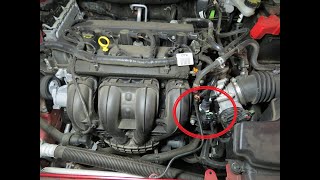
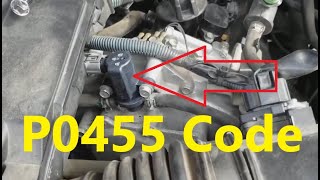
Est. part cost: $200-$400 - Faulty Canister Purge Valve 🟡 Medium Probability The purge valve is a common failure point in many EVAP systems. It can get stuck open, creating a constant leak. However, TSB #SSM 50306 warns that this part is often replaced unnecessarily on these vehicles.
How to confirm: With the engine off, the valve should be closed. You can remove the valve and try to blow through it; if air passes, it's stuck open and faulty. A scan tool can also be used to command the valve on and off to check its function.
Typical fix: Replacement of the canister purge valve.
Est. part cost: $50-$150 - Cracked or Disconnected EVAP Hoses ⚪ Low Probability
How to confirm: Perform a visual inspection of all accessible EVAP lines between the fuel tank, charcoal canister, and purge valve in the engine bay. The most effective method is to have a professional perform a smoke test, which will make any leaks visible.
Typical fix: Replace the cracked or broken hose section.
Est. part cost: $20-$100 depending on the hose
Rare But Worth Checking
- Cracked Fuel Filler Neck: Corrosion or physical damage can cause the metal or plastic filler neck to crack, creating a large leak.
- Faulty Fuel Tank Pressure Sensor: While uncommon, the sensor that monitors EVAP system pressure can fail and provide incorrect readings to the PCM, falsely triggering a leak code.
Diagnosis Steps
- Read the codes with an OBD-II scanner to confirm P0455 and check for any other related codes.
- Inspect the capless fuel filler neck. Ensure the flap is clean, moves freely, and seals tightly. Clean the sealing area with a rag.
- Clear the code and drive the vehicle for a few days to see if the code returns. The EVAP monitor runs under specific conditions (fuel level, temperature), so it may take time.
- If the code returns, perform a thorough visual inspection of all accessible EVAP system components, including the charcoal canister and all hoses, looking for obvious cracks or damage. Pay close attention to the canister as noted in TSB #SSM 49313.
- Test the canister purge valve. It is normally closed and should not allow air to pass when unpowered.
- If no obvious faults are found, the most effective next step is a professional smoke test. This involves injecting vaporized smoke into the EVAP system to pinpoint the exact location of the leak.
- Per TSB SSM 50306, a technician with a Ford Diagnosis and Repair System (FDRS) Scan Tool should perform a 'Full System EVAP Leak Test' and an 'EVAP Purge Valve Leak Test' before replacing components.
Parts You'll Likely Need
- Vapor Canister Purge Valve
(OEM #9U5Z-9F945-C, HU5Z-9F945-F)— This valve controls the flow of fuel vapors to the engine and is a common failure point that can stick open, causing a leak.
Trusted brands: Motorcraft (CX-2776), Dorman, Standard Motor Products
OEM price range: $60-$90
Aftermarket price range: $40-$70 - Vapor Canister
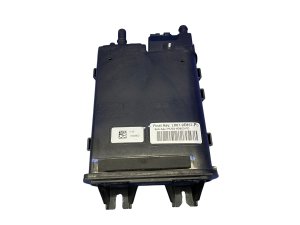
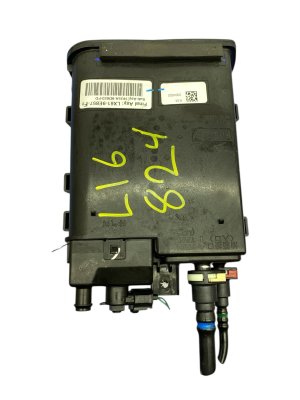
(OEM #LX6Z-9D653-F (for gasoline engines))— A TSB specifically mentions this part can be damaged during vehicle shipping on 2020 models, causing a large leak. It is also known to be vulnerable to road debris damage on platform mates.
Trusted brands: Motorcraft (CX2660)
OEM price range: $260-$400
Aftermarket price range: $150-$300 - Fuel Filler Neck
(OEM #L1MZ-9034-Y)— The sealing flap in the capless system can fail or the neck itself can be damaged, preventing a proper seal.
Trusted brands: Motorcraft
OEM price range: $150-$250
Aftermarket price range: $100-$180
Related Codes That Often Appear With This One
- P0442 — Indicates a small EVAP leak. It can appear alongside P0455 if the system has multiple leak points or if the leak size is borderline.
- P0456 — Indicates a very small EVAP leak. Both this code and P0455 were cited in TSB #SSM 49313 related to canister damage.
- P0451 — Relates to the EVAP Fuel Tank Pressure Sensor. It can appear with P0455 if the sensor itself is faulty or if the leak is causing erratic pressure readings.
Technical Service Bulletins (TSBs) & Recalls
- SSM 50306: Cautions against the immediate replacement of the EVAP canister purge valve, as testing of returned parts shows they are often fully functional. It advises technicians to use the FDRS scan tool to perform a full system leak test and a purge valve leak test before replacing parts.
- SSM 49313: Highlights that on 2020 Escape/Corsair vehicles, EVAP codes including P0455 may be due to carbon canister damage that occurred during vehicle transportation.
Platform-Specific Known Issues
- A notable issue for the 2020 Corsair is the potential for the carbon canister to be damaged during initial vehicle transportation, which can directly cause a P0455 code. This is documented in NHTSA Technical Service Bulletin #SSM 49313 and also applies to the 2020 Ford Escape.
- The EVAP vapor canister used on the Corsair and its platform mates (Ford Escape, Bronco Sport, Maverick) has shown a vulnerability to damage from road debris, which can also lead to EVAP leak codes.
Mechanic-Grade Diagnostic Values
- Fuel Tank Pressure (FTP) Sensor Voltage (KOEO, system open) — expected: 2.4V - 2.6V. Failure: Voltage significantly outside this range with the fuel filler neck open indicates a faulty sensor.
- EVAP System Integrity Test Target Pressure (via Scan Tool) — expected: approx. -8.0 in. H2O (vacuum). Failure: Failure to achieve this target vacuum level during the test points to a large leak (P0455).
Scan Tool Commands That Help
- Ford Diagnosis and Repair System (FDRS): Full System EVAP Leak Test — This is the main guided diagnostic test. The tool commands the canister vent solenoid closed, then commands the purge valve open to create a vacuum in the system. It monitors the Fuel Tank Pressure sensor to see if the vacuum holds. A rapid loss of vacuum indicates a leak, which will be flagged by the test.
- Ford Diagnosis and Repair System (FDRS): EVAP Purge Valve Leak Test — This is a specific component test recommended by TSB 50306 before replacing the purge valve. It checks if the normally-closed valve is sealing properly when it is not being commanded open by the PCM. This helps avoid the common misdiagnosis of replacing a functional purge valve.
Wiring & Ground Locations
- Official Electrical Wiring Diagram Manual — This is a purchasable service manual, not a specific location on the vehicle.. The official Ford manual for the 2020 Lincoln Corsair (available for purchase) contains dedicated sections for Grounds, Connector Faces, Component Location Views, and Harnessing. This is the authoritative source for tracing wires from the PCM to the purge valve, vent solenoid, and FTP sensor, and for locating critical ground points that could cause erratic sensor behavior if corroded or loose.
- Fuel Vapor Pressure Sensor Connector — On the EVAP canister or a connected line.. This connector has 2 leads. Knowing the pin count is the first step in testing for proper voltage and ground at the sensor, helping to differentiate a wiring issue from a failed sensor.
Real Owner Repair Stories
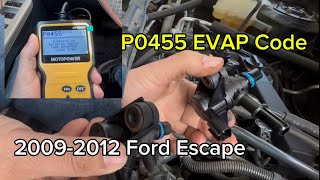
- YouTube channel 'Blaine Nojiri' (Unknown Year, Make, Model (Not a Corsair, but demonstrates a common Ford EVAP failure)) — Failed smog test with code P0455.
❌ Tried (didn't work) Initial diagnosis was a large EVAP leak.
✅ What actually fixed it The canister purge valve was faulty and getting stuck open. The user demonstrated how the old valve was stuck while a new one actuated correctly. Replacing the purge valve resolved the P0455 code and the car subsequently passed its smog inspection.
OEM Part Supersession History
CU5Z-9F945-B, FVS8→HU5Z-9F945-F— Part revision by manufacturer.
Heads up: The new part number HU5Z-9F945-F is the correct service replacement for the older numbers.
Model Year Variations Within This Range
- 2021: The 2021 model year introduced the Grand Touring PHEV (Plug-in Hybrid) variant. Hybrid vehicles often use a different, pressurized EVAP system to meet emissions standards even when the gasoline engine is not running. Therefore, diagnostics and parts for the PHEV model's EVAP system will differ from the standard 2.0L and 2.3L gasoline engine models.
- 2020-2021: For the non-hybrid gasoline engine models, the EVAP system, powertrain, and related components are virtually identical between 2020 and 2021. The causes and fixes for P0455 on a 2.0L or 2.3L engine should be consistent across both model years.
Helpful Videos




Used OEM Parts in Stock
New Aftermarket Parts Available


The information in this article is provided for general reference and educational purposes only. Vehicle specifications, procedures, and part compatibility can vary by production date, trim level, and region. Always consult your vehicle's factory service manual and verify part numbers before purchasing or performing repairs. Safety-critical components such as airbags, seat belts, and braking systems should be installed by a qualified professional.
- Lincoln CORSAIR:
- 🎬 Helpful Videos
- 🛍️ Shop This Part
- What's Unique About the 2020-2021 Lincoln CORSAIR
- Diagnostic Flowchart
- Symptoms You May Notice
- Most Likely Causes
- Rare But Worth Checking
- Diagnosis Steps
- Parts You'll Likely Need
- Related Codes That Often Appear With This One
- Technical Service Bulletins (TSBs) & Recalls
- Platform-Specific Known Issues
- Mechanic-Grade Diagnostic Values
- Scan Tool Commands That Help
- Wiring & Ground Locations
- Real Owner Repair Stories
- OEM Part Supersession History
- Model Year Variations Within This Range
- 🎟️ Get 5% Off