

P0455 on 2011-2015 Kia Optima Hybrid: EVAP Large Leak Causes and Fixes
P0455 on a 2011-2015 Kia Optima Hybrid indicates a large leak in the EVAP system. The most common causes are a loose gas cap or a faulty canister close valve (CCV), especially on vehicles from salt belt states. A new gas cap is under $25, while a CCV can cost between $50 and $100. In some cases, the charcoal canister itself may crack, a known issue for this platform.
- P0455 signifies a large leak in the fuel vapor system.
- Always start your diagnosis by checking the gas cap; it's the easiest and most common fix.
- For the Kia Optima Hybrid, the Canister Close Valve (CCV) is a frequent culprit, especially on cars from states with heavy road salt use.
- If simple checks don't find the issue, a smoke test is the most reliable way to locate the leak without guessing.
- Do not immediately assume the expensive charcoal canister is bad; test the cheaper valves and hoses first.
What's Unique About the 2011-2015 Kia OPTIMA HYBRID
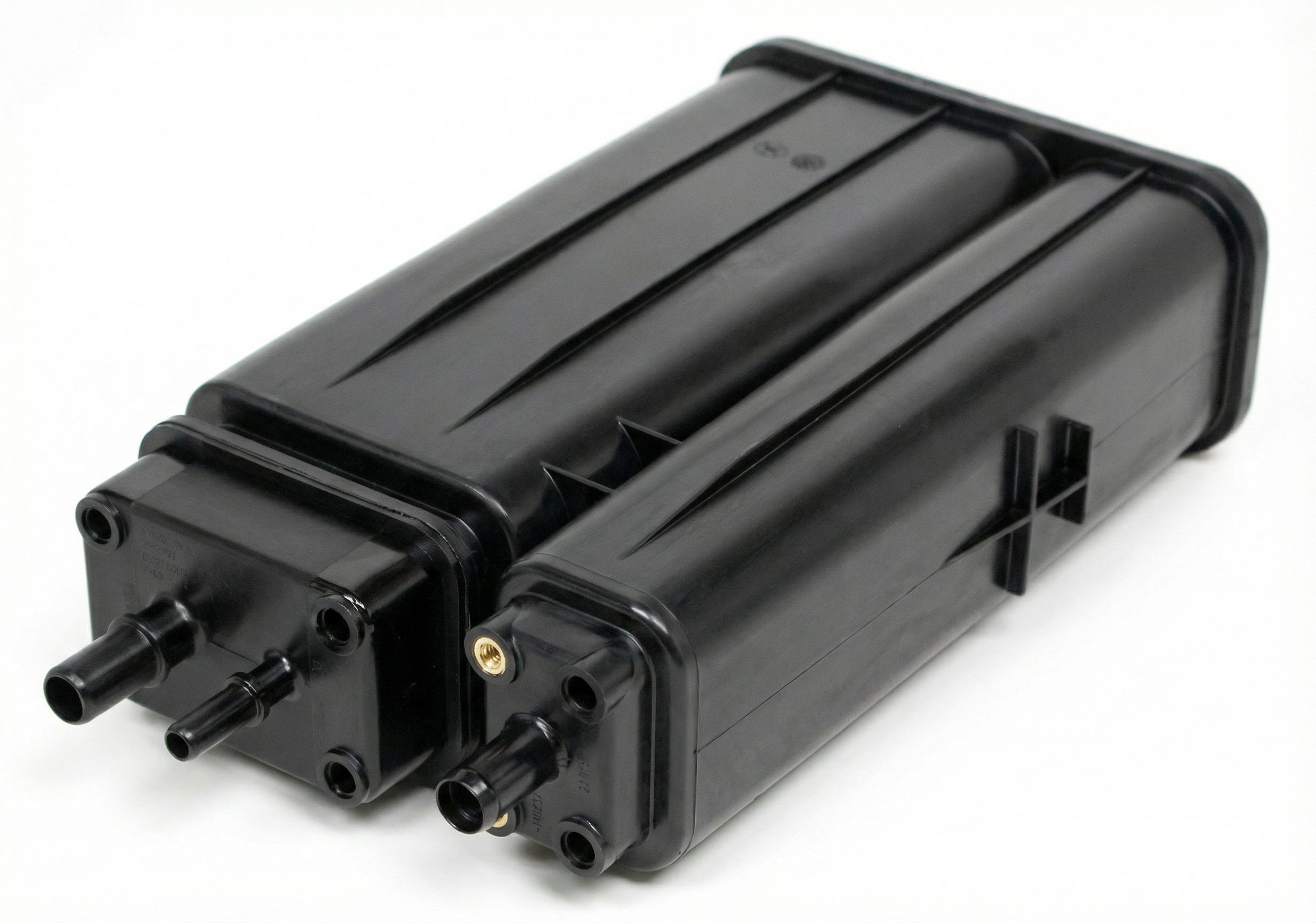
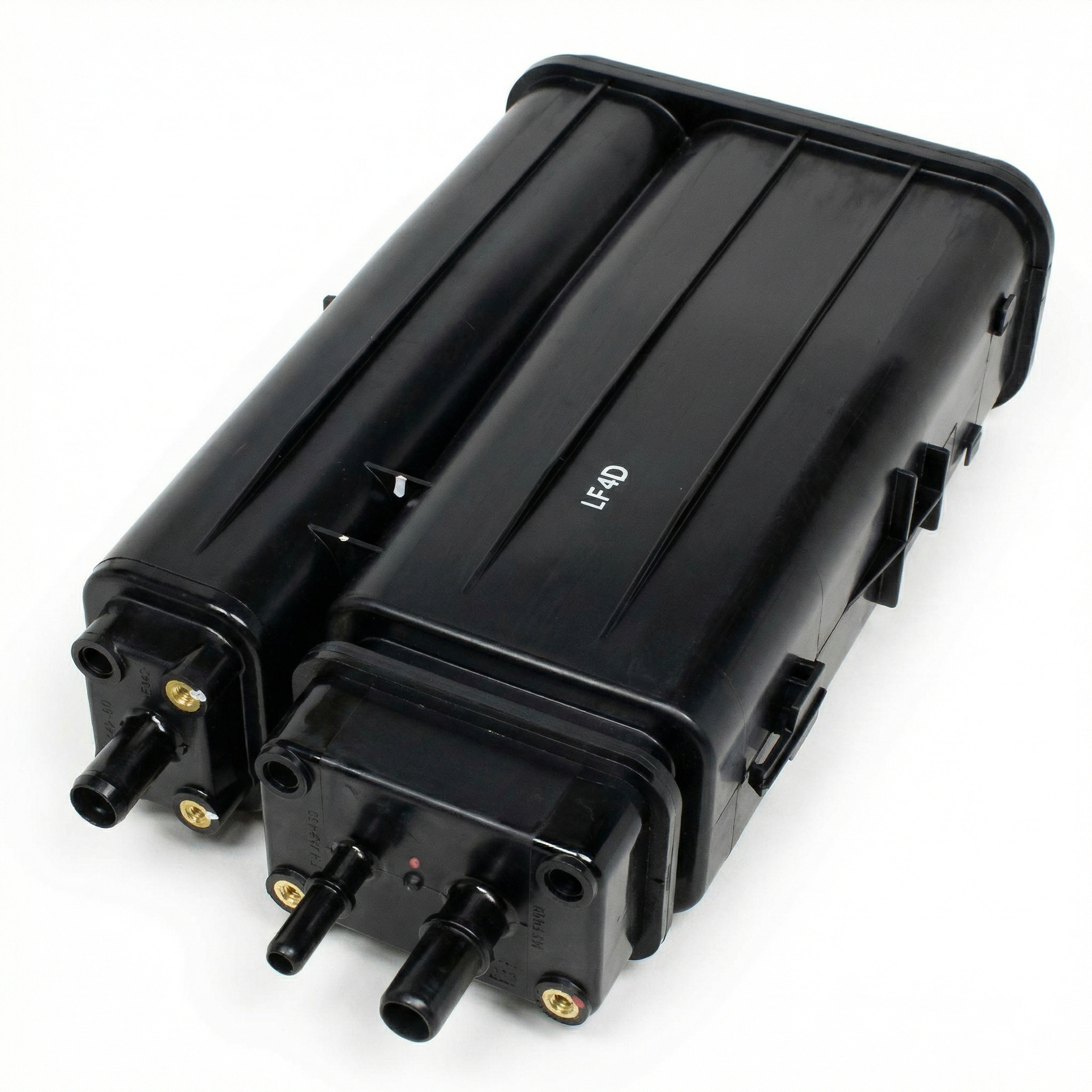
For the 2011-2015 Kia Optima Hybrid, a key factor for the P0455 code is regional use. A manufacturer Technical Service Bulletin (TSB SC135) specifically notes that vehicles operated in 'salt belt' states are more prone to EVAP leaks due to corrosion. This TSB campaign involves inspecting the charcoal canister for cracks around the mounting points and replacing it if damage is found, indicating this is a known weak point. This makes the canister and related valves more likely failure points than on vehicles from drier climates.
Diagnostic Flowchart
Tap your situation to follow the diagnostic path that matches what you're seeing on this vehicle.
Symptoms You May Notice
- Check Engine Light is on
- A faint smell of fuel, particularly around the rear of the car or near the driver's side front wheel well.
- No noticeable impact on engine performance or drivability.
- Replacing the expensive charcoal canister when the actual problem is a much cheaper and easier-to-replace canister close valve (CCV) or purge valve (PCSV).
- Replacing other EVAP components when the issue is simply a loose or faulty gas cap.
Most Likely Causes
- Loose or Faulty Gas Cap 🔴 High Probability This is the most common cause for a P0455 code on any vehicle due to user error (not tightening it) or a worn-out seal. It is always the recommended first step in diagnosis due to its low cost and ease of replacement.
How to confirm: Ensure the gas cap clicks at least once when tightened. Inspect the rubber seal on the cap for cracks, stiffness, or damage. An OEM replacement is often recommended as some aftermarket caps may not seal correctly.
Typical fix: Tighten the cap and clear the code. If the code returns or the seal is bad, replace the gas cap with a new OEM part.
Est. part cost: $15-$30 - Faulty Canister Close Valve (CCV) / Vent Valve 🟡 Medium Probability The CCV is located near the charcoal canister under the car and is exposed to the elements. It can get stuck open due to dirt, debris, or corrosion, especially in salt belt states as noted in TSB-SC135R1. This valve is often integrated into the charcoal canister assembly.
How to confirm: The valve can be tested with a capable scan tool to see if it actuates. It can also be removed and tested by applying 12v power to see if the solenoid clicks open and closed; it should hold air when not energized.
Typical fix: Replacement of the canister close valve. If it is integrated with the charcoal canister, the entire assembly may need to be replaced.
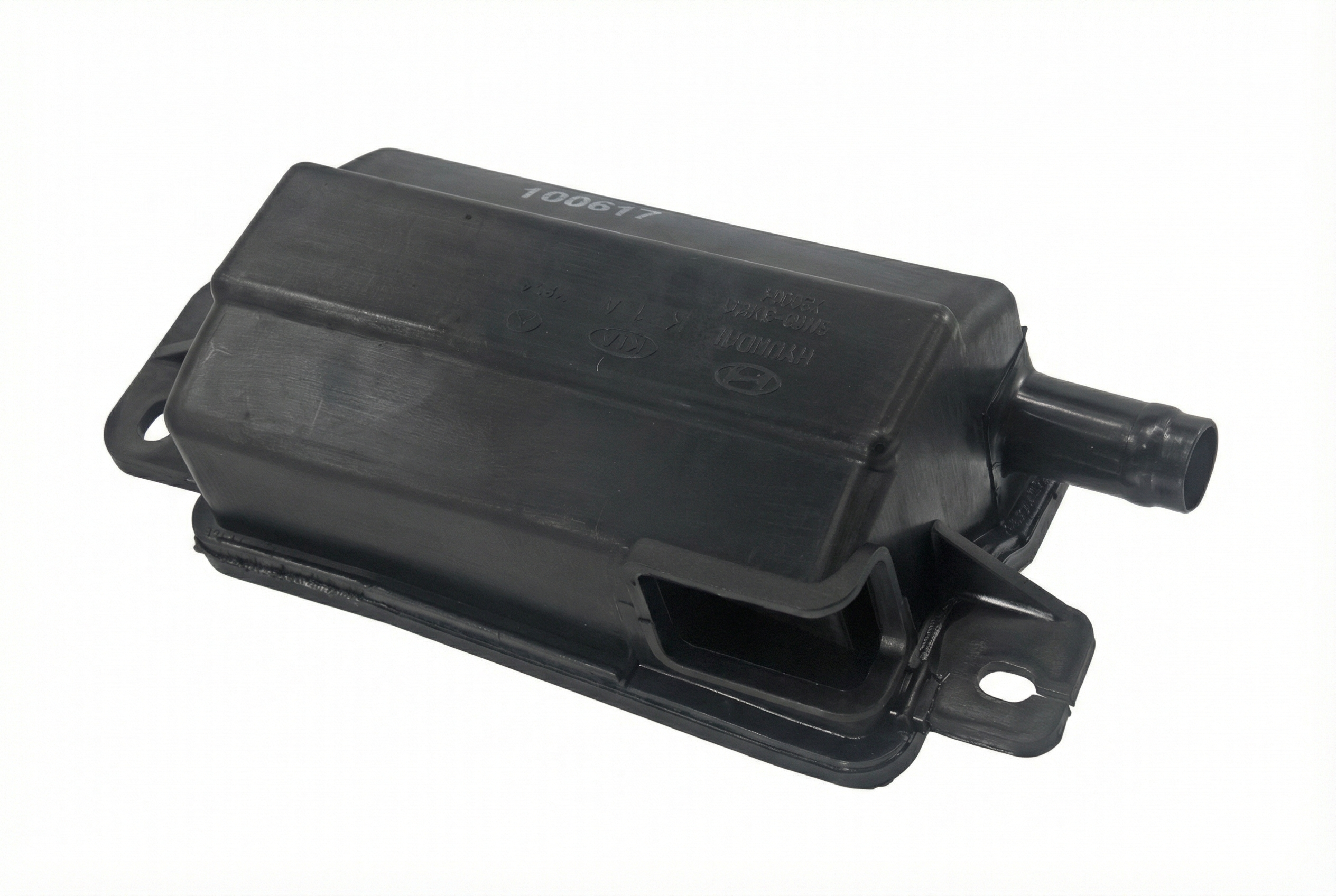
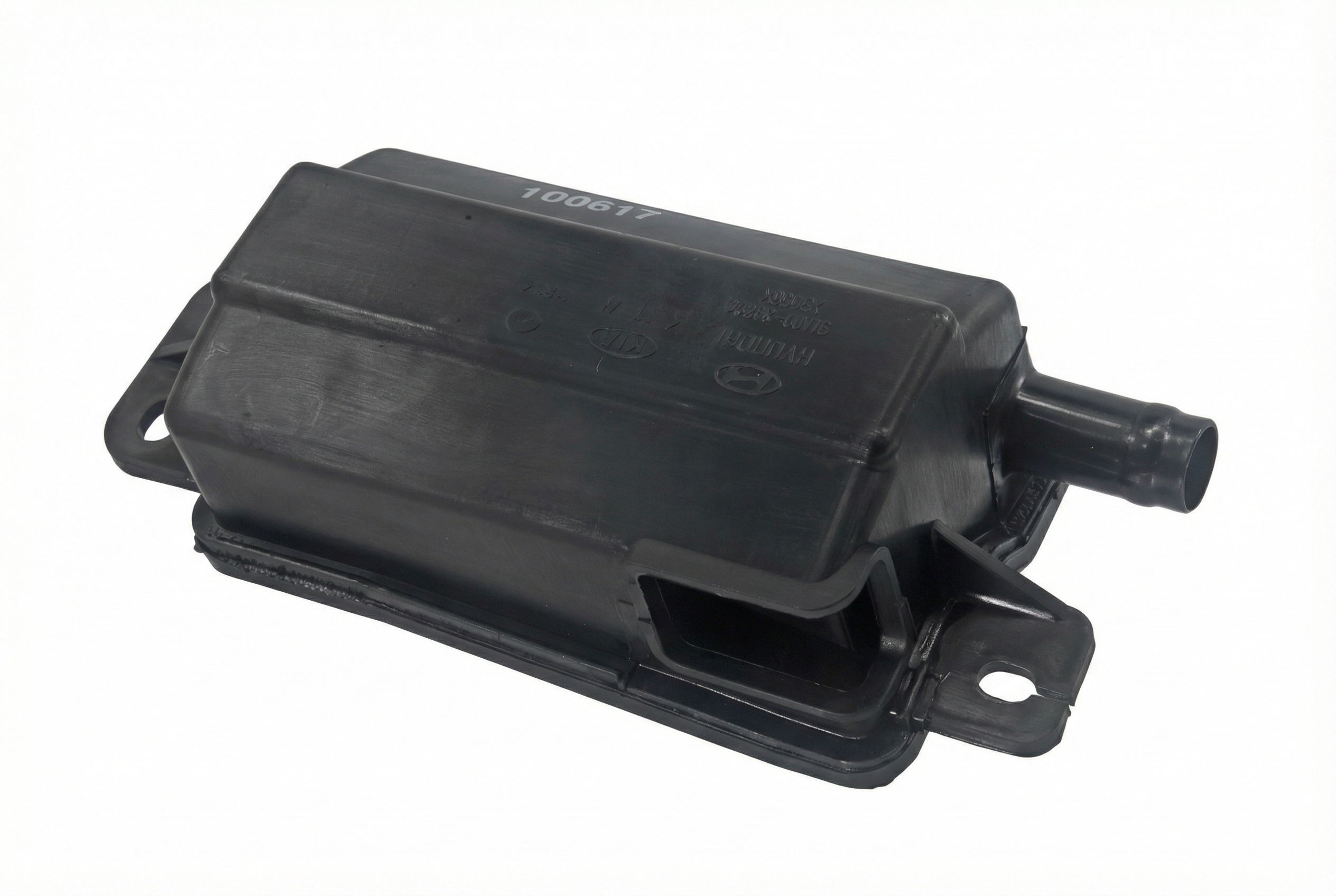
Est. part cost: $50-$100 - Faulty Purge Control Solenoid Valve (PCSV) 🟡 Medium Probability This valve, located in the engine bay, can fail by getting stuck open, creating a constant leak path.
How to confirm: With the engine running, disconnect the hose from the intake manifold side and feel for vacuum with your finger. There should be no vacuum at idle when the valve is commanded closed. If you feel suction, the valve is stuck open.
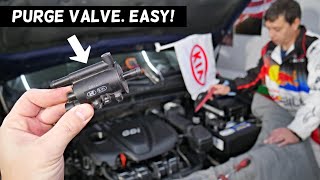
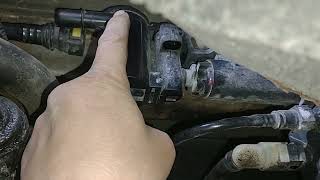
Typical fix: Replace the purge control solenoid valve. This is often a simple repair involving swapping two hoses and an electrical connector. 🎬 Watch: This quick walkthrough shows how to replace the purge valve.
Est. part cost: $40-$80 - Cracked or Disconnected EVAP Hose ⚪ Low Probability Rubber hoses can become brittle and crack over time due to age and heat cycles. Connections can also become loose.
How to confirm: A visual inspection of all accessible EVAP lines between the engine, charcoal canister, and fuel tank. The most definitive method is a smoke test, which forces smoke into the EVAP system to reveal the exact location of any leaks.
Typical fix: Replace the cracked section of hose or reconnect a loose line.
Est. part cost: $10-$50
Rare But Worth Checking
- Cracked Charcoal Canister: The plastic housing of the canister can develop cracks from road debris or stress. This was mentioned by owners as a common issue on Optimas and is the specific subject of TSB SC135 for salt-belt vehicles, where corrosion of mounting hardware can stress and crack the canister. A smoke test is the best way to confirm before replacement.
- Corroded Fuel Filler Neck: As highlighted by TSB-SC135R1, vehicles in salt belt states can develop rust and perforation on the fuel filler neck, creating a large leak. This should be visually inspected, especially if you live in a region with heavy road salt use. Aftermarket replacements are available.
- Blown EVAP System Fuse: The purge valve and vent valve solenoids are electrical components that rely on a fuse. If the fuse blows, the valves will not operate correctly, which can lead to the system failing its pressure test and logging a P0455 code. On a 2016 Optima, for example, the fuse is in the engine compartment fuse box labeled 'SENSORS 2'.
Diagnosis Steps
- Read the code with an OBD-II scanner to confirm P0455 is present.
- Inspect the gas cap. Remove it, check the seal for damage, and reinstall it, ensuring it clicks shut. Clear the code and drive for a few days to see if it returns. This is the most common fix.
- If the code returns, perform a visual inspection of all visible EVAP hoses in the engine bay and under the car near the fuel tank for obvious cracks or disconnections.
- Locate the Purge Control Solenoid Valve (PCSV) in the engine bay. With the engine at idle, test its function by checking for vacuum at the intake port when it should be closed.
- Inspect the charcoal canister and Canister Close Valve (CCV) under the vehicle near the fuel tank. Look for cracks on the canister body, especially around mounting points, and check the CCV for corrosion or damage.
- Test the CCV operation with a scan tool or by applying 12v power and listening for a click. 🎬 See how to locate and remove the canister vent solenoid.
- Visually inspect the fuel filler neck for any signs of heavy rust or perforation, a known issue in salt-belt states.
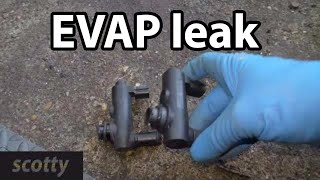
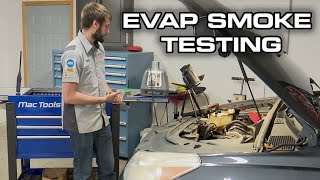
- If the leak source is still not found, the most effective method is to have a professional smoke test performed. This involves injecting vaporized smoke into the EVAP system, which will escape from any leak point, making it easy to see. 🎬 Watch: A professional guide on performing an EVAP smoke test.
Parts You'll Likely Need
- Fuel Cap
(OEM #31010-3L600U)— This is the most frequent and simplest fix for a P0455 code. The seal wears out over time or the cap is not tightened correctly.
Trusted brands: Kia (OEM), Gates
OEM price range: $20-$30
Aftermarket price range: $15-$25 - Canister Close Valve (CCV)
(OEM #31453-3K600)— This valve is exposed to the elements and is a common failure point, especially due to corrosion in salt belt states as noted in TSB-SC135R1. It can get stuck open, causing a large leak.
Trusted brands: Kia (OEM), Dorman
OEM price range: $60-$90
Aftermarket price range: $40-$70 - Vapor Canister Purge Valve (PCSV)
(OEM #28910-2E600)— This valve controls the flow of vapors to the engine and can get stuck open, causing a leak that is present even when the engine is off.
Trusted brands: Kia (OEM), Bosch, Dorman
OEM price range: $50-$80
Aftermarket price range: $30-$60 - Fuel Filler Neck
(OEM #31030-4R000)— Subject to corrosion and perforation in salt-belt states, creating a large, un-sealable leak at the top of the fuel system.
Trusted brands: Kia (OEM), Liland, Spectra Premium
OEM price range: $100-$150
Aftermarket price range: $70-$120
Related Codes That Often Appear With This One
- P0442 — This code indicates a small EVAP leak. It can appear alongside or precede a P0455 if the system has multiple leaks or if the leak size is borderline. TSB #PS469 groups these codes together for diagnostic purposes.
- P0456 — This code indicates a very small EVAP leak. It's less common to see with P0455 but can occur if the leak test logic is triggered under different conditions. TSB #PS469 also groups this code with P0455.
Technical Service Bulletins (TSBs) & Recalls
- PS469: Recommends a manual EVAP test for hard-to-find leaks when codes like P0455, P0442, and P0456 are present.
- TSB-SC135R1 / SC135: Links DTC P0455 to vehicles in salt belt states due to potential corrosion causing cracks in the evaporative canister. The campaign involves inspection and replacement of the canister if cracks are found.
Platform-Specific Known Issues
- Per TSB SC135, vehicles sold or registered in 28 'salt belt' states are susceptible to corrosion-induced cracking of the charcoal canister, which can trigger code P0455. The TSB outlines an inspection and replacement procedure.
Mechanic-Grade Diagnostic Values
- Fuel Tank Pressure Sensor (FTPS) Signal Voltage — expected: Greater than 1.5V during a manual PCSV ground test.. Failure: If the voltage drops below 1.5V, it indicates a restriction in the EVAP system (e.g., rollover valve, charcoal canister, CCV).
- Canister Close Valve (CCV) Solenoid Power — expected: Approximately 12V (battery voltage) at the harness connector with the ignition key on.. Failure: No voltage at the connector could indicate a broken wire or blown fuse.
Scan Tool Commands That Help
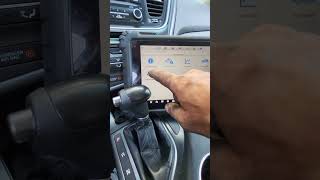
- Kia GDS (Global Diagnostic System): Evap. Leakage Test — To initiate a forced, self-contained leak test of the entire EVAP system. This is useful for verifying a repair or checking system integrity without waiting for the vehicle's natural monitor to run.
- Kia GDS (Global Diagnostic System): Actuation Test — To individually command the Purge Control Solenoid Valve (PCSV) and Canister Close Valve (CCV) to open and close, verifying the electrical circuit and solenoid function independently of the full system test.
Wiring & Ground Locations
- Purge Control Solenoid Valve (PCSV) Fuse — In the engine compartment fuse box. On a similar 2016 Optima, it is labeled 'SENSORS 2' and is a 10-amp fuse.. A blown fuse will prevent the PCSV from operating, which can cause the EVAP system self-test to fail and log a P0455 code.
Real Owner Repair Stories
- YouTube user 'Tony Fix it' (2015 Kia Optima with 199,000 miles) — P0455 Large EVAP leak code present.
✅ What actually fixed it The owner proactively replaced the charcoal canister, the purge valve, and the vent valve (CCV) together due to the vehicle's high mileage. After replacement, a scan tool was used to run the EVAP self-test, which then passed.
OEM Part Supersession History
31453-3K600→31453-3K600FFF— Part has been updated by the manufacturer.
Heads up: The new part is a direct replacement for the old one.
Helpful Videos
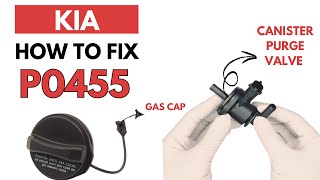
![How to Fix KIA P0455 Engine Code in 3 Minutes [2 DIY Methods / Only $4.61]](https://img.youtube.com/vi/v3j7s1R1NhY/mqdefault.jpg)
Used OEM Parts in Stock

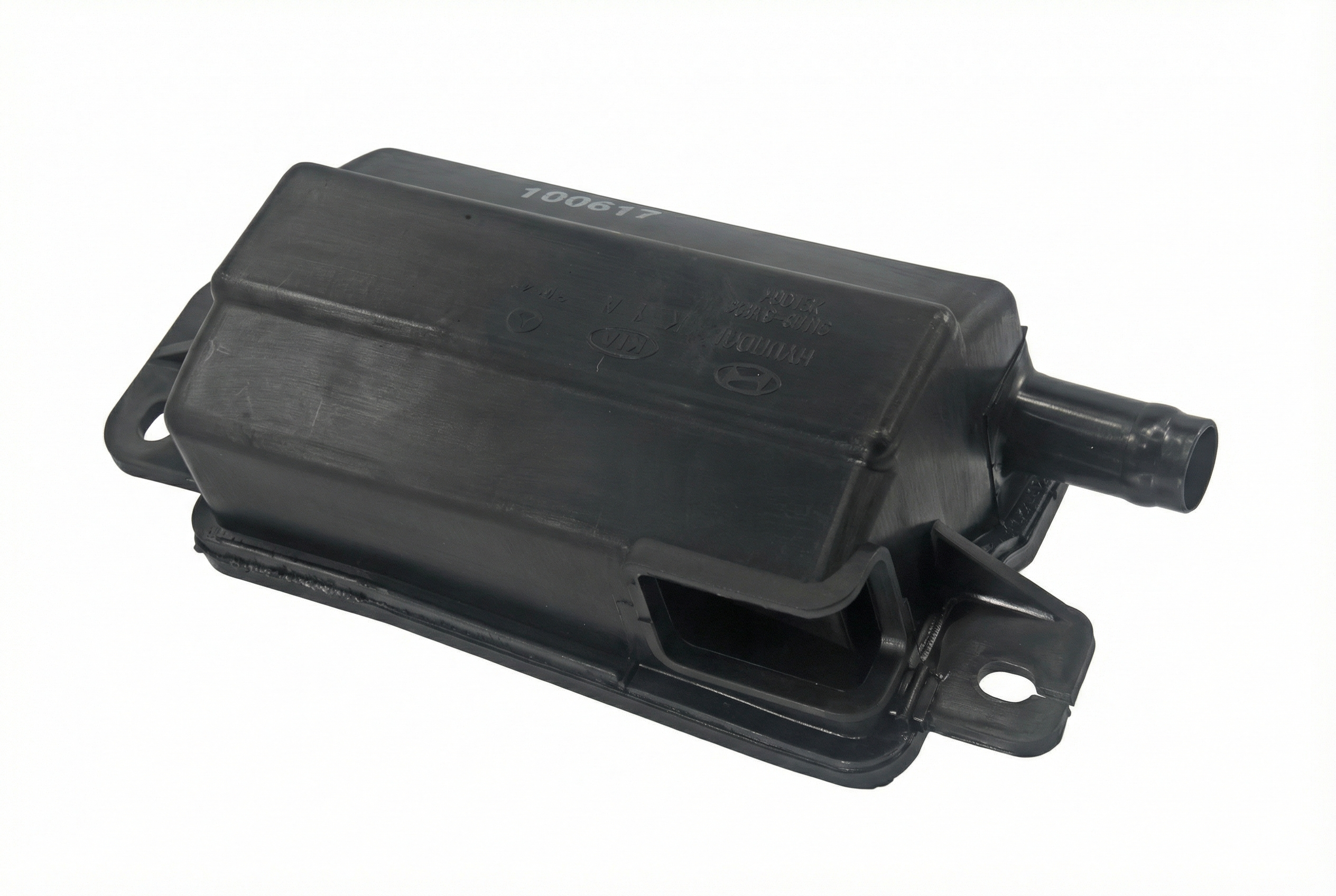
New Aftermarket Parts Available


The information in this article is provided for general reference and educational purposes only. Vehicle specifications, procedures, and part compatibility can vary by production date, trim level, and region. Always consult your vehicle's factory service manual and verify part numbers before purchasing or performing repairs. Safety-critical components such as airbags, seat belts, and braking systems should be installed by a qualified professional.
- Kia OPTIMA HYBRID:
- 🎬 Helpful Videos
- 🛍️ Shop This Part
- What's Unique About the 2011-2015 Kia OPTIMA HYBRID
- Diagnostic Flowchart
- Symptoms You May Notice
- Most Likely Causes
- Rare But Worth Checking
- Diagnosis Steps
- Parts You'll Likely Need
- Related Codes That Often Appear With This One
- Technical Service Bulletins (TSBs) & Recalls
- Platform-Specific Known Issues
- Mechanic-Grade Diagnostic Values
- Scan Tool Commands That Help
- Wiring & Ground Locations
- Real Owner Repair Stories
- OEM Part Supersession History
- 🎟️ Get 5% Off