

P0455 on 2016-2021 Jeep Wrangler: EVAP Large Leak Causes & Fixes
For a 2016-2021 Jeep Wrangler, a P0455 code is most often caused by a loose or faulty gas cap (on 2016-2018 JK models) or a damaged EVAP component. Always check the gas cap first. If that doesn't fix it, the next most likely culprits are a faulty EVAP purge solenoid or a cracked hose, often found with a smoke test. The EVAP System Integrity Module (ESIM) is also a very common failure point on these vehicles.
- P0455 indicates a large leak in the EVAP emissions system; it is not a threat to your engine's mechanical health.
- For 2016-2018 JK models, always check the gas cap first. A new OEM cap is a cheap and easy potential fix.
- For all models, a visual inspection of hoses for cracks is a good second step, but a professional smoke test is the most reliable way to find the source of the leak.
- Be aware of generation-specific issues: the exposed EVAP canister and fuel tank nipple on the JK, and potential for electrical false codes on the JL.
- Do not ignore the code, as your Wrangler will not pass an emissions inspection until it is resolved.
What's Unique About the 2016-2021 Jeep WRANGLER

The 2016-2021 Wrangler range spans two generations, the JK (2016-2018) and the JL (2018-present), which have different EVAP system designs. On the JK, the EVAP canister is notoriously exposed underneath the vehicle, making it susceptible to damage from off-roading. The newer JL generation moved the canister to a more protected location inside the passenger-side rear wheel well, but introduced a capless fuel filler system that can be a new source for leaks. Wranglers are also prone to cracked EVAP lines on top of the fuel tank, a well-documented weak point, especially on JK models.
Diagnostic Flowchart

Tap your situation to follow the diagnostic path that matches what you're seeing on this vehicle.
Generation note: This range covers two Wrangler generations: the JK (2016-2018) and the JL (2018-2021). The JK has a traditional gas cap and a vulnerably placed EVAP canister. The JL has a capless fuel filler and a better-protected canister located in the rear passenger wheel well. Common failure points, like the location of the purge valve and the potential for cracked lines on the fuel tank, can differ between them. The ESIM module is a common failure on both generations.
Symptoms You May Notice

- Check Engine Light is on.
- A message saying "gascap" may appear on the dashboard (more common on JK models).
- A noticeable smell of raw fuel, especially around the rear of the vehicle.
- In rare cases, a rough idle if the purge valve is stuck open, creating a vacuum leak.
- Replacing the EVAP canister when the leak is actually a small, hard-to-see hose crack nearby.
- Immediately assuming a complex failure when the issue is just a loose gas cap.
- Replacing the ESIM module when the actual leak is the brittle nipple on top of the fuel tank (JK models).
Most Likely Causes

- Loose, Worn, or Incorrect Gas Cap (JK Models) 🔴 High Probability The gas cap seal is a simple rubber part that degrades over time. Aftermarket caps are a frequent source of problems if they don't seal to OEM specifications. This is the easiest and most common fix.
How to confirm: Ensure the cap is tightened until it clicks at least three times. Inspect the rubber O-ring for cracks or damage. Applying a small amount of silicone grease to the O-ring can help create a better seal. If in doubt, a new OEM cap is an inexpensive test.
Typical fix: Replace the gas cap with a new OEM part.
Est. part cost: $15-$35 - Faulty EVAP System Integrity Module (ESIM) / Leak Detection Pump 🔴 High Probability This component is responsible for sealing the system for testing and is a known high-failure part on many Chrysler/Jeep products. It can fail internally from dirt or wear without any visible external damage, causing it to get stuck and report a leak.
How to confirm: This part is difficult to test without a bi-directional scan tool. It's often replaced after a smoke test reveals no other leaks. A common symptom of failure is when the code appears despite the system holding pressure during a smoke test. On JK models, it is located on the EVAP canister in front of the rear axle; on JL models, it's on the back of the canister inside the rear passenger wheel well.
Typical fix: Replace the ESIM, ensuring the O-ring seal is also replaced. The part twists about a quarter turn to remove.
Est. part cost: $25-$75 - Cracked or Disconnected EVAP Hoses 🟡 Medium Probability Hoses become brittle with age and heat cycles. Off-roading can cause impacts or stress on lines running along the frame. Rodents are also known to chew on these lines. A common area for cracks is on the plastic lines near the engine.
How to confirm: Perform a thorough visual inspection of all accessible EVAP lines from the engine bay to the canister. A smoke test is the most reliable method to find small cracks or hidden leaks.
Typical fix: Replace the damaged section of hose.
Est. part cost: $10-$50 - Faulty EVAP Purge Valve/Solenoid 🟡 Medium Probability This solenoid, typically located in the engine bay on the 3.6L engine, can fail and get stuck open, creating a permanent leak path. This is a common failure item across many Jeep/Chrysler vehicles sharing this engine.
How to confirm: Remove the valve and try to blow through it. When unpowered, it should be closed. If you can blow through it, it has failed. You can also test for clicking with a 12V source.
Typical fix: Replace the EVAP purge valve.
Est. part cost: $25-$70 - Damaged Fuel Filler Neck (JK) or Capless Filler (JL) ⚪ Low Probability On JK models, the steel filler neck can rust and develop pinholes, or the connection to the tank can be damaged. On JL models, the spring-loaded door of the capless system can fail to seal properly due to debris or wear.
How to confirm: For JK, visually inspect the filler neck for corrosion after removing the plastic trim. A smoke test will show smoke escaping from the neck. For JL, clean the capless filler opening and ensure the flap moves freely and seals shut.
Typical fix: Replace the fuel filler neck assembly on JK models. For JL, clean the assembly or replace if damaged.
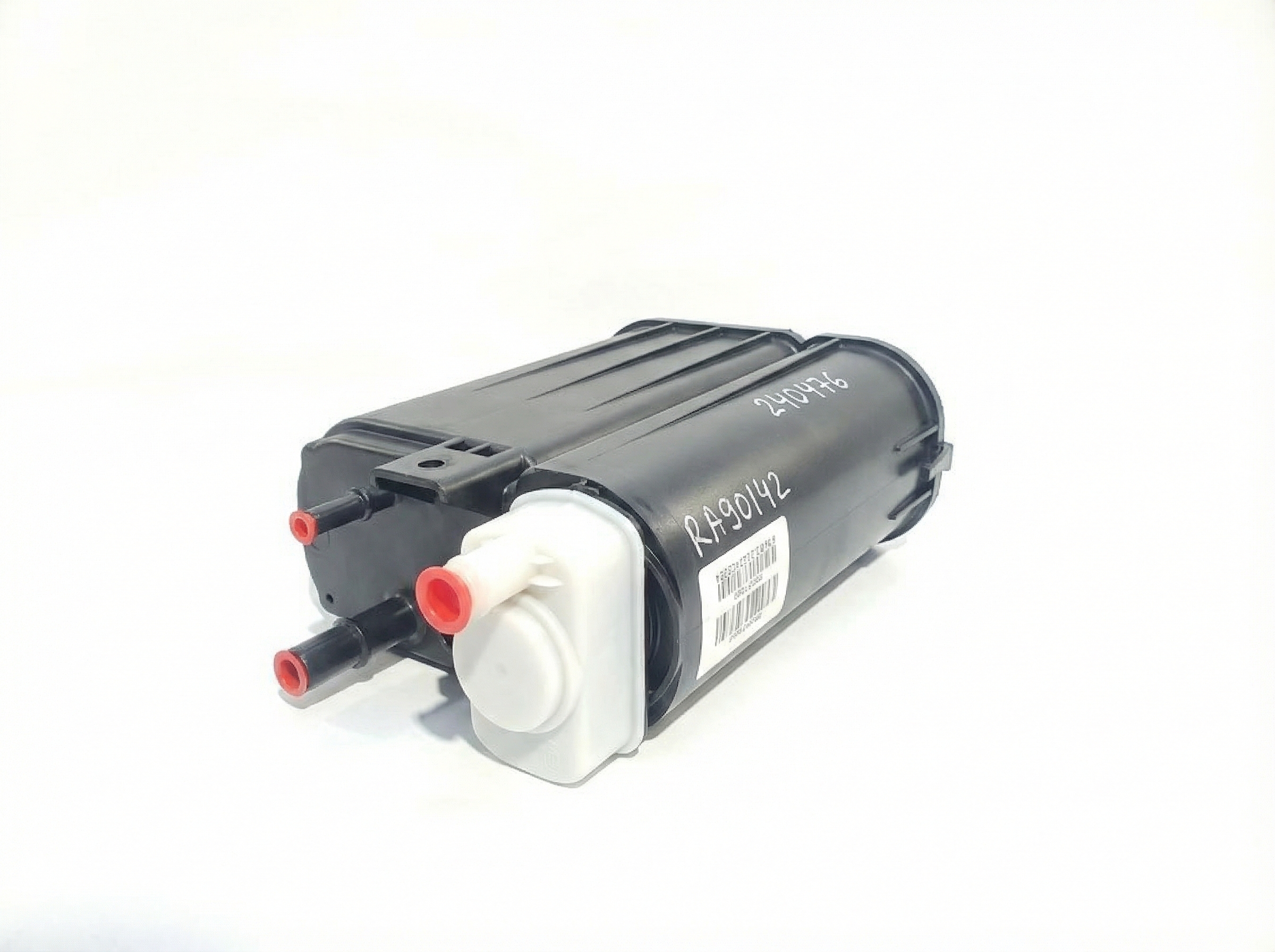
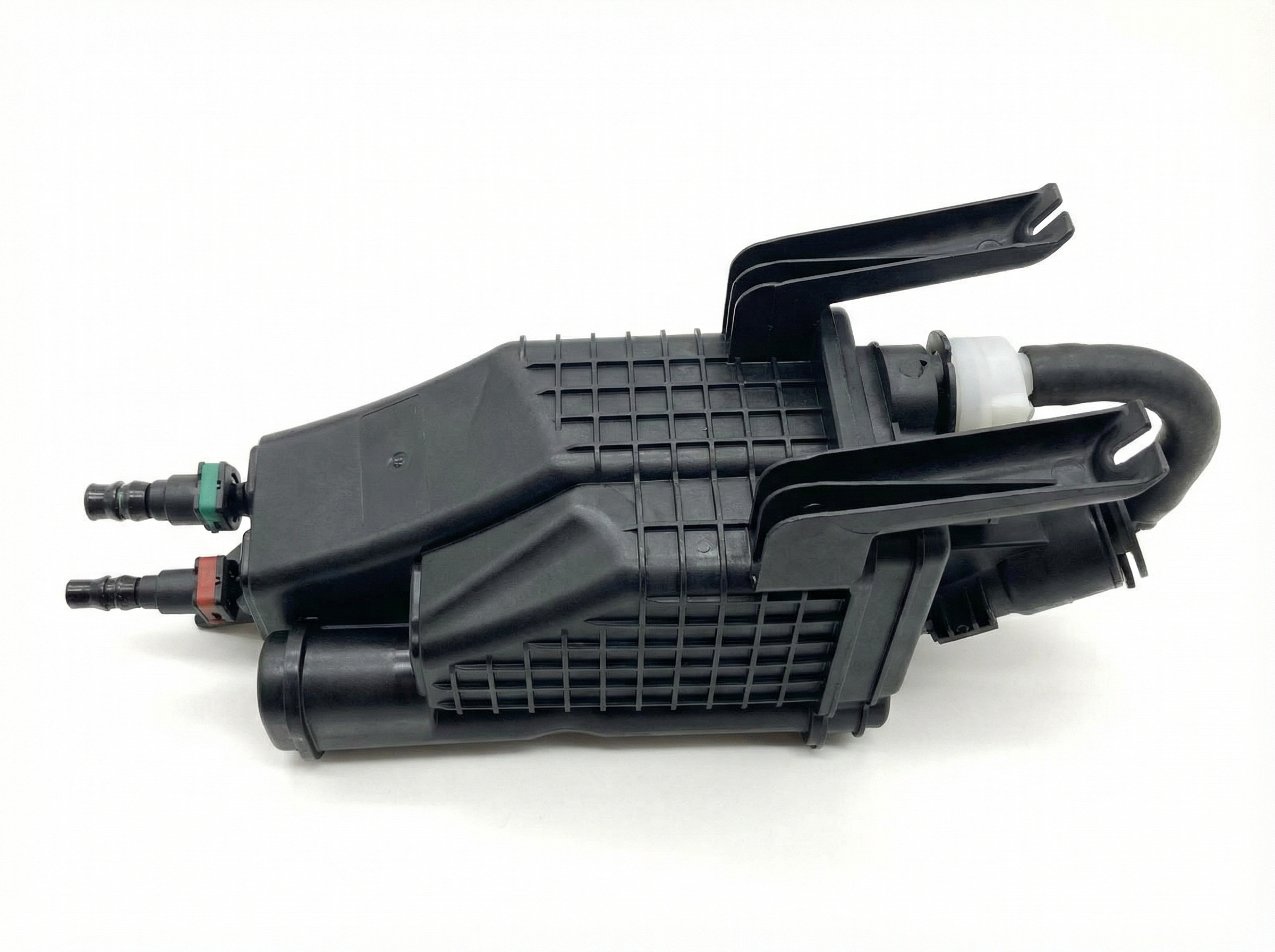
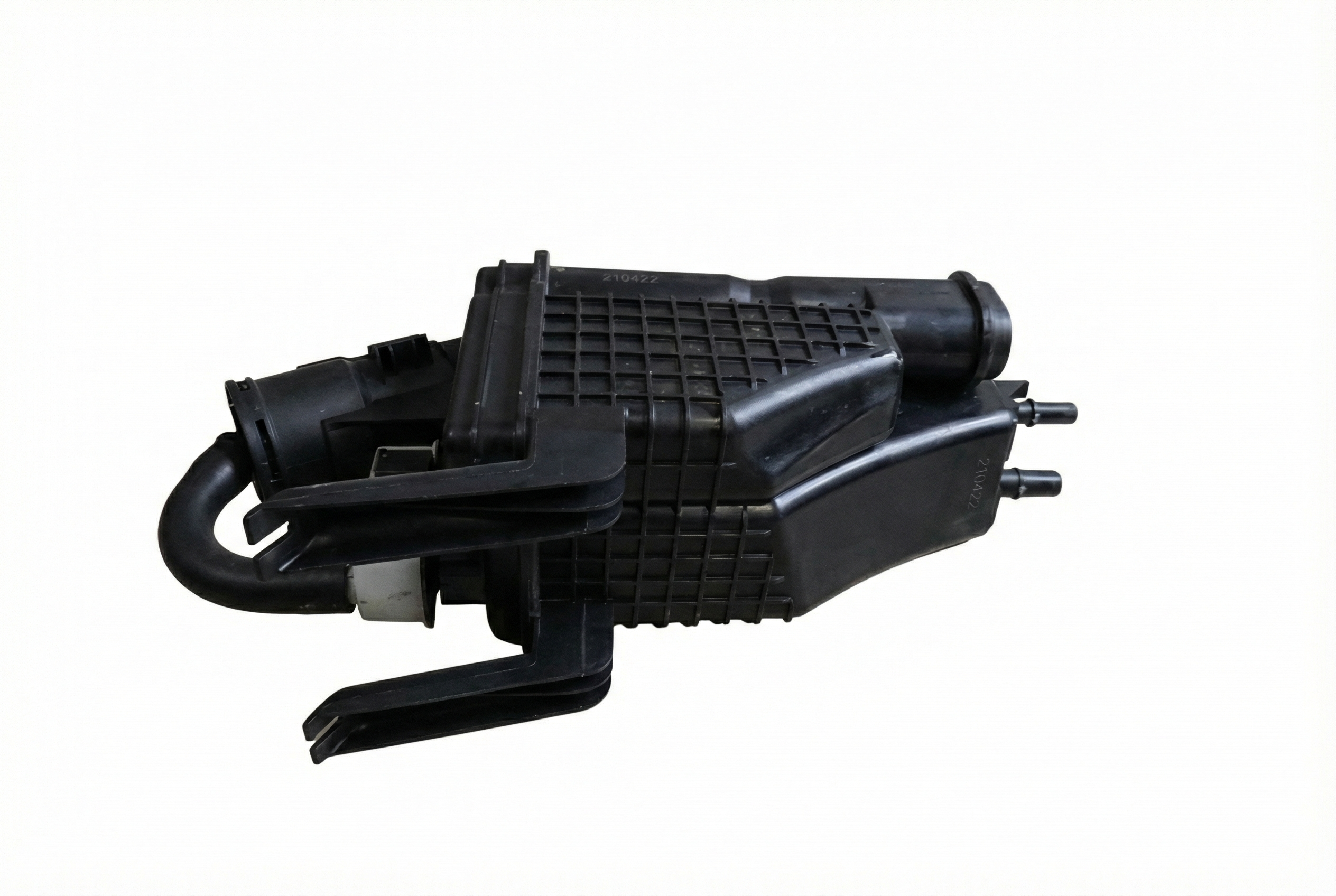
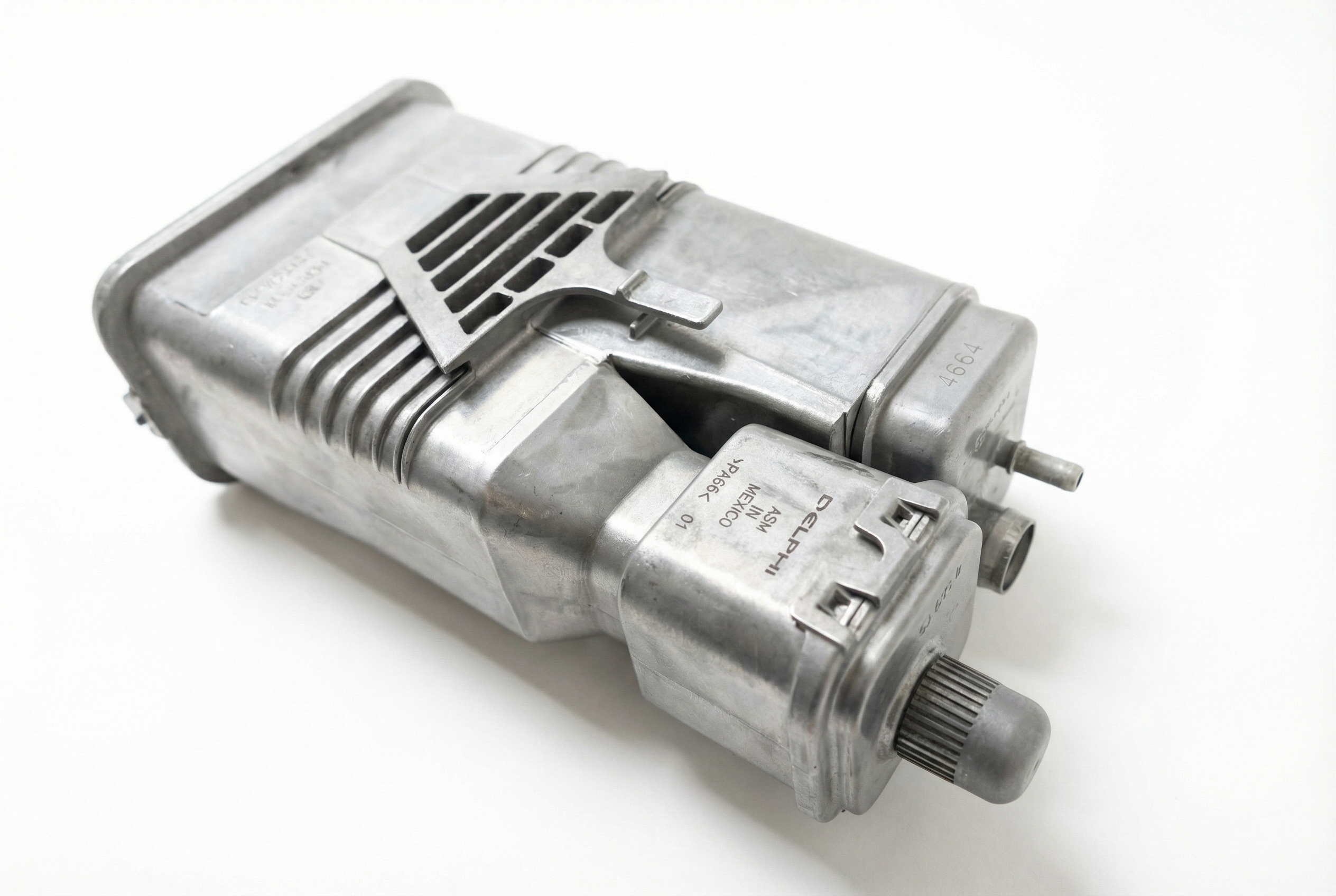
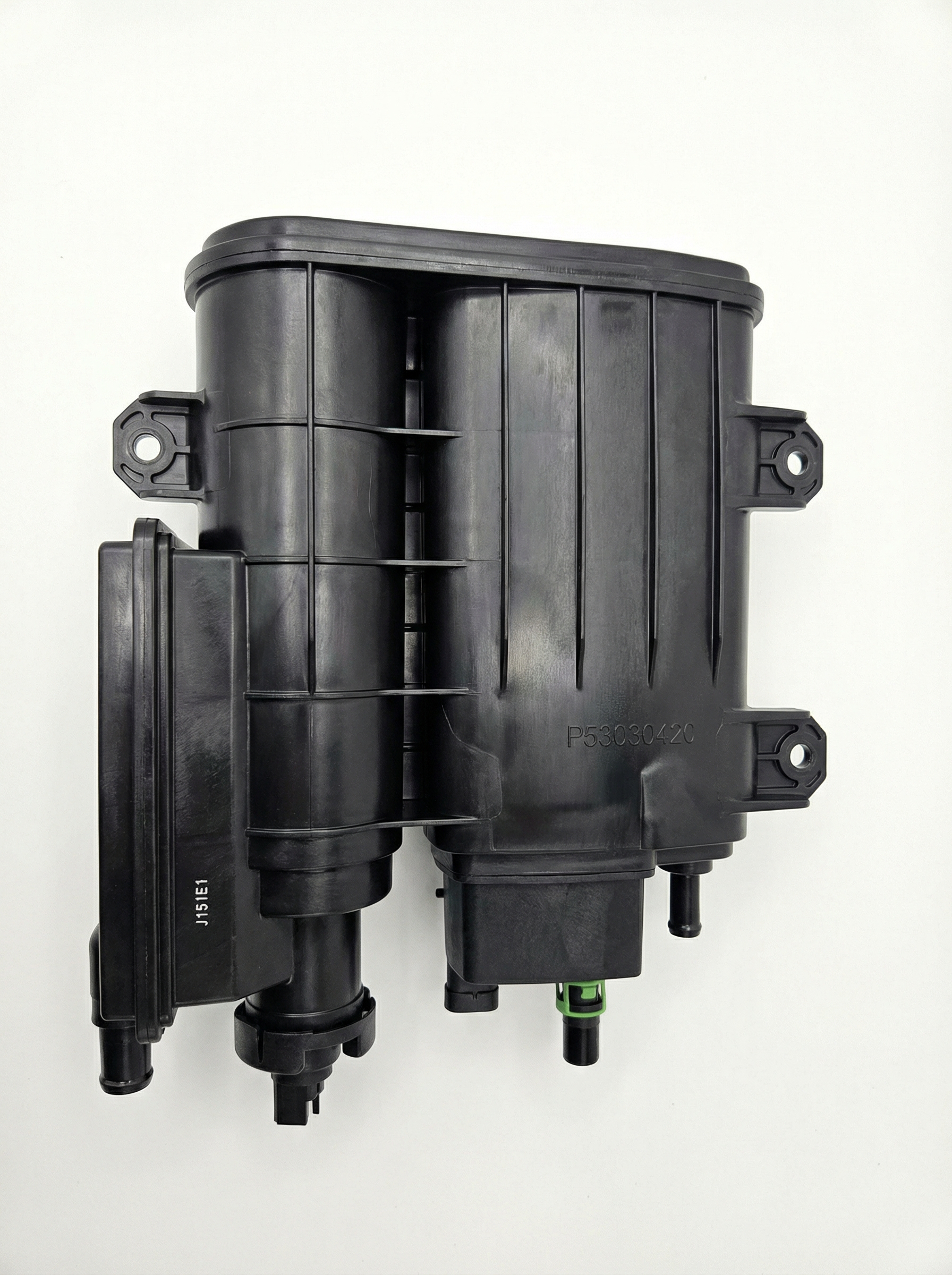
Est. part cost: $70-$150 - Cracked EVAP Canister ⚪ Low Probability On JK models, the canister is mounted in a vulnerable spot near the rear axle and can be damaged by rocks or obstacles during off-roading. This is less common on JL models where it is better protected.
How to confirm: A visual inspection may reveal cracks or damage. A smoke test will show smoke billowing from the canister body if it is cracked.
Typical fix: Replace the EVAP canister.
Est. part cost: $100-$250
Rare But Worth Checking
- Cracked Rollover Valve Nipple on Fuel Tank (JK): A plastic nipple for an EVAP line on top of the fuel tank can become brittle and snap. This is a well-documented issue in the JK community, often discovered when trying to track down a persistent P0455 or P0456 code. The repair is difficult as the part is integrated into the tank. Owners have successfully repaired it by drilling out the broken stud and inserting a metal sleeve (like a roll pin or threaded insert) secured with fuel-safe epoxy like J-B Weld. This avoids a costly full tank replacement. 🎬 See this $20 DIY fix for a broken fuel tank nipple.
- Failing Battery (JL): Some JL owners have reported that a P0455 or P0456 code was resolved only after replacing an aging vehicle battery. The theory is that low or unstable voltage from the complex dual-battery system in the JL can cause the sensitive EVAP system sensors and modules to malfunction and give a false reading. This is often a last resort after other components have been checked.
Diagnosis Steps
- Inspect the Gas Cap/Filler Neck: For JK models, tighten the gas cap until it clicks several times and inspect the seal for cracks. For JL models, inspect the capless filler opening for debris or damage to the seal. Clear the code and drive for a few days to see if it returns.
- Visual Inspection: Carefully inspect all visible EVAP hoses in the engine bay (especially around the purge solenoid) and underneath the vehicle near the EVAP canister and fuel tank. Look for any cracks, loose connections, or signs of damage.
- Test the Purge Solenoid: Locate the purge solenoid in the engine bay. Disconnect it and attempt to blow through it. If air passes through, the valve is stuck open and must be replaced.
- Perform a Smoke Test: This is the most effective step. A mechanic will connect a smoke machine to the EVAP service port. The machine fills the system with low-pressure smoke, which will escape from the location of any leak, making it easy to pinpoint. This test will identify cracked hoses, a bad canister, a leaking fuel tank nipple, or a bad filler neck.
- Inspect the ESIM: If a smoke test shows no leaks, the ESIM itself is a prime suspect. It is located on the EVAP canister. On JKs, this is in front of the rear axle. On JLs, it's behind the passenger rear fender liner. It can be replaced by pushing a tab, twisting counter-clockwise, and pulling it out.
- Check for TSBs: Ask a dealer if any Technical Service Bulletins apply to your vehicle's VIN, as there may be known issues with specific production runs. The provided TSBs confirm this is a known area of concern for Jeep. [Bulletin #1400522REVB, #S2125000002, #18-090-16, #S2025000004]
Parts You'll Likely Need
- Fuel Cap (JK Models)
(OEM #52030387AB)— This is the most frequent cause of P0455 on JK models due to seal degradation. Using an OEM Mopar cap is highly recommended as aftermarket versions can have sealing issues.
Trusted brands: Mopar
OEM price range: $20-$35
Aftermarket price range: $15-$25 - EVAP System Integrity Module (ESIM)
(OEM #04861962AB (or superseding part 04861962AD))— A very common failure part that gets stuck internally, causing a false large leak code. It's relatively inexpensive and easy to replace on the EVAP canister.
Trusted brands: Mopar, Dorman, AA Ignition
OEM price range: $50-$75
Aftermarket price range: $25-$50 - EVAP Purge Valve / Solenoid
(OEM #4627694AA (JL Models), 04861963AD (JK Models))— A common failure part that gets stuck open, creating a large leak. It's relatively inexpensive and easy to replace in the engine bay.
Trusted brands: Mopar, Dorman, Bosch
OEM price range: $40-$70
Aftermarket price range: $25-$50
Related Codes That Often Appear With This One
- P0456 — P0456 indicates a small EVAP leak. It's common to see both codes if the leak size is borderline or if multiple leaks exist. The TSBs #1400522REVB and #S2125000002 list both codes together. The broken fuel tank nipple on JKs can also trigger both codes.
- P0441 — This code indicates incorrect purge flow, which can be caused by a faulty purge valve that is also causing the P0455 leak. TSB #18-090-16 lists both codes.
- P0457 — This code indicates a leak detected due to a loose fuel cap. It is often triggered alongside P0455 when the root cause is a component failure (like the ESIM) that the system interprets as a missing cap.
- P04EC / P04EE — These are more specific EVAP leak codes related to the fuel tank side, often seen on PHEV models, but can accompany a general large leak code. They are mentioned in TSBs #1400522REVB and #S2125000002.
Technical Service Bulletins (TSBs) & Recalls
- 1400522REVB
- S2125000002
- 18-090-16
- S2025000004
Platform-Specific Known Issues
- JK Generation (2016-2018): The EVAP canister is located in a vulnerable position near the rear axle, making it prone to impact damage during off-road use.
- JK Generation (2016-2018): A plastic nipple on the fuel tank's rollover valve is known to become brittle and break, causing a persistent EVAP leak that is difficult to fix without dropping the tank.
- JL Generation (2018-2021): Some owners have reported chasing EVAP codes (P0455/P0456) for extended periods, replacing multiple parts, with the final solution being the replacement of an old/failing primary battery.
Mechanic-Grade Diagnostic Values
- EVAP Purge Valve Solenoid Coil Resistance — expected: 14 to 75 Ohms. Failure: A reading that is infinite (open circuit) or well outside the expected range indicates a faulty coil. A narrower range of 20-30 Ohms is considered typical for a good valve.
- Fuel Tank Pressure (FTP) Sensor Voltage (Scan Tool) — expected: ~2.5V at atmospheric pressure (system open). Failure: Voltage should decrease as vacuum is applied. A static, unresponsive, or out-of-range voltage suggests a faulty sensor.
Scan Tool Commands That Help
- wiTECH (or equivalent professional scanner): EVAP System Test / Leak Detection Monitor Test — This is a forced, bidirectional test used to command the EVAP system to run its self-test sequence on demand. It allows a technician to verify a fix is successful without waiting for the vehicle's natural drive cycle monitor to run. The scan tool will report if the large leak test passes or fails.
- wiTECH (Mopar Dealer Tool): Small Leak Verification Test (SLVT) — This is the mandatory first step in official dealer diagnostics for EVAP leaks. It can help differentiate between large and small leak conditions.
Wiring & Ground Locations
- Purge Solenoid Wiring (JK Models) — At the white PCM connector under the hood.. The purge solenoid is controlled by two wires running to the PCM. On the JK, these are typically a Dark Blue/White wire at Pin 20 and a Dark Blue/Brown wire at Pin 29. A poor connection at these specific pins can prevent the valve from operating, mimicking a component failure.
- Main Body Grounds (JL Models) — Multiple key ground points exist under the hood: G902A is near the air box, G901A is a cluster of three grounds by the battery, and G905A is on the driver's side near the brake booster.. Poor grounds for the PCM or other EVAP system components can cause erratic sensor readings and false codes. Ensuring these grounds are clean and tight is a critical diagnostic step.
Real Owner Repair Stories
- YouTube channel 'Tony Fix it' (2011 Jeep Wrangler JK (diagnostic process is identical for 2016-2018 JK)) — Persistent EVAP leak code.
❌ Tried (didn't work) An initial smoke test that did not reveal any leaks.
✅ What actually fixed it A second, more thorough smoke test revealed a crack in a plastic EVAP fitting on top of the gas tank. The damage likely occurred when an aftermarket gas tank skid plate was installed, flexing the tank and breaking the brittle nipple. - YouTube channel 'Evolved Jeeping' (2019 Jeep Wrangler JL Rubicon) — Persistent P0456 (small leak) check engine light for almost a year. The diagnostic process is highly relevant for P0455.
❌ Tried (didn't work) Replaced ESIM module, Replaced gas cap (capless filler funnel/seal), Replaced purge valve, Replaced both main and auxiliary batteries
✅ What actually fixed it The owner purchased an inexpensive automotive smoke machine and performed a smoke test. The test finally revealed the location of the physical leak, which had eluded replacement of all common electronic components. - Jeep Cherokee Forum (Jeep Cherokee (salt-belt vehicle). The failure mode is relevant to any vehicle, including Wranglers, in similar climates.) — P0455 Large EVAP leak.
❌ Tried (didn't work) Verified purge valve was working., Verified Leak Detection Pump (LDP) was working.
✅ What actually fixed it The owner found that the short section of steel EVAP line running from the charcoal canister back towards the fuel tank was badly rusted and had a hole. He replaced the rotted steel section with a piece of polyethylene tubing to fix the leak.
"I Checked Everything" — The Actual Cause
- A known issue on the Jeep Wrangler is the ESIM failing internally. In these cases, a smoke test will show the system is perfectly sealed and holding pressure, yet the P0455/P0456 code will persist. The ESIM's internal switch mechanism fails, causing it to incorrectly report a leak to the computer. This often leads to replacing the ESIM as the final step after a passed smoke test.
- On the JL Wrangler, an aging or failing battery in the dual-battery system can cause unstable voltage, leading the highly sensitive EVAP modules to report false leak codes even when no leak exists. This is often a last-resort fix after all other components and a smoke test check out.
OEM Part Supersession History
4861963AA, 4861963AB, 4861963AC, 4891729AA→4861963AD— Standard part revision and consolidation by the manufacturer.
Model Year Variations Within This Range
- 2016-2018 (JK) vs 2018-2021 (JL): The primary variation is the generation change. The JK uses a traditional gas cap and has an exposed EVAP canister. The JL uses a capless fuel filler and has a protected canister in the rear wheel well. Diagnostic approaches must account for these physical differences.
Helpful Videos

Used OEM Parts in Stock
New Aftermarket Parts Available


The information in this article is provided for general reference and educational purposes only. Vehicle specifications, procedures, and part compatibility can vary by production date, trim level, and region. Always consult your vehicle's factory service manual and verify part numbers before purchasing or performing repairs. Safety-critical components such as airbags, seat belts, and braking systems should be installed by a qualified professional.
- Jeep WRANGLER:
- 🎬 Helpful Videos
- 🛍️ Shop This Part
- What's Unique About the 2016-2021 Jeep WRANGLER
- Diagnostic Flowchart
- Symptoms You May Notice
- Most Likely Causes
- Rare But Worth Checking
- Diagnosis Steps
- Parts You'll Likely Need
- Related Codes That Often Appear With This One
- Technical Service Bulletins (TSBs) & Recalls
- Platform-Specific Known Issues
- Mechanic-Grade Diagnostic Values
- Scan Tool Commands That Help
- Wiring & Ground Locations
- Real Owner Repair Stories
- "I Checked Everything" — The Actual Cause
- OEM Part Supersession History
- Model Year Variations Within This Range
- 🎟️ Get 5% Off