

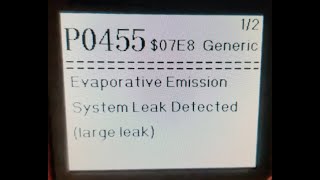
P0455 on 2014-2020 Jeep Grand Cherokee: EVAP Large Leak Causes and Fixes
For a P0455 code on a 2014-2020 Jeep Grand Cherokee, the most common causes are a faulty seal on the capless gas filler or a cracked EVAP purge valve hose on top of the engine. The hose is a known issue documented in a manufacturer TSB and is an inexpensive part (around $50) that's easy to replace.
- P0455 on a 2014-2020 Grand Cherokee is most often caused by a simple mechanical failure, not a complex electronic one.
- Always start by inspecting the capless fuel filler seal and the plastic EVAP purge hose on top of the engine before considering more expensive parts.
- The purge hose is a known weak point with a specific TSB, making it a highly probable culprit.
- This is a DIY-friendly repair for the most common causes, potentially saving hundreds of dollars in labor costs.
What's Unique About the 2014-2020 Jeep GRAND CHEROKEE

While a loose gas cap is the top cause for P0455 on many cars, the 2014-2020 Grand Cherokee (WK2 generation) has a capless fuel filler, so the issue is often the seal on the filler flap itself. More importantly, this specific vehicle is prone to a cracked EVAP purge valve hose located right on top of the engine. This problem is so common that Jeep issued a Technical Service Bulletin (TSB 25-002-15 REV-B) for it, making it a primary suspect that should be checked first. The Dodge Durango, a platform mate, shares this same vulnerability.
Diagnostic Flowchart

Tap your situation to follow the diagnostic path that matches what you're seeing on this vehicle.
Symptoms You May Notice
- Check Engine Light is on.
- A noticeable smell of fuel, potentially strongest near the left rear wheel opening where the EVAP canister and ESIM are located.
- Vehicle will fail an emissions test.
- Remote start may be disabled while the Check Engine Light is active.
- Immediately replacing the purge valve without first inspecting the purge valve hose, which is the more common failure point on this specific vehicle.
- Assuming the charcoal canister has failed when the leak is actually from the much cheaper and easier to replace ESIM switch mounted on it.
Most Likely Causes


- Cracked EVAP Purge Valve Hose 🔴 High Probability This is a well-documented failure point for this platform, as stated in Jeep TSB #25-002-15 REV-B. The plastic hose assembly becomes brittle over time due to engine heat and develops cracks, especially at the connection points.
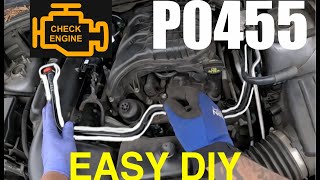
How to confirm: Remove the engine cover and visually inspect the plastic hose assembly that connects to the purge valve on the driver's side of the engine. Cracks are often visible near the connection points. In some cases, a previous owner may have attempted a temporary fix with tape.
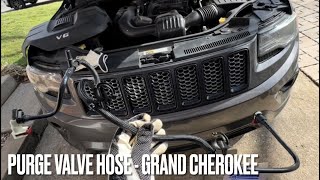
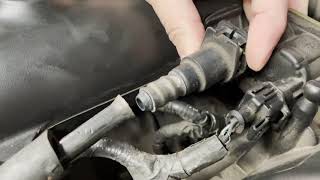
Typical fix: Replace the entire purge valve hose assembly. It is a simple repair that involves unclipping the old hose and snapping the new one into place. It is a 5-minute job for most DIYers. 🎬 Watch this 2-minute walkthrough to replace the purge valve hose.
Est. part cost: $40-$70 - Faulty Capless Fuel Filler Seal 🔴 High Probability Instead of a traditional gas cap, these vehicles use a spring-loaded flap. Debris can prevent it from sealing, or the seal itself can wear out, creating a large leak.
How to confirm: Open the fuel door and inspect the metal flap and its surrounding seal. Check for any dirt, debris, or damage that would prevent a tight seal. Ensure the flap moves freely and closes completely.
Typical fix: Clean the sealing surface with a rag and some cleaner. If the seal is damaged or the flap mechanism is faulty, the entire fuel filler neck assembly may need to be replaced.
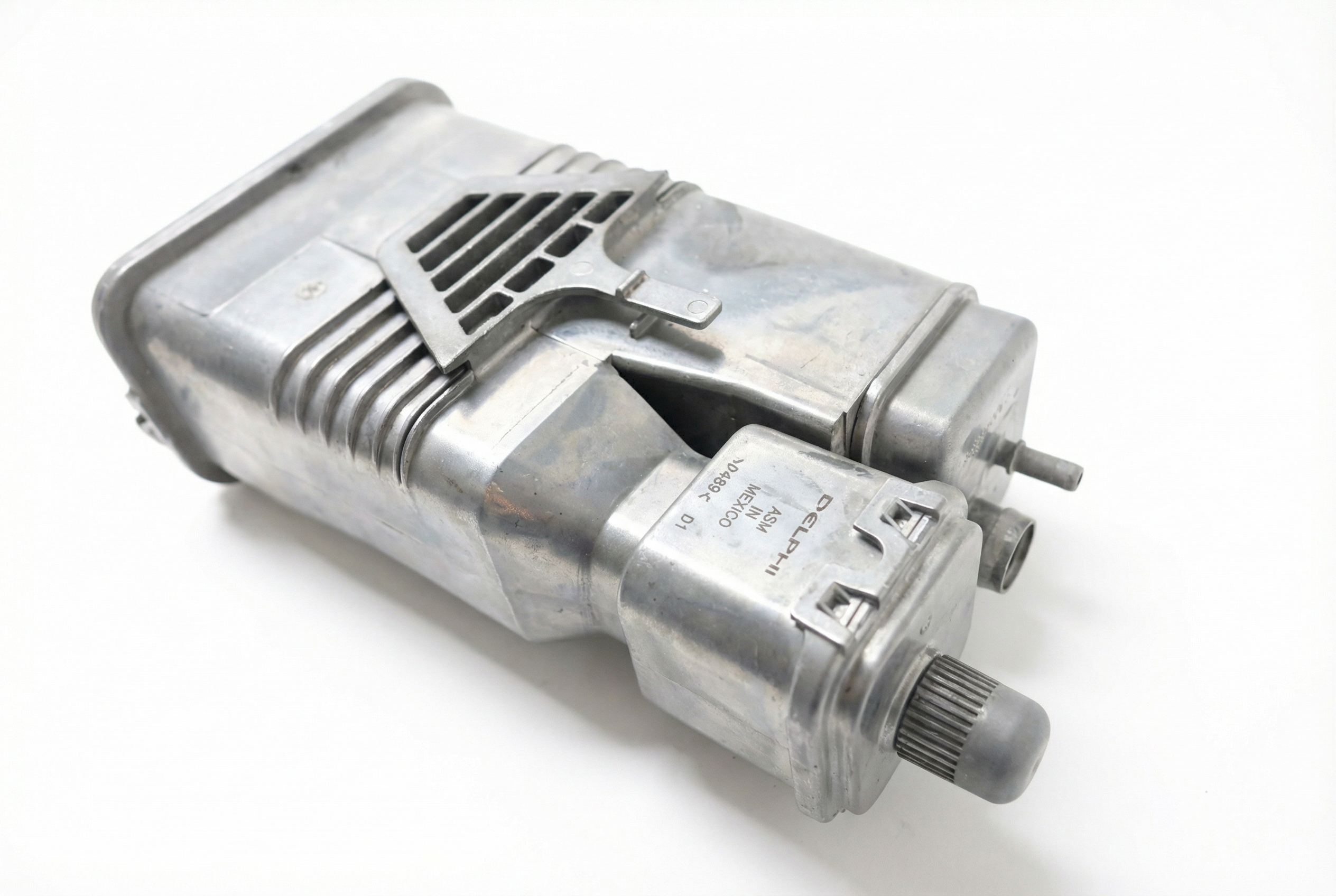
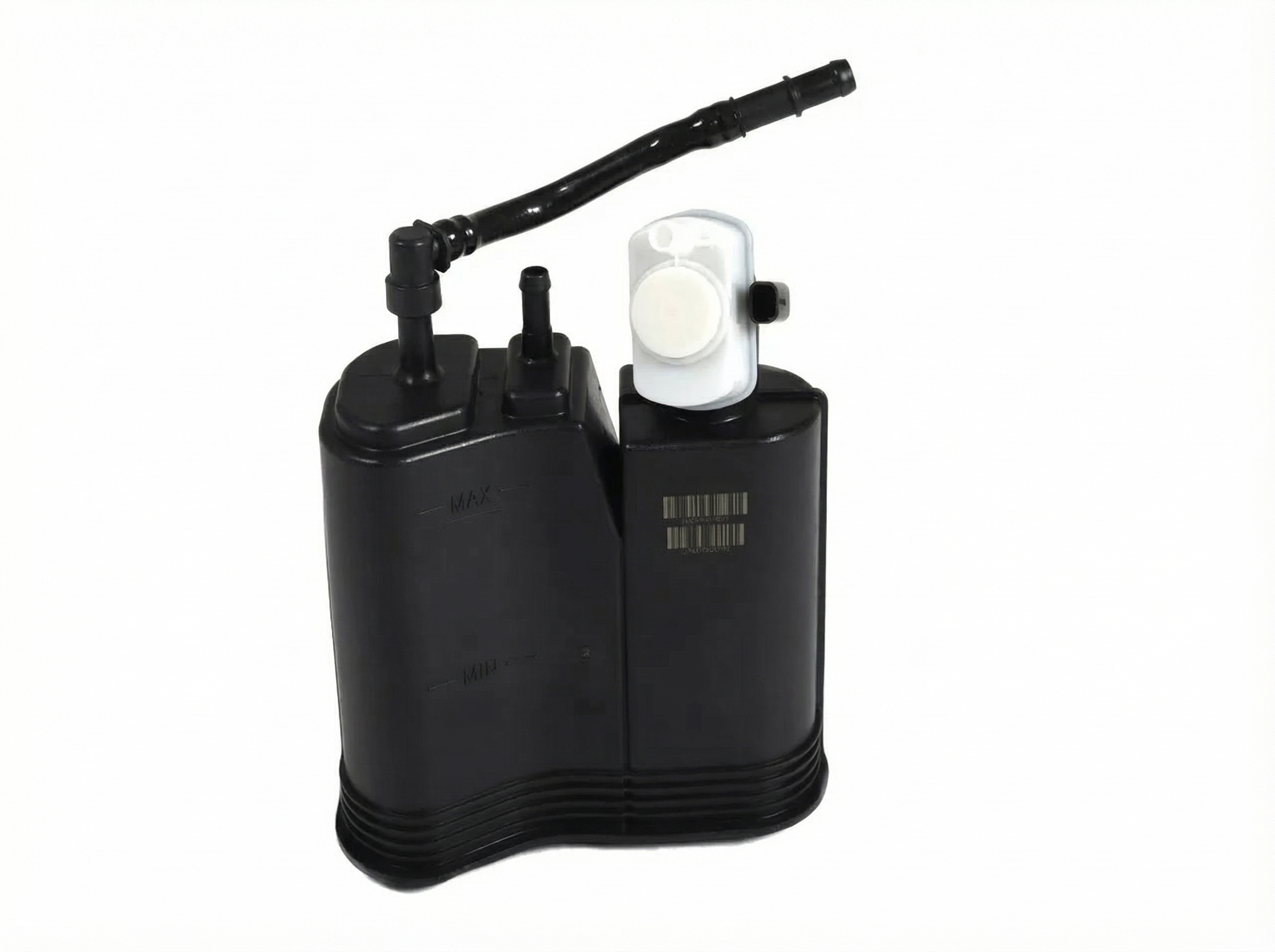
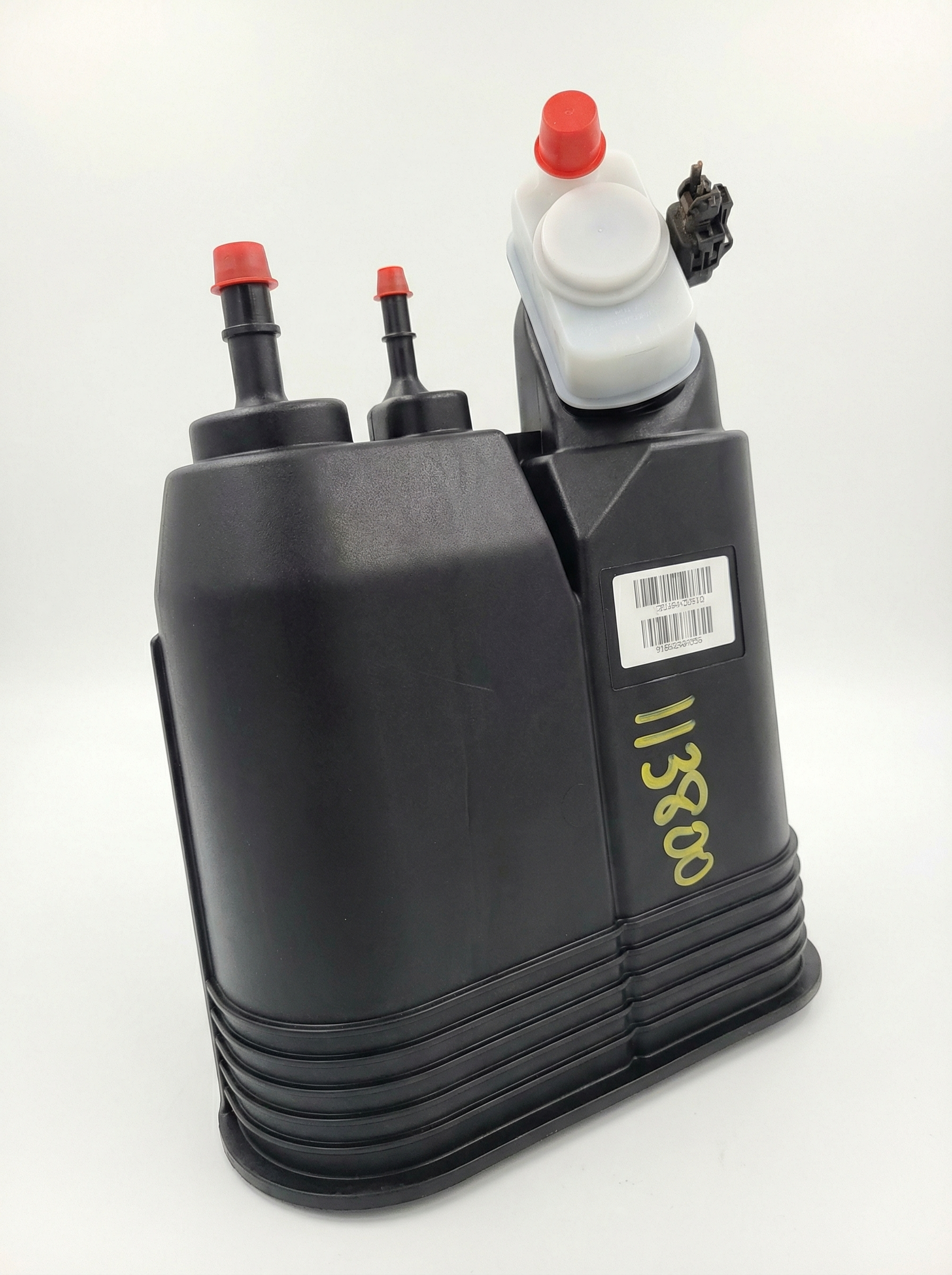
Est. part cost: $5-$15 for cleaning, $100-$200 for filler neck assembly - Faulty or Corroded ESIM Switch 🟡 Medium Probability The Evaporative System Integrity Monitor (ESIM) is Chrysler's version of a vent valve switch. It is located on the charcoal canister behind the driver's side rear wheel liner and is known to corrode and fail, causing a leak. This is a common failure point across many Chrysler, Dodge, and Jeep vehicles.
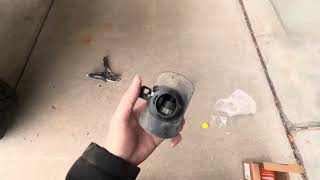
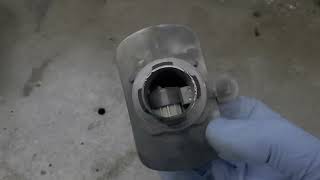
How to confirm: Locate the ESIM on the charcoal canister (behind the left rear wheel well liner). A smoke test is the best method. A technician found a hole corroded through the plastic body of the switch. Sometimes shaking the removed switch will produce a rattle from broken internal components, indicating it has failed.
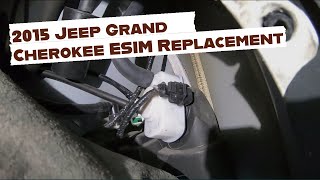
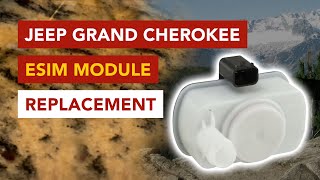
Typical fix: Replace the ESIM switch and its seal on the charcoal canister. This involves removing the rear wheel and peeling back the liner for access. The switch twists off with a quarter-turn. 🎬 See how to swap out the ESIM module yourself.
Est. part cost: $30-$50 - Faulty EVAP Purge Valve/Solenoid 🟡 Medium Probability
How to confirm: The purge valve, located on the engine, can get stuck open. With the engine off, you can remove the valve and try to blow through it. If air passes through, it's stuck open and needs replacement. A multimeter can be used to check the resistance of the solenoid coil, which should typically be between 15 and 30 ohms.
Typical fix: Replace the purge valve. This is typically mounted on the engine with one or two bolts and is easy to access after removing the engine cover.
Est. part cost: $25-$60 - Cracked or Disconnected EVAP Hoses ⚪ Low Probability
How to confirm: Perform a thorough visual inspection of all accessible EVAP lines from the engine bay to the fuel tank. A smoke test is the most effective way to find a leak in a hose that isn't easily visible.
Typical fix: Replace the damaged section of hose.
Est. part cost: $10-$30
Rare But Worth Checking
- Cracked Charcoal Canister: The canister itself can be damaged by road debris or become brittle with age, causing a large leak. This is usually found with a smoke test.
- Cracked Fuel Filler Neck: The pipe leading to the fuel tank can develop cracks, especially the plastic components, leading to a large EVAP leak.
Diagnosis Steps
- Check the capless fuel filler. Open the fuel door and inspect the sealing surface for debris or damage. Clean it and ensure the flap closes securely.
- Visually inspect the EVAP purge valve hose. Remove the plastic engine cover and carefully examine the plastic hose assembly on the driver's side of the engine for any cracks or breaks. This is the most likely cause per TSB #25-002-15 REV-B.
- Inspect other visible EVAP lines in the engine bay for obvious cracks or disconnections.
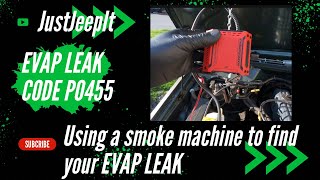
- If no obvious leak is found, the next step is a smoke test. A mechanic will inject low-pressure smoke into the EVAP service port. Smoke will exit from the point of the leak. 🎬 Watch a pro find an EVAP leak using a smoke tester.
- During the smoke test, pay close attention to the purge valve, the ESIM switch on the charcoal canister (behind the driver's side rear wheel well), the fuel filler neck, and all hose connections.
- If a smoke test is not possible, you can test individual components. Test the purge valve to see if it's stuck open. Inspect the ESIM for corrosion or damage, and listen for a rattle when shaken.
Parts You'll Likely Need

- EVAP Purge Valve Hose
(OEM #04593834AC (for 3.6L, per TSB 25-002-15); 68250915AD (2016-2019 3.6L); 68426846AB (3.0L Diesel); 68194884AC (6.4L HEMI))— This part is identified in a manufacturer TSB as a common failure point that causes P0455. It becomes brittle and cracks. [Bulletin #25-002-15 REV-B]
Trusted brands: Mopar, Dorman
OEM price range: $50-$80
Aftermarket price range: $40-$60 - Evaporative System Integrity Monitor (ESIM) Switch
(OEM #04861962AD (replaces 4861962AA, 4861962AB, 4861962AC))— This switch, located on the charcoal canister, is another known weak point on Chrysler/Jeep vehicles that can corrode and cause a leak.
Trusted brands: Mopar, Standard Motor Products, Duralast (ESM10003)
OEM price range: $40-$70
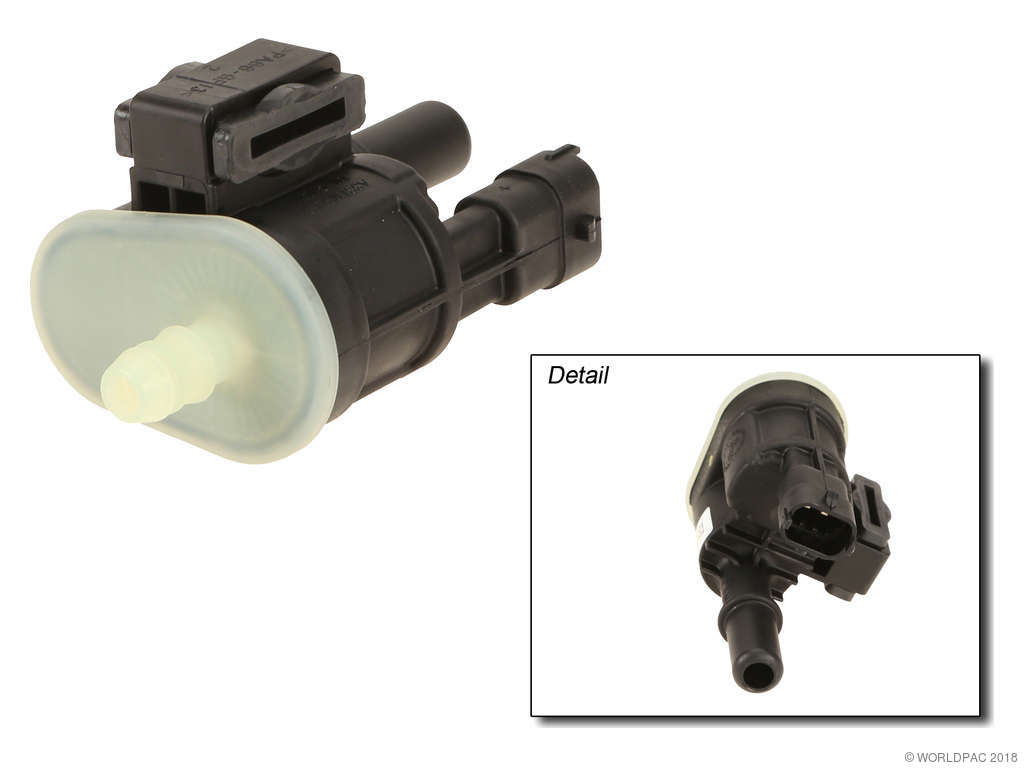
Aftermarket price range: $25-$45 - Vapor Canister Purge Valve
(OEM #5149061AA (often listed, but may be discontinued); 4627694AB)— This valve can fail by sticking open, creating a constant leak path to the engine intake.
Trusted brands: Mopar, Bosch, Delphi
OEM price range: $40-$70
Aftermarket price range: $25-$50
Related Codes That Often Appear With This One
- P0456 — P0456 indicates a small EVAP leak. It's common to see both codes if a leak is intermittent or on the borderline between small and large. Several TSBs list them together. [Bulletin #18-035-20, Bulletin #25-002-15 REV-B] An owner might fix the large leak (P0455, e.g., a cracked hose) and then find the small leak code (P0456, e.g., a bad ESIM seal) appears afterward.
- P0441 — P0441 indicates incorrect purge flow. A large leak from a broken hose can sometimes disrupt the system's ability to draw a proper vacuum, triggering this code alongside P0455. [Bulletin #18-035-20, Bulletin #18-090-16]
- P0440 — P0440 indicates a general EVAP system failure. It can appear alongside P0455 and P0456, pointing to a significant issue within the system that a smoke test may not immediately find.
Technical Service Bulletins (TSBs) & Recalls
- 25-002-15 REV-B: The most relevant TSB, calling out the purge hose for causing P0455/P0456 on 2015 models, but the issue is widely known to affect the whole 2014-2020 range.
- 18-035-20: Links P0455 with P0441/P0456 and a fuel odor smell.
- 18-090-16: Lists P0455 as a possible DTC along with several other unrelated codes, suggesting a software update may be relevant in some cases.
Platform-Specific Known Issues
- TSB #25-002-15 REV-B explicitly states that P0455 can be caused by a split in the evaporative emissions purge valve hose, requiring its replacement.
- TSB #18-035-20 notes that a symptom accompanying P0455 can be a fuel odor smell specifically in the left rear wheel opening.
- Owner experiences confirm the purge hose is a very common, easy DIY fix. One owner on YouTube noted they temporarily used duct tape before replacing the part, which is a sign to look for.
Mechanic-Grade Diagnostic Values
- EVAP Purge Valve/Solenoid Coil Resistance — expected: 15 to 30 Ohms. Failure: A reading far outside this range, or an open circuit (infinite resistance), indicates a failed solenoid coil.
- EVAP Purge Solenoid Control Signal at PCM — expected: PWM Signal: 0-12-0v. Failure: Signal not present or incorrect indicates a wiring or PCM driver issue.
Scan Tool Commands That Help
- wiTECH or equivalent bidirectional scanner: EVAP System Test / Leak Test — To command the system to seal (close the vent valve/ESIM) and monitor the fuel tank pressure sensor to verify if a leak is present without needing a smoke machine immediately. Some scanners were missing this function for certain model years.
- wiTECH or equivalent bidirectional scanner: Purge Valve Actuation/Control — To manually command the purge valve open and closed to check its functionality. You can listen for a click and verify with a vacuum gauge if it's sealing properly.
- wiTECH or equivalent bidirectional scanner: Vent Valve / ESIM Actuation — To command the vent valve (ESIM) closed during a smoke test. This is necessary to seal the system from the vent side to allow pressure to build and reveal leaks.
Wiring & Ground Locations
- PCM Connector Pin 68 — At the Powertrain Control Module (PCM).. This pin sends the control signal to the EVAP Purge Solenoid. The wire is typically Pink/Gray (PK/GY). Testing here can determine if the PCM is commanding the solenoid to open.
- EVAP Purge Solenoid Connector — On the purge solenoid itself, on top of the engine.. This is a 2-pin connector. It's the primary point for testing the solenoid's resistance and checking for power and the control signal from the PCM. Corrosion or damage here can cause the code.
Real Owner Repair Stories
- Reddit user AnikaGSD52 (2014 Jeep Grand Cherokee) — P0455 and P0456 codes.
✅ What actually fixed it Initially, the user fixed the common cracked purge hose. A few months later, the codes returned and the final fix was replacing the ESIM switch on the charcoal canister. This highlights that multiple EVAP components can fail over time. - YouTube channel 'Watch Me Wrench' (Jeep Grand Cherokee WK2 (2010-2018 range)) — P0455 (large leak) and P0456 (small leak) codes.
❌ Tried (didn't work) Initially fixing only one component.
✅ What actually fixed it The P0455 code was resolved by replacing the cracked purge hose under the hood. The P0456 code remained until the ESIM switch and its gasket were replaced at the rear of the vehicle. This is a classic example of two separate issues causing both codes. - YouTube channel 'Fix It All' (2015 Jeep Grand Cherokee) — P0455 code, check engine light.
❌ Tried (didn't work) The previous owner had attempted to hide the cracked purge hose with a plastic covering.
✅ What actually fixed it The video clearly shows a completely broken vacuum hose connected to the purge valve. Replacing the entire hose assembly was the definitive fix.
"I Checked Everything" — The Actual Cause
- A known pattern on these vehicles is for a smoke test to come back clean, yet the P0455/P0456 codes persist. In one documented case, a technician smoke tested the system multiple times with no visible leaks found. The final resolution was replacing the ESIM switch. The theory is that the ESIM itself was failing internally or had a corrosion hole that was difficult to spot with smoke, but was not sealing correctly during the vehicle's self-test.
OEM Part Supersession History
4861962AA, 4861962AB, 4861962AC→04861962AD— Standard part evolution and revision by the manufacturer for the Evaporative System Integrity Monitor (ESIM) Switch.
Heads up: The latest part number, 04861962AD, is the correct service part and replaces all previous versions. Using an older stock part is not recommended.04593834AC→N/A— This part number for the purge valve hose is often misidentified online as an EGR valve. It is crucial to verify the part by application (EVAP Purge Hose for 3.6L) rather than just the part number's description on some vendor sites.
Heads up: Be cautious when ordering 04593834AC, as some catalogs incorrectly list it as an EGR valve, which is a completely different component.
Helpful Videos
Used OEM Parts in Stock
New Aftermarket Parts Available


The information in this article is provided for general reference and educational purposes only. Vehicle specifications, procedures, and part compatibility can vary by production date, trim level, and region. Always consult your vehicle's factory service manual and verify part numbers before purchasing or performing repairs. Safety-critical components such as airbags, seat belts, and braking systems should be installed by a qualified professional.
- Jeep GRAND CHEROKEE:
- 🎬 Helpful Videos
- 🛍️ Shop This Part
- What's Unique About the 2014-2020 Jeep GRAND CHEROKEE
- Diagnostic Flowchart
- Symptoms You May Notice
- Most Likely Causes
- Rare But Worth Checking
- Diagnosis Steps
- Parts You'll Likely Need
- Related Codes That Often Appear With This One
- Technical Service Bulletins (TSBs) & Recalls
- Platform-Specific Known Issues
- Mechanic-Grade Diagnostic Values
- Scan Tool Commands That Help
- Wiring & Ground Locations
- Real Owner Repair Stories
- "I Checked Everything" — The Actual Cause
- OEM Part Supersession History
- 🎟️ Get 5% Off