

P0455 on 2007-2012 Infiniti FX35: EVAP Large Leak Causes and Fixes
For a 2007-2012 Infiniti FX35, the P0455 code is most often caused by a loose or faulty gas cap (OEM Part# 17251-1LA0A). If that doesn't fix it, the next most likely culprit is a failed EVAP canister vent control valve (OEM Part# 14935-JF00B or 14935-AM60B) located at the rear of the vehicle. A new OEM gas cap is about $30-$40, while the vent valve can cost between $70 and $160.
- Always check the gas cap first for code P0455. Make sure it's tight and the seal is intact.
- If the gas cap isn't the issue, the EVAP canister vent control valve (located at the rear of the car) is the next most likely part to have failed.
- Replacing the gas cap or vent control valve is a straightforward DIY job for most owners.
- A smoke test is the most effective way to find the exact source of a leak if it's not one of the common components.
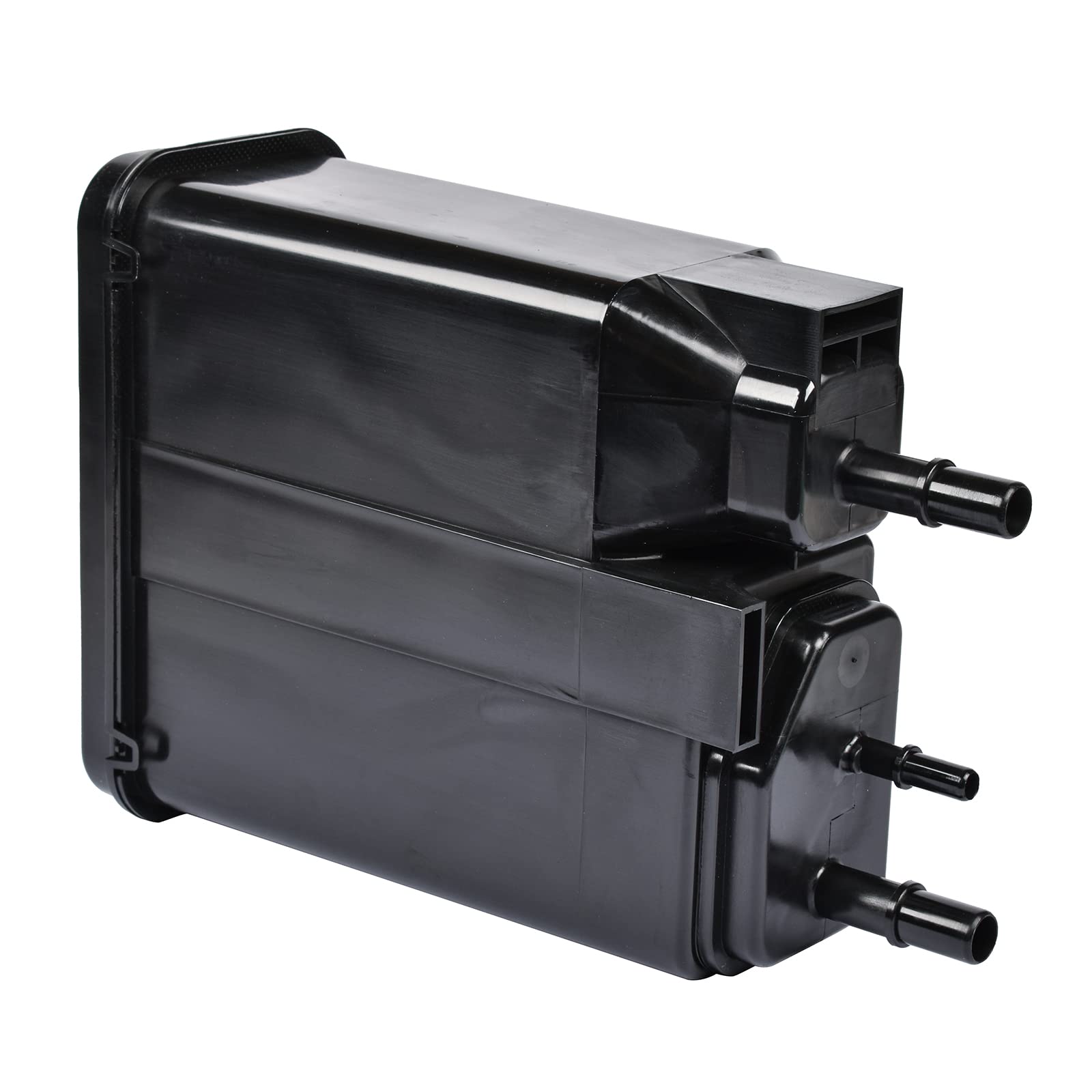
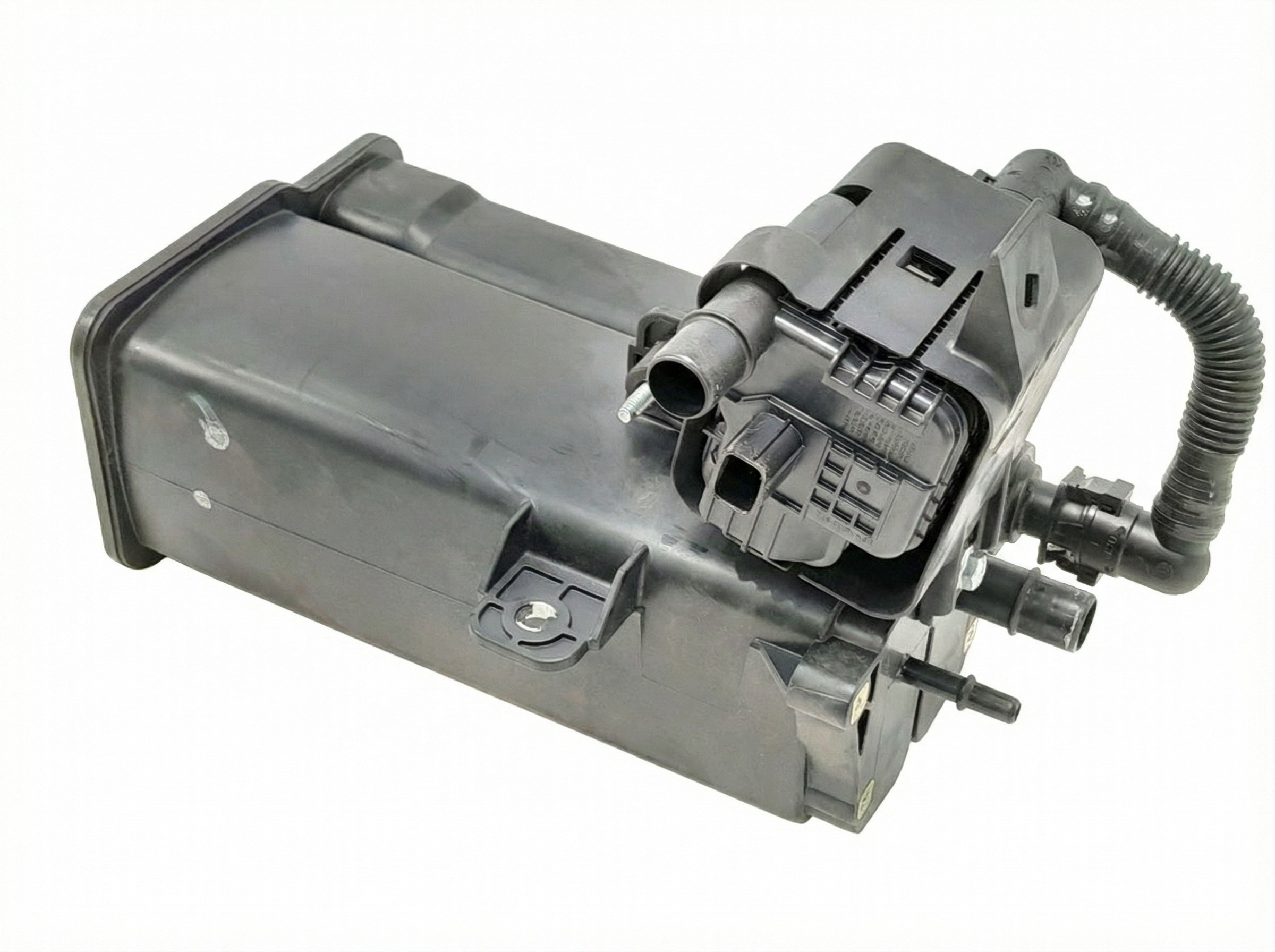
- Do not replace the entire charcoal canister unless it is confirmed to be cracked; the vent valve attached to it is usually the actual problem and is sold separately.
What's Unique About the 2007-2012 Infiniti FX35

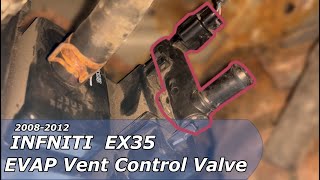
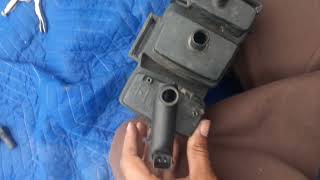
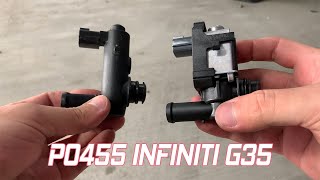
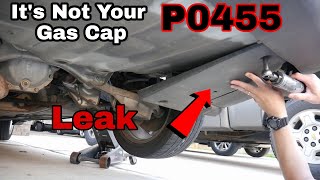
The Infiniti FX35, sharing its FM platform with other Nissan/Infiniti models like the G35 and 350Z, is particularly known for two common P0455 culprits. After a simple loose gas cap, the most frequent failure is the EVAP canister vent control valve. This valve is mounted to the charcoal canister behind the rear passenger-side wheel, where its exposure to road debris, water, and rust causes it to seize or stick open, triggering the large leak code. 🎬 Watch: Step-by-step vent control valve replacement on an FX35. This is a well-documented failure point across enthusiast forums like InfinitiScene.org for this vehicle generation.
Diagnostic Flowchart
Tap your situation to follow the diagnostic path that matches what you're seeing on this vehicle.
Generation note: This range covers two generations of the FX35: the first generation (S50, 2007-2008) and the second generation (S51, 2009-2012). While the underlying causes for P0455 are very similar, some part numbers and the exact location of components may differ slightly. For example, the EVAP vent control valve for an S50 may be part #14935-AM60B, while the S51 uses #14935-JF00B. Videos show distinct procedures for the 03-08 models versus the 2009+ models for replacing the vent control valve.
Symptoms You May Notice
- Check Engine Light is on
- A "LOOSE FUEL CAP" warning message may appear on the dashboard.
- A faint smell of gasoline, especially around the rear of the vehicle near the fuel tank.
- Difficulty refueling (gas pump clicks off prematurely) if the vent valve is stuck closed, though this is less common for a P0455 (stuck open) fault.
- Replacing the entire charcoal canister when only the vent control valve is bad. The valve is a separate, much cheaper part that attaches to the canister.
- Replacing the purge valve in the engine bay when the more common failure is the vent control valve at the rear of the vehicle.
- Using a cheap aftermarket gas cap which may not seal correctly, leading to a persistent code.
Most Likely Causes

- Loose or Faulty Gas Cap 🔴 High Probability This is the most common cause across all vehicles and is specifically highlighted in Infiniti Technical Service Bulletin ITB09012F and ITB13-044J. The cap's seal can wear out, or the cap may not have been tightened correctly. A tether getting caught under the cap is a common owner-reported mistake.
How to confirm: Ensure the gas cap is tightened until it clicks at least once. Inspect the cap's O-ring for cracks or damage. If the light returns after tightening and clearing the code, a new OEM cap is a cheap and effective diagnostic step. Aftermarket caps are often reported to cause issues.
Typical fix: Tighten or replace the fuel filler cap with a genuine OEM part.
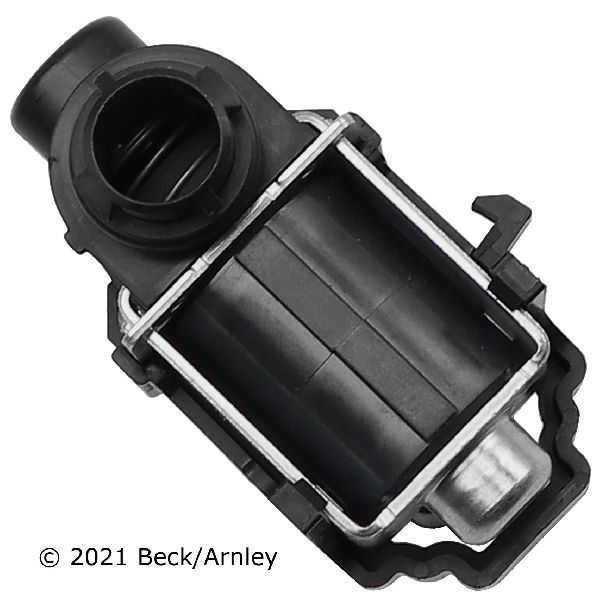
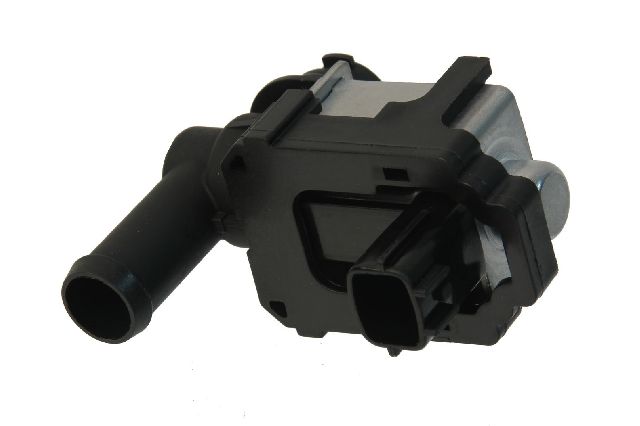
Est. part cost: $30-$45 - EVAP Canister Vent Control Valve Failure 🔴 High Probability This valve is located under the vehicle by the charcoal canister, behind the rear passenger-side wheel, making it vulnerable to rust and road debris. It often gets stuck open due to internal corrosion, which the computer immediately detects as a large leak.
How to confirm: The valve is normally open. When 12V is applied to its terminals, it should click closed and block airflow. You can test this with a 12V power source (like a car battery). If it doesn't click or is stuck open with no power, it has failed. A smoke test is definitive and will show smoke billowing out of this valve if it's failed open.
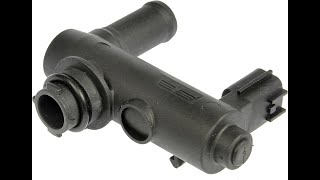
Typical fix: Replace the EVAP canister vent control valve and its O-ring. The part twists into the EVAP canister. The job takes about 30-45 minutes.
Est. part cost: $70-$160 - EVAP Canister Purge Volume Control Solenoid Valve Failure 🟡 Medium Probability Located in the engine bay, this valve can get stuck open, creating a constant vacuum leak from the EVAP system into the intake manifold.
How to confirm: This valve is normally closed. Disconnect the hoses and try to blow through it with the engine off. If air passes through, it is stuck open and needs to be replaced.
Typical fix: Replace the purge volume control solenoid valve.
Est. part cost: $100-$200 - Cracked or Disconnected EVAP Hoses ⚪ Low Probability Over time, the rubber and plastic hoses in the EVAP system can become brittle and crack, especially those exposed to the elements under the car or heat in the engine bay.
How to confirm: A visual inspection may reveal obvious cracks or disconnected lines. The most definitive method is to use a smoke machine, which fills the EVAP system with smoke and makes any leaks visible. Pay close attention to the hoses connecting to the canister and the purge valve.
Typical fix: Replace the damaged section of hose or reconnect it securely.
Est. part cost: $10-$50
Rare But Worth Checking
- Cracked Fuel Filler Neck: Rust can cause the metal filler neck (where you insert the gas nozzle) to develop cracks, creating a leak. This was the subject of a recall for earlier 2003-2006 models, but it's still a possibility on 2007+ models in rust-prone areas. A smoke test will reveal leaks from this area.
- Cracked Charcoal Canister: While less common than valve failures, the plastic body of the charcoal canister itself can be damaged by road debris or age, causing a large leak. The canister shield is known to rust away, leaving the canister vulnerable.
Diagnosis Steps

- Read the code with an OBD-II scanner to confirm P0455 is present.
- Inspect the gas cap. Ensure it is tight and the seal is not cracked or worn. Check that the tether is not caught under the seal. Tighten it until it clicks several times. Clear the code and drive for a few days to see if it returns.
- If the code returns, replace the gas cap with a new OEM part (e.g., #17251-1LA0A) as a low-cost, high-probability fix.
- Visually inspect the EVAP hoses in the engine bay and under the vehicle leading to the charcoal canister for any obvious cracks, disconnections, or damage.
- Locate the EVAP canister vent control valve behind the rear passenger-side wheel. It is attached to the large black charcoal canister. Test its function by removing it, applying 12V power to the two pins, and observing if the internal plunger moves. If it's visibly rusted or doesn't actuate, it needs replacement.
- Test the EVAP purge valve in the engine bay. With the engine off, disconnect it and see if you can blow through it. If air passes, it's stuck open and faulty.
- If the cause is still not found, perform a smoke test. Introduce smoke into the EVAP service port (often has a green cap) and look for smoke escaping from any component in the system, which will pinpoint the leak's location.
Parts You'll Likely Need

- Fuel Filler Cap
(OEM #17251-1LA0A (supersedes previous numbers like 17251-EJ70A))— This is the most frequent cause of P0455, as stated in Infiniti TSBs. The seal wears out over time.
Trusted brands: Infiniti (OEM)
OEM price range: $30-$45
Aftermarket price range: $15-$30 - EVAP Canister Vent Control Valve
(OEM #14935-JF00B (S51, 2009-2012) or 14935-AM60B (S50, 2007-2008))— A very common failure point on this platform due to its exposed location under the vehicle. It gets stuck open from rust and debris, causing a large leak.
Trusted brands: Infiniti (OEM), Bosch (0280142481), Dorman (911-503), Standard Motor Products
OEM price range: $120-$160
Aftermarket price range: $60-$110 - EVAP Canister Purge Volume Control Solenoid Valve
(OEM #14930-JK20E or K5T48481)— This valve in the engine bay can fail and stick open, causing this code. Less common than the rear vent valve.
Trusted brands: Infiniti (OEM), Hitachi, Dorman
OEM price range: $180-$220
Aftermarket price range: $100-$150
Related Codes That Often Appear With This One
- P0456 — P0456 indicates a 'very small leak'. Sometimes a failing component can initially cause a small leak before it worsens and triggers the 'large leak' P0455 code.
- P0442 — P0442 indicates a 'small leak' and is often caused by the same components that trigger P0455, such as a failing gas cap seal or a sticky valve.
Technical Service Bulletins (TSBs) & Recalls
- ITB09012F: Notes that a loose fuel fill cap may be the cause for P0442, P0455, or P0456 on 2007-2011 Infiniti vehicles and advises technicians to confirm proper installation with the customer.
- ITB13-044J: Supersedes earlier bulletins for 2012+ models and provides general EVAP leak diagnostic information.
- ITB17-026: While not directly for P0455, this bulletin extends the warranty on the EVAP vent tube for many Infiniti models due to clogging issues that can cause refueling problems, a related symptom.
Platform-Specific Known Issues
- The EVAP canister vent control valve is a known weak point. Its location behind the rear wheel exposes it to water and dirt, leading to premature failure. Owners on forums frequently post DIY guides for this specific repair.
- A recall (NHTSA #05V555000) was issued for the fuel filler hose on 2003-2006 FX35 models for cracking. While not covering the 2007-2012 range, it highlights a potential failure area to inspect on older vehicles within this range, especially in harsh climates.
- The metal shield protecting the charcoal canister and vent valve is highly prone to rusting and can disintegrate, leaving the components exposed or making removal difficult.
Mechanic-Grade Diagnostic Values
- EVAP Canister Vent Control Valve Resistance — expected: 20 to 50 Ohms. Failure: A reading significantly outside this range indicates a faulty solenoid coil.
- EVAP Canister Purge Volume Control Solenoid Valve Resistance — expected: 15 to 30 Ohms. Failure: A reading far out of this range suggests the valve's internal circuit is damaged.
- EVAP System Test Pressure — expected: 0.2 - 0.4 PSI. Failure: Inability to hold this low pressure during a smoke or pressure test indicates a leak.
Scan Tool Commands That Help
- Infiniti CONSULT-II / CONSULT-III: EVAP System Active Test — This function allows a technician to command the EVAP vent and purge valves to open or close, which is essential for verifying their operation without having to remove them. It's used to confirm if a valve is responding to ECM commands during diagnosis.
Wiring & Ground Locations
- Fuse #34 (2008 S50) — In the IPDM E/R (Intelligent Power Distribution Module Engine Room), located in the right rear of the engine compartment.. This 10A fuse supplies power to the EVAP Canister Vent Control Valve. A blown fuse will cause the valve to be inoperative, potentially setting a code.
- Fuse #51 (2009+ S51) — In the fuse box located in the engine compartment.. This 15A fuse provides power to the EVAP Canister Vent Control Valve. If this fuse is blown, the valve will not function.
- EVAP Control System Pressure Sensor — Under the right rear of the luggage compartment, near the EVAP canister assembly.. This sensor monitors the pressure/vacuum in the EVAP system. Its wiring and connector should be inspected for damage, as a faulty signal can mimic a leak.
Real Owner Repair Stories
- InfinitiScene.com user (2006 FX35 with 230k miles) — P0455 code appeared.
❌ Tried (didn't work) Replacing the gas cap.
✅ What actually fixed it The user planned to replace the EVAP canister vent control valve next, as it is a common failure point after the gas cap has been ruled out. The final fix was confirmed to be the vent control valve replacement. - G35Driver.com user (2008 G35 Journey Sedan with 99k miles (shares platform with FX35)) — Persistent P0455 code, sometimes intermittent between fill-ups.
❌ Tried (didn't work) Replaced gas cap with an aftermarket one., Replaced gas cap again with an OEM one.
✅ What actually fixed it The user replaced the canister purge valve (solenoid) and the problem was resolved. - YouTube user comment (Vehicle not specified, but common issue on many cars including Infiniti.) — P0455 code.
❌ Tried (didn't work) Replacing EVAP solenoids.
✅ What actually fixed it The final cause was a leak in the fuel filler neck due to rust.
"I Checked Everything" — The Actual Cause
- In a documented case on a G35 (shared platform), a user reported a recurring P0455 code despite the vehicle passing a smoke test twice at a Nissan specialty shop. The shop visually inspected all lines, the canister, and valves and found no issues. The final resolution posted by another user in the thread pointed to a canister purge valve that was sticking intermittently, which would not show up during a static smoke test if the valve was closed at that moment.
When the Usual Fixes Don't Work
- While the gas cap and rear vent control valve are the most common culprits for P0455, several owner-documented repairs show these fixes do not always work. In one case, after replacing both an aftermarket and an OEM gas cap to no avail, the issue was ultimately resolved by replacing the purge valve solenoid in the engine bay. In another instance, after replacing solenoids, the true cause was found to be a rusted-through fuel filler neck, a problem that requires a thorough smoke test focused on that specific area to identify. These cases highlight that if the two most common fixes fail, a systematic diagnosis including the purge valve and a comprehensive smoke test is necessary, rather than continuing to replace the same parts.
OEM Part Supersession History
14935-AM600, 14935-AM60A→14935-AM60B— Updated design for the EVAP Canister Vent Control Valve for S50 models (2003-2008).14935-JF00A→14935-JF00B— Updated design for the EVAP Canister Vent Control Valve for S51 models (2009-2012). Some sources indicate this part has been superseded multiple times, with one user receiving part 14935-JF01C as the latest revision.
Heads up: While the AM60B (S50) and JF00B (S51) valves are physically different and not interchangeable, forum discussions suggest the newer JF00-series valves are a different design than the older AM60-series.22365-JA10A, 22365-JA10B→22365-1TV1D— Supersession for the EVAP Control System Pressure Sensor.
Model Year Variations Within This Range
- 2007-2008 (S50): Uses EVAP Canister Vent Control Valve part number 14935-AM60B. The removal procedure and surrounding components may differ slightly from the S51 generation.
- 2009-2012 (S51): Uses EVAP Canister Vent Control Valve part number 14935-JF00B (or later revisions). The charcoal canister and protective shield design are different from the previous generation.
Helpful Videos
Used OEM Parts in Stock
New Aftermarket Parts Available


The information in this article is provided for general reference and educational purposes only. Vehicle specifications, procedures, and part compatibility can vary by production date, trim level, and region. Always consult your vehicle's factory service manual and verify part numbers before purchasing or performing repairs. Safety-critical components such as airbags, seat belts, and braking systems should be installed by a qualified professional.
- Infiniti FX35:
- 🎬 Helpful Videos
- 🛍️ Shop This Part
- What's Unique About the 2007-2012 Infiniti FX35
- Diagnostic Flowchart
- Symptoms You May Notice
- Most Likely Causes
- Rare But Worth Checking
- Diagnosis Steps
- Parts You'll Likely Need
- Related Codes That Often Appear With This One
- Technical Service Bulletins (TSBs) & Recalls
- Platform-Specific Known Issues
- Mechanic-Grade Diagnostic Values
- Scan Tool Commands That Help
- Wiring & Ground Locations
- Real Owner Repair Stories
- "I Checked Everything" — The Actual Cause
- When the Usual Fixes Don't Work
- OEM Part Supersession History
- Model Year Variations Within This Range
- 🎟️ Get 5% Off