

P0455 on 2004-2011 GMC Yukon XL: EVAP Large Leak Causes and Fixes
This code means a large leak is detected in your fuel vapor system. The most common and cheapest fix is a loose or faulty gas cap. If that's not it, the next likely culprits are the EVAP purge solenoid on the engine or the vent solenoid near the spare tire, both of which are common failure points on these trucks. For 2007-2011 models, the vent solenoid is notoriously prone to failure from road debris.
- Always start with the simplest solution: check that your gas cap is tight and its seal is intact. This resolves P0455 more often than not.
- If the gas cap is good, your next step depends on your vehicle's year. For 2004-2006 models, suspect the purge valve on the engine. For 2007-2011, the vent solenoid near the spare tire is the more likely failure.
- Difficulty filling up your gas tank is a classic symptom of a bad vent solenoid.
- This code will not leave you stranded, but it needs to be fixed to pass an emissions test.
- The most common fixes (gas cap, purge valve, vent valve) are all relatively inexpensive and can be performed by a DIYer with basic tools.
What's Unique About the 2004-2011 Gmc YUKON XL

The 2004-2011 Yukon XL spans two vehicle generations: the GMT800 (2004-2006) and GMT900 (2007-2011). While the cause is often a simple gas cap on both, other common failures differ. On GMT800 models, the engine-mounted purge valve is a frequent issue. For the later GMT900 models, the vent solenoid located near the spare tire is a notoriously common failure point, often getting clogged with dust and failing to seal. GM issued a TSB for an updated vent solenoid kit for GMT900s that relocates the air filter to a less exposed area to prevent repeat failures.
Diagnostic Flowchart
Tap your situation to follow the diagnostic path that matches what you're seeing on this vehicle.
Generation note: This range covers the end of the GMT800 platform (2004-2006) and the majority of the GMT900 platform (2007-2011). The location and failure patterns of EVAP components differ. The purge valve is on the engine for both, but the vent valve/solenoid design and location near the spare tire on the GMT900 is a key area to inspect for that generation. The original GMT900 vent solenoid was prone to debris ingestion, and an updated part with a relocated filter is recommended.
Symptoms You May Notice
- Check Engine Light is on.
- A noticeable fuel smell, especially around the rear of the vehicle or after parking.
- Difficulty filling the fuel tank (the gas pump nozzle clicks off repeatedly), which strongly points to a faulty or clogged vent solenoid.
- A "Tighten Gas Cap" message on the driver information center, even if the cap is tight.
- A 'whoosh' of air releasing when opening the gas cap, which can surprisingly indicate a stuck *closed* vent valve or a faulty purge valve, not a leak.
- Replacing the charcoal canister when only the vent solenoid has failed. The solenoid is often sold separately and is the much more common failure point.
- Immediately suspecting a complex leak when the gas cap was simply not tightened correctly after refueling.
- Assuming a large leak exists when the purge valve is actually stuck closed, preventing the system from drawing a vacuum during its test cycle. The ECU interprets the inability to create a vacuum as a large leak.
Most Likely Causes


- Loose, Damaged, or Incorrect Gas Cap 🔴 High Probability This is the most common cause for a P0455 code on any vehicle due to user error (not tightening) or simple wear of the cap's seal over time.
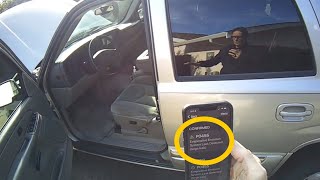
How to confirm: Ensure the gas cap is tightened until it clicks at least three times. Inspect the rubber O-ring on the cap for cracks, brittleness, or damage. If you hear a 'whoosh' of pressure when removing the cap, the cap itself is likely sealing, and the problem is elsewhere. A new, OEM-spec cap is a cheap and effective first diagnostic step. 🎬 Watch: This easy DIY fix for the P0455 engine light.
Typical fix: Tighten or replace the gas cap. Use an OEM (ACDelco) or high-quality aftermarket cap for a reliable seal.
Est. part cost: $15-$40 - Failed EVAP Vent Valve/Solenoid 🔴 High Probability On the GMT900 (2007-2011) platform, the vent solenoid is located near the spare tire where it is exposed to road dust and debris, causing it to get stuck open and fail to seal the system. This is such a common issue that GM released an updated part with a relocation kit for the filter box. Owners on forums frequently cite this as the fix for P0455, especially when paired with P0449.
How to confirm: Listen for a click from the solenoid when commanded closed with a bi-directional scan tool. If it doesn't click or seal, it has failed. A smoke test will show smoke exiting the vent if it's stuck open. Difficulty filling the gas tank is another strong indicator of a bad vent solenoid.
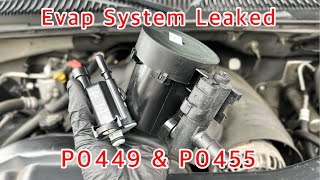
Typical fix: Replace the vent valve/solenoid assembly. It is mounted to a cross-member near the charcoal canister. For GMT900 models, it is highly recommended to use the updated kit (e.g., ACDelco 23481275) which includes a hose to relocate the filter 🎬 See this walkthrough for replacing both the vent and purge valves. to a cleaner location.
Est. part cost: $30-$80 - Failed EVAP Purge Valve/Solenoid 🟡 Medium Probability This valve is located on the engine intake manifold and can get stuck open or closed. It's a very common failure on the GMT800 (2004-2006) models. When it sticks closed, the system can't pull a vacuum for its self-test, which the ECU misinterprets as a large leak.
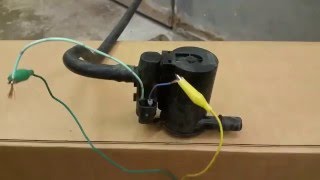
How to confirm: The purge valve should be normally closed with the engine off. Remove the valve and try to blow through it; if air passes, it's stuck open and needs replacement. A stuck-open purge valve can also cause a rough idle or hard starting. You can also test it with a scan tool to see if it actuates and holds vacuum.
Typical fix: Replace the purge valve. It is located on top of the engine and is typically held by one bolt, making it a very easy 10-minute fix.
Est. part cost: $25-$75 - Cracked or Disconnected EVAP Hoses ⚪ Low Probability Over time, the plastic and rubber hoses in the EVAP system can become brittle and crack, especially in areas with high heat or vibration. A user on a Tahoe/Yukon forum reported their P0455 was caused by a disconnected hose at the fuel tank after a fuel pump replacement.
How to confirm: Visually inspect all EVAP lines running from the gas tank, to the charcoal canister, and up to the purge valve on the engine. A smoke test is the most effective way to pinpoint a hard-to-see crack or disconnected fitting.
Typical fix: Replace the cracked section of hose or re-secure the connection.
Est. part cost: $10-$50
Rare But Worth Checking
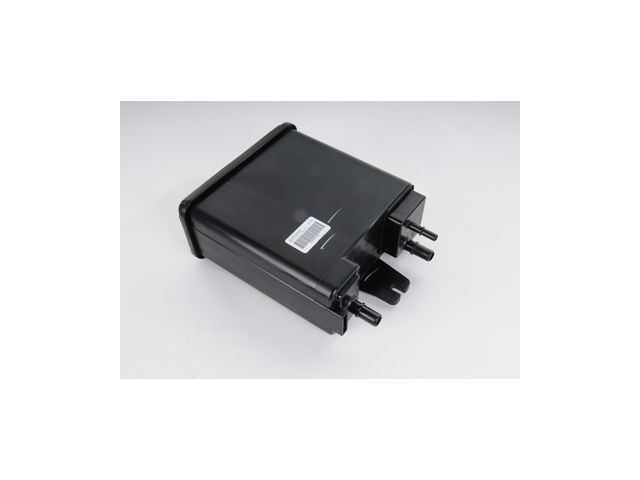
- Cracked Charcoal Canister: The canister itself can be damaged by road debris or age, causing a large leak. This is uncommon but should be visually inspected. Sometimes, the canister can fail internally, sending charcoal pellets into the EVAP lines, causing blockages and requiring extensive cleaning.
- Damaged Fuel Filler Neck: Rust or damage to the metal filler neck where the gas cap seals can prevent a proper seal, even with a new cap.
- Leaking Fuel Tank Gasket: The gasket for the fuel pump/sending unit on top of the tank can fail, creating a large leak. This is more likely if the fuel pump has been replaced recently.
Diagnosis Steps

- Check the Gas Cap: This is the first and easiest step. Remove it, inspect the seal for cracks, and retighten it until it clicks several times. Clear the code and drive for a day or two to see if it returns.
- Visual Inspection: Look under the vehicle near the spare tire for the vent solenoid and charcoal canister. Check for obvious cracks in the canister or disconnected/cracked hoses. Follow the lines to the engine bay.
- Inspect and Test the Purge Valve: Locate the purge valve on the engine intake manifold. With the engine off, remove the valve. Try to blow air through it. If air passes, the valve is stuck open and must be replaced. This is a very common failure on GMT800 models.
- Inspect and Test the Vent Solenoid: This is the most likely culprit on GMT900 models. If you have a bi-directional scan tool, command the vent solenoid closed and see if it clicks and holds a vacuum. If you don't have a scanner and you have trouble filling the gas tank, the vent solenoid is highly suspect. You can also remove it and test it with a 12v source to see if it actuates.
- Perform a Smoke Test: If the leak source is still not found, a smoke test is the definitive diagnostic method. A mechanic will inject pressurized smoke into the EVAP system's service port and look for where the smoke escapes. This can reveal hairline cracks in hoses or a bad fuel tank gasket.
Parts You'll Likely Need

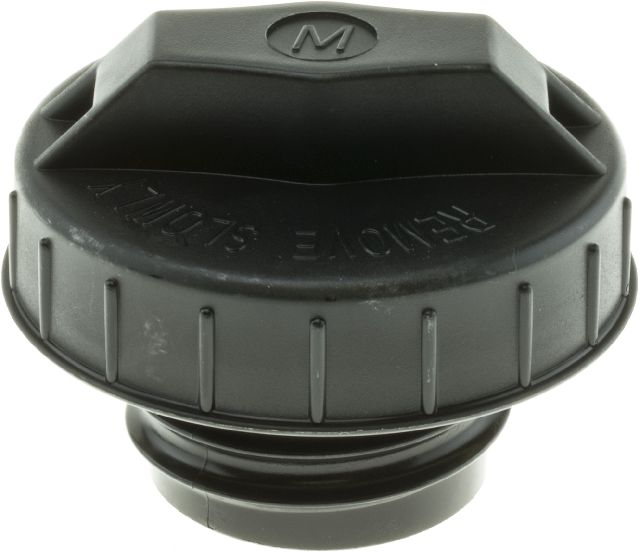
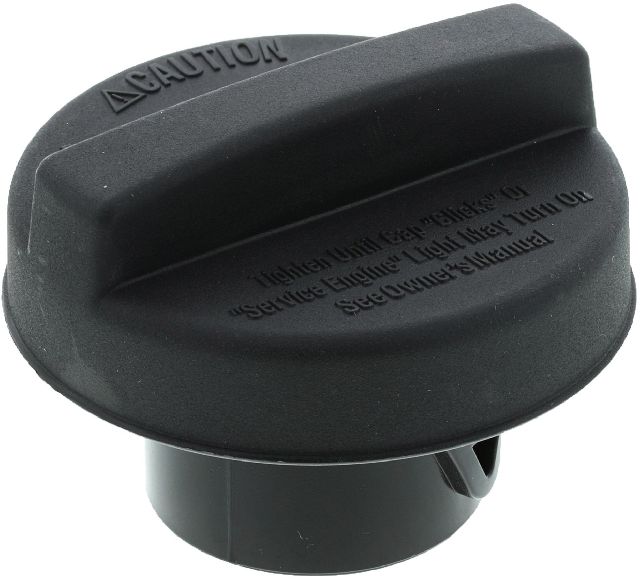
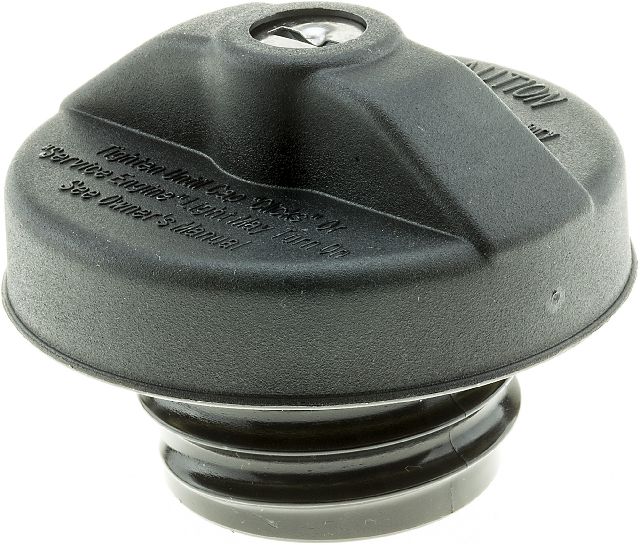
- Gas Cap
(OEM #GT269 (ACDelco for GMT800), GT334 (ACDelco for GMT900))— This is the most frequent cause of P0455 due to a worn seal or not being tightened properly.
Trusted brands: ACDelco, Stant
OEM price range: $25-$40
Aftermarket price range: $15-$25 - EVAP Canister Purge Valve / Solenoid
(OEM #12597567 (Supersedes 1997279))— A common failure, especially on 2004-2006 models, where it gets stuck open or closed. Located on the engine for easy access. Cross-references include Dorman 911-032 and Standard Motor Products CP471.
Trusted brands: ACDelco, Dorman, Standard Motor Products (SMP)
OEM price range: $40-$75
Aftermarket price range: $25-$50 - EVAP Canister Vent Valve / Solenoid
(OEM #23481275 (Updated Kit for GMT900))— The most common failure on 2007-2011 models, located near the spare tire. It gets stuck open from debris. The updated kit relocates the air filter to prevent repeat failures.
Trusted brands: ACDelco, Dorman, Standard Motor Products (SMP)
OEM price range: $50-$80
Aftermarket price range: $30-$60
Related Codes That Often Appear With This One
- P0442 — P0442 indicates a small EVAP leak. You might see this code intermittently before the leak worsens and triggers the P0455 'large leak' code.
- P0449 — This code specifically points to a fault in the EVAP vent solenoid circuit. If you have P0455 and P0449 together, the vent solenoid is almost certainly the problem.
- P0446 — This code indicates a fault in the EVAP vent control system. Like P0449, seeing it alongside P0455 strongly points towards a faulty vent solenoid.
Technical Service Bulletins (TSBs) & Recalls
- Bulletin #21-NA-124: Diagnostic Tip for Malfunction Indicator Lamp (MIL) Illuminated - DTC P0442 and/or P0455 Set. This bulletin provides a logical diagnostic flow: 1. Check EVAP lines for proper connection and damage. 2. Investigate vent valve for malfunction (stuck open). 3. Investigate purge valve for malfunction.
- TSB #09-06-04-028D: This TSB for 2007-2010 models addresses the original vent solenoid design's susceptibility to water and dirt intrusion, leading to failure. The fix is to install an updated solenoid with a relocated air filter.
- TSB #02-06-04-037: While for an earlier generation, this TSB is relevant as it established the precedent for relocating the EVAP vent filter to a cleaner location to prevent premature failure, a strategy continued with the GMT900s.
Platform-Specific Known Issues
- The NHTSA references Technical Service Bulletin #21-NA-124, which provides diagnostic tips for EVAP leaks causing codes P0442 and P0455, confirming this is a known issue to the manufacturer.
- A user on TahoeYukonForum.com with a 2004 Denali XL experienced a P0455 code and fixed it by replacing the purge valve on the intake, noting that a large pressure release from the gas cap pointed to the purge valve not venting properly, rather than a leak.
- Another forum member with a 2007 Yukon chased a recurring P0455 after replacing the vent solenoid, only to find a disconnected EVAP hose at the fuel tank that was forgotten during a fuel pump replacement.
- On GMT900 models (2007-2011), owners frequently report that replacing the original vent solenoid with the updated ACDelco kit (part #23481275 or similar) that relocates the vent filter is the permanent solution.
Mechanic-Grade Diagnostic Values
- EVAP Purge or Vent Solenoid Resistance — expected: 15 to 30 Ohms. Failure: A reading far outside this range, or an open circuit (infinite resistance), indicates a failed solenoid coil.
- Fuel Tank Pressure (FTP) Sensor Voltage — expected: ~1.5 Volts (Key On, Engine Off, system at atmospheric pressure). Failure: Voltage less than 1.5V indicates positive pressure in the tank; voltage greater than 1.5V indicates a vacuum. A sensor that is stuck at a specific voltage or does not change when pressure/vacuum is applied is faulty.
Scan Tool Commands That Help
- Tech2 / GDS2 / High-End Bidirectional Scanner: EVAP System Test — This automated test commands the vent and purge solenoids to seal the system and monitors the FTP sensor to check for a pressure drop, confirming if a leak is present without a smoke machine.
- Tech2 / GDS2 / High-End Bidirectional Scanner: EVAP Purge/Seal (or EVAP Vent Solenoid Command) — This allows manual control of the vent and purge solenoids. You can command the vent solenoid closed to seal the system for a smoke test or to see if it clicks. You can command the purge solenoid open/closed to check its function and listen for clicking.
Wiring & Ground Locations
- G1xx Series (e.g., G100, G101, G103) — Grounds starting with 'G1' are located in the front of the vehicle, on or forward of the firewall. For example, G100 is often on the lower left of the radiator core support, and G103 is on the cowl above the brake booster.. A poor ground connection for the ECM or BCM (grounded at G103) can cause incorrect sensor readings and false codes. The ECM controls the entire EVAP system, so its ground integrity is critical.
- G4xx Series (e.g., G401) — Grounds starting with 'G4' are located from the rear seat area to the back of the vehicle. This includes the frame rail area near the fuel tank and EVAP canister.. The EVAP vent solenoid and fuel tank pressure sensor are located at the rear of the vehicle. A corroded or loose frame ground in this area can cause intermittent or failed operation of these components, leading to P0455 or related codes like P0449.
- EVAP Vent Solenoid Connector — Under the vehicle, near the spare tire, connected to the vent solenoid.. This 2-pin connector and its wiring are exposed to road debris and moisture. Corrosion or damage here can interrupt the signal to the solenoid, preventing it from closing and causing a P0449 and P0455. The circuit can be tested here with a test light or multimeter.
Real Owner Repair Stories
- Jeep Cherokee Forum (Jeep Cherokee (similar EVAP principle)) — P0455 Large Leak code.
❌ Tried (didn't work) Verified purge valve was working correctly., Tested Leak Detection Pump (LDP) and confirmed it was functional.
✅ What actually fixed it The short steel line running from the charcoal canister towards the fuel tank was badly rusted and rotted through, causing the large leak. The owner replaced the rusted steel section with polyethylene tubing to resolve the code. - YouTube user 'Purge Valve Testing and Replacement on GMC Yukon 2007 - 2014 6.2L' (2007 GMC Yukon 6.2L) — Running lean on both banks (high long-term fuel trims), no specific EVAP code mentioned initially, but testing pointed to EVAP.
❌ Tried (didn't work) Cleaned fuel injectors., Fixed other vacuum leaks found with a smoke machine.
✅ What actually fixed it The purge valve on the intake manifold was stuck open, creating a constant vacuum pull from the EVAP system. The owner confirmed this by starting the engine, disconnecting the electrical connector to the valve, and feeling for suction on the valve's port. Replacing the purge valve (ACDelco) fixed the lean condition.
"I Checked Everything" — The Actual Cause
- A smoke test may pass if the leak is intermittent or only occurs under specific conditions. A common scenario is a faulty Fuel Tank Pressure (FTP) sensor that sends incorrect readings to the ECM, making it believe there is a large leak when the system is actually sealed. The ECM triggers P0455 based on the sensor data, not a physical leak, so a smoke test would show nothing.
- Another possibility is a purge valve that is stuck closed. During the EVAP monitor test, the ECM commands the purge valve to open to draw a vacuum on the system. If the valve fails to open, no vacuum is generated. The ECM interprets this inability to pull a vacuum as a massive leak, triggering P0455, even though the system holds pressure perfectly and would pass a smoke test.
OEM Part Supersession History
12570469, 12597341, 12597566, 12606684→12597567 (which is now superseded by 12735397)— Standard part evolution for the common engine-mounted purge valve. Revisions aim to improve durability and performance.
Heads up: These part numbers are generally interchangeable for the specified applications, but it is always best to use the latest revision (12735397) or a quality cross-reference like Dorman 911-032 or SMP CP471.Varies by year (pre-2007)→ACDelco 23481275 (Kit for 2007-2011 GMT900)— The original vent solenoid design on GMT900 trucks was highly prone to failure from dust/debris. The updated kit includes a hose to relocate the filter/vent inlet to a cleaner location higher up in the chassis.
Heads up: For 2007+ models, using the updated relocation kit is highly recommended over a direct replacement of the old-style solenoid to prevent repeat failures.
Model Year Variations Within This Range
- 2004-2006 (GMT800) vs. 2007-2011 (GMT900): The EVAP systems have different component designs and part numbers. The most notable difference is the vent solenoid. On GMT900 trucks (2007+), the vent solenoid is a well-known, frequent failure point due to its exposed location, and GM issued an updated part with a filter relocation hose to fix it. While the purge valve on the engine can fail on both generations, it is cited more often as a problem on GMT800s.
Helpful Videos
Used OEM Parts in Stock


New Aftermarket Parts Available


The information in this article is provided for general reference and educational purposes only. Vehicle specifications, procedures, and part compatibility can vary by production date, trim level, and region. Always consult your vehicle's factory service manual and verify part numbers before purchasing or performing repairs. Safety-critical components such as airbags, seat belts, and braking systems should be installed by a qualified professional.
- Gmc YUKON XL:
- 🎬 Helpful Videos
- 🛍️ Shop This Part
- What's Unique About the 2004-2011 Gmc YUKON XL
- Diagnostic Flowchart
- Symptoms You May Notice
- Most Likely Causes
- Rare But Worth Checking
- Diagnosis Steps
- Parts You'll Likely Need
- Related Codes That Often Appear With This One
- Technical Service Bulletins (TSBs) & Recalls
- Platform-Specific Known Issues
- Mechanic-Grade Diagnostic Values
- Scan Tool Commands That Help
- Wiring & Ground Locations
- Real Owner Repair Stories
- "I Checked Everything" — The Actual Cause
- OEM Part Supersession History
- Model Year Variations Within This Range
- 🎟️ Get 5% Off