

P0455 on 2000-2002 GMC Sonoma: EVAP Large Leak Causes and Fixes
For a 2000-2002 GMC Sonoma, a P0455 code is most often caused by a loose or faulty gas cap. If the cap is secure, the next most likely causes are a failed EVAP vent solenoid near the fuel tank or a cracked EVAP purge solenoid on the engine. A new gas cap is under $25, while solenoids can range from $20 to $60.
- Always check the gas cap first for a P0455 code. Make sure it's tight and the seal is not cracked.
- If the gas cap is not the issue, the most likely culprits are the EVAP vent solenoid (by the tank) or the purge solenoid (on the engine).
- This code will cause an automatic failure of an emissions test but does not affect vehicle safety or drivability.
- A smoke test is the most definitive way to find a leak if a visual inspection and component testing do not reveal the source.
- This is a common and very DIY-friendly repair, with most parts being affordable and accessible.
What's Unique About the 2000-2002 Gmc SONOMA
The 2000-2002 GMC Sonoma, and its sibling the Chevrolet S-10, use a straightforward EVAP system. However, components like the EVAP vent solenoid are mounted underneath the truck near the gas tank, making them susceptible to damage from road debris and corrosion from road salt. Similarly, the plastic and rubber hoses become brittle with age and can crack, especially at connection points. The manufacturer has issued Technical Service Bulletins (TSBs) that provide diagnostic tips and updated parts for EVAP system issues, including a common problem with the vent solenoid getting clogged with dust and debris in certain environments.
Diagnostic Flowchart
Tap your situation to follow the diagnostic path that matches what you're seeing on this vehicle.
Symptoms You May Notice
- Check Engine Light is on
- A faint or strong smell of fuel, particularly around the rear of the vehicle near the gas tank.
- Gas cap feels loose, the seal looks cracked/worn, or the cap is missing entirely.
- Difficulty refueling; the gas pump nozzle clicks off frequently before the tank is full.
- Replacing the fuel tank pressure sensor when the issue is a simple hose leak or bad solenoid. The sensor rarely fails in a way that causes a leak code without also setting a sensor-specific code.
- Replacing the charcoal canister when only the vent solenoid attached to it has failed. The canister itself is often durable unless physically cracked.
Most Likely Causes
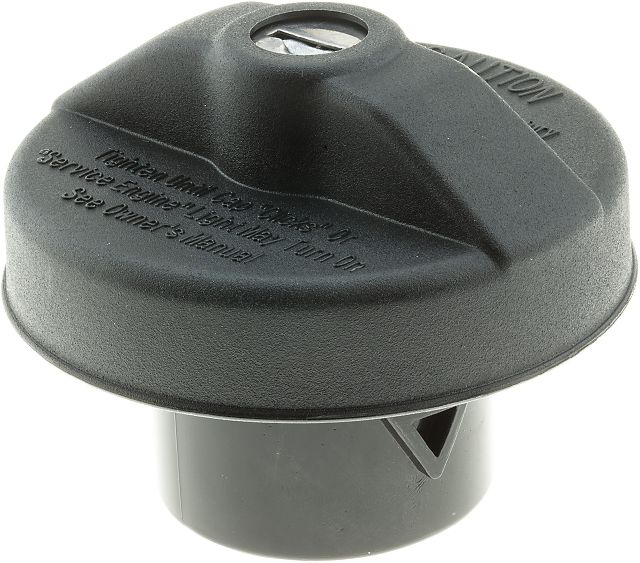
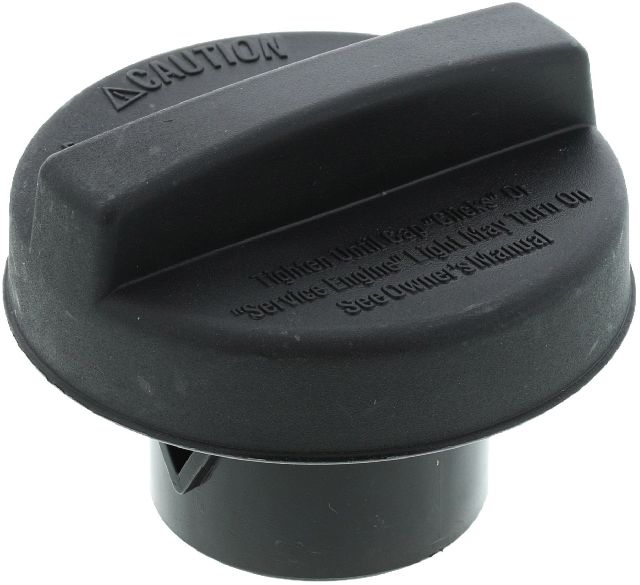
- Loose, Damaged, or Incorrect Gas Cap 🔴 High Probability The gas cap is the most frequently handled part of the EVAP system. Seals wear out over time, and it's easy to forget to tighten it properly after refueling. Using a non-OEM cap can also lead to sealing issues.
How to confirm: Ensure the cap is tightened until it clicks at least once. Inspect the rubber O-ring seal for cracks, stiffness, or damage. If it looks worn, it's best to replace it. A replacement is a cheap and easy first step in diagnosis.
Typical fix: Tighten or replace the gas cap.
Est. part cost: $15-$35 - Failed EVAP Vent Solenoid 🟡 Medium Probability The vent solenoid is located near the charcoal canister by the fuel tank, exposing it to road salt, water, and debris. This can cause the internal valve to get stuck open, creating a permanent large leak. TSB #02-06-04-037 addresses issues where dust and dirt clog the valve, leading to EVAP codes.
How to confirm: The valve is normally open. Using a capable scan tool, command the valve closed. If it doesn't seal during a smoke test (smoke escapes from the valve), it has failed. You can also apply 12V power directly to the solenoid's terminals to check if you can hear it click closed.
Typical fix: Replace the EVAP vent solenoid. Some TSBs recommend relocating the filter box to a cleaner location to prevent repeat failures.
Est. part cost: $25-$60 - Failed EVAP Purge Solenoid/Valve 🟡 Medium Probability This valve is located in the engine bay, attached to the side of the engine block under the intake manifold. Over time, due to heat and age, it can become stuck open or, more commonly for this code, stuck closed, preventing the system from drawing a vacuum during its test.
How to confirm: The valve is normally closed. Disconnect the valve and try to blow through it; if air passes, it's stuck open. If a scan tool commands it open (e.g., to 90%) and no vacuum is pulled from the intake side, it may be stuck closed. Accessing it often requires removing the driver's side front wheel and wheel well liner.
Typical fix: Replace the EVAP purge solenoid.
Est. part cost: $20-$50 - Cracked or Disconnected EVAP Hoses ⚪ Low Probability After 20+ years, the rubber and plastic hoses in the EVAP system can become brittle and crack, especially at connection points near the engine or at the charcoal canister. Forum users report hoses crumbling upon contact during repairs.
How to confirm: Visually inspect all accessible EVAP lines for obvious cracks or disconnections. A smoke test is the most effective way to find a leak in a hose that isn't easily visible.
Typical fix: Replace the cracked section of hose or the entire line assembly.
Est. part cost: $10-$40
Rare But Worth Checking
- Cracked Charcoal Canister: The plastic housing of the canister can crack from age or impact, creating a large leak. This is usually found during a smoke test.
- Rusted Fuel Filler Neck: In areas where road salt is used, the metal fuel filler neck can rust through, preventing the gas cap from creating a proper seal. This will be visible upon inspection. A TSB for S-10 crew cabs (#03-06-04-058) recommended an updated part for a related issue.
- Leaking Fuel Tank Pressure Sensor: The sensor itself or its seal on the fuel tank/fuel pump module can fail, creating a leak. This is often found during a smoke test where smoke will be seen coming from the top of the fuel tank. 🎬 Watch: How to use a smoke machine to find hidden leaks.
- Rusted Fuel Pump Module/Lock Ring: Common in the rust belt, the top of the fuel pump sending unit can rust through, creating a leak path that will trigger a P0455 code. This would be discovered during a smoke test.
Diagnosis Steps
- Check the gas cap. Ensure it is tight and clicks when secured. Inspect the seal for any signs of cracking or wear. If in doubt, it's an inexpensive first part to replace.
- Perform a thorough visual inspection of all accessible EVAP hoses and lines, from the engine bay to the charcoal canister near the fuel tank. Look for any obvious cracks, breaks, or loose connections. Pay special attention to the fuel filler neck for rust perforation.
- If you have a capable scan tool, command the EVAP vent solenoid closed and the purge solenoid open to check their function. Listen for an audible click from each solenoid.
- Test the purge solenoid (engine bay). It is normally closed. Disconnect it and attempt to blow air through it. If air passes, the valve is stuck open and must be replaced. To access it, you may need to go through the driver's side wheel well.
- Test the vent solenoid (by the tank). It is normally open. With a scan tool or by applying 12V power and ground, command it closed. If it doesn't seal (you can still blow through it), it needs to be replaced.
- If the cause is still not apparent, perform a smoke test. Introduce smoke into the EVAP service port and look for where it escapes. This is the most reliable method for finding hidden leaks in hoses, the charcoal canister, the fuel filler neck, or the top of the fuel tank.
Parts You'll Likely Need
- Gas Cap
(OEM #ACDelco GT294)— This is the most common failure point due to frequent use and seal degradation. It's the first, easiest, and cheapest part to check and replace.
Trusted brands: ACDelco, Stant
OEM price range: $25-$40
Aftermarket price range: $15-$25 - EVAP Vapor Canister Vent Solenoid
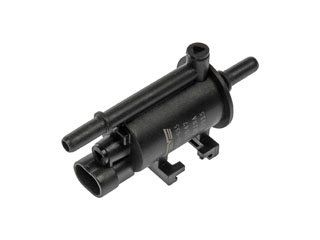
(OEM #ACDelco 214-2149 (check fitment for specific year/model))— Its location under the vehicle makes it highly susceptible to failure from corrosion and debris, causing it to stick open and create a large leak. This is a very common point of failure for P0455 on these trucks.
Trusted brands: ACDelco, Dorman, Delphi
OEM price range: $40-$70
Aftermarket price range: $25-$60 - EVAP Vapor Canister Purge Solenoid
(OEM #ACDelco 214-641 (check fitment for specific year/model))— Located on the engine, this valve can get stuck open or closed due to heat and age, creating a leak path or preventing the system from testing itself properly.
Trusted brands: ACDelco, Dorman, Delphi
OEM price range: $30-$60
Aftermarket price range: $20-$50
Related Codes That Often Appear With This One
- P0442 — This code indicates a small EVAP leak. It can appear alongside P0455 if the system has multiple leaks of different sizes or if the computer's leak detection criteria are met for both thresholds. A TSB (#21-NA-124) specifically groups P0442 and P0455 diagnosis.
- P0440 — This is a general EVAP system malfunction code. It often accompanies specific leak codes like P0455 when the computer detects a general failure in the system's ability to run its diagnostic tests.
- P0449 — This code specifically points to a fault in the EVAP vent solenoid control circuit. If the solenoid is electrically faulty, it can't be commanded closed, leading to a large leak condition that also triggers P0455.
- P0446 — This code indicates a restriction in the vent system. It is often caused by the same component that causes P0455: a faulty EVAP vent solenoid that is clogged or stuck, preventing proper airflow.
Technical Service Bulletins (TSBs) & Recalls
- 21-NA-124: Diagnostic tips on testing for possible EVAP leaks in the system to correct a customer concern of an MIL Illuminated with DTCs P0442 and/or P0455 Set.
- 02-06-04-037H: Addresses DTC P0446 (Restricted/Blocked EVAP Vent Path) caused by dirt/dust intrusion into the vent solenoid. The fix is to replace the vent valve assembly with an updated service kit. This condition can also lead to a P0455.
- 03-06-04-058: Recommends replacing the fuel filler neck on some S-10/Sonoma models with an updated part (P/N 15124302) to fix a check valve issue, which can be related to EVAP sealing.
Platform-Specific Known Issues
- A General Motors Technical Service Bulletin (TSB 21-NA-124) was issued to provide technicians with diagnostic tips for testing EVAP leaks related to codes P0442 and/or P0455.
- An older, highly relevant TSB, #02-06-04-037 (with multiple revisions), addresses DTC P0446 (EVAP Vent System Performance) by providing a kit to relocate the vent solenoid filter to a cleaner location, preventing debris from clogging the valve. While for P0446, this clogged valve is also a root cause for P0455 when it sticks open.
Mechanic-Grade Diagnostic Values
- EVAP Canister Purge Valve Solenoid Resistance — expected: 30 to 38 Ohms (when engine is cool). Failure: A reading outside this range indicates a faulty solenoid coil.
- EVAP Canister Vent Solenoid Resistance — expected: 48 to 65 Ohms. Failure: A reading outside this range suggests the solenoid coil is bad.
- Fuel Tank Pressure (FTP) Sensor Voltage — expected: Approximately 1.5-1.6 Volts at atmospheric pressure (system open). Failure: During a scan tool-commanded test, if the voltage does not change significantly when a vacuum is applied, it indicates a large leak preventing the system from sealing.
Scan Tool Commands That Help
- Tech 2 or equivalent professional scan tool: EVAP Purge / Seal Functional Test — This is a critical diagnostic step after a visual inspection. It allows a technician to manually command the vent solenoid closed ('Seal') and then incrementally open the purge solenoid ('Purge') to see if the system can build and hold a vacuum, which is monitored via the Fuel Tank Pressure sensor data. Failure to build vacuum during this test confirms a large leak that must be found with a smoke machine or further valve testing.
Wiring & Ground Locations
- EVAP Canister Purge Solenoid — On the engine block, under the intake manifold. For the 2.2L engine, it's on the right (passenger) side, toward the firewall. Best access is often gained by removing the driver's side front wheel and inner fender liner.. This solenoid is normally closed. If it sticks open, it creates a permanent large leak path from the EVAP system to the engine intake.
- EVAP Canister Vent Solenoid — At the rear of the truck, mounted near the charcoal canister and fuel tank, often on a frame crossmember.. This solenoid is normally open and must close to seal the system for testing. Its exposed location makes it and its wiring vulnerable to corrosion and physical damage, causing it to stick open.
- EVAP Charcoal Canister — Located on the left (driver's) rear of the truck, along the chassis frame rail behind the gas tank.. This is the central hub for EVAP hoses and the vent solenoid. A physical crack in the canister body will cause a large leak.
- EVAP Solenoid Power Feed — On similar GM platforms, both the purge and vent solenoids receive key-on power from a shared fuse in the underhood fuse block (e.g., a 10A fuse).. If this fuse is blown, neither solenoid will operate, but this typically sets circuit codes (like P0449) rather than just a leak code. The power wire is often Pink at the vent solenoid and Pink or Orange at the purge solenoid.
Real Owner Repair Stories
- YouTube user with a 2000 GMC Sonoma 2.2L (2000 GMC Sonoma 2.2L SL 2WD) — Check Engine Light with EVAP codes (P04xx series).
❌ Tried (didn't work) Replaced the gas cap., Replaced the rear charcoal canister., Replaced the vent valve/solenoid attached to the rear canister.
✅ What actually fixed it The owner was unaware there was a second EVAP solenoid. The actual fix was replacing the EVAP Purge Solenoid located on the side of the engine block. The part was inexpensive ($16) and resolved the persistent code after all other common parts failed to do so.
"I Checked Everything" — The Actual Cause
- A smoke test can come back clean if the leak is conditional. For example, if the EVAP vent solenoid (normally open) fails to close when commanded by the PCM, it represents a large leak during the system's self-test. However, during a standard smoke test, the technician might not command the valve closed, so smoke will simply exit the vent as designed, making it seem like there is no leak. The true failure is the solenoid's inability to function, which is found by using a scan tool's bidirectional controls to command it closed and then seeing if it still leaks smoke.
OEM Part Supersession History
ACDelco 214-2149 (Vent Solenoid)→N/A, but has known aftermarket equivalents
Heads up: Aftermarket cross-references include Dorman 911-021 and Standard Ignition CVS6.
Helpful Videos
We Have This Part in Stock


The information in this article is provided for general reference and educational purposes only. Vehicle specifications, procedures, and part compatibility can vary by production date, trim level, and region. Always consult your vehicle's factory service manual and verify part numbers before purchasing or performing repairs. Safety-critical components such as airbags, seat belts, and braking systems should be installed by a qualified professional.
- Gmc SONOMA:
- 🎬 Helpful Videos
- 🛍️ Shop This Part
- What's Unique About the 2000-2002 Gmc SONOMA
- Diagnostic Flowchart
- Symptoms You May Notice
- Most Likely Causes
- Rare But Worth Checking
- Diagnosis Steps
- Parts You'll Likely Need
- Related Codes That Often Appear With This One
- Technical Service Bulletins (TSBs) & Recalls
- Platform-Specific Known Issues
- Mechanic-Grade Diagnostic Values
- Scan Tool Commands That Help
- Wiring & Ground Locations
- Real Owner Repair Stories
- "I Checked Everything" — The Actual Cause
- OEM Part Supersession History
- 🎟️ Get 5% Off