

P0455 on 2015-2022 GMC Canyon: EVAP Large Leak Causes and Fixes
The P0455 code on a 2015-2022 GMC Canyon indicates a large leak in the evaporative emissions (EVAP) system. The most common and simplest cause is a loose or faulty gas cap. If that's not the issue, the next most likely culprits are a failed EVAP purge or vent solenoid, which are known failure points on this platform.
- P0455 on your GMC Canyon means the computer has detected a large leak in the fuel vapor system.
- Always check your gas cap first. Make sure it's tight and the seal isn't cracked. This is the most common and cheapest fix.
- If the gas cap isn't the problem, the next most likely causes are a faulty EVAP purge valve (in the engine bay) or a faulty EVAP vent valve (near the gas tank).
- While you can drive the truck with this code, you will be releasing excess fuel vapors into the atmosphere and will not pass an emissions inspection.
- A smoke test is the most reliable professional method to quickly locate the source of the leak if it's not obvious.
What's Unique About the 2015-2022 Gmc CANYON
For the second-generation GMC Canyon (and its twin, the Chevrolet Colorado), the EVAP system components, particularly the vent and purge valves, are common failure points that lead to a P0455 code. While a loose gas cap is always the first suspect, owners of these trucks frequently find that one of the EVAP solenoids has failed, either by sticking open or closed. 🎬 Watch: A quick guide to the most common EVAP leak causes. GM has issued technical service bulletin 21-NA-124, which provides specific diagnostic advice for P0442 (small leak) and P0455 (large leak) codes, acknowledging it's a recognized issue and guiding technicians to check line connections and valve function in a specific order.
Diagnostic Flowchart
Tap your situation to follow the diagnostic path that matches what you're seeing on this vehicle.
Symptoms You May Notice
- Check Engine Light is on
- A noticeable smell of gasoline, especially around the rear of the truck or after parking in a garage.
- Slight decrease in fuel economy
- Difficulty refueling, where the gas pump nozzle clicks off repeatedly before the tank is full (this can be a symptom of a faulty vent valve).
- Replacing the fuel tank pressure sensor without proper diagnosis. This sensor is more likely to set its own specific codes if it fails and its voltage can be read with a scan tool to check for normal operation (around 1.5 volts on a GM when the system is at atmospheric pressure).
Most Likely Causes
- Loose, Damaged, or Incorrect Gas Cap 🔴 High Probability This is the most common cause for a P0455 on any vehicle. The gas cap seal can degrade over time, get debris on it, or may not have been tightened until it clicks. Even the tether getting caught under the seal can cause a large leak.
How to confirm: Inspect the gas cap for cracks or damage to the rubber seal. Ensure it is tightened until it clicks at least once. If the cap looks worn, replacement is a cheap and easy first step. Clearing the code and driving for a few days will confirm if this was the fix.
Typical fix: Tighten or replace the gas cap.
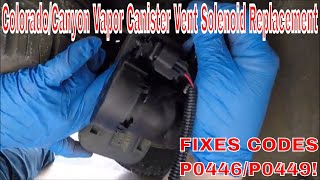
Est. part cost: $15-$30 - Faulty EVAP Vent Solenoid 🟡 Medium Probability The vent solenoid is located near the charcoal canister by the spare tire and is exposed to the elements, making it susceptible to failure from rust and debris. It can get stuck open, causing a large leak condition. This is a very high-failure rate part on this platform.
How to confirm: The valve is normally open. A scan tool can command it closed to check its function. A smoke test is the most effective way to confirm; if smoke exits the vent valve when it's commanded closed, it has failed. This failure often triggers code P0449 alongside P0455.
Typical fix: Replace the EVAP vent solenoid valve. This can often be done with basic tools in about 30 minutes.
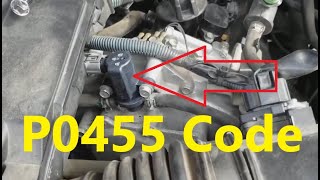
Est. part cost: $30-$70 - Faulty EVAP Purge Solenoid/Valve 🟡 Medium Probability This valve is located in the engine bay and controls the flow of fuel vapors from the EVAP canister to the engine. It can get stuck open or, less commonly, stuck closed, creating a large leak condition. A stuck-open purge valve can sometimes cause a rough idle or hard starting after refueling.
How to confirm: The valve is normally closed when the engine is off. Remove the valve and try to blow through it. If air passes through, it is stuck open and needs replacement. Alternatively, with the engine running and the electrical connector unplugged, feel for vacuum at the port leading to the canister; any vacuum indicates it's stuck open.
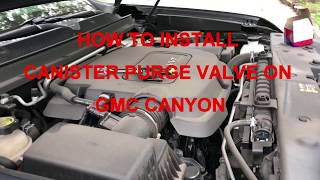
Typical fix: Replace the EVAP purge solenoid valve. On the Canyon/Colorado, access is tight but manageable, sometimes made easier by removing the battery.
Est. part cost: $25-$60 - Cracked or Disconnected EVAP Hoses ⚪ Low Probability Rubber and plastic lines can become brittle over time and crack, especially connections near the engine or on the charcoal canister. A hose can also be knocked loose during other maintenance.
How to confirm: Visually inspect all accessible EVAP lines for obvious cracks, damage, or loose connections. A smoke test is the definitive method to find leaks that aren't visible. TSB 21-NA-124 specifically advises checking for unseated tube connections first.
Typical fix: Replace the damaged section of hose or reconnect it.
Est. part cost: $10-$50
Rare But Worth Checking
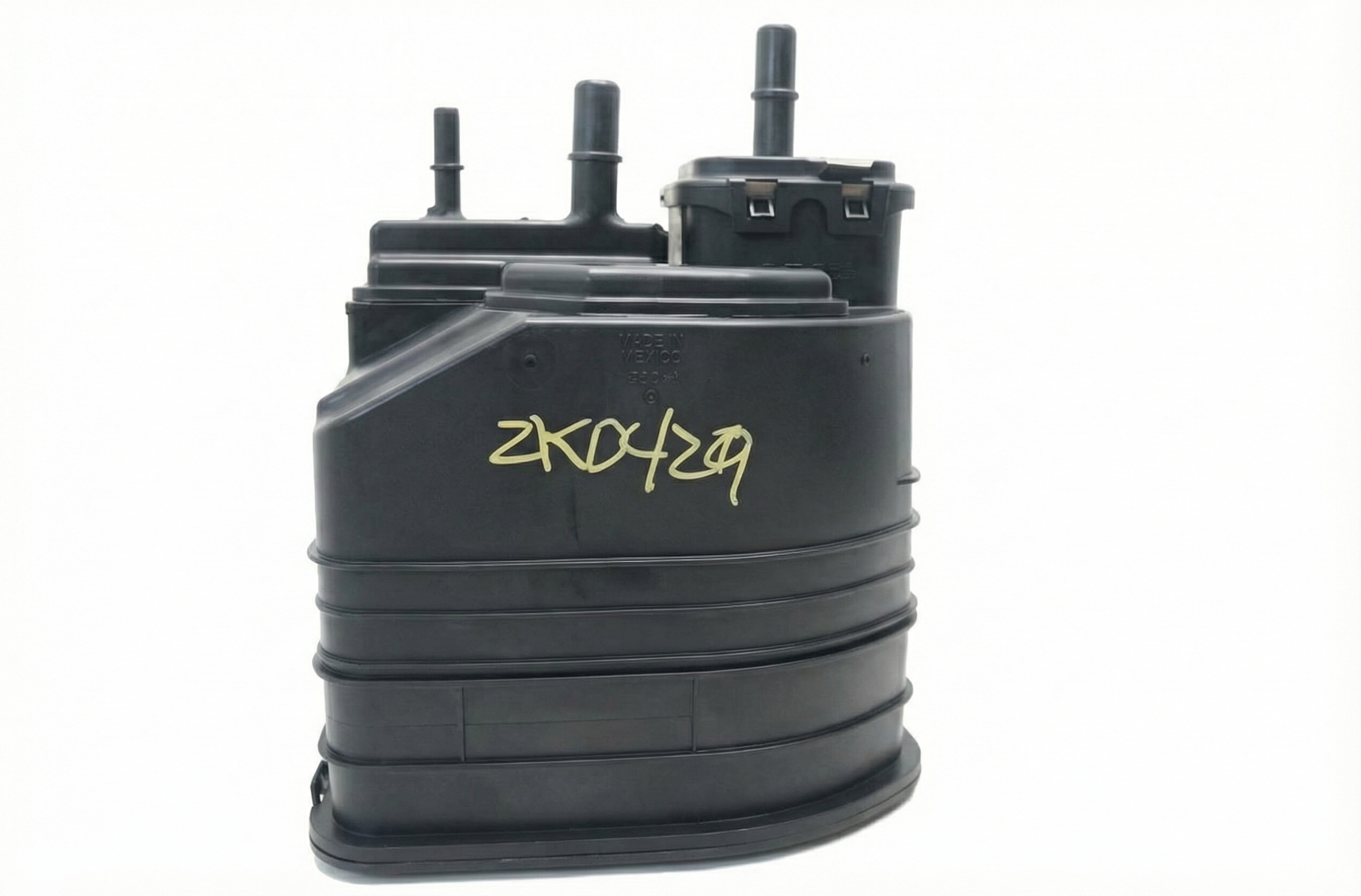
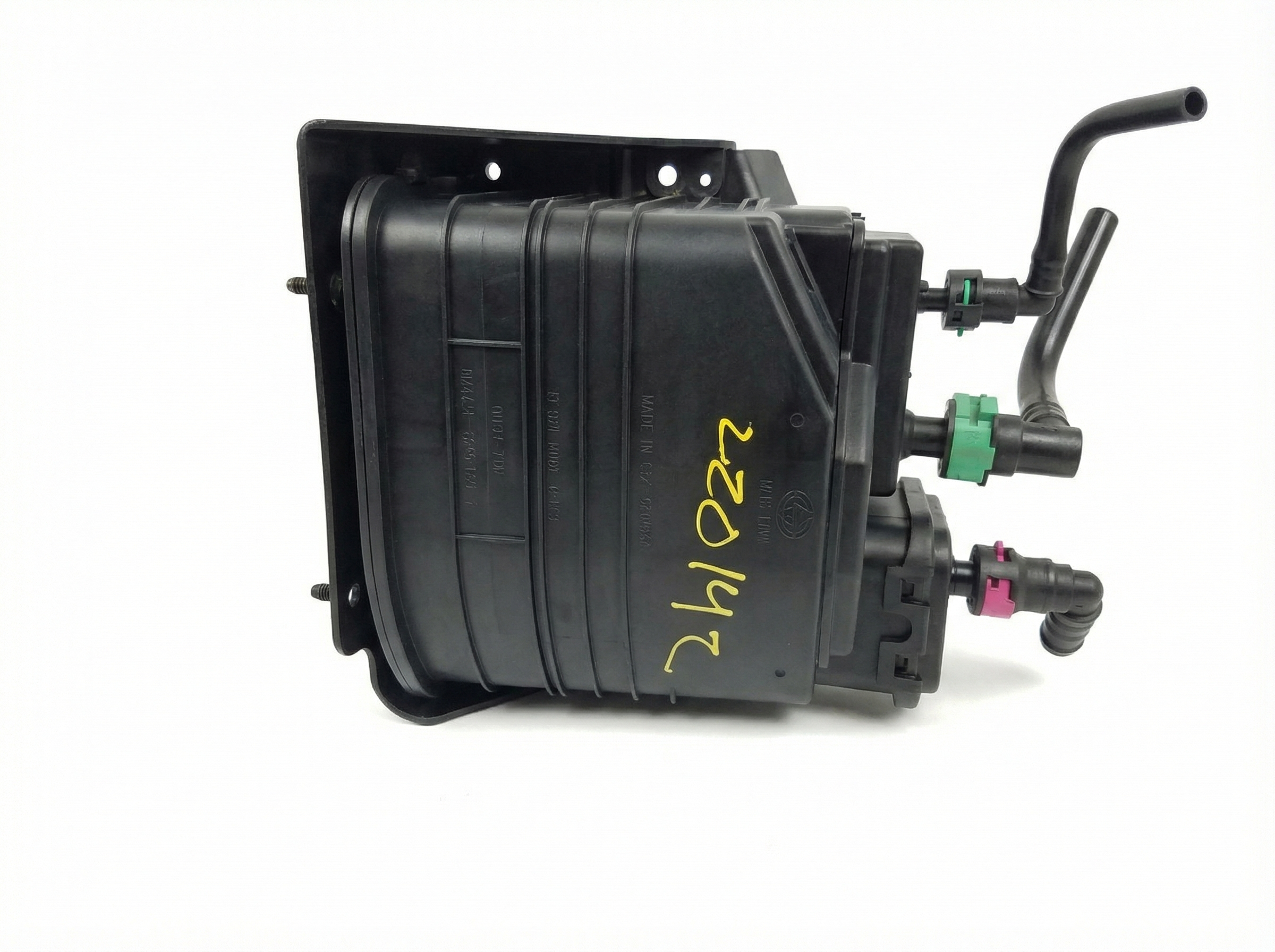
- Cracked EVAP Charcoal Canister: The plastic housing of the charcoal canister can crack from road debris or age, creating a large leak. This is less common but should be checked with a smoke test if other components are confirmed to be working.
- Damaged Fuel Filler Neck: Corrosion or damage to the metal filler neck where the gas cap seals can prevent a proper seal, even with a new gas cap. This is a known issue on some GM trucks.
- Damaged Fuel Tank Pressure Sensor or Seal: On some GM models, the fuel tank pressure sensor is integrated into the fuel tank or pump assembly. An owner on a forum reported that a previous attempt to remove this non-serviceable sensor created a crack in the tank, causing a persistent P0455 code.
Diagnosis Steps
- Check the Gas Cap: This is the first and easiest step. Ensure it is tight and clicks. Inspect the seal for any cracks or wear. If in doubt, replace it, clear the code, and drive for a few days to see if it returns.
- Visual Inspection: Look over the EVAP system hoses and components under the hood and near the fuel tank (by the spare tire). Check for any obvious cracks, damage, or disconnected lines.
- Inspect Purge Solenoid: Locate the purge solenoid in the engine bay. With the engine running, disconnect the electrical connector. Feel for vacuum on the hose port coming from the canister. If you feel suction, the valve is stuck open and must be replaced.
- Inspect Vent Solenoid: Locate the vent solenoid near the charcoal canister (typically near the spare tire). Check for damage and ensure the electrical connector is secure. Testing requires a scan tool to command it closed or applying voltage directly. If it's commanded closed and smoke from a smoke test still escapes, it's faulty.
- Perform a Smoke Test: This is the most effective way to find leaks. A smoke machine forces low-pressure smoke into the EVAP system via a service port. The leak will be revealed by the escaping smoke. This is the definitive way to find cracked hoses, a bad canister, or a faulty valve.
Parts You'll Likely Need
- Gas Cap — This is the most frequent and simplest fix for a P0455 code. Always check this first.
Trusted brands: ACDelco, Stant
OEM price range: $20-$30
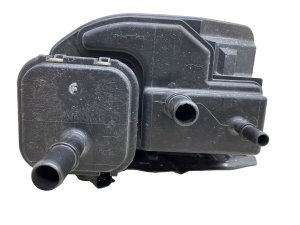
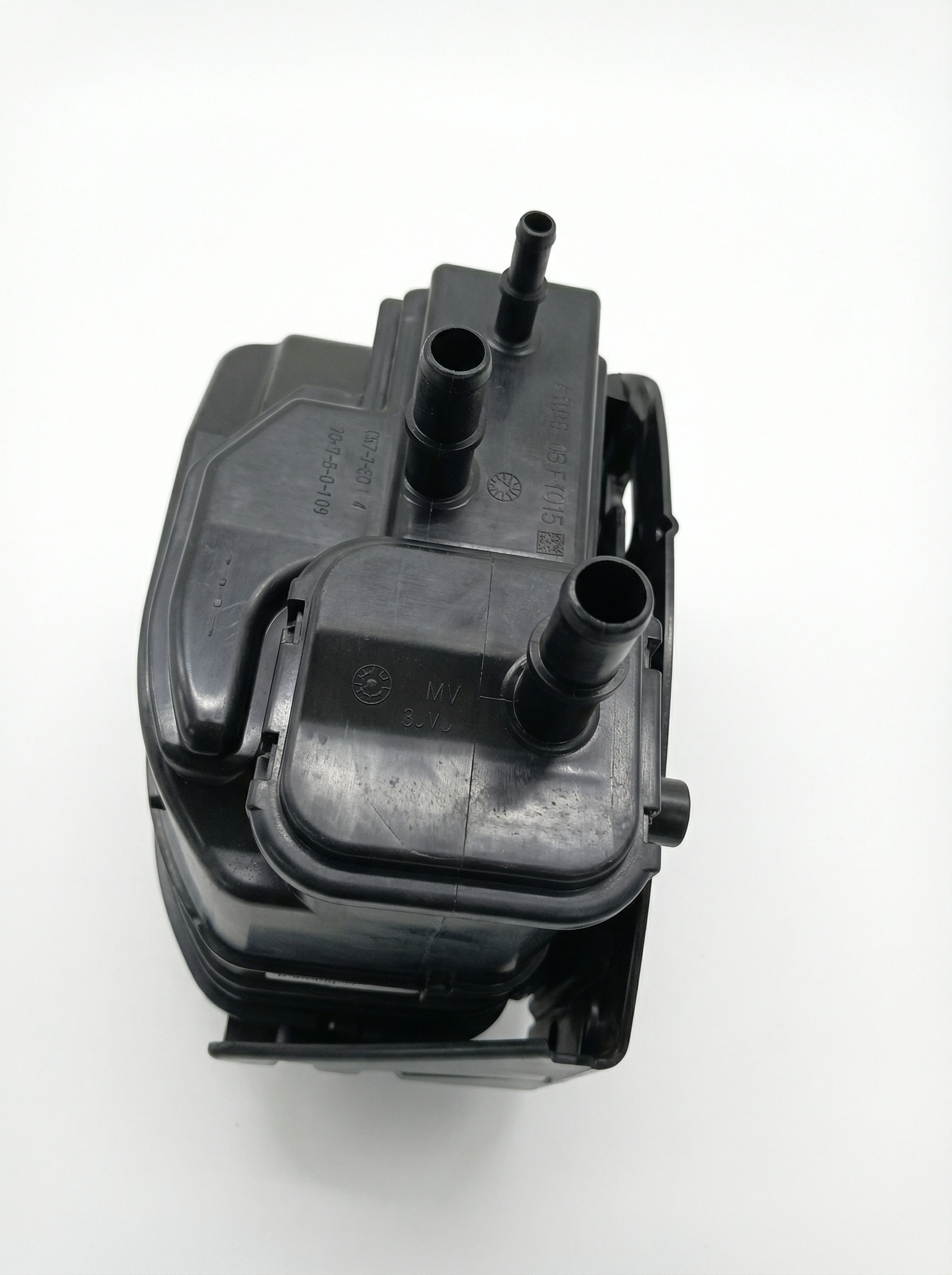
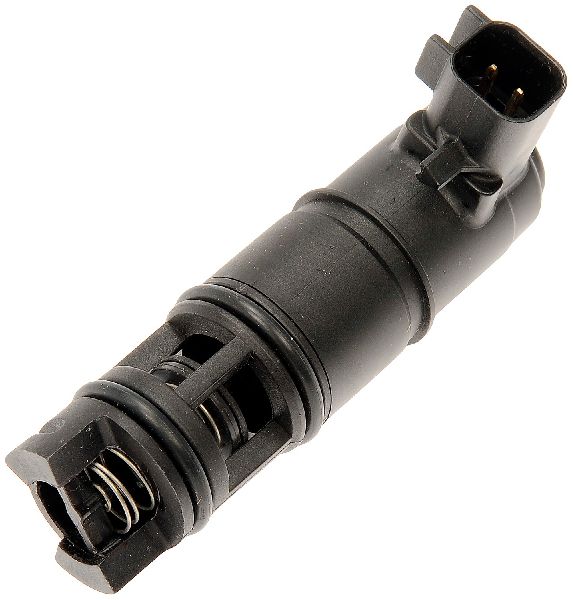
Aftermarket price range: $15-$25 - EVAP Canister Purge Solenoid Valve
(OEM #12690512)— A common failure point that gets stuck open, causing a large leak. It's located in the engine bay and is relatively easy to replace. Note: The original part number 12690512 has been superseded by 12737252.
Trusted brands: ACDelco, Dorman, Standard Motor Products
OEM price range: $40-$60
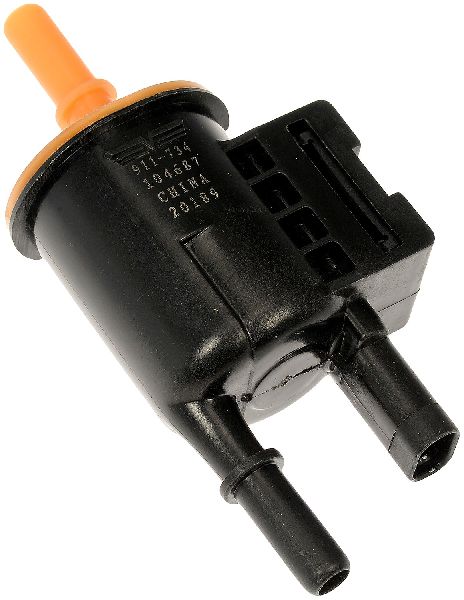
Aftermarket price range: $25-$45 - EVAP Canister Vent Solenoid Valve
(OEM #84734791)— This valve is located near the fuel tank and is prone to failure from exposure to road grime and moisture, often getting stuck open. Note: The original part number 23434149 has been superseded by 84734791. Some replacements may require an adapter harness.
Trusted brands: ACDelco, Dorman
OEM price range: $50-$80
Aftermarket price range: $30-$60
Related Codes That Often Appear With This One
- P0442 — P0442 indicates a small EVAP leak. A component that is beginning to fail might initially cause a small leak before it worsens and triggers the P0455 for a large leak.
- P0449 — This code specifically points to a fault in the EVAP vent solenoid valve circuit. Since a failed vent solenoid is a very common cause of P0455 on these trucks, seeing both codes together strongly suggests the vent solenoid is the culprit.
- P0496 — This code indicates 'EVAP Flow During a Non-Purge Condition,' which almost always points to a purge valve that is stuck open. A stuck-open purge valve is also a common cause for the P0455 large leak code.
Technical Service Bulletins (TSBs) & Recalls
- 21-NA-124: Diagnostic tip for Malfunction Indicator Lamp (MIL) Illuminated - DTC P0442 and/or P0455 Set.
Platform-Specific Known Issues
- GM TSB 21-NA-124 Diagnostic Procedure: GM issued Technical Service Bulletin #21-NA-124 to provide technicians with diagnostic tips for finding EVAP leaks that cause P0442 and P0455. The bulletin advises a specific order of operations: 1. Check all EVAP lines for proper seating and damage. 2. Check the vent valve for a stuck-open position. 3. Finally, investigate the purge valve. This indicates GM recognizes a hierarchy of most likely failures.
- Owner Experience: Purge Valve Stuck Closed: In a detailed diagnostic video on a similar GM vehicle, a mechanic found a P0455 code was cau
Mechanic-Grade Diagnostic Values
- Fuel Tank Pressure (FTP) Sensor Voltage — expected: ~1.5 Volts with the gas cap off (system at atmospheric pressure). Acceptable range is 1.3V-1.7V.. Failure: A reading significantly different from 1.5V at rest (e.g., 2.8V), or a voltage that is stuck high or low and does not change when vacuum is applied. A reading >1.5V indicates vacuum.
- EVAP Vent Solenoid Resistance — expected: 20 to 30 ohms across the two pins of the solenoid.. Failure: Infinite resistance (open circuit) or zero resistance (short circuit) indicates a failed solenoid coil.
- EVAP Purge Solenoid Resistance — expected: 15 to 30 ohms across the two pins of the solenoid.. Failure: A reading far outside the expected range indicates a damaged internal circuit.
Scan Tool Commands That Help
- GDS2 (GM Global Diagnostic System 2): EVAP Purge/Seal Test — This is the primary bidirectional test to verify system integrity. It commands the vent valve closed and pulses the purge valve to apply engine vacuum, allowing a technician to monitor the FTP sensor to see if the system holds vacuum.
- GDS2 or equivalent professional scan tool: EVAP Vent Solenoid Control — Used to command the normally-open vent valve to the 'Closed' or 'Not Venting' position during a smoke test. This seals the system so the smoke can build pressure and reveal leaks. If smoke still exits the vent valve when commanded closed, the valve is faulty.
Wiring & Ground Locations
- Purge Valve Access — In the engine bay, on the driver's side of the intake manifold. Access is very tight; mechanics recommend removing the battery to gain clear access to the valve and its single 10mm mounting bolt.. Knowing the best access method prevents breaking the plastic EVAP lines or connectors attached to this commonly replaced part.
- Vent Valve Location — Under the truck bed, typically on the passenger side above the spare tire, mounted to the charcoal canister.. This component is exposed to road debris and corrosion, making it a frequent failure point. Knowing its location is key for inspection and replacement.
- Critical EVAP Line Connections — Seven key connection points identified in service literature as potential leak sources.. A leak is often at a connection point rather than a cracked hose. Per TSB 21-NA-124, these should be inspected first: 1. Purge valve to intake. 2. Purge tube to chassis line (rear of engine). 3. Chassis line to canister. 4. Fuel tank line to canister. 5. Vent line to vent valve. 6. Fuel tank jumper connection. 7. Gas cap.
Real Owner Repair Stories
- YouTube channel 'DIY-SAVE' (Chevrolet (unspecified model, but demonstrates common GM issue)) — Check Engine Light with code P0455.
❌ Tried (didn't work) Initial diagnosis pointed to a large EVAP leak.
✅ What actually fixed it The problem was resolved by replacing the gas cap. The user confirmed one month later that the Check Engine Light had not returned. - YouTube channel 'SuperMarioDiagnostics' (2015 GMC Canyon) — Check Engine Light with code P0496 (EVAP Flow During Non-Purge), which is commonly associated with P0455.
❌ Tried (didn't work) The video is a direct diagnosis, not a history of failed parts.
✅ What actually fixed it The mechanic diagnosed a stuck-open purge valve in real-time. With the engine running and the valve's electrical connector unplugged, he felt for vacuum on the tank-side port. Feeling suction confirmed it was stuck open. Replacing the purge valve fixed the issue. - GMTNation forum user (GM Truck (unspecified model)) — P0455 code after a smoke test showed no leaks.
❌ Tried (didn't work) Smoke test from the engine bay did not reveal any leaks., Replacing the charcoal canister did not fix the issue.
✅ What actually fixed it The user documented that the FTP sensor voltage was behaving correctly and the vent valve worked on the bench, leading to the conclusion that the issue was likely electrical, such as the ECM not commanding the vent valve to close during the self-test, or a faulty FTP sensor that was providing plausible but incorrect readings. This highlights a non-leak cause for a leak code.
"I Checked Everything" — The Actual Cause
- In one documented case, a vehicle owner with a persistent P0455 performed a smoke test which revealed no leaks. After extensive diagnosis, the suspicion fell on the electrical side of the system. The possibilities were that either the Fuel Tank Pressure (FTP) sensor was faulty (despite showing a normal 1.5V at rest), or the Engine Control Module (ECM) was not commanding the vent valve to close to seal the system for the test. This is a classic mechanic's dilemma where the 'leak detected' code is not caused by a physical leak, but by the system's inability to properly run the test in the first place.
OEM Part Supersession History
12690512, 12630282, 12661763, 12610560→12737252— Standard part evolution by the manufacturer for improved reliability or manufacturing efficiency.
Heads up: The new part number (12737252) is the correct direct replacement for the older numbers.Varies (e.g., 23434149)→Varies (e.g., 84734791)— Part design update.
Heads up: Some replacement EVAP vent solenoids for this platform have a different electrical connector than the original factory harness. These parts are often sold as a kit that includes a pigtail adapter harness that must be spliced in or plugged in line.
Model Year Variations Within This Range
- 2015: General Motors issued a special coverage adjustment (SCA #18029) for the vapor canister purge solenoid on some 2015 GMC Canyon models. This extends the warranty for this specific part to 10 years or 120,000 miles. Owners of 2015 models should contact a GM dealer with their VIN to check for eligibility before purchasing the part.
Helpful Videos
Used OEM Parts in Stock

New Aftermarket Parts Available


The information in this article is provided for general reference and educational purposes only. Vehicle specifications, procedures, and part compatibility can vary by production date, trim level, and region. Always consult your vehicle's factory service manual and verify part numbers before purchasing or performing repairs. Safety-critical components such as airbags, seat belts, and braking systems should be installed by a qualified professional.
- Gmc CANYON:
- 🎬 Helpful Videos
- 🛍️ Shop This Part
- What's Unique About the 2015-2022 Gmc CANYON
- Diagnostic Flowchart
- Symptoms You May Notice
- Most Likely Causes
- Rare But Worth Checking
- Diagnosis Steps
- Parts You'll Likely Need
- Related Codes That Often Appear With This One
- Technical Service Bulletins (TSBs) & Recalls
- Platform-Specific Known Issues
- Mechanic-Grade Diagnostic Values
- Scan Tool Commands That Help
- Wiring & Ground Locations
- Real Owner Repair Stories
- "I Checked Everything" — The Actual Cause
- OEM Part Supersession History
- Model Year Variations Within This Range
- 🎟️ Get 5% Off