

P0455 on 2021-2024 Ford Edge: EVAP Gross Leak Causes and Fixes
For a 2021-2024 Ford Edge, P0455 most often points to a problem with the capless fuel filler neck, a faulty canister purge valve, or a disconnected fuel vapor line inside the fuel tank. Cleaning the fuel filler opening is the first and easiest step. If that fails, the next most common fixes involve replacing the canister purge valve or, in cases with hard starting after refueling, investigating the in-tank vapor line per manufacturer bulletins.
- P0455 on a 2021-2024 Edge indicates a large EVAP system leak.
- Always start by inspecting and cleaning the capless fuel filler inlet; this is a common and free fix.
- A faulty canister purge valve is another likely culprit, but test it before replacing it.
- Be aware of manufacturer TSBs pointing to a disconnected vapor line inside the fuel tank, especially if you experience hard starts after refueling.
- The vehicle is safe to drive, but the issue should be fixed to pass emissions tests and protect the environment.
What's Unique About the 2021-2024 Ford EDGE

For the 2021-2024 Ford Edge, this code is frequently linked to specific issues beyond the typical loose gas cap. Ford has issued Technical Service Bulletins (TSBs) pointing to a disconnected fuel vapor line inside the fuel tank on 2024 models, which can cause this code along with hard starting after refueling. Another TSB cautions that the canister purge valve is often replaced unnecessarily on 2021-2022 models, indicating that proper diagnosis is key on this platform.
Diagnostic Flowchart
Tap your situation to follow the diagnostic path that matches what you're seeing on this vehicle.
Symptoms You May Notice
- Check Engine Light is on
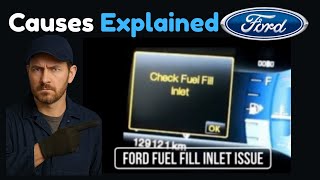
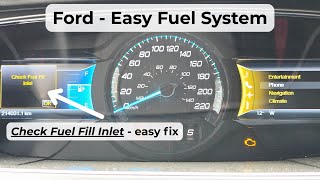
- A message to "Check Fuel Fill Inlet" may appear on the dashb 🎬 See common causes for the fuel fill inlet messageoard.
- Difficulty starting the engine, especially right after refueling.
- Engine stalls after restarting once the tank has been filled.
- Rough idle or engine stumbling.
- A faint smell of gasoline may be noticeable, particularly around the fuel tank area.
- Replacing the canister purge valve without testing it first. TSB SSM 50306 specifically warns that many returned purge valves are fully functional, suggesting misdiagnosis is common.
- Replacing the fuel filler neck when a thorough cleaning would have resolved the sealing issue.
Most Likely Causes

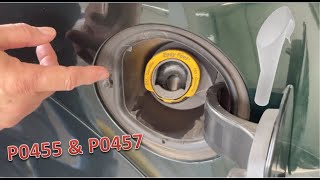
- Debris in Capless Fuel Filler Inlet 🔴 High Probability Ford's 'Easy Fuel' capless system can fail to seal if dirt, dust, or debris gets lodged in the spring-loaded flap, causing a large leak that the system detects. This is widely reported as the most common cause for EVAP codes on these vehicles.
How to confirm: Visually inspect the fuel filler opening for any dirt, grime, or obstructions that could prevent the flap from sealing completely. The sealing surface is the black plastic ring inside the opening.
Typical fix: Use the white plastic funnel that comes with the vehicle (often found with the spare tire tools) to work the flap open and closed. Spray a silicone lubricant or WD-40 on a clean rag and wipe the inner seal. Then, insert and remove the funnel several times to distribute the lubricant and dislodge any remaining debris. 🎬 Watch: Quick fix for Ford capless EVAP codes Avoid using harsh chemicals like brake cleaner.
Est. part cost: $0 - Disconnected Fuel Vapor Line in Fuel Tank 🟡 Medium Probability Ford TSBs 25-2431 and 24-2199 specifically identify a disconnected fuel vapor line inside the fuel tank as a cause for P0455 on some 2024 models. This issue is strongly indicated if the code is accompanied by hard starting or stalling immediately after refueling.
How to confirm: This typically requires a smoke test to confirm the leak is originating from the tank area. Definitive confirmation requires accessing the top of the fuel tank to inspect the internal lines, which may involve dropping the tank or accessing a service port under the rear seat.
Typical fix: Reconnect the fuel vapor line inside the fuel tank. This is a complex repair that is often best left to a professional unless you are experienced with fuel system repairs.
Est. part cost: $0 in parts if the line is just disconnected, but labor will be significant. - Faulty Canister Purge Valve 🟡 Medium Probability The purge valve (or solenoid) can get stuck open, creating a constant vacuum leak that the system detects as a gross leak. TSB SSM 50306 notes this is a common code, but warns that returned valves often test good, so diagnosis is critical before replacement.
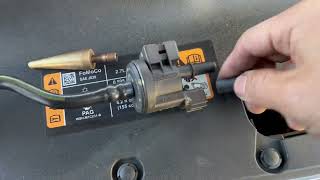
How to confirm: With the engine off, disconnect the vapor line from the purge valve. If you can blow through it, or if a handheld vacuum pump shows it's not holding vacuum, it is stuck open and faulty. The valve is normally closed when unpowered. A more definitive test is to use a smoke machine; with the valve disconnected and unpowered, smoke should not pass through it.
Typical fix: Replace the canister purge valve. It is typically located in the engine bay, mounted on or near the intake manifold, and is relatively easy to access.
Est. part cost: $30-$75 - Faulty EVAP Canister Vent Solenoid ⚪ Low Probability The vent solenoid, located near the charcoal canister under the rear of the vehicle, is normally open and closes when the system tests for leaks. If it gets stuck open due to debris or failure, the system can't seal and will log a P0455 code. Forum users have reported cleaning debris from this valve to resolve the code.
How to confirm: Use a scan tool to command the vent solenoid closed. If it doesn't audibly click, or if a smoke test shows smoke exiting the vent hose with the valve commanded shut, the solenoid is bad. You can also test it by applying 12V power; it should close and not allow air to pass through.
Typical fix: Replace the EVAP canister vent solenoid. It is located near the charcoal canister, under the vehicle near the fuel tank.
Est. part cost: $40-$90
Rare But Worth Checking
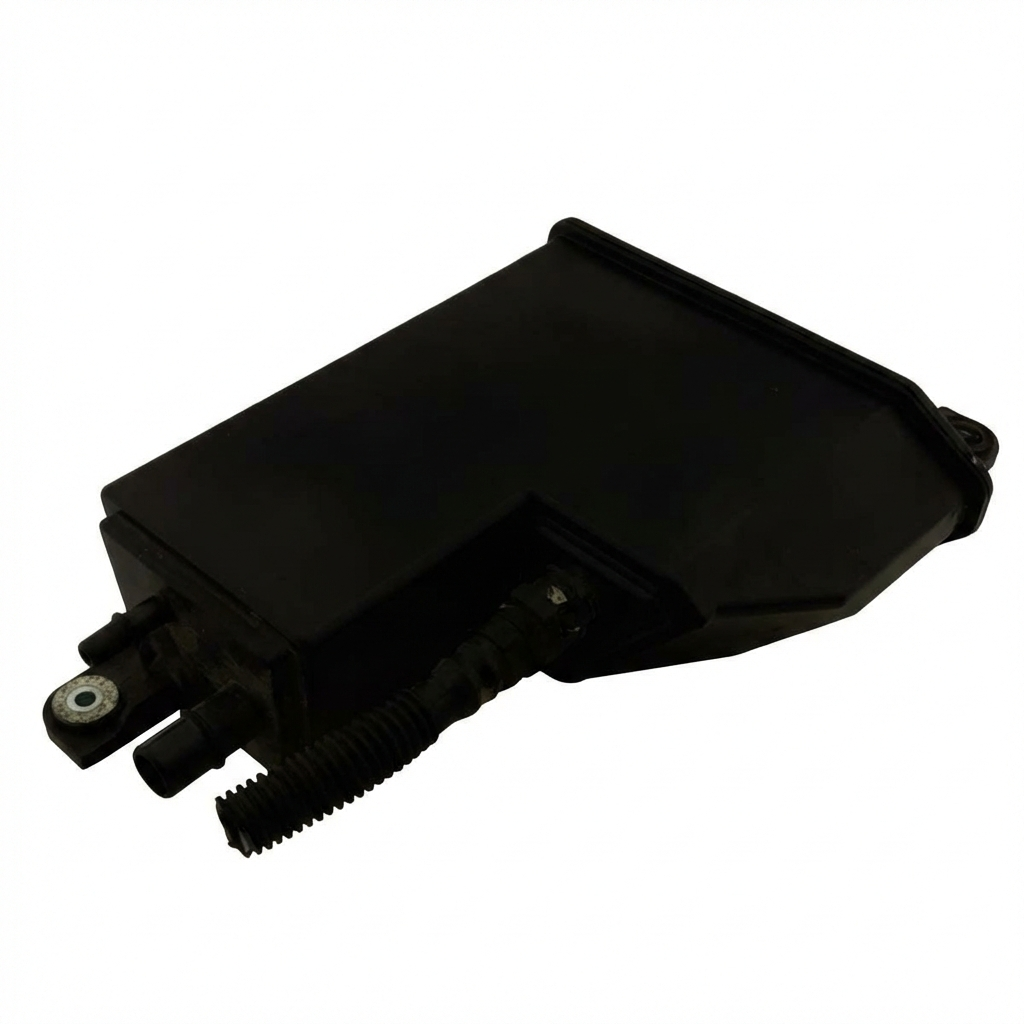
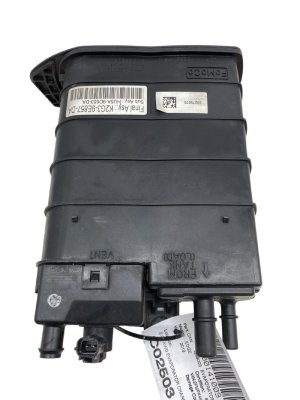
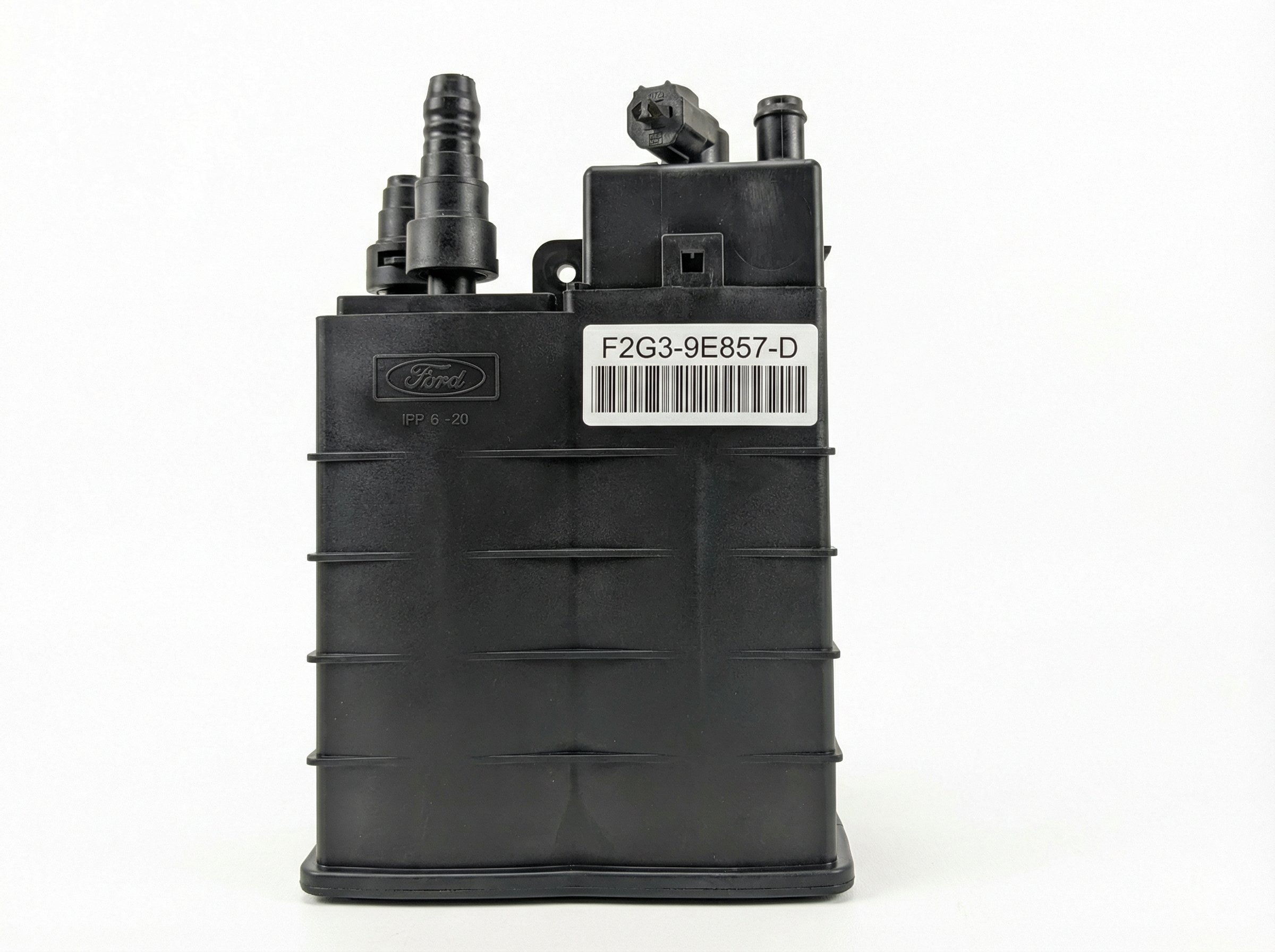
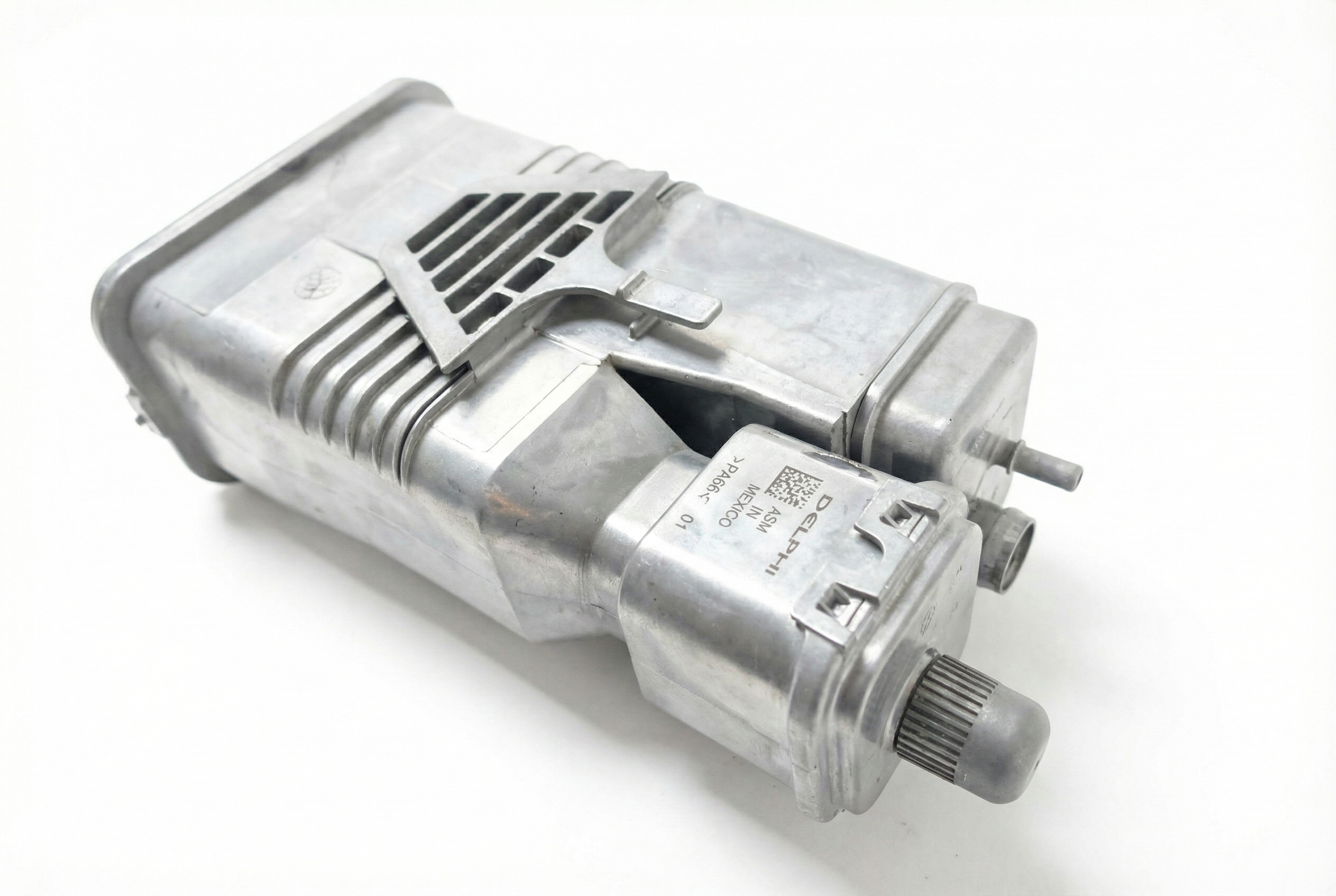
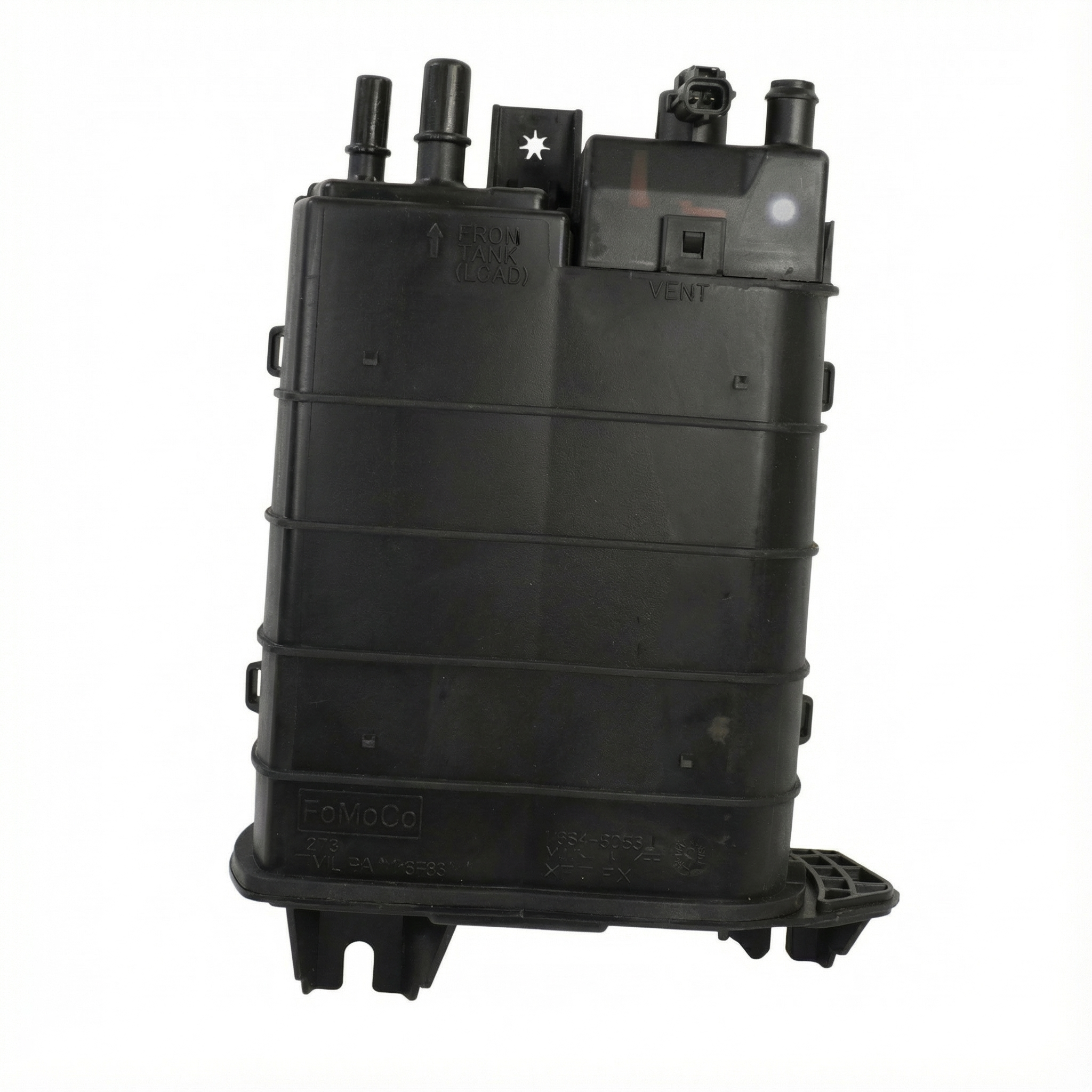
- Cracked EVAP Charcoal Canister: The charcoal canister, typically a black plastic box located near the fuel tank, can be damaged by road debris, causing a large crack and a P0455 code. A visual inspection during a smoke test is usually sufficient to spot this damage.
- Damaged EVAP Hose or Line: While less common than component failure, a cracked, disconnected, or chewed-through rubber or plastic EVAP line will cause a leak. A smoke test is the most effective way to find such a leak, as smoke will visibly escape from the damaged area.
- Faulty Fuel Tank Pressure (FTP) Sensor: In rare cases, the sensor that reports pressure to the computer can fail, making the computer 'think' there is a leak when there isn't one. This should only be considered after all other possibilities, especially physical leaks, have been ruled out with a smoke test.
Diagnosis Steps

- Read the Code: Confirm P0455 is the active code using an OBD-II scanner.
- Inspect and Clean Fuel Filler Inlet: This is the most common fix. Carefully check the capless fuel filler opening for debris. Use the vehicle's funnel and a clean rag with silicone spray or WD-40 to wipe the seal and work the flap, ensuring it moves freely and seals tightly.
- Clear Code and Drive: After cleaning, clear the code with a scanner or by disconnecting the battery for 15 minutes. Drive for a few days to allow the EVAP monitor to run its self-test and see if the code returns.
- Visual Inspection: If the code returns, visually inspect all accessible EVAP hoses in the engine bay and under the vehicle for obvious cracks, disconnections, or damage.
- Test the Canister Purge Valve: Locate the purge valve in the engine bay. Disconnect it and test if it's stuck open by trying to blow through it. It should be closed when the engine is off.
- Diagnosis with Smoke Test: If the cause is still not apparent, the most effective next step is to perform a smoke test. Connect the smoke machine to the EVAP service port. The smoke will fill the system and quickly reveal the location of any leaks, whether from a cracked hose, a faulty vent solenoid, the charcoal canister, or the fuel tank area.
Parts You'll Likely Need

- Canister Purge Valve
(OEM #9U5Z-9F945-C (replaces 7U5Z-9F945-E))— A common failure point that gets stuck open, causing a large leak. It's a frequent cause of P0455 across many Ford models.
Trusted brands: Motorcraft, Bosch, Dorman
OEM price range: $45-$65
Aftermarket price range: $25-$45 - Fuel Filler Neck / Inlet — The capless inlet can be damaged or fail to seal, requiring replacement if a thorough cleaning doesn't solve the issue.
Trusted brands: Motorcraft
OEM price range: $100-$180
Aftermarket price range: $70-$120 - Canister Vent Solenoid
(OEM #9U5Z9C915H (Example, verify by VIN))— Can get stuck open due to debris or electrical failure, preventing the EVAP system from sealing for its self-test.
Trusted brands: Motorcraft, Dorman
OEM price range: $50-$80
Aftermarket price range: $30-$50
Related Codes That Often Appear With This One
- P0496 — Indicates high purge flow, often seen with a stuck-open purge valve. Mentioned in TSBs 25-2431, 50306, and 24-2199.
- P0456 — Indicates a small EVAP leak. Sometimes a large leak from a dirty fuel inlet can initially be detected as a small one, or vice-versa. Mentioned in TSB 50306.
- P04F0 — EVAP System High Pressure Purge Line Performance. This code is specifically cited alongside P0455 in Ford TSBs 25-2431, 50306, and 24-2199.
- P0451 — EVAP System Pressure Sensor/Switch Range/Performance. This indicates a problem with the sensor reading, which can accompany a large leak. It is mentioned in TSBs 25-2431, 50306, and 24-2199.
Technical Service Bulletins (TSBs) & Recalls
- TSB 25-2431
- TSB 24-2199
- SSM 50306
Platform-Specific Known Issues
- TSB 25-2431 & TSB 24-2199: On some 2024 models, a disconnected fuel vapor line inside the fuel tank may cause P0455, accompanied by symptoms like hard starting or stalling after refueling. This requires accessing the fuel tank to reconnect the line.
- SSM 50306: For 2021-2022 models, Ford notes that canister purge valves are often replaced unnecessarily, as returned parts test fully functional. This underscores the importance of proper diagnosis before replacement.
Mechanic-Grade Diagnostic Values
- Fuel Tank Pressure (FTP) Sensor Voltage — expected: Approximately 1.5V with the gas cap off (atmospheric pressure). The range can be between 1.3V to 1.7V.. Failure: A reading stuck low (near 0V) may indicate a wiring issue, while a reading stuck high (near 5V) after opening the tank could indicate a faulty sensor.
- Canister Purge Valve Connector Power — expected: One terminal should have constant power with the key on. The other terminal is ground-side switched by the PCM.. Failure: Using a noid light, the light should not be illuminated with the key on, engine off. If it is, the PCM may be commanding the valve open incorrectly.
Scan Tool Commands That Help
- Ford IDS (or equivalent professional scan tool): EVAP System Leak Test — This is a guided, automated test that commands the vent solenoid closed and the purge solenoid open to create a vacuum in the system, then monitors the FTP sensor to verify the system can seal and hold a vacuum. It's the primary diagnostic step after a visual inspection.
- Ford IDS (or equivalent professional scan tool): Purge/Seal (EVAPCV and EVAPV) On/Off — This bidirectional control allows a technician to manually command the canister purge valve and canister vent valve solenoids on and off to check for audible clicks and to seal the system for a smoke test.
Wiring & Ground Locations
- Canister Purge Valve Connector — In the engine bay, connected to the purge valve, which is often near the intake manifold.. The connector is a 2-wire, 18-gauge weatherproof connector. Damage to this connector or its wiring can prevent the purge valve from being controlled by the PCM, leading to EVAP codes. One wire provides power, and the other is a ground signal from the PCM.
- Fuse F26 (Under-hood Fuse Box) — In the under-hood fuse box (Battery Junction Box).. On a 2022 Ford Edge, fuse F26 (a 10A fuse) provides power to the Canister Vent solenoid and Vapor Blocking Valve, among other components. A blown fuse here would prevent the vent solenoid from closing, making it impossible for the system to seal and causing a P0455.
- Forward Chassis Grounds — Behind the front bumper cover, on both the driver and passenger sides of the frame.. These are main grounding points for harnesses that run to the under-hood junction box and the PCM. A poor ground connection at these points could cause erratic behavior in various electronic systems, including the EVAP components controlled by the PCM.
Real Owner Repair Stories
- Ford Truck Enthusiasts Forums (2011 Ford Edge) — P0455 code
❌ Tried (didn't work) Initial diagnosis pointed towards the common gas cap issue, but the vehicle is capless.
✅ What actually fixed it A dealership service receipt revealed the cause was the 'Canister vent solenoid not seating.' The fix was to remove the canister vent valve and clean debris from between the pintle and its seat. - Ford Edge Forum (2011 Ford Edge 3.5L) — P0455 code, 'Check fuel inlet' message
❌ Tried (didn't work) Cleaning the fuel inlet., Replacing the canister purge solenoid.
✅ What actually fixed it The user did not post a final resolution, but was advised to perform a smoke test to find the physical leak after the common component replacements failed to solve the issue.
OEM Part Supersession History
AU5Z-9C915-A, AU5Z-9C915-B→9U5Z-9C915-H— Part revision/update by manufacturer.
Heads up: While many aftermarket parts list cross-compatibility, it's crucial to verify the specific part for the 2021-2024 Edge by VIN, as subtle changes in hose connections or electrical plugs can occur.
Model Year Variations Within This Range
- 2021-2024: The primary engine options (2.0L Turbo I4 and 2.7L Twin-Turbo V6) and the 8-speed automatic transmission remained consistent across this range. The most significant change was the standardization of the large 12-inch vertical touchscreen with Sync 4A software starting in 2021, replacing the older Sync 3 system. While the core EVAP system components are largely the same, TSBs specifically call out the 2024 model year for potential in-tank vapor line issues.
Helpful Videos
Used OEM Parts in Stock
New Aftermarket Parts Available


The information in this article is provided for general reference and educational purposes only. Vehicle specifications, procedures, and part compatibility can vary by production date, trim level, and region. Always consult your vehicle's factory service manual and verify part numbers before purchasing or performing repairs. Safety-critical components such as airbags, seat belts, and braking systems should be installed by a qualified professional.
- Ford EDGE:
- 🎬 Helpful Videos
- 🛍️ Shop This Part
- What's Unique About the 2021-2024 Ford EDGE
- Diagnostic Flowchart
- Symptoms You May Notice
- Most Likely Causes
- Rare But Worth Checking
- Diagnosis Steps
- Parts You'll Likely Need
- Related Codes That Often Appear With This One
- Technical Service Bulletins (TSBs) & Recalls
- Platform-Specific Known Issues
- Mechanic-Grade Diagnostic Values
- Scan Tool Commands That Help
- Wiring & Ground Locations
- Real Owner Repair Stories
- OEM Part Supersession History
- Model Year Variations Within This Range
- 🎟️ Get 5% Off