

P0455 on 2000-2007 Chevrolet Silverado 2500: EVAP Large Leak Causes & Fixes
For a P0455 code on a 2000-2007 Silverado 2500, the most common causes are a loose or faulty gas cap or a failed EVAP vent solenoid located near the spare tire. Always check the gas cap first; if that's not it, the vent solenoid is the next likely culprit, costing around $25-$60 for the part. GM issued a TSB recommending a relocation kit for the vent filter to prevent repeat failures from dirt intrusion.
- Always check that your gas cap is tight and its seal is intact before attempting any other repairs. This is the most common and cheapest fix.
- The second most likely culprit is the EVAP vent solenoid located near the spare tire, which often fails due to its exposed location.
- While the code does not indicate a problem that affects drivability, it will cause your truck to fail an emissions test.
- For leaks that aren't obvious, a smoke test is the most reliable way to pinpoint the exact source of the problem.
- Be aware of the generation split in 2007; the 'Classic' (GMT800) and new body style (GMT900) use different EVAP parts.
What's Unique About the 2000-2007 Chevrolet SILVERADO 2500

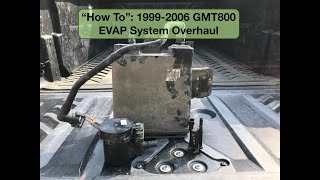
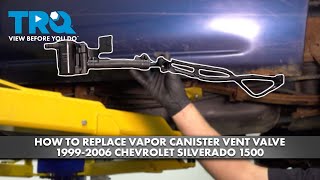
On this generation of Silverado (GMT800), the EVAP system's vent solenoid is notoriously prone to failure. Its location near the charcoal canister by the spare tire exposes it to significant road debris, dirt, and moisture. This often causes the valve to get stuck open, creating the large leak that triggers the P0455 code. The problem is so common that GM released a Technical Service Bulletin (TSB #02-06-04-037) describing a fix that involves replacing the valve and relocating its air filter to a cleaner location, like up near the transmission bell housing.
Diagnostic Flowchart

Tap your situation to follow the diagnostic path that matches what you're seeing on this vehicle.
Generation note: This range covers the GMT800 platform (2000-2006 and 2007 'Classic' models) and the first year of the GMT900 platform (new body style 2007). While the causes are similar, the EVAP vent solenoid and charcoal canister designs and locations differ between these generations. It is crucial to verify the correct parts for your specific 2007 model. A 'Classic' will have a boxier design, a two-piece headlight assembly split by a grille bar, and 'Chevrolet' spelled out on the tailgate. The 'New Body Style' has a single-piece headlight and a large Chevy bowtie emblem in the center of the tailgate.
Symptoms You May Notice
- Check Engine Light is on
- A faint fuel smell may be noticeable
- Vehicle will fail an emissions inspection
- Difficulty refueling (gas pump clicks off repeatedly) can sometimes be related to a faulty or clogged vent solenoid
- Replacing the purge valve (in the engine bay) when the more common failure is the vent valve (near the fuel tank).
- Repeatedly replacing the gas cap when the code returns, without investigating other components like the vent solenoid or hoses.
Most Likely Causes


- Loose, Damaged, or Incorrect Gas Cap 🔴 High Probability This is the most common cause for a P0455 on any vehicle due to user error (not tightening) or simple wear of the cap's seal over time. Many owners replace the cap as the first step, only to have the code return, indicating a different issue.
How to confirm: Inspect the gas cap for cracks or a worn-out rubber seal. Ensure it is tightened until it clicks at least three times. If it's an aftermarket cap, ensure it's the correct type for the vehicle. An OEM cap is often recommended if the original is suspect.
Typical fix: Tighten or replace the gas cap.
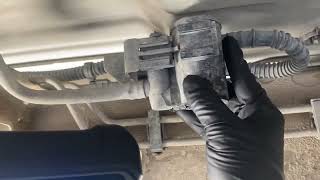
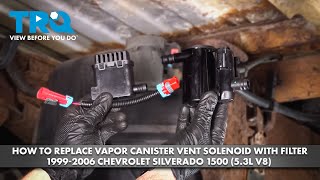
Est. part cost: $15-$30 - Failed EVAP Vent Valve Solenoid 🔴 High Probability The vent solenoid is mounted near the charcoal canister by the spare tire, where it is highly susceptible to dirt, water, and corrosion, causing it to stick open. This is a well-documented weak point, leading GM to issue TSB #02-06-04-037, which recommends replacing the valve and relocating the filter to a cleaner area.
How to confirm: The valve is normally open. With a scan tool, command the valve closed and see if it holds a vacuum. Alternatively, remove the valve and apply 12V power; you should hear it click closed. If it doesn't click, is full of dirt, or is stuck open, it has failed.
Typical fix: Replace the vent valve solenoid. The official GM fix involves installing a service kit (like P/N 19152349 for 04-07 models) that includes a new valve and a remote filter box to be routed to a cleaner location, often near the transmission.
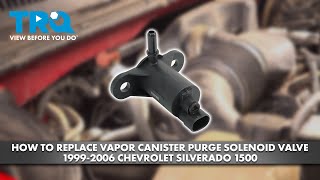
Est. part cost: $25-$70 - Failed EVAP Purge Valve Solenoid 🟡 Medium Probability While less common than the vent valve, the purge valve can fail by getting stuck open, creating a constant vacuum pull on the fuel tank that the system interprets as a leak during its test cycle.
How to confirm: The purge valve is located on the engine intake manifold and is normally closed. Remove the valve and try to blow through it. If air passes through, it is stuck open and needs to be replaced. A scan tool can also be used to command it open and closed to check for a change in fuel tank pressure.
Typical fix: Replace the purge valve solenoid.
Est. part cost: $20-$50 - Cracked or Disconnected EVAP Hoses 🟡 Medium Probability Over time, the plastic and rubber lines in the EVAP system can become brittle and crack, especially those exposed to the elements under the truck and the lines on top of the fuel tank which can chafe.
How to confirm: A visual inspection may reveal obvious cracks or disconnected lines, particularly at connection points. The most effective method is to use a smoke machine, which fills the system with low-pressure smoke and makes any leak easy to spot.
Typical fix: Replace the cracked section of hose or the entire line assembly. Some owners have successfully repaired rotted metal lines with sections of rubber fuel line.
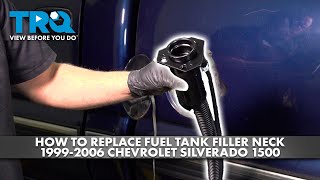
Est. part cost: $10-$100 - Rusted or Damaged Fuel Filler Neck ⚪ Low Probability In regions with heavy road salt use (the "Rust Belt"), the metal fuel filler neck can corrode and develop holes, creating a large leak. There was a recall for this issue on some GM trucks, so it's a known potential failure point.
How to confirm: Visually inspect the entire length of the filler neck (from the gas cap to the tank) for rust, flaking metal, or visible holes. A smoke test will definitively show a leak from this area.
Typical fix: Replace the fuel filler neck.
Est. part cost: $70-$200
Rare But Worth Checking
- Cracked Charcoal Canister: The plastic housing of the charcoal canister can crack from road debris impact or age, creating a leak. This is usually found with a smoke test. In some cases, over-filling the fuel tank can saturate the canister with raw fuel, causing it to fail.
- Faulty Fuel Tank Pressure Sensor: A faulty sensor could incorrectly report a large leak when there isn't one. This is uncommon and usually accompanied by other sensor-specific codes (e.g., P0452).
Diagnosis Steps
- Read the code with an OBD-II scanner to confirm P0455 is present.
- Inspect the gas cap. Ensure it is tight and the seal is not cracked or worn. A loose gas cap is the most common initial cause.
- If the cap is good, perform a thorough visual inspection of all accessible EVAP hoses, the charcoal canister, and the fuel filler neck for any obvious cracks, rust, or damage. Pay close attention to the seven critical connection points outlined by GM.
- Locate the EVAP vent solenoid near the charcoal canister (by the spare tire). Check its electrical connection and inspect it for damage or being clogged with dirt. This is a very common failure point.
- Locate the EVAP purge solenoid in the engine bay (on the intake manifold) and inspect its hoses and connection.
- If no obvious issues are found, the most effective diagnostic step is to have the system tested with a smoke machine. This will pressurize the system with visible smoke, revealing the exact location of any leaks.
- Using a bi-directional scan tool, command the vent and purge solenoids to open and close to test their function while monitoring the fuel tank pressure sensor.
Parts You'll Likely Need

- EVAP Vent Valve Solenoid
(OEM #25932571 (supersedes 10382105, 15750484))— This is the most common failure point on this platform after the gas cap. It gets stuck open due to its exposed location, causing a large leak. The updated repair involves a relocation kit (GM P/N 19152349 for 04-07 models).
Trusted brands: ACDelco, Dorman
OEM price range: $40-$60
Aftermarket price range: $25-$45 - Gas Cap
(OEM #GT225 (GM #15763225))— A worn seal or a cap that is not tightened properly is the simplest and most frequent cause of a P0455 code. An owner on ChevyTalk confirmed replacing their cap with this part number.
Trusted brands: ACDelco, Stant
OEM price range: $20-$30
Aftermarket price range: $15-$25 - EVAP Purge Valve Solenoid — Less common than the vent valve, but can fail by getting stuck open, allowing unmetered vacuum into the EVAP system.
Trusted brands: ACDelco, Bosch, Standard Motor Products
OEM price range: $30-$50
Aftermarket price range: $20-$40
Related Codes That Often Appear With This One
- P0442 — This code for a small EVAP leak can sometimes appear alongside P0455 if the system has multiple leaks or the test parameters are borderline. The provided TSB #21-NA-124 and TSB #02-06-04-037 mention both codes. [⭐ TSB #21-NA-124, 31]
- P0449 — This code specifically indicates a fault in the EVAP vent solenoid valve control circuit, which is often the root cause of the P0455 leak. A P0449 almost always points directly to a bad vent solenoid or its wiring.
- P0446 — This code indicates a restriction in the EVAP vent system. It is commonly caused by the same issue as P0455 on these trucks: a vent solenoid clogged with dirt and debris. TSB 02-06-04-037 directly addresses this code.
Technical Service Bulletins (TSBs) & Recalls
- Bulletin #21-NA-124: Provides diagnostic tips for testing EVAP system leaks related to DTCs P0442 and/or P0455.
- Bulletin #02-06-04-037: Addresses Check Engine Light with codes P0442, P0446, P0449, or P0455 due to a restricted/blocked EVAP vent path from dirt. Recommends replacing the vent valve and relocating the filter.
Platform-Specific Known Issues
- TSB for Vent Solenoid Failure: GM issued Technical Service Bulletin #02-06-04-037 for multiple codes including P0455, P0446, and P0449. It acknowledges that dirt and dust intrusion into the vent solenoid is a common problem, especially in dusty environments. The official fix is to install a service kit that replaces the solenoid and adds a remote filter box, which is routed to a cleaner location above the transmission.
Mechanic-Grade Diagnostic Values
- EVAP Purge Valve Solenoid Resistance — expected: 20 to 30 Ohms. Failure: A reading that is significantly higher, lower, or infinite (open circuit) indicates a faulty solenoid coil.
- EVAP Vent Valve Solenoid Resistance — expected: 12 to 130 Ohms (Varies by specific part and application). Failure: A reading outside the expected range for the specific part indicates a failure. A common failure mode is an open circuit (infinite resistance).
- Fuel Tank Pressure (FTP) Sensor Voltage — expected: ~1.5V at rest (atmospheric pressure). Failure: Voltage less than 1.5V indicates positive pressure in the tank; voltage greater than 1.5V indicates a vacuum. A sensor that does not change voltage or provides an erratic reading is suspect.
- Conditions for EVAP Large Leak Test to Run — expected: Ignition voltage: 10-18V; Barometric pressure: >75 kPa; Fuel level: 15-85%; Engine Coolant Temp: 4-65°C (39-149°F); Intake Air Temp: 4-75°C (39-167°F).. Failure: If these conditions are not met, the ECM will not run the diagnostic test, and the readiness monitor for the EVAP system will not set.
Scan Tool Commands That Help
- Tech2 or equivalent bi-directional scanner: EVAP Service Bay Test — This command forces the vehicle's ECM to run the complete EVAP system integrity test on demand in the service bay, without needing to perform a full drive cycle. It will command the vent solenoid closed and the purge solenoid open to create a vacuum and then monitor the system for leaks, providing a pass/fail result.
- Tech2 or equivalent bi-directional scanner: EVAP Vent Solenoid Command (On/Off or Venting/Not Venting) — This is used to test the function of the vent solenoid directly. While a smoke machine is connected, you can command the valve closed (Not Venting) to seal the system and check for leaks. If smoke exits the vent, the solenoid is not sealing correctly. You can also listen for an audible click when commanding it on and off.
- Tech2 or equivalent bi-directional scanner: EVAP Purge Solenoid Command (% or On/Off) — This allows you to test the purge solenoid. You can command it open while the engine is running to see if it affects idle (indicating it's opening) and monitor fuel trims. With the engine off, you can command it open and try to blow through it to confirm it's not stuck closed.
Wiring & Ground Locations
- PCM Ground — On the top rear of the engine block, driver's side. It is a wire coming from the main wiring loom.. This is the main ground for the Powertrain Control Module (PCM). A poor connection here can cause all sorts of erratic sensor readings and incorrect commands to components like the EVAP solenoids, leading to false codes.
- Fuel Pump / EVAP System Frame Ground — On the driver's side frame rail, near the fuel tank and spare tire area.. The EVAP vent solenoid and fuel tank pressure sensor are grounded through the chassis. Corrosion or a loose connection at this ground point can cause the vent solenoid to fail to operate correctly or the pressure sensor to send incorrect data to the PCM.
- EVAP Solenoid Power Source — Power for both the purge and vent solenoids often comes from a shared fuse in the underhood fuse block (e.g., a 10-amp fuse).. A wiring diagram shows that a single fuse can supply power to both solenoids. A problem with this circuit would affect both components. The purge solenoid receives power on an orange wire, and the vent solenoid on a pink wire.
Real Owner Repair Stories
- Reddit user Earwaxed61 on r/Silverado (First Generation Silverado (assumed 1999-2006)) — P0455 Large EVAP Leak code.
❌ Tried (didn't work) Implied throwing parts at it without a smoke test.
✅ What actually fixed it Found that the metal EVAP lines near the fuel tank had rotted out. The user repaired the rotted section with rubber fuel line, which resolved the code.
"I Checked Everything" — The Actual Cause
- A known failure pattern involves the EVAP vent solenoid being stuck closed, not open. In this scenario, a smoke test will show no leaks because the system is sealed. However, when the ECM tries to run its self-test, it commands the vent valve to close (which it already is) and then expects to see a change in pressure that doesn't happen, or it fails a later part of the test that requires the vent to open. A technician on YouTube diagnosed this by using a scan tool to command the valve to the 'Venting' state and observing that the smoke machine still showed a sealed system, proving the valve was stuck closed and needed replacement.
OEM Part Supersession History
10382105, 15750484, 22728634→25932571— Standard part evolution and consolidation by GM.
Model Year Variations Within This Range
- 1999-2006: The GMT800 platform used a three-section modular frame, independent front suspension with torsion bars on 4WD and HD models, and rear leaf springs. The EVAP system components, particularly the vent solenoid and canister, are located near the spare tire.
- 2007: 2007 was a split year. The 'Classic' models were carry-overs of the GMT800 platform. The 'New Body Style' (NBS) models were the first of the GMT900 platform. While P0455 causes are similar, the physical part numbers and locations for EVAP components can differ significantly between a 2007 'Classic' and a 2007 'NBS'. It is crucial to identify the body style before ordering parts.
Helpful Videos
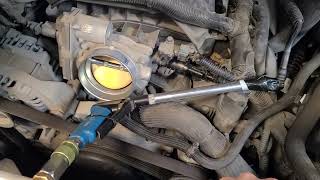
We Have This Part in Stock



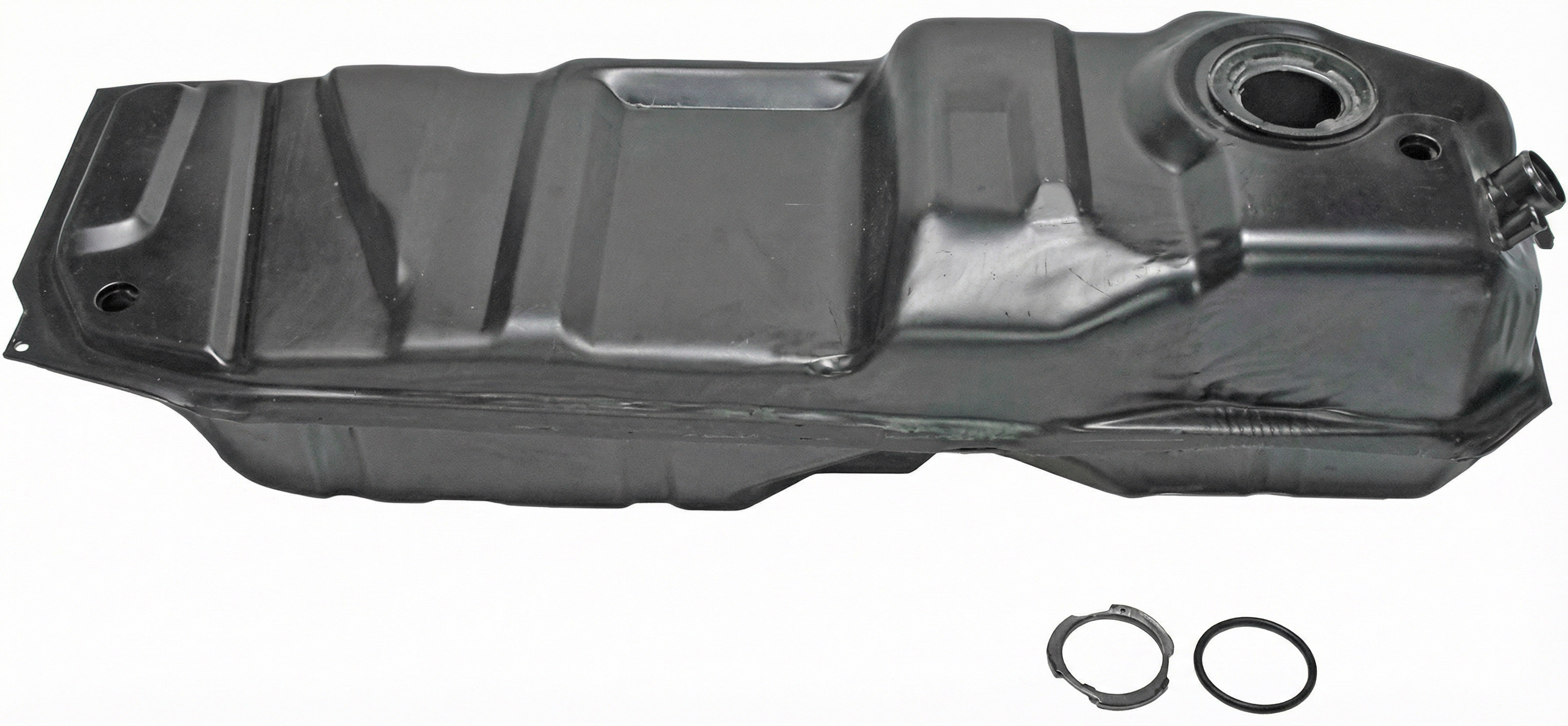
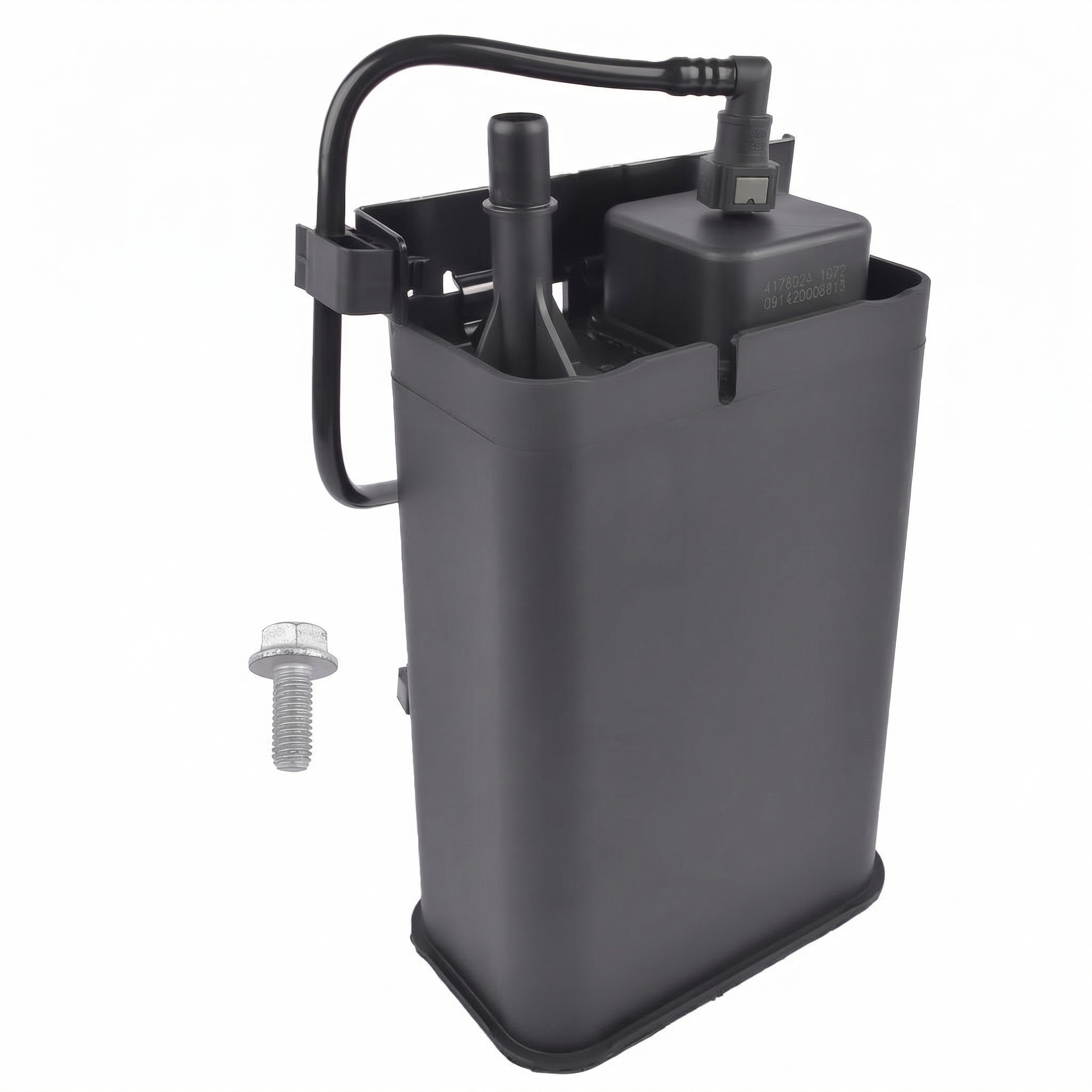


The information in this article is provided for general reference and educational purposes only. Vehicle specifications, procedures, and part compatibility can vary by production date, trim level, and region. Always consult your vehicle's factory service manual and verify part numbers before purchasing or performing repairs. Safety-critical components such as airbags, seat belts, and braking systems should be installed by a qualified professional.
- Chevrolet SILVERADO 2500:
- 🎬 Helpful Videos
- 🛍️ Shop This Part
- What's Unique About the 2000-2007 Chevrolet SILVERADO 2500
- Diagnostic Flowchart
- Symptoms You May Notice
- Most Likely Causes
- Rare But Worth Checking
- Diagnosis Steps
- Parts You'll Likely Need
- Related Codes That Often Appear With This One
- Technical Service Bulletins (TSBs) & Recalls
- Platform-Specific Known Issues
- Mechanic-Grade Diagnostic Values
- Scan Tool Commands That Help
- Wiring & Ground Locations
- Real Owner Repair Stories
- "I Checked Everything" — The Actual Cause
- OEM Part Supersession History
- Model Year Variations Within This Range
- 🎟️ Get 5% Off