

P0455 on 2012-2019 Chevrolet Malibu: EVAP Large Leak Causes and Fixes
For a 2012-2019 Chevy Malibu, code P0455 most often means you have a loose gas cap or a failed EVAP purge valve. On 2016+ models, check the capless fuel filler neck seal. Replacing a gas cap is under $25, while a purge valve is about $30-$60 and is a common DIY fix. If those are not the issue, follow the diagnostic order in GM TSB #21-NA-124 by checking EVAP lines, then the vent valve.
- P0455 means your car has a large emissions leak. It's not dangerous to drive but needs to be fixed to pass inspection.
- First, check your gas cap (2012-2016 models) or the capless filler neck (2016-2019 models). This is the most common and cheapest fix.
- If the cap/filler isn't the problem, the EVAP purge valve in the engine bay is the next most likely culprit and is a common DIY replacement.
- A smoke test is the best way to find the exact source of a leak if the common causes are ruled out.
What's Unique About the 2012-2019 Chevrolet MALIBU

The 2012-2019 Malibu spans two generations, with a key difference in the fuel system. The 8th generation (2012-2016) uses a traditional gas cap, which is a frequent cause of this code. The 9th generation (2016-2019) introduced a capless fuel filler system; on these models, the seal on the filler neck itself can fail and cause a P0455 code. Additionally, the EVAP purge valve is a notoriously common failure point on many GM platforms of this era, not just the Malibu, with the issue reported on everything from the Impala to the Camaro.
Diagnostic Flowchart

Tap your situation to follow the diagnostic path that matches what you're seeing on this vehicle.
Generation note: This range covers the 8th generation (2012-2016) and the 9th generation (2016-2019). The 8th gen uses a standard gas cap, a common failure point. The 9th gen uses a capless fuel filler, where the integrated seal can fail. A 2016 model could be either generation (the 2016 'Malibu Limited' was the old body style), so visual confirmation of the fuel filler type is important.
Symptoms You May Notice
- Check Engine Light is on
- A noticeable smell of fuel, especially around the rear of the car
- On 9th-gen models, difficulty inserting the fuel nozzle if the filler neck mechanism is damaged
- Slight decrease in fuel economy over a long period.
- Replacing the O2 sensors. O2 sensors are not part of the EVAP system and will not cause a P0455 code.
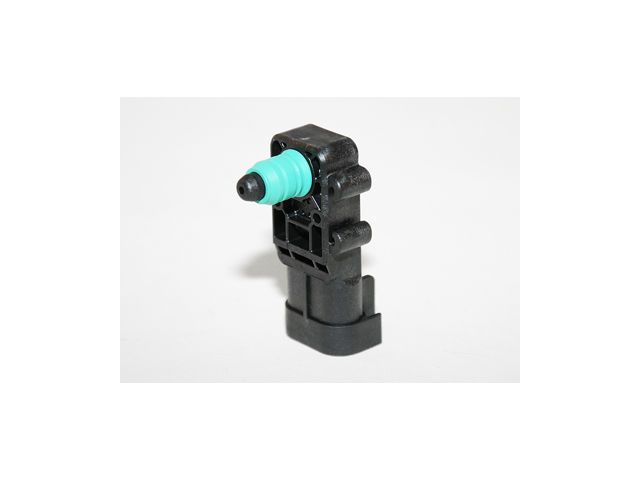
- Replacing the fuel tank pressure sensor. While part of the EVAP system, this sensor is more likely to set its own specific codes (e.g., P0452, P0453) if it fails electrically, rather than cause a large leak code.
Most Likely Causes


- Loose, Damaged, or Missing Gas Cap (8th Gen) 🔴 High Probability This is the most common cause for any vehicle with a traditional gas cap, often due to not tightening it until it clicks or the seal aging and cracking.
How to confirm: Ensure the gas cap is present and tightened until it clicks at least three times. Inspect the rubber O-ring on the cap for cracks, stiffness, or damage. An aftermarket cap that doesn't seal properly can also be the cause.
Typical fix: Tighten the cap. If the seal is bad, replace the entire gas cap with a quality OEM or equivalent part.
Est. part cost: $10-$25 - Faulty Fuel Filler Neck Seal (9th Gen Capless System) 🔴 High Probability The spring-loaded door and internal rubber gasket on the capless system can wear out, get stuck with debris, or become dislodged, preventing a proper seal.
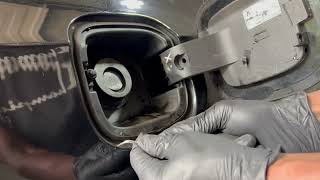
How to confirm: Visually inspect the opening of the fuel filler neck. Look for a displaced or damaged rubber gasket behind the metal flap. The area should be clean and the flap should move freely. A YouTube video by 'Just The Drip' on a 2017 Malibu clearly shows the gasket having come out of place behind the door, which is a confirmed failure mode. 🎬 Watch: See how to replace the capless fuel filler neck.
Typical fix: The entire fuel filler neck assembly must be replaced, as the seal is not serviced separately. This is a DIY-possible job that involves removing the rear wheel and inner fender liner for access.
Est. part cost: $70-$140 - Failed EVAP Purge Solenoid Valve 🔴 High Probability This is a very common failure part on many GM vehicles of this era, including the Malibu. The valve gets stuck open, creating a permanent leak path from the EVAP system to the engine intake. This part is so common that many owners replace it preemptively.
How to confirm: The valve is located in the engine bay on top of the intake manifold. A simple and effective test is to disconnect the valve with the engine off and try to blow through it; if air passes, it is stuck open and faulty. It should be normally closed.
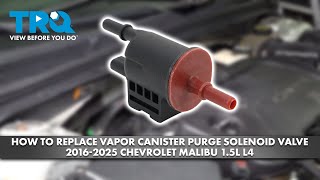
Typical fix: Replace the purge solenoid valve. It is typically held by one bolt and has two hoses and an electrical connector, making it a straightforward 15-minute DIY job. 🎬 See this walkthrough for replacing the 1.5L purge solenoid.
Est. part cost: $30-$60 - Failed EVAP Vent Solenoid Valve 🟡 Medium Probability This valve can get stuck open due to dirt and road debris, especially since it is located underneath the car near the fuel tank and charcoal canister.
How to confirm: A stuck-open vent valve will cause a large leak. Diagnosis often requires a scan tool to command the valve closed while performing a smoke test. If smoke exits the vent valve when commanded shut, it has failed. You can also test it by applying 12V power; the normally-open valve should click closed.
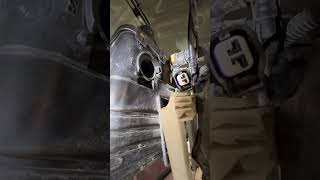
Typical fix: Replace the vent solenoid. Access can be difficult as it's located near the fuel tank, often attached to the charcoal canister. 🎬 Watch: How to replace the canister vent valve.
Est. part cost: $40-$75 - Cracked or Disconnected EVAP Hose ⚪ Low Probability Over time, the plastic and rubber lines in the EVAP system can become brittle and crack, especially at connection points or where they are exposed to the elements under the car.
How to confirm: A thorough visual inspection of all EVAP lines from the engine bay to the charcoal canister may reveal an obvious crack or disconnection. A smoke test is the most effective method to pinpoint the exact location of a hidden leak.
Typical fix: Replace the cracked section of hose or the entire hose assembly.
Est. part cost: $20-$100
Rare But Worth Checking
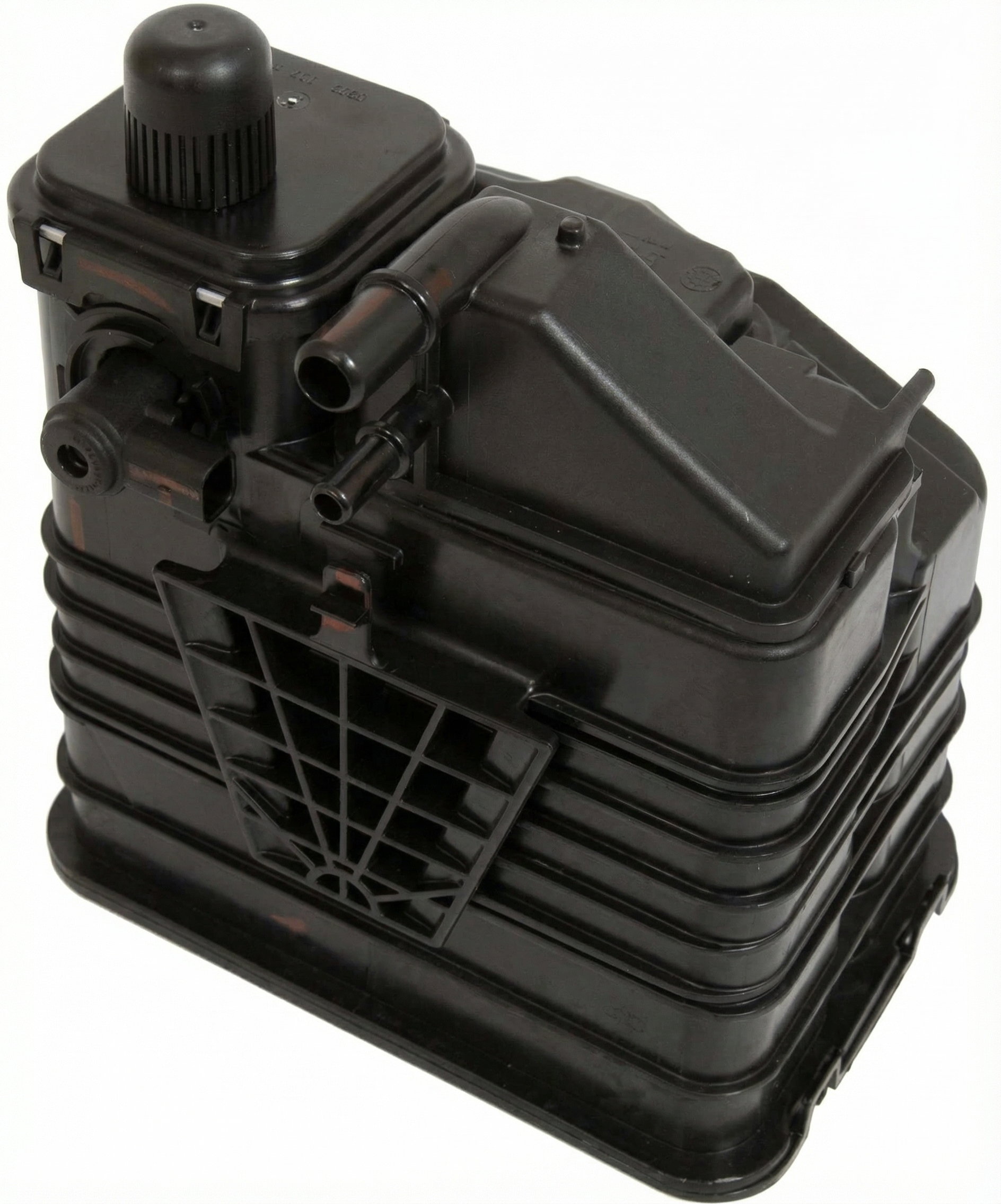
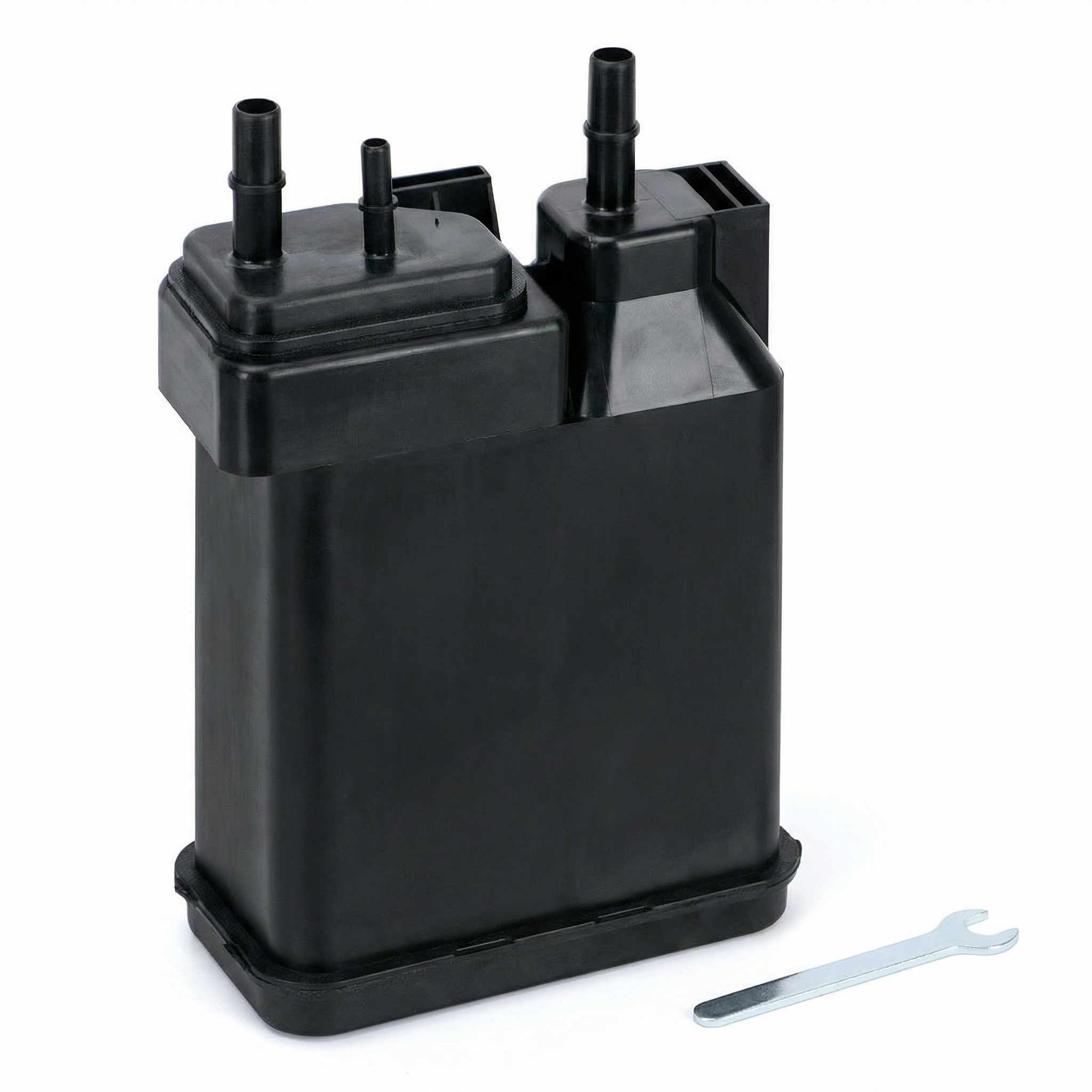
- Cracked Charcoal Canister: The plastic housing of the canister can be damaged by road debris or become brittle with age, causing a large leak. This is usually found with a smoke test.
- Damaged Fuel Tank or Filler Neck: In rust-prone areas, the metal fuel filler neck (on older models) or the fuel tank itself can corrode and develop a leak large enough to trigger P0455.
Diagnosis Steps
- Read the code with an OBD-II scanner to confirm P0455 is present.
- For 2012-2016 models: Inspect the gas cap. Ensure it is tight. Remove it and check the seal for cracks or damage. Replace if it looks worn or is an improper aftermarket cap.
- For 2016-2019 models: Inspect the capless fuel filler neck. Check for debris holding the flap open or a damaged/dislodged internal seal. Also ensure the emergency fuel funnel is not missing from its storage location, as this can sometimes affect sealing.
- Clear the code and drive for a few days to see if it returns. If it does, proceed with the GM-recommended diagnostic order from TSB #21-NA-124.
- Visually inspect all accessible EVAP hoses and connections in the engine bay and under the car for obvious cracks or disconnections, per TSB #21-NA-124.
- Locate the EVAP purge valve in the engine bay. With the engine off, disconnect the hoses and try to blow through it. If air passes, the valve is bad and must be replaced.
- If the purge valve is good, the next likely part per the TSB is the vent solenoid near the fuel tank. A smoke test is the most definitive way to find the leak at this point, as it will reveal leaks from a stuck-open vent valve, the charcoal canister, or any hard-to-see hoses.
Parts You'll Likely Need
- EVAP Canister Purge Solenoid Valve
(OEM #12690512 (supersedes 12632174))— This is a very high-failure rate item on this platform and a common cause for P0455 when the gas cap is not the issue. The updated part number is 12690512.
Trusted brands: ACDelco (GM OE), Dorman
OEM price range: $45-$65
Aftermarket price range: $25-$50 - Gas Cap (for 8th Gen)
(OEM #GT334 (ACDelco))— The simplest and most common cause for P0455 on models with a traditional cap (2012-2016). The seal wears out over time.
Trusted brands: ACDelco, Stant
OEM price range: $20-$30
Aftermarket price range: $10-$20 - Fuel Filler Neck (Capless, for 9th Gen)
(OEM #84392682)— The primary sealing point on 9th generation models (2016-2019). The internal seal is not sold separately, requiring replacement of the whole neck if it fails.
Trusted brands: GM Genuine, Dorman
OEM price range: $90-$140
Aftermarket price range: $60-$100 - EVAP Canister Vent Solenoid Valve
(OEM #25950499 (ACDelco 214-2082))— Another common failure that causes a large leak, typically by getting stuck open. It's the next logical part to check after the purge valve, per GM TSB #21-NA-124.
Related Codes That Often Appear With This One
- P0442 — P0442 indicates a small EVAP leak. Sometimes a leak can be on the borderline between small and large, causing both codes to appear. GM TSB #21-NA-124 addresses both codes simultaneously.
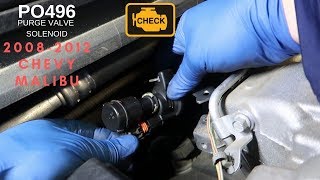
- P0496 — P0496 indicates 'EVAP Flow During a Non-Purge Condition,' which almost always points directly to a faulty purge valve stuck open—a primary cause of P0455.
- P0449 — P0449 specifically indicates a fault in the EVAP vent solenoid circuit. If you have this code along with P0455, the vent solenoid is the most likely culprit.
Technical Service Bulletins (TSBs) & Recalls
- Provides official diagnostic tips for P0442 and P0455. It recommends a specific order of operations: 1) Inspect all EVAP line connections are fully seated. 2) Inspect lines for damage. 3) Check the vent valve for a stuck-open condition. 4) Check the purge valve.
Platform-Specific Known Issues
- GM issued Technical Service Bulletin #21-NA-124 to provide dealers with diagnostic tips for finding EVAP leaks related to codes P0442 and P0455. [⭐ MANUFACTURER TSB — highest authority]
- While not a recall, GM has acknowledged the high failure rate of the purge valve (P0496) on similar platforms with Special Coverage programs, highlighting its prevalence as a problem part.
Scan Tool Commands That Help
- GDS2 / Professional Scan Tool: EVAP Purge/Seal — This is a critical bidirectional command used to prepare the EVAP system for a smoke or vacuum test. The command closes the normally-open vent valve, sealing the system so it can be checked for leaks. Without this, a smoke test is ineffective as the smoke will simply exit the open vent.
- GDS2 / Professional Scan Tool: EVAP Service Bay Test — This is a guided diagnostic function that runs the vehicle's onboard EVAP leak test on command. It allows a technician to verify a repair or check the system's integrity without waiting for the normal drive cycle conditions to be met.
- GDS2 / Professional Scan Tool: EVAP Canister Purge Solenoid Valve Control — This allows the technician to command the purge valve to a specific duty cycle (e.g., 30%) to test its function and to draw a vacuum on the system when used in conjunction with the Purge/Seal command.
Wiring & Ground Locations
- Fuse F32 (Engine Compartment) — In the under-hood fuse box on the right side of the engine bay (for 2016-2023 models).. This 5-amp fuse provides power to the EVAP system. If the vent or purge solenoids are not responding to scan tool commands, checking this fuse is a primary electrical diagnostic step before checking for wiring issues.
Real Owner Repair Stories
- Chevrolet Forum user 'Joe Silverado' (2008 Chevrolet Silverado Z71 (similar GM EVAP logic)) — Persistent P0455 code for two years. Check engine light would turn off during very cold winter temperatures and return when it warmed up.
❌ Tried (didn't work) Replaced valve solenoid, Replaced purge canister valve, Replaced valve filter, Replaced all valve hoses, Replaced gas cap
✅ What actually fixed it The issue was not a part failure but a misunderstanding of the system. A technician explained that the EVAP self-test is temperature-dependent and will not run when it is too cold. This explained why the light went out in winter. The final resolution required proper diagnosis with a scan tool to observe system parameters, rather than continuing to replace parts. - YouTube video on a 2013 Ford Explorer (similar capless system) (2013 Ford Explorer with capless fuel filler) — P0455 and P0457 codes.
❌ Tried (didn't work) Initial diagnosis pointed to a large leak.
✅ What actually fixed it The problem was debris on the seal of the capless fuel filler neck. The fix was to spray WD-40 on the emergency funnel, insert it into the filler neck, and twist it around to clean the grime off the internal sealing surfaces, allowing the flap to seal correctly.
"I Checked Everything" — The Actual Cause
- A common reason a smoke test shows no leak is because the technician failed to command the EVAP vent valve closed with a scan tool. The vent valve is normally open, so if it is not commanded shut, the smoke will simply flow through the system and exit the vent near the charcoal canister, appearing as if there is no leak within the sealed portion of the system.
- A leak was present but missed during a smoke test because it was located at the seal on top of the fuel pump/fuel tank assembly. This area is extremely difficult to see without dropping the fuel tank or removing the truck bed (on applicable models), so smoke may not be visible from underneath the vehicle.
OEM Part Supersession History
12632174→12690512, which was then superseded by 12737252— Standard design revisions by the manufacturer to improve reliability or address known failure modes of the EVAP Purge Solenoid Valve.
Heads up: Using the latest part number (12737252) is recommended as it is the most current revision from GM. The older parts may be more prone to the original failure.
Model Year Variations Within This Range
- 2016-2019 (9th Generation): The EVAP system is powered by fuse F32 (a 5-amp fuse) located in the engine compartment fuse box. This is a specific electrical detail for the newer generation.
- 2016: Chevrolet sold two different Malibus in 2016. The 'Malibu Limited' was a carryover of the 8th generation and uses a traditional gas cap. The all-new 9th generation 'Malibu' was also released, featuring new engines and a capless fuel filler system. It is critical to visually identify which model you have, as the most common cause for P0455 differs significantly between them.
Helpful Videos
Used OEM Parts in Stock

New Aftermarket Parts Available



The information in this article is provided for general reference and educational purposes only. Vehicle specifications, procedures, and part compatibility can vary by production date, trim level, and region. Always consult your vehicle's factory service manual and verify part numbers before purchasing or performing repairs. Safety-critical components such as airbags, seat belts, and braking systems should be installed by a qualified professional.
- Chevrolet MALIBU:
- 🎬 Helpful Videos
- 🛍️ Shop This Part
- What's Unique About the 2012-2019 Chevrolet MALIBU
- Diagnostic Flowchart
- Symptoms You May Notice
- Most Likely Causes
- Rare But Worth Checking
- Diagnosis Steps
- Parts You'll Likely Need
- Related Codes That Often Appear With This One
- Technical Service Bulletins (TSBs) & Recalls
- Platform-Specific Known Issues
- Scan Tool Commands That Help
- Wiring & Ground Locations
- Real Owner Repair Stories
- "I Checked Everything" — The Actual Cause
- OEM Part Supersession History
- Model Year Variations Within This Range
- 🎟️ Get 5% Off